






Alan Armstrong reports.
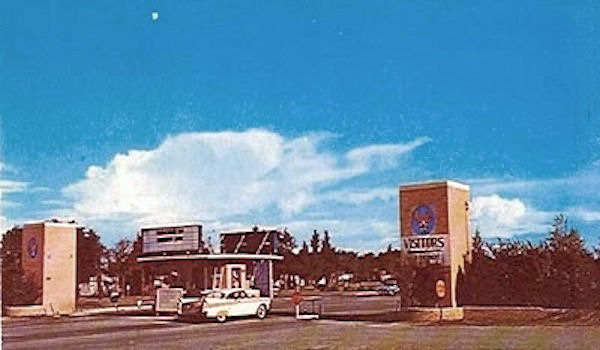
Today, Roswell International Air Center is a sleepy airport in southeastern New Mexico upon which are parked numerous jetliners that have been mothballed or are being broken up for salvage. Located three miles south of the central business district of the City of Roswell in Chavez County, New Mexico, the airport has a unique place in American history.
The Genesis of Roswell Army Airfield
Initially known as Roswell Army Airfield, the property upon which the base was developed was acquired in 1941 from rancher David Chesser. Owing to its excellent flying weather, the purpose of the facility was to provide military flight training and also to serve as a bombardier school. The facility had no less than 4,600 acres along with seven concrete runways. Roswell Army Airfield was complemented by no less than nine auxiliary landing fields to accommodate overflow and tough and go traffic, and the airfield was assigned to the United States Army Air Corps Training Command on September 20, 1941.
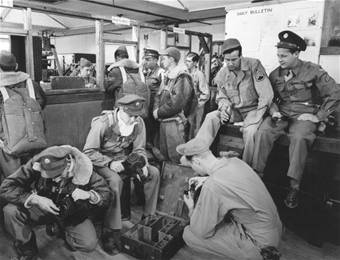
Roswell Army Flying School was home to Beechcraft AT-11 twin engine trainers and Cessna AT-17 twin engine trainers, together with Vultee BT-13 and BT-15 training aircraft.
In time, the Second Air Force provided all B-29 Superfortress transition training for the Army Air Forces. On September 12, 1944, Army Air Force Headquarters established B-29 schools for the transition training of crews consisting of pilots, co-pilots and flight engineers. By January 1945, Roswell Army Airfield was home of the 3030th Army Air Force Base Unit (pilot school, specialized Very Heavy) which specialized in training B-29 Superfortress crews.
The 509th Composite Group
The 509th Composite Group was activated on December 17, 1944 at Wendover Army Airfield in Utah. It was tasked with operational deployment of nuclear weapons dropped on Hiroshima and Nagasaki, Japan in August 1945. The Group contained squadrons of B-29s, C-47s and C-54s. It operated Silverplate B-29s specially configured to carry nuclear weapons.
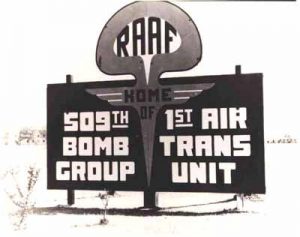
The 509th Composite Group led by then Colonel Paul Tibbets returned from its wartime base at Tinian and relocated to Roswell Army Airfield on November 6, 1945. The 509th Composite Group was initially assigned to the Second Air Force under the Continental Air Forces. In the midst of demobilization in late 1945, the 509th Composite Group was reassigned to the 58th Bombardment Wing at Fort Worth Army Airfield on January 17, 1946. Then on March 1, 1946, the 509th Bombardment Group was assigned to the Strategic Air Command (SAC), being one of the first of eleven organizations assigned to SAC. At the time of the formation of SAC, the 509th Composite Group was the only unit that had experience in deploying nuclear weapons. Many historians consider the 509th Composite Group as the foundation for the Strategic Air Command. A sign outside Roswell Army Airfield in 1946/47 shows a mushroom cloud for the 509th Bombardment Group (Very Heavy). With the creation of the United States Air Force as a separate service on November 17, 1947, the group became the 509th Bombardment Wing. Beginning in June of 1948, the 509th Air Refueling Squadron was activated as part of the 509th Bombardment Wing along with the 43rd Air Refueling Squadron at Davis-Mountain Air Force Base in Arizona. With the addition of KB-29M Tankers, the 509th Bombardment Group’s aircraft could reach virtually any point on Earth.
In June 1950, the 509th Bombardment Group began receiving the upgraded version of the B-29 known as the Boeing B-50A Superfortress. When the Corvair B-36 joined the Air Force inventory, the designation “Very Heavy” was dropped from the description of the 509th Bombardment Group which was then redesignated as “Medium.”
By January 1954, the Boeing KC-97 Aerial Tanker had replaced the KB-29M aircraft, and the Wing entered the jet age in 1955 receiving the first jet bomber, the Boeing B-47 Stratojet.
By June 1958, the 509th Wing had been transferred to Pease Air Force Base in New Hampshire. Today the 509th is located at Whiteman Air Force Base in Missouri where it operates the B-2 Spirit Stealth Bomber.
A Victim to Base Closing During the Vietnam War
In 1967, the Base was ordered shut down and operations ceased July 1, 1967. Little remains today to remind visitors of the history enjoyed by this former military base. From 1941 to 1942, it was known as Roswell Army Flying School. From 1942 to 1947, it was known as Roswell Army Air- field. From 1947 to 1948, it was known as Roswell Air Force Base. From 1948 until closure in 1967, it was known as Walker Air Force Base. The last name of the facility was in honor of General Kenneth Newton Walker, a native of Los Cerrillos, New Mexico, who was killed during a bombing mission over Rabaul, New Britain, Papua, New Guinea on January 5, 1943. After his group scored direct hits on nine Japanese ships, General Walker’s aircraft was last seen leaving the target with one engine on fire and several Japanese fighters on its tail. For his gallantry, General Walker was awarded the Congressional Medal of Honor posthumously by President Franklin D. Roosevelt in 1943.
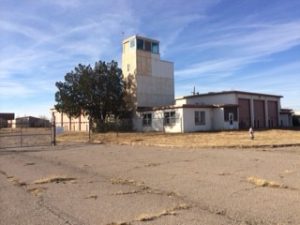
As one walks about the campus of this former military field, the old control tower is still standing as are a number of aircraft hangars, office buildings and maintenance shops. Although the City of Roswell has placed a new fire station on the field, the general appearance of the facility is that of a run- down former military air base, the significance of which is now lost on most Americans. The airfield is littered with what appears to be hundreds of aging jetliners, some in storage and some being broken up for salvage. In short, the old Roswell Army Airfield is now an airplane bone yard.
Two Americans who have not lost their reverence for the historical significance for this closed military facility are Johnny Stites and his wife, Maralea. Mr. and Mrs. Stites maintain the Walker Aviation Museum in the terminal building of the airport. This modest museum is adorned with aviation artifacts and models of military aircraft to pay homage to those who died ensuring and protecting our freedoms during the Second World War and thereafter. Admission to the museum is free, and there is a grill next door to the museum. High above the tables which serve the grill is a large model of a B-29 Superfortress.
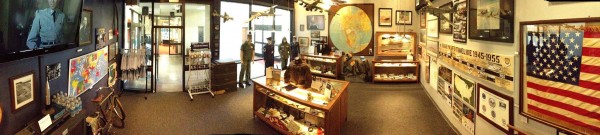
If your travels ever take you near Roswell, New Mexico, you might consider a visit to the Walker Aviation Museum and this closed military facility in southeastern New Mexico.
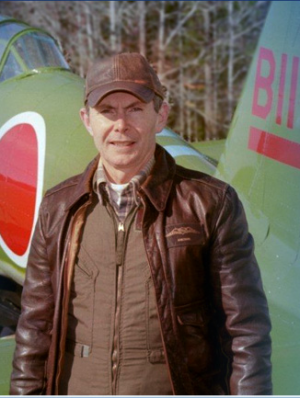 Alan Armstrong is an aviation lawyer in Atlanta. He is listed in Martindale Hubbell’s publication of Preeminent Lawyers. Alan has spoken frequently on topics of aviation law to pilots and aviation groups. He has testified before the House Aviation Subcommittee and conducted a mock trial at Sun-N-Fun. A commercial pilot with flight instructor privileges, Alan has flown a number of vintage aircraft. Along with two other pilots, Alan owns and flies a replica Nakajima B5N2 Kate bomber, and he is a pilot in the Dixie Wing of the Commemorative Air Force. The replica Kate bomber was built for and flown in the 20th Century Fox film, “Tora! Tora! Tora!” More details on that aircraft may be found at www.japanesebomber.com.





Walker AFB closed in 1968, not 1963. I was stationed there from Sept 1964 until July 1967.
The paragraph title “A Victim to Base Closing during the Vietnam War” made no sense if the base closed in 1963. 1968 makes a lot of sense in this context.
It closed in 1967. I was there…
Did you live on west Wells. Were you a B52 crew member in 63′-64?
I was there ’63 and ’64. Left there for Malmstrom in about 1965. Rolling Thunder in or near 1965. Seems Lyndon Johnson is credited for closing the base for reallocation of resources for Vietnam. Of course the politics/Johnson/New Mexico.
I was born there in 1966, my dad was stationed there too
My Father was a Senior Master Sargeant during those years there. I was 5-7 years old. Remember the B-52’s and was there when Kennedy was killed
Message for Daniel Hanna.
Do you recall where you were when the B52’s caught fire. Did you witness the fire? Interesting your statement “…was there when Kennedy was killed.” Do you remember where you were when Kennedy was murdered. I was rolling across the Roswell country side when the news was broadcast over the car radio, on the third day following the fire.
I was very close to the fire. I lived at 69 Wells, the closest house to the fire. I was 4 years old at that time. What details do you remember? Did you live in officer housing? It seems high ranking enlisted sometimes lived in officer housing.
I can confirm, the main gate was still manned by AP’s in the fall of 1968.
I believe that in the history of Walker AFB, NM is in error on at least one detail. The author stated that the 509th Composite Group, Paul Tibbets’ top secret nuclear weapons delivery outfit moved to Roswell from Wendover in November 1945. That doesn’t make chronological sense because the bombs were dropped on Japan out of Tinian North Field on August 6th and 8th of that year.
I was stationed at Roswel A.F.B. from 1960-1963 l did aircraft sheetmetal on B-52s and KC -135s . Also on various other aircraft. We stopped at the base about five years ago. My old barraks was still there. (I was in the 6th FMS squadron).
My Dad, MSgt John S Madden was 1st Sargent of 6 FMS
You were likely there 11-19-63 as well. Where did you live? Can you tell me if West Wells Street was Officer and NCO housing? Did you live on West Wells?
Do you have any familiarity with the Mrk-41 or a B-41 weapon. Did you ever see one aboard a B-52 or witness the arming of a 52 with a nuclear weapon? The weapon probably weighed about 10,000 pounds.
My father Billy Cox was stationed at Walker Air Force Base in 1964 . We are looking for some of his pictures . My father passed away 9-11-13
I know he went to boot camp in Lakeland Air Force Base 1964 then went to Roswell NM . I’m just trying to find out where I need to look.
Thank you
I was also stationed at Walker Air Base from 1962-1965. try contacting the administrator at; http://www.airforcetogetherweserved.com. They may be able to help you find informaton about your fathers records from WAFB.
I was also stationed at Walker AFB from ‘62-‘65. I was a newly trained B52 gunner and arrived on the base just in time to start flying Chrome Domes during the Cuban Missle Crisis. I was assigned to the 40th Bomb Sqdn, 6th Bomb Wing. Lotsa bad stuff happened at WAFB during my time there…the B52 explosion on the ramp, a KC135 tanker flying into the ground during a night training mission and the Atlas missile going up in smoke during an ORI. Weird!! I learned to fly at the WAFB Aero Club
Interesting, WAFB Having had an aero club. What aircraft were available? I also benefitted from an aero club at another AFB. I probably shouldn’t have been flying aircraft in the period. I was given a runway heading of 17L Or 17R and after several communications with tower I still did not know my clearance, so I just picked one, you know 50-50. I landed head on into departing 105’s. Evasive maneuvering and no damage. Seems I may have had some residual from an earlier TBI. Don’t think I ever flew the wild blue yonder under my command ever again. Seems the incident shut down the club.
Do you know if the B52 had a nuclear weapon on board at the time of the fire. I wonder if it is likely that it did have a weapon on board. Did the magnesium rotars ignite in the fire? Did anybody recall shots fired before the B52 went up?
Same last name, and my father was at WAFB in 1962. I was born on base that year.
Try http://www.bmtflightphotos.af.mil/
If you check with the base historical office. They should have a book with pictures of the group he trained with. Called “flights” when I was a drill sgt in 1988. Msgt Hucks
Terri, there is a Roswell Facebook page. You ought to go there and post this story above. If anyone knows anything about your father, it’s likely to be there. I was raised in Roswell and am currently writing a book. All stories are considered for addition to my book. If you have a story, go to my FB page; Laura Lucas and message me. Thanks.
My father was killed in that explosion Nov 19, 1963. His name was Harold Richard Morrison. He was working on a B-52E strato. My mom was widowed with 4 small children. Supposedly, 3 were taken to hospital including crew chief. I’d love to talk with any survivors if any still alive. We never got full story on what really happened and his wedding ring was never returned from his locker. My number is +18177155526 Katrina Wilkins, Weatherford, TX.
Hi Katrina,
Seems I was near the fire. I have some memory of that day. I lived at 69 wells, the furthest house west at the end of the street, and probably the closest house to the fire. I had, it seems, only been in town since about Friday, 11-15-63. My father, a B-52 commander had been transfered to Walker AFB from Griffith AFB in Rome New York.
You probably mean LacklandAFB. It is a training base outside San Antonio, Tx. My dad was at Walker. I have several cousins who trained at Lackland. He said “join the navy and see the world; join the Air Force and see Texas”!!!!
My pop was recalled to Walker in 1947 and flew in the 509th through Pease AFB. Wyatt Duzenberry was pop’s flight engineer thru B-29’s and B-50’s. 100th was also at Walker vibrating all the nails out of the walls.
My Dad was at Walker at that time. We lived in the old POW camp at Or hard Park. I went to first grade in Dexter. My Dad worked in the instrument shop.
So, was the POW camp housing the same as you lived in, or did you live in different structures on the same ground?
My Dad was stationed at Walker AFB from 1949-1958 and was in the 509th wing, 830 squadron. I was born there in 1954. He was a navigator/bombadeer. The wing was transferred to Pease AFB in 1958 and he was transferred along with his crew. My Mom is still living and she remembers so much about their life there.
My Dad was stationed at Walker from 1947 through 1963. He was a crew chief on 29’s and 52’s. PCS’d to Ramey AFB, Puerto Rico in October of 1963. I was Born at St. Mary’s Hospital in Roswell in 1954. Interesting note… John Denver and Demi Moore were also born at St. Mary’s hospital.
I forgot to mention that he was on the first Mission in the B52 to SE Asia. We lived on East Wells and moved just up the street in 1962 to a circle, Ruahonned (sp?) place. Both houses were accross from the old wooden hospital building and down the street from the new Hospital that opened in the Early 60’s.
I lived at 69 Wells 1963 and 64. Do you remember the B-52 fire?
Historical records indicate the high temperature the day of the B52’s and hangar fire of 11-19-63 to have been about 60°F. I wonder what time of day was the fire? Mid-afternoon? Was the desert field on fire also, eg tumbleweeds?
My dad was a crew chief on the 29’s at Roswell and prior to that he was on Tinian with the Silverplates. I was conceived in Roswell in 1948 and the house my parents rented back then is still standing. Dad’s plane had tail numbers ending in 99 as my older brother used to call out “There’s nintey niner” when ever he came in from a trip and flew overhead. Dad was the only mechanic in the 509th to have no aborted flights due to mechanical failures. Now I’ve got 50 years of aviation maintenance under my belt, just not on the 29’s.
I was stationed at Walker AFB from 1961 to 1965
I was in 812th medical group 1960 to 1964. In dental clinic
I was also in the 812th Medical Group from 1960 to 1964 working at the dental clinic along with Robert Conklin.
I was in the 812th also at the Dental Clinic in 1965- 1966. Was transferred to Goose Bay dental clinic when base was phased out.
I should have said “when the base was in the “process” of being phased out”. A couple months before I left for the Goose
I was re-assigned to as a driver for one of the medical squads. Good ole days at Walker. Remember the Ye Court Jesters?
When Paul Revere and The Raiders played at the skating rink in town?
I remember a club in town we all danced at- it was on a 2nd floor, but can’t remember the name of it.
I was assigned to the 812th med group flight surgeon’s office at Westover AFB in 1968 out of tech school. It just disappeared into the wind along with the 99th Bombardment Wing.
I remember you Robert, I was with the 812th also from 5/60 thru 9/63, Preventive Medicine
section, located orderly room, behind hospital. Take care if you are still around!
Steven I was there same time 11/1961 to 2/1966. There was a Steven Wagner in my squadron, 6FSS. Was that you?
I was in the 812th from april65 till july67 when the base closed.Good memories.
I was stationed there from 1963-65 – 812th medical – Bioenvinonmental Engineer
Joe Dempsey I was there 1961 until 1964, all those new buildings are all gone !
I was stationed at WalkerAFB , from October – 1962 – August 1966 , with a brief TDY to Anderson AFB , Guam , Oct – 1965 – Feb 1966 . I was assigned to the 6th CES , roads and grounds as a mason . I also worked in the missile silos performing corrosion control . I remember the silo explosions , and meeting General Curtis LeMae , who was at Walker investigating those explosions . I did attend Eastern New Mexico University at Roswell , after it opened a campus on the base 1971.
I was at Walker Dec. 61-May 64 also 6th CES. I was a Firefighter.I remember one winter it was 24 below zero, soo cold.
Does anyone know about the B-52 explotion that killed 7 airman in a hanger? Around 1962-64.
My fatherwas sstationed there when it happened. I was in kindergarten, I remember it very well. We lived on East Burnsst.I think I it was 134.
Do you recall what time the fire may have started. I suspect you were not in school? Kindergarten probably let out near noon. The higher grades between 2:00 and 3:00 pm. Do you recall any other children,that were not in school at the time of the fire?
My name is Jim sanders I was there on the flight when that happened . I was in 6th trans sq. from 1961 – 1964 july
Yes several of our shop members were there. Was in 6^ th Field Maintenence Squadron. They were purging oxygen into the fuel tank, when explosion took place.
What shop were you in, I was in 6th FMS A/R shop
Bill Metallo,
Were you in the 6 fms pneudraulic shop? I worked there from 62 to 66. Took care of lox systems. I think you were from Wisconsin, if I remember correctly.
What year did this explosion occur? My father was an Airman stationed at Walker AFB as an aviation mechanic. I was born there in 1965 and we moved shortly after that. I have always been told the base closed on July 1967.
I was a dental tech on call. With my on call dentist. We wer called to chart their teeth an id them through their dental records. My first exposure to death.
I was there that day.
Fuel cell guys purged the aircraft with Oxygen.
This was not the thing to do….
I don’t think it killed 7 though and it was just outside of the hanger. Don’t remember the hanger number it may have been hanger 1048
Yes, I was AP, watched 0655 burn on ramp just outside hangars area Destroyed By Fire on November 19 1963 during maintenance whilst parked at Walker AFB, New Mexico.
RT Goss – Do you remember the AP Lieutenant at the explosion scene directing response to the tragedy?
That was during a ORI inspection. I was in the 6th OMS. I think thair were 3 killed. It was caused from purging the center wing tank with oxygen instead of nitrogen.
Was it ever finally determinative that the oxygen was in fact the cause of the fire? I saw an old newspaper, seems the author quoted and Air force Press Release stating that the cause of the fire would not be revealed.
My name is Lee Heath and i was working at the fire station with you and i do remember the explotion. Hope you get this
I was researching info early this am as my memories of this still are apart of my life now at 72 years old—–on this particular incident. I was an A.P. on flight line security in 1964—–forget the date but will never forget the explosion of a B-52 near a hangar. I was first on the scene to give witness to that tragedy. It was a big blast that nearly set off another B-52 nearby. We had secondary explosions on the wing fuel tanks from the first initial blast——–the fuel ran like a small stream into an adjacent hangar and ignited the tail gunner’s 4 of the .50 caliber machine guns on the tail——-what a precarious situation. Etc Etc.
And yes I witnessed a couple of the deaths.
Ed Kuhn, I believe I know you. I also were on flight line security. We were on “D” Flight and our Flight Sargent was T/Sgt. Hicks. On that day I was assigned to patrol, (6 man patrol squad) It could be that we were on the same squad that day. I was know as “Pineapple”, because I came from Hawaii.
Do you recall the time of the initial explosion?
As I remember the fuel system was to be flushed out with nitrogen and someone made an adapter and hooked up Oxygen bottles, that had been planted grey by mistake.
A good example of getting the job done without thinking.
I left before the base closed but was told, Chaves County voted republican, and LBJ just closed it.
I had 6 U-6A Beavers in the next nose dock, was on my way back from lunch at the NCO club .
Was in the 6thACCS squadron then 6th OMS, Base Flight
Seems that if one had to make an adapter it should have been obvious that the tanks did not contain oxygen. The confluence of two such errors seems improbable? I wondered if there may have been a supply issue for the nitrogen tanks that someone would go through all that trouble to make an adapter.
My name is Earl J Freitas, better know as (Pineapple), I was stationed at WAFB from November, 1962 to December 1963. Yes I remember that day very well. I was in 6th Combat Defense Squadron, Security Forces. I was working day shift on that day, and were near the Hangar that had the explosion. I remember it happening very quickly. I think it was during the winter months, because I stood post the next day, and remember it being cold and had a parka on. I will never forget that day. Because , the next day when I stood post I could smell the lingering smells of burnt human bodies. Walker Air Force Base also lost 2 or 3 missile sites during the period that I was stationed there.
I lived at 69 west wells. I remember a big fire behind our house. Seems the desert field was on fire. I remember fire trucks racing west bound inbetween our house and the Hangar. I did not start kindergarten until 1964. So, were you at the school when the fire occurred? I was behind our house looking south from a dirt road that ran east west behind 69 Wells. What sounds do you recall other than sirens? Do you recall a bloom period in the desert, South and west of Sunset Elementary School? I wonder what that open space looked like in November.
Were all of the mishaps at the silos related? Do you know the cause of any of the silo explosions?
Earl J Freitas – Do you remember the name of the Air Police Lieutenant working at the time of the explosion? He was one of the first responders in an Air Police Blue pick up truck with a driver to reach the explosion and he worked with the fire crews and available airmen to get a B-52 out of dangers way in the connecting hangar?
My father , Frank Lorello, worked on the flight line at the time of the explosion. He was a Master Sargent an retired in early 1963. I went to grade school at Valley View Elementary (1st-3rd grade)
Do you remember a William “bill” shivers that was in crash rescue or firefighter, stationed there at that time?
I had extended my tour 2 more years, and also worked in all the silos. Missile crew enjoyed setting off alert system, to see how long we took to get out the silo. Spent almost a year in them. 3 days in an 3 days out. 3 blown up by the time I got out an came home. Also worked at Quick Strike for a year. Too many Broken Arrows
Were all of the mishaps at the silos related? Do you know the cause of any of the silo explosions? Were any of the silo disasters close to Walker AFB?
I lived at 69 Wells 1963 And 64. Were you on base on Nov 19, 1963. A couple B-52’s and a hangar caught fire? Did they determine the cause of the explosions?
Donald Touchet – my father Harold Richard Morrison, staff Sargent was killed in a B52 explosion at Walker AFB November 19, 1963 while on TDY. 3 people were killed. He was in 96 Field Maintenance, stationed in Dyess AFB, Abilene, TX. I’d love to get in touch with any of his friends and their family, and/or the crew family that we’re widowed like my mom on November 19, 1963 when he was killed in B52 explosion. A fireman jumped out of the cockpit and survived but broke his leg and back. Where is he now? Somebody out there must have records of what caused this accident and/or worked that day. Please reach out to me. Call or text 817-715-5526, [email protected]. 9/14/2023
My Dad was with CES at Walker in 1966. Did you know Mike Schuler…he was a Dirt Boy?
I was stationed at Walker AFB between May 1964 and February 1967. I was in 6 SAW. They were closing the base when I left.
I recently looked at an old newspaper 11-20-63. seems, a spokesperson for the Air force made an official press release, informing the public that the cause of the accident would never be made public.
Owned the only TR-3 on base in 1962 and only Vermonter. Loved Rosewell and a special girl .
My 8th grade teacher in 1963 in Sembach, Germany had just come from Roswell and owned a green TR-3. When she learned we were going to be stationed there, she told me all about the town and how much I’d like it.
Wow!! Not sure who posted this, but could hardly believe my eyes when I happened to pull up the site for Walker AFB, just for the fun of it. And yes, the special girl, I do remember well. Will not divulge her name, but her initials were WFJ. TR-3 was replaced by an English Racing Green, TR-4 after returning to Vermont. AAh, for the good ole days!!
Was definitely operational between July 1964 and July 1966 when my Dad was stationed there. I went to school for 9th and 10th grade in Roswell; Sierra Jr. High and Roswell High School. My sister graduated from high school at RHS and then married a guy who was stationed at Walker through 1967. It is now a sad little town going the way of former base-post towns that were closed for political reasons after building their local economy around the base.
Was your father Staff Sgt. Manley? Was he in the Transportation Squadron?
Doug,
Was your fathers called BJ at work? I was assigned to WAFB from 9/62-367 in the jet eng shop and retrained to Mechanical Accy shop. I do have a picture of the Austin Healey I bought from himbut had to give it back after overhauling it. Two stripers didn’t make very much money.
Ray
I am a retired USAF Flight Engineer. I was stationed at Walker AFB 1957-1965. Walker was not only the largest Sac Base, but also the most advanced facility for aircraft. Over 400 parking spots for aircraft, with single point refueling receptacles at every spot. Two opposing runways allowed the aircraft to land, regardless of Wind conditions.
Closing of the Facility was Politically motivated when LBJ did not carry NewMexico in the 1966 reelection campaign. A special delegation from NM was dispatched to plead with LBJ to reconsider the decision to close the facility. His response “Get your favors from your Republican Friends”.
Closing the Base was a Travesty for the AF, losing the most advanced Aircraft Facility with extremely low operating cost, and creating an Economic disaster for all Eastern NM.
I was born in Roswell July 1959 my Dad Ray Schneiter was station there before we went to England in 1961 he was a great man.
My dad was a B29 mechanic there in 1945. He was at Kirkland before and he was also at Alamogardo, NM.He died 4 yrs ago. His name.. Arnold L. Peterson. I would like to find his service records. He liked Roswell and Bottomless Lake for beers.
Larry Peterson.
I am a Veteran Service Officer in Indiana. I was station at Walter from March 64 till my discharge in 1966. You can request your father’s service records at the National Archives in St Louis: http://www.archives.gov. Just follow the prompts for military records. I deal with veterans everyday and help them obtain benefits from the VA. Any questions, just email at the address above. Good luck.
Larry, if you want to find your dad’s service records, contact:
Modern Military Records
National Archives
8601 Adelphi Road, Room 2400
College Park, MD 20740
(301) 837-3510
http://www.archives.gov/dc-metro/college-park/
I do volunteer work at the Army Heritage Education Center in Carlisle, PA and this is what I do there one day a week; research for family members who want to know about their loved ones who served our country and what units they were in, etc. Since we do not have any individual service records, we always refer them to the National Archives for the records.
Hi Larry, my grandfather was a B29 crew chief 1944/5 at Walker. John W. Powles, Jr. we loved his stories; I have some papers where he wrote all about the specs of the plane.
My dad, who passed in February, 2015, was stationed there in 1951 and early 1952. I was born there in 1951, but never returned. Lots of bases had their origins on politics, and this one, like so many others, had its death in politics, too. Walker was the first of 16 places I lived by the time I was 21.
Looking for Physicians at Walker AFB from 1964 until Base closing.
So happy to find this site. It’s nice to think that my father may have known some of you when he was stationed at Walker AFB in the early 1960’s.
Hello, first of all thank you all for your service. I would like to ask if anyone knew a Robert Lucero from Southern California who was stationed there in 1963.He is my biological father and I know nothing about him. I’d love to know about him maybe meet him…maybe I look like him… . If anyone knows anything I’d greatly appreciate any feedback. . Thank you so much God bless you all.
I was stationed a Walker from 1956-1959. The 509th BW was at Walker with KC97’s but left when we got our B52’s and KC135’s. We had B36 aircraft until 1957 when we acquired B52E’s. I was assigned to the 6A&E squadron in the radio/ radar shop. After Walker I went to Minot AFB,ND. Walker was still the best place. Had some friends who lived at Orchard Park. We have a 6th BW reunion in Sept but I could not find any housing units at Orchard Park. Roswell was great.
Hello Mr Simon, I believe you may have known my father, Merrill E Scharmen. He flew B36s and B52s with the 6 BW for many years. He is still with us. See more about him at my brother’s facebook page – https://www.facebook.com/kim.scharmen?fref=ts – Scroll down to see Merrill’s WW2 mission diary
Tom Scharmen
Albuquerque
comsalud [at] netscape.net
I was stationed at Walker in 1957 with the 6th FMS as an electrical guy. If I recall the B52’s had their 4 alternators forward of the bomb bay doors. They were early arrivals. I left in 1958 transferring over to the 509 FMS. Walker was a good place for Pirates. Remember the Patch.
hi fred i was in the 509th electrical shop till we got transfered to pease in new hampshire. do you remember sgt lee the nco the charge? do you remember any other guys from that time period?
I arrived at Walker in September 1957, I left May 31, 1967 Was a 43131E the 24th Bomb Squadron, TDY to the 393rd Post Flt Dock till our B-52Es arrived beginning in Dec 1957. In 1959 all maintenance personnel were transfer out of the bomb squadrons and into 6th OMS and FMS I left Walker on May 31st 1967. One month before it was officially closed.
My dad served at walker him and a few friends would go to a small cafe where he met his future mother in law he was married on 59 but now rests on levenworth national cemetery
Finished my basic training at Walker Afb, January 1951. Stationed there until permanent change of station Feb 1953.
I was born at St Mary’s Hospital 06/13/1948. My Dad was stationed there after the war. He Transferred to Bergstrom AFB in1952. It eventually became The SAC Command . He was a Senior Master Chief when he retired. His name was Ottis L. Holmes. He was not hard to forget. He was 6′ 5″. If you remember him let me hear from you.
Was stationed there from 1963 till Dec. 1966 6th supply squadron, from there shipped to Andeson base Guam.
I was stationed at Walker Air Force Base as a Air Born Radio Operator, 1953-1956. In June 26, 1956 a Boeing KC 97 Stratotanker crashed on take off, Occupants
11/Fatalities 11. I Have been trying to find out more information about this crash. Please if anybody can tell me more I would appreciate any information that could be found/
George,
Search under WW2aircraft.net for KC-135 crash. Several accounts there and details. I was on base at the time as an Air Force brat and remember the day well.
Duncan
a propeller broke o0ff at the hub of #2 engine ripping the engine from the wing. The propeller entered the lower forward deck where jet fuel tanks erupted causing a huge fireball. The kc 97 ended just outside the fenced perimeter heading in the opposite direction re the takeoff. The whole upper half of the air craft was blown off and the remaining engines were buried in the ground.. I believe the Aircraft Commander was Lt. King. I escorted A/2c Maurice Boyd’s body home in Miami, Oklahoma. Maurice and I had gone to tech school in Biloxi and after a stay at Davis-Monthan AFB we transfered to the 509 AREF. I was a assigned as the combat ready radio operator on T-84 crew, Lt. Dusty Rhodes A/C I do not recall your name.
I was on the flightline that day. The left wing root erupted in an explosion and the left wing folded upwards as the fuselage sank to the ground in flames. It was a frightening thing to witness – the wing folding no doubt a consequence of your (Michael’s) description of the cause, ie. the propellor loss into the lower forward compartment. I crewed a KC-97G after that for 3 years and often recalled that crash – with some trepidation, since, more often than not, I flew on my plane when it went on a mission.
Ron, me and some crew members visited the crash site a couple of hours after the crash. I distinctly remember seeing the left wing with the outboard engine buried in the ground at approx. 30 degrees’ MA
George,
I was stationed at Walker from April 1954 to July 1957 with the 812th Air base Group, HQ. Squadron. Base flight section. I was crew chief on one of B-25 for about two years and transferred to transit alert section. I saw the explosion of the KC-97 on June 26th 1956.
To find the newspaper article about it that I submitted to a ww2aircraft.net website just Google my Richard G. Pappa name and you will find the first two hits on me. The first article is a short quip on me being stationed at Roswell. The second article will lead you to the article of the crash. Click on this.
Click on FORUMS on left side of page.
Under search threads and posts, type in pappa in keywords and hit enter.
The first article is the one you want. Any problems, contact me. Thanks Dick
I was stationed at walker with the 58th FIS in 1960 until we were deactivated that same year, that summer a KC 135 went through a hanger , a few were killed. I was a jet mech. on F 89 J. I have been trying to locate. a roommate and buddy John Christian from Waco Texas.
I was stationed at Walker from 1949 until november 1952 I was in the 830th bomb sqd. was on b29 and b50.s ground crew, best buddy was Marvin M from Iowa, was in an acident and spent a while in the base hospital loved a nurse Lt. Agnes Trywicki not sure of spelling. I married a Roswell beauty and had 6 kids
Does anyone have any insight or specific information on the Walker Air Base Auxiliary Landing Field No 1 to Roswell AFB? The company I work for “APAC” is an archaeological firm and we are recording the landing field as an archaeological site. Any information anyone has we be a great help to us.
In what year was APAC recording the landing field as an archeological site?
Was in 6th field maintenance squadron as a jet engine mechanic from 1962 till March. 1966. Was looking for old sac buddies. Particurly a good friend from NY named Robert Handlen? Nickname. (Jolly).
I was stationed at WAFB from late 1952 until May 1954, with the AACS (Airways and Air Communications Service) detachment. We were a tenant organization tasked with operating the air traffic control facilities. I was a GCA (Ground Controlled Approach operator). Worked in a radar van situated right next to the active runway. Also spent time in the control tower.
Walker was wonderful duty. The locals were friendly to the AF unlike places like Biloxi Miss.
At the time I was there the base had B36s, B50s, KB29s and finally KC97s.
I did two tours at WAFB One from 1950 to 1956 in Base Refueling which was a part of the 812 th supply. Went to Lowery AFB and retrained in Bomb Navigation system and upon completion of school was assigned to Castle AFB until 1958 and then Returned to WAFB to 511th Field Training Detachment where I taught Bomb Navigation System until the base closed.. The day the B-52 Blew up I was in the class room and our sectary Mrs. Stukanberg hid under her desk as she thought we were under attack. I have four boys and 3 where born on base and 1 in Roswell.
Many fond memories as an air policeman in the 6th combat defence squadron from 1964 to 1965. Revisited the closed base with my family in 1992.
Was stationed at Walker 1956 to 1958 when we moved to
Pease A.F.B. in N.H. assistant crew chief with Bob Taylor. Had a good friend we called Shades. He was from England. Walker was a good base.
My late husband. Dr Harvey Hayman was there from 1960 to 1962. I gave birth in the airbase hospital August 19 1961 to my daughter, Wendy. Lived on Holliman Place. Planning to return this Summer. 55 years later.
Hi, I saw your post about Holloman Place, where we lived from 1952-1957. Sad to see the current state of the homes. We were there in September 2016. I went to Kindergarten and First Grade there. Fond memories!
I was at Walker from 1957 to 1960, Jet Enine Mechanic. 6th FMS assigned to engine hanger, Unit Conditioning. The day I left Walker was February 3, 1960 which is the same day a KC 135 blew a tire on take off and crashed into a hanger. I heard the explosion and seen the smoke in my rear view mirrow as I exited the main gate. Not sure which hanger it went thru but have been told it was the engine hanger where my shop was. Anyone know for sure?
I was stationed at Walker from 1955 to 57.– I was a IFF and rendezvous technician.– Unfortunately one airman was killed when a B-47 he was working on exploded.
Hey All you Walker AFB Guys! We have a Walker AFB Reunion every year around September 20 in Roswell. You are all welcome!!
Will Schmitt
I was hoping someone my know anything about my grandfather or the name of the b29 he flew. Major (was captain at time of service) Jack Binford.In march 10th 1951 is when he was called back. 8th Air Force Sac ,24th, 28th, and 19th bombardment squad.
To be honest I have most of his military records but I don’t understand what the heck I’m looking at or the depth of its information. lol I need a translator please. Thank you all for your service! [email protected]
B-52-0655 Nov 1963, getting purged for fuel cell work. I was on 0644 With Bill Dudley and Trennie Cavandish.Trennis and I was on our way to chow and stopped by 0655 to see if anyone wanted to go eat. One said he did. Two other guys was trying to get the cowling closed on nbr 3&4 engine. There cloth tool bag was next to them. As we pulled away about 100 yards. A shock wave hit our metro truck. Knocking me to the floor. The rear doors were open and I seen parts of the nose dock hanger roof flying in the air. Then the explosion and shrapnel from wing sections on wings bars flying through the air. The center fuel tank blew forst. The guy in the cockpit jumped out the side window broke his back still ran to fuel shop. Each fuel take blew except the right drop tank it still had 17000bls of fuel. Later found the two ground crew guys died as the wing and engine fell on them. Only the zipper and melted tools were left in the once bsg. A B2-52 next to 0655. Some guys got a tow tractor even while fls m es were still bring .They towed that B-53 out of harms eay. Everyone in the big hanger headed for the rear desert. That sane day a missile blew up in a silo…Left There in 1964. Loved the base.
Donald Touchet – my father Harold Richard Morrison, staff Sargent was killed in a B52 explosion at Walker AFB November 19, 1963 while on TDY. 3 people were killed. He was in 96 Field Maintenance, stationed in Dyess AFB, Abilene, TX. I’d love to get in touch with any of his friends and their family, and/or the crew family that we’re widowed like my mom on November 19, 1963 when he was killed in B52 explosion. A fireman jumped out of the cockpit and survived but broke his leg and back. Where is he now? Somebody out there must have records of what caused this accident and/or worked that day. Please reach out to me. Call or text 817-715-5526, [email protected]. 9/14/2023
I served with 509th Dental Clinic from 1954-56 with a stint in Guam. My assistant was Sgt. Jerry Battles. Major Bob Reese was commander of our Dental Clinic. Drs. Bob Spalten, Ken Lecocq, Bill Schmidt, and DR. Greg Franz M.D. Anybody remember our clinic. Sgt Ward was in charge of the clinic work.
Does anyone in this Group Know Jack Bryden Dahlke ? He was in the 509th Maintenance crew from 1956- 57 He worked on B 47’s Mainly He also say his Major was Jack Ingraham. He remembers an Eli Cook from St. Louis MO and a person last name Green from Chicago. Any Info would be great to have Thank you in advance
WAS IN THE 509TH DICHARGED DEC 1951 BUT SURE HAD FUN AT THE BOTTOMLESS LAKE DVEING FROM THE CLIFFS WALKER WAS GREAT
Hi Jim, Hopefully you are still alive and kicking. My father was Capt. Walt Wagner, he was on the missing Globemaster in March of 51 that disappeared on the way to Mildenhall England. Have been trying to find anyone who was a part of the 509th at that time. I was born in Roswell after the incident and also attended New Mexico Military Institute in the 60’s. What I really want to know is what were the rumors that surrounded the incident from people who were inside of the 509th.
I was stationed at Walker AFB from 1958 and 1959 with the 37th Aviation Depot Squadron. We loaded conventional and nukes on B52s and B36s. I designed our squadron patch. I was also involved with the Roswell Little Theater group that sponsored the Miss New Mexico pageant when I was there. I was transferred there from Ben Guerir AFB in Morocco where I had the chance to travel to Madrid, Paris and London. The travel bug bit my behind, and have been traveling ever since. I’ve visited 83 countries. Kept in touch with one airman who now lives in Texas. We live in Silicon Valley.
Hi Tak
I’ve been trying to find the Squadron patch for the USAF 37th Munitions Maintenance Squadron that was active at Walker in the mid 60’s. Here’s the link for a picture:
https://www.usmilitariaforum.com/forums/index.php?/topic/360372-info-needed-usaf-37th-munitions-maintenance-squadron/
Any chance you can help me find one.
Any ideas or suggestions would be appreciated.
Thanks
Jerry Delaney
I was a member of the 37th MMS from January 1961 to Feb. 1964. When were you there?
Do you recall the B52 fire 11-19-63? I lived at 69 Wells, the closest house to the fire. I am interested to know what time of day did the fire start?
Hi John, I was there from about April 1961 till Feb. 1965.
My name is Gene Fuson. I roomed with Pierre Picard. My best friends were Joe Keller, Don Jensen and Paul Petty. My crew chief was Bill Collins.
I remember you, I think you were from Covington Kentucky?
Hi John, I remember you. I was in 37 mms from about April 1961 until Feb. 1965.
Please contact me.
Gene Fuson…………….Pierre’s roommate.
I was on duty in the Fire Department at Walker AFB the day the B-52 exploded. We heard the explosion, the Fire Station shooked, we ran to our trucks to get them out of the station and we immediately saw the B-52 burning two hangars to the right of our station. Within a minute we were fighting the fire. I positioned my crew adjacent to the broken wing and outboard fuel tank laying on the ground. We try to push the fire back but the tank exploded right in front of us, we immediately turned our attention to the B-52 on the adjacent hangar, very proud we help save that one. That I saw, there were two dead under the engine, two in the fuselage and one with back injureis. I do remember Touchet, Heath and sgt Williams
My goodness… that must have been a tragic moment to be a part of! But you and your team clearly have much to be proud of in all you did to bring the situation under control. Thank you so much for writing in to fill in some of the details, and of course for your dedication to our nation!
What time was the initial blast?
Louis – my father Harold Richard Morrison, staff Sargent was killed in a B52 explosion at Walker AFB November 19, 1963 while on TDY. 3 people were killed. He was in 96 Field Maintenance, stationed in Dyess AFB, Abilene, TX. I’d love to get in touch with any of his friends and their family, and/or the crew family that we’re widowed like my mom on November 19, 1963 when he was killed in B52 explosion. A fireman jumped out of the cockpit and survived but broke his leg and back. Where is he now? Somebody out there must have records of what caused this accident and/or worked that day. Red Please reach out to me. Call or text 817-715-5526, [email protected]. 9/14/2023
My son, a Chief Master Sergeant, now retired with 30 years of service in the USAF, was also born in St. Mary’s Hospital.
Wow! Such interesting stories. I’m a relic from WWII (age 91) and was stationed at Roswell late 1944 and 1945. I was in the aviation cadet program awaiting training. While in the backlog, young guys like me were assigned to various airfields and given menial jobs until our call to flight training. I was assigned to Headquarters Squadron and worked at the main post office. All officers, to my recollection, received their mail there and I served them at the mail pickup window. After gaining control of the air in Europe, a good number of European combat aircrews were sent to Roswell for B-29 transition training. They said, “We won our war, let somebody else fly the B-29s to bomb Japan.” I concurred with them because with their influx, my chances for flight training were reduced. Our group of pre-aviation cadets were in fact later eliminated at the convenience of the government. The sidewalks in downtown Roswell were overflowing at night with military persons. In town the USO was a busy, busy place. Some of the respondents herein mentioned “Bottomless Lake.” Brought back memories. VE Day (Victory in Europe) celebrations were a sloppy drunken affair in the base service club. Several of the respondents have remarked about Roswell being a good base. Yeah, I was happy there. Six years later, after college and a ROTC commission, I was called to active duty for Korea and became a career man, retiring in 1972.
I was at Walker from about 1 Oct ‘65 til Mar ‘67. My Wife arrived from overseas shortly before we left, and I was trying to get out a remote tour to Greece. AF agreed and sent us to Bergstrom instead. My unit was Det 3, 727 Tac Con Sq closed and left, so I belive I was the last member of Tactical Air Command assigned at Walker. We love the great food in the town. Chew Den was Chinese but had great fried chicken. Italian place across the street was fantastic. Loved the town and area, except the dust storms.
Hello,
Some years ago I read a story about how a C-54 Skymaster had made an unauthorized landing at Walker AFB in November of 1963, how the aircraft was never approached by security personnel, but instead all the lights on the base were turned off to confuse anyone aboard the plane.
The story itself sounds incredulous, but I was just wondering if anyone had ever heard of something like this ever having taken place?
It could be that the month and/or year are off, but certainly any mention of an abandoned C-54 would be stuck in someone’s memory?
Thanks in advance,
Marcel Kuijper
(SGT 1LK 101st Infantry Brigade – Royal Dutch Army – retired)
I was a member of the 37th MMS squadron from Jan.1961 to Feb. 1964. When I got there the squadron was housed in an older wooden hanger that was next to the one destroyed in the KC-135 incident. We then moved to the big big hanger on the other side of the base. I remember you could get the entire B-52 inside except for the tail.
John, contact me. I was there in 37mms with you.
Gene Fuson
I was stationed at Walker AFB from Sept. 1960 to Sept. 1962. I was an AP and started out in the 6th CD Sqdn but wound up going to 6TH Combat Support Group’s Hq Sqdn as I was assigned to Colonel Husemoller’s office processing security clearances. I was in a “big band” called the Del Roys with guys from A & E. Doug Chenowith, Dick Deroscher, Charles Rhodes from, I think, FMS, Henry Travis and Nate Crook from HQ Sq., he worked in finance. I remember CMsgt Ray Nelson from CD Sq. Don Grassman, !st Sgt Di Angelo of 6th CD Sq. Carver Heggins from HQ Sq. Rick Reinardy from MMS. (he was guitarist in the band.). S/Sgt Gene Jackson, A&E, He worked partime as a bartender at the “O” Club. I remember Leo Spear, Ralph Bruneau, Arvin Jones, they worked in Pass & ID.. GOOD TIMES those last two years of my enlistment.
Cam, I was stationed at Walker from 1961 to December 1964; I worked in Accounting & Finance and I was in the 6th CSG and Headquarters Squadron. The AF granted me a Xmas Early Out rather than serve through my scheduled January 2, 1965 termination on active duty. I remember Dick Duroscher as he was also in the Carol Bridge Trio. My roommate Tom Corporon was the pianist in that trio. Do you remember the Downbeats with Jim Cooper on drums, Daryl Townes vocalist, Jim Montgomery on bass guitar, Clyde Weitzel on guitar, Craig Johnson on tenor sax and Tom Corporon on piano? They were regulars at the NCO Club and the Airman’s Club. I do recall that you were an accomplished musician and that you conducted a big band for notable events on the base. Am I correct? I wish you the best.
The big band was known as the Del Roys and is included Deroscher, Chenowith, Charles Rhodes, all 6th A & E guys. Henry Travis was the bands baritone sax guy, he was in FMS; Nate Crook was a tenor saxophonist , he was in 6th HQ Sqdn and we had a JAG officer guy in the trombone section along with two other guys, one from FMS and the other one, Bill Jackson from Supply Sqdn.
Our bassist was Booker Collins who worked as a bellhop at one of the hotels downtown Roswell. Booker is buried in the cemetery in the south part of Roswell. His musical history was astounding. He had played with Benny Moten and Andy Kirk back in the 1930’s and early 40’s. They were two of the early jazz bands that started the jazz era of the 40’s & early 50’s. I learned more about rhythm and time from him than I did from any formal education. I paid a visit to Roswell in the fall of 2000; my first time back since my discharge in Sept. 1962. I paid Booker a visit in the cemetery at that time. Deroscher evidently shacked up with Carol Bridge while he was still at Walker. I have heard that he went to Las Vegas after discharge and made his living playing in the “pit” bands backing the shows in the various hotels/casinos. As I recall, “The Downbeats” went to the all armed services talent competition in 1962 and won the “Grand” Prize. I could be wrong on the accuracy of that memory. I was discharged Sept. 1962 and did stay in that part of the world for one year as a student at Eastern New Mexico University up in Portales. I did it primarily to continue playing with a pianist and bassist, John Kilmer & Jim Ates and in fact the weekend before classes started, we had a Friday night gig at the O CLUB on base. I’m 85 now, haven’t touched a set of drums in probably 35 plus years. San Francisco is my home town and I’ve lived here pretty much since leaving New Mexico. All the Best – Cam
CHARLIE PITTMAN SAYS; DECEMBER 18 2022 I WAS at WALKER Airforce Base from NOVEMBER 29, 1962 TO JUNE 25, 1966, I WAS A Aircraft Mechanic on the B-52 & KC-135. HOT SPOTS, POPS Driven, Y DRIVEN,Bottomless Lakes, drive-inn theater and the Carlsbad dragstrip.
My dad was stationed at walker Afb for 10 years me and sisters were born on base 1950 1952 1953 my dad was a airplane mechanic we lived in orchard park before going to Tripoli Africa for three years. I was young when we lived there but I do remember orchard park.
Hello my name is Michelle. My Father was Billy Brooks and I think he was part of the SAC 509th Walker AFB. We lived at 81 Light Hall Place. I do recall some explosion there for the Military hauled us out of school, which was located by the area of the explosion. From there we were transferred to Kessler and then to Wright Patterson.
High Michelle, are you referring to the explosion 11-19-63? Were you at Sunset Elementary School?
My father was stationed there in 1964. My brother was born at the Roswell Hospital in 1964. That same year my father was diagnosed with cancer while on leave for a PA hunting trip. My father was medically retired from the Air Force. His name was John Snyder and all I know is that he did something with navigation of aircraft. Leaving a comment in case anyone worked with my father and would be willing to provide information.
Any former 6th ARS KC-135 pilot and/or boom operators who were at Walker AFB on here? I’m a current 6 ARS pilot at Travis AFB on the KC-10 and I have been renovating our heritage room (bar), would like to get some photos of our time as a -135 unit to put on the walls if anyone has any to share.
My grandfather, Carl A Ehrich, was allegedly fire chief of the Air Base Fire Station during WWII. I’m trying to find some documentation on his service and the fire station. He later became the NM State Fire Instructor. I’ll try and contact the Museum folks.