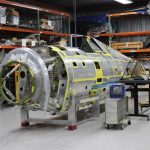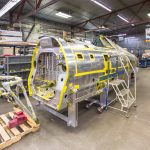

Warbird Digest has just received the November/December, 2019 report from Chuck Cravens concerning the restoration of the Dakota Territory Air Museum’s P-47D Thunderbolt 42-27609 at AirCorps Aviation in Bemidji, Minnesota. We thought our readers would be very interested to see how the project has progressed since our last article on this important project. So without further ado, here it goes!
Update
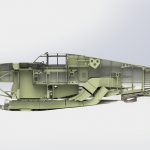
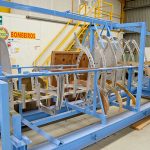
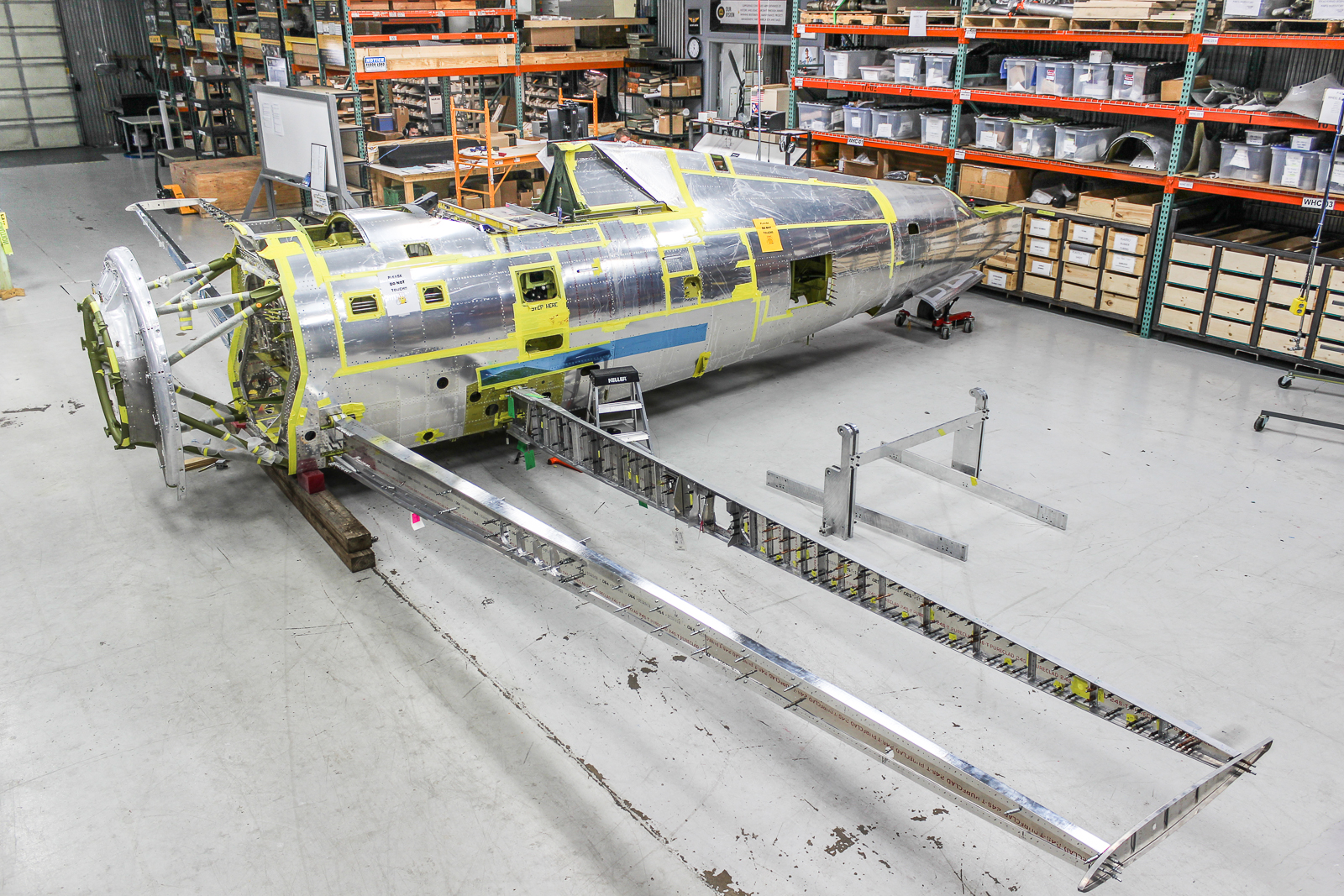
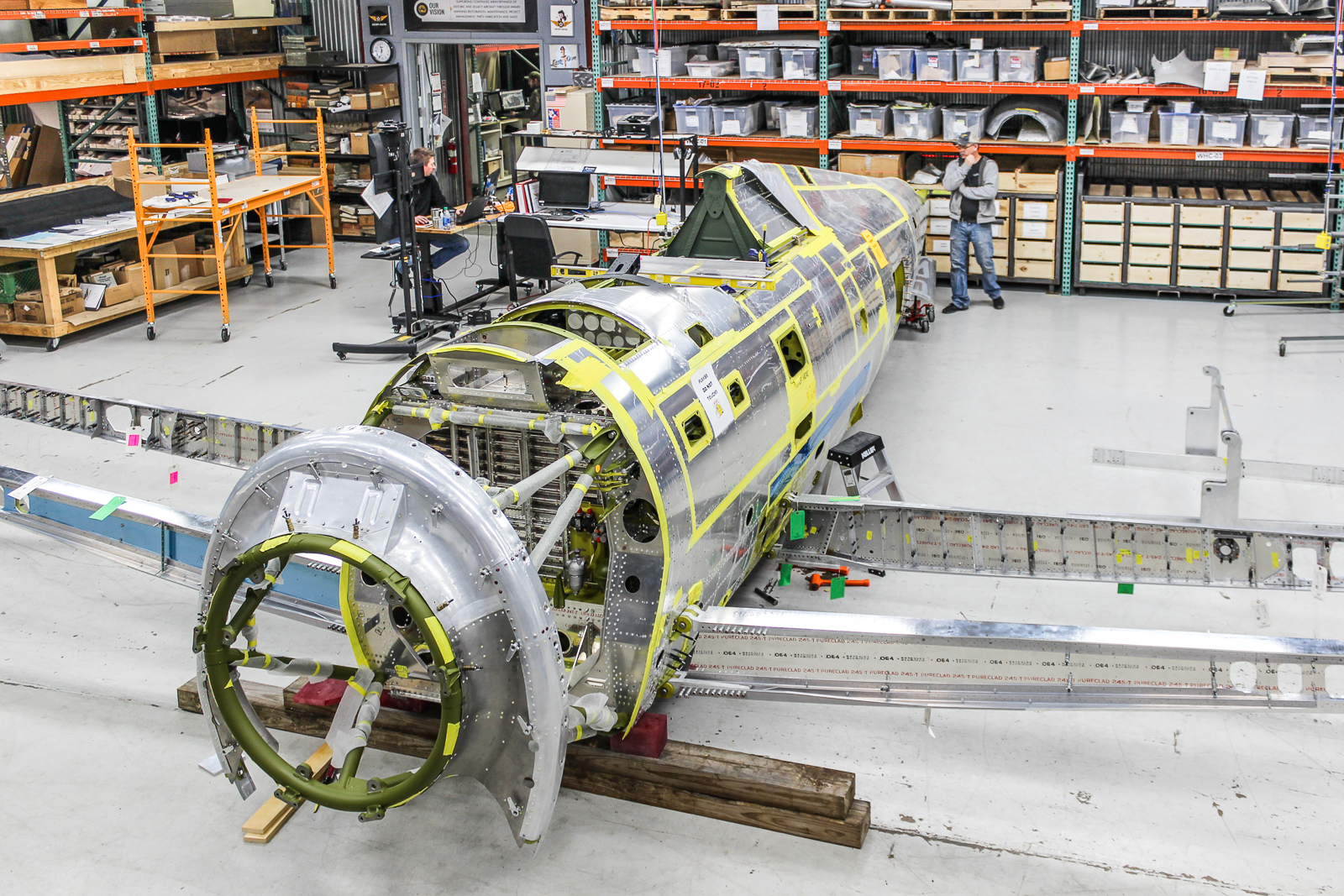
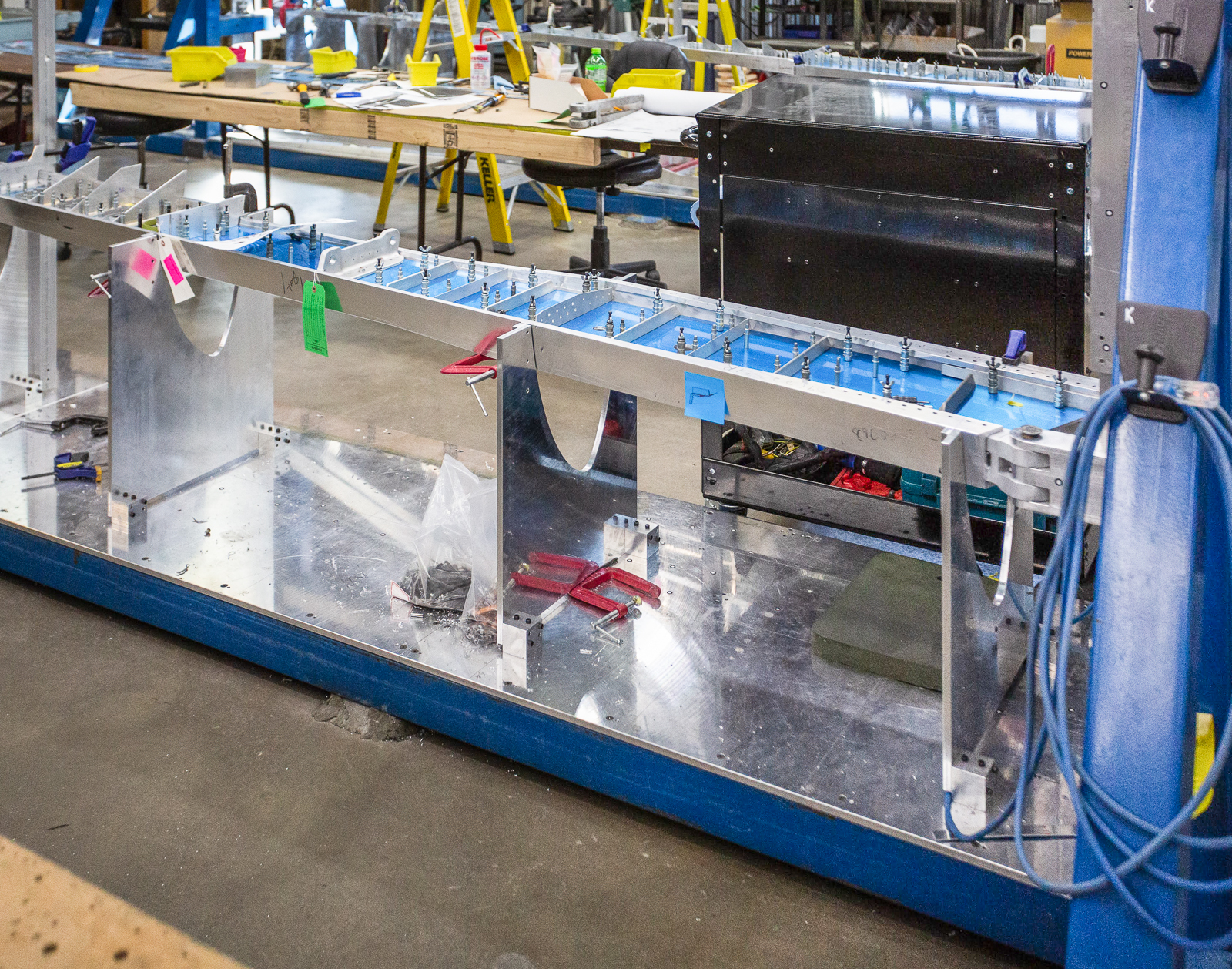
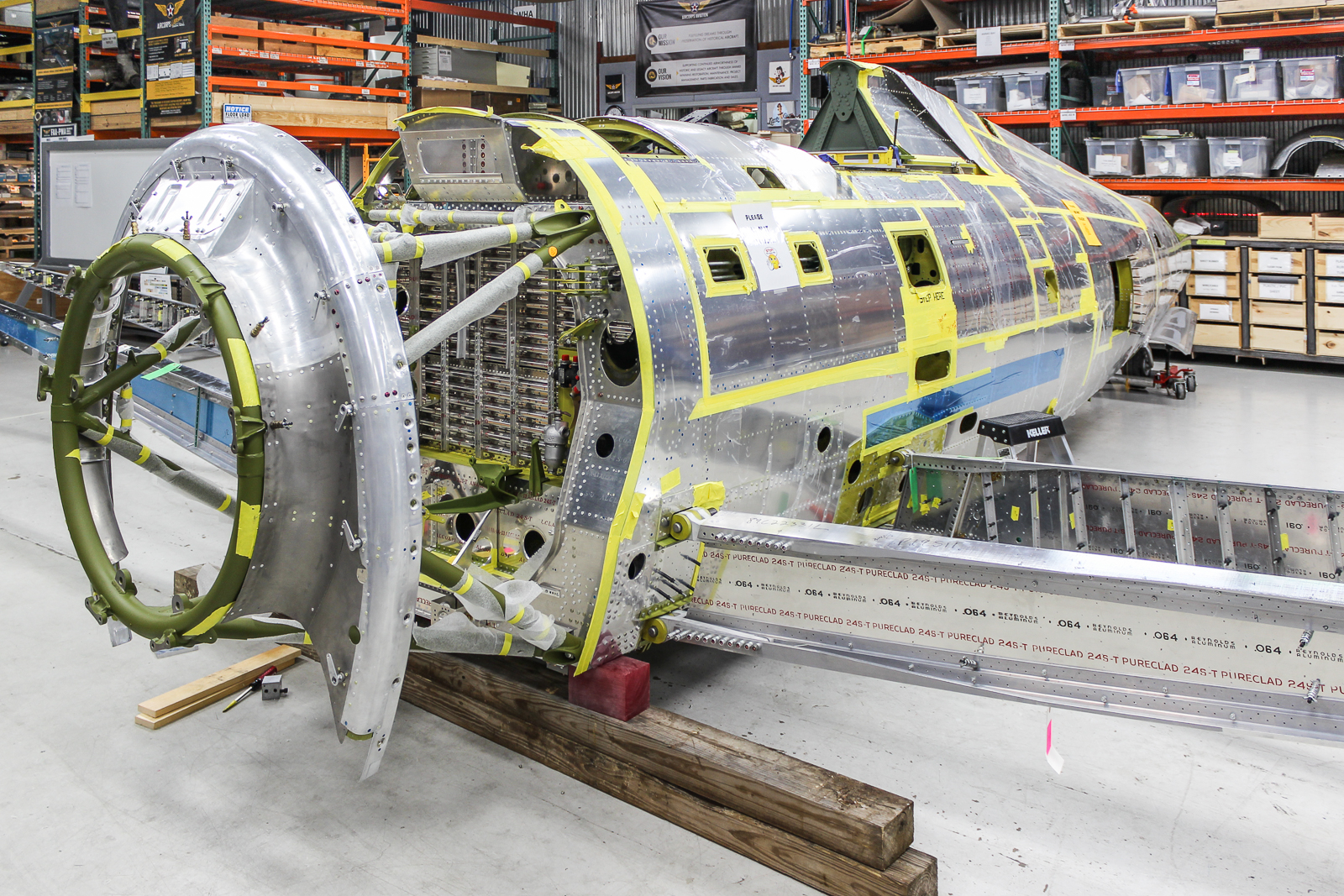
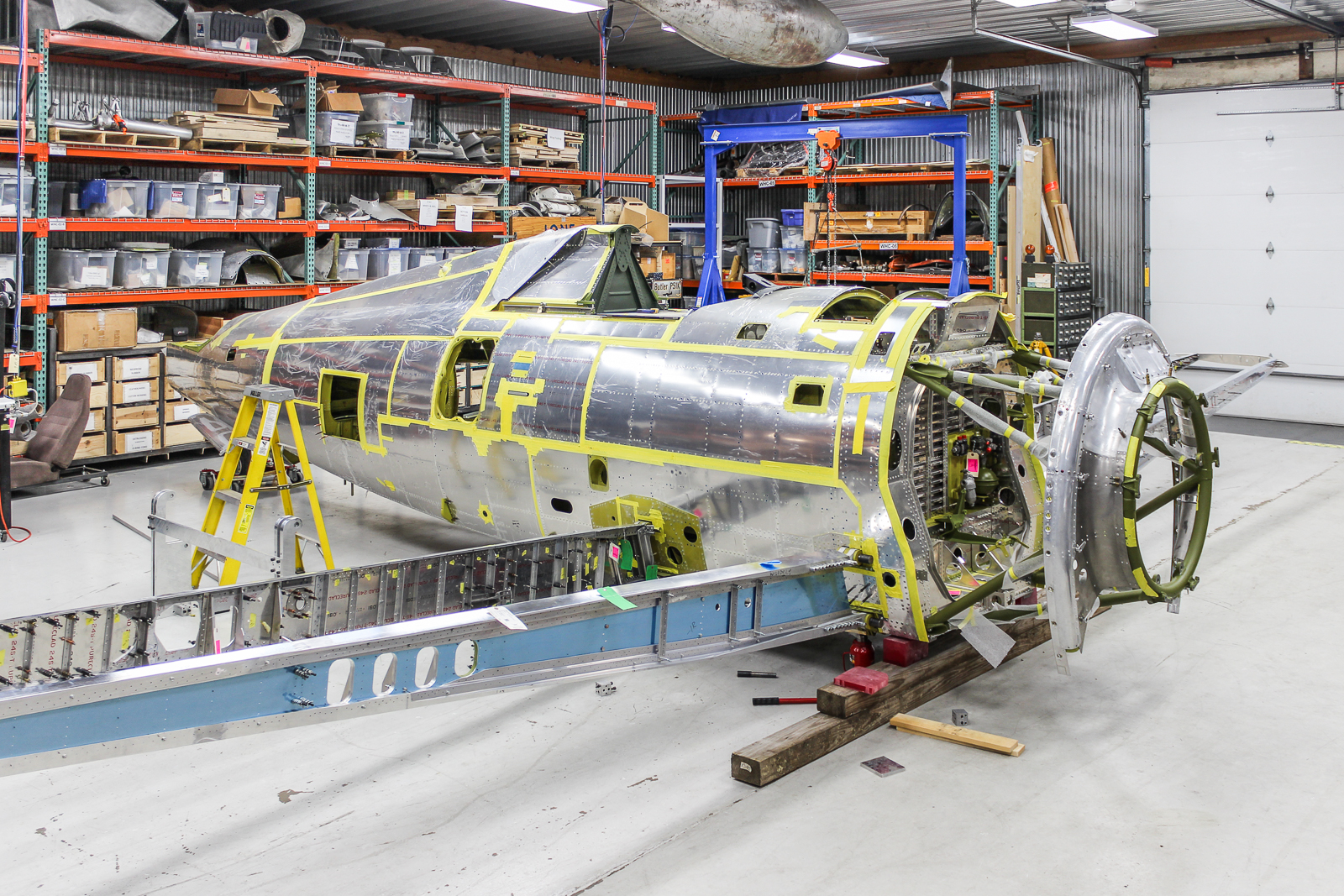
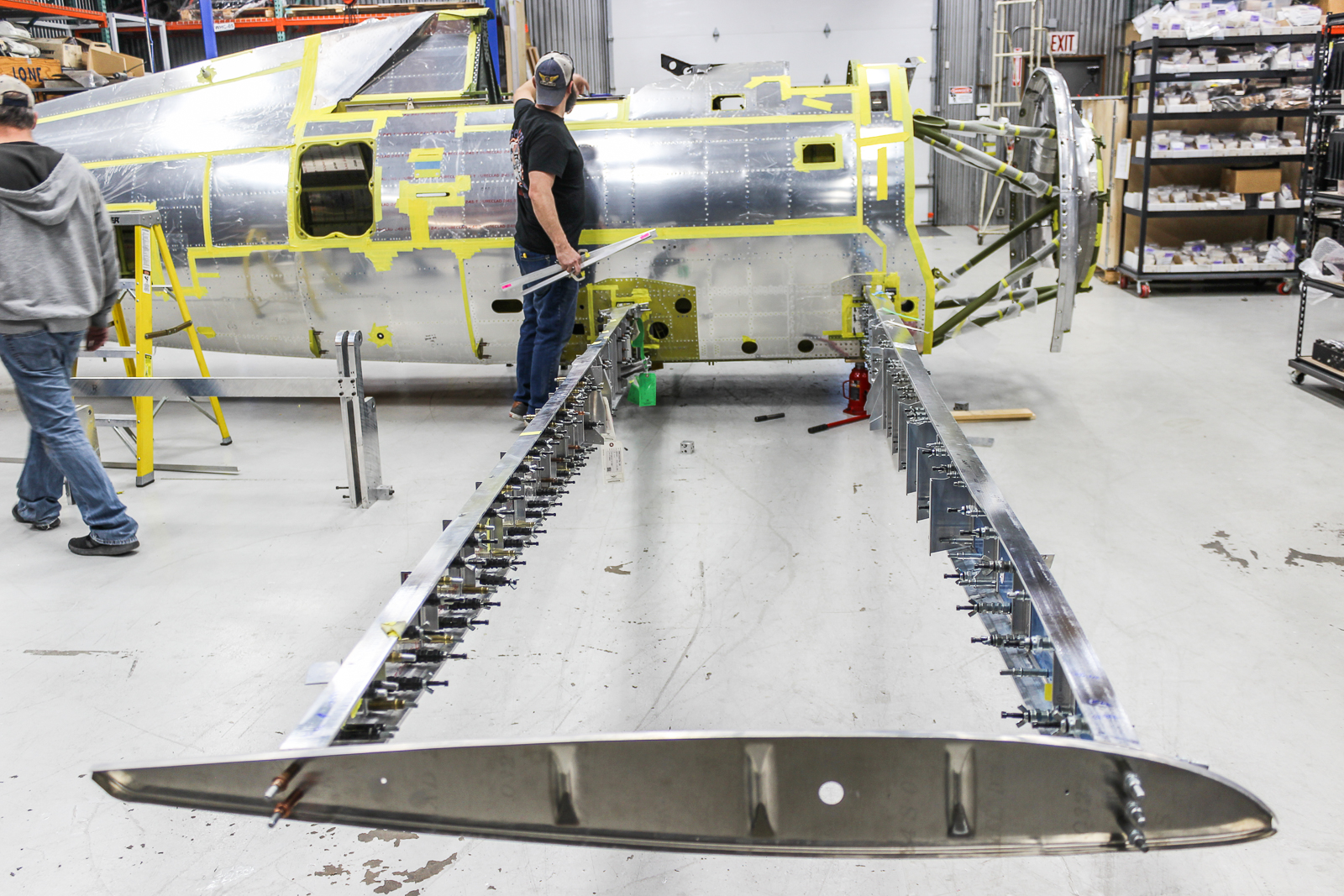
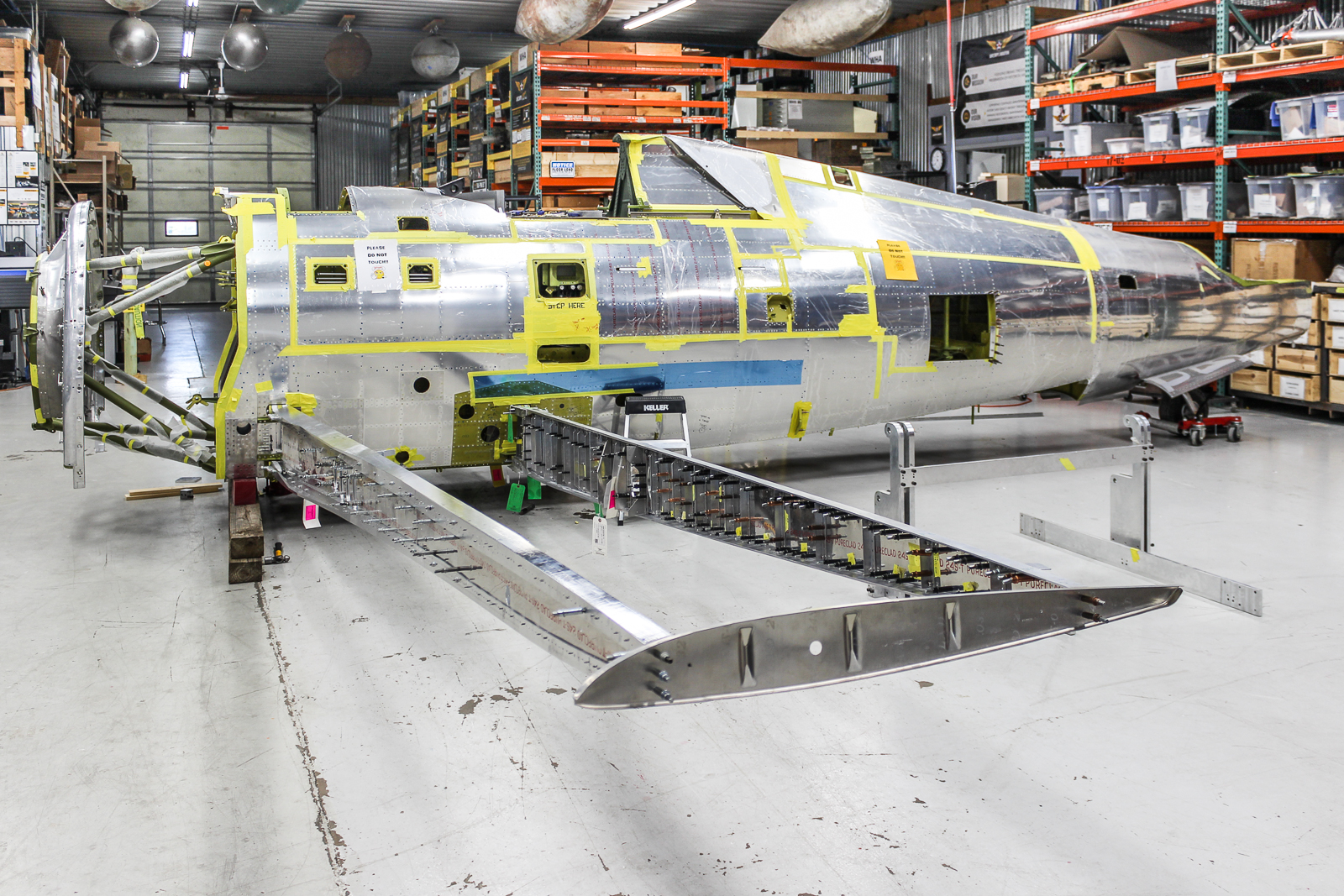
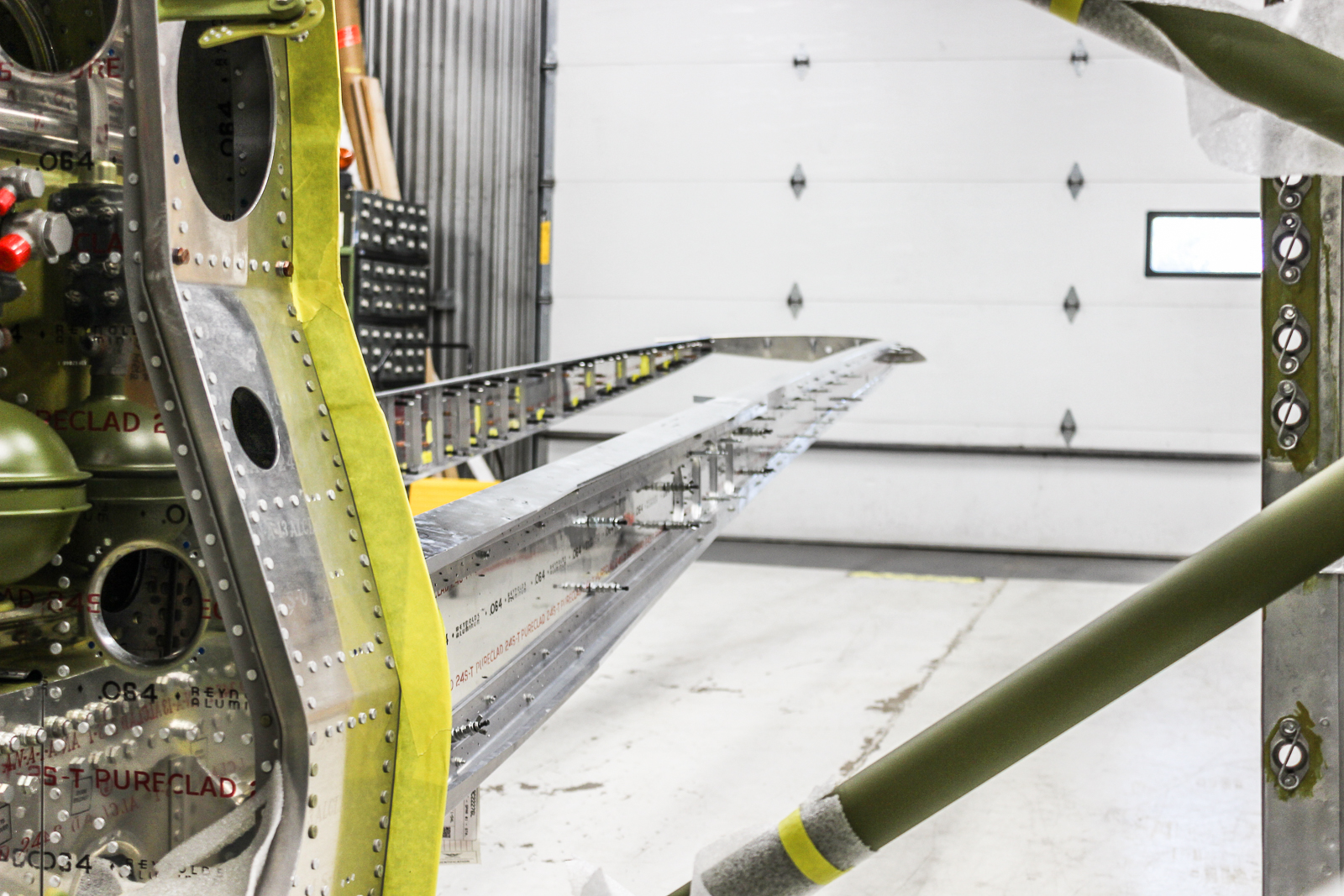
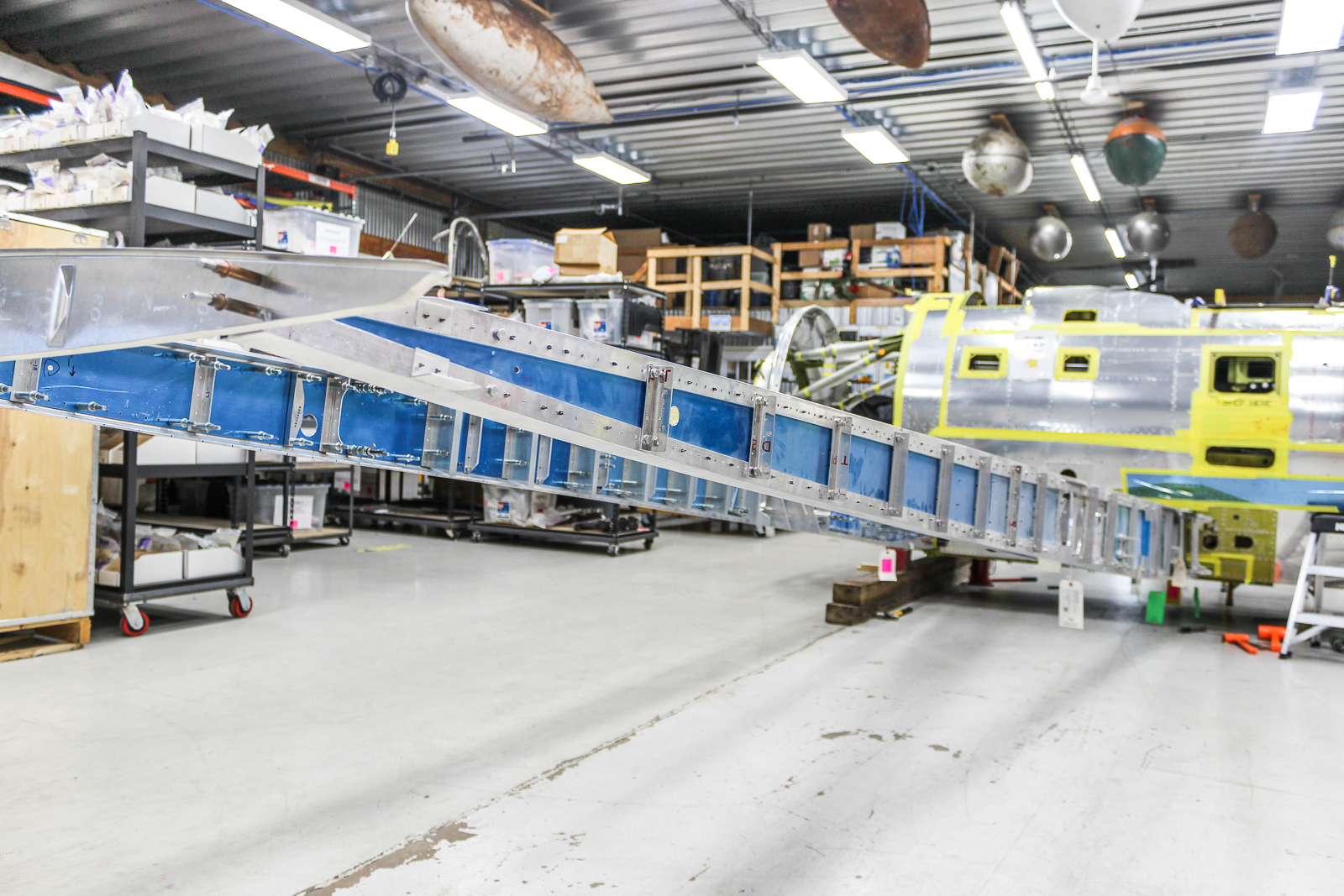
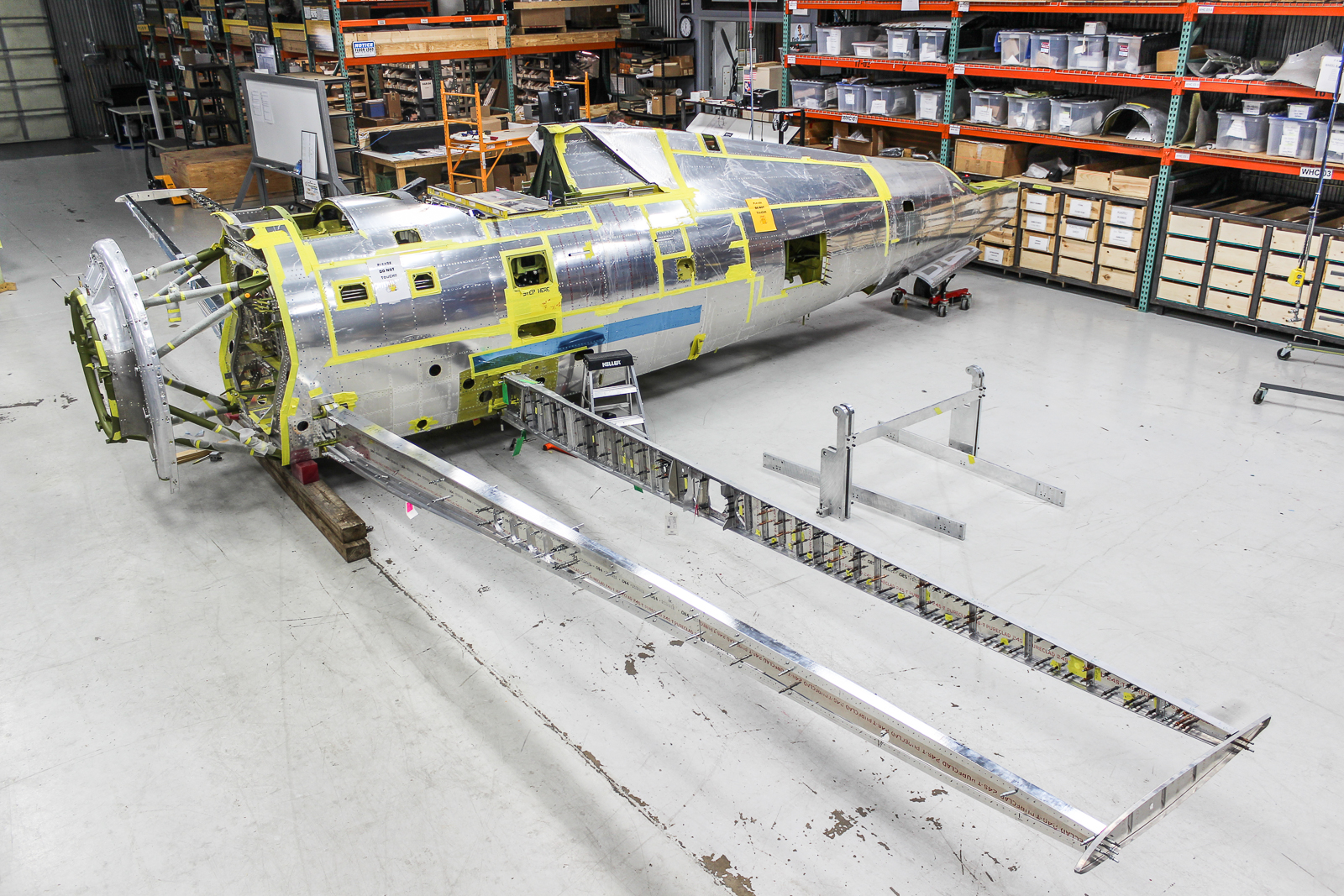
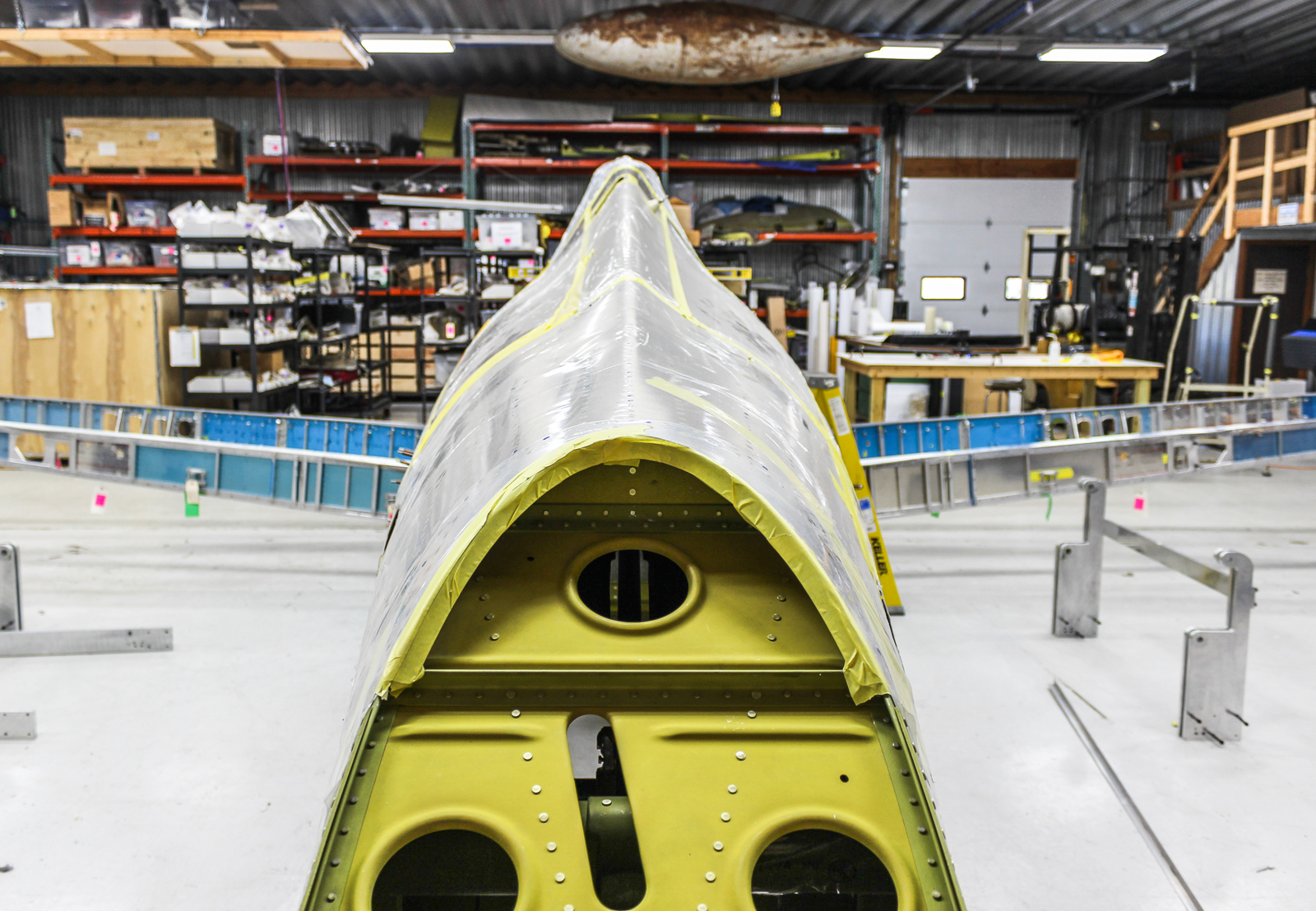
The wing spars were fitted to the fuselage this month before anodizing. After that, they went back into the fixtures as wing construction progressed.
Press
The work at AirCorps is sometimes a strange combination of modern technology and WWII era methods. Modern CNC machine tools, digitized engineering drawings, and CAD renderings make the restoration more efficient, but sometimes the forties technology is the best way to duplicate parts made during WWII.
Often, a combination of the two gets the job done. A perfect example is the 1500 ton Dominion hydroforming press. It is the best tool to use for pressing parts over REN plastic machined forms that are created on CNC mills or routers.
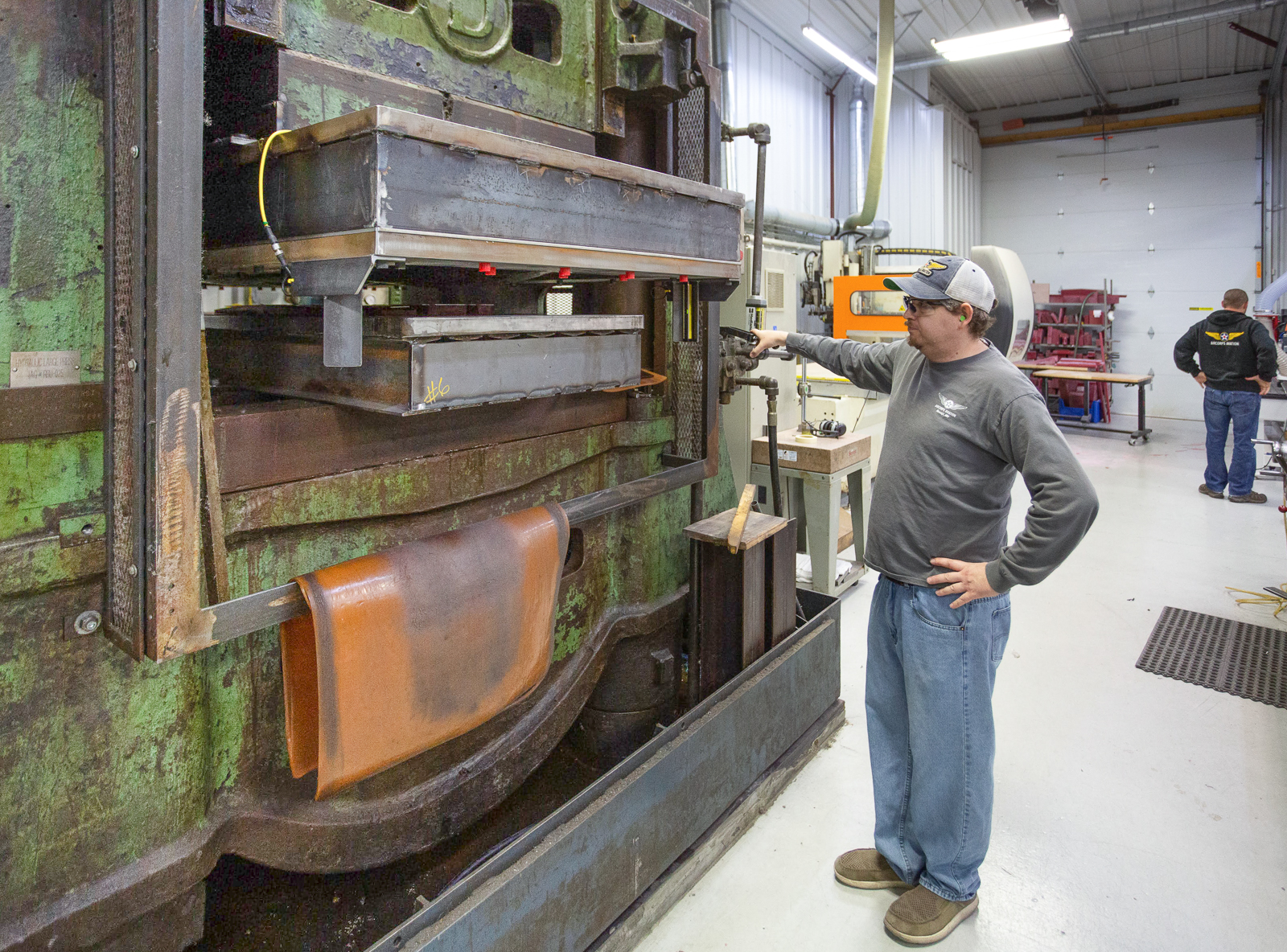 Matt operates the huge forties-era rubber die forming press. (photo via AirCorps Aviation)Rubber die forming is based on the principle that rubber, when subjected to high pressure, behaves like a fluid. In the fluid state, the rubber pad distributes the pressure uniformly over the aluminum blank. As the pressure increases, the rubber assumes the shape of the single rigid die.
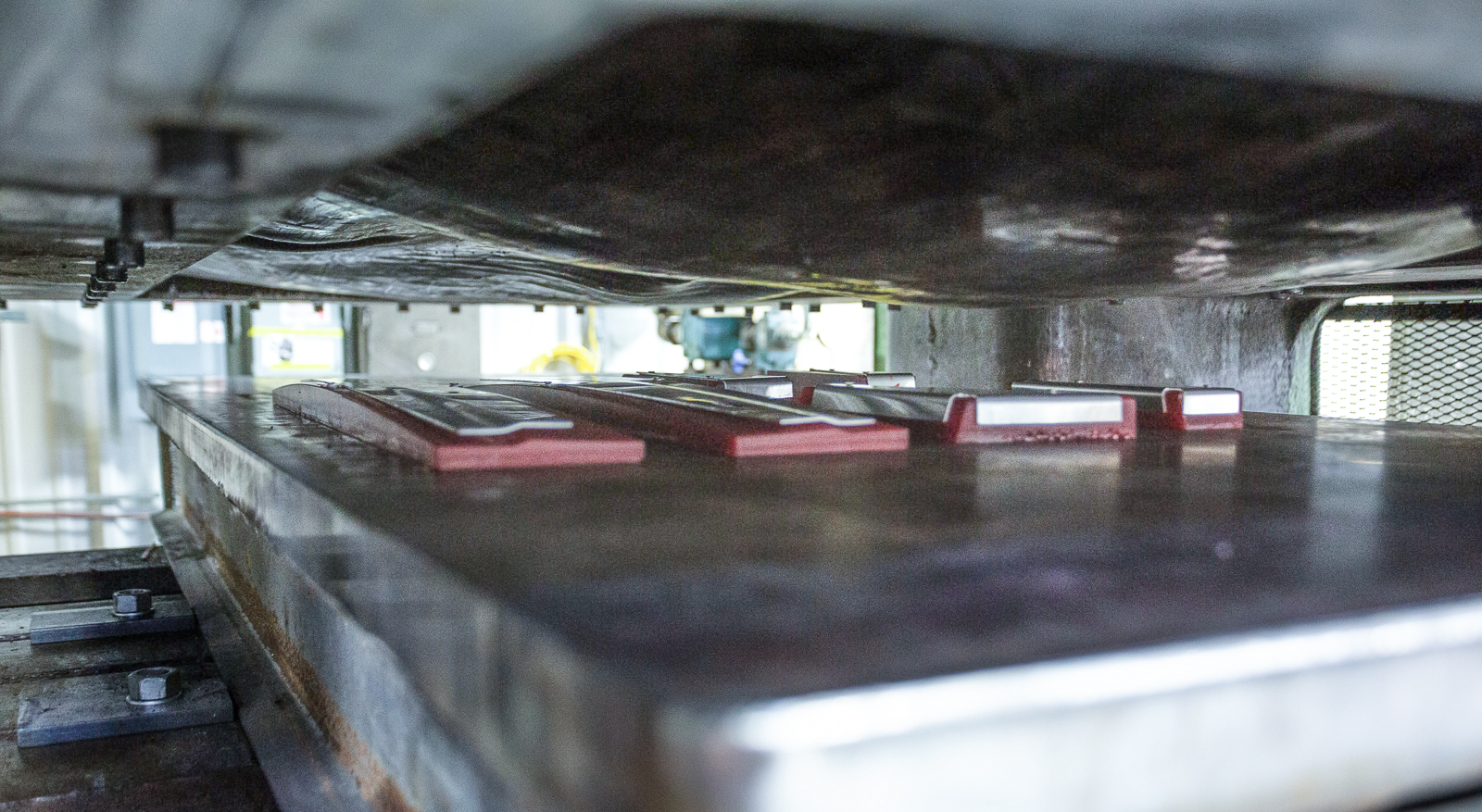 Here is a view under the raised hydraulic ram after some aluminum parts have been pressed by the four inch rubber pad mounted on the ram. The rubber pad behaves like a liquid under the extreme pressure and precisely forms the aluminum sheet stock over the machined REN plastic form. (photo via AirCorps Aviation
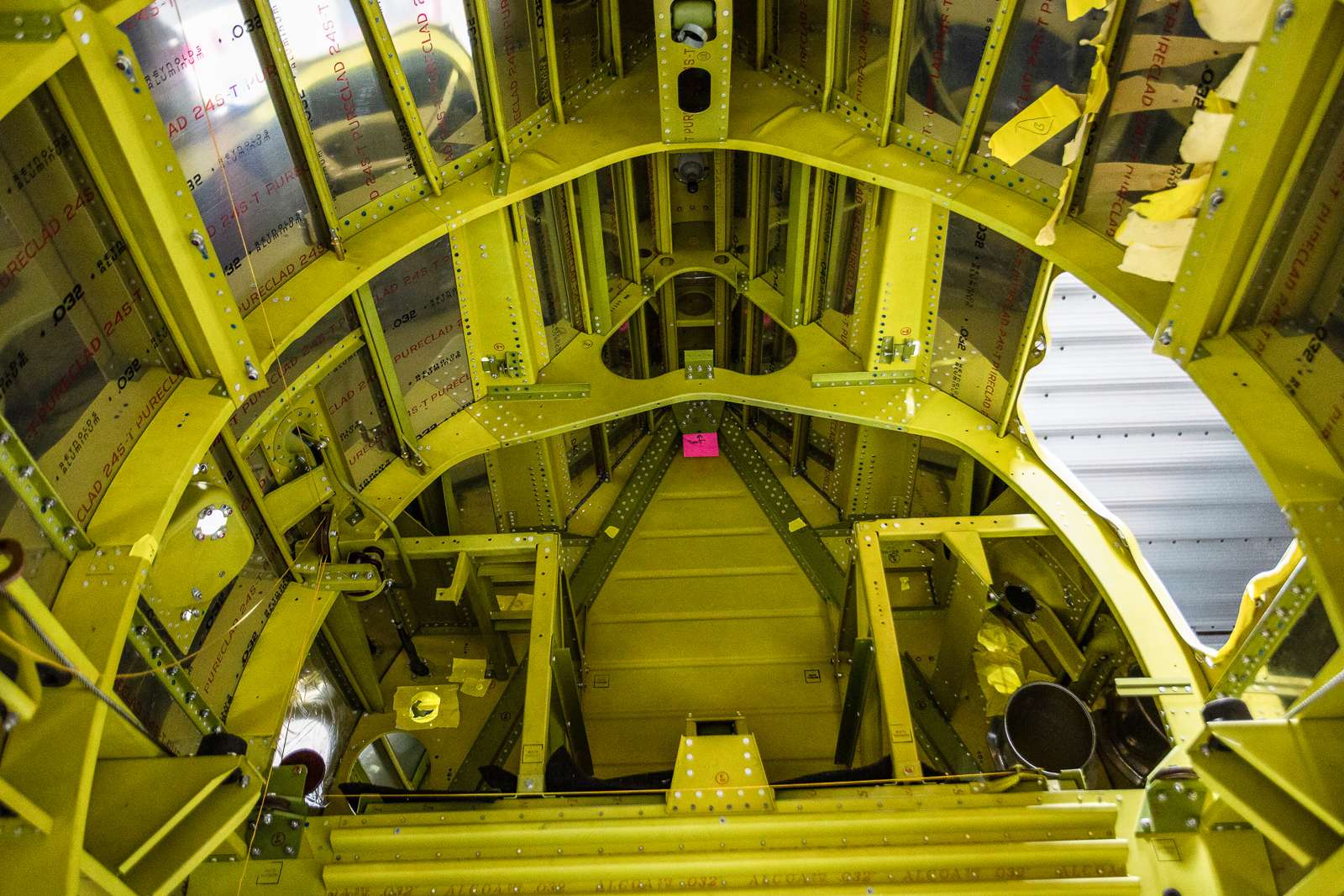
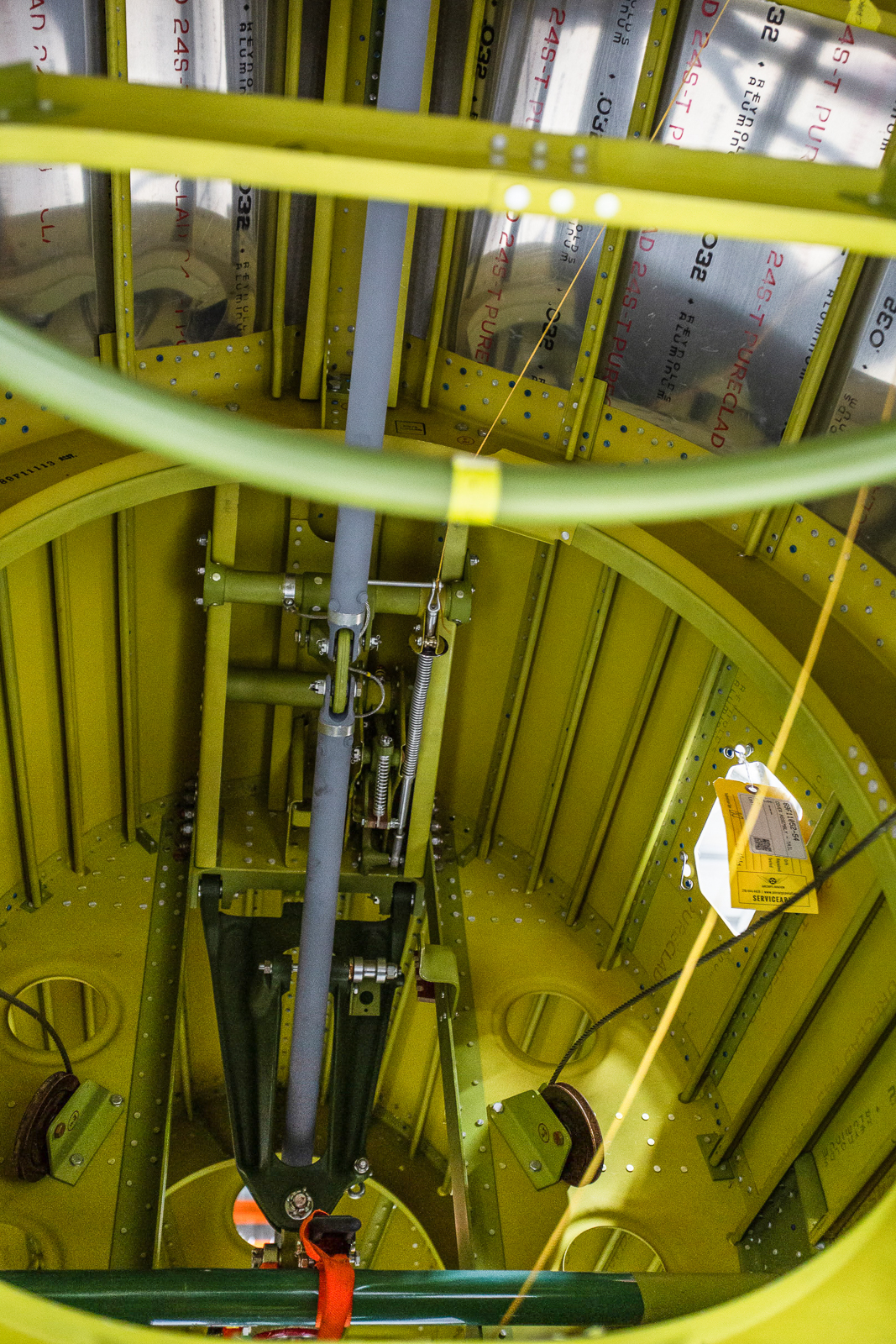
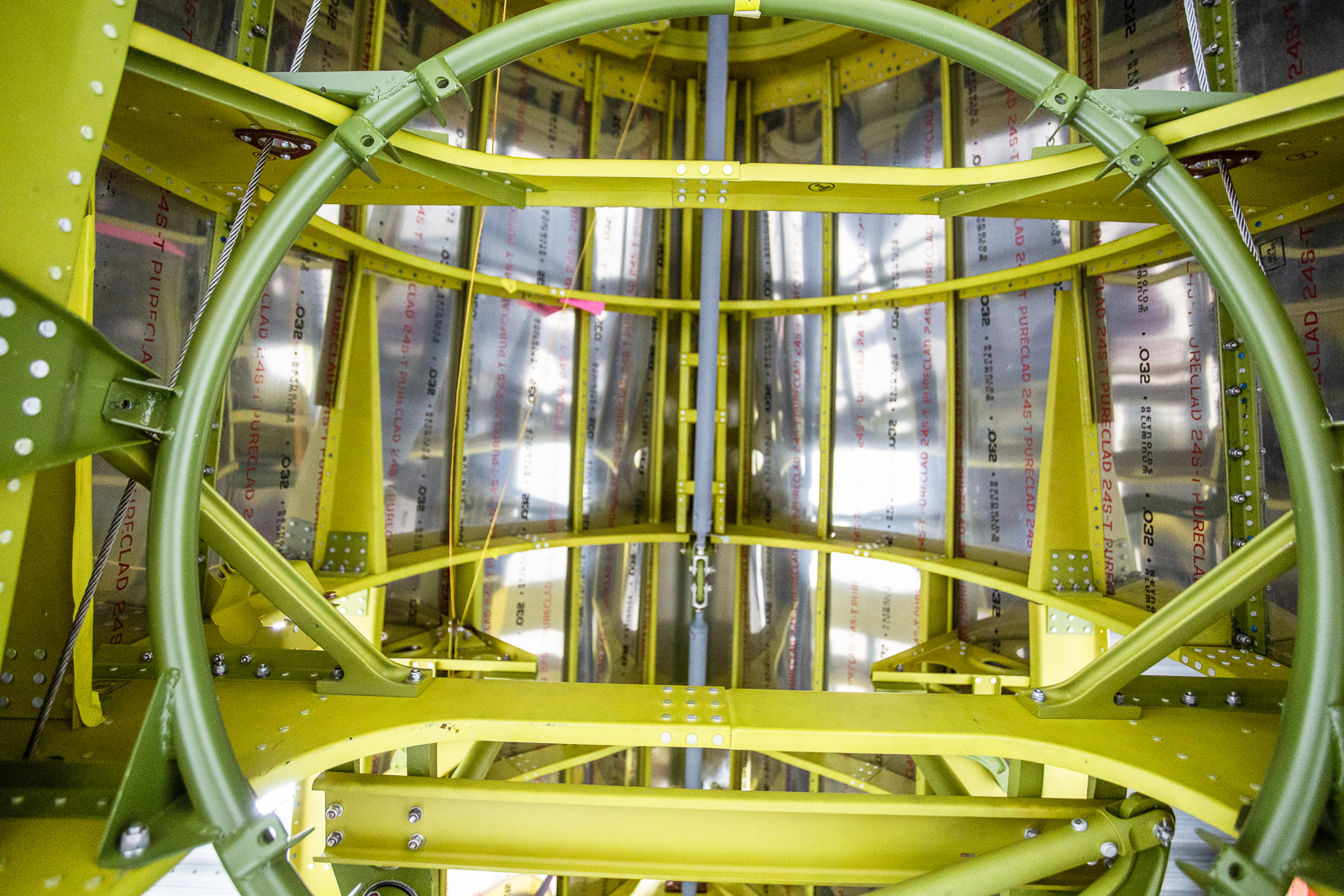
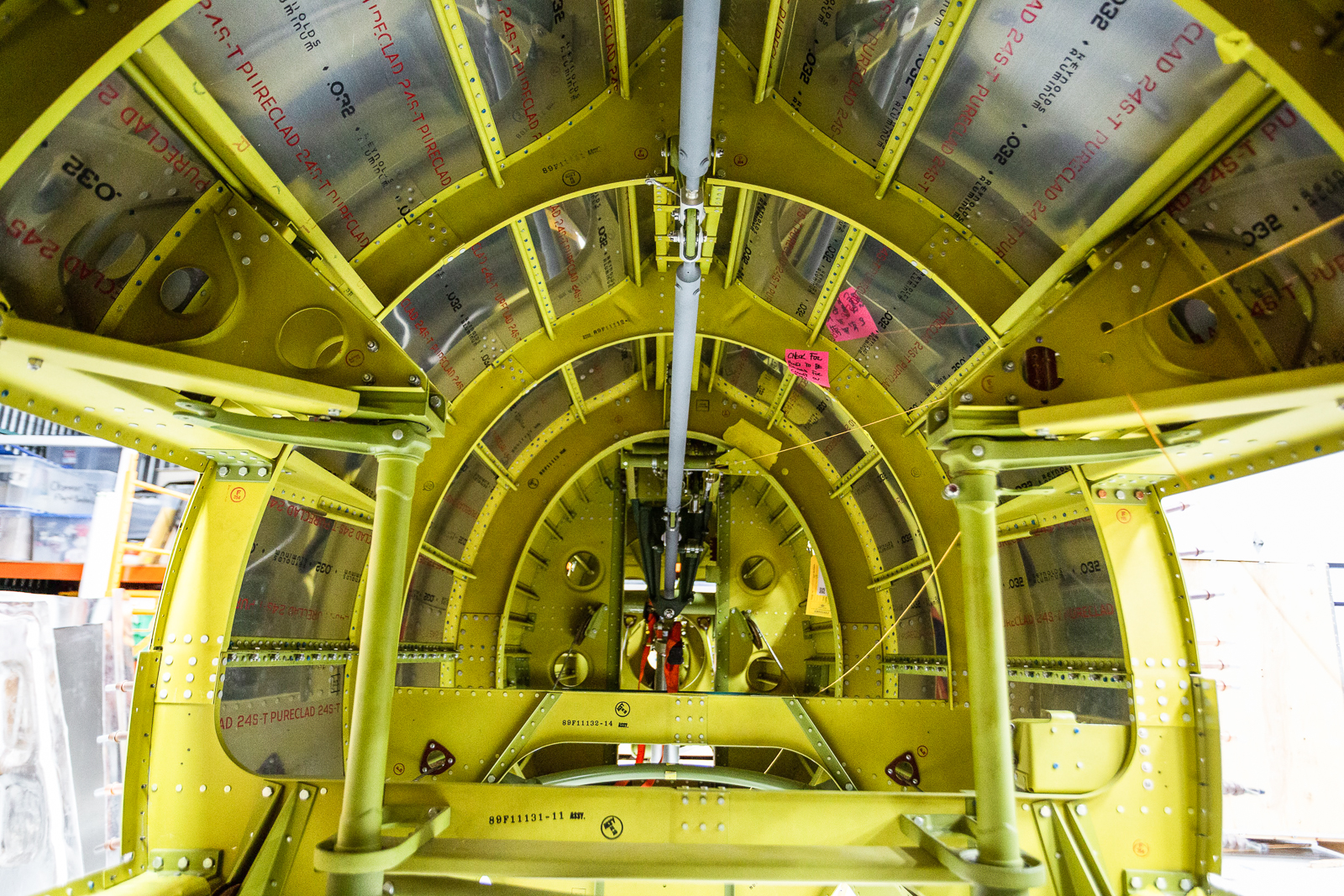
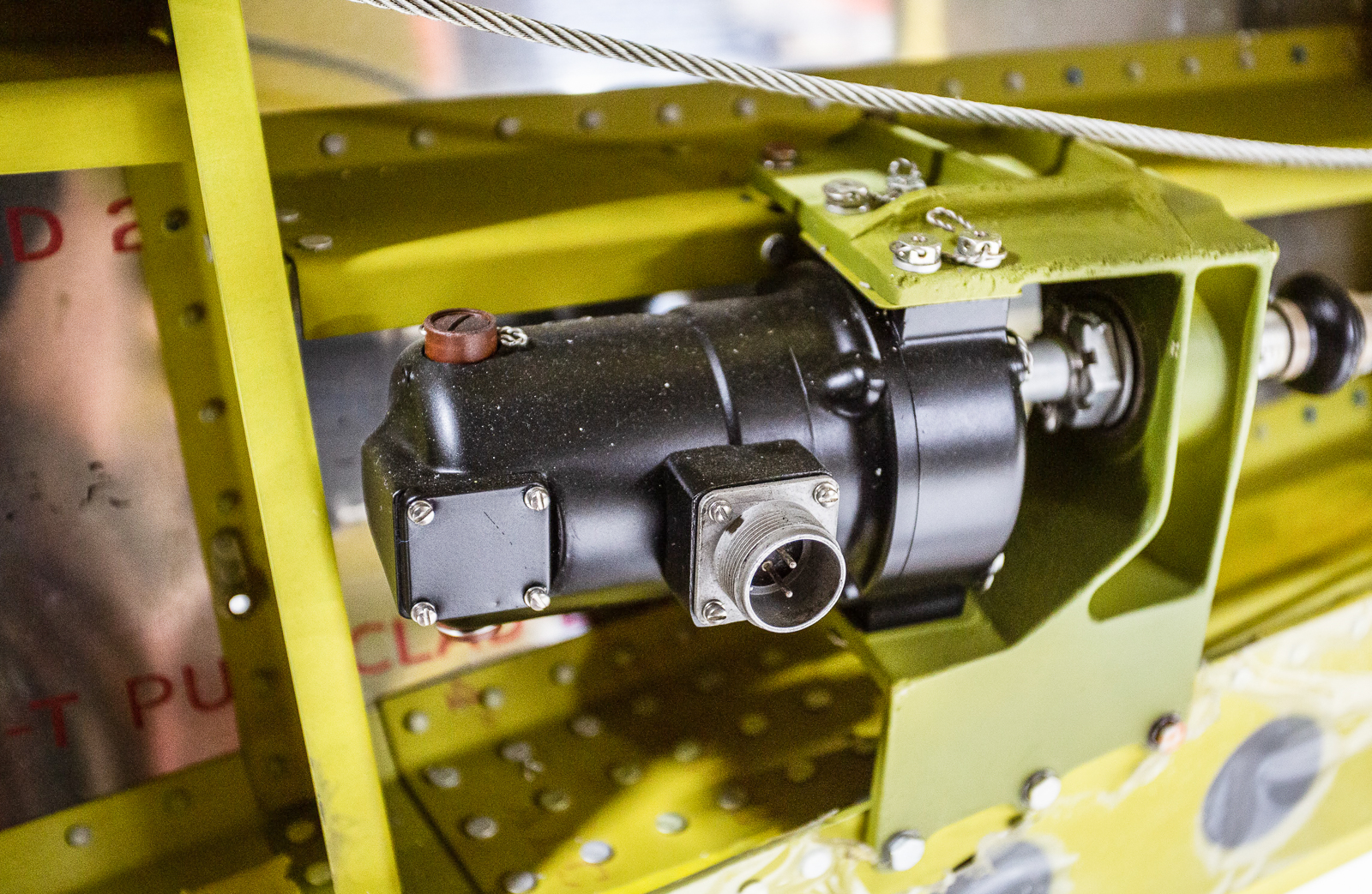
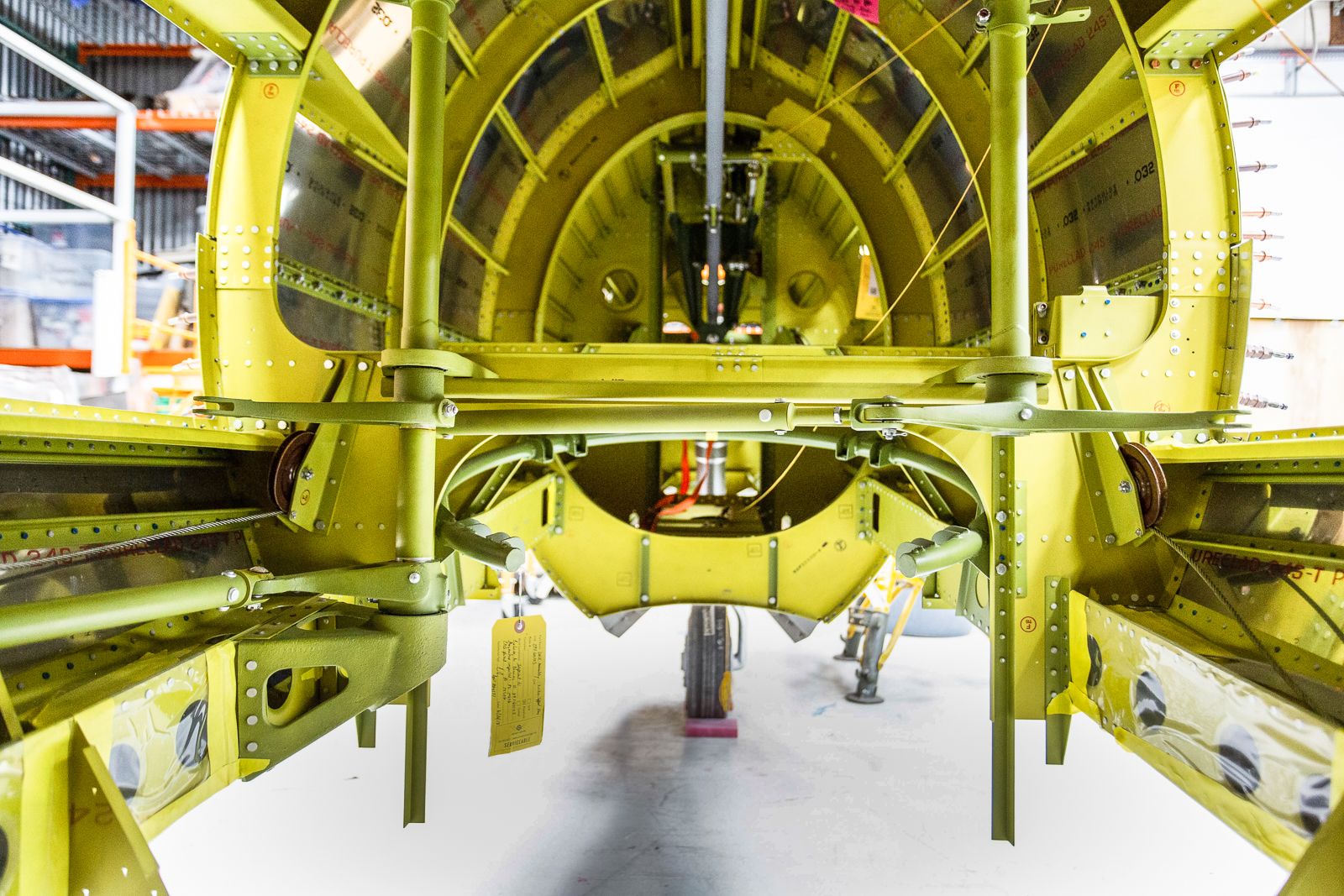
Fuselage
Wings
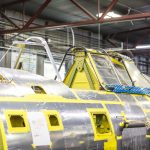
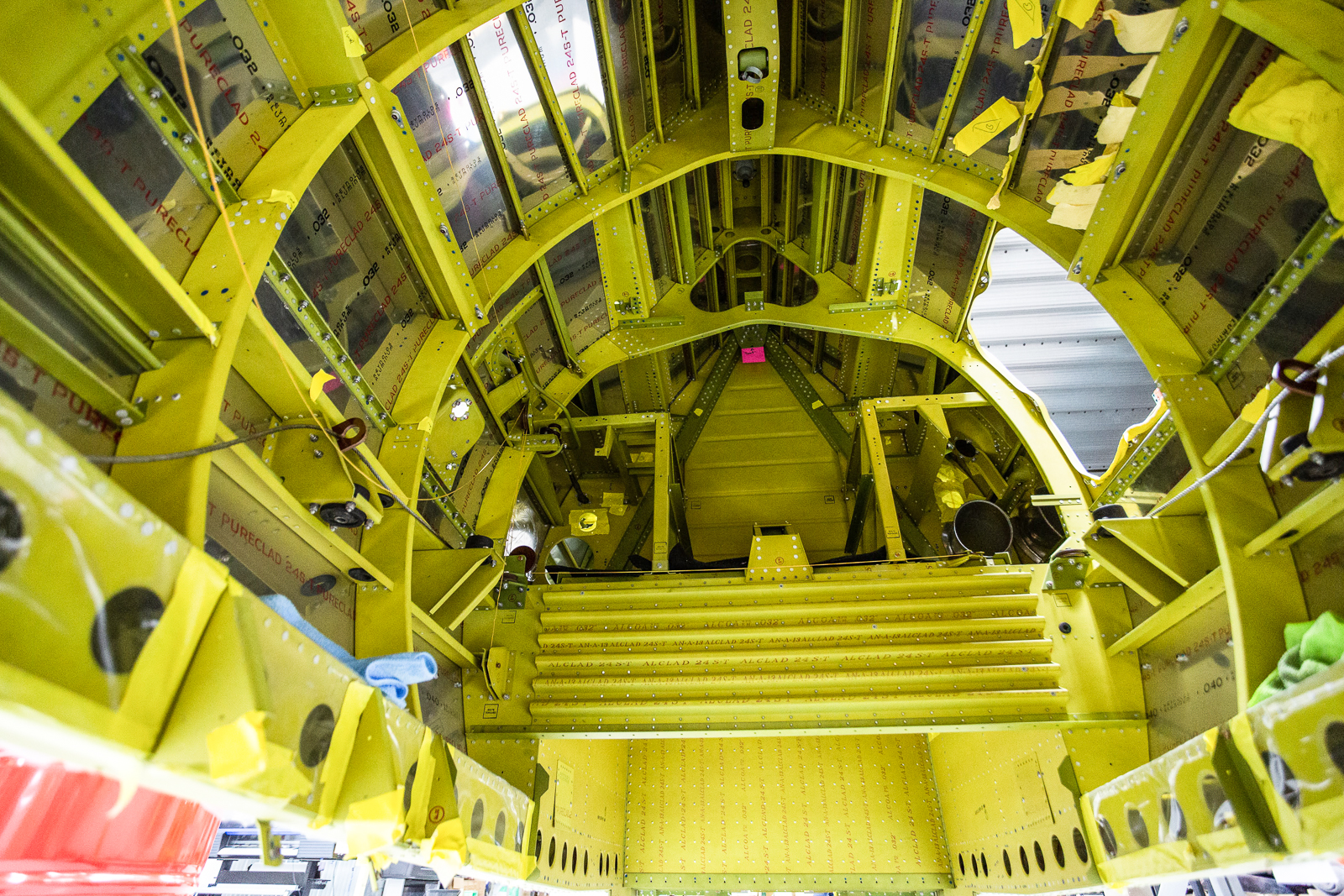
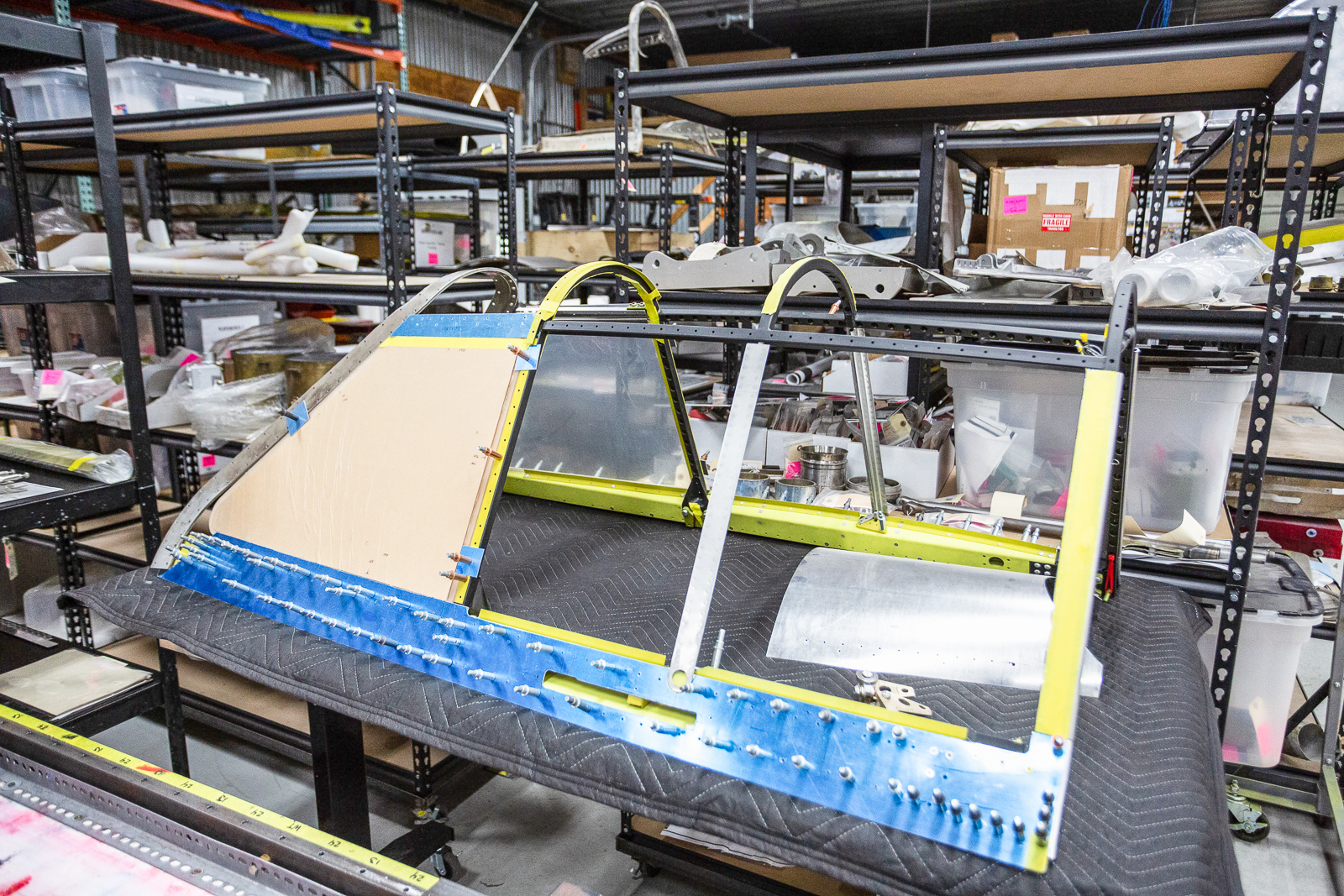
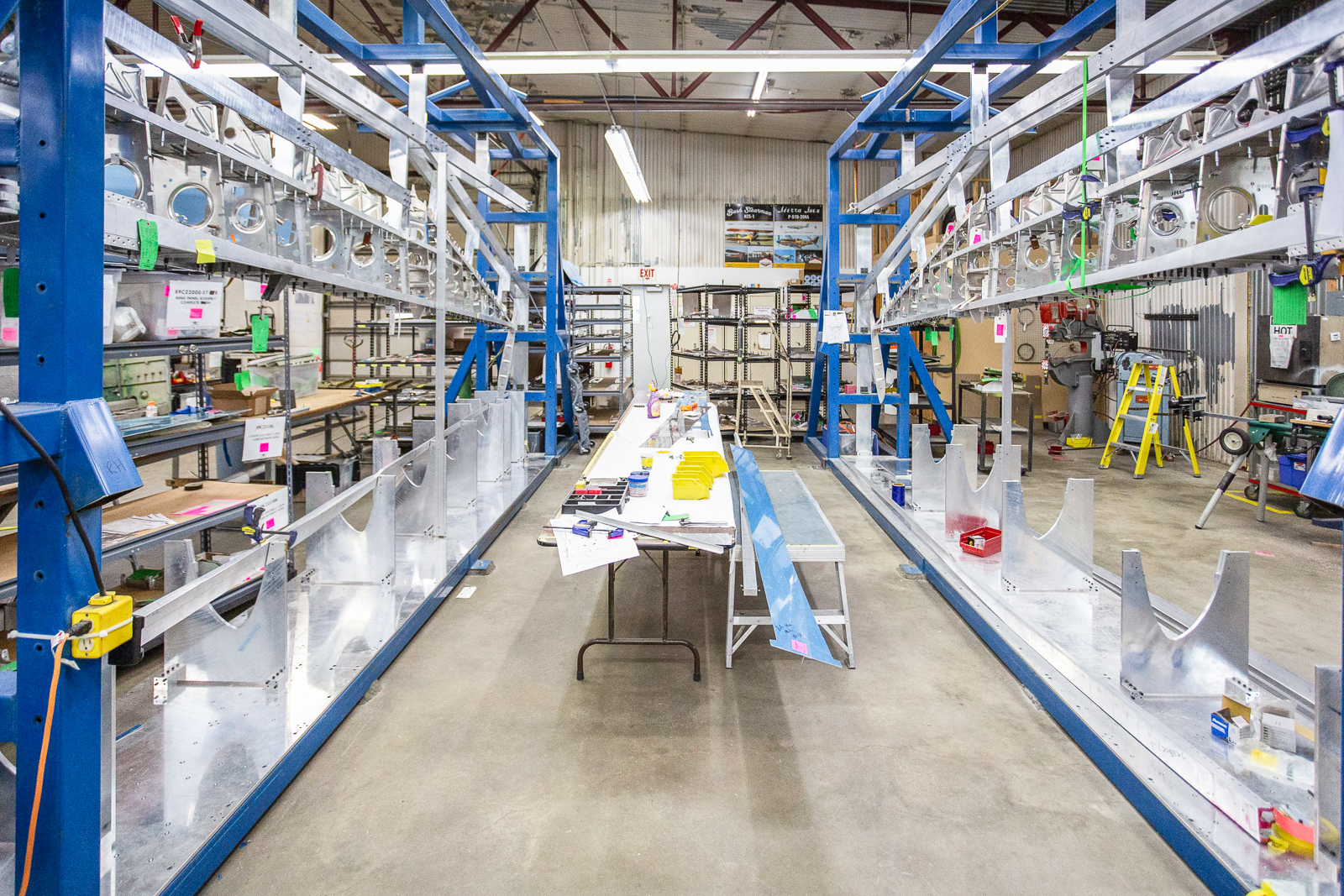
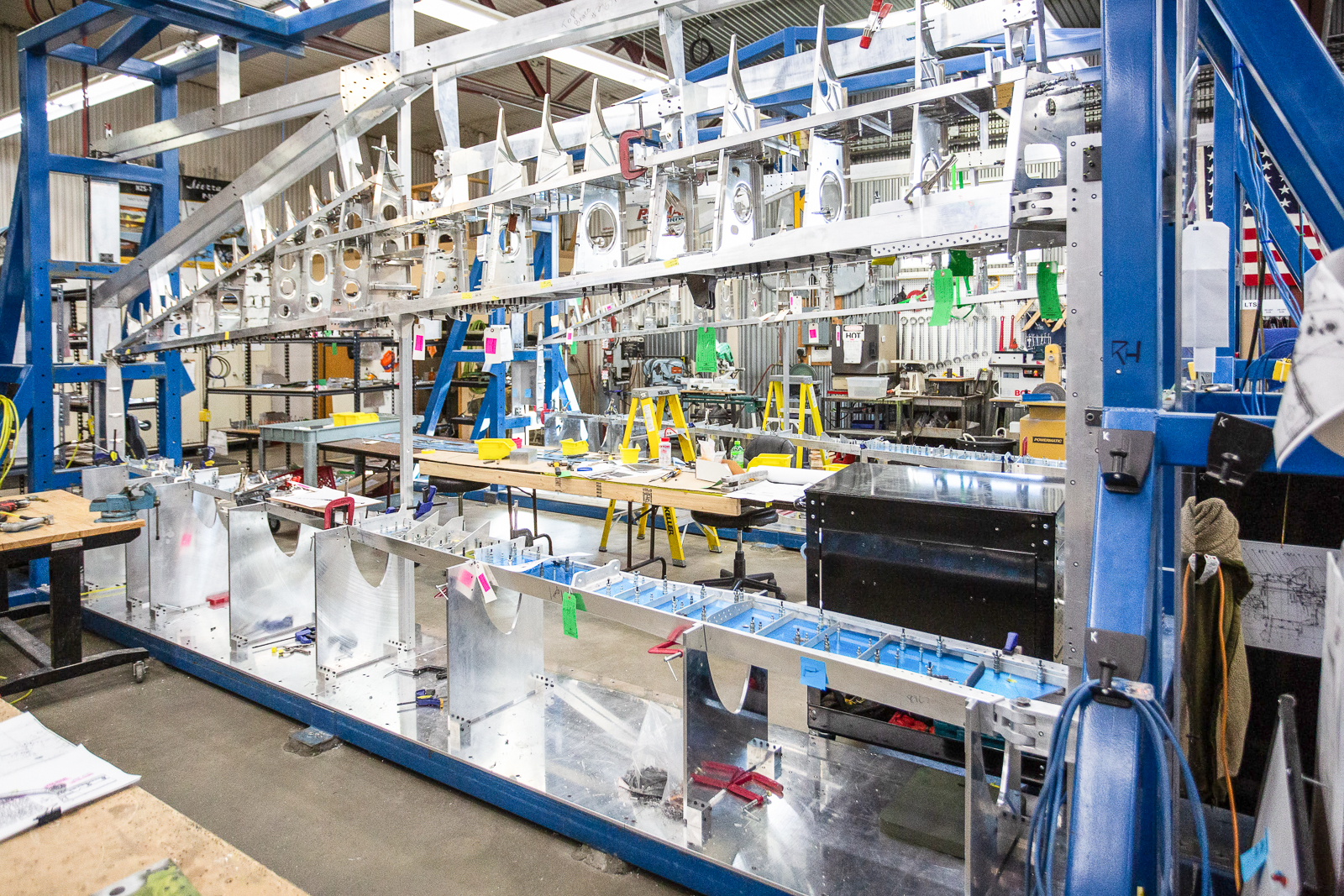
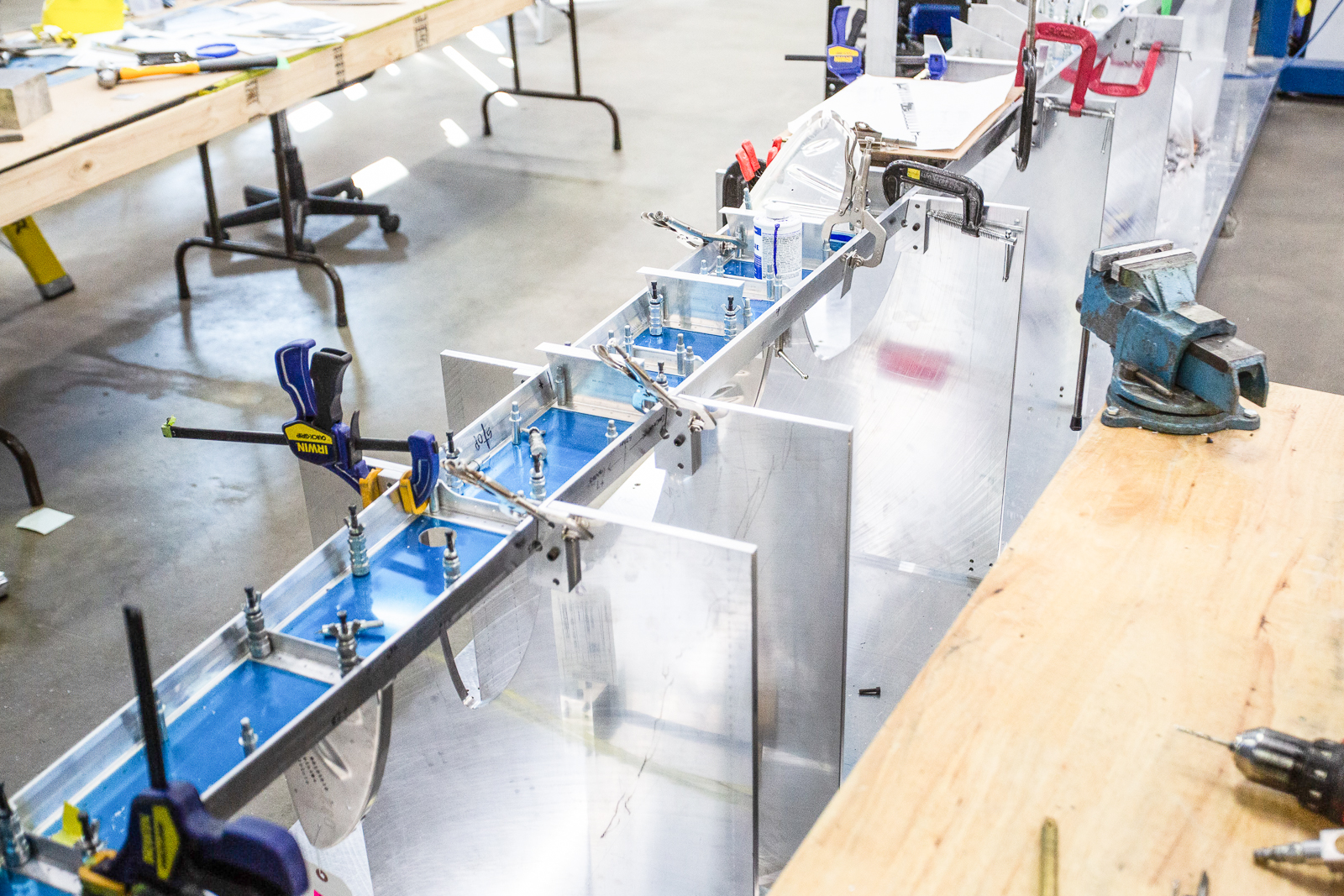
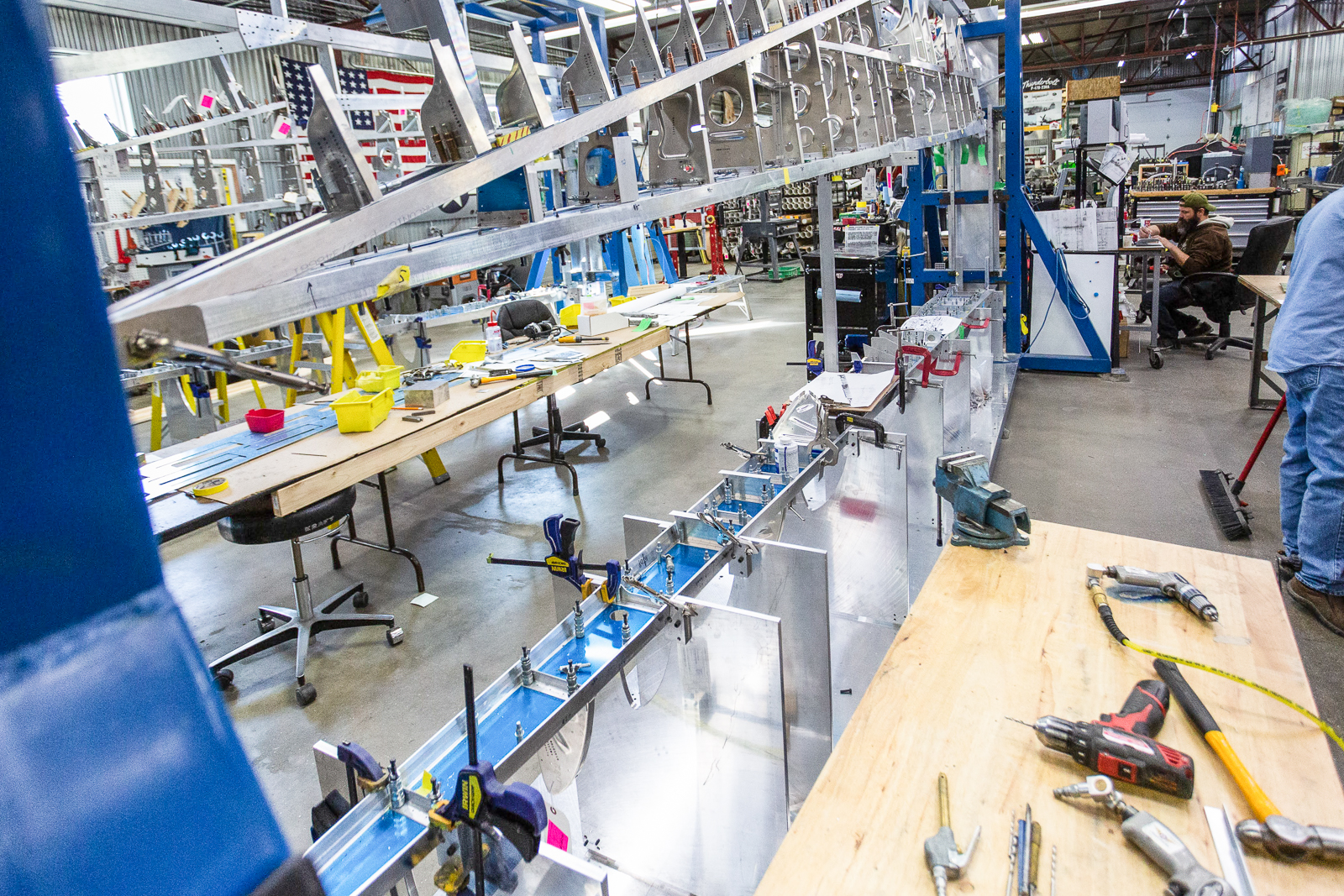
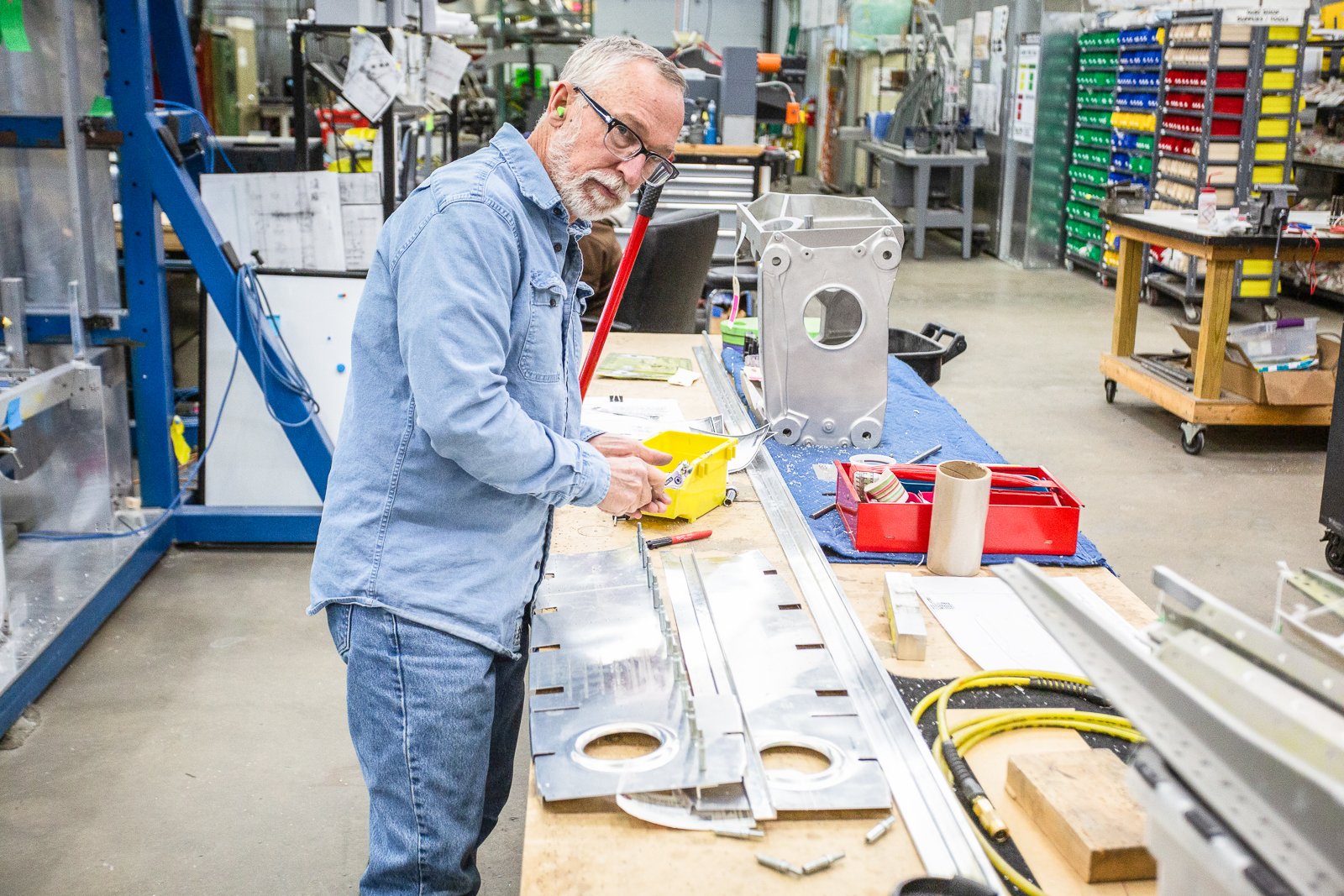
The spaces between the spars continue to be filled as work on the wings goes forward.
Spar Fitting
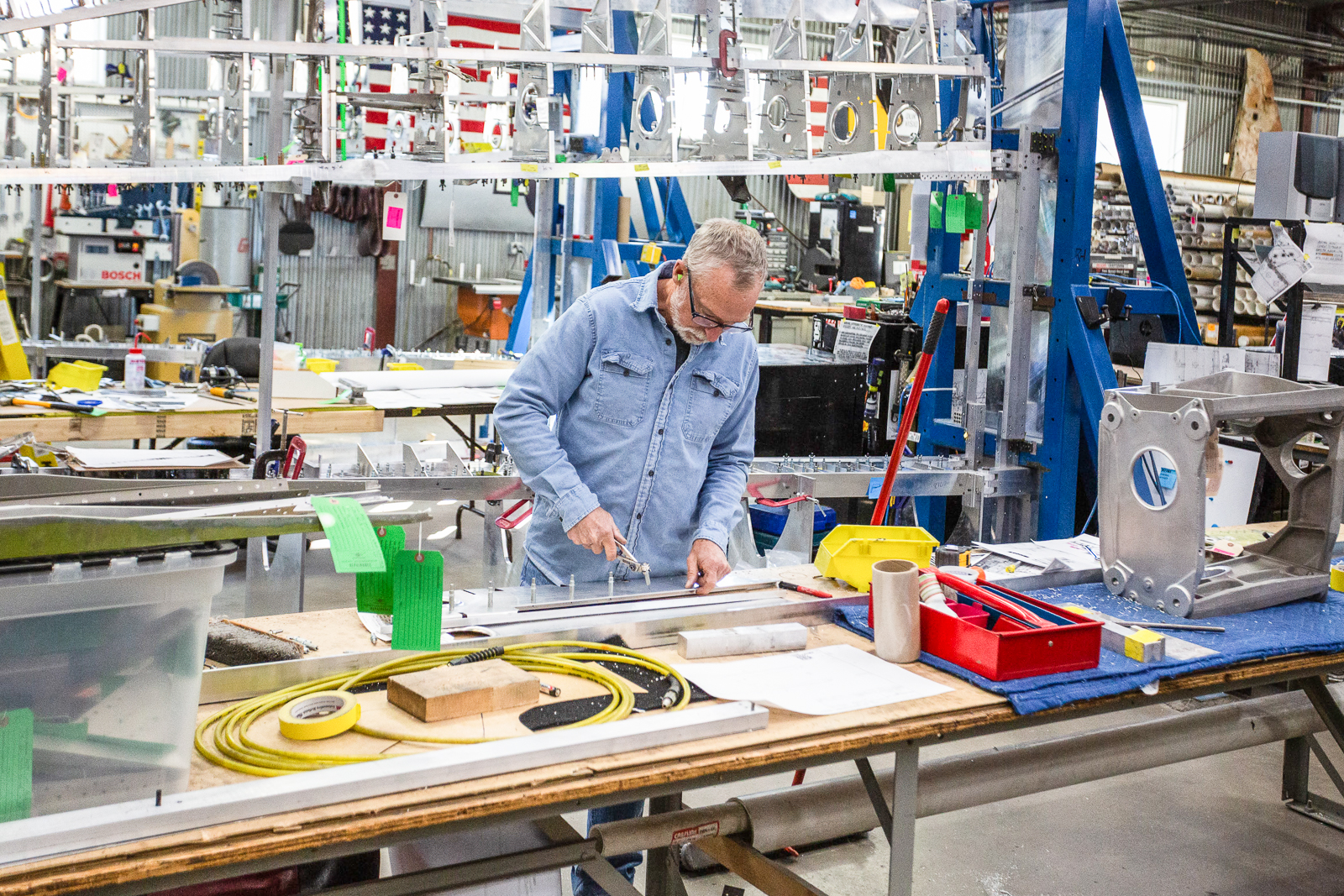
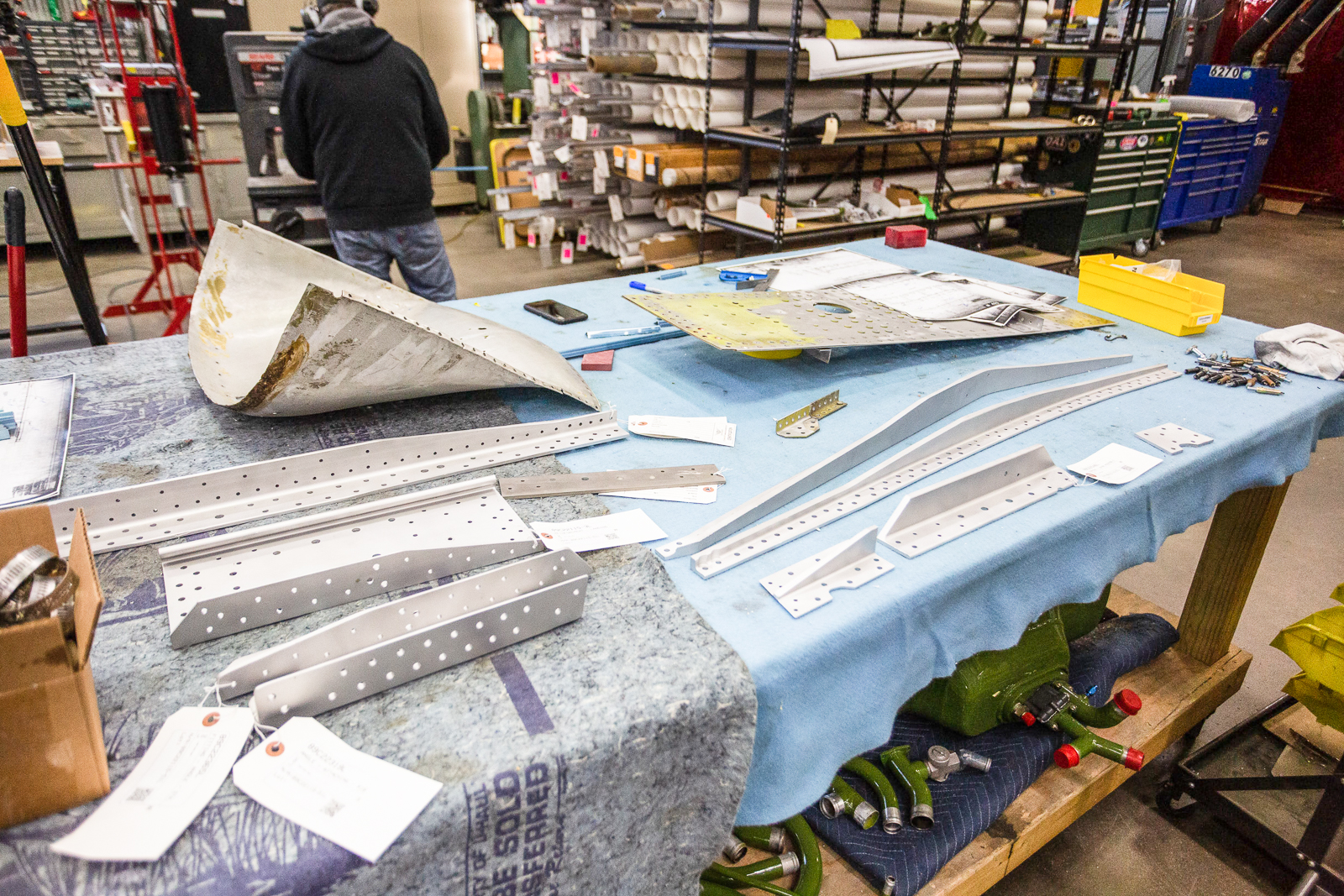
One of the exciting developments this month was the way the fitting of the main wing spars to the fuselage helped us to visualize the P-47’s appearance once it has been assembled. The spars fit to the fuselage had to be perfectly established before they went back into the fixture for the fitting of the other connecting wing structure. The spars and other parts will go together and come apart several times through the fitting, deburring, and painting processes before they are permanently assembled.
Employee Profile: Nic Johnson
AirCorps Aviation Art Markings and Creative Specialist
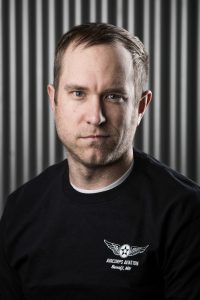
Nic grew up in Walker, MN, about 30 miles south of AirCorp’s Bemidji location. He received a scholarship to The Art Institute of Chicago and graduated with a degree in New Media. After a career working in film and television production as a weapons armorer, prop master, and Art Director based out of Los Angeles, CA., Nic decided to make the move back to Northern Minnesota.
California’s loss was Minnesota’s gain here at AirCorps.
In 2016 AirCorps Aviation bought famed aviation historian, author, and Minnesota Aviation Hall of Fame member Noel Allard’s replica decal and data plate business. Nic came on board in 2018 and has consulted with Noel extensively. Besides creating and producing placards, paint masks and water transfers, Nic has developed new AirCorps Art promotional and retail sales products.
The P-61 Black Widow is Nic’s favorite warbird. His favorite memory from his AirCorps career thus far is working on the Sierra Sue II Superbowl LII flyover, and he looks forward to future Oshkosh AirVentures. Nic thinks the best part of working at AirCorps Aviation is taking on new challenges and helping customers achieve the best possible scheme for their restoration project.
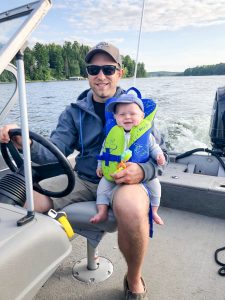
Nic and his wife Sarah welcomed their first child, Asher, in January 2019. Asher lets his parents live in his house near Akeley, MN where opportunities for outdoor recreation abound. Like many of the AirCorps team, Nic is an avid outdoor sportsman.
And that’s all for this month. We wish to thank AirCorps Aviation, Chuck Cravens (words and images) as well as John LaTourelle and Nic Johnson (images) for making this report possible! We look forwards to bringing more restoration reports on progress with this rare machine in the coming months.