





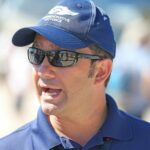
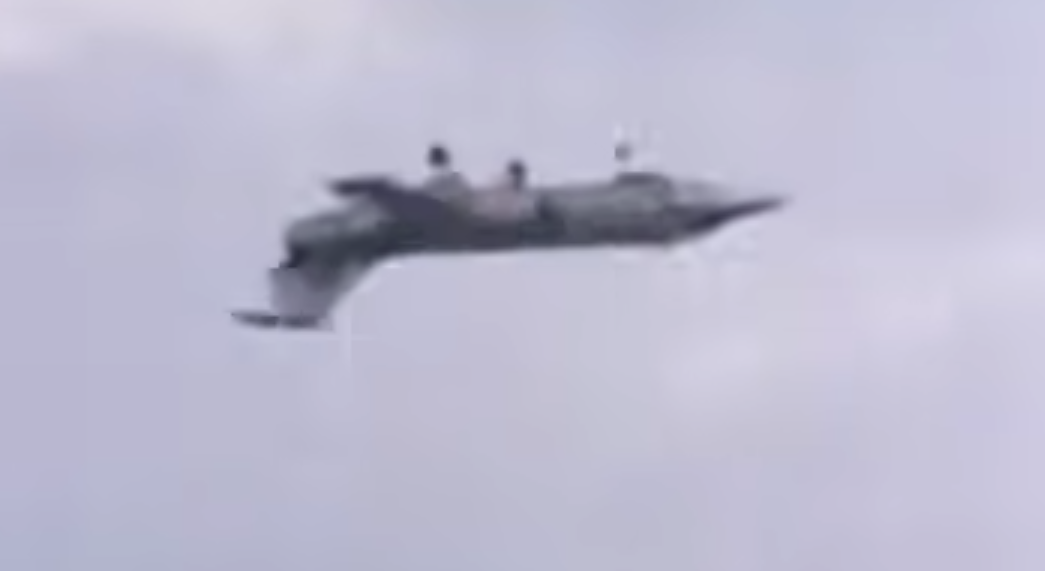

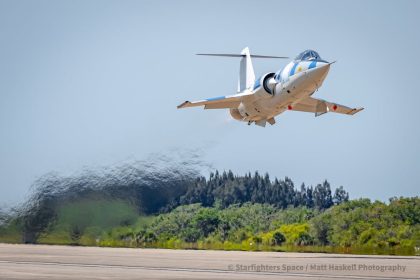
You’ve probably seen this video before, Legendary Belgian Air Force Silvers Aerobatic Team member, William “Bill” Ongena performing a touch-roll-touch in a Lockheed F-104G Starfighter, a plane that was infamously difficult to control at lower speeds. Until Bill actually performed the maneuver, it was said to be impossible, though clearly it wasn’t. Bill was the first of very few pilots to successfully perform it, though many subsequently tried, with some dying in the trying. Bill tragically passed away, in of all things, a car accident, well before his time. We’ll admit to being a little Starfighter-obsessed here at Warbirds News, and having a contact list full of ex-Starfighter pilots, we thought it would be interesting to send them the video and ask them to comment on the maneuver. The response was overwhelming.
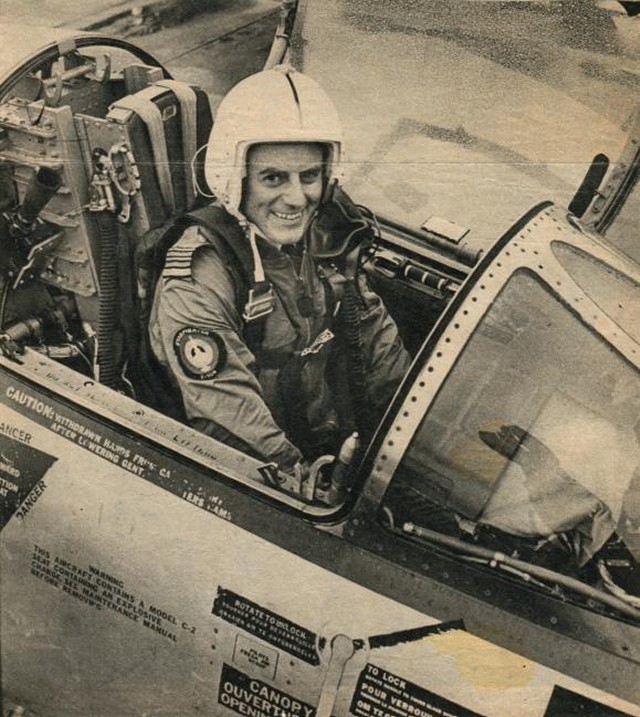
In order of response to our query:
(on an editorial note, some of these responses were translated, so please assume any errors are ours)
Wolfgang Czaia, a pilot with more than 27,000 hours of flight time began flying gliders while still in high school in his homeland of Germany, progressing through a variety of aircraft, from the L-19, Dol-27, FW-149, T-6, T-37, T-33, T-38 and a Skyfox (a modified T-33), to a MiG-29, an Iskra Polish jet trainer and a Pilatus PT-9. He has served as a test pilot for the Messerschmitt 262 reproduction project at Paine Field in Everett, Washington. Of all of the planes he’s flown, the F-104 Starfighter stands out as his all-time favorite. He has served as a military flight instructor in F-104s, training German, Dutch, Belgian, and Italian NATO pilots at Fighter Weapons School 10 at Jever Air Base.
Wolfgang’s Comment: “This one shows Belgian Air Force pilot Bill Ongena doing the so-called ‘Touch-Roll-Touch’, but other pilots of other air forces have done it as well. He approaches the runway with gear and take-off flaps extended, touches down briefly, applies full power, and pulls up to about 50 feet while initiating a roll on his upward trajectory. Then comes a power reduction, possibly speed brake extension to slow down, and descent to another touch-and-go. With the landing gear down, full aileron travel (20°) is available, producing a sufficiently good rate to complete a 360° roll without the nose dropping dangerously low. (With landing gear up, the aileron throw is only 10°). It was strictly a “show” maneuver to demonstrate the controllability of the airplane and had no practical application. After Belgian pilot Jacobs was killed during a practice flight, the maneuver was prohibited.”
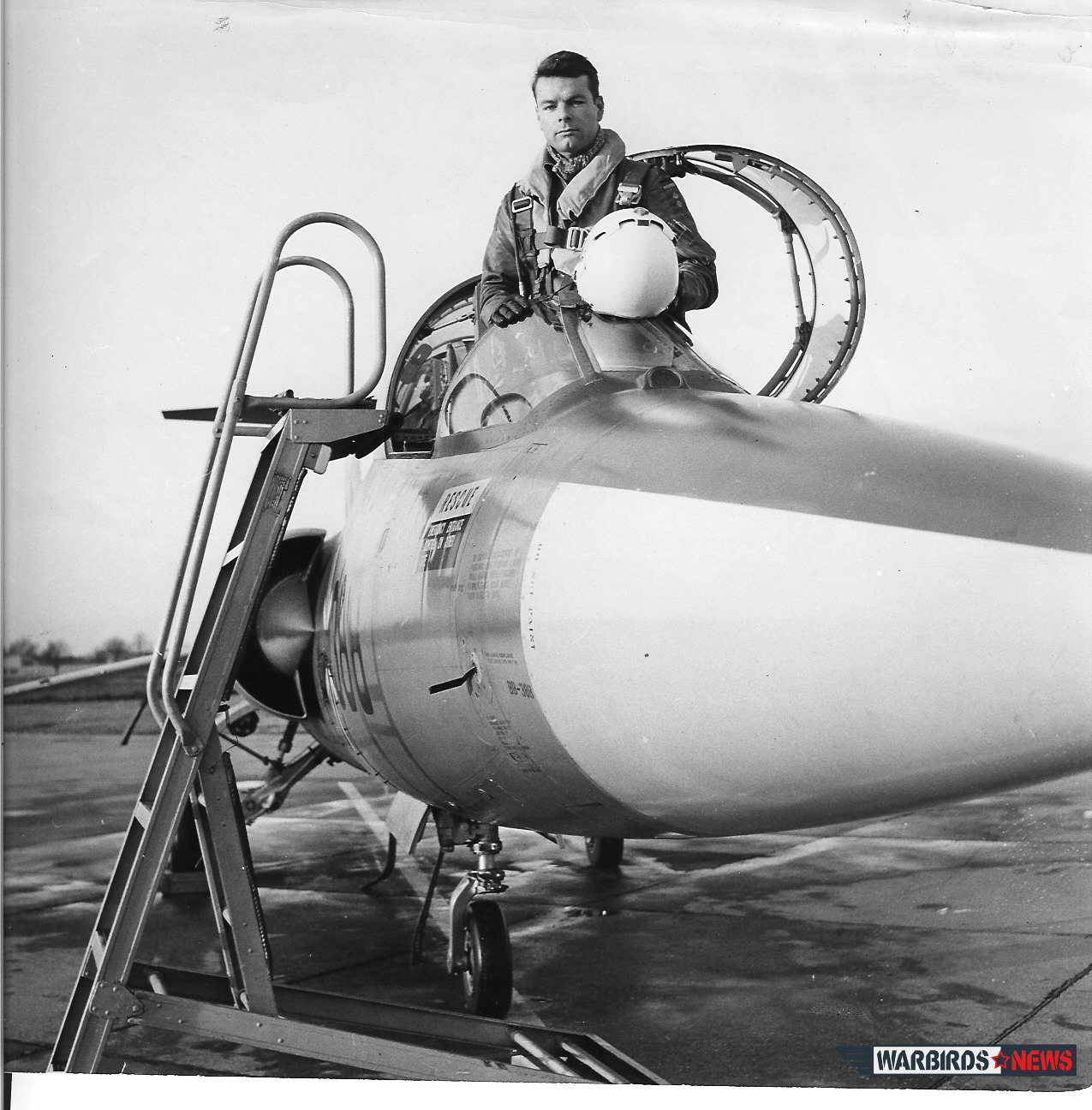
US Air Force Captain Harold Alston of the 435th, TFS 479th was the first pilot to fly 100 combat missions in Vietnam flying the F-104C. Harold’s Comment: “The important thing is that the pilot did not actuate the landing gear. When the gear and doors are moving it creates a lot of drag. For us old air show pilots we either do an aileron roll with the gear up or gear down, but not with it transitioning. I was impressed with the demonstration.”
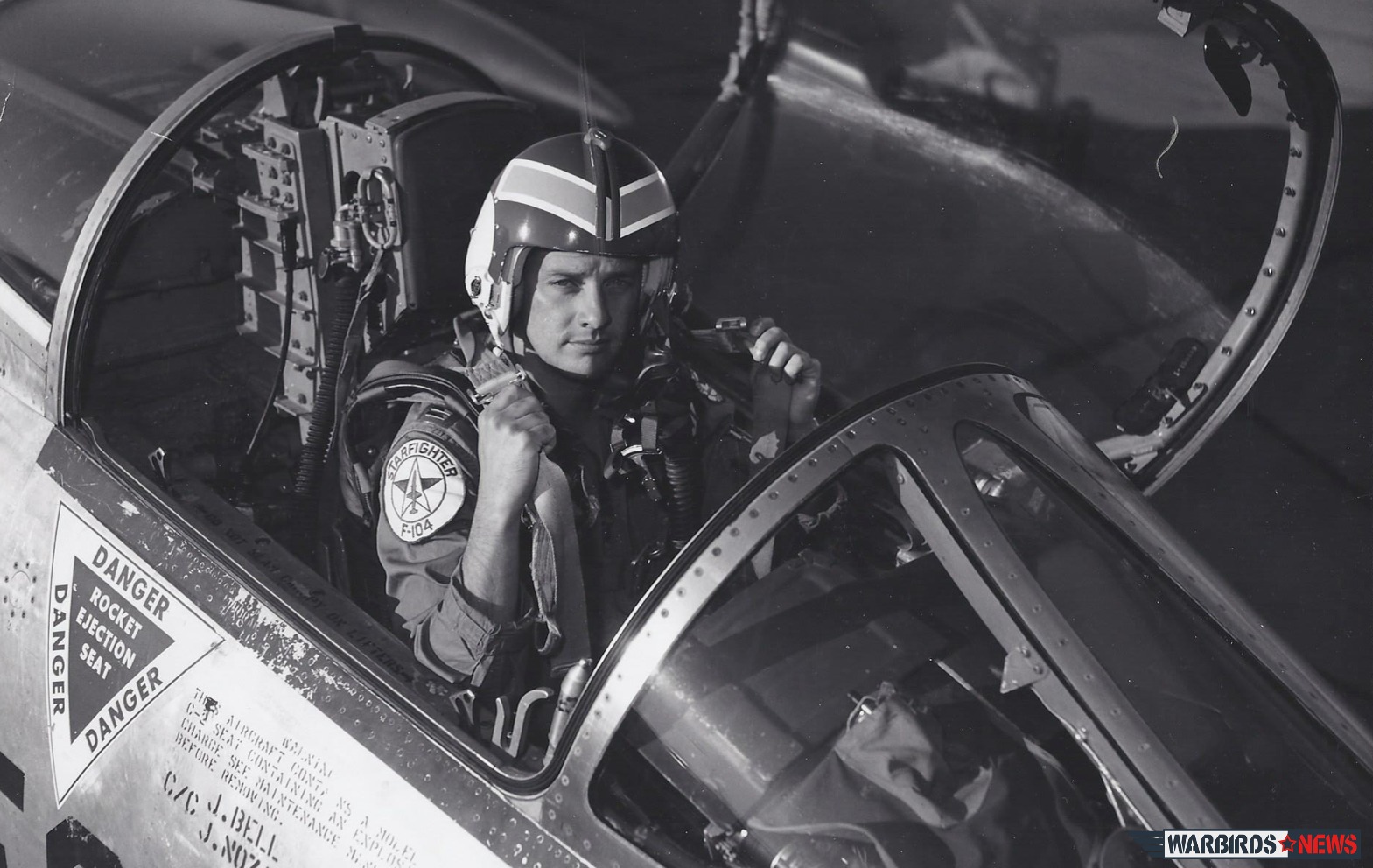
Howard “Scrappy” Johnson served as a fighter pilot flying over 7,000 hours in fifteen different fighter planes during his career. In 1953, Major Johnson transferred to Hamilton AFB where he had the first opportunity to hear about the Air Force’s newest, fastest airplane, the F-104A. In 1958, with only 30 hours of flight time in the Starfighter, he shattered the World’s Altitude Record zooming to 91,243 feet. In recognition of the record, Vice President Richard Nixon presented him with the Robert J. Collier Trophy for aeronautical achievement. “Scrappy’s” Comment: “When I was an advisor to the West German Air Force, from 1960-1963, one of my fellow advisors did this same thing, landed A/B (After Burner), take off, roll and BAAAM! crashed. His name was Captain Tom Perfilli. This maneuver was then prohibited.”
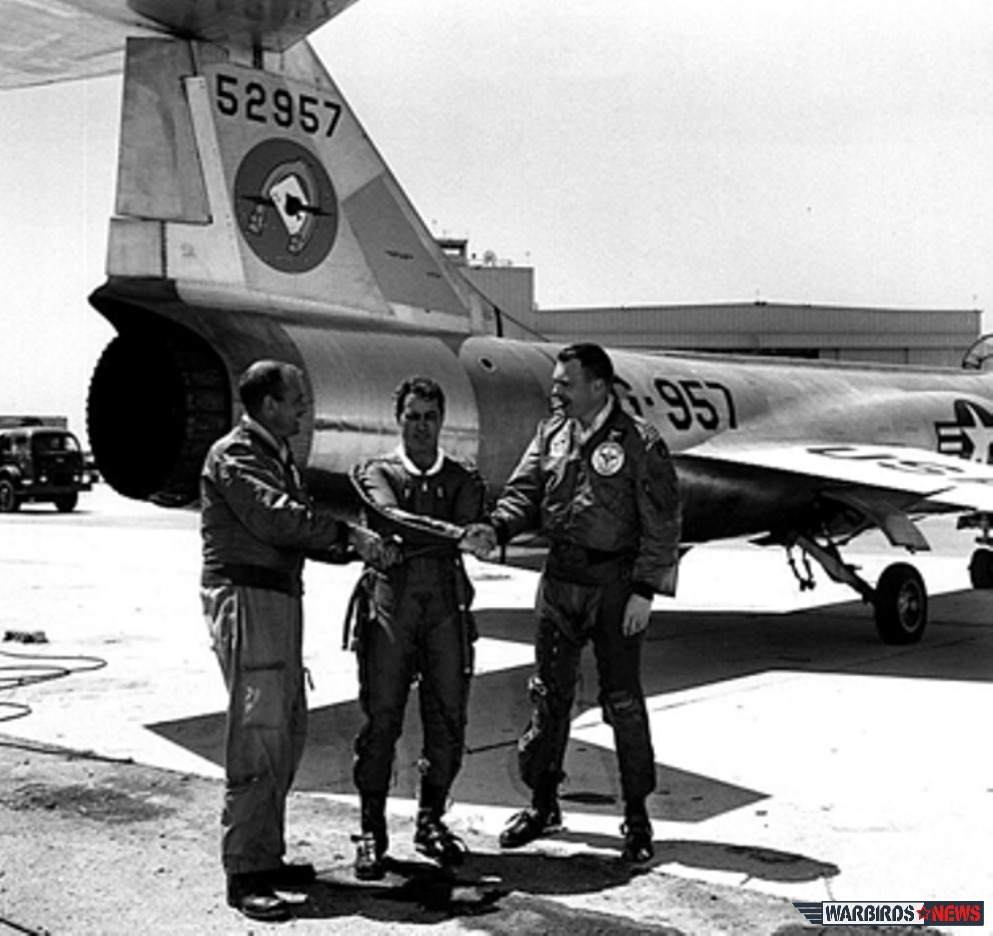
Ferry Van Der Geest flew the RF104 in the Royal Netherlands Air Force until the last day of F-104 operations. His squadron got the 104 in 1963 and she was replaced in in 1984 by the RF16. He was with the 306 Squadron from September 1983 until May 1987. He only flew the 104 for 1.5 years with a total of around 320 hours. But according to him, as a young fighter pilot, he had enough adventures with the “Spillone” (Italian for Needle) to fill a book.
Ferry’s comment: “This famous touch-roll-touch was only performed in Belgium, one day a pilot had an afterburner (AB) blow-out and he crashed on the second touch, killing himself in the process. It is an extremely dangerous maneuver with no room for error whatsoever. The average touchdown speed is at around 175 knots and the use of AB is totally mandatory. So far no one has ever done something like this afterward.”
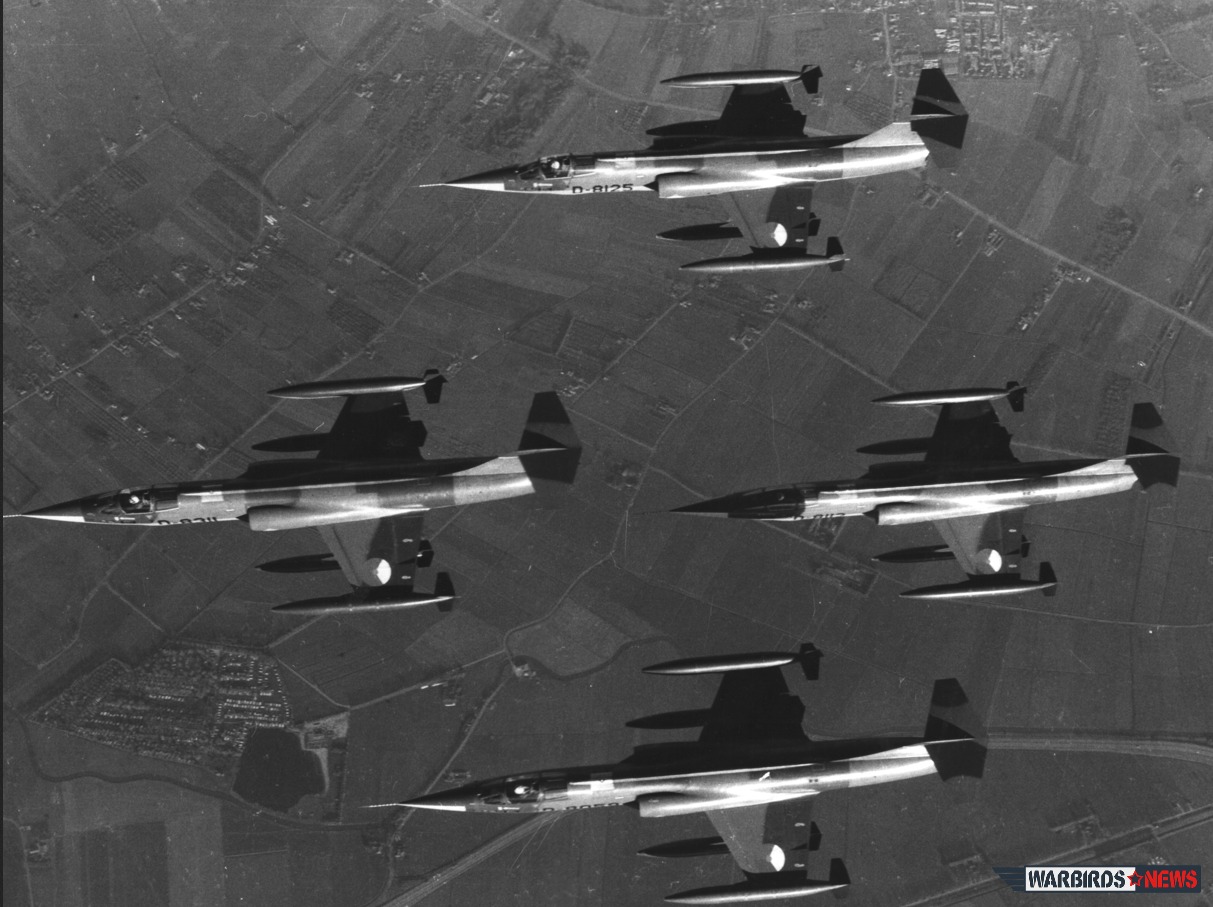
Hans Van Der Werff flew the 104 in the Royal Netherlands Air Force, his total flight time on the F-104 is 2400 hours, though it’s worthwhile to note that the RNAF uses actual flying time instead of block time, so for an apples-to-apples comparison with other pilots from other air forces, adding 10% is in order. Hans flew the 104 from 1968 till 1980, he was instructor-pilot, instrument rating examiner and test-pilot. From 1974 until 1979 he was the official demo pilot for the F-104G for the Royal Netherlands Air Force and he participated in over 100 flying displays.
Hans’ Comment: “I did this maneuver (touch-roll-touch) a couple of times myself during training for my airshow. As you probably know I was the F-104 demo pilot for the Royal Netherlands Air Force from 1974 until 1979. Air staff prohibited me from doing the maneuver after a USAF pilot crashed doing the same thing. Subsequently, I would do a “dirty roll” without touching. To do the maneuver it actually takes as much guts as skill. The low speed/low altitude was the main problem. And then the extended gear made the roll rate a lot less. Also, because the roll was started in a climbing attitude, you had to take care that the roll ended slightly nose down to start the landing within the limits of the runway.”
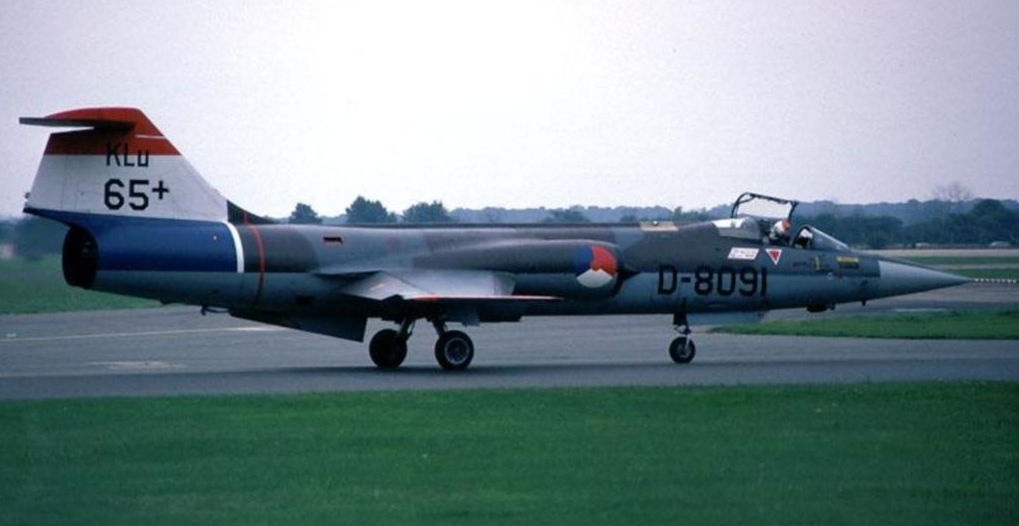
(Image Credit: 916-Starfighter.de)
General Bruno Servadei served with the Italian Air Force flying F-84Fs and F-104Ss. Now retired, he performs in European airshows flying the Fl 100 RGf with the famed Blu Circe Aerobatic Team. General Servadei’s Comment: “I saw Ongena perform this maneuver, live in Turin at Caselle Airport in the 60s, back when I was flying with the F84F. It was amazing, especially for me with piloting the F84F, where Ongena would be able to take off, roll, and land in less distance than it would take my plane to just get its wheels off the ground. On the maneuver itself, it undoubtedly required technical ability but it especially required guts, because the aircraft is flying very close to the ground. I think with a little practicing it could have been done by others, probably with the F-104S variant it would be easier with the plane having 2000lbs of extra thrust. If I were to have attempted the maneuver myself back in the day, the commander on the base would have kicked me out! At the time of Ongena, there was still a free-spiritedness in effect that allowed pilots to do crazy shit like that. In my time I’ve seen many pilots of the 6th Aerobrigata (Now 6 Stormo) doing crazy things. I have seen pilots in the Red Devils (the aerobatic team of the 6 Aerobrigata) flying upside down with their canopy and tails just a few feet from the grass!”
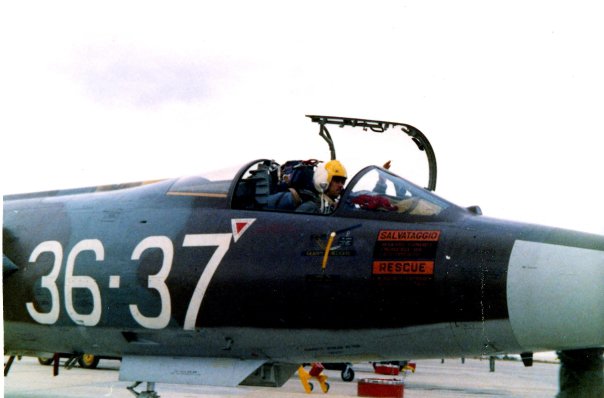
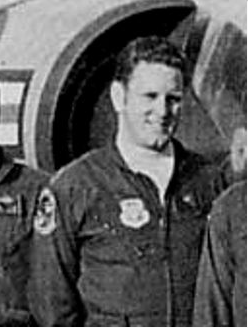
Dave Skilling spent 3 years as an instructor on the F104 at Luke Air Force Base in Arizona, in the training program for German 104 pilots, and almost 7 years in two separate tours of duty in Europe, flying the 104 with 6 NATO air forces in a strike training role as a part of the NATO Standardization Team for strike wings (the “DOON Team”) for three years.
Dave’s Comments: “First, that sort of maneuver close to the ground takes a lot of practice at that slow speed at a higher altitude, then bringing it down lower and lower until you can do it after a takeoff. I was never in a situation where I could practice sufficiently to make it safe. It takes some unusual yaw “to the top” at the beginning and end, and some zero to negative G’s over the top in order not to lose altitude (I’ve done it at altitude). The US Air Force would ground you for trying such a maneuver after takeoff (except for the Thunderbirds and Blue Angels, who practiced it a lot before their solos did it). By the time I flew in Europe, where it might be more admired, I was a guest pilot at the F-104 bases (even though I was an “inspector”), and wouldn’t have tried such stunts as a guest. I think any 104 pilot who really wanted to do this could have trained in it – but not all would not have wanted to! But few ever got the chance. In my next life, I may be a Thunderbird (and lots of other stuff I didn’t have time for in this life).”
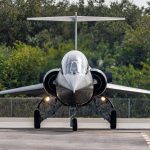
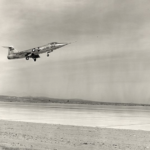
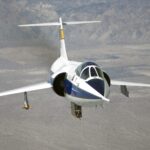
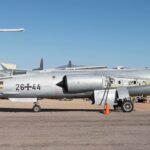
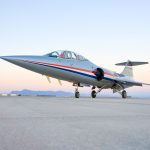
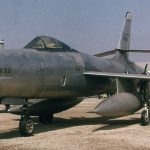
Because you can never have too many pictures of the Starfighter.
Well there you have it, analysis of one of the most daunting and dangerous maneuvers on record for the F-104 Starfighter by seven men who flew and knew the craft, including one who’s actually performed it and lived to tell the tale. We’d like to thank all those who took the time to contribute by responding to our query, as well as for providing the photos.




In the early nineties ,I had the pleasure to spend an evening with Bill Ongena at his home .
He explained me how he began to train for this manœuvre.
He told me he practised it on top of a 8/8 cloud layer so if the figure failed , there was no problem .By practising that way , he could gain experience and all needed parameters for a successful figure more near the ground ,progressively.
Bob
Bill died in 1990 and his grave is at Hamme mille cemetary
F-104 Take-off, Roll and Landing…
On Tue, Aug 20, 2013 at 8:14 AM, Steve Dwelle wrote:
Tom,
I was really blown away when I first received this. I stewed about it all through my Norwegian Cruise as I couldn’t open up the attachment with my IPad. I couldn’t comprehend this being done, having flown the F-104 at Luke AFB. I don’t believe I could do it an F-4E as stated in the title…”Take-off, roll, land in length of runway”.
Here are some thoughts:
He started with a touch and go, not a take-off!
He was going like a bastard when he rolled…to roll at very slow speed you must start with a very BIG push of the stick to break the AOA, or it just won’t roll, and I did not see that.
He did see a lot of dirt at the inverted position which must have scared some shit out of him.
He only had take-off flaps, which means he was going like a bastard when he touched down, meaning a very long landing roll without BLC or anti-skid brakes. I saw no drag chute until a new film sequence, and I think you need to be below 200 or it comes right off.
I read a more expanded version of this email (hopefully attached below) which called this sequence a “touch, roll, and touch” instead of takeoff, roll and land.
The notes indicate this pilot and several others died trying this! UGH!!
Having said all of that…
I believe it “touch, roll and touch” can be done quite safely and predictably (meaning nobody has to die) in an F-4E given sufficient training…and probably even to a full stop, given a SAC length runway. Thinking about doing it from a dead stop…that is a completely different scenario.
Cheers,
Steve Dwelle
Bill Ongena was certainly the best F104 solo display pilot in the world,it was a time when
a pilot could show his skill and the capacities of the airplane totally without any restrictions as it is now.
As a teenager in the sixties I was fortunate to see him doing his famous “touch and go roll”
many times.In the last official meeting he participated(Brustem air base),he did the show with Sus Jacobs ,his successor ,they took off opposite at the same times!
What a great times!
Jacques Bodart
La Hulpe
Belgium
Something more if you want to see some interesting photos go to this webste:
http://www.sergebonfond.be
There are plenty of infos about the history of the belgian Beauvechain Fighter base with photos of Bill Ongena
Happy loopings & landings
Jacques Bodart
Thank you for allowing me to learn about my father who was one of these guys…all whom are beyond my comprehension…true dedication and so much more…the scope of your work is phenomenal to say the least. Eternally grateful.
Pamela thanks for the nice words. if you want to share stories or pictures or your father please contact us. We would love to write a story.
I was right out of cadets when an old head (WW2 and Korea) told me about practicing air demo maneuvers over a stratus deck. Never thought about doing a ‘touch-roll-touch’. Logged about 730 hours in the 104A and just over 2000 in the F4D/E. A light F4D should be able to do a ‘trt’. But if higher brass found out – bye-bye.
Walt, thanks for feedback! If you care to share any of your flying stories with us, please let us know.
The touch & roll maneuver with the F-104G was performed also by 2 Italian Air Force pilots : Ghisoni and Tajoli
Italians Do It better!
After flying the F86 for a number of years our Az ANG 197 FIS received
the F104A..The Squadron was activated and sent to Ramstein during the ‘Berlin Crisses’ ..Some of the pilots had not checked out in the Zipper, so
down to Wheelus AB for a short check out..Flying in Germany was quite
an experience,but we survived!! The Unit later got the pleasure of flying C-97s!!!
A few years later I returned to active duty at Luke AFB again in the F104G.
‘The Zip is a bit fasterand a good deal more FUN!!!
Whai have you not the name Gleen Reeves ?? He was test poilot for Lokeed. I think he was the one that inventet this manovær.
Because these pilot are alive and we know them personally.
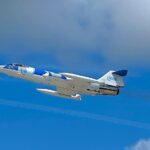
what was the registration (FX-..) of the F-104G Starfighter that we see performing in the famous footage ?
Frank Liethen checked me out in the 104 at Edwards….then I flew to Nellis and advised the tower…..”Thunderbird One on initial for a touch and go.” They responded with Security Police. I made the touch and go and returned to Edwards. End story.
Paul, thanks for the story. if you can share more F-104 stories, please sens us an email!