

Today In Aviation History: Operation Blue Moon is Launched

During the Cuban Missile Crisis, six U.S. Navy RF-8A Crusaders flew the first American low-level reconnaissance missions over Soviet missile installations in Cuba on October 23, 1962. Flying at around 400 mph just a few hundred feet above the ground, the unarmed photographic aircraft captured detailed images of missile launchers, support vehicles, and personnel, providing vital intelligence as the crisis unfolded.

Austin Hancock
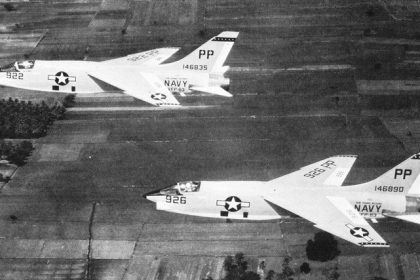
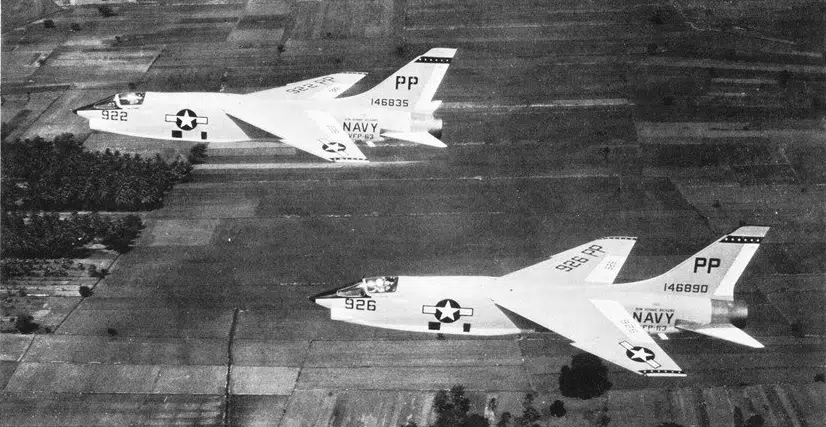
Two U.S. Navy Vought F8U-1P Crusaders (BuNo 146835, 146890) from Photographic Reconnaissance Squadron 63 (VFP-63) Det.E "Eyes of the Fleet" in flight. VFP-63 Det.E was assigned to Carrier Air Group 19 (CVG-19) aboard the aircraft carrier USS Bon Homme Richard (CVA-31) for a deployment to the Western Pacific from 12 July 1962 to 11 February 1963. (Image credit: U.S. Navy/Wikimedia Commons)
AirCorps Restorations
VAN Today in Aviation History Banner
Welcome to VAN’s Today in Aviation History (Image credit: VAN)

On this day in aviation history, 64 years ago (October 23, 1962), six U.S. Navy RF-8 Crusader photographic reconnaissance aircraft conducted the first American low-level reconnaissance flights over Soviet missile installations in Cuba. Flying at high speed only a few hundred feet above the ground, the missions provided American intelligence officials with extraordinarily detailed photographs during the height of the Cuban Missile Crisis.
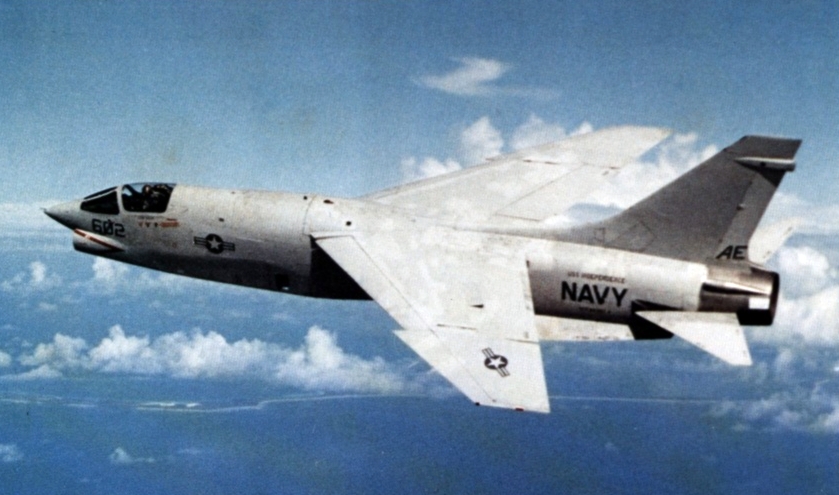
rf 8g crusader vfp 63 det 4 in flight c1981
A U.S. Navy Vought RF-8G Crusader from Photographic Reconnaissance Squadron VFP-63 Det.4. Eyes of the Fleet in flight. VFP-63 Det.4 was assigned to Carrier Air Wing 6 (CVW-6) aboard the aircraft carrier USS Independence (CV-62) for a deployment to the Mediterranean Sea and the Indian Ocean from 19 November 1980 to 10 June 1981. (Image credit: U.S. Navy/Wikimedia Commons)

High-altitude U-2 reconnaissance photographs had already revealed Soviet medium-range ballistic missiles in Cuba, but additional imagery was needed to identify equipment and determine the operational status of the sites. Under Operation Blue Moon, Navy Light Photographic Squadron 62 (VFP-62) was assigned to conduct low-level photographic reconnaissance. Its unarmed RF-8A Crusaders were equipped with multiple cameras in place of the fighter version’s cannons and could photograph targets while passing overhead at high speed.
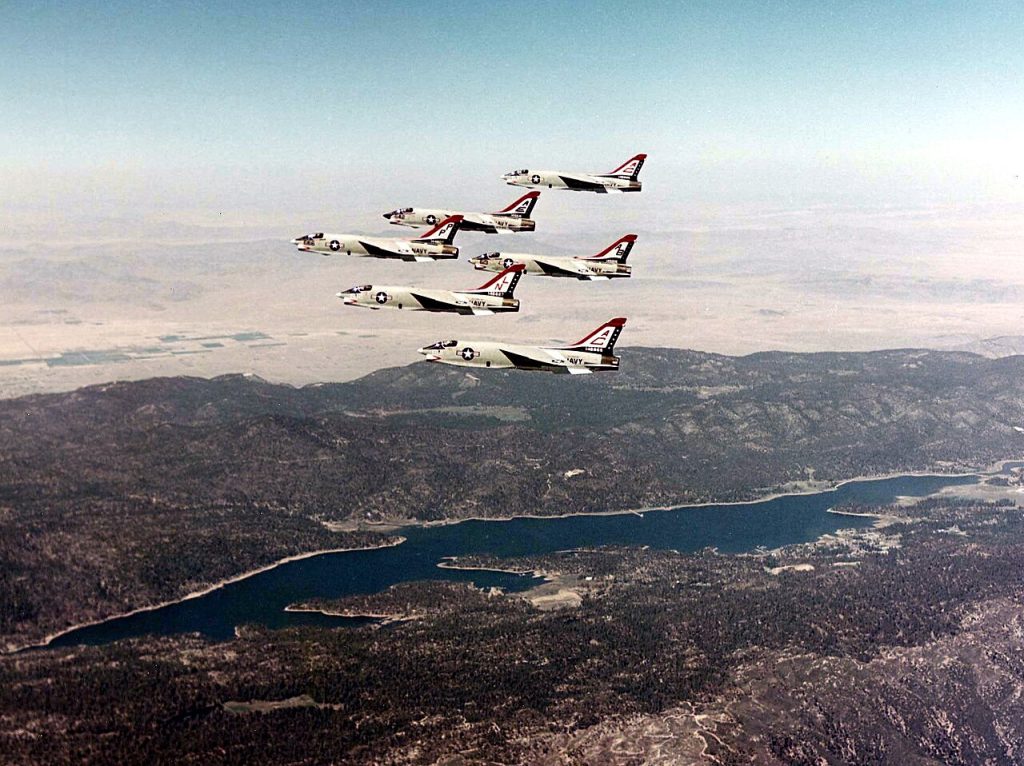
rf 8g crusaders of vfp 63 over california 1976
Six U.S. Navy Vought RF-8G Crusader aircraft from Photographic Reconnaissance Squadron VFP-63 “Eyes of the Fleet” in flight over Southern California (USA), in 1976. VFP-63 provided detachments to the different U.S. carrier air wings (CVW). The aircraft in front wears the squadron´s tail code “PP”; the other aircraft were assigned to the following CVWs: CVW-1 (“AB”) aboard USS John F. Kennedy (CV-67); CVW-3 (“AC”) on USS Saratoga (CV-60); CVW-6 (“AE”) on USS America (CV-66); and CVW-15 (“NL”) on USS Coral Sea (CV-43). The aircraft wear U.S. Bicentennial markings. (Image credit: LCdr. Ruby, U.S. Navy/Wikimedia Commons)

On October 23, six RF-8As departed Key West and crossed the Cuban coastline at approximately 400 mph, descending to only a few hundred feet above the terrain. Their cameras captured detailed views of missile launchers, support vehicles, equipment, and personnel at the Soviet installations. The photographs provided crucial evidence of the missiles’ condition and allowed intelligence analysts to monitor Soviet activity throughout the crisis. VFP-62 and Marine Corps reconnaissance aircraft continued flying low-level missions over Cuba in the days that followed.

f 8 crusaders on uss midway cva 41 1963
A U.S. Navy Vought RF-8A Crusader and an F-8A (BuNo 143767) are readied for launching aboard the aircraft carrier USS Midway (CVA-41), in 1963. (Image credit: U.S. Navy/Wikimedia Commons)

The RF-8A was the photographic reconnaissance derivative of the supersonic F-8 Crusader. Powered by a Pratt & Whitney J57 afterburning turbojet, it was capable of speeds exceeding 1,000 mph and had a service ceiling above 50,000 feet. The RF-8 traded the fighter’s four 20 mm cannons for an internal camera installation, allowing it to capture high-resolution photographs while making extremely fast, low-altitude passes over heavily defended territory.

Boschung Global 729x90
Share This Article
Commercial Pilot, CFI, and Museum Entrepreneur, with a subject focus on WWII Aviation. I am dedicated to building flight experience so I can fly WWII Fighters, such as the P-51 Mustang, for museums and airshows, and in the USAF Heritage Flight. I lead and run the Pennington Flight Memorial, to honor local MIA Tuskegee Airman F/O Leland “Sticky” Pennington.
Leave a Comment

Leave a Reply

Your email address will not be published. Required fields are marked *