


It was sunny but still chilly on the afternoon of April 14—Easter Monday, 1941—in the Northern English town of Chadderton, located six miles northeast of Manchester. Fourteen-year-old Edward Grogan’s parents wanted to take advantage of the holiday to see a matinee showing of the new Shirley Temple Film at the Avenue Cinema. Not being a Shirley Temple fan, Ed was charged with looking after his three-year-old brother, David, in the family’s second-story flat, much to his displeasure.
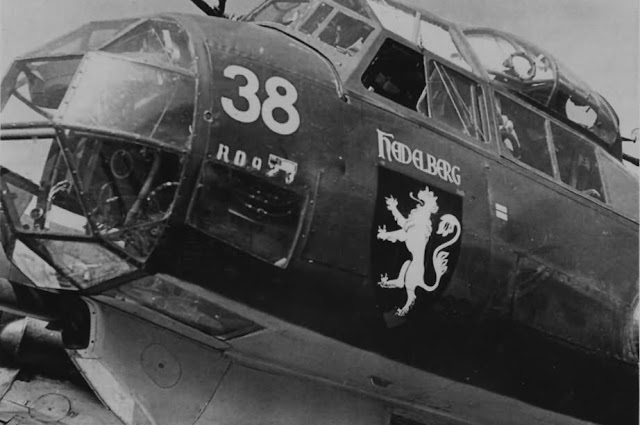
Making the best of the situation, Ed and David played with David’s blocks on the floor of the family’s parlor, which featured a large window overlooking the street. About an hour after his parents left, at 2:53 p.m., the boys heard the whine of the air-raid siren. “Being boys, we immediately leaped up and ran to the window,” said Ed. “Just as we reached the window, a Ju 88 went howling past, below our eye level. Being 14 and a boy at the time, I immediately knew it was a Ju 88.” Ed and David rushed downstairs into the street to watch the bomber speeding away. “When we told our parents we had done that, they were very cross,” said Ed. “My mother said we could have been machine-gunned by the tail gunner. Being the airplane expert I was, I told them that there was no tail gunner in the Ju 88, which had absolutely no effect on my mother’s attitude.”

Collette Neary’s mother had taken her and her brother to the Avenue, but after queuing up for tickets, found the movie was sold out. As they returned to their house and entered their living room, “we heard a noise, and we recognized it because we had heard it many times before on Pathé News at the cinema,” she said. “It grew louder and became deafening. My motherland brother dived under the table. I stood transfixed at the window, either from fright or curiosity, and suddenly, there it was! A German plane was passing over our house and down our long back garden. The noise, the crosses on the wings and the pilot’s goggles and mask were all familiar, but never before in real life! It went low over the long garden adjoining ours and then climbed steeply over the next group of houses, and away.”

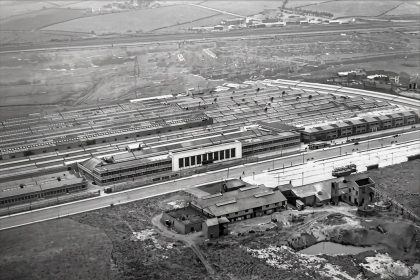
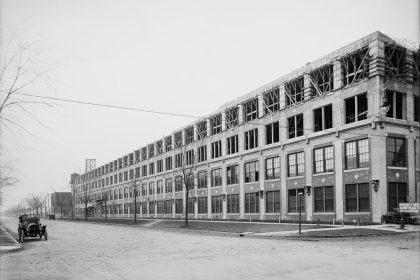
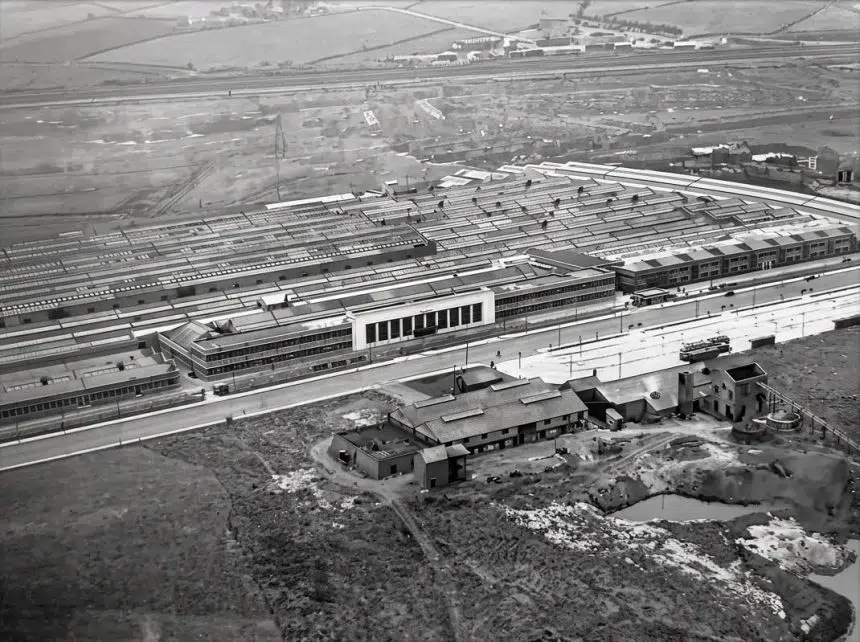
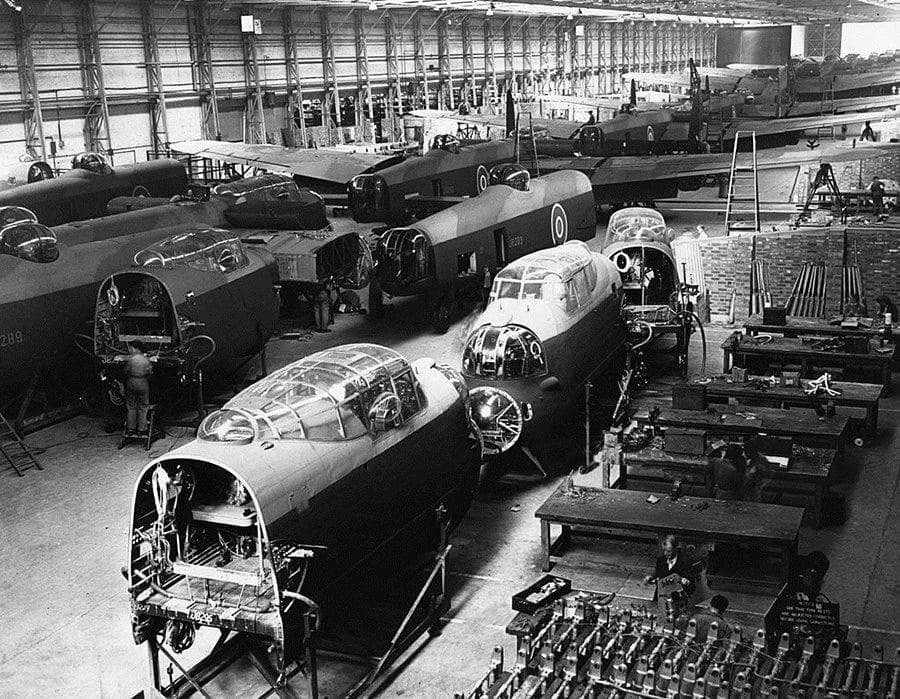
The Ju 88 was from Kampfgeschwader 76 (KG 76). Flying very low to evade radar, the German crew (who remain anonymous, unfortunately, thanks to the destruction of Luftwaffe records as the war ended) used the local rail lines to navigate across Lancashire to reach a very specific target—the Avro Works at Chadderton. The plant had been opened in 1939 as Britain geared up for war. It was a 750,000-square-foot facility that would employ 11,000 people at its peak. At this stage of the war, the plant had produced Avro Ansons and license-built Bristol Blenheims before pivoting to the Avro Manchester. Oddly, the plant didn’t have its own runway—planes were completed in sections and transported for final assembly at Woodford Aerodrome, nearly 20 miles away.
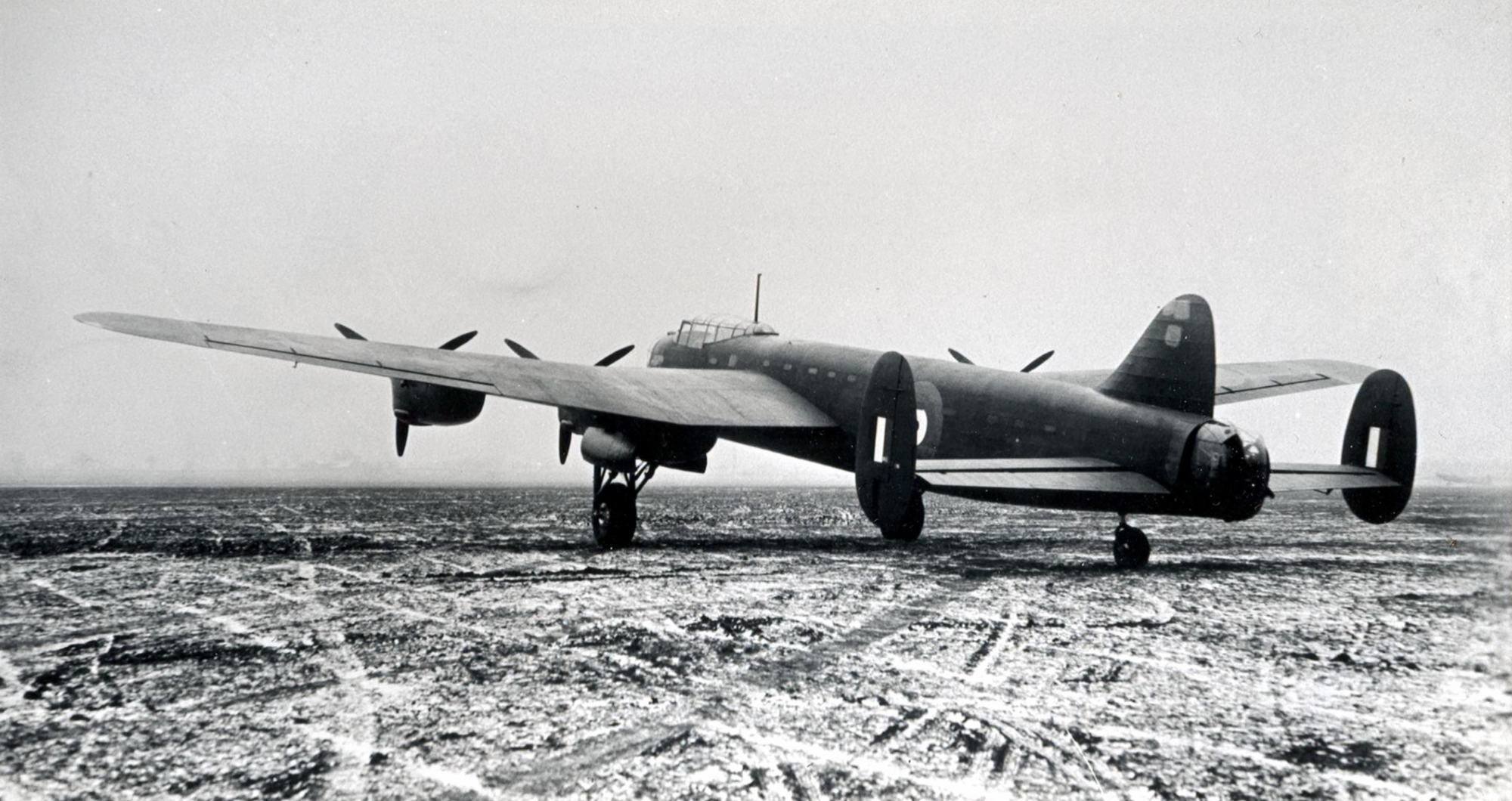
Ed Grogan, who enjoyed peering through the fence at the goings-on at the field, had an idea why the Luftwaffe might be paying this target a visit. “We were worried because we knew the day before, the Lancaster prototype had flown into the field near the plant,” he said. “Luckily, it had flown out that morning and wasn’t there when the bombs fell.” But the German raider didn’t head for Woodford. The Ju 88 went hurtling down Middleton Road, headed for the Avro works in Chadderton, unmolested by British defenses. The plane’s very low altitude was below the lowest depression of the anti-aircraft guns stationed nearby, and although the local Home Guard threw up some small-arms and machine gun fire as the Ju 88 neared the plant, it had no effect. “I was driving back to Middleton Junction when I noticed men working on the road were flinging themselves down,” said John Bagot, a former Guardian editor. “I stopped, jumped out of the car, and promptly ducked my head, for flying low over the railway line was a large plane bearing German markings. As it flew low, obviously following the railway line towards Middleton Junction, I could see the bomb doors slowly opening.”
“When it appeared to be over the junction, the plane gained some height,” Bagot reported. Other reports said the Ju 88 had popped up to avoid power lines, then lined up to make a bombing run from north to south following the railway line running down the eastern side of the factory at 3:03 p.m. “Then in the distance, I could see a sudden flash and heard a rumble. That German had dropped his load on Avro’s huge factory. The pilot circled and made off over the Pennines at speed.” The German pilot had, indeed, struck the Avro works, which on a typical Monday would have been crowded with workers. Fortunately, the Avro management had offered the workers either Good Friday or Easter Monday as a day off. For some odd reason, working on Good Friday was double time and Easter Monday would have been only time and a half, which helped tilt the workforce’s decision. Thus, the raid took place on one of the few days during the war when the factory was closed, which is why there were no casualties.

Staffed or not, the Ju 88 released four high-explosive bombs on the factory. The first bomb penetrated the roof and detonated on the floor of the assembly department, leaving a crater about nine feet across and four feet deep, but there was only slight damage to the machinery or aircraft on the line. The second bomb entered a different part of the assembly sheds, bounced off the concrete floor, passed through sections of Manchester under construction, destroyed three assembly jigs and damaged a blast wall—but did not explode. The local bomb disposal team later defused it. The third bomb was potentially the most destructive to the plant’s operation. It scored a direct hit on the rivet store on the southern boundary of the factory, wrecking the store building and spraying a hail of rivets and other debris across the facility, causing extensive damage to adjacent roofing. The fourth bomb landed in a field outside the factory without exploding; it too was made safe and later removed. That night, Lord Haw Haw, the English propagandist in German service, broadcast the story of the raid, proclaiming that a large aircraft factory in Lancashire had been utterly destroyed. In reality, the damage was minimal. The thick blast walls erected around the plant to limit damage had worked well. Several airframes were damaged on the line; there was minor damage to the equipment, and extensive damage to the roof. Then there were those pesky rivets.

The bomb that struck the rivet store scattered millions of rivets of various sizes far and wide. Workers went out and collected these critical parts — no plane could be assembled without them. The rivet hunt was a huge task, yielding dozens of bags filled with thousands of assorted rivets, but an even bigger challenge for plant employees was sorting them by sizes and types. At first glance, every rivet looked more or less like every other rivet, but there were differences in size and metallurgical makeup. Sorting millions of nearly identical rivets seemed like an impossible challenge, but then someone had a stroke of genius. Volunteers were asked for among the pupils, residents and teachers at nearby Henshaw’s Institution for the Blind. The blind and sight-impaired volunteers were able to quickly sort and categorize the rivets purely by feel, allowing the Avro works to go back into production. In the years to come, the Chadderton facility would pay back that bombing in spectacular fashion. Of the 7,377 Avro Lancasters built, 3,032 of them would be constructed at Chadderton.