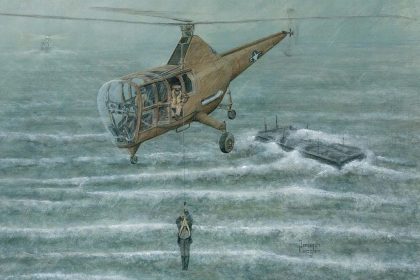



November 29, 1945 – 81 years ago today, a milestone in aviation safety occurred with the first successful air-to-sea rescue of a stranded crew via helicopter hoist. This story began one day prior, on November 28. A violent storm caused Texaco Barge No. 397 to break loose from an oil tanker near Bridgeport Harbor, Connecticut. The barge wandered and eventually came to rest aground on Penfield Reef with a crew of two aboard: Captain Joseph Pawlik and crewman Steven Penninger. Pawlik and Penninger spent the next 16 hours stranded aboard Barge No. 397, firing distress flares while battling violent waves that rocked the ship.

The crew of Barge No. 397’s pleas for assistance were not unnoticed. Conventional rescue attempts via boat were made, but without success due to the strength of the waves. Seeking an alternative, the police department visited the nearby Sikorsky Aircraft factory, seeking an “outside-the-box” solution. A helicopter was sent to investigate the scene of the stranded ship, with Sikorsky’s chief test pilot Dmitry Viner and Captain Jackson Beighle (USAAF) at the controls. The helicopter crew’s survey of the site concluded that landing nearby was not possible, so an alternative method of rescue would need to be developed.
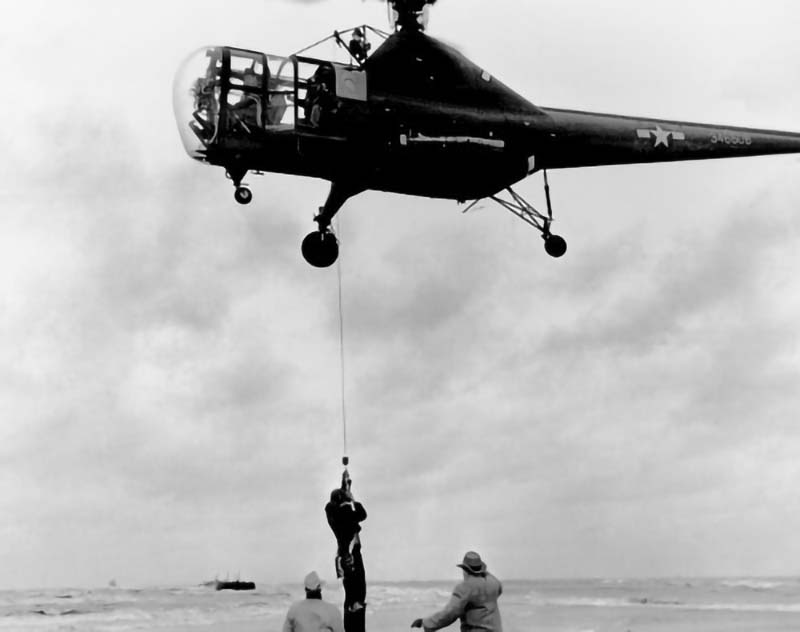
(Image credit: Sikorsky Archives)
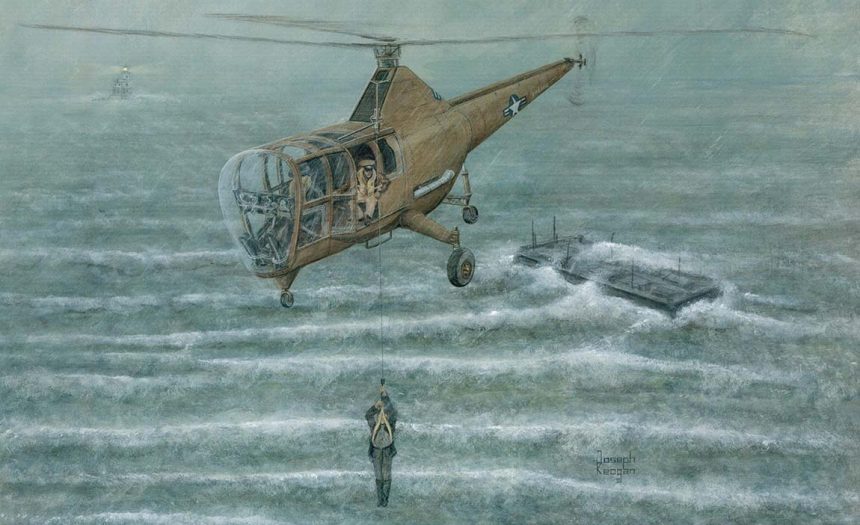
Upon returning to the Sikorsky factory, the decision was made to equip a YR-5A model helicopter with an experimental rescue hoist. The Sikorsky flight crew returned to the scene of the stranded barge. Viner kept the YR-5A in a steady hover, despite gusting winds, while Beighle fought the elements equally hard to lower the hoist to the stranded crew. Steven Penninger was rescued first and taken safely back to shore. The YR-5A returned for Joe Pawlik. His rescue was not as simple; the hoist jammed and left the ship’s Captain dangling 30 feet below the modified Sikorsky rescue-copter. Viner carefully piloted the YR-5A back to shore, safely lowering Pawlik to the beach below.

The Sikorsky YR-5A’s use of a hoist to rescue a stranded crew was the first documented air-to-sea rescue in an emergency situation via rotorcraft. The mission proved that a helicopter could successfully serve in the search-and-rescue role, recovering stranded crews without the need for landing.