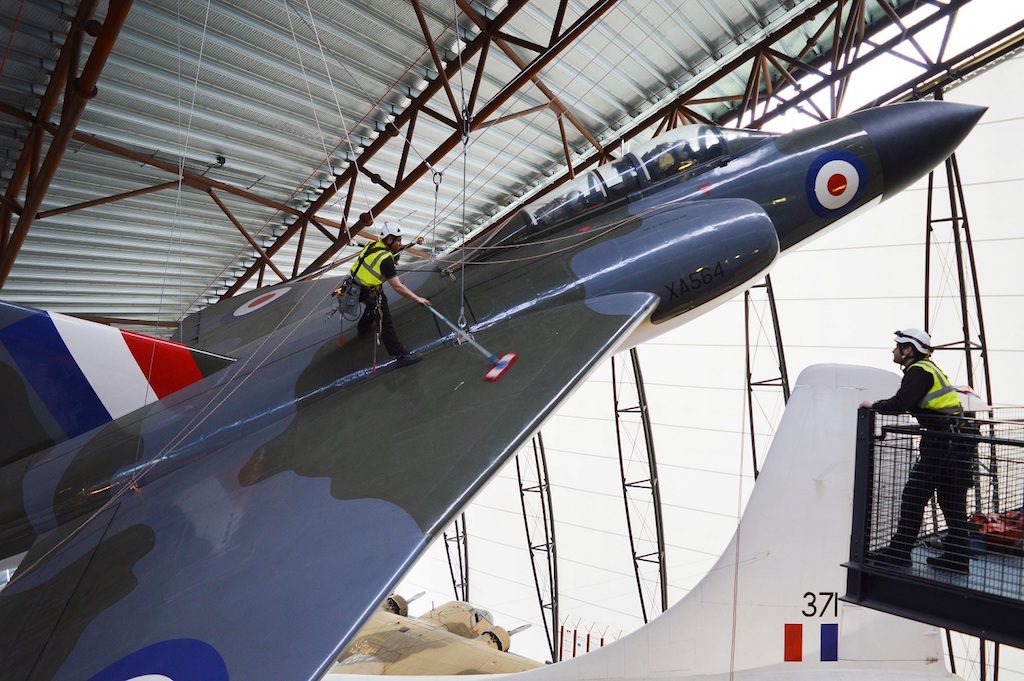


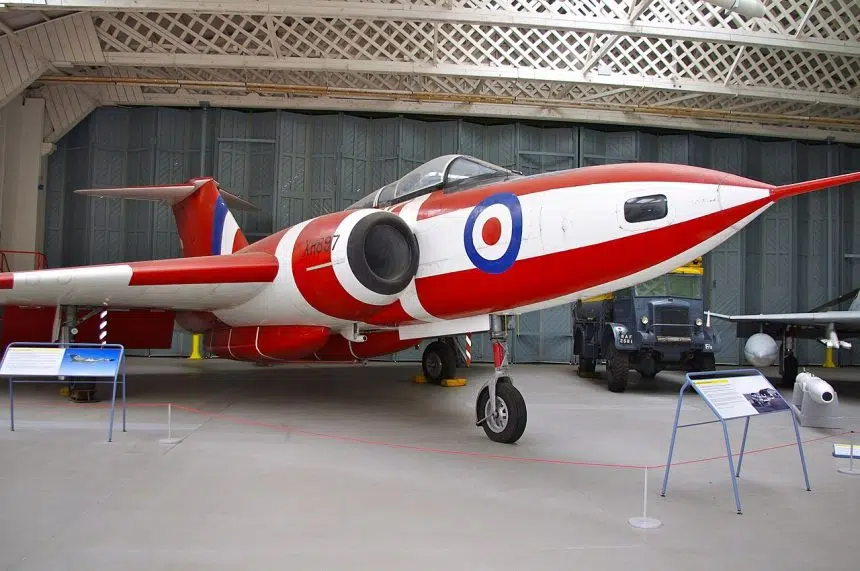

On 26 November 1951, a large experimental jet fighter rose thunderously from its runway at Moreton Valence in Gloucestershire, southwest England. Departing on its first test flight, exactly 75 years ago this Thanksgiving week, the prototype Gloster Javelin was the world’s first delta-wing, twin-engine, subsonic all-weather jet fighter interceptor. On that November day, no other air force had anything like it. The prototype’s distinctive triangular silhouette powered through British skies. The Royal Air Force (RAF) soon described it as a cutting-edge match for any intruding Soviet piston-engine bomber carrying nuclear weapons, as the Cold War froze over. Five years later, this delta entered operational RAF service, patrolling British airspace and its North Sea approaches as a potent radar defense interceptor.

Britain’s Pioneering Jet Age
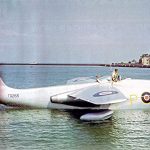
The first test flight of the Gloster Javelin took place in a remarkable period of returning optimism in Britain. In the late 1940s and early 1950s, public thanksgiving for victory after WWII and a hope for national rebirth were powerful forces in Britain. The buoyant public mood then was exemplified by the Festival of Britain (3 May-30 September 1951), a hugely popular showcase of British scientific and cultural achievements. Around 8.5 million people, from all over Britain, visited its main exhibition site on London’s South Bank, on the River Thames. Aviation featured prominently. Visitors were enticed by exhibits promising a coming “Jet Age,” including the nose cone from Britain’s brand-new pioneering jet airliner, the de Havilland DH106 Comet (manufactured 1949-1964). A Saunders-Roe SRA/1 (TG263) flying boat jet fighter (1947-1951) also landed on the Thames – the first jet aircraft to have done so, then, or since. After the coronation of the young Queen Elizabeth II in June 1953, Britain looked forward confidently to what the press dubbed a “New Elizabethan Age.”
In aviation terms, Britain had emerged from WWII as a powerful and innovative world competitor. The demands of war had transformed its pre-war air manufacturing industry, creating the second largest air force in the world (after the United States) and employing an astonishing one million workers. Britain’s military aircraft sector had become the nation’s single largest industry. It was a huge national asset, ripe for further development, as Britain recovered gradually from the ravages of war. By 1953, the RAF retained 6,338 operational subsonic aircraft. The UK military aviation industry was also a highly experienced source of engineering and design excellence, although plagued consistently by lack of government funding. It relied on the innovation of thirty iconic pre-war and wartime British aircraft companies. It was a decade when innovative British military and civil aeronautical design, engineering and production flourished. Experimental prototypes – including the delta-winged Avro 707 (1949) and Fairey FD1 (1951) – appeared in a dizzying variety of futuristic shapes and were held in awe and with pride by Britons old and young. It was the era of “The Eagle” comic, popular with schoolchildren for its regular aircraft cutaway features and its comic strip adventures of determined, fearless pilots. My own father, later a university history lecturer, recalled the excitement he felt as a schoolboy seeing these new aircraft during the early 1950s. In 1951 he visited both the Festival of Britain and attended air shows at RAF St Athan, Glamorganshire, Wales, watching RAF Gloster Meteor F.4s and silver de Havilland Vampire F.3 and FB.5s performing to star-struck crowds.
Cold War Delta
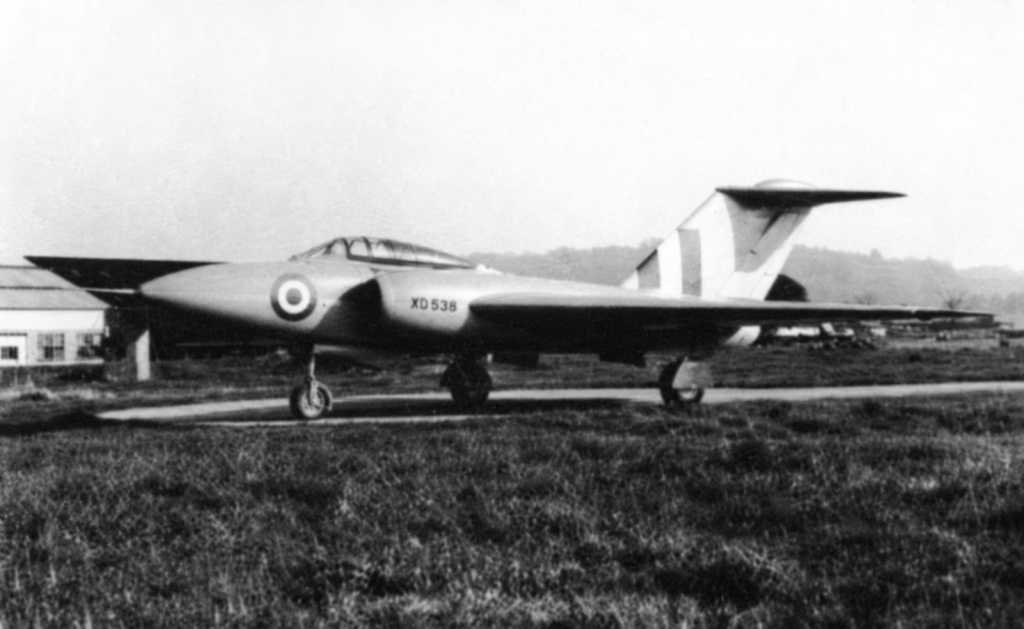
The Gloster Javelin was born from a UK Air Ministry and RAF request in 1947 for a jet night fighter in an interception role. The Gloster Aircraft Company (1917-1963) responded quickly. It operated from its HQ at Brockworth, near Gloucester, with a manufacturing site at nearby Bentham and a test runway at Moreton Valence. In 1948 George Carter – Gloster’s designer of the rugged Gloster Gladiator biplane (1937-1944) and Gloster Meteor jet fighter (1944-1982) – proposed an innovative new delta (triangular) wing jet aircraft. To achieve this, Carter and his team exploited captured German WWII experimental wing configuration and aerodynamic data. The resulting prototype, designated the Gloster GA.5, was envisaged as an alloy-constructed, twin-engine jet fighter-interceptor, to confront intruding Soviet bombers up to an altitude of 40,000 feet. It would have all-weather capability (with onboard radar in its nose cone). The GA.5 was built at Brockworth and undertook flight testing from 1951. The prototype featured a thick delta wing (an area of 927 square feet) and a large, T-shaped tail fin. When fully loaded, it weighed around 25,500 lbs. It was 16 feet high, 56 feet long, with a wingspan of 52 feet. This made it much larger and heavier than any of RAF fighter jet contemporaries, the de Havilland Vampire (1946-1966) and Gloster Meteor. The GA.5 was powered by two Armstrong Siddeley Sapphire Sa.3 turbojet engines, each generating 7,500-lb thrust. The first production variant, FAW.1, was flight tested in July 1954.
Cold War demands on the RAF were pressing. The Gloster Javelin was an urgent priority. Several Gloster test pilots voiced misgivings, suggesting corners had been cut. They identified handling problems, necessitating a series of modifications. Gloster Aircraft Company’s Chief Test Pilot, Canadian ex-Hurricane fighter ace Bill Waterton, recorded that the controls of the first prototype (WD804) became heavy at high speeds. They tested his full strength, he noticed, and his view from the cockpit was restricted. Trouble was coming. Jet test flying in the UK in the late 1940s and 1950s was a hazardous business, with regular crashes. The Javelin’s test record was no different. On 29 June 1952, Waterton was flying WD804 on its 85th test flight when flutter caused both elevators to detach. Waterton skillfully nursed the unstable prototype down and survived its serious crash at Boscombe Down airfield, Wiltshire. It was a close-run thing and made national news headlines. The second Javelin prototype was tested at the 1952 Farnborough Air Show (otherwise infamous for the fatal crash of a de Havilland DH 110). A third was flown in March 1953 but also crashed on 11 June. Clearly, the Javelin’s formidable appearance masked serious aeronautical problems. Investigators discovered that the Javelin’s singular T-shaped tailplane and elevator design could cause the aircraft to stall while maneuvering at steep pitch angles. Further changes included the addition of air vortex generators mounted on the Javelin’s delta wing surfaces and a new hydraulic moving tailplane. Five prototypes were used to test the overall design. Formal production orders were issued in 1953. The first Javelin production variant, FAW.1, was flight tested in July 1954. In all, the Javelin went through nine production marks (FAW.1, 1956 -FAW.9, 1960). In 1956, the FAW.7 variant received upgraded Sapphire 7 (ASSa.7) turbojet engines, each producing 11,000-lb thrust, enhancing the Javelin’s performance by around 37% and achieving a maximum speed of Mach 0.93 (710 mph). Including the prototypes and production models, Gloster and Armstrong Whitworth (both operating as part of the Hawker Siddeley Group) built 436 Gloster Javelins between 1955 and 1958. The Javelin was the last aircraft produced by the Gloster Aircraft Company.
Subsonic Outclassed by Supersonic
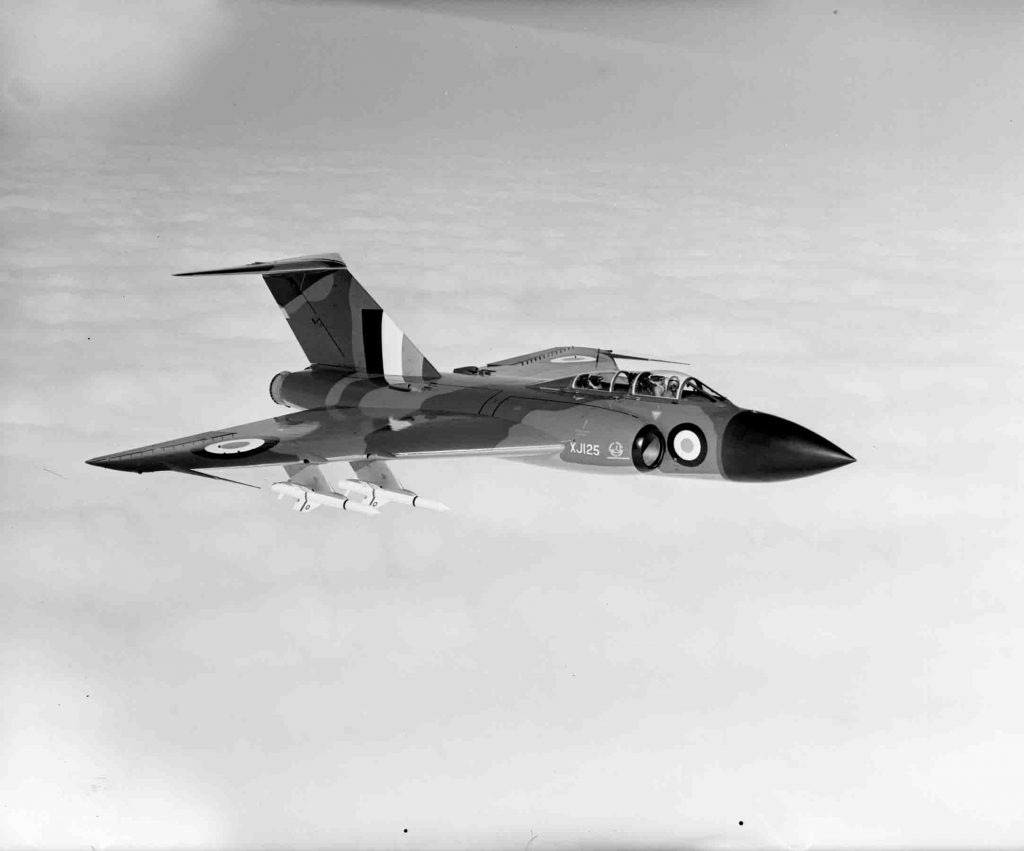
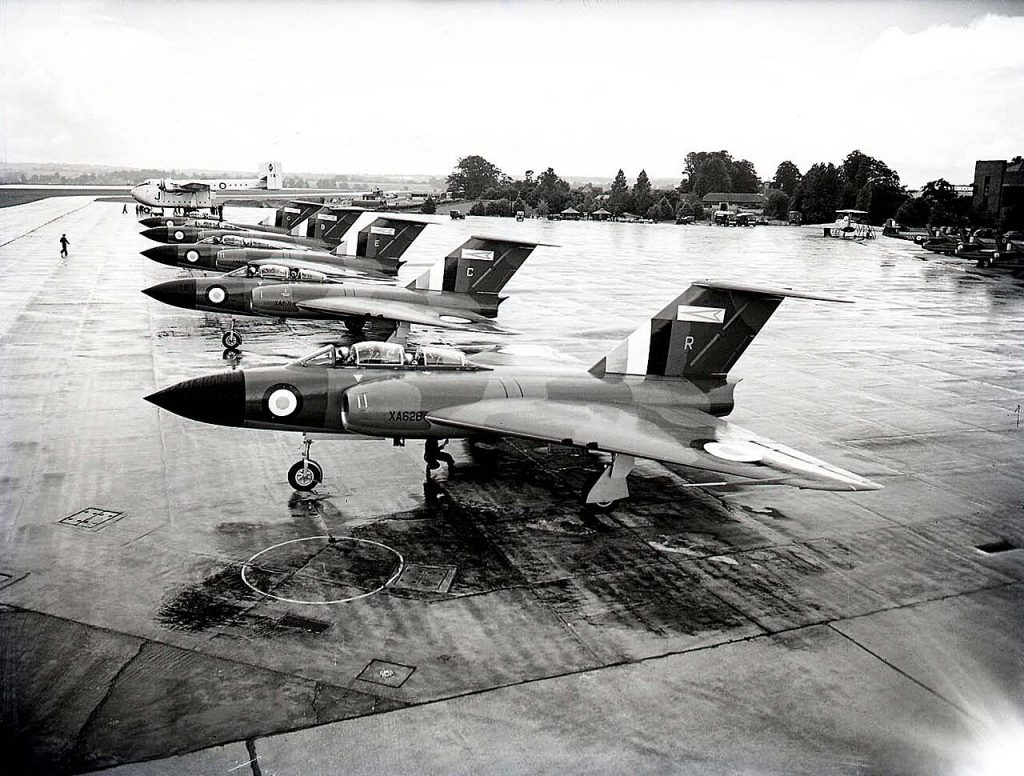
The Gloster Javelin (FAW.1) entered RAF service in February 1956 with No. 46 Squadron RAF, at Odiham, Hampshire. It went on to replace the Gloster Meteor and serve with 23 front-line RAF squadrons in the UK, Western Europe, the Middle East and the Far East. It was armed with four 30mm ADEN cannon (manufactured at Enfield, North London) and up to four underwing infrared-homing de Havilland Firestreak air-to-air missiles. It served in its all-weather role alongside night fighter variants of the Gloster Meteor, the de Havilland Vampire, de Havilland Venom (1952-1962), Canadian-built Sabre F.4s (1952-1956), Supermarine Swifts (1954-1961), and swept-wing Hawker Hunters (1954-1994). By 1960, the maximum loaded weight of the Javelin was increased to 43,165 lbs (FAW.9). During the Malaysian-Indonesian conflict (1963-1966), in which the RAF successfully deterred the Indonesian Air Force, Javelin FAW.9 and FAW.9R variants from No. 60 and No. 64 Squadrons RAF flew from RAF Tengah, Singapore, on air escort and deterrence missions from airfields in Borneo (Sarawak and Sabah). In this conflict, the Javelin proved both its purpose and full capabilities. There were no combat air losses on either side.

But by the early 1960s the Javelin’s trajectory was descending. Some RAF aircrew enjoyed its reliability and endurance but complained about its cumbersome handling, dubbing it the “Gloster Drag Master” or the “Flying Flatiron.” Opinion was divided on the quality and reliability of the Javelin’s available nose cone radar systems. Worse, by 1962 the Javelin was outclassed by the Soviet Union’s first supersonic bombers, the Tupolev TU-22 “Blinder” and Yakovlev Yak-28 “Brewer”. The Javelin simply could not match the speed of these new Soviet aircraft or climb fast enough to intercept them. The Yak-28 could also fly higher, up to 55,000 feet versus the Javelin’s service ceiling of 52,500 feet. By 1966, the RAF withdrew the Javelin from Western European deployment. In 1968, the Javelin was formally retired, replaced by a truly worthy successor, the English Electric Lightning (1960-1988). The Lightning was Britain’s first supersonic fighter interceptor. Its prototype, English Electric P.1, broke the speed of sound in May 1954. Lightnings were capable of flight speeds of Mach 2.2 (1,500 mph), twice that of the Gloster Javelin. In turn, the Lightning was replaced by the McDonnell Douglas F-4M Phantom FGR.2 (1969-1992). The final Gloster Javelin flight took place in 1975.
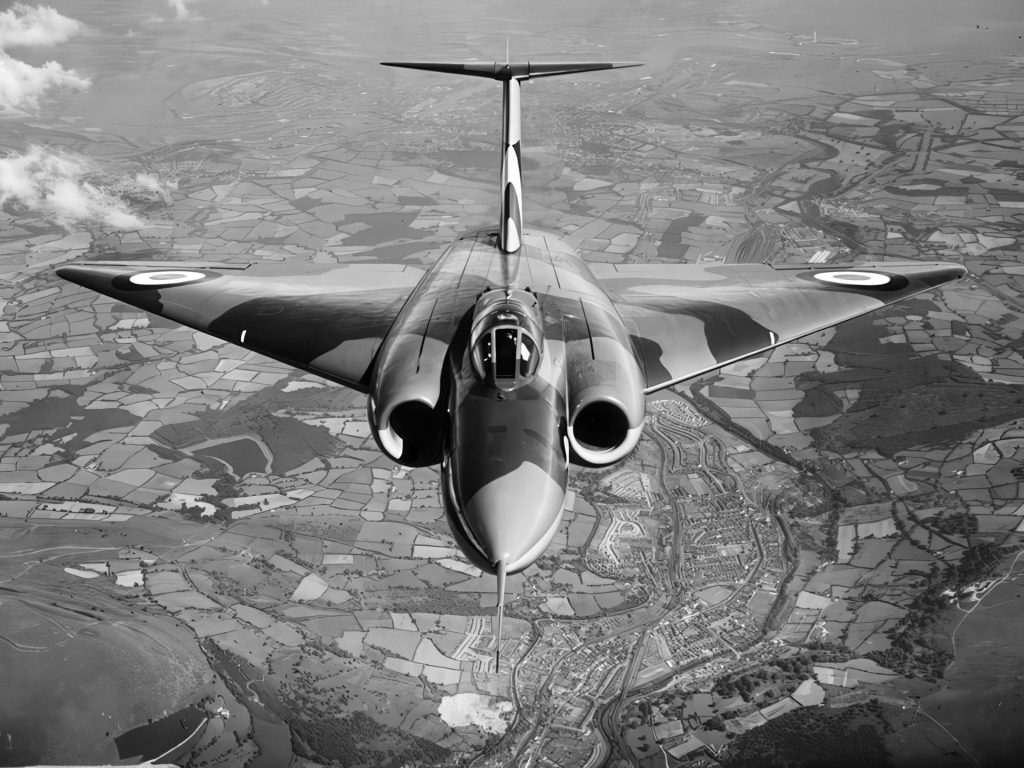
(Image credit: IWM)
Yet the Gloster Javelin’s revolutionary delta wing design never went away. The highly successful Avro Vulcan bomber (1956-1984), mainstay of Britain’s nuclear deterrent V-bomber fleet in the 1960s, also featured its own singular, Avro-designed, delta wing configuration. Indeed, for today’s RAF and military aircraft designers, the future remains delta-shaped. In 2026, the RAF and BAE Systems are developing the BAE Systems Tempest, a sixth-generation jet fighter as part of the Global Combat Air Programme (GCAP), in collaboration with Italy and Japan. Set to enter RAF service in 2035, to replace the Eurofighter Typhoon, the Tempest has an ultra-modern cropped delta wing design.

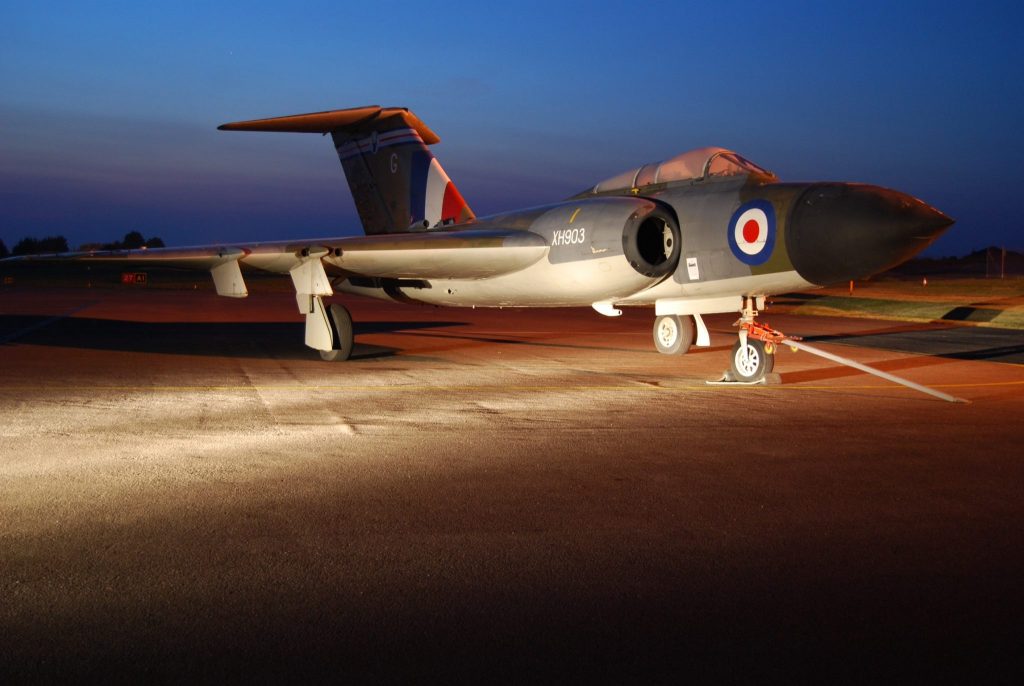
In this Thanksgiving week, 75 years since its first test flight, the Gloster Javelin’s delta legacy lives on. Today, while none remain airworthy, a total of nine Javelins are on static museum display in the UK and Europe. Visitors to the UK can see FAW.1, FAW.5, FAW.8, FAW.9 and FAW.9R Gloster Javelins at: RAF Museum Midlands (Cosford, Shropshire), Imperial War Museum Duxford (Cambridgeshire), Jet Age Museum (Gloucester, Gloucestershire), Norfolk & Suffolk Air Museum (Flixton, Suffolk), Midland Air Museum (Baginton, Warwickshire), Newark Air Museum (Winthorpe, Nottinghamshire), and East Midlands Aeropark (Castle Donington, Derbyshire). A further Javelin example is on display at the Museo dell’Aviazione (Cerbaiola, Rimini, Italy), and a FAW.7 nose cone is on display at Caernarfon Airworld, Gwynedd, Wales.