





On this day in aviation history, 57 years ago (November 26, 1969), the Conroy CL-44-O Skymonster took flight for the first time. Developed by American aircraft designer John M. Conroy, the unusual four-engine cargo aircraft was a heavily modified Canadair CL-44 freighter featuring an enormous, enlarged fuselage. The aircraft was designed to transport oversized cargo that could not easily fit aboard conventional transports. Conroy had previously founded Aero Spacelines, the company responsible for developing the famous Guppy family of oversized cargo aircraft. His new design applied a similar concept to the Canadair CL-44, a turboprop freighter derived from the Bristol Britannia. The conversion was performed at Santa Barbara Airport in California, where the original aircraft’s upper fuselage was removed and replaced with a much larger structure. The aircraft retained its distinctive swing-tail loading arrangement, allowing bulky cargo to be loaded from the rear.
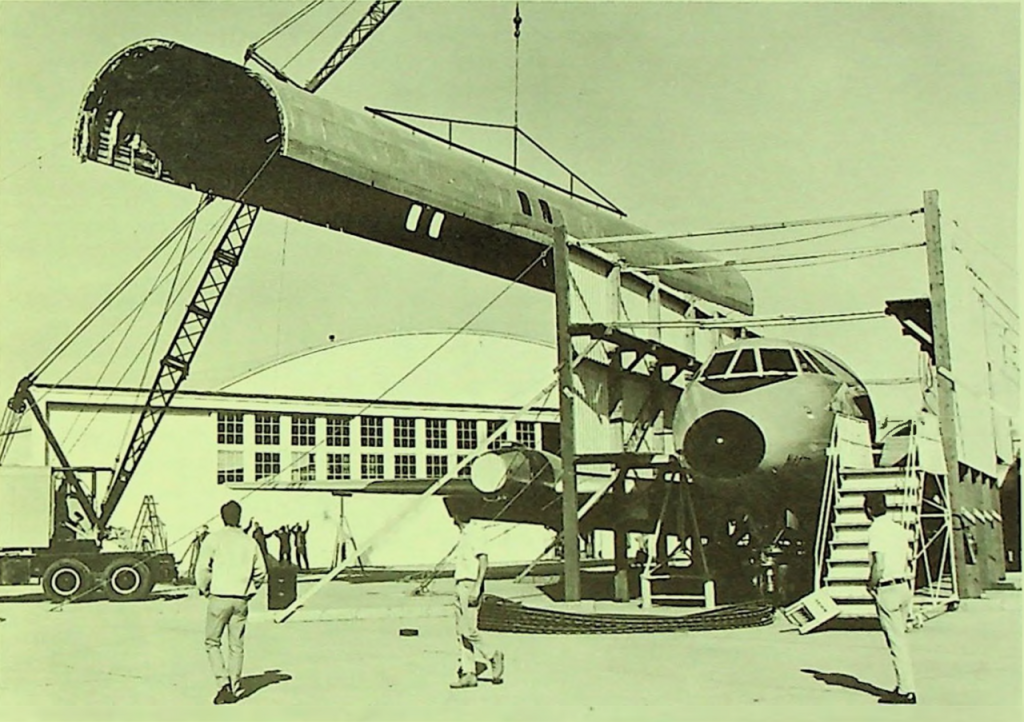
The Skymonster was originally intended to transport Rolls-Royce RB.211 jet engines from Northern Ireland to California for installation on the Lockheed L-1011 TriStar airliner. However, Conroy lost the transportation contract to a competing operator using Lockheed Hercules aircraft. Only one Skymonster was completed, entering service with Transmeridian Air Cargo in 1970. It subsequently operated with several cargo airlines, including British Cargo Airlines and HeavyLift Cargo Airlines, before eventually being stored at Bournemouth Airport in England. After decades of uncertain preservation efforts, the aircraft was dismantled in early 2025. The Conroy CL-44-O retained four Rolls-Royce Tyne turboprop engines, each producing approximately 5,730 equivalent shaft horsepower. Contemporary specifications listed a cruising speed of 350 mph, a maximum takeoff weight of 210,000 pounds, and a payload capacity of 62,500 pounds. Its enlarged cargo compartment measured 98 feet 1 inch in overall length, with a maximum internal width of 13 feet 11 inches and a height of 11 feet 4 inches. The conversion approximately doubled the original CL-44’s internal cargo volume while retaining its basic wing, engines, and landing gear.