We appreciate the support from readers like you at Foxiz. Through your purchases using the links on our site, you empower us with affiliate commissions.
Flying Leatherneck Aviation Museum Acquires C-130 Instrument Trainer
Following a trek across the United States, a C-130 cockpit trainer will be restored by the Flying Leatherneck Aviation Museum in a former C-130 hangar at the former MCAS El Toro.
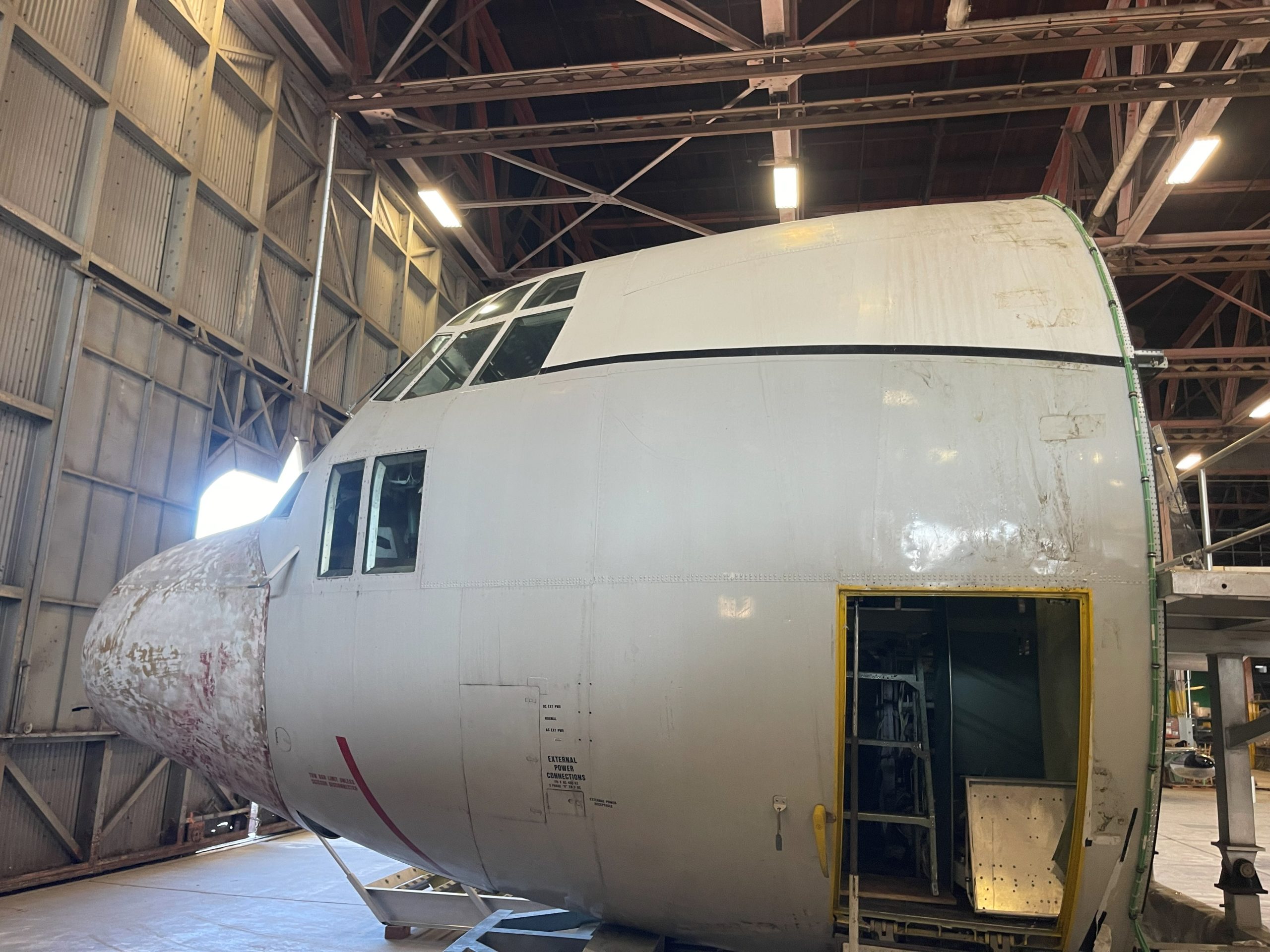
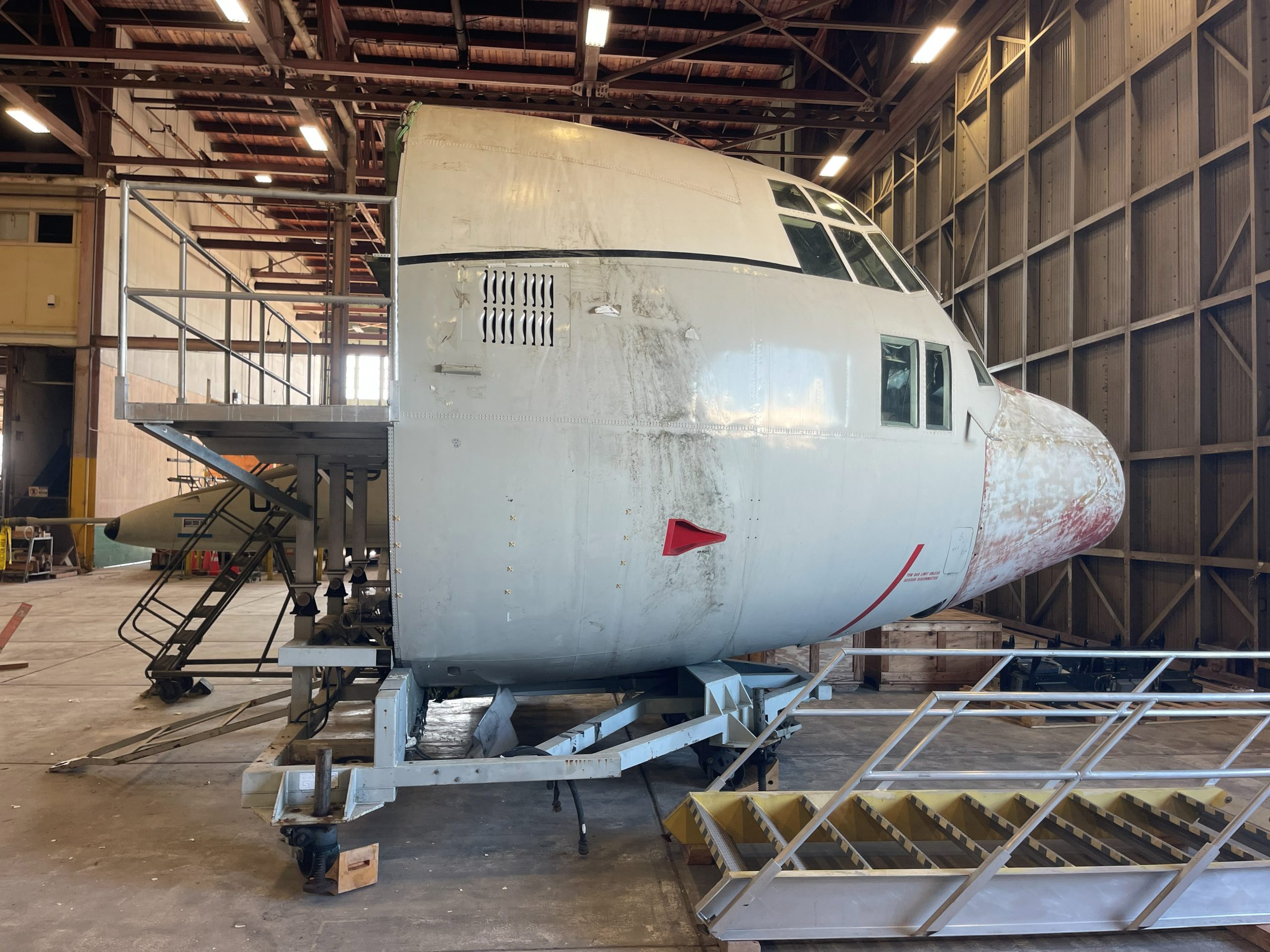
C-130 Communications/Navigation /Instrumentation (CNI) trainer inside Hangar 297 of the Flying Leatherneck Aviation Museum. (Image credit: Adam Estes)
SHARE
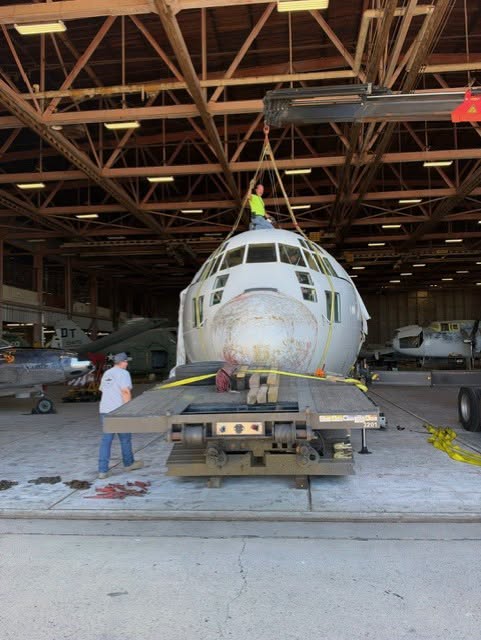
On Veterans Day 2026, the nose of a Lockheed C-130 Hercules formerly used as a cockpit instrument trainer was delivered to the Flying Leatherneck Aviation Museum at Hangar 297 on the former site of Marine Corps Air Station El Toro in Irvine, California, following a cross-country journey from Naval Air Station Patuxent River, Maryland. For the museum that is still building its new permanent building at the Orange County Great Park, the C-130 cockpit represents the largest fixed-wing aircraft in the US Marine Corps’ inventory and allows the museum to use the cockpit section to represent the C-130s that were once serviced in the very same hangar being used as the museum’s storage and restoration facility.
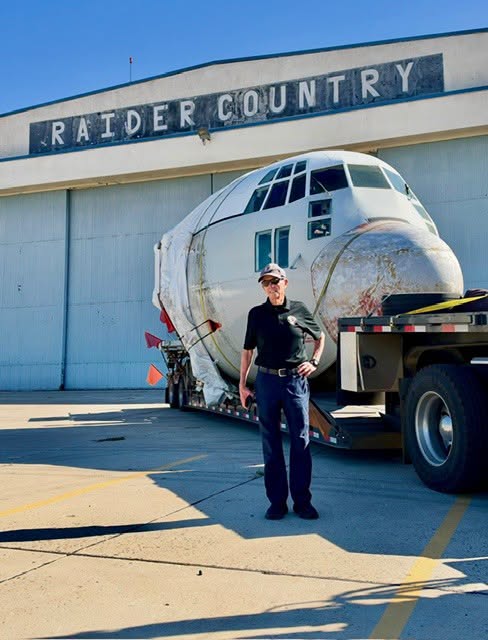
C-130 Communications/Navigation /Instrumentation (CNI) trainer arrives at the Flying Leatherneck Aviation Museum inside the former VMGR-352 “Raider Country” hangar. (Image credit: Flying Leatherneck Aviation Museum)
While the exact identity of the airframe from which this cockpit trainer came is unclear, given the lack of data plates, it was later used for crew familiarization training for the Navy/Marine C-130T training program at Naval Air Station Joint Reserve Base Fort Worth, Texas. In 2012, the cockpit section was moved to NAS Patuxent River and was fitted with the glass cockpit displays of the C-130J Super Hercules, which has become the primary basis for the current iteration of the Hercules family that has remained in service for 70 years. Yet with new advancements in the C-130J program, this cockpit instrument trainer was deemed no longer necessary for continual use at NAS Patuxent River, and in May 2022 it was delivered to the Patuxent River Naval Air Museum in Lexington Park, Maryland, with the intention of being refurbished for use as an interactive exhibit at the museum.
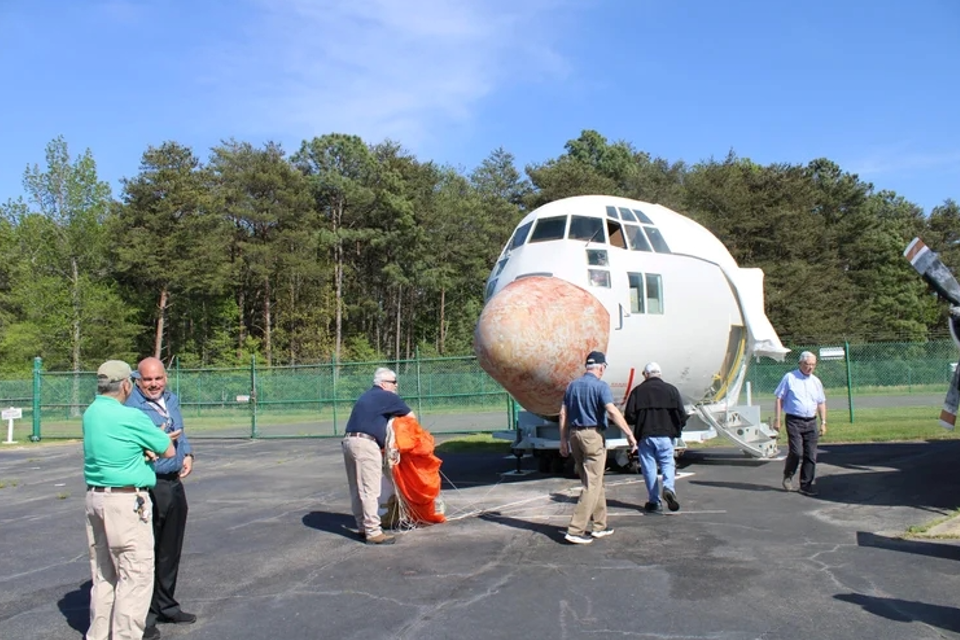
C-130 Communications/Navigation /Instrumentation (CNI) candidate training device being towed to the Patuxent River Naval Air Museum, April 10, 2022. (Image credit: Naval Air Systems Command)
The C-130 cockpit trainer unveiled at the Patuxent River Naval Air Museum, May 2022.
The C-130 cockpit trainer unveiled at the Patuxent River Naval Air Museum, May 2022.
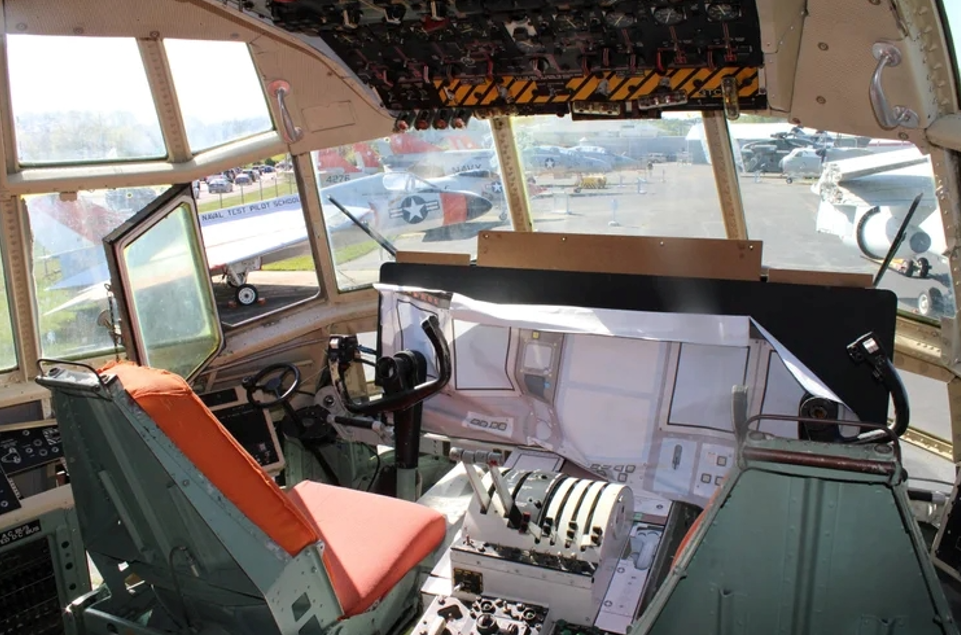
View of the cockpit of the C-130 Communications/Navigation /Instrumentation (CNI) trainer at the Patuxent River Naval Air Museum, Lexington Park, Maryland.
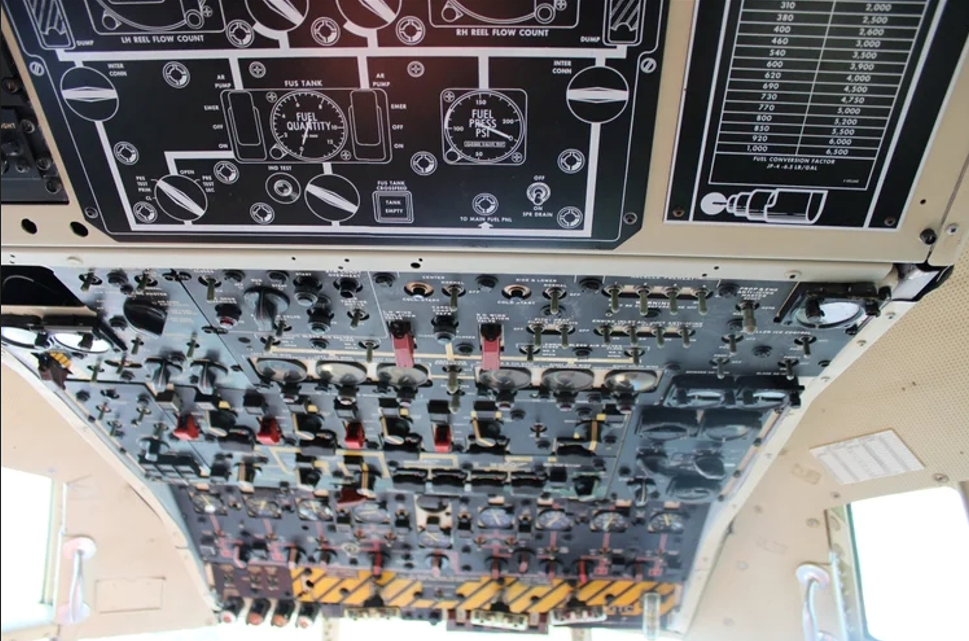
Instrument panel display of the C-130 Communications/Navigation /Instrumentation (CNI) trainer during its time at the Patuxent River Naval Air Museum in Lexington Park, Maryland.
Cockpit view of the C-130 Communications/Navigation /Instrumentation (CNI) trainer during its time at the Patuxent River Naval Air Museum. (Image credit: Patuxent River Naval Air Museum)
However, after four years of being displayed outdoors as part of the flight line at the Patuxent River Naval Air Station, the C-130 cockpit was made available to the Flying Leatherneck Aviation Museum, which raised enough funds to have the 23 feet high, 27 feet long (including a trailer beneath), and 16 feet wide cockpit section transported on an oversize load permit from Patuxent River to Irvine. For the Flying Leatherneck Aviation Museum, the delivery of this cockpit section is made all the more personal as the current restoration/storage hangar in use by the museum, Hangar 297, was famously used as a maintenance hangar for Marine Aerial Refueler Transport Squadron 352 (VMGR-352), nicknamed the “Raiders”. Indeed, the VMGR-352’s insignia still appears on the exterior of Hangar 297, as does the phrase “Raider Country” over one of the hangar doors. Since Hangar 297 was originally built in WWII and never designed to accommodate an aircraft the size of a C-130, the hangar doors were fitted with cut-outs for the tails of the Hercules tankers/transports to jut out of the hangar while the rest of the aircraft would fit inside.
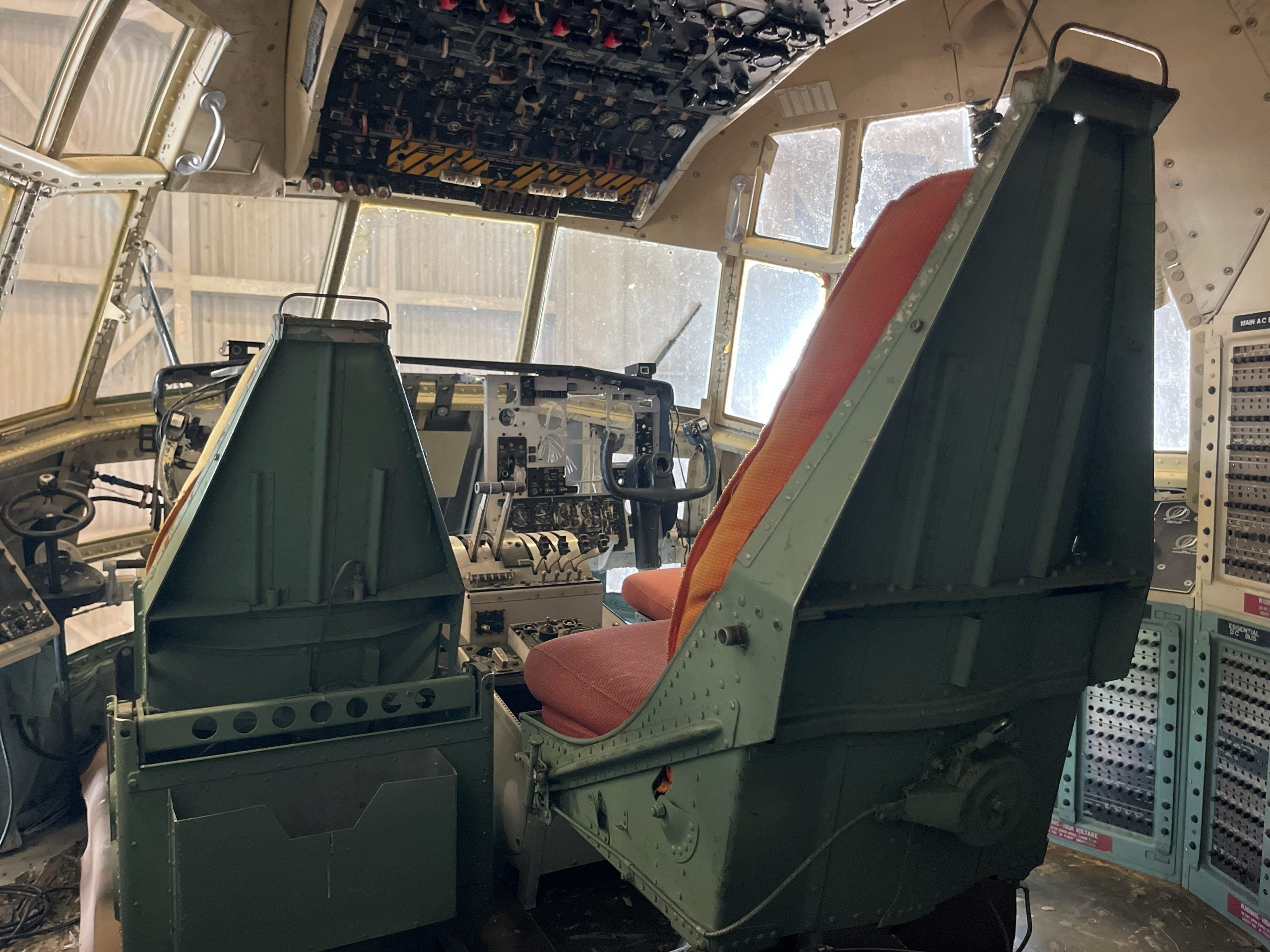
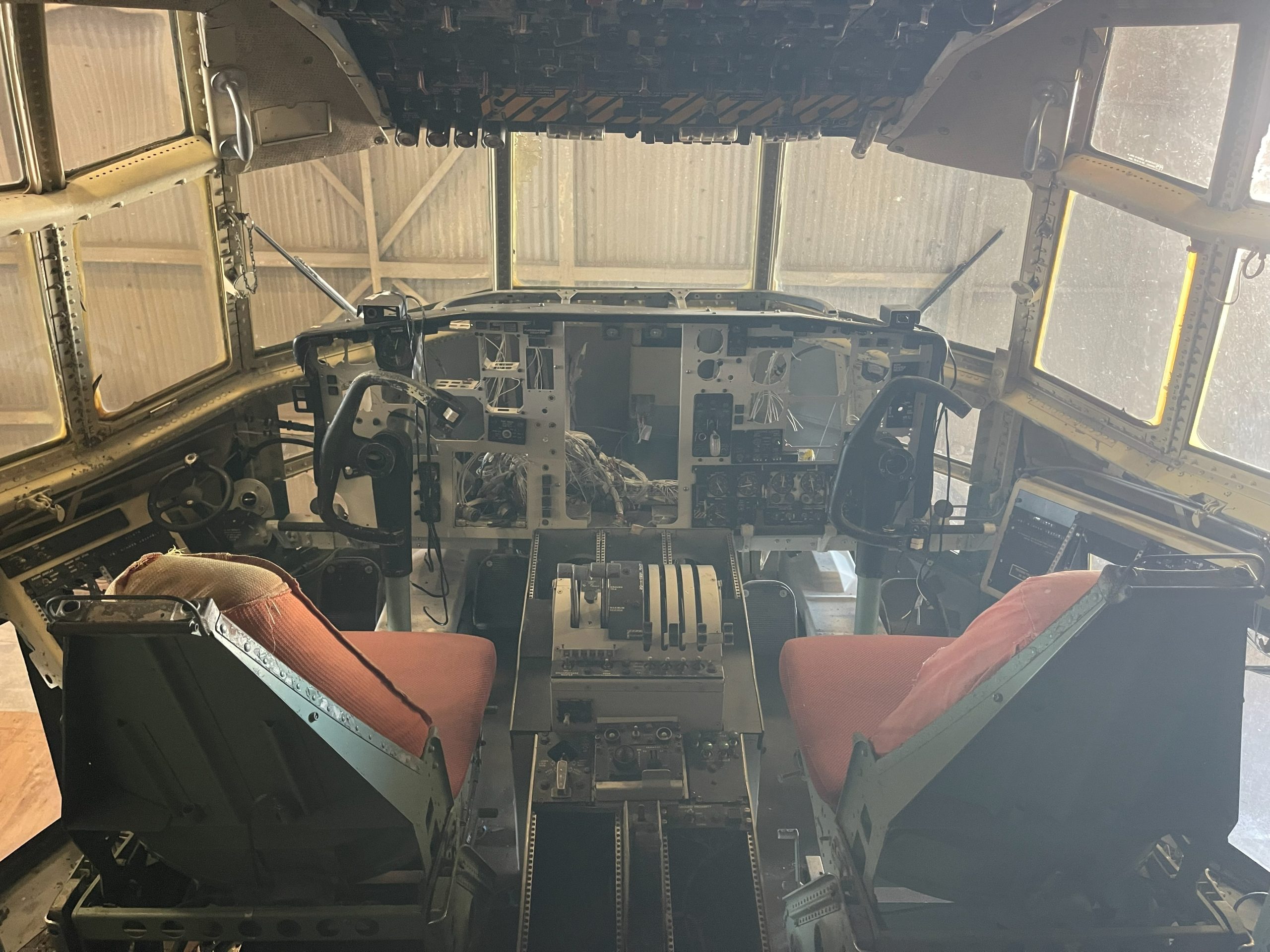
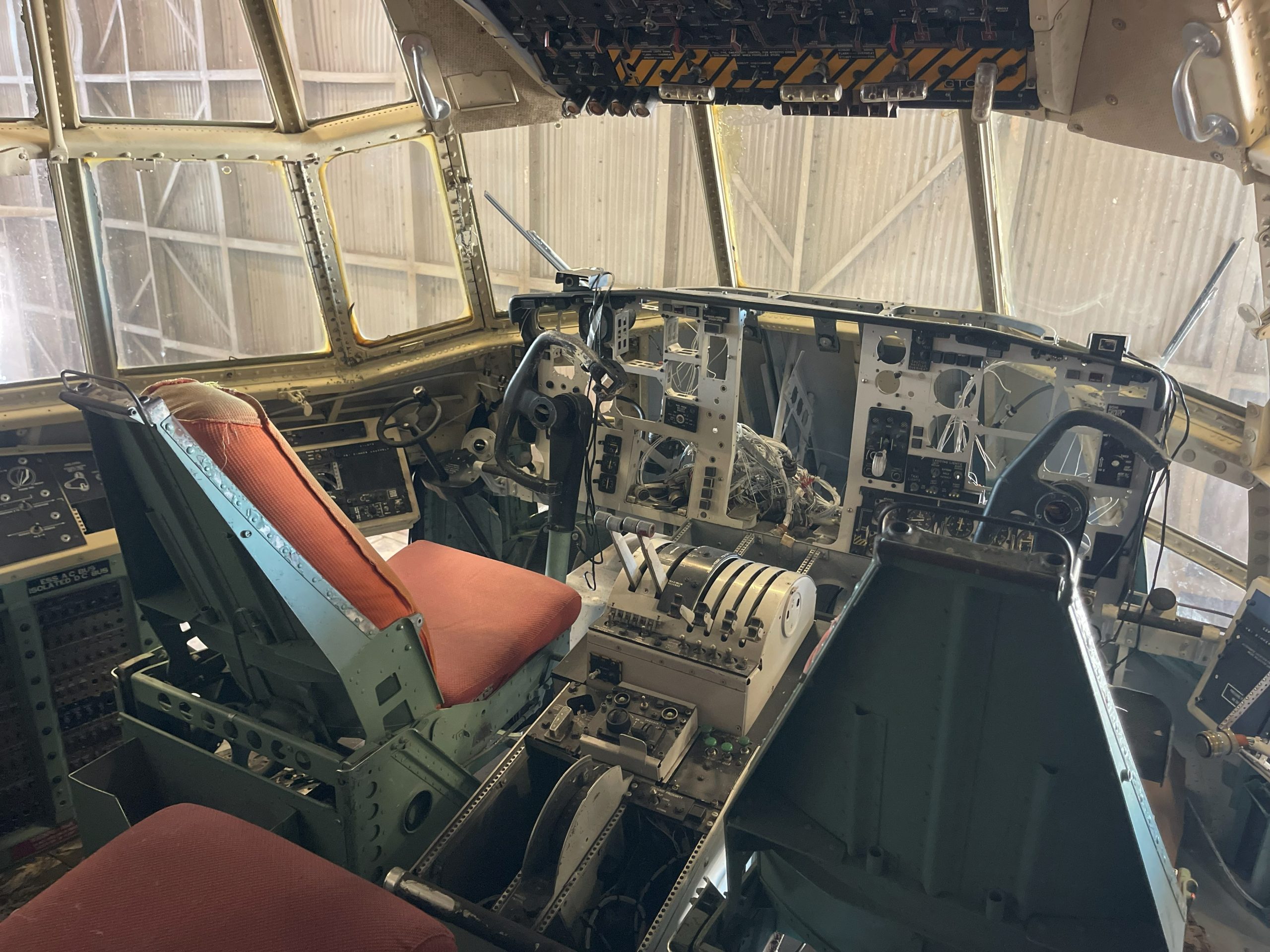
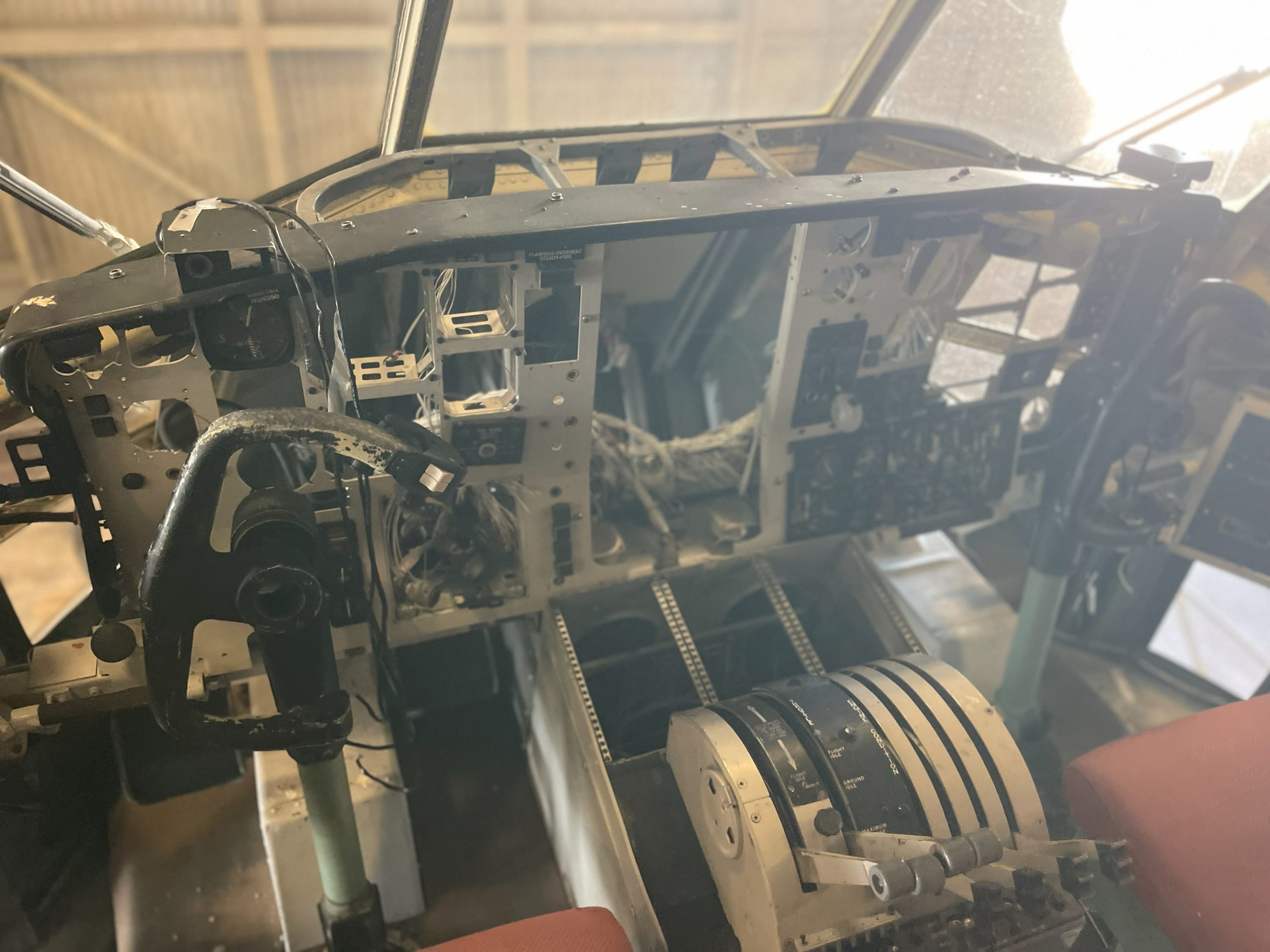
View of the cockpit of the C-130 trainer delivered to the Flying Leatherneck Aviation Museum.
View of the cockpit of the C-130 trainer delivered to the Flying Leatherneck Aviation Museum.
View of the cockpit of the C-130 trainer delivered to the Flying Leatherneck Aviation Museum. The museum intends to restore the cockpit for a new interactive exhibit.
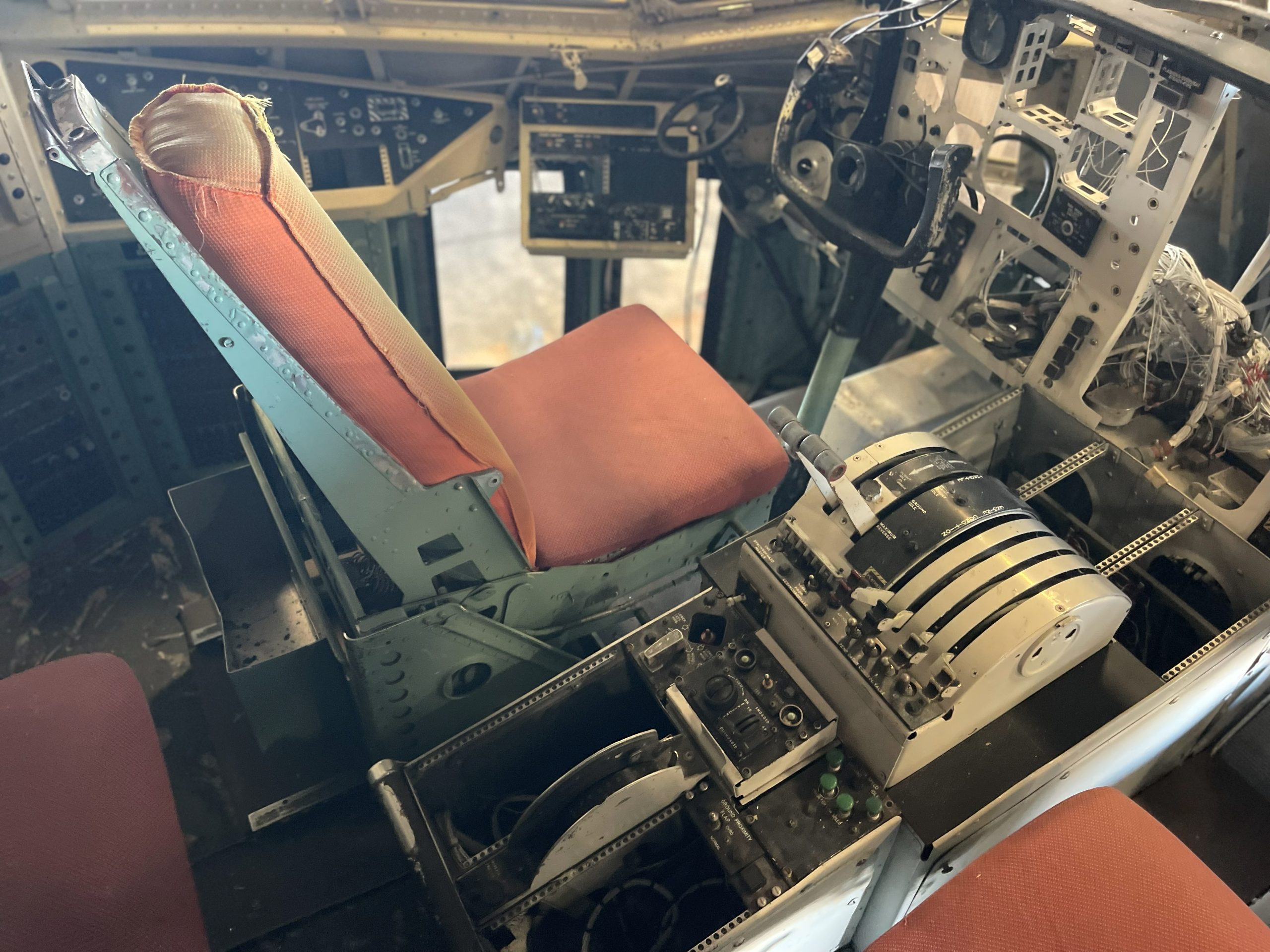
Pilot’s seat and throttle quadrant in the C-130 cockpit trainer inside the Flying Leatherneck Aviation Museum’s Hangar 297.
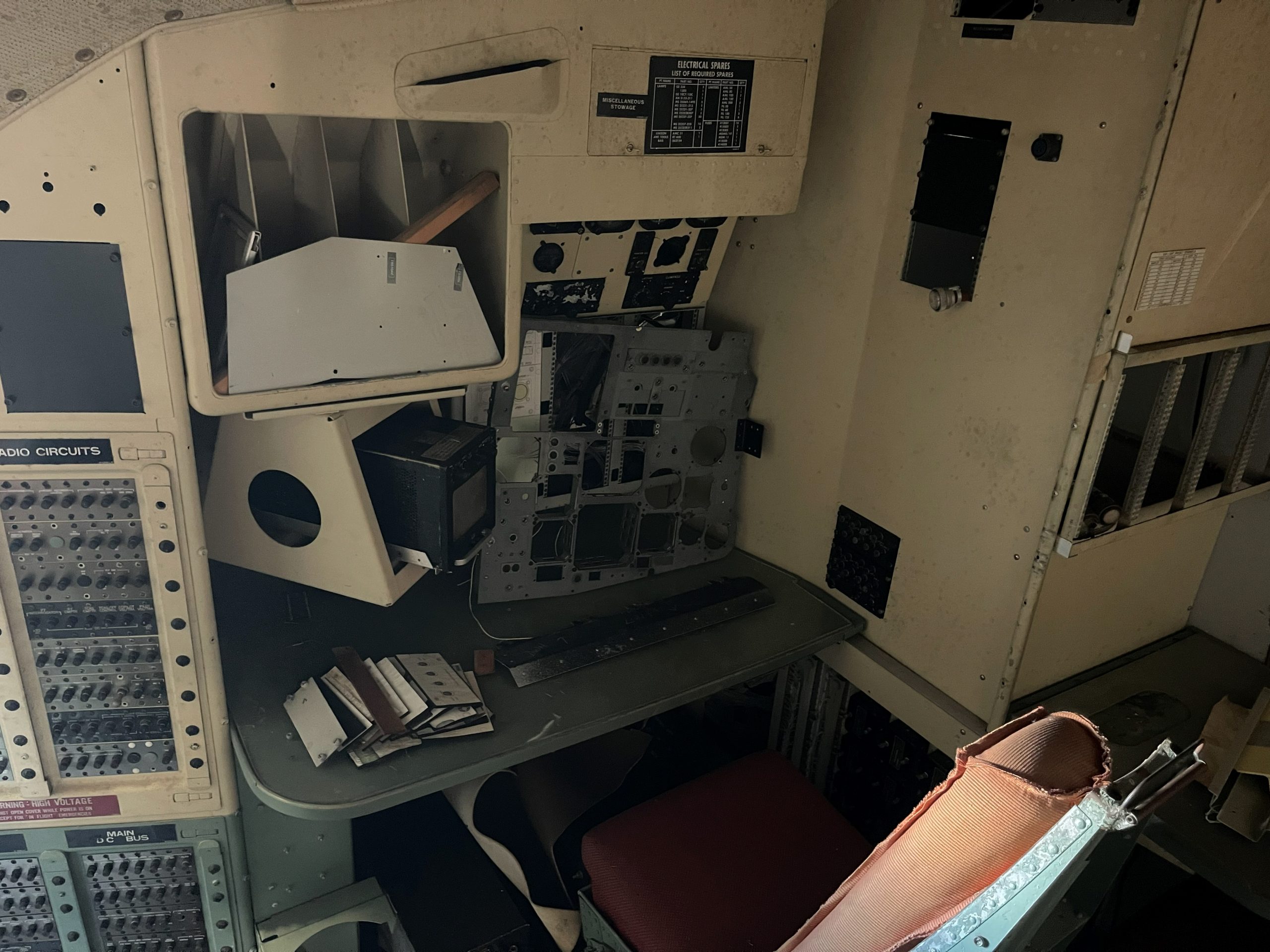
The stripped out instrument panel of the Flying Leatherneck Aviation Museum’s new C-130 cockpit trainer, which will be refitted with “steam gauges” for a new interactive display.
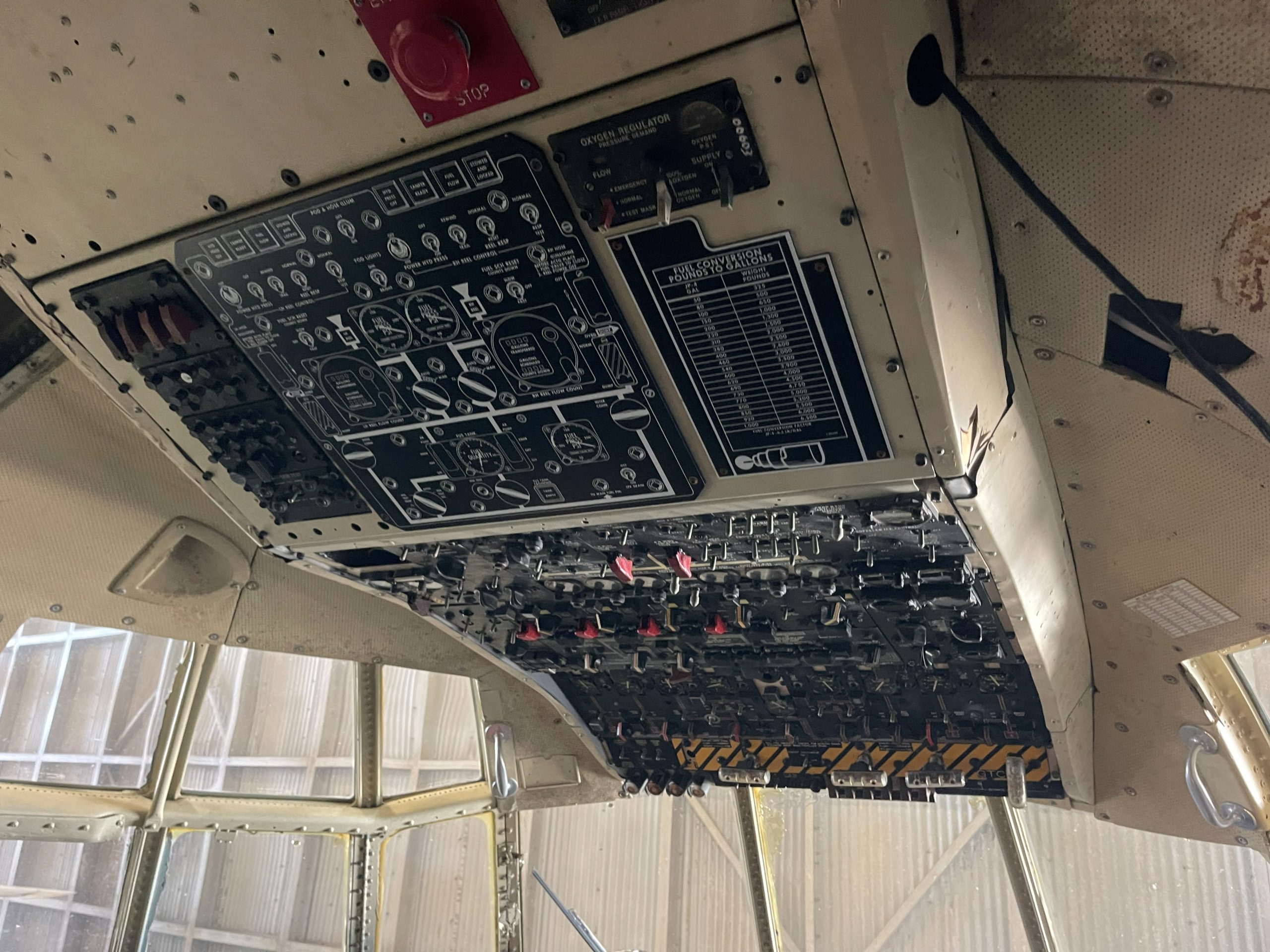
Overhead instrument panel in the C-130 cockpit trainer delivered to the Flying Leatherneck Aviation Museum.
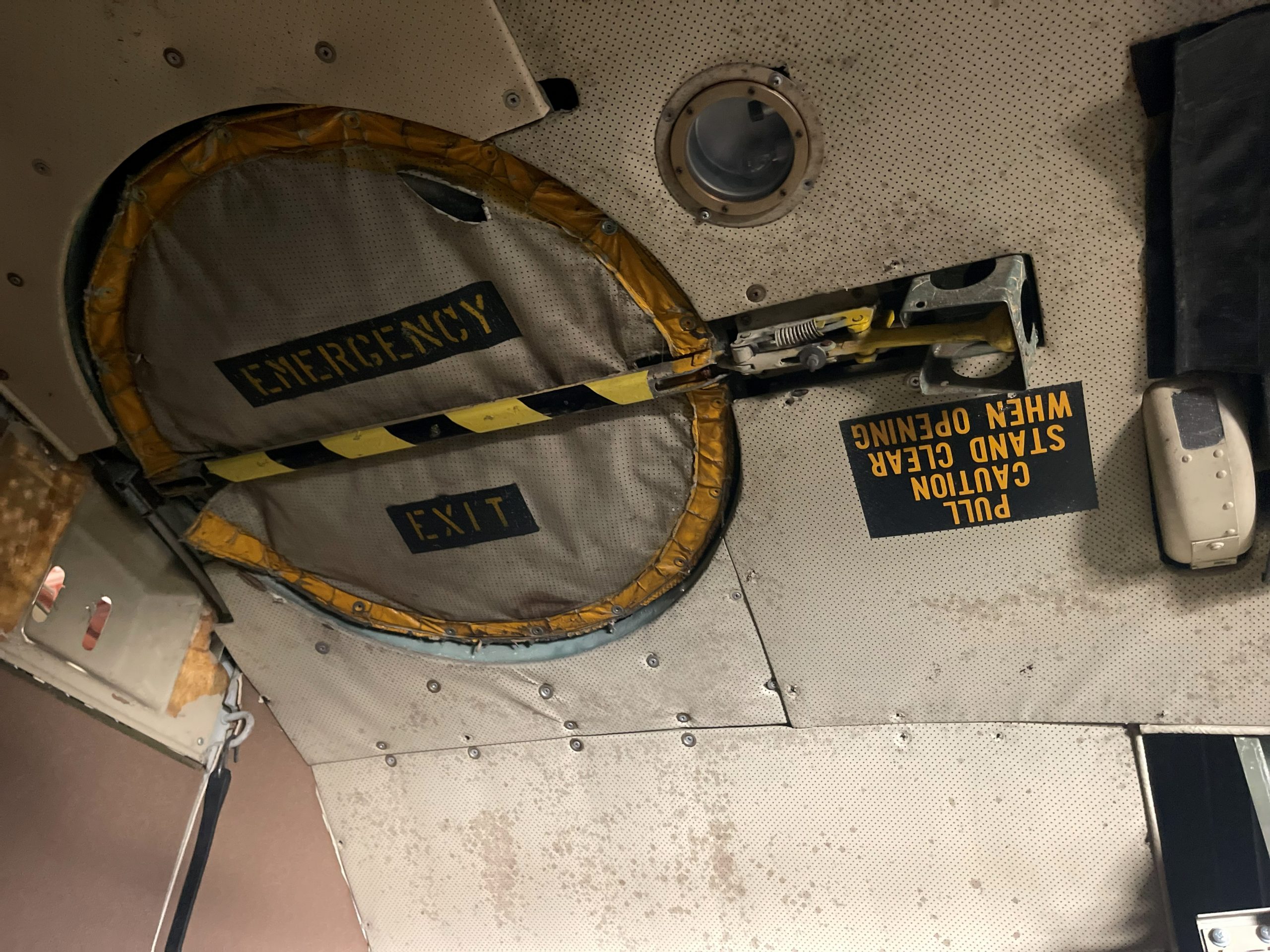
Emergency exit hatch in the roof of the C-130 cockpit trainer delivered to the Flying Leatherneck Aviation Museum.
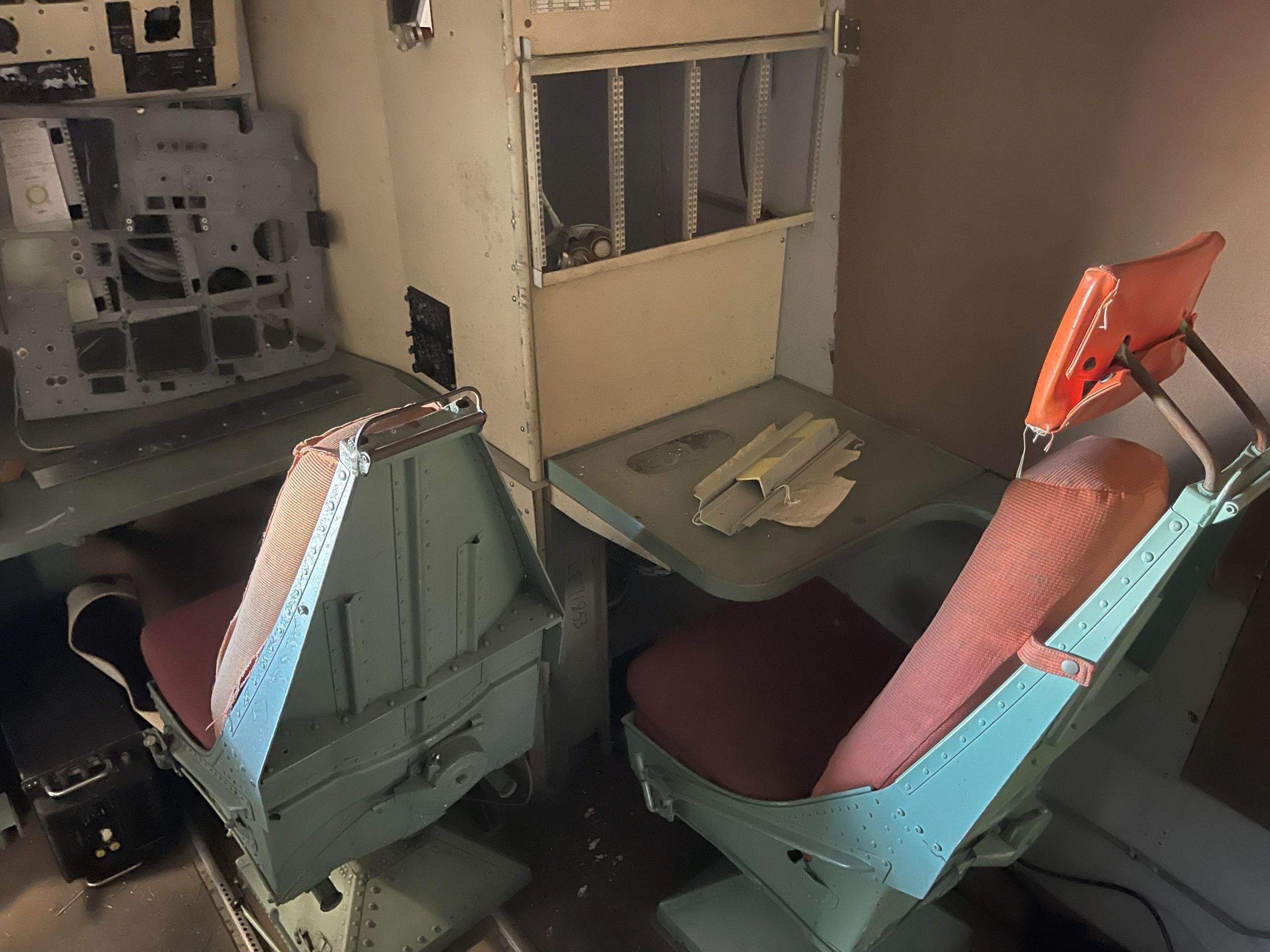
Navigator and flight engineer stations in the Flying Leatherneck Aviation Museum’s C-130 cockpit trainer.
The flight engineer’s station inside the Flying Leatherneck Aviation Museum’s new C-130 cockpit trainer.
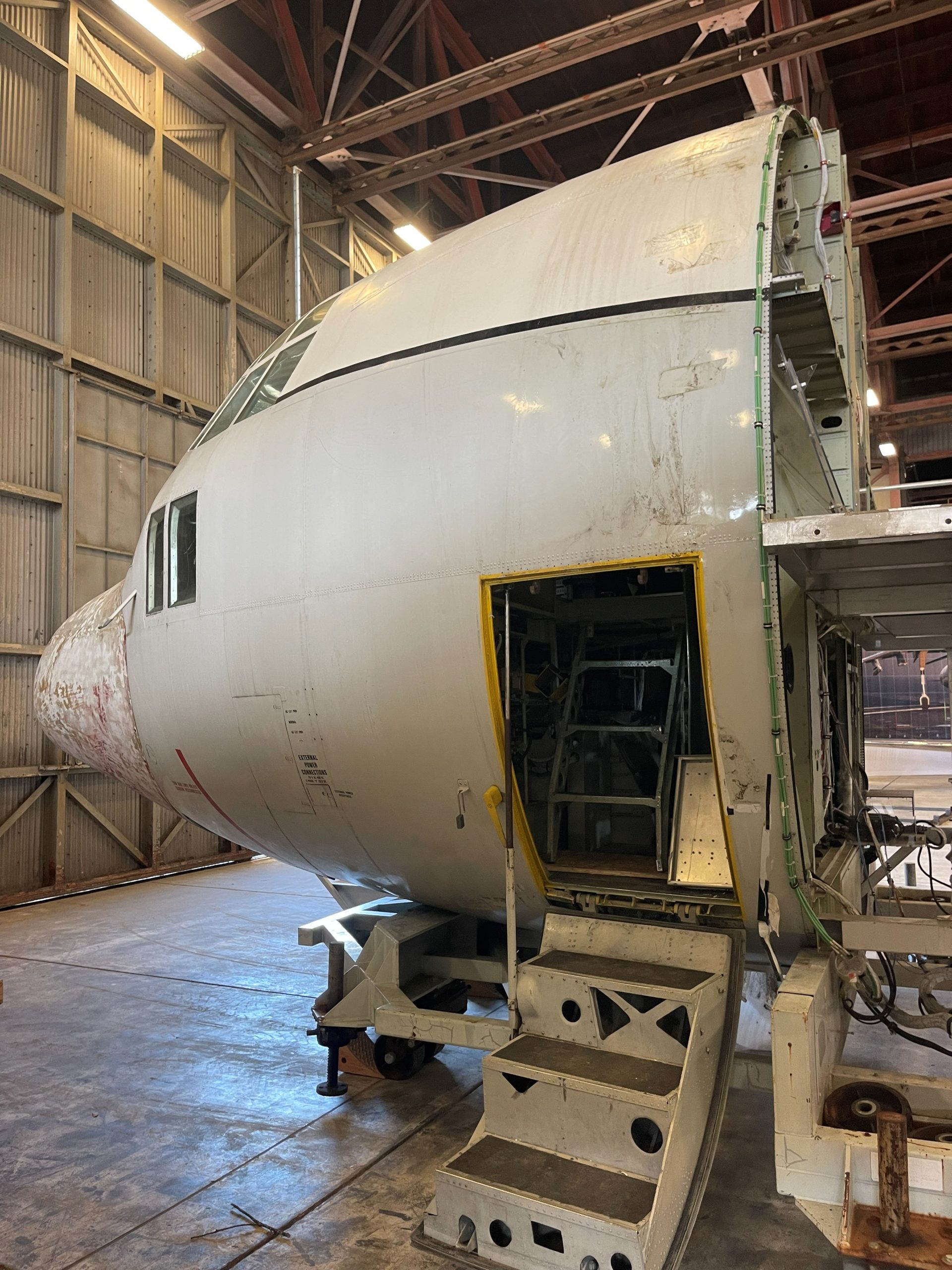
Left hand side view of the C-130 Communications/Navigation /Instrumentation (CNI) trainer inside Hangar 297 of the Flying Leatherneck Aviation Museum, with its crew access hatch open.
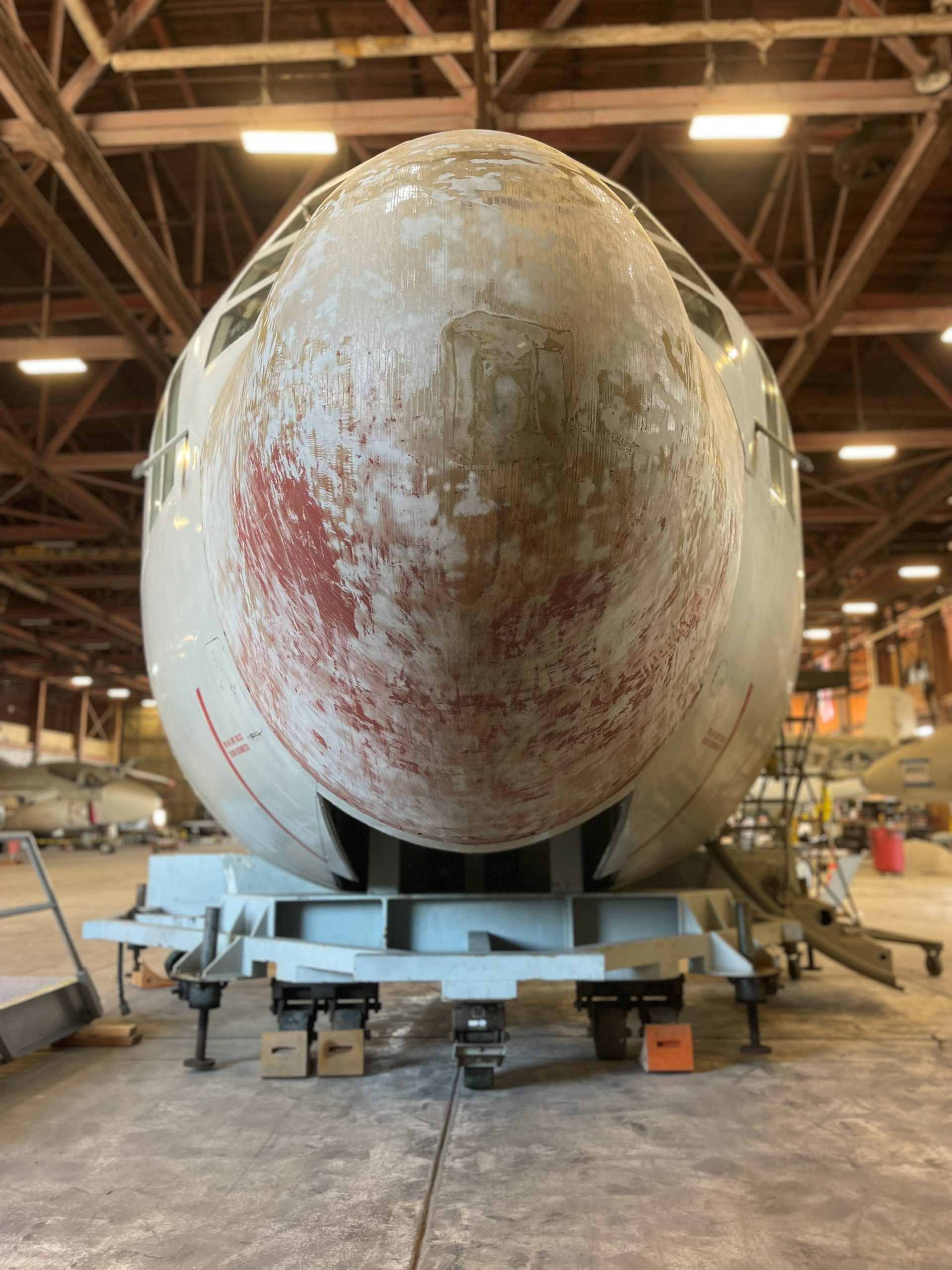
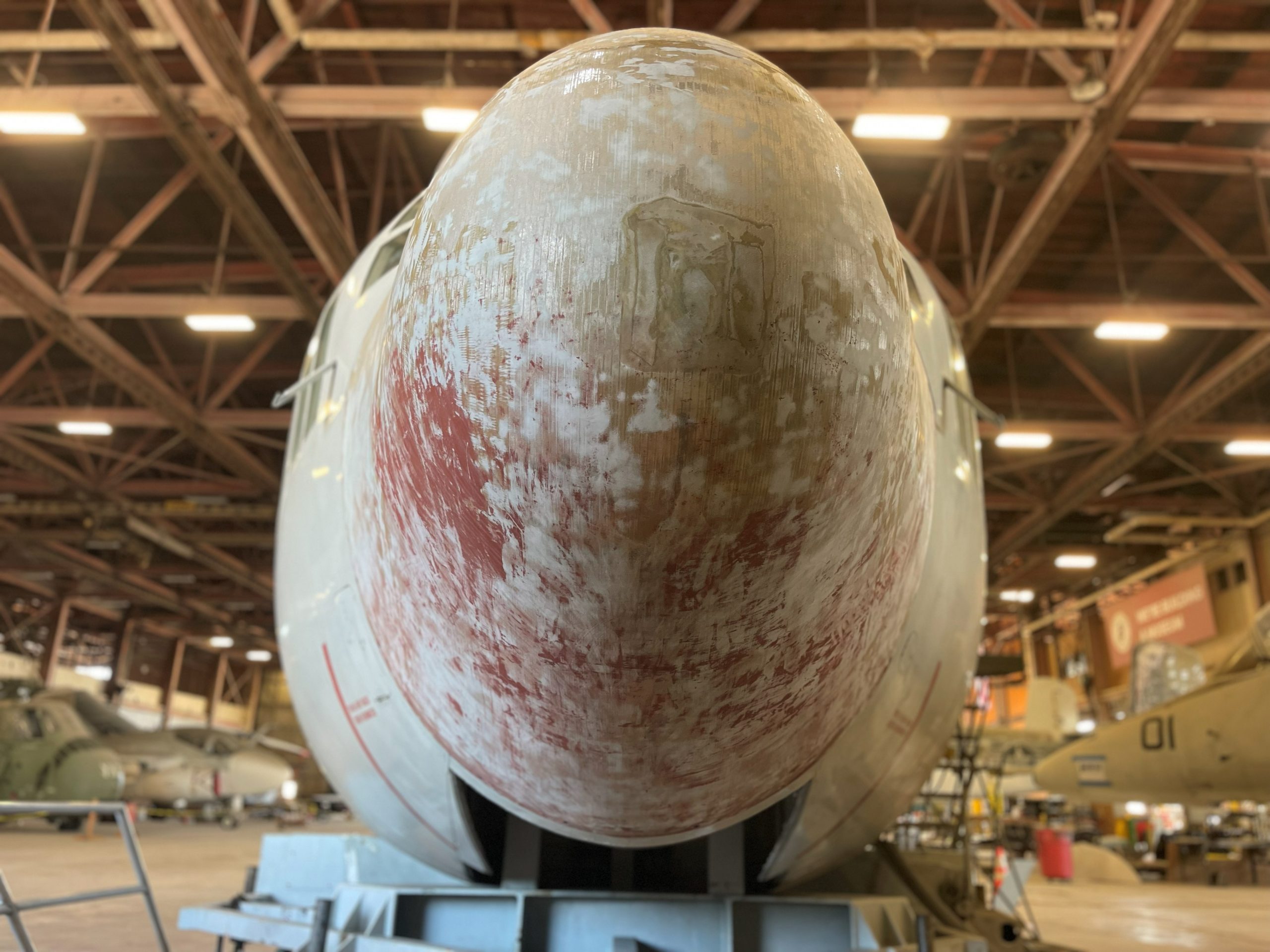
Head-on view of the C-130 Communications/Navigation /Instrumentation (CNI) trainer inside Hangar 297 of the Flying Leatherneck Aviation Museum.
C-130 Communications/Navigation /Instrumentation (CNI) trainer inside Hangar 297 of the Flying Leatherneck Aviation Museum, where it will be refurbished for a new interactive exhibit.
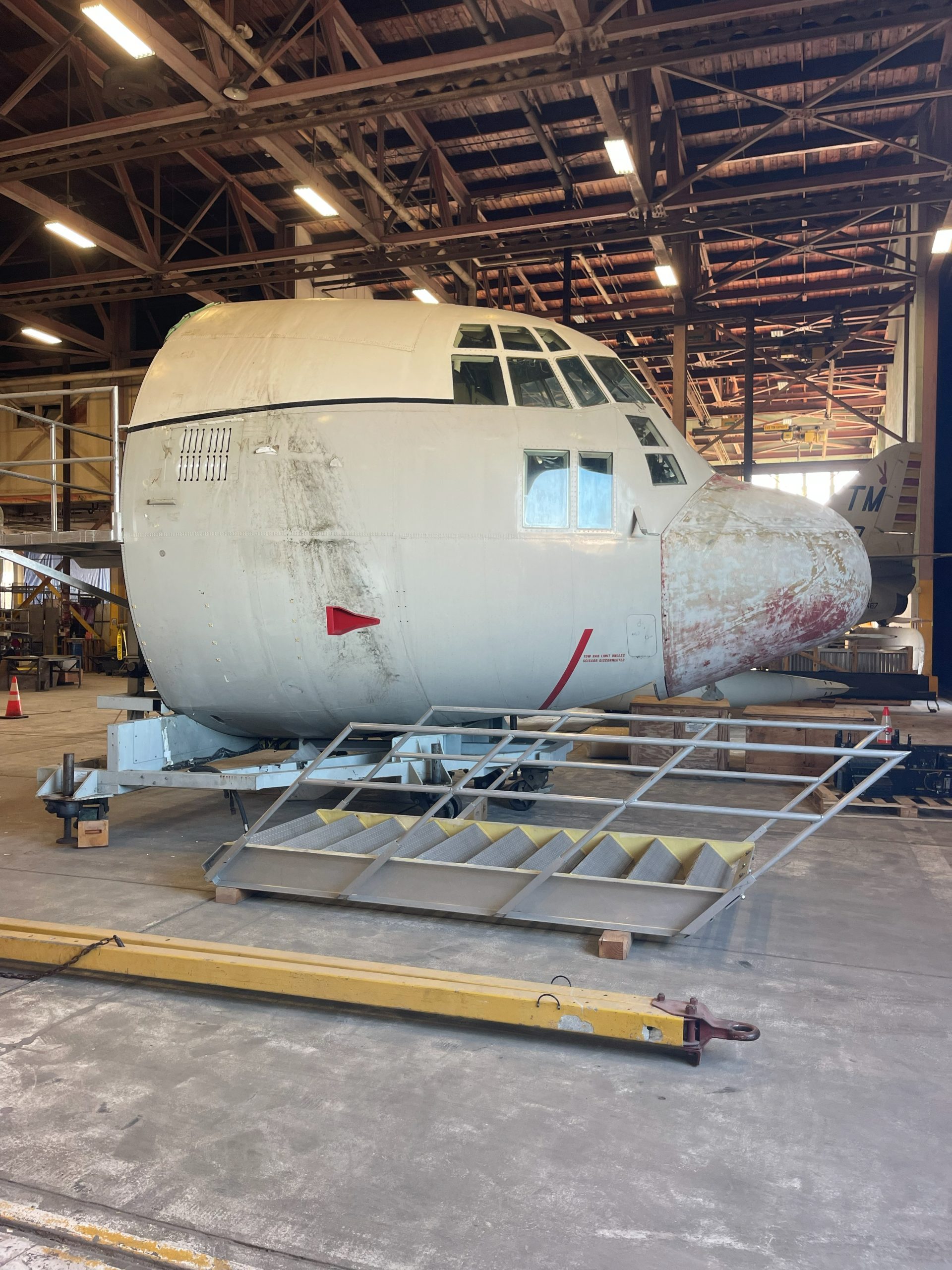
Left hand profile view of the C-130 Communications/Navigation /Instrumentation (CNI) trainer inside Hangar 297 of the Flying Leatherneck Aviation Museum.
Nose of the C-130 Communications/Navigation /Instrumentation (CNI) trainer inside Hangar 297 of the Flying Leatherneck Aviation Museum.
Profile of the C-130 Communications/Navigation /Instrumentation (CNI) trainer inside Hangar 297 of the Flying Leatherneck Aviation Museum.
Head-on view of the C-130 Communications/Navigation /Instrumentation (CNI) trainer inside Hangar 297 of the Flying Leatherneck Aviation Museum. (Image credit: Adam Estes)
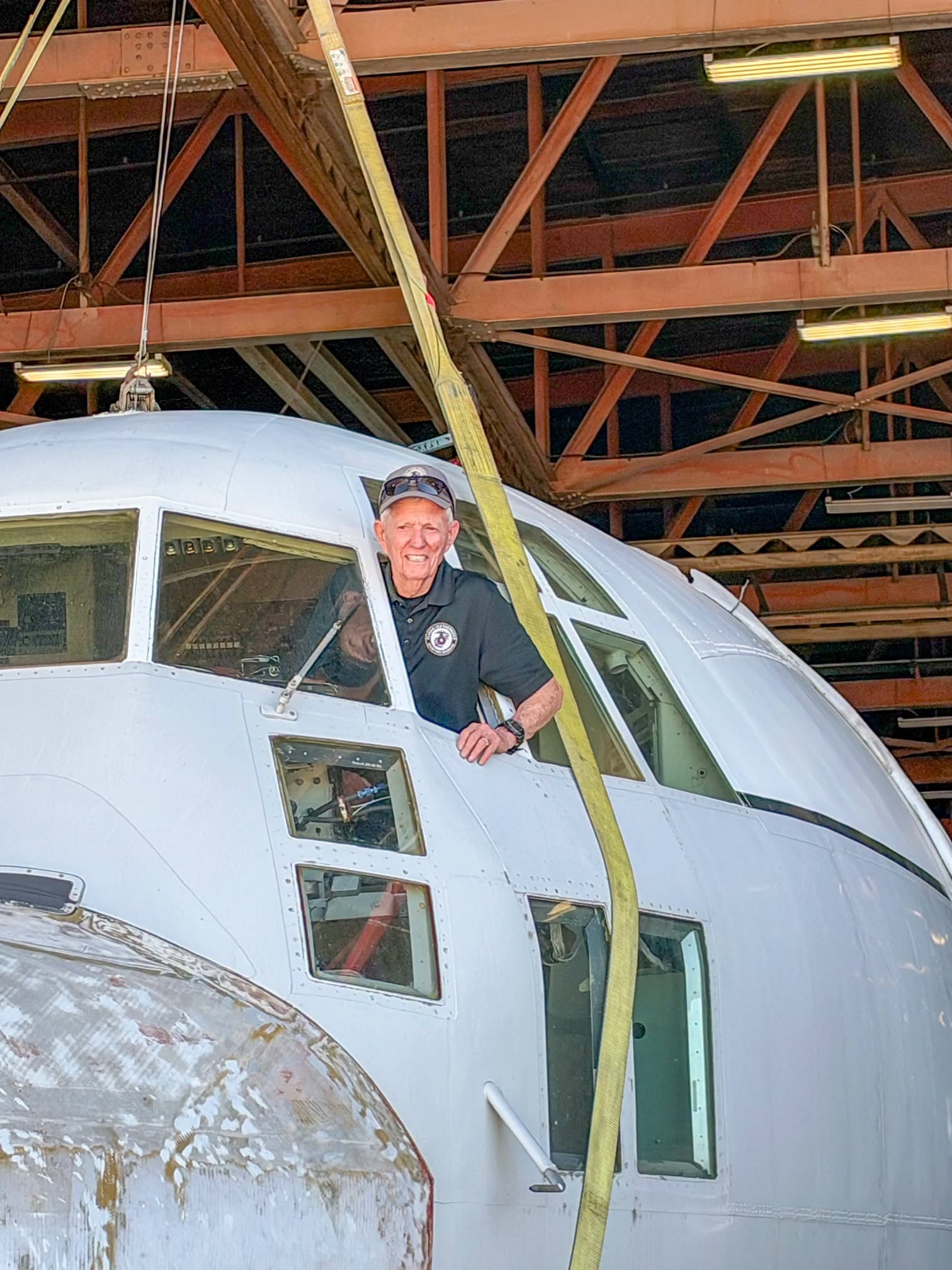
Additionally, one of the Board Members of the FLAM, Colonel Tom O’Malley, USMC (Ret.), was the former commanding officer of VMGR-352 and was there to greet the C-130 cockpit trainer on its arrival at Hangar 297. With the arrival of the C-130 cockpit trainer, the Flying Leatherneck Aviation Museum’s restoration team, already at work on other projects such as a B-25J Mitchell, F-8J Crusader, and F-5 Freedom Fighter, will refit the cockpit’s instrument panel and flight engineer’s station to be opened as an interactive exhibit when the museum opens in the new hangar under construction near Hangar 297, which is expected to open to the public in spring 2028. For more information, visit the Flying Leatherneck Aviation Museum’s website HERE.
Colonel Tom O’Malley USMC (Ret.), former commander of VMGR-352 and board member of the FLAM, stands in front of the C-130 instrument trainer shortly after its arrival at the Flying Leatherneck Aviation Museum.
The C-130 cockpit trainer arrives at the Flying Leatherneck Aviation Museum’s storage and restoration hangar to be refurbished for eventually display at the new museum in by spring 2028.
Former commander of VMGR-352 Colonel Tom O’Malley, USMC (Ret.) proudly stands in the cockpit of the C-130 nose section delivered to the Flying Leatherneck Aviation Museum.
Interior view of the crew access hatch of the C-130 cockpit trainer now placed inside the Flying Leatherneck Aviation Museum’s restoration/storage hangar. (Image credit: Adam Estes)Rendering of the C-130 instrument trainer displayed in the new Flying Leatherneck Aviation Museum building, currently under construction and expected to open in 2028. (Image credit: Flying Leatherneck Aviation Museum)
Raised in Fullerton, California, Adam has earned a Bachelor's degree in History and is now pursuing a Master's in the same field. Fascinated by aviation history from a young age, he has visited numerous air museums across the United States, including the National Air and Space Museum and the San Diego Air and Space Museum. He volunteers at the Planes of Fame Air Museum in Chino as a docent and researcher, gaining hands-on experience with aircraft maintenance. Known for his encyclopedic knowledge of aviation history, he is particularly interested in the stories of individual aircraft and their postwar journeys. Active in online aviation communities, he shares his work widely and seeks further opportunities in the field.
Vintage Aviation News now offers an ad-free reading experience. Enjoy faster-loading pages, uninterrupted stories, and the satisfaction of helping us preserve aviation history.