


By Marcus Gibson
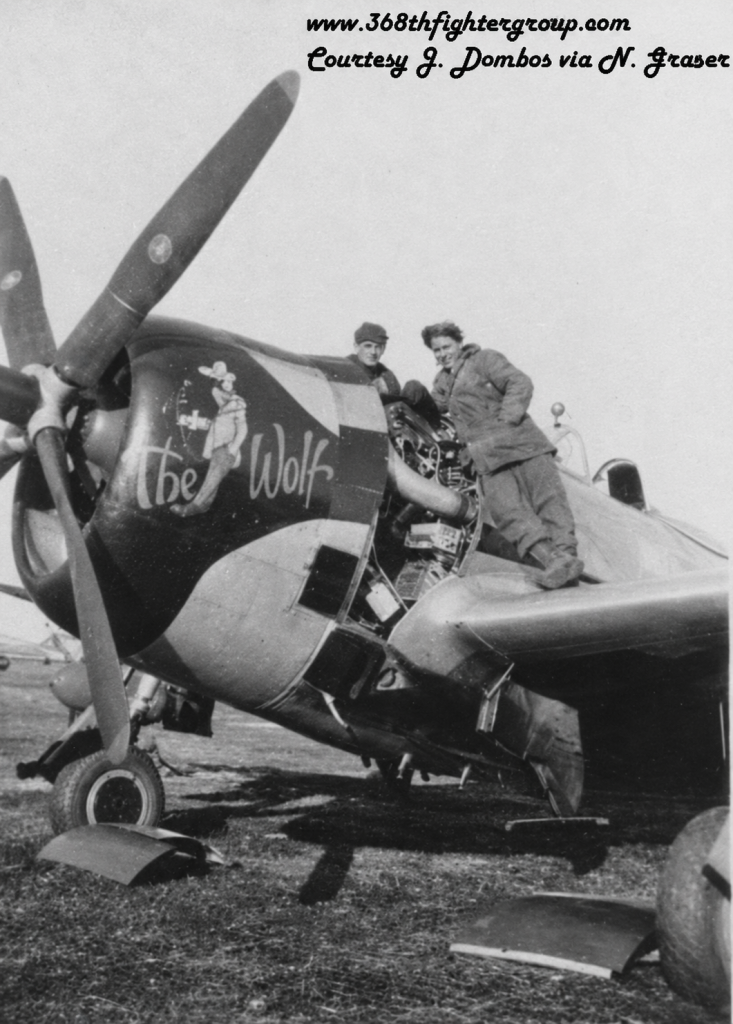
Rain grounded the U.S. Army Air Forces’ 368th Fighter Group at Chièvres, Belgium, on Thanksgiving Day, November 23, 1944. With flying operations called off, the group sat down to roast turkey and dressing, sweet potatoes, cranberries, and cake. Its unit history called it the best meal most of the men had eaten since arriving on the European continent. That dinner had been months in the making. In September, the U.S. Army had promised a Thanksgiving turkey dinner to its troops on the continent. By the end of that month, the Army had more than two million personnel across the European Theater, including 103 air groups. The farther Allied forces advanced from their supply ports, the harder it became to make good on the promise.
The Thanksgiving shipment had to move through a supply network already stretched by the demands of the war. Refrigerated cargo space was scarce, and turkey made especially inefficient use of it. The Army calculated that a holiday portion weighed a pound and a half, the equivalent of three ordinary meat servings. It took up as much refrigerated space as four and a half of those servings. The biggest shipment of turkey came aboard the refrigerated cargo ship SS Great Republic, which left New York in October. Getting the birds across the Atlantic was only part of the job. The Quartermaster Corps was responsible for rations and storage, while the Transportation Corps controlled much of the rail and truck capacity needed to get food inland. A delay in moving perishable cargo out of a port could hold up unloading and leave supplies sitting where they could spoil.

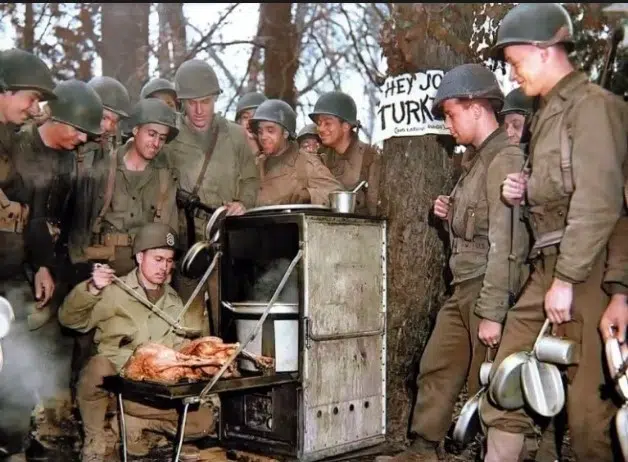
By November 18, the Quartermaster Corps had distributed the 1,604 tons of turkey brought in aboard Great Republic, along with fresh eggs, fruit, and vegetables. Refrigerated vans were waiting at the port, and trucks from mobile bakery companies helped move the load. From supply depots, the food went to mess halls and field kitchens. A U.S. Army Signal Corps photograph dated November 22 shows Sgt. Louis S. Wallace basting a turkey in an M-1937 field range. The meals reached many units in time for the holiday. First Army quartermaster Andrew T. McNamara recalled receiving turkey at a rate of one pound per man, along with cranberries, sage, and other ingredients for the occasion. Elsewhere, some combat troops received their holiday rations a day or two late. A few missed the meal altogether because of conditions at the front.

The ship that carried the turkey went on to supply American forces in two more wars. The U.S. Navy commissioned Great Republic as USS Pictor in 1950. She carried provisions during the Korean War and supplied the Seventh Fleet off Vietnam before being decommissioned in December 1969. In Italy, the 445th Bombardment Squadron marked the same holiday with a football game and a turkey dinner at three in the afternoon. The men lost 40–0, but the squadron diary records that the turkey lifted their spirits. “For today was Thanksgiving Day and there was no war today,” the diarist wrote.

Sources
U.S. Army Center of Military History | The Quartermaster Corps, pp. 506–507
U.S. Army Center of Military History | American Military History, Volume II
U.S. Army Sustainment Command | The Great Turkey Lift of 1944
368th Fighter Group | Unit history, November 1944
321st Bombardment Group | Squadron war diaries, November 1944
Defense Logistics Agency | Andrew T. McNamara’s WWII memoir, p. 150