


In 1932, Errett Lobban Cord founded the Airplane Development Corporation, which helped Jerry Vultee develop the Vultee V-1. The Aviation Corporation (later AVCO) formed the Aviation Manufacturing Corporation (AMC) in 1934 under the Air Mail Act. On November 30, 1934, it acquired Cord’s holdings, including Vultee’s Airplane Development Corporation. AMC closed on January 1, 1936, and the Vultee Aircraft Division became a separate subsidiary of Aviation. Jerry Vultee became vice president and chief engineer. He bought the assets of the now-closed AMC, which included Lycoming Engines and Stinson Aircraft Company. American Airlines needed a new aircraft and chose the redesigned V-1A, which could carry eight passengers. The airline purchased 11 of these planes. However, sales did not increase because the government was concerned about safety, since it was a single-engine aircraft. The last two planes in this series, the V-1AD and V-1AS, were made in Downey, California, after the company moved its manufacturing there. In 1935, Vultee created the Vultee V-11 military aircraft, using the V-1A’s wing structure and landing gear. This aircraft received many international orders. Turkey purchased 40 V-11s between 1937 and 1938, China bought 30 during the same years, and Brazil acquired 25 from 1938 to 1939. The Soviet Union ordered 4 planes and a license to build 31 more. After Jerry Vultee died in January 1938, the Air Corps ordered 7 YA-19s to begin a production relationship.

By 1937, Jerry Vultee ran his own factory in Downey. He had over a million dollars in orders for his V-1, V-1A, and V-11 planes. On January 29, 1938, before he became independent again, Jerry Vultee and his wife Sylvia Parker, who was the daughter of Twentieth Century Fox director Max Parker, died in a plane crash. Jerry was flying during a snowstorm near Sedona, Arizona. A bronze plaque honoring the Vultees is located near the crash site. It is at the end of the Coconino Forestry and Vultee Arch Trails, where a natural rock arch is named the Vultee Arch. The Aviation Corporation hired Dick Palmer, a former Howard Hughes employee, to replace Jerry Vultee. Under his leadership, Vultee Aircraft Division started developing military designs. Dick Palmer created the BT-13, BT-15, and SNV Valiant trainers. He also oversaw other important production programs, including the V-72 Vengeance, which served in the USAAC as the A-31 and A-35. Vultee became an independent company, Vultee Aircraft, in November 1939 when AVCO spun it off. The next year, the company faced a serious labor dispute. Employees wanted to raise their minimum wage from 50 to 75 cents to match what workers in the automobile industry earned. The P-66 Vanguard was a fighter plane program from 1941. It was originally meant for Sweden but ended up being used by the USAAC, Great Britain, and finally China.
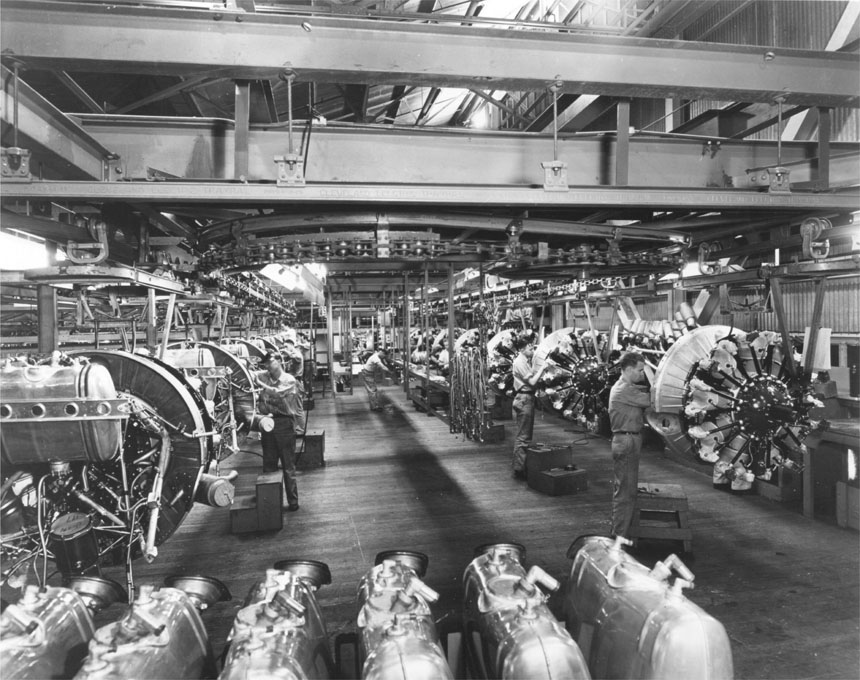
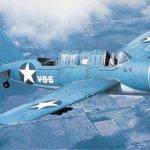
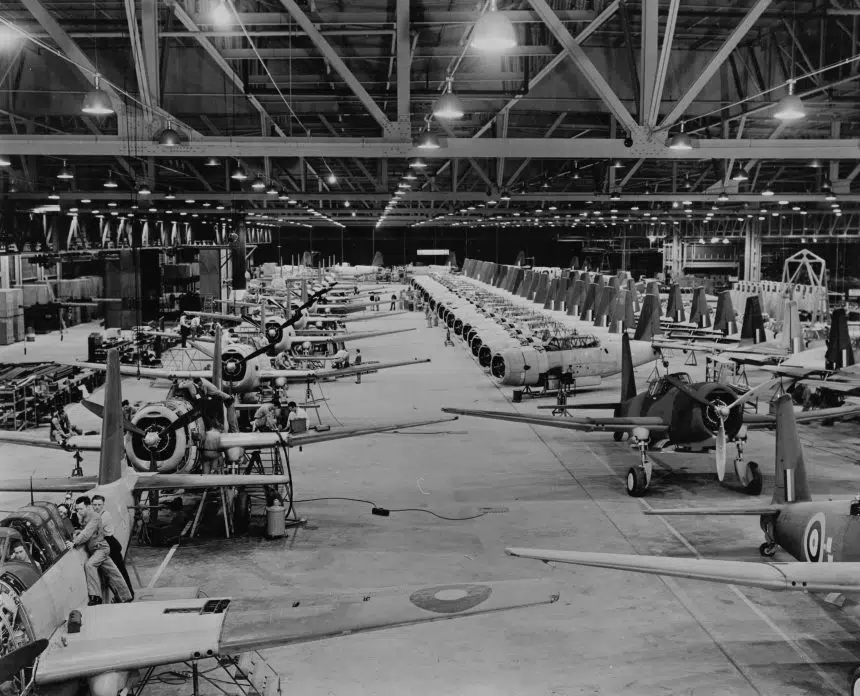
The P-66 had a poor combat record in China and was out of service by 1943. The XP-54 fighter project was Vultee Aircraft’s last design, and only two examples were built. In 1939, the Vultee model 54A, number 141, flew for the first time on July 28. In August, the USAAC chose it for mass production as the BT-13. This model became standard during WWII. During the war, Vultee also started using women as assembly workers. On March 17–18, 1943, Consolidated and Vultee combined to form the Consolidated Vultee Aircraft Corporation, commonly known as Convair, which led Vultee’s management team to step down. Vultee’s early models were the V-1, a single-engine airliner introduced in 1933 with a total of 25 planes built, and the V-11, a single-engine attack aircraft that debuted in 1935. The improved V-12 was released in 1939. Vultee also created the V-51/BC-3, a prototype for a basic combat trainer, and the V-54, which became the BT-13 and BT-15 Valiant basic trainers. The Valiant was Vultee’s most produced aircraft, with 11,538 built. Other military models included the V-48/P-66 Vanguard, a single-engine fighter with 146 units built, and the V-72 Vengeance, a dive bomber with 1,931 produced. Later, Vultee worked on experimental planes like the XP-54, a twin-boom fighter with two prototypes, and the V-90 XA-41, a prototype for a single-engine dive bomber. The company also proposed the XP-68 Tornado, a version of the V-84 that was never manufactured. Read more Forgotten Factories articles HERE.