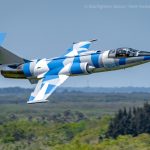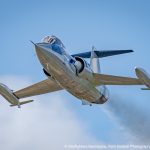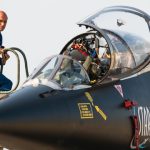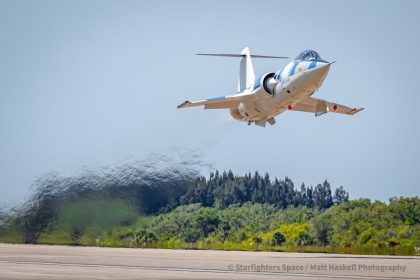
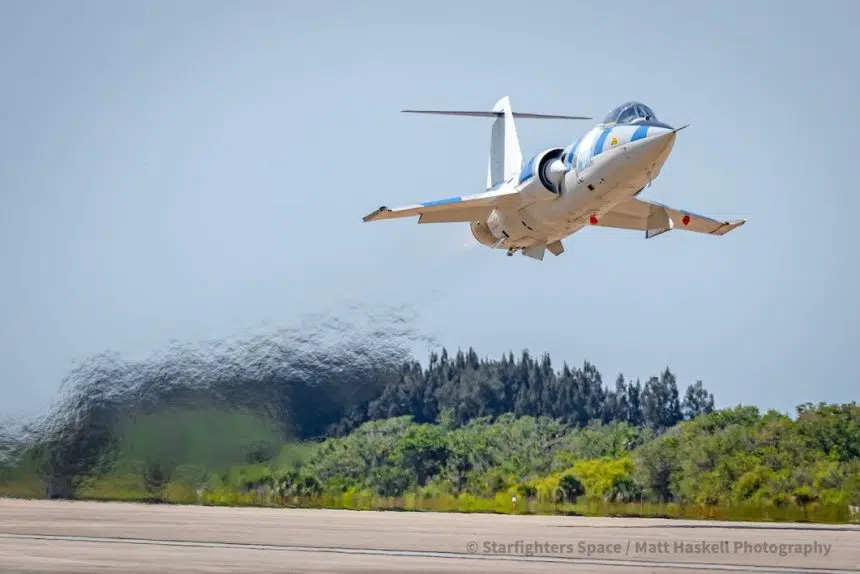

Starfighters Space is preparing its STARLAUNCH 1 suborbital development vehicle for a planned captive-carry flight in December 2026, marking the next step in the company’s effort to use its F-104 Starfighters as air-launch platforms. The company has finalized the vehicle’s airframe design and ordered flight hardware from Italy’s Robby Moto Engineering S.R.L.. The planned flight would take place between Starfighters’ base at NASA’s Kennedy Space Center and Cecil Spaceport in Jacksonville, Florida. With the vehicle remaining attached to the aircraft, the test would allow the team to evaluate its aerodynamic behavior, assess aircraft integration, and develop procedures for subsequent missions. Starfighters expects to receive the inert flight hardware at its Kennedy Space Center hangar in November. The team will then assemble and test the rocket-to-aircraft interface ahead of the flight.

“The planned captive-carry flight would move STARLAUNCH™ 1 from design and ground-based development into flight testing,” said Tim Franta, CEO of Starfighters Space. “Our approach is deliberately incremental: build the hardware, integrate it with the aircraft, fly it, collect data, and use those results to advance toward separation and powered flight. This work on STARLAUNCH™ 1 is also expected to generate engineering and operational experience to inform the future development of STARLAUNCH™ 2.”

The proposed flight could also carry the company’s recently completed Wind Tunnel in the Sky hardware beneath the F-104’s opposite wing. As previously reported by Vintage Aviation News, Starfighters has completed hardware for the F-104-based testing program. Carrying that equipment alongside STARLAUNCH 1 would offer a potential customer-funded rideshare opportunity while serving as a counterweight to improve aerodynamic stability. According to Starfighters, the two systems share some components and interchangeable systems, allowing the team to use common aircraft integration procedures.

Flight data will also support propulsion development by Vaya Defense & Space, which is developing a hybrid rocket motor to match STARLAUNCH 1’s flight-hardware specifications. Following the captive-carry mission, Starfighters plans to conduct a drop test over the Atlantic Ocean, followed by a demonstration of the integrated propulsion system. Results from that campaign are also expected to inform the development of STARLAUNCH 2.
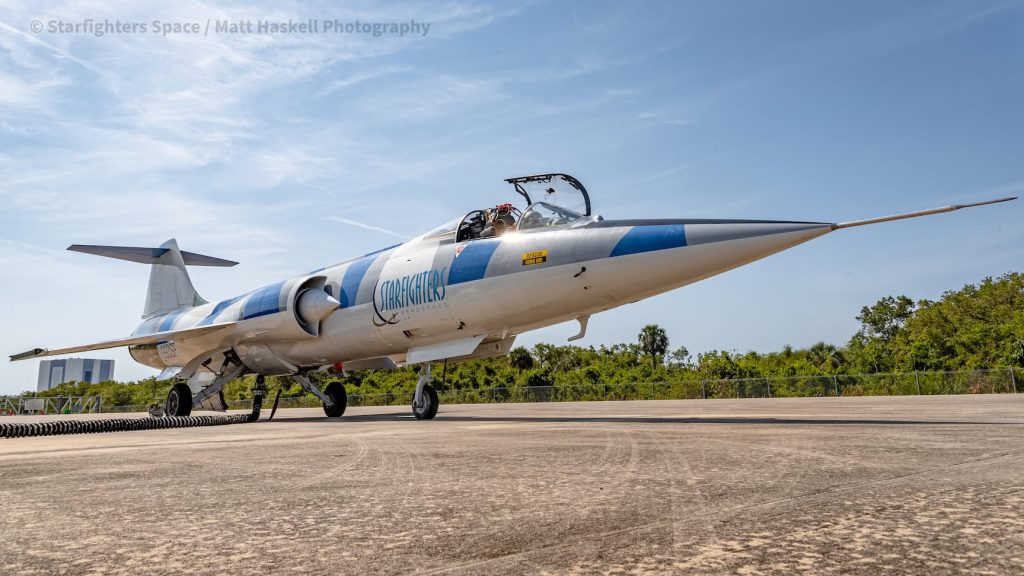
(Image credit: Starfighters Space / Matt Askell Photography)
“December’s captive-carry mission would essentially be step one of a multi-flight campaign, building processes for our launch team while capturing data for the FAA and the Space Force as we move toward propulsive air launch,” said Piercarlo Ciacchi, Director of Flight Operations and Chief Pilot of Starfighters Space. “Our plan is to follow the December mission with a drop test over the Atlantic Ocean followed by a demonstration of the integrated propulsion system. Development of STARLAUNCH™ 2 would be informed by these missions, concurrent with the STARLAUNCH™ 1 development.” Starfighters operates F-104 aircraft from Kennedy Space Center in Florida and Midland International Air & Space Port in Texas. The company uses the former military interceptors for supersonic research, payload testing, and pilot training. Its aircraft can support work involving advanced materials, hypersonic technologies, missile defense, microgravity research, and spaceflight hardware validation—giving the Cold War-era Starfighter a continuing role in aerospace development.