






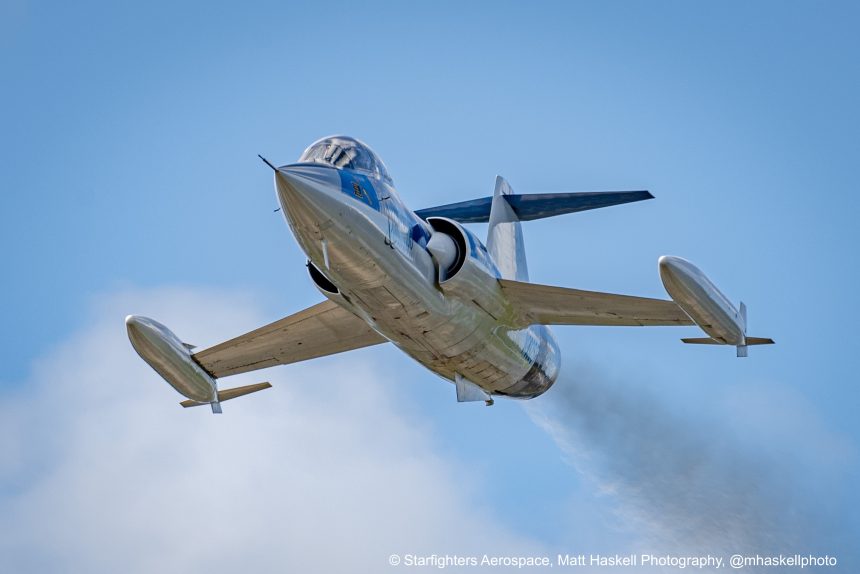

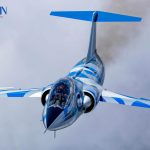
Starfighters Space, Inc. has announced the next phase in the development of its “Wind Tunnel in the Sky,” a reusable airborne platform designed to test advanced technologies during sustained flight at speeds exceeding Mach 2. The company operates a commercial fleet of flight-ready Lockheed F-104 Starfighters and plans to offer the platform to commercial, government, defense, and research customers seeking to evaluate technologies under real-world atmospheric and high-speed flight conditions.
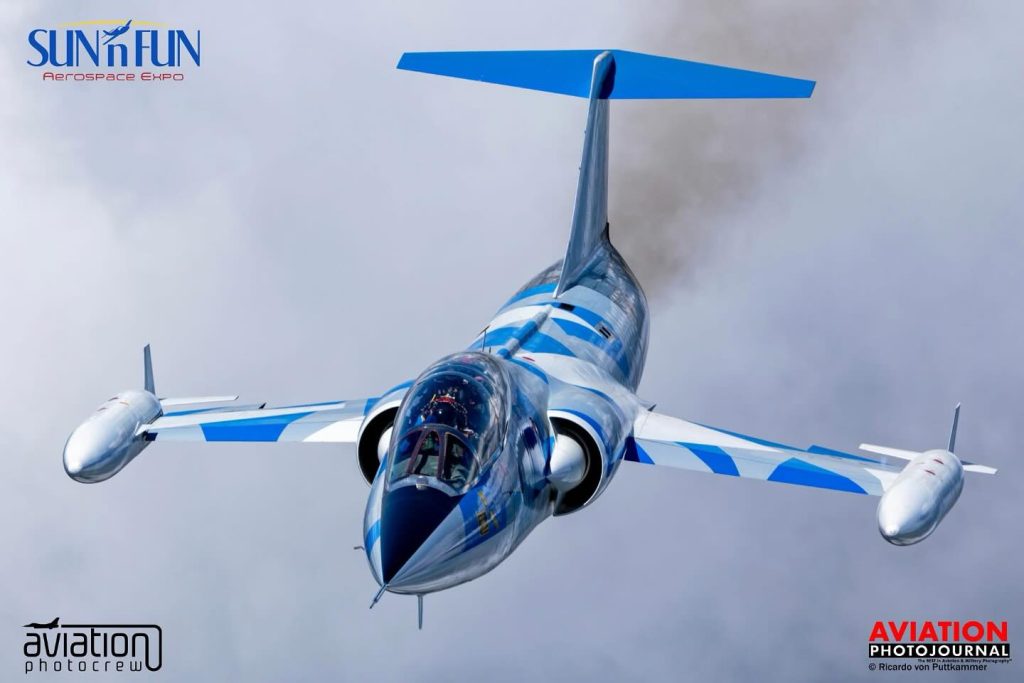
At the center of the project is a modular, reusable underwing test platform capable of carrying sensors, experimental hardware, and other payloads. Potential applications include the evaluation of aerodynamic test articles, avionics, communications equipment, electronic systems, advanced materials, and technologies associated with hypersonic and microgravity research programs. According to Starfighters Space, a typical 45-minute mission could provide as much as 10 minutes of sustained flight at Mach 2 or above. This would give researchers considerably longer exposure to supersonic conditions than many conventional wind-tunnel tests, which may last only seconds. The airborne platform could also reduce reliance on heavily scheduled ground-test facilities by allowing certain evaluations to be completed during a single flight.
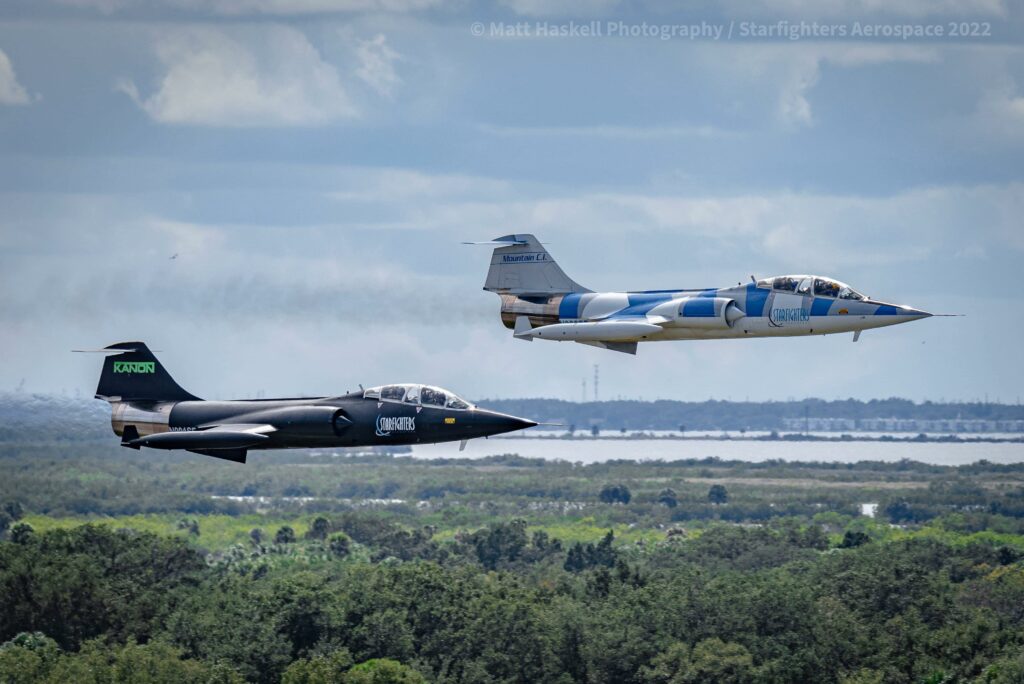
(Image credit: Matt Askell)
“As demand for hypersonic and advanced aerospace systems continues to grow, access to specialized test infrastructure remains limited, increasing demand for complementary commercial flight-test capabilities,” said Tim Franta, CEO of Starfighters Space. “While ground wind tunnels remain essential for aerospace research and development, airborne testing can expose hardware to combinations of weather variation, vibration, acceleration, dynamic pressure, temperature, and operational conditions that cannot always be fully reproduced in a fixed facility.”
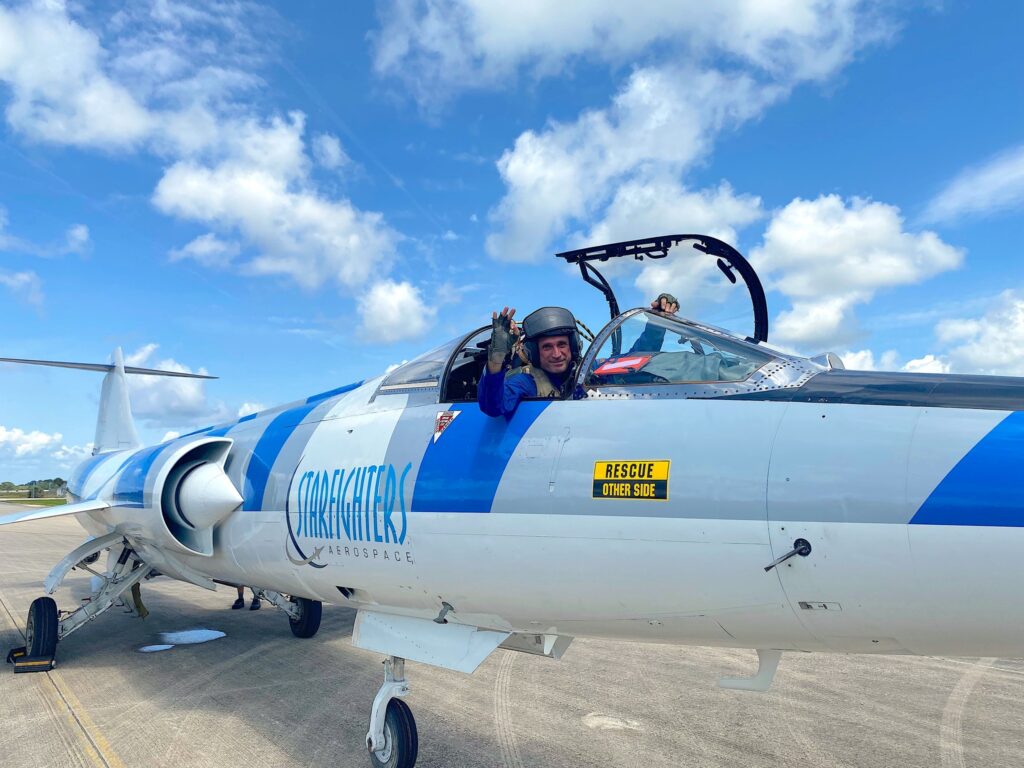
The “Wind Tunnel in the Sky” concept builds on the company’s previous subsonic and supersonic flight-test work, including testing conducted in support of its STARLAUNCH 1 demonstrator. As development continues, Starfighters Space expects the reusable platform to broaden commercial access to its F-104 fleet for the testing of next-generation aerospace, defense, and space technologies.
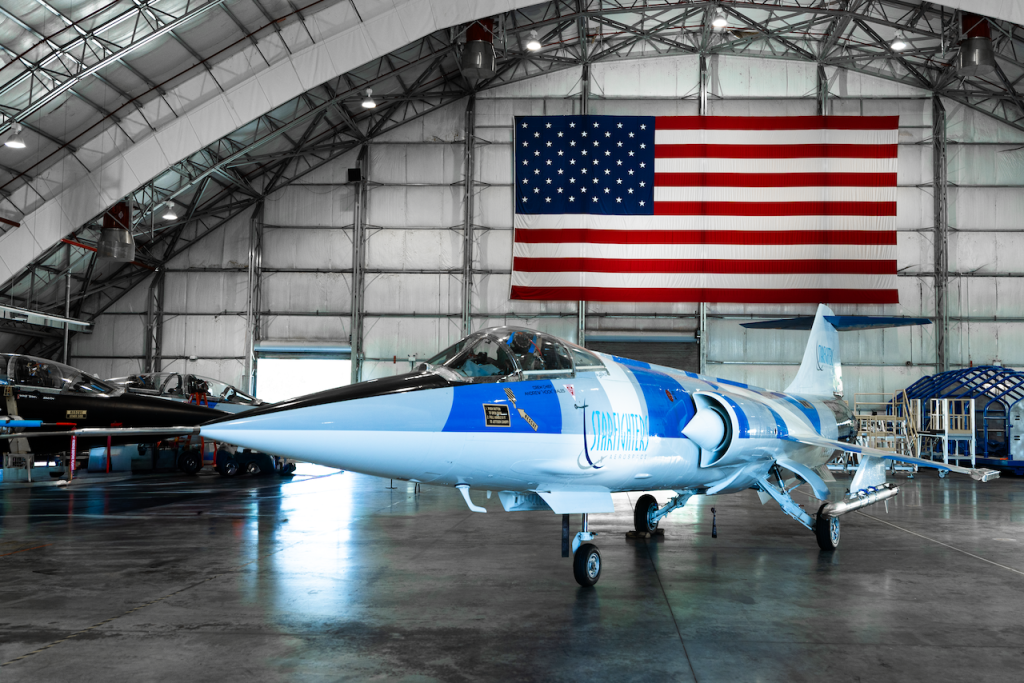
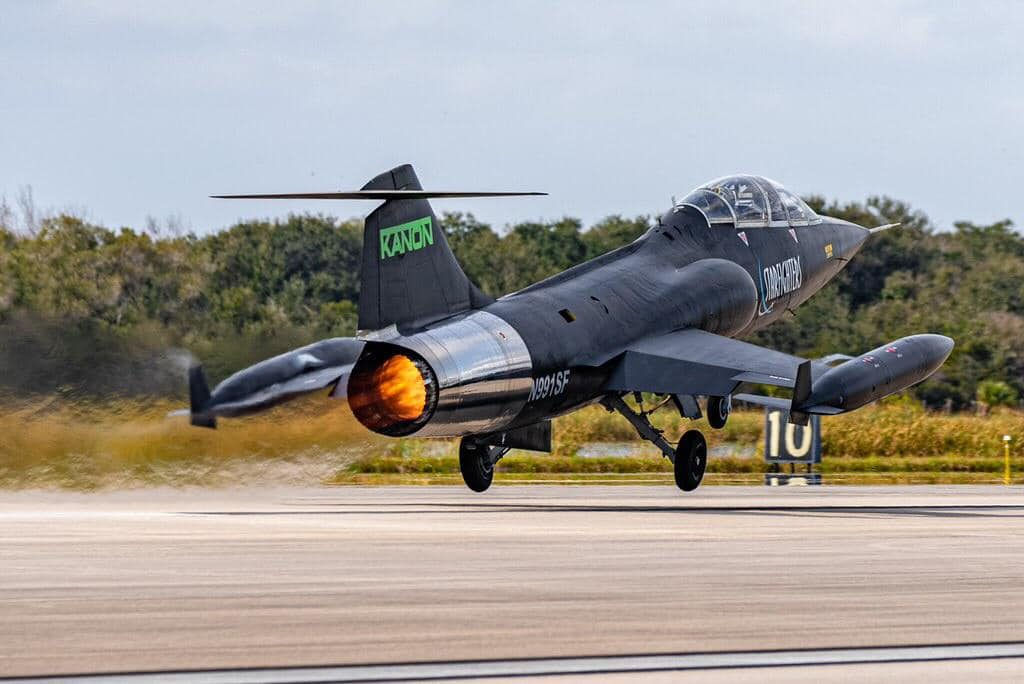
With their small wings, powerful General Electric J79 engines, and exceptional high-speed performance, the company’s F-104s provide a distinctive test environment. The aircraft can expose experimental equipment to the vibration, acceleration, temperature changes, dynamic pressure, and atmospheric variations encountered during actual supersonic flight. Starfighters Space operates F-104 aircraft from NASA’s Kennedy Space Center in Florida and Midland Air and Space Port in Texas. Its aircraft can be configured for air-launched payloads, pilot training, and research, development, test, and evaluation work involving hypersonic technology, missile-defense systems, microgravity science, spaceflight hardware, advanced materials, and defense electronics.








German Bundeswehr Luftwaffe pilots called the F-104 “Witwermacher”…Widowmaker. I hope this company has their Work Comp premiums paid up.
That was not what we the pilots called it. It was the media.
That was not what we the pilots called it. It was the media.
What an absolutely fantastic shot in that first pic. WOW !!!! Never seen an angle like that before…Thanks. Rob.
Sorry,should have mentioned my one and only encounter with the mighty 104. April 2008,Speyer Tecknic museum. A real 104 in the yard..I nearly cut my hand on the main plane leading edge;I could not believe the thinness of this aerofoil! Stubby wings..Yeah,Massive Grunt to get these things into the air. Probably the beginning of this type of power to weight/wing area concept?