







From an original interview by Moreno Aguiari and edited by Kevin Wilkins
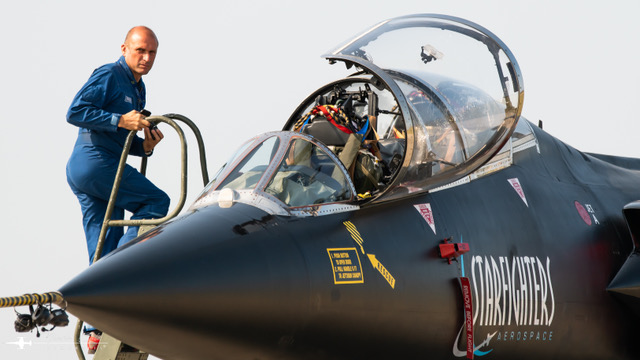
For most fighter pilots, a career follows a fairly predictable path. Aircraft change, assignments evolve, and eventually a transition is made into civilian aviation or retirement. For Piercarlo Ciacchi, however, almost nothing about his aviation journey could be considered ordinary. Beginning his military career in the Italian Air Force, Ciacchi earned one of the service’s most coveted assignments: flying the legendary Lockheed F-104 Starfighter. After transitioning to the General Dynamics F-16 Fighting Falcon, he was selected for Italy’s famed national aerobatic team, the Frecce Tricolori. Following nearly eight years performing breathtaking demonstrations around the world, he left military service only to find himself once again at the controls of the aircraft that first captured his imagination—the F-104—this time flying research and development missions for Starfighters Space at Cape Canaveral. Throughout every stage of his career, Ciacchi has consistently pushed boundaries, challenged conventional thinking, and applied an engineer’s mindset to aviation. Although he became a fighter pilot, the engineer he once hoped to be never disappeared. Aircraft were never simply machines to fly; they were systems to understand, improve, and occasionally use in ways others had not considered. That outlook would shape every chapter of a career defined by innovation, curiosity, and a lifelong fascination with machines operating at the very edge of possibility.
A Passion Born Through Travel
Aviation entered Ciacchi’s life long before he ever climbed into a cockpit. Growing up in Italy during the early 1980s, he was exposed to international travel at a time when such opportunities were far less common than they are today. His parents made a point of taking him on trips around the world, and the countless hours spent in major airports sparked a fascination that never faded. “I really have to give it to my parents,” Ciacchi recalled. “They decided to travel at least twice a year to some part of the world, which was kind of uncommon at that time. Being in those big international airports as a young kid fascinated me. That’s how I got attached to airplanes.” Ironically, his original ambition was not to become a pilot. He dreamed of becoming an engineer and designing more efficient aircraft. It was his father who encouraged him to apply to the Italian Air Force, even though Ciacchi believed his chances of selection were almost nonexistent. “I thought it was almost a waste of time to apply because so many people did every year,” he remembered. “I thought I had zero chances. But it actually happened.” That acceptance changed the trajectory of his life, setting him on a path that would take him from the flight line of Italian fighter squadrons to some of the most recognizable aircraft and organizations in aviation.
The Road to the Starfighter
After entering the Italian Air Force Academy, Ciacchi progressed through one of the most demanding pilot training systems in Europe. His first military aircraft was the SIAI-Marchetti SF-260, where students were expected to master basic flight, instrument procedures, aerobatics, and formation flying in a compressed training schedule. The attrition rate was steep. Of the 64 students who began the course, only 18 completed it. Those selected moved on to Euro-NATO Joint Jet Pilot Training (ENJJPT) at Sheppard Air Force Base in Texas, where Ciacchi flew the Cessna T-37 Tweet and the Northrop T-38 Talon alongside students from NATO nations around the world. The experience exposed him not only to high-performance jet operations, but also to different cultures, flying philosophies, and the standards of a multinational training environment.
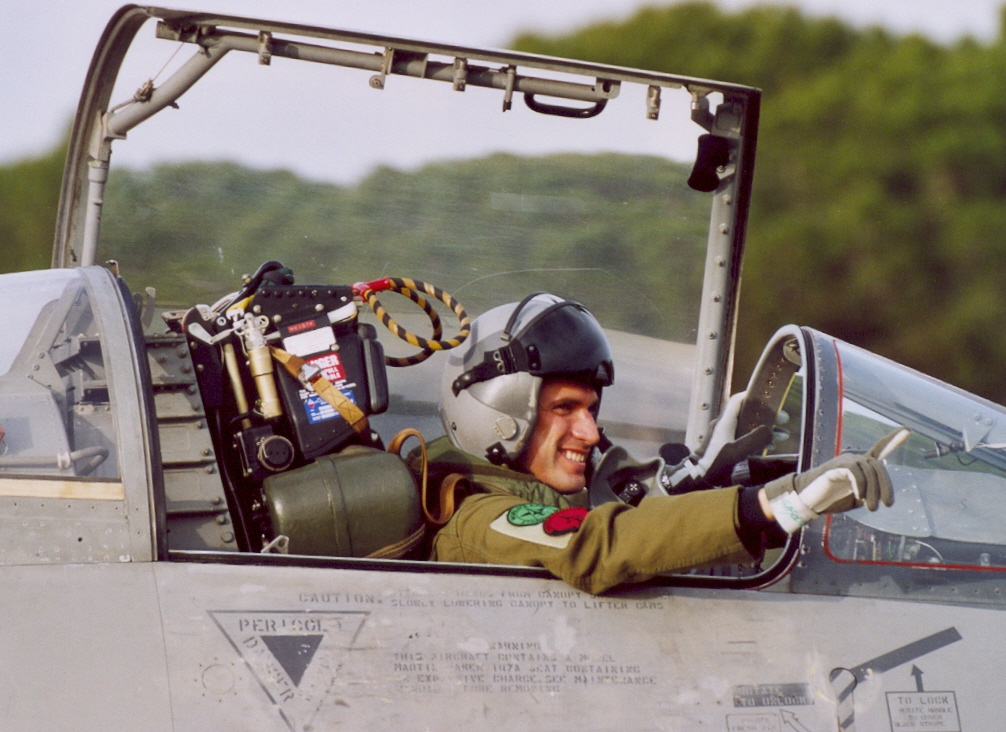
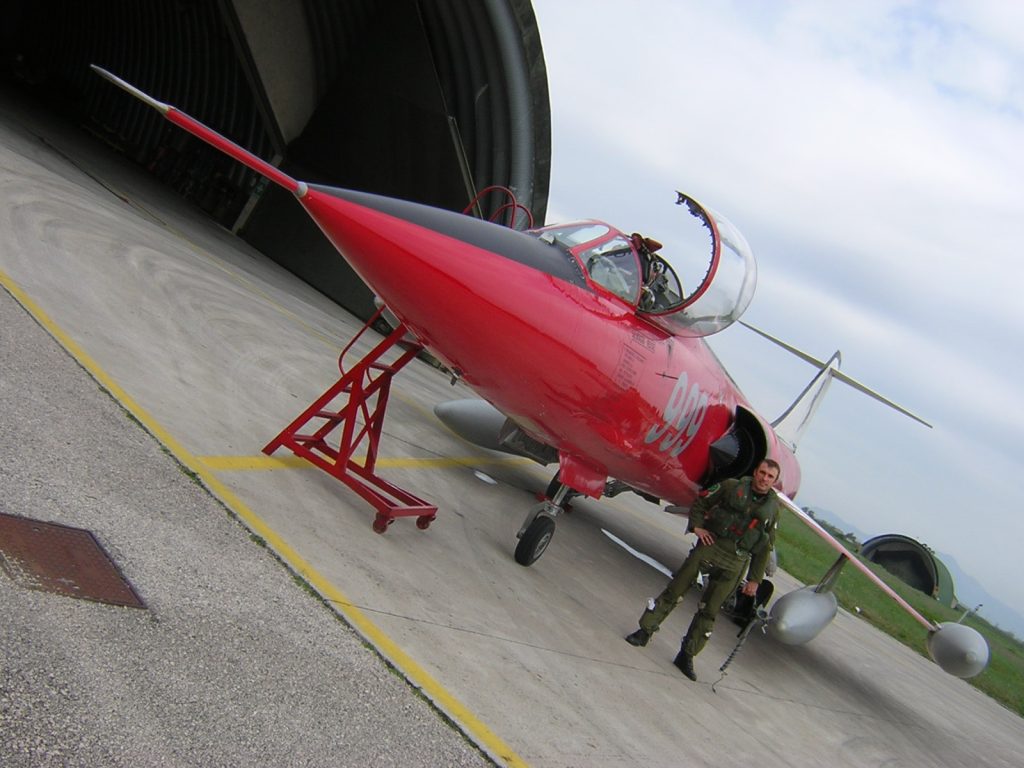
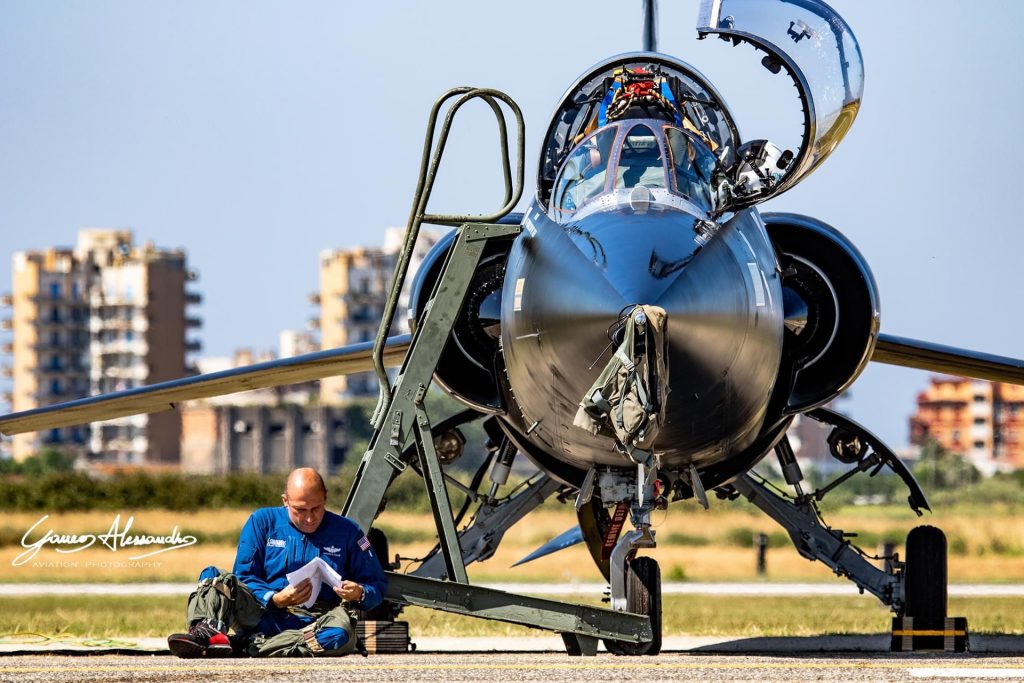
His performance ranking upon graduation gave him the opportunity to request assignment to the aircraft he wanted most: the F-104 Starfighter. At the time, the type was nearing the end of its Italian service, and there were no guarantees that any young pilot would still be assigned to it. Yet Ciacchi became part of one of the last classes to enter the Starfighter community. The first sight of the aircraft was memorable, but the first flight left a deeper impression. “We were a few hundred feet off the ground, taking off from Grosseto AFB, and I said, ‘Oh, damn, I’m on a freaking F-104.’ I actually turned around to look at the wing because you can barely see it from the cockpit. That was emotional.”
Learning the Starfighter
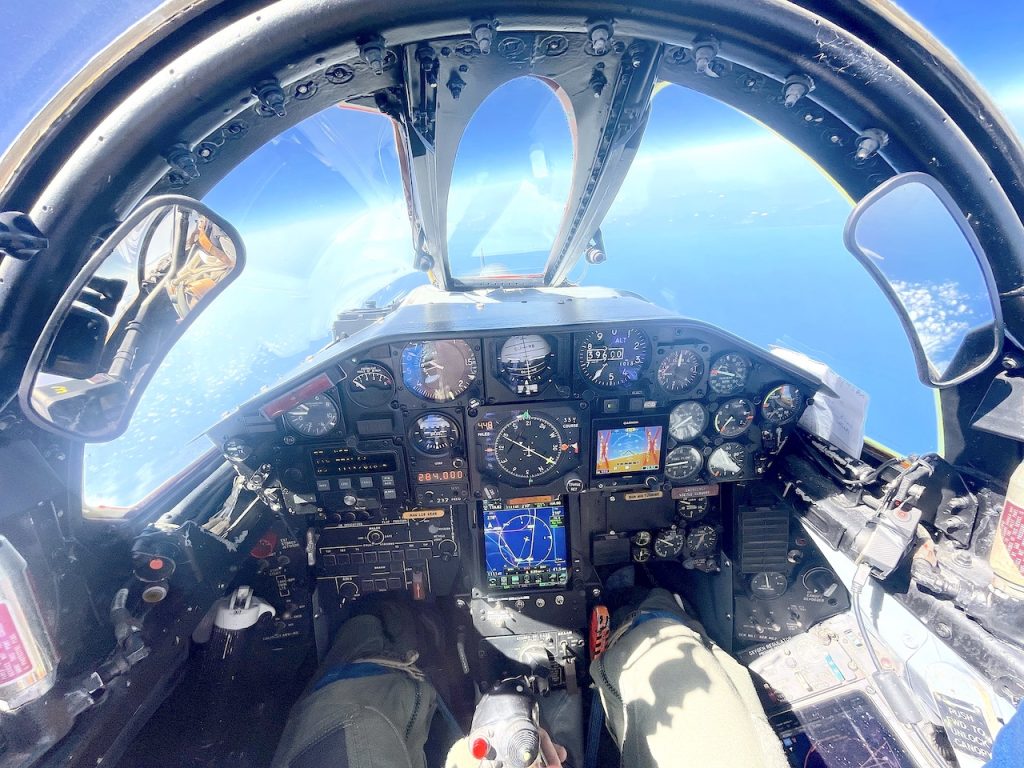
By the time Ciacchi arrived, the Italian Air Force had accumulated decades of experience operating the Starfighter. Earlier years had exposed the aircraft’s unforgiving nature, but years of refinement in training, procedures, and tactics had transformed it into a far safer and more effective platform than many outside observers realized. According to Ciacchi, one of the greatest challenges was that the F-104 could not be treated like any fighter that had come before it. Pilots and commanders gradually learned that the aircraft demanded a completely different mindset. “The F-104 is like an IndyCar,” he explained. “It does one thing in an extreme way.” That performance came with little margin for error. Unlike modern fighters equipped with sophisticated flight-control systems that protect pilots from exceeding limits, the Starfighter demanded precision and discipline. If mishandled, the aircraft would not save its pilot from the consequences.
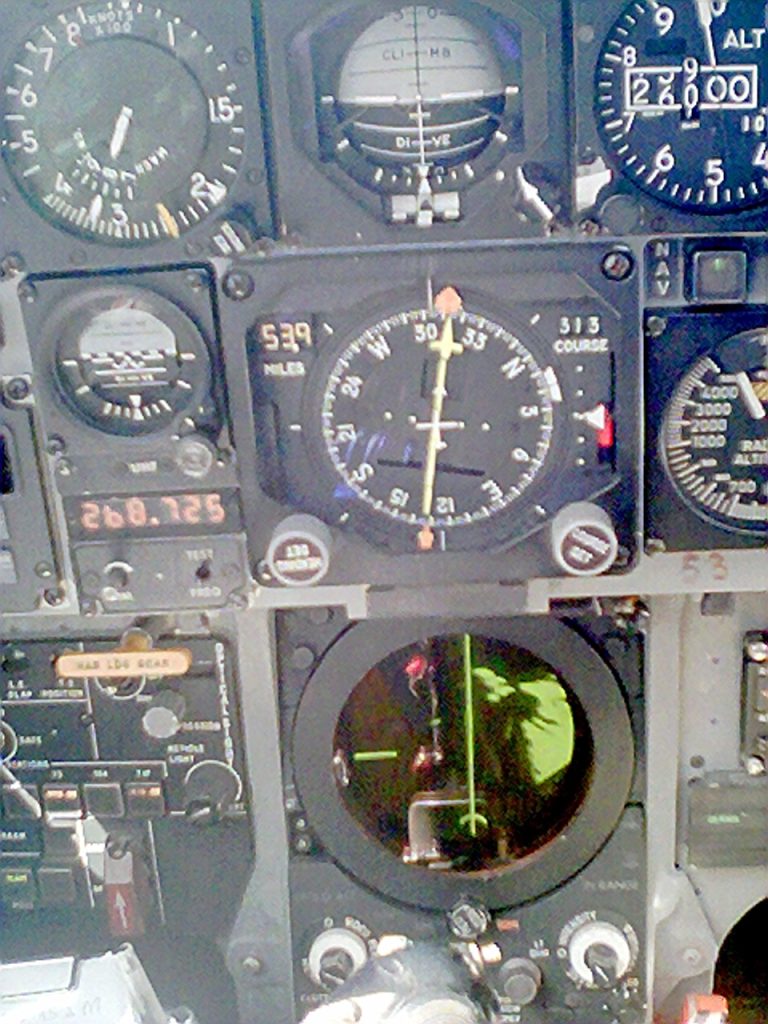
“If you G-stall it on a turn, then you’re out of control,” Ciacchi said. “Most modern fighters recover by themselves. The F-104 wouldn’t do that.” Yet that very characteristic was also what made the aircraft so rewarding. The Starfighter responded directly and honestly to pilot inputs, creating a connection between man and machine that few modern aircraft can replicate. Years later, after transitioning to the F-16, Ciacchi would describe the newer fighter as “a great SUV in the aviation world” because of its ability to perform a wide variety of missions exceptionally well. Yet he never lost his appreciation for the Starfighter’s purity. “It’s more like a true airplane,” he said. “It’s going to do the same thing every time, and it depends directly on your hands.”
Engineering the Envelope
Most fighter pilots focus on tactics and mission execution. Ciacchi often found himself studying performance. The engineer who once wanted to design aircraft never stopped asking questions about how machines worked and how they could be used more effectively. His attention became increasingly focused on the areas of the Starfighter’s envelope that fascinated him most: high-altitude and supersonic flight. “I loved everything high and supersonic,” he recalled.
Rather than simply accepting established procedures, he began analyzing how the aircraft performed in different conditions. He discovered that while the F-104 was not especially efficient at low altitude and slower speeds, it became remarkably effective when operated in the environment for which it had been designed. “The F-104 is not very efficient when you go slow and low,” he explained. “I found areas of the envelope that allowed us to fly certain scenarios that weren’t being flown until then.” That research led him to develop new supersonic profiles that allowed the aircraft to travel farther and remain in the high-speed regime longer while operating within available airspace constraints. Some of those procedures proved valuable enough that they continued to be used after his departure from the Starfighter community. “I even designed new profiles that adapted to the airspace we had available. They allowed us to fly farther and longer while remaining supersonic.” It was an engineer’s solution applied from the cockpit rather than the design office.
Alert Duty and Operational Life
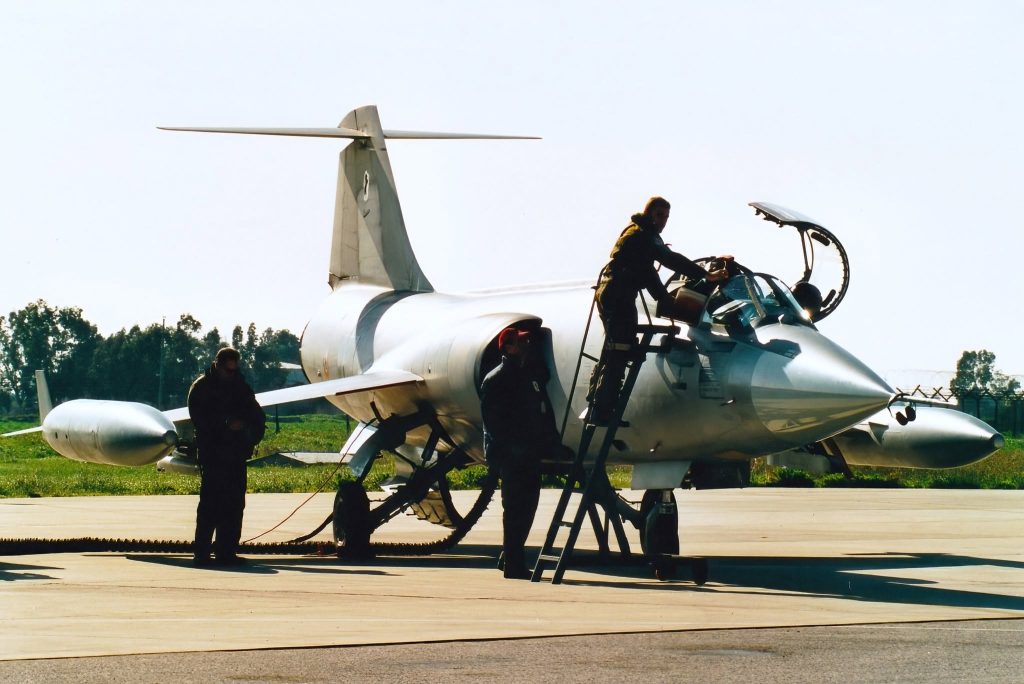
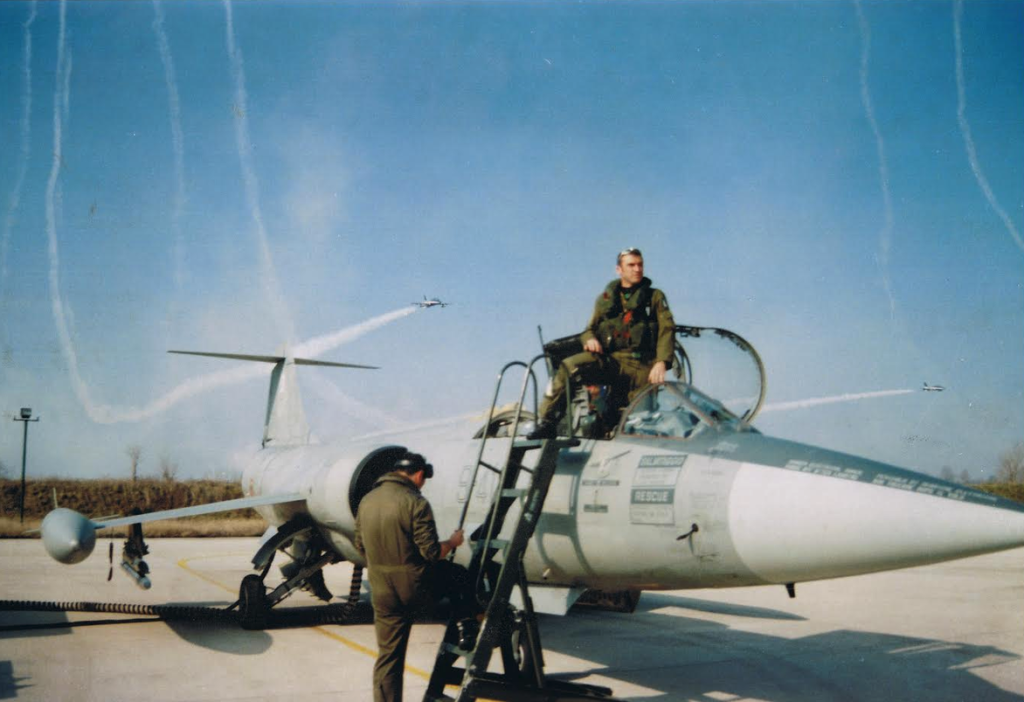
Like most interceptor pilots, Ciacchi spent the majority of his flying career preparing for missions that he hoped would never be required. “Training, training, training and training,” he said when describing daily life in an operational squadron. Those training missions increased in complexity as pilots advanced from wingmen to flight leaders, rehearsing scenarios they might encounter if called upon to defend Italian airspace. When not flying, pilots frequently stood alert duty, remaining close to armed aircraft prepared to launch on short notice. Although alert postures varied depending on circumstances, a 15-minute readiness status was common. In reality, young pilots often moved considerably faster. “My normal number during the daytime was around seven minutes,” Ciacchi recalled. From the moment the alarm sounded, pilots raced to the aircraft, strapped in with assistance from ground crews, started engines, and launched toward an unknown situation. For those who lived it, such readiness became routine.
The F-16 and a New Perspective
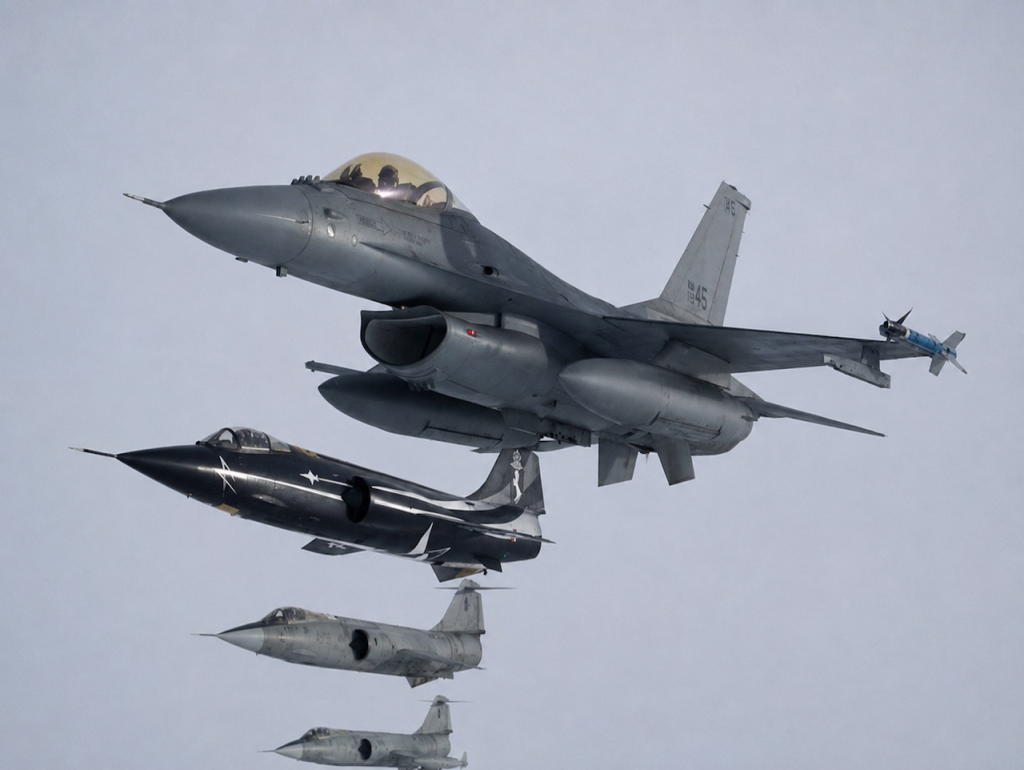
When Italy retired the F-104, Ciacchi was selected to transition to the F-16 Fighting Falcon as part of the Italian Air Force’s interim fighter force before the arrival of the Eurofighter Typhoon. The assignment reflected the Air Force’s confidence in his abilities and exposed him to one of the most successful fighters ever built. Yet the transition also highlighted the dramatic shift that had occurred in fighter design philosophy.
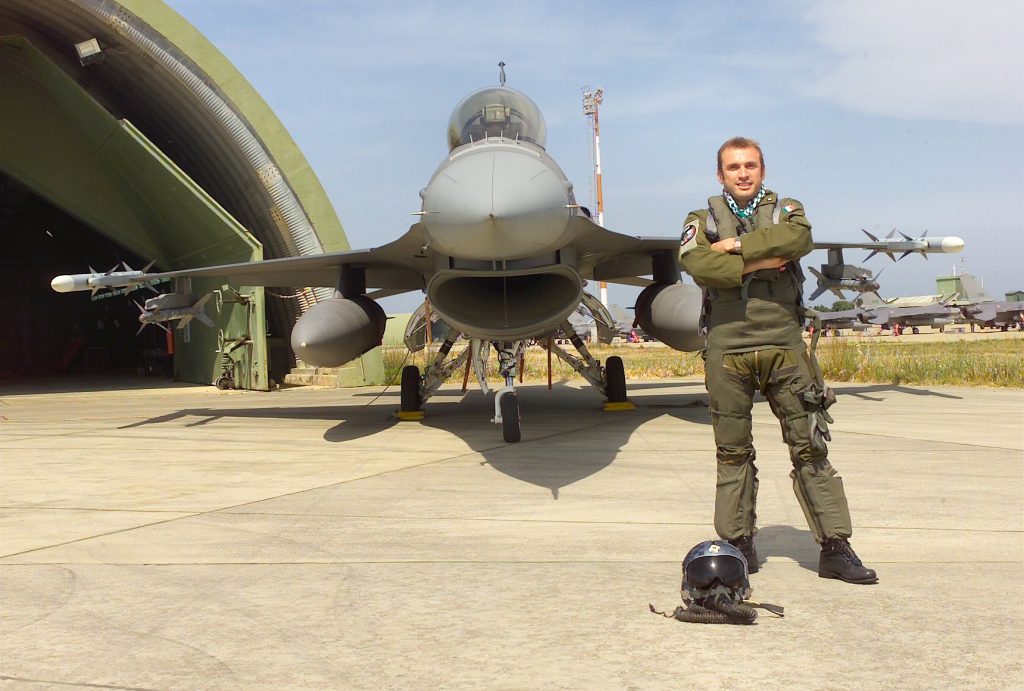
The Falcon’s flight-control computers interpreted pilot inputs and adjusted aircraft responses in ways the Starfighter never would. “There’s definitely something between you and what the aircraft does,” Ciacchi observed. The F-16 was unquestionably more capable in most tactical situations, but from a pure flying perspective, he still appreciated the directness of the older aircraft. It was another example of how his appreciation for engineering often extended beyond technology alone. He admired not simply what an aircraft could do, but how it achieved it.
Joining the Frecce Tricolori
One of the most remarkable chapters of Ciacchi’s career nearly never happened. After several years in operational squadrons, he submitted a request to join the Frecce Tricolori, Italy’s iconic national aerobatic team, considered by many one of the best in the world. For Ciacchi, who had attended airshows and admired the team since childhood, the opportunity represented something special. Unknown to him, however, local commanders never forwarded his application. Concerned about losing experienced pilots, they quietly prevented the request from moving forward. The selection process proceeded without him. Then fate intervened.
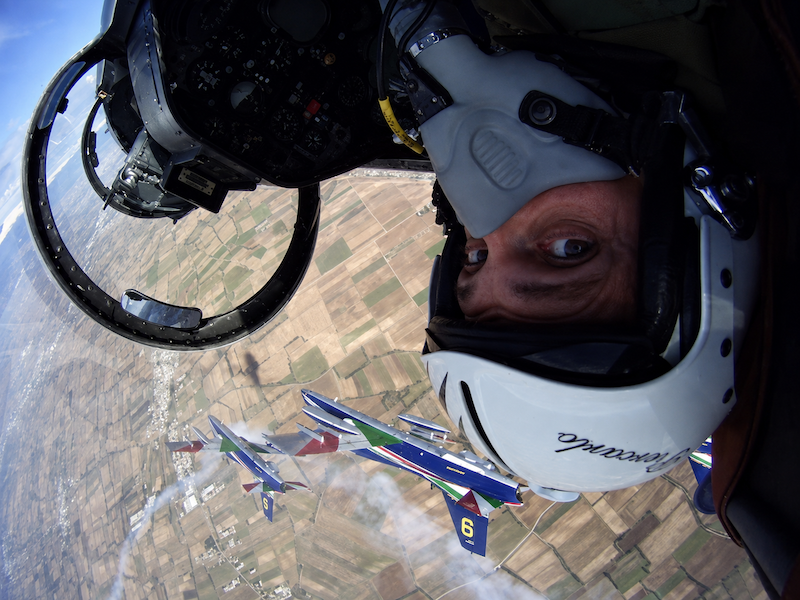
When the candidates chosen that year ultimately failed to meet expectations, the commander of the Frecce Tricolori personally contacted operational units to determine whether other qualified pilots had expressed interest. That inquiry revealed that several applications—including Ciacchi’s—had never reached the selection board. A second selection process was organized. Out of six candidates, two were chosen. Ciacchi was one of them. “It was unbelievable,” he recalled. “There is no way you could calculate the chances of going from wanting to be an engineer to becoming a Frecce Tricolori demonstration pilot.”
(Image credit: PierCarlo Ciacchi)
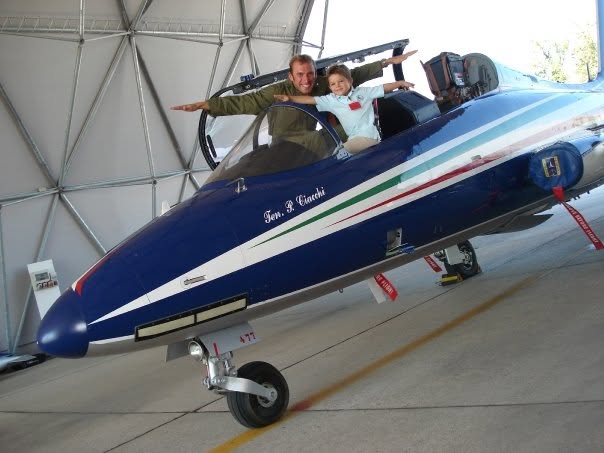
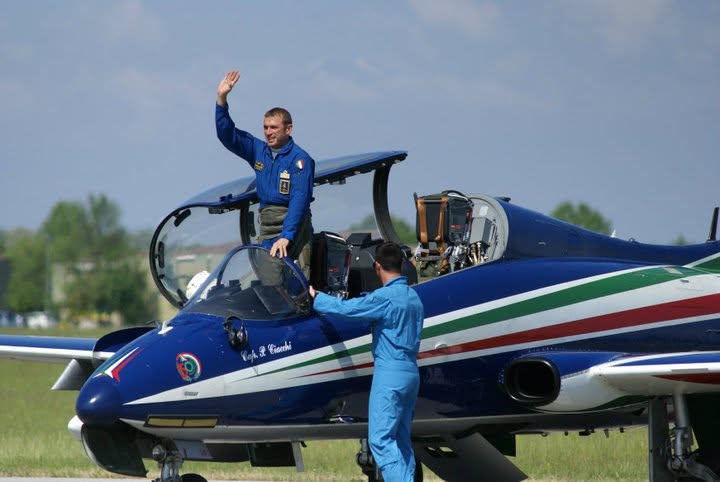
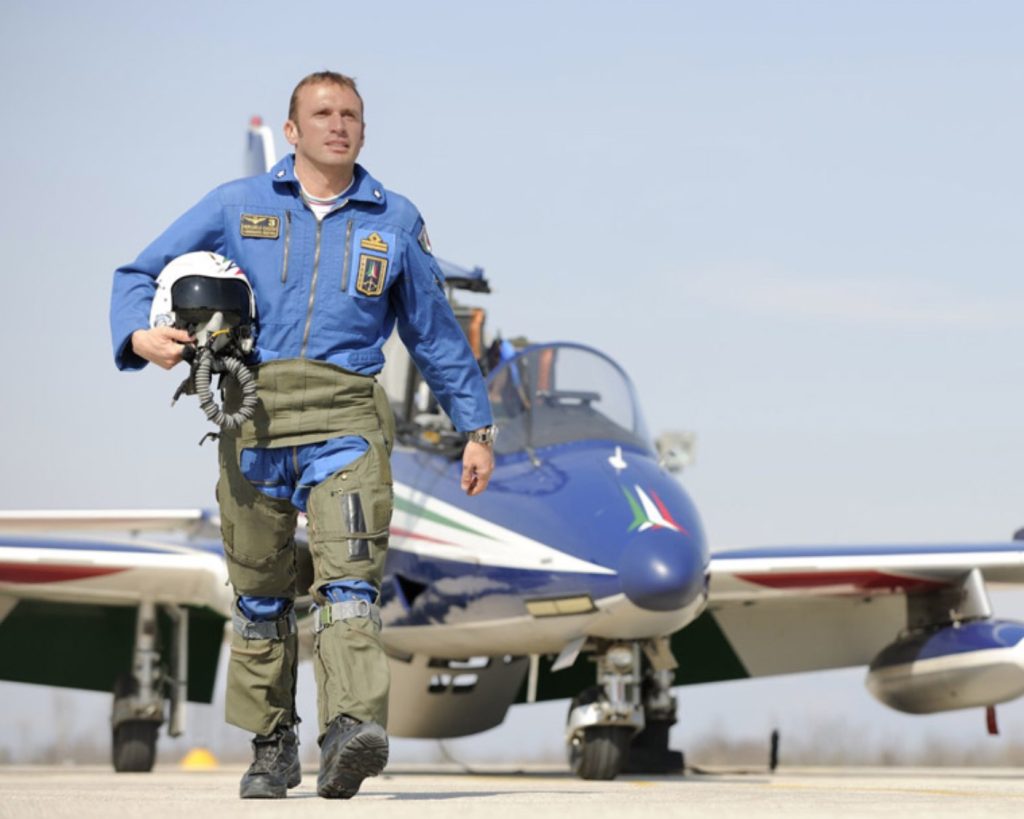
He would remain with the team for nearly eight years, flying the MB-339 throughout Europe and around the world. The experience was about far more than precision formation flying. It involved trust, discipline, and relationships forged through years of shared experiences. “The relationship that grows there is something I wouldn’t even be able to explain,” he said. “It’s remarkable.” When asked for a single favorite memory, he declined to choose one. “Every day was a tremendous adventure.”
(Image credit: PierCarlo Ciacchi)
Returning to His First Love
After his time with the Frecce Tricolori, Ciacchi was assigned to transition to the Eurofighter Typhoon. Instead, he made a decision that surprised many of his colleagues. Believing he had reached the apex of his military career, he chose to leave the Air Force. At the same time, discussions that had been ongoing for years with Starfighters Space in Florida began to gain momentum. The opportunity offered something unique: the chance to return to the aircraft that had shaped so much of his early career while also becoming involved in advanced aerospace projects. Years after leaving military service, he found himself climbing back into an F-104 cockpit. As the aircraft accelerated down the runway during his first return flight, the passage of time suddenly became apparent. “I looked around and realized we were still on the ground at 180 knots,” he recalled. “When we were 20 years old, we were completely crazy. We didn’t realize how extreme that airplane really was.”
Starfighters Space and the Future of the F-104
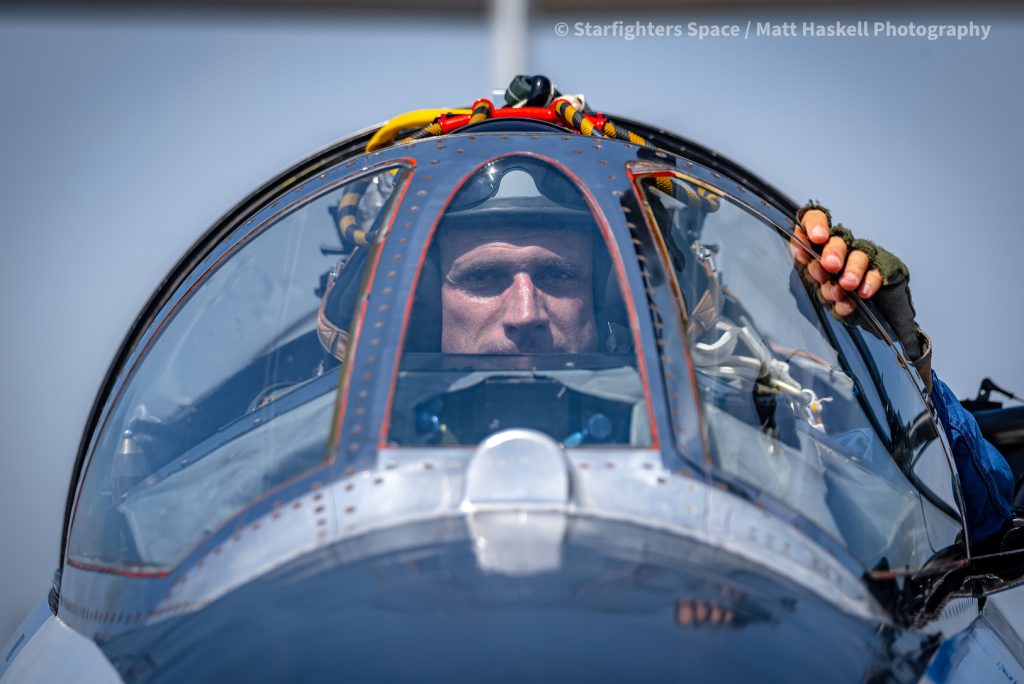
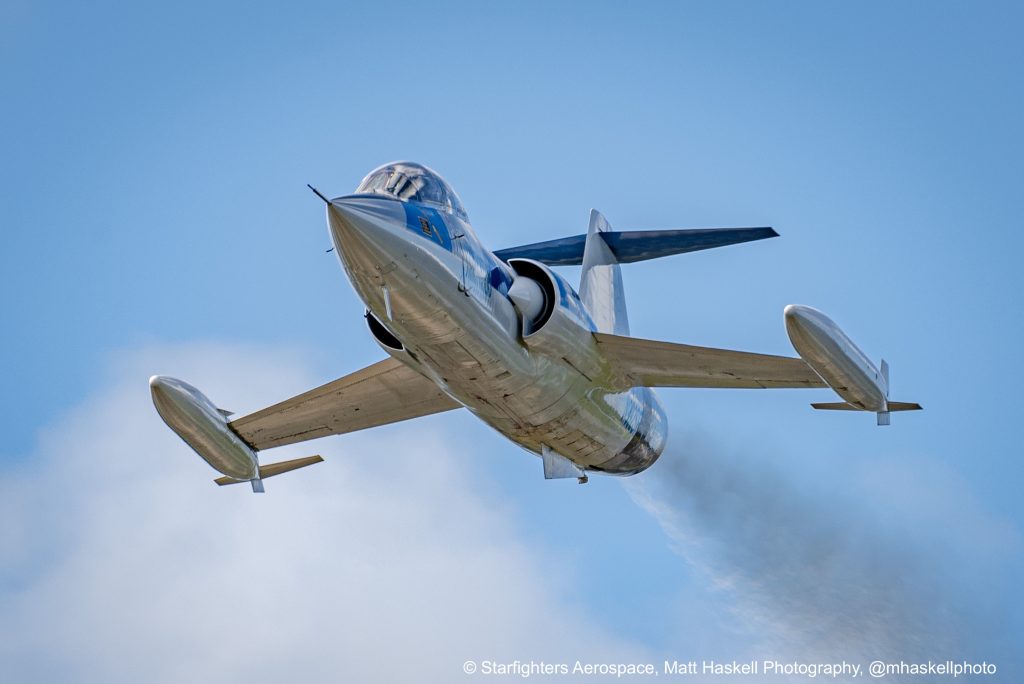
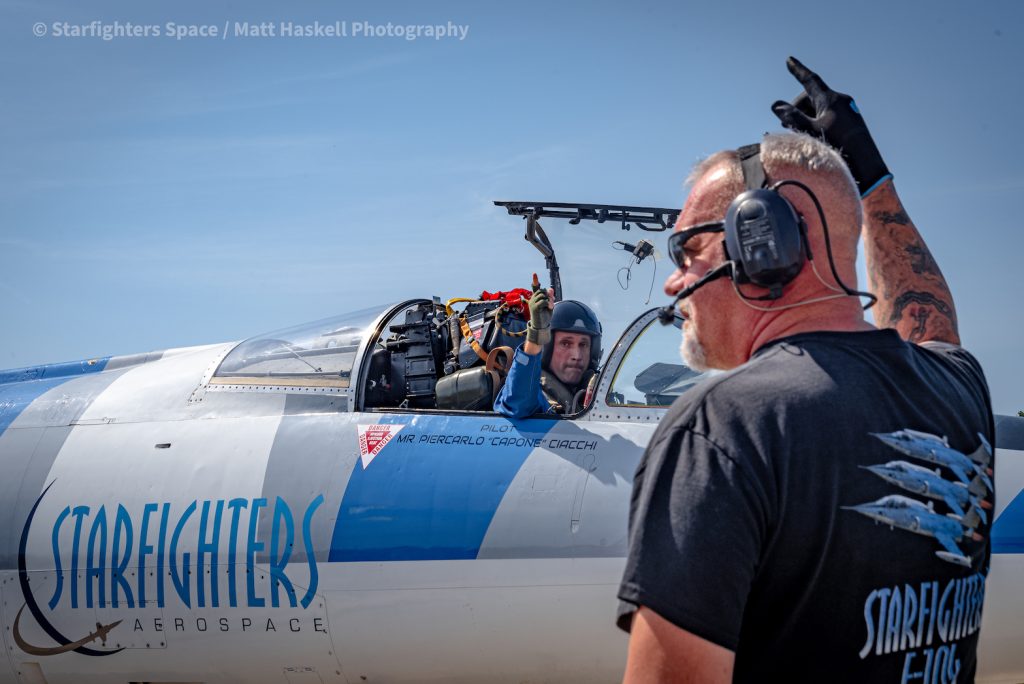
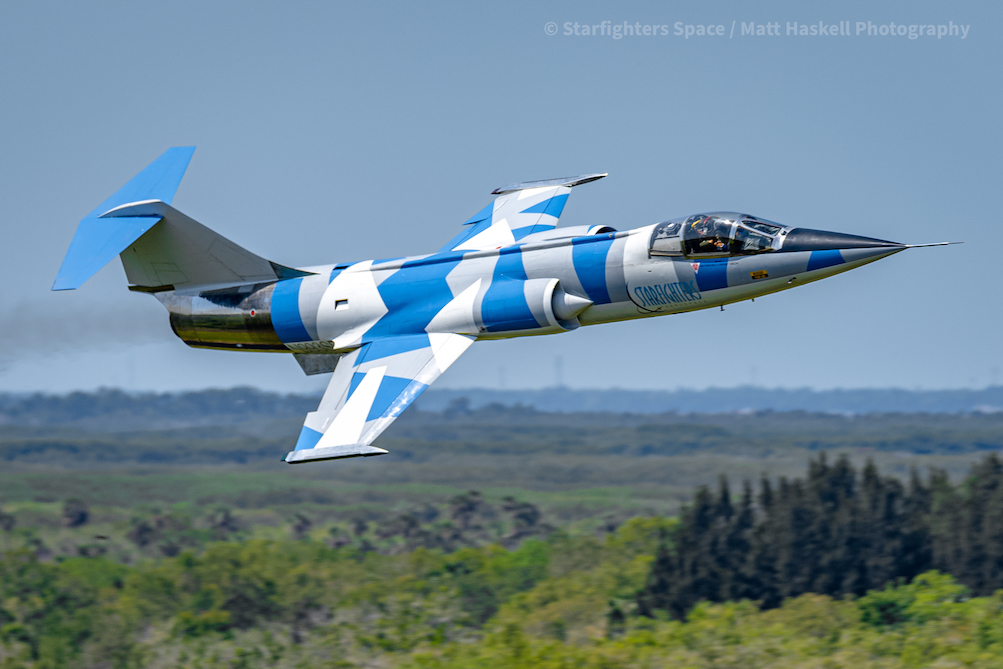
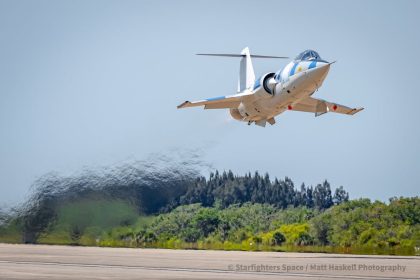
Today, the Starfighter serves a role few could have imagined during the Cold War. At Starfighters Space, the aircraft functions as a research platform supporting payload integration, air-launch development, and supersonic or hypersonic testing. Rather than operating as a historical artifact, the F-104 is being utilized for exactly the qualities that made it revolutionary in the first place.
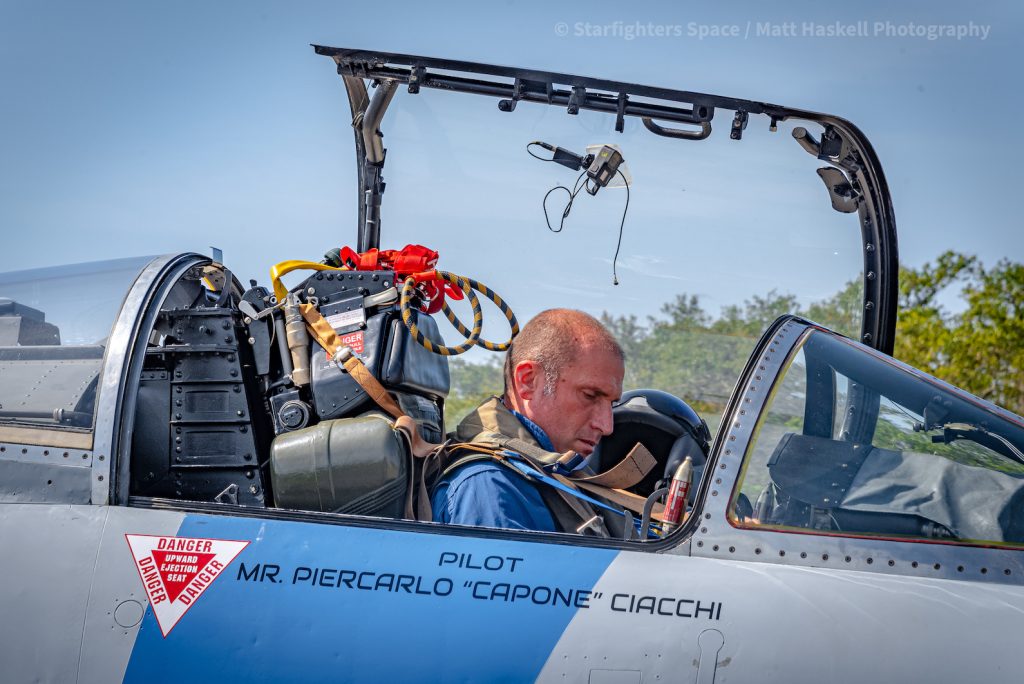
“It brings back my engineering dream,” Ciacchi said. Some projects involve simulating air-launch profiles for future aerospace systems. Others involve carrying experimental hardware into sustained supersonic flight, providing real-world testing conditions that can be difficult and expensive to reproduce in a laboratory environment. Describing the aircraft’s role, Ciacchi referred to it as “a flying test bed.” When Aguiari suggested the phrase “flying wind tunnel,” he immediately agreed. “Correct. That’s what it is.” He believes the aircraft still has significant potential ahead of it, including possible applications as an astronaut-training platform, echoing a role once performed by NASA’s own Starfighters.
(Image credit: Matt Haskell Photography)
A Machine Ahead of Its Time
For Ciacchi, the Starfighter’s appeal goes far beyond nostalgia. What fascinates him most is what the aircraft represents: the willingness of its designers to pursue an idea farther than anyone else thought possible. “The people who designed it went definitely more ahead than anybody else could at that time,” he said. “They were visionaries.” That vision is visible everywhere he looks. “Every wiring and tubing, every piece of equipment, is beyond what normally people would have done up to that point.” Perhaps that is why the aircraft’s famous nickname still resonates. When asked about the description “a missile with a man in it,” Ciacchi smiled. “When you climb vertically, and you’re going 450 knots, you don’t need wings. That’s basically what a missile does.”
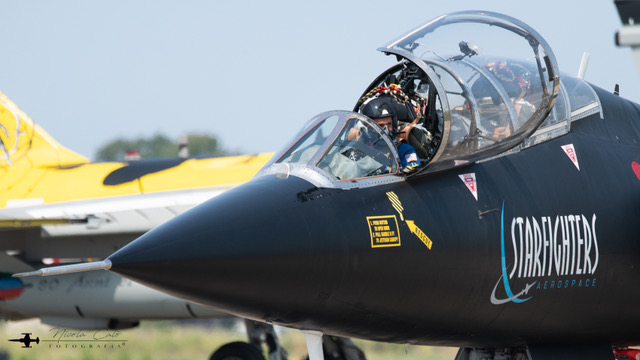
Even today, some of the research profiles flown by Starfighters Space involve steep climbs and high-energy maneuvers that remind him why the aircraft earned such a reputation. For Ciacchi, however, the Starfighter is ultimately a reminder of something larger than aviation. To explain it, he compared the aircraft to a Stradivari violin. A modern, computer-produced instrument may perform the same basic function, but it does not necessarily carry the same sense of craftsmanship, vision, and human ambition. “They both play music,” he said, “but when you touch a Stradivari, you feel the people who put everything they had into creating it.”
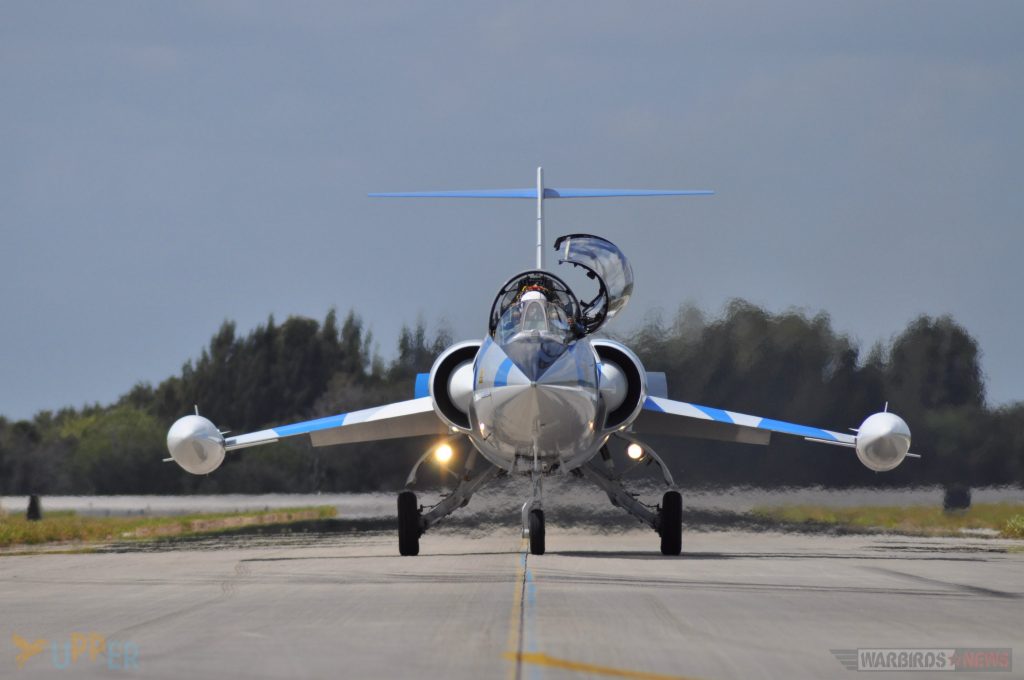
That sentiment may best explain both the aircraft and the man who continues to fly it. From aspiring engineer to Starfighter pilot, from the Frecce Tricolori to aerospace research over Cape Canaveral, Piercarlo Ciacchi has spent a lifetime pursuing extraordinary machines and the ideas behind them. Fittingly, the aircraft that remains at the center of his story is one that was never ordinary either.



A great article. As the last combat qualified 104 pilot in the USAF as an exchange officer with Canada I agree whole heartedly. The 104 was a great airplane to fly and it talked to you. If you mishandled it you could get bitten.
Although not absolutely the last Zipper driver, Fritz has that honor or perhaps some test pilot at Edwards or Pax. I think we all would agree. What a great ride.
Well written. Piercarlo is one lucky man
My dad served in the RAAF in the big one and I’ve always been a warbird fan.As a young bloke and being in the Air force Training Corp I was always gobsmacked by all these new super fast jets. The F104 being top of most boys list. In 2008 I was lucky enough to visit the Speyer Teknic museum in Germany…What an eye opener! In the yard there was a Shuttle,747, U Boat among others;of which there was a 104! Had never seen one live and could not believe my luck. Also could not believe the Cord of those wings(?) Nearly sliced my finger running along the leading edge…a lasting memory.
Thanks for the great stories!
Rob.
My father retired USAF Major Roy (Bud) Jamesen accumulated over 2,000 hours in a F-104 Starfighter. Was an exchange pilot with the Royal Canadian Air Force in Cold Lake, Alberta in 1964-1965