We appreciate the support from readers like you at Foxiz. Through your purchases using the links on our site, you empower us with affiliate commissions.
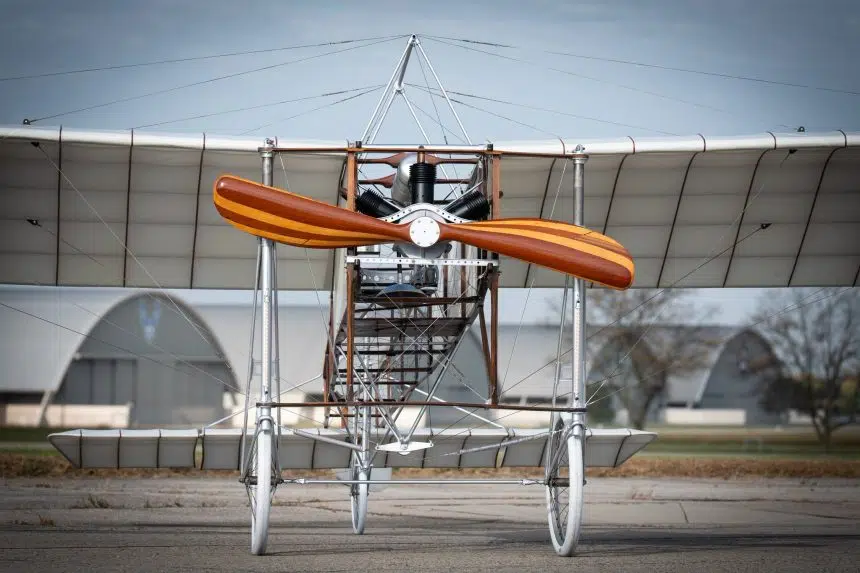
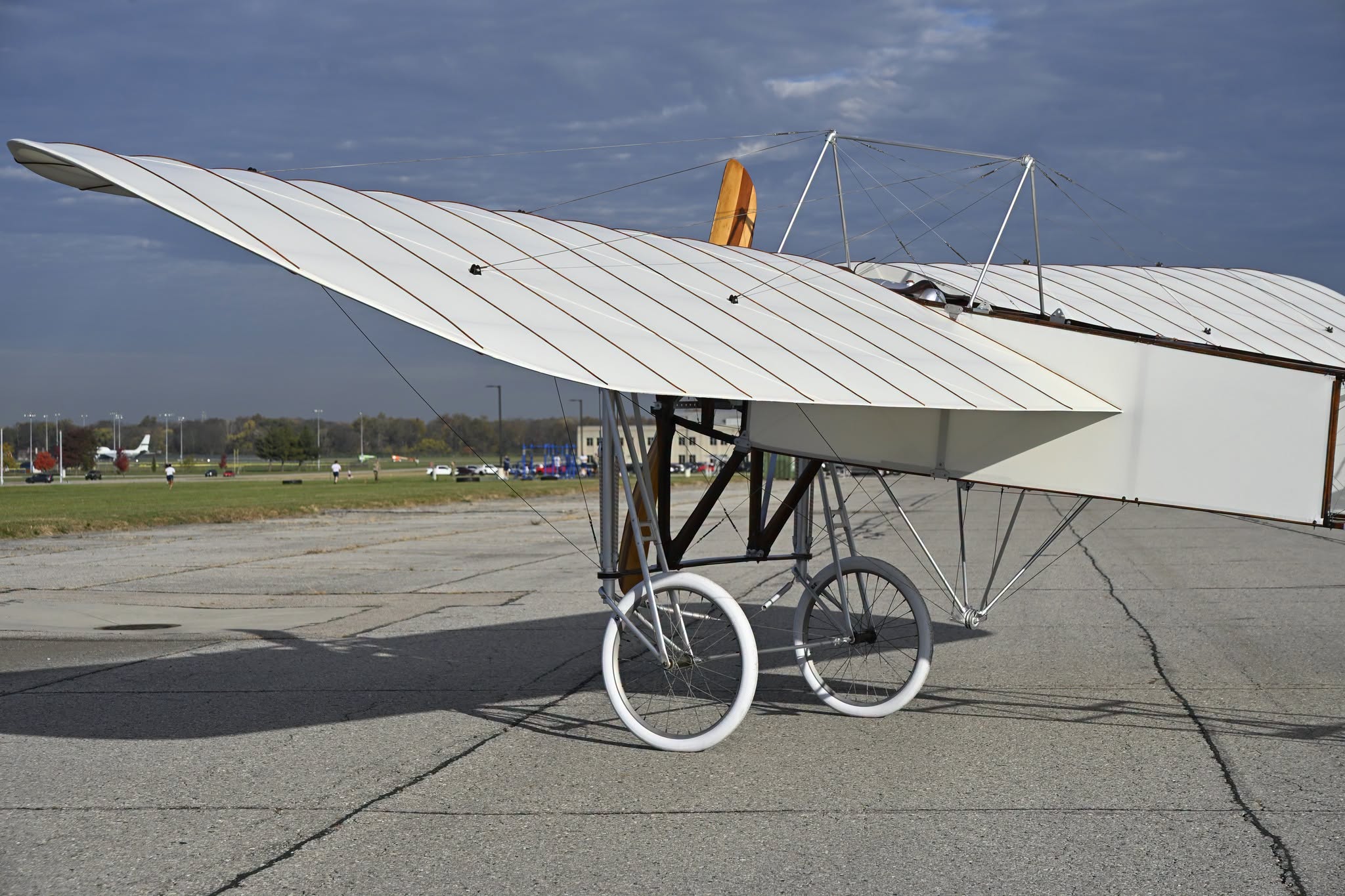
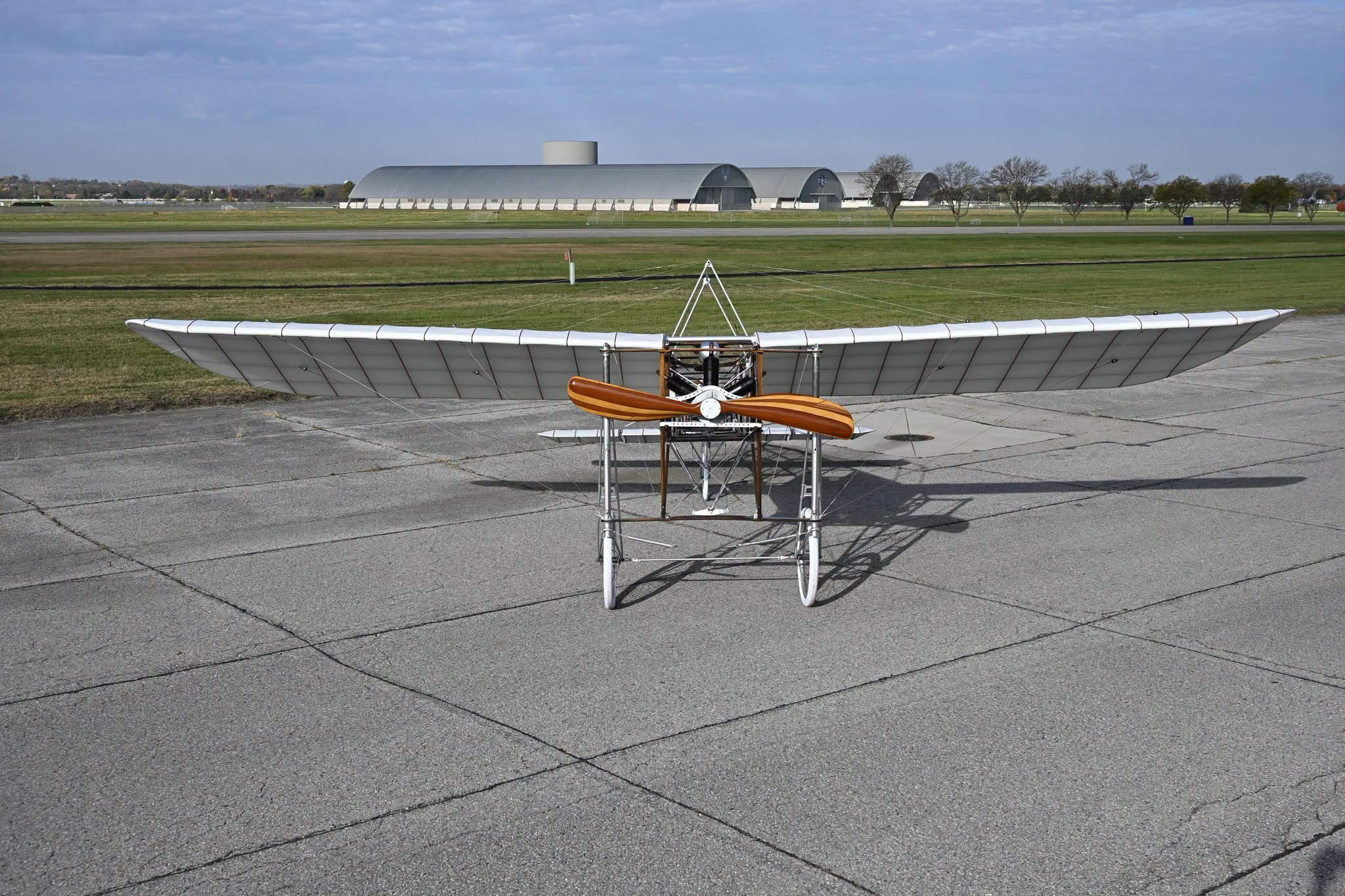
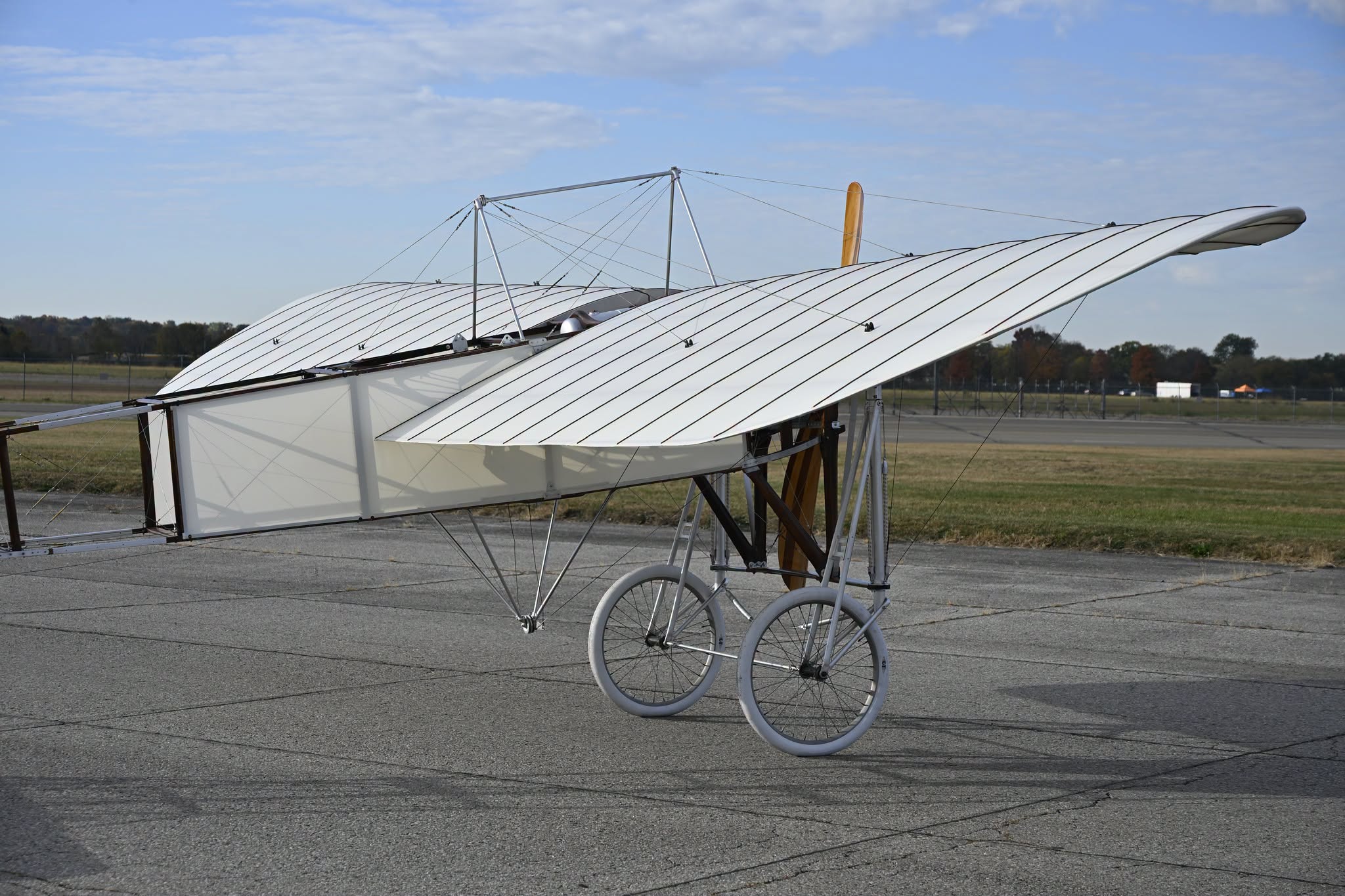
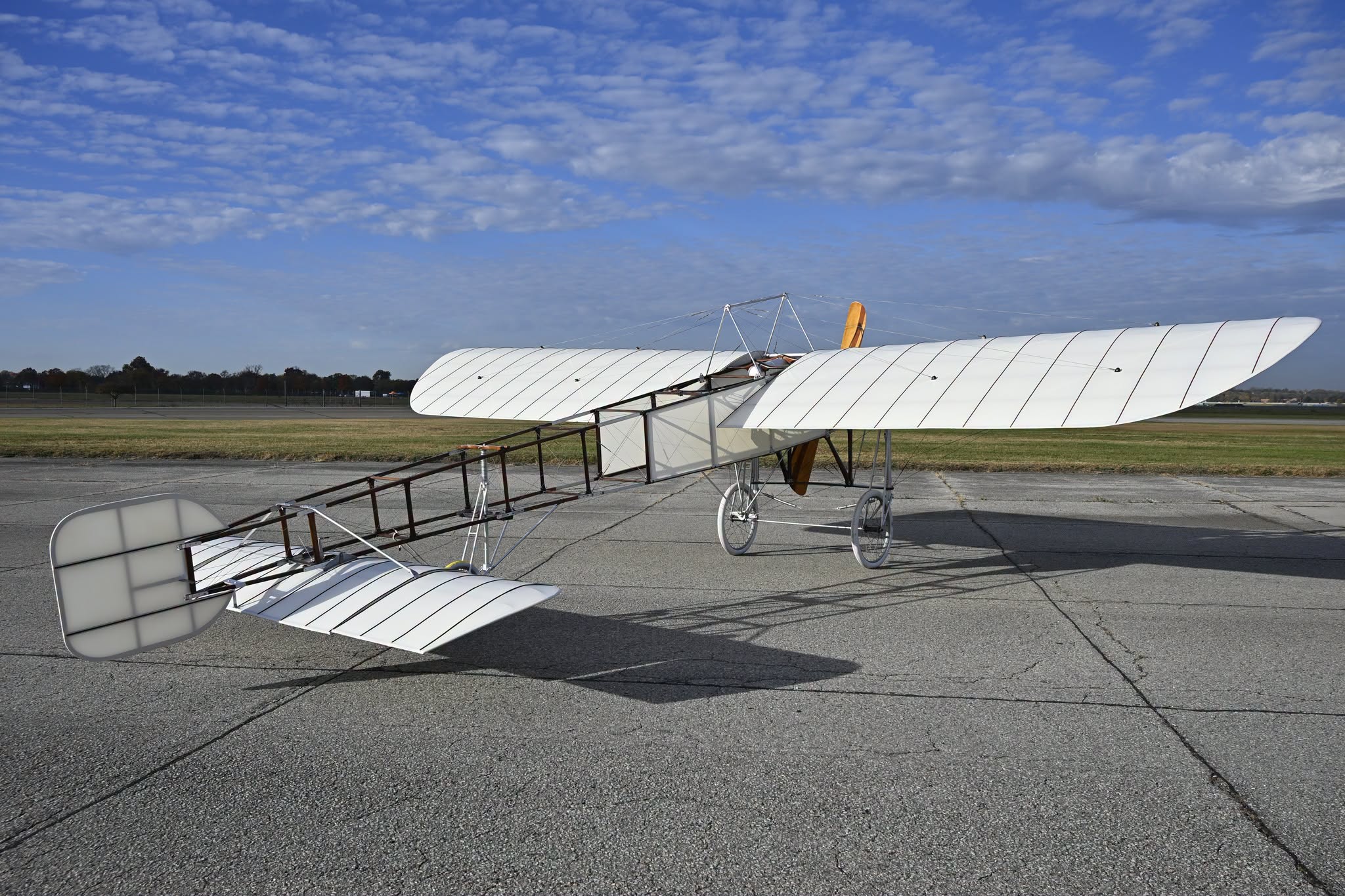
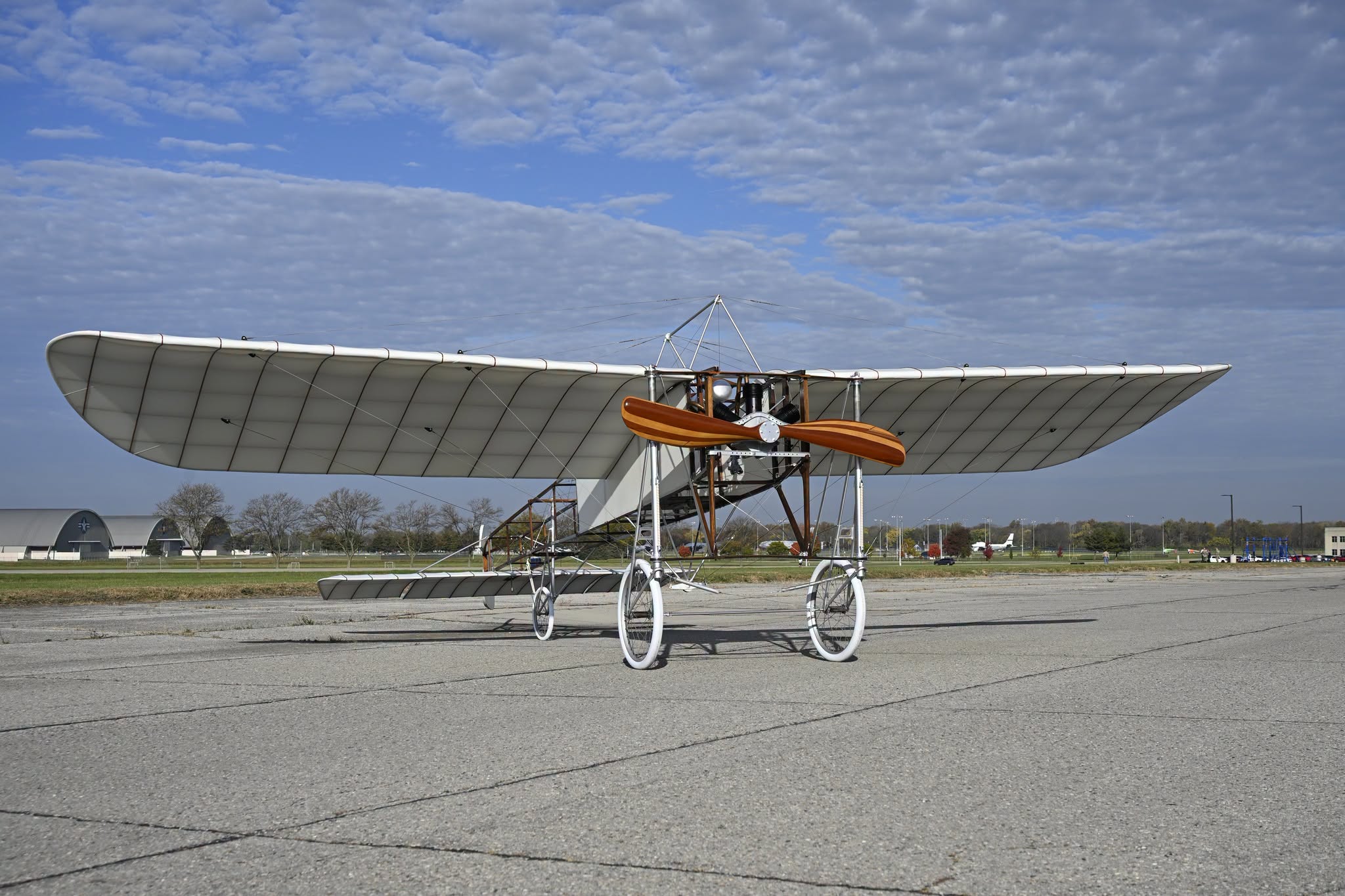
The National Museum of the USAF's Bleriot Monoplane following the completion of an eight-month restoration from February-October 2026. (Image credit: National Museum of the USAF)
SHARE
In February 2023, the National Museum of the United States Air Force in Dayton, Ohio, took its Blériot Monoplane, one of the oldest aircraft in its collection, off public display to receive a restoration, as brought up in this article HERE. Now, with several other restoration projects being completed, the NMUSAF has been turning its attention back to the Bleriot in its restoration hangar.
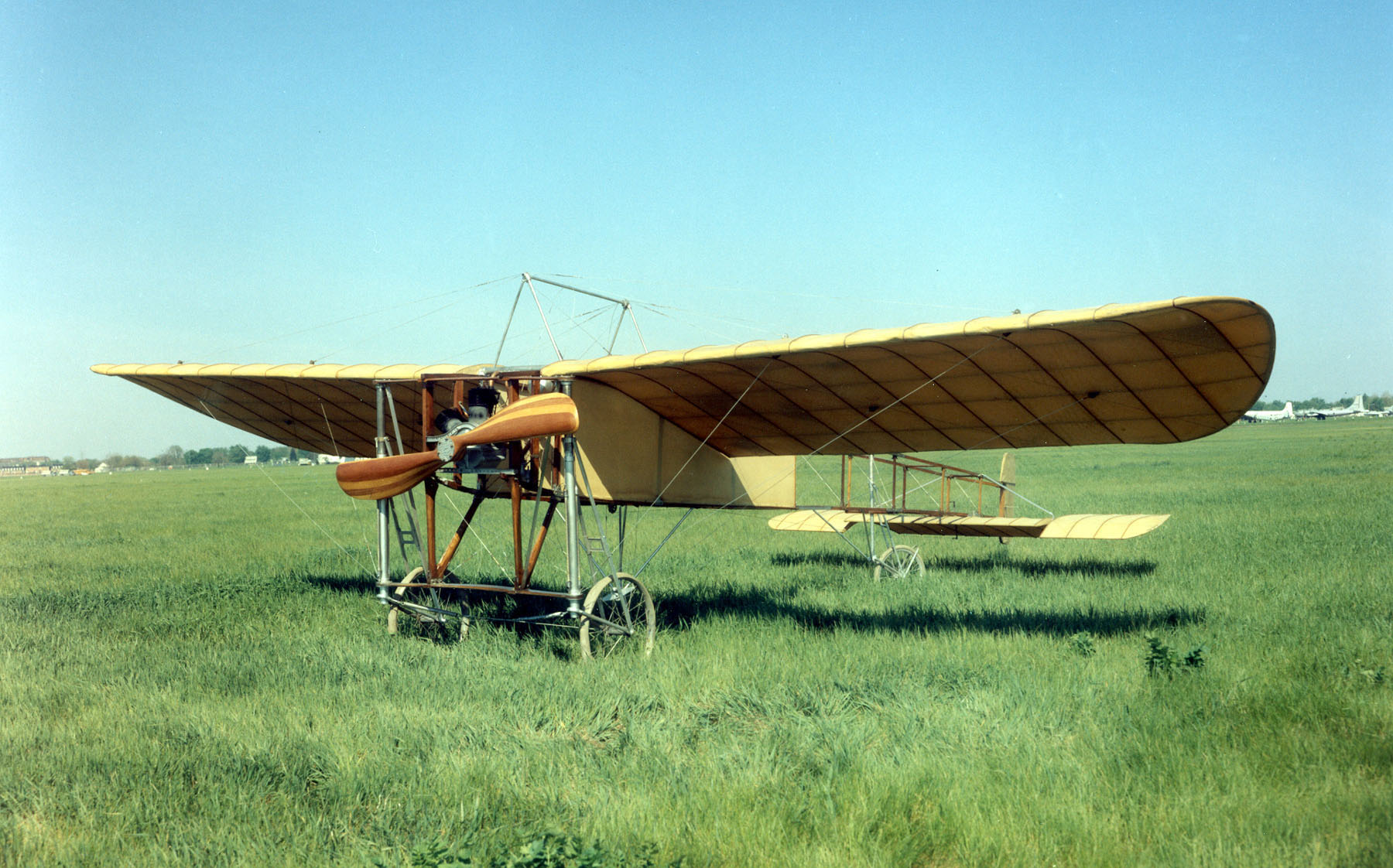
DAYTON, Ohio — Bleriot Monoplane at the National Museum of the United States Air Force. (Image credit: U.S. Air Force photo)
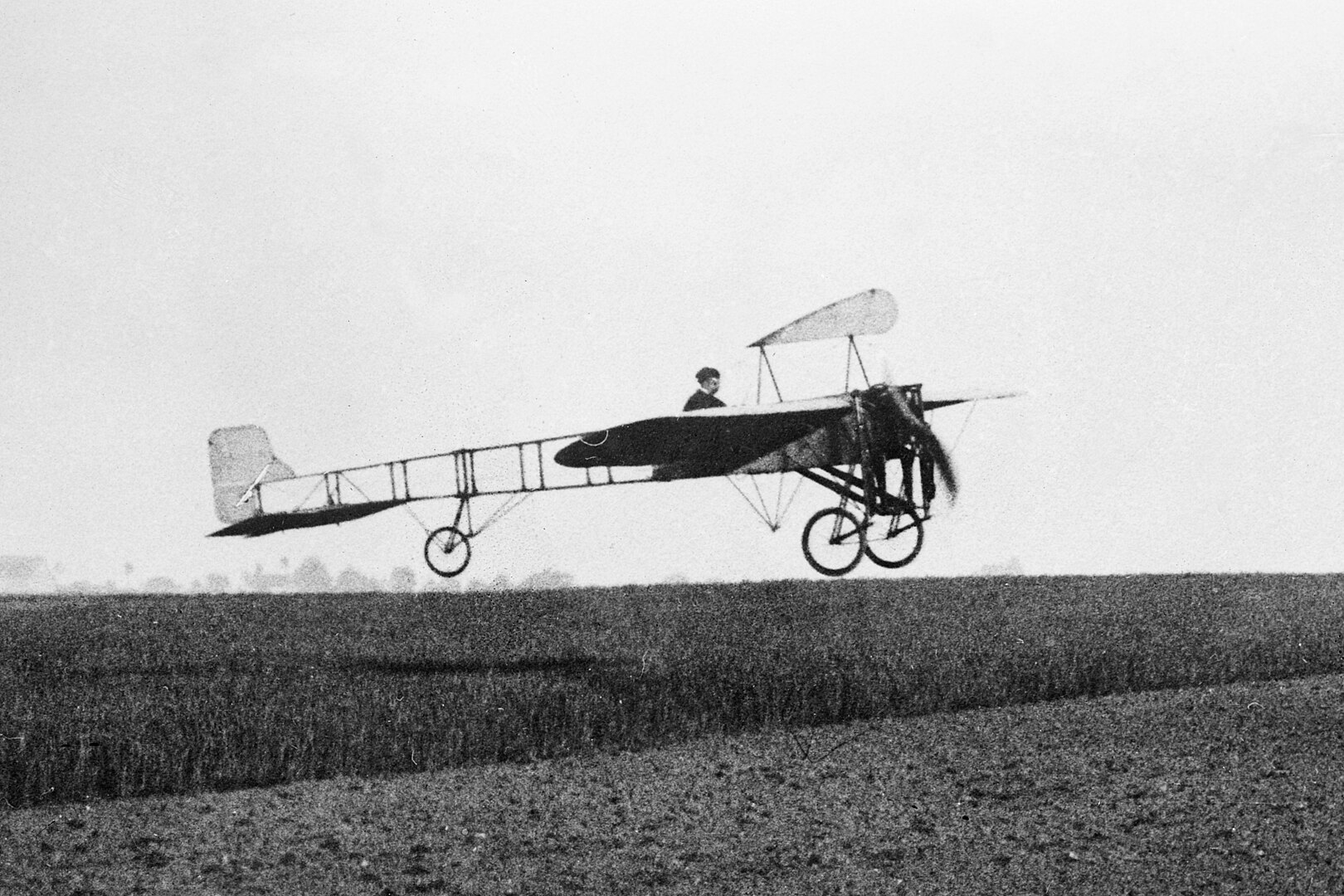
While the Blériot XI may be best known for being the first airplane to cross the English Channel, when French aviator Louis Blériot flew from Calais to Dover in 37 minutes on July 25, 1909, the Blériot XI was widely also adopted as a military aircraft across Europe, Latin America, Australia and New Zealand in the years right before World War I, being used for flight training and aerial observation, particularly through the Blériot XI-2 variant. Some Blériots would see conflict in smaller wars such as the Italo-Turkish War in Libya and the Balkan Wars. When World War I broke out in the summer of 1914, the Blériot XI would be used in combat during the first months of the war, but rapid advancements in aviation technology and tactics quickly rendered the flimsy Blériots obsolete, being kept as trainers well behind the front lines.
The Blériot XI as first built, with small “teardrop” profile fin on dorsal cabane struts. (Image credit: Library of Congress)Captain Carlo Piazza in the cockpit of his Blériot XI in Libya during the Italo-Turkish War, 1911. (Image credit: Aeronautica Militaire Italiana)
Although the Blériot XI was never accepted into service with the US military, the National Museum of the USAF notes that many American pilots who volunteered to join the British and French air arms before the United States’ official entry into the war in April 1917 would learn to fly on Blériots before going into combat, and once America officially entered the war and sent its airmen to France, many received ground schooling with a unique variant of the Blériot XI. Several old Blériots were fitted with “clipped” wings that were too small to enable an aircraft to lift off the ground, yet gave a fledgling pilot a better sense of controlling aircraft at takeoff speeds before graduating to airworthy aircraft. These modified aircraft were nicknamed “Penguins” after the flightless Antarctic bird, and while it was common in France for these to be based directly on the Blériot XI, the Breese Aircraft Corporation of Farmingdale, New York, built their own Penguin design, the Breese Penguin, which adopted the same layout as the Blériot Penguins but was powered by a Lawrence A-3 two-cylinder inline engine with an output of 28 hp.
View of a Bleriot XI modified as a “Penguin” ground trainer during WWI. (Image credit: The Flight Log and War Letters of George Evans Turnure, Jr.)Front view of a Breese Penguin ground trainer. Built by the Breese Aircraft Company of Farmingdale, New York, it was inspired by the modifications made to numerous Bleriot XIs in France for use as ground trainers during WWI. (Image credit: National Archives and Records Administration)
Besides the fame the Blériot XI earned around the world as a pioneering aircraft, its design was copied by numerous companies and even private individuals who dreamed of taking to the skies in homemade airplanes. One of these was one of the many aviation pioneers from Ohio, Ernest C. “Ernie” Hall, who built the very Blériot now held in the collections of the NMUSAF. Born on October 31, 1890, in Gustavus, Ohio, Hall developed a passion for aviation even before fellow Ohioans Orville and Wilbur Wright had flown their Flyer in 1903. As a teenager, he designed and built model gliders before constructing and flying full-scale gliders.
A young Ernest C. Hall sits in the cockpit of one of his Bleriot XI copies, wearing a cap and flying googles. (Image credit: Ernie Hall Aviation Museum)
With Louis Blériot’s aerial crossing of the English Channel, the Blériot XI aircraft became one of the most popular aircraft designs in the world, and Hall was determined to build his own Bleriot XI. After obtaining a set of engineering drawings for the aircraft, he built his own Blériot XI and used it to teach himself how to fly a powered aircraft, and Hall would eventually construct no less than three Blériot monoplanes. Following his success, the 21-year-old self-taught pilot met the Wright Brothers, then became a flight instructor with the Curtiss Exhibition Company.
One of the copies of the Bleriot XI built by Ohio aviation pioneer Ernest C. Hall. This one is fitted with a two-cylinder Detroit Aero engine. (Image credit: National Museum of the USAF)
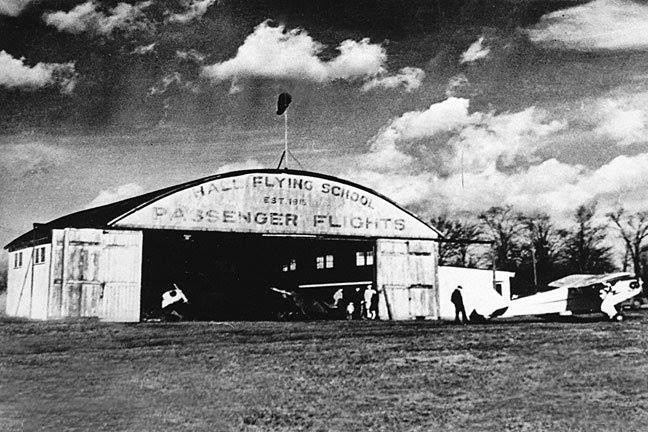
In 1915, Hall established his 1st flying school in Conneaut, Pennsylvania, at the age of 25. Two years later, when America entered WWI, Hall worked as a civilian contractor, hired as a flight instructor for the U.S. Army Air Service at Call Field in Wichita Falls, Texas. After WWI ended, Hall continued to work as a civilian flight instructor, and in 1922 he settled in Warren, Ohio, with Hall later becoming the State of Ohio’s Director of the Bureau of Aeronautics, training more pilots in WWII, and remained a flight instructor well into his later years before he died on December 5, 1972, aged 82.
View of the hangar of Ernest C. Hall’s flying school in Warren, Ohio.
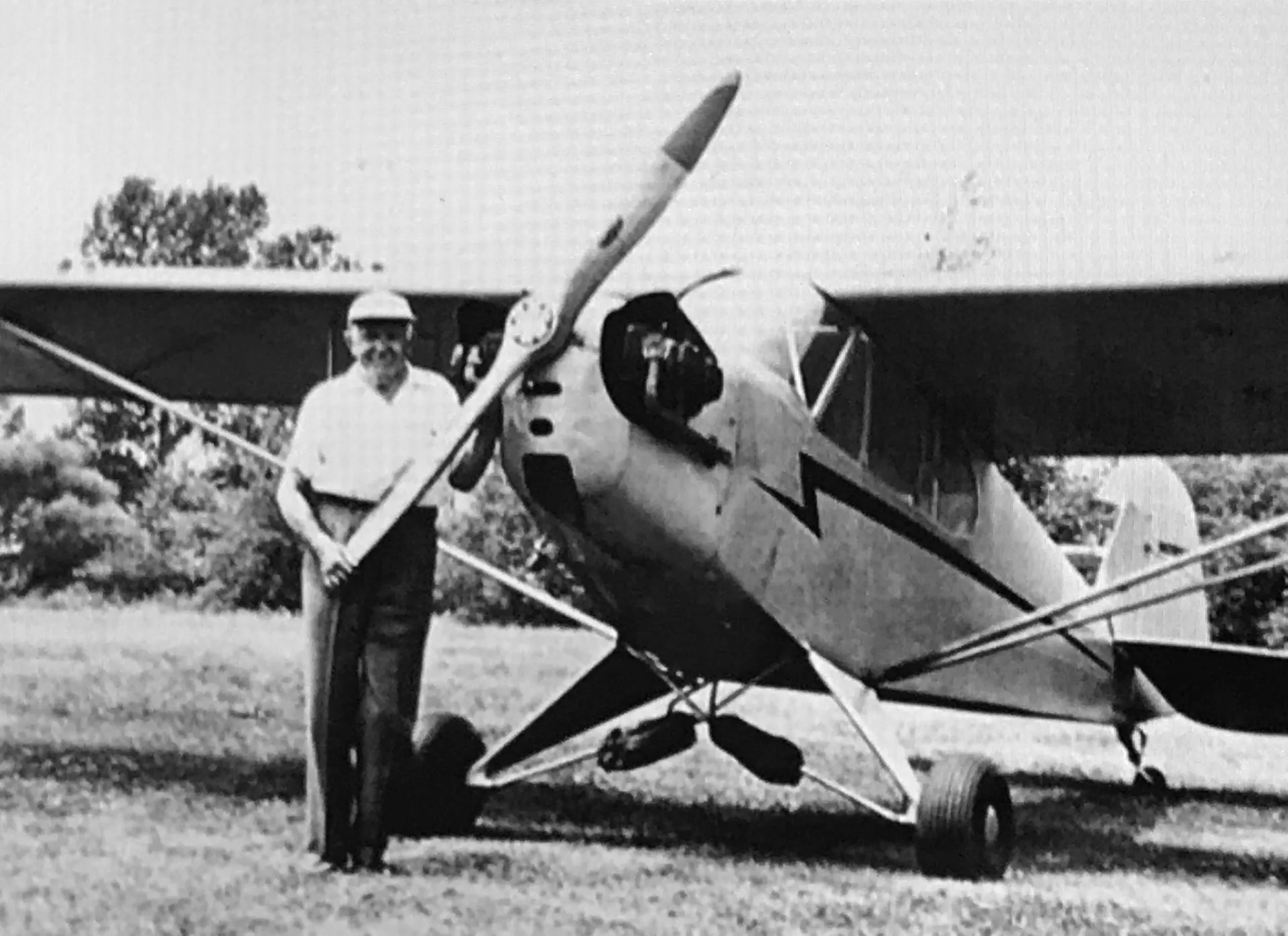
Ernie Hall standing with a Piper J-3 Cub.
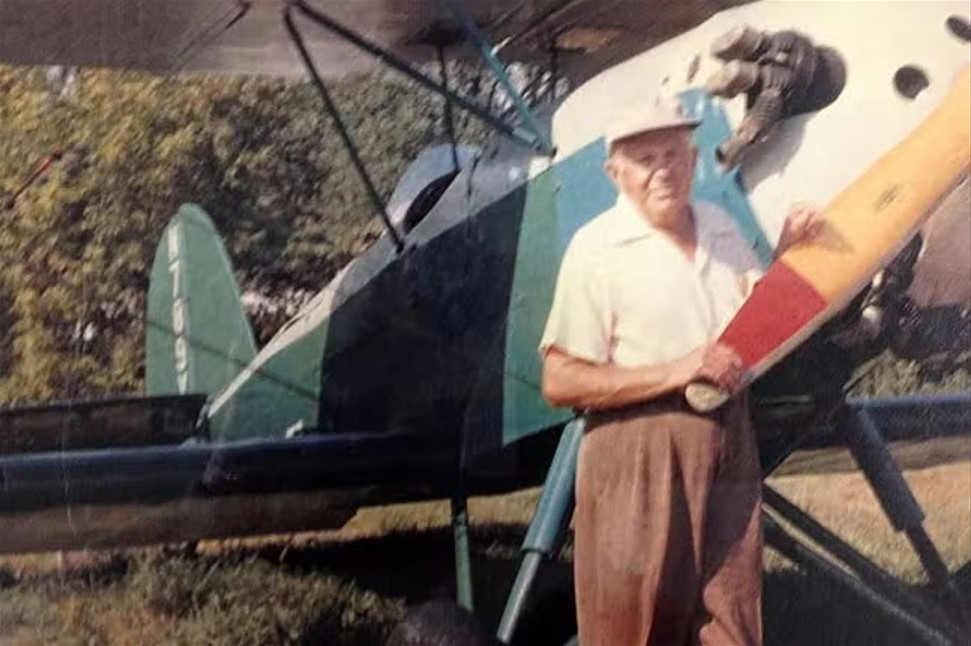
Ernest C. Hall poses with his Brunner-Winkle BK Bird, N789Y.
Before his death, however, Hall was widely recognized for his lifelong work in aviation, being among the last pre-WWI pilots still flying into the 1960s, and was an active member of such organizations as the Early Birds of America and the OX-5 Club. Additionally, two of his Bleriot monoplanes would survive him. The first one he built was flown until damaged in 1917, was later sold to pilot Shirley Wardle, who installed a 65-hp Continental engine and registered the aircraft as N9781 before the aircraft was donated to the Bradley Air Museum (now the New England Air Museum) in Windsor Locks, Connecticut, and was refitted with a horizontally-opposed 2-cylinder 25-hp engine manufactured by Fred Weinberg of Detroit, Michigan, founder of the short-lived Detroit Aero Engines company.
Another of Ernest C. Hall’s Bleriot XI displayed at the New England Air Museum in Windsor Locks, Connecticut. (Image credit: New England Air Museum)
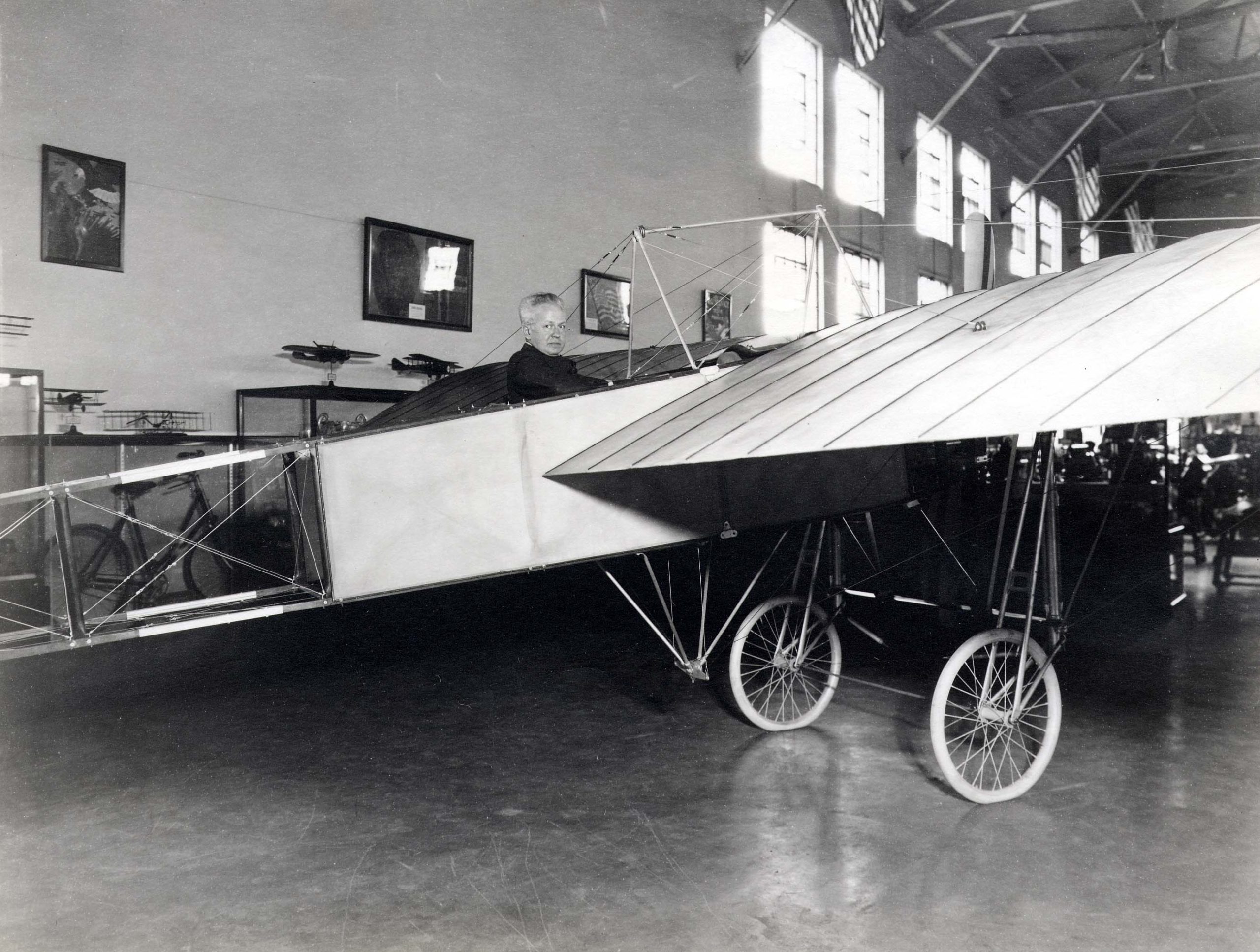
The Bleriot monoplane built by Ernest C. Hall residing at the NMUSAF is believed to be the third and last Bleriot copy built by Hall in 1911. Little is known about its flying career under Hall, but there is no record that it was ever issued any form of registration by any government agency. It also appears that, in contrast to the aircraft he built now on display in Connecticut, Hall fitted this Bleriot copy with an Anzani fan-type 3-cylinder engine with an output of 20 hp, the standard powerplant for the original Bleriot XI. During the late 1930s, Hall donated this Bleriot copy to what was then called the Army Aeronautical Museum, which was privately housed inside a building constructed by the Works Progress Administration (WPA). The building, known today as Building 12, still stands inside Area B of Wright-Patterson AFB. During WWII, the collection was neglected, and several aircraft were even scrapped in order to make room for wartime needs at Wright Field. The Bleriot went into storage, and though it was spared from the wartime scrap drives, its condition deteriorated, as it was not kept in a climate-controlled building. By 1954, the newly renamed United States Air Force Museum made a public museum on the Patterson Field side of WPAFB, and the Bleriot monoplane was returned to Ernie Hall in Warren, Ohio, for safekeeping.
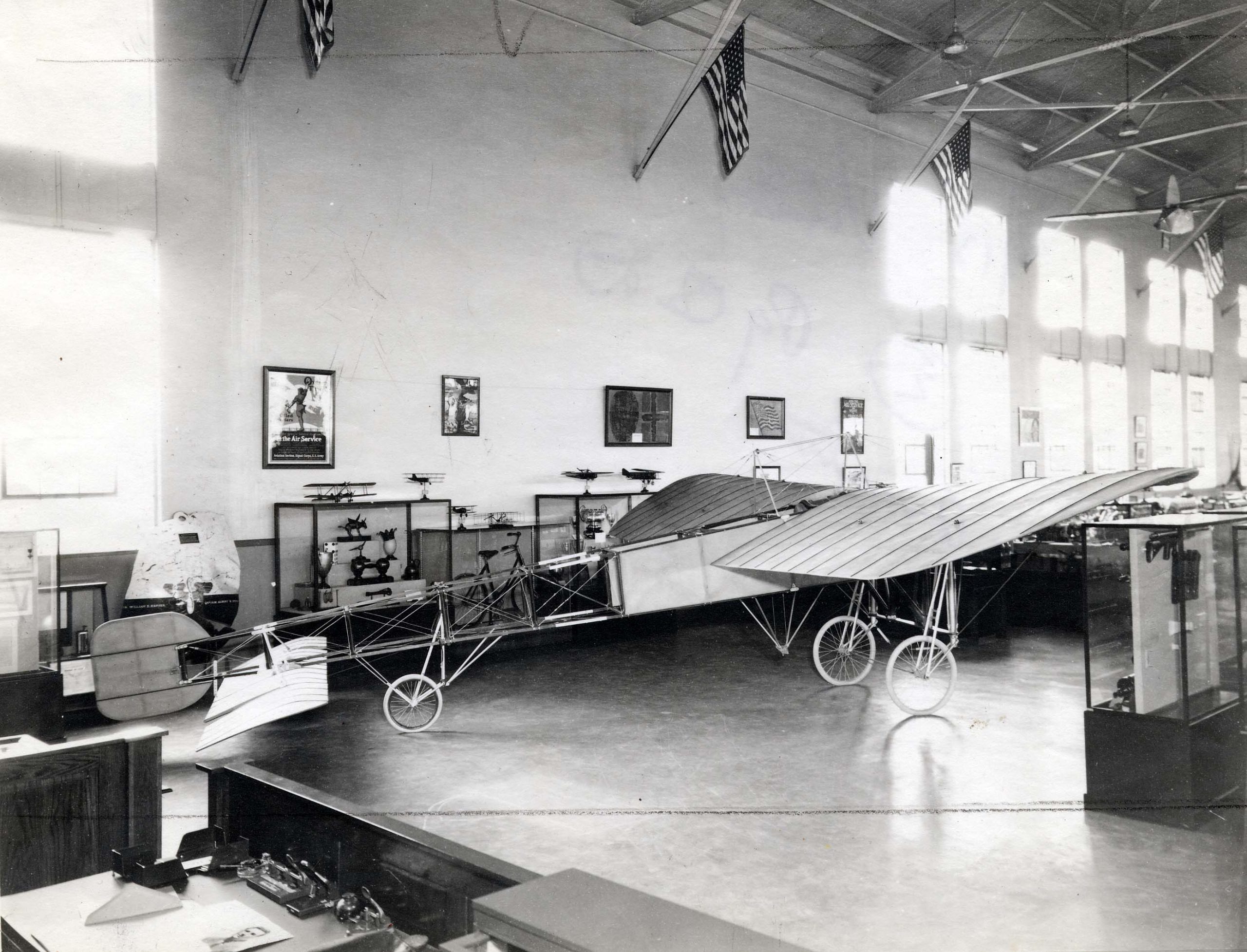
Bleriot monoplane built by Ohio aviation pioneer Ernest C. Hall on display at the Army Aeronautical Museum, Wright Field, Dayton, Ohio, circa 1939.
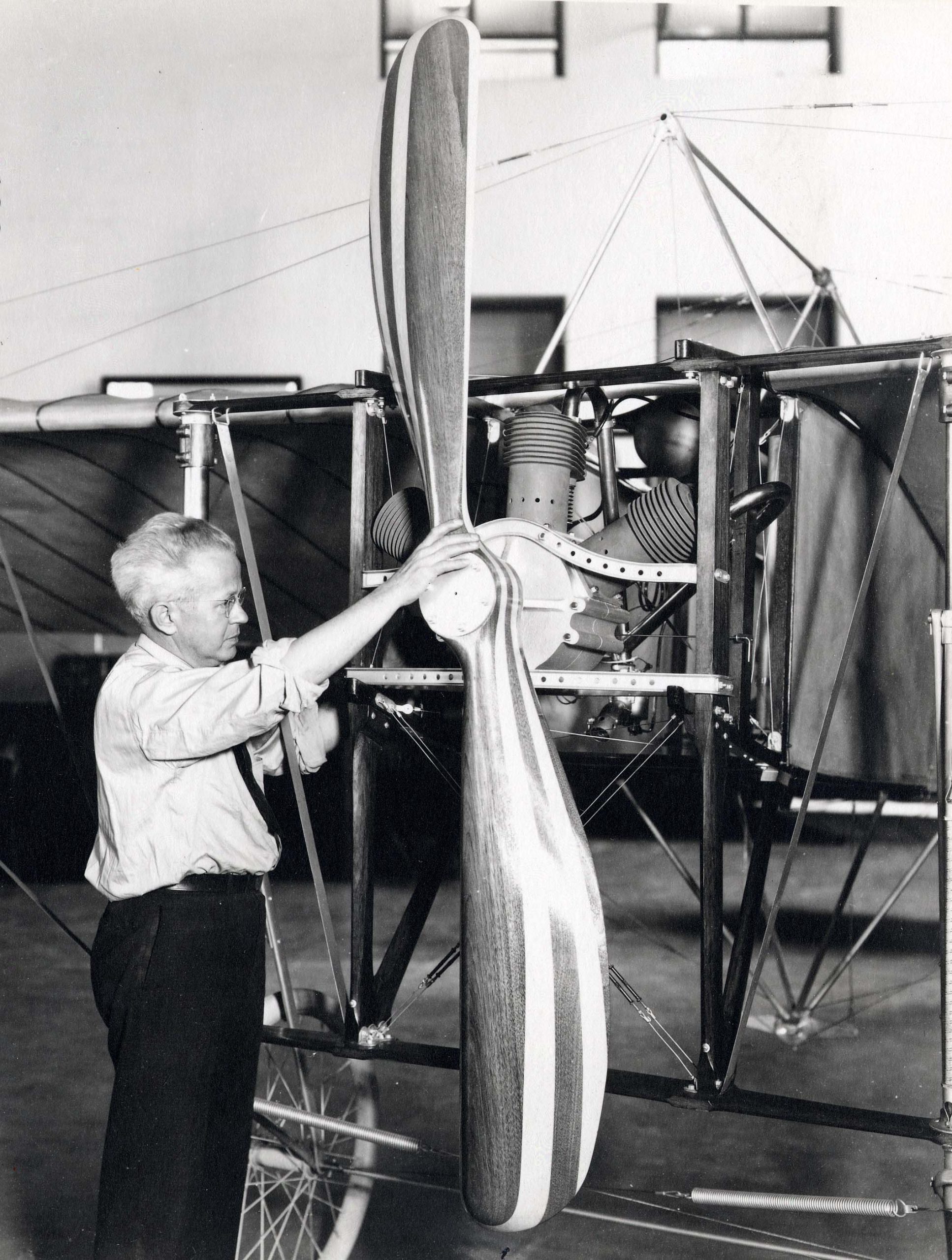
Ernest C. Hall inspects the propeller installed on the Bleriot monoplane he built and donated to what was then the Army Aeronautical Museum, circa 1939.
Ernest C. Hall sits in the cockpit of the Bleriot XI copy he built around 1911 while the aircraft is displayed at the Army Aeronautical Museum, an early iteration of the National Museum of the USAF, Wright Field, Dayton, Ohio.
In 1969, while the museum was moving into its current location on the Wright Field portion of Wright-Patterson, Ernie Hall was contacted by the USAF Museum, which expressed interest in returning his Bleriot monoplane to the museum and having it on public display for the first time. Hall accepted the request and trucked the old airplane back to the museum, where it was restored for display. When the museum volunteers made some errors in reassembling the wings and internal structure of the Bleriot, Hall was vocal about this, offered insight into correcting the aircraft for display, and oversaw the correct reassembly of the aircraft.
DAYTON, Ohio — Bleriot Monoplane at the National Museum of the United States Air Force.
DAYTON, Ohio — Bleriot Monoplane at the National Museum of the United States Air Force.
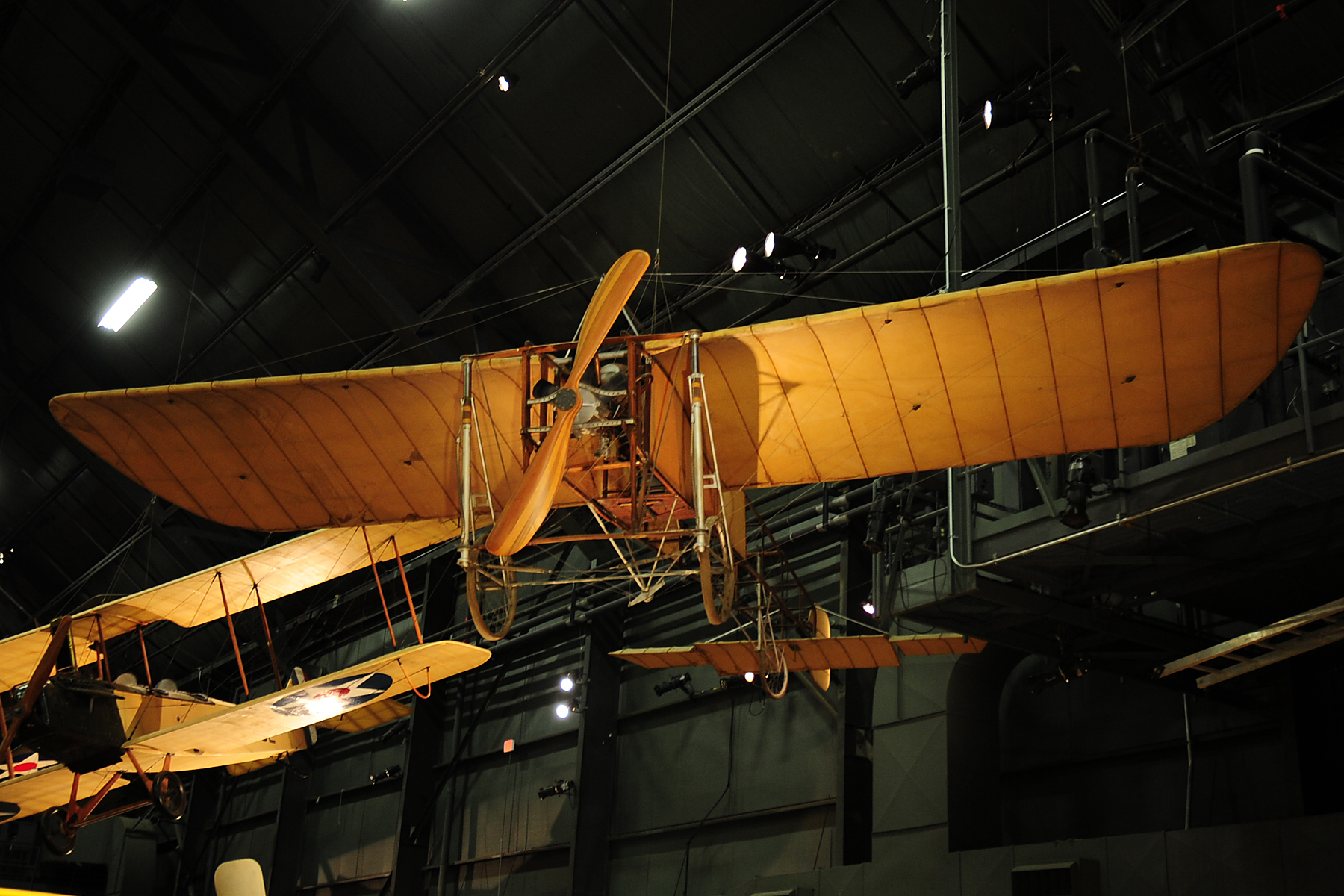
Ernest C. Hall’s Bleriot monoplane displayed in the Early Years Gallery of the National Museum of the USAF.
Ernest C. Hall’s Bleriot monoplane displayed in the Early Years Gallery of the National Museum of the USAF.
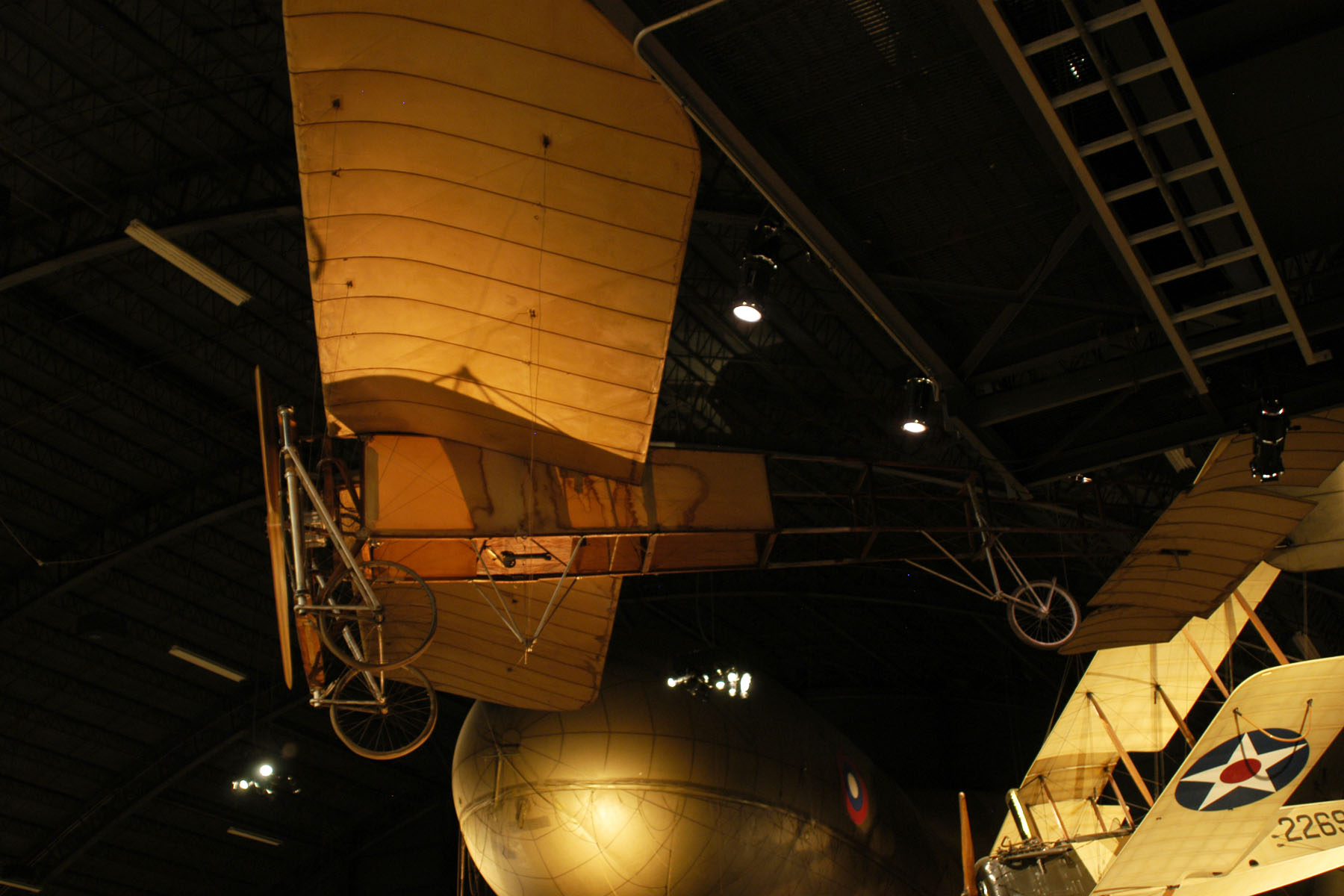
Ernest C. Hall’s Bleriot monoplane displayed in the Early Years Gallery of the National Museum of the USAF prior to its transfer to the museum’s restoration hangar.
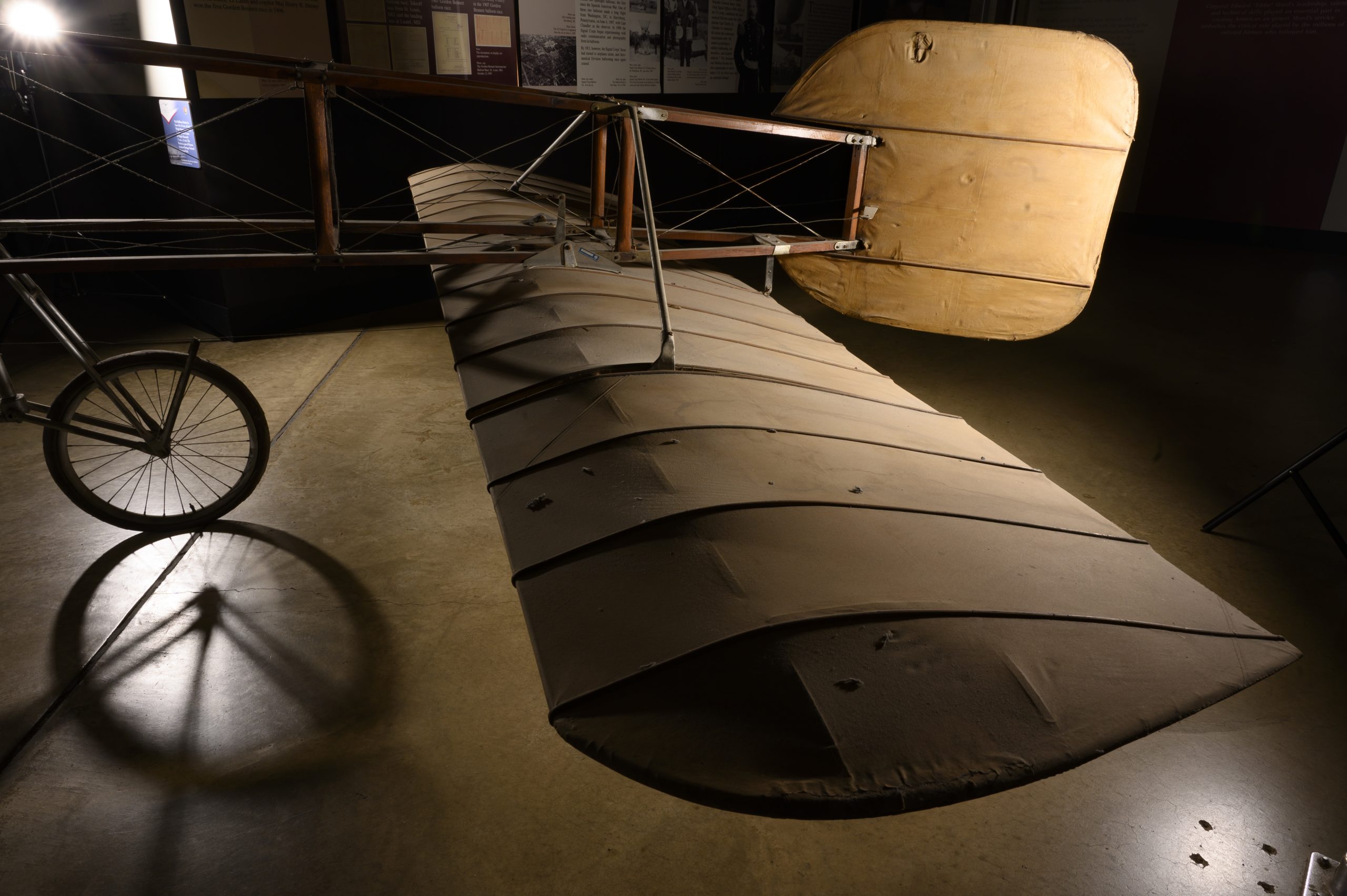
Tail of Ernest C. Hall’s Bleriot monoplane displayed in the Early Years Gallery of the National Museum of the USAF.
Detail of the Anzani engine on Ernest C. Hall’s Bleriot monoplane displayed in the National Museum of the USAF’s Early Years Gallery. (Image credit: U.S. Air Force photo)
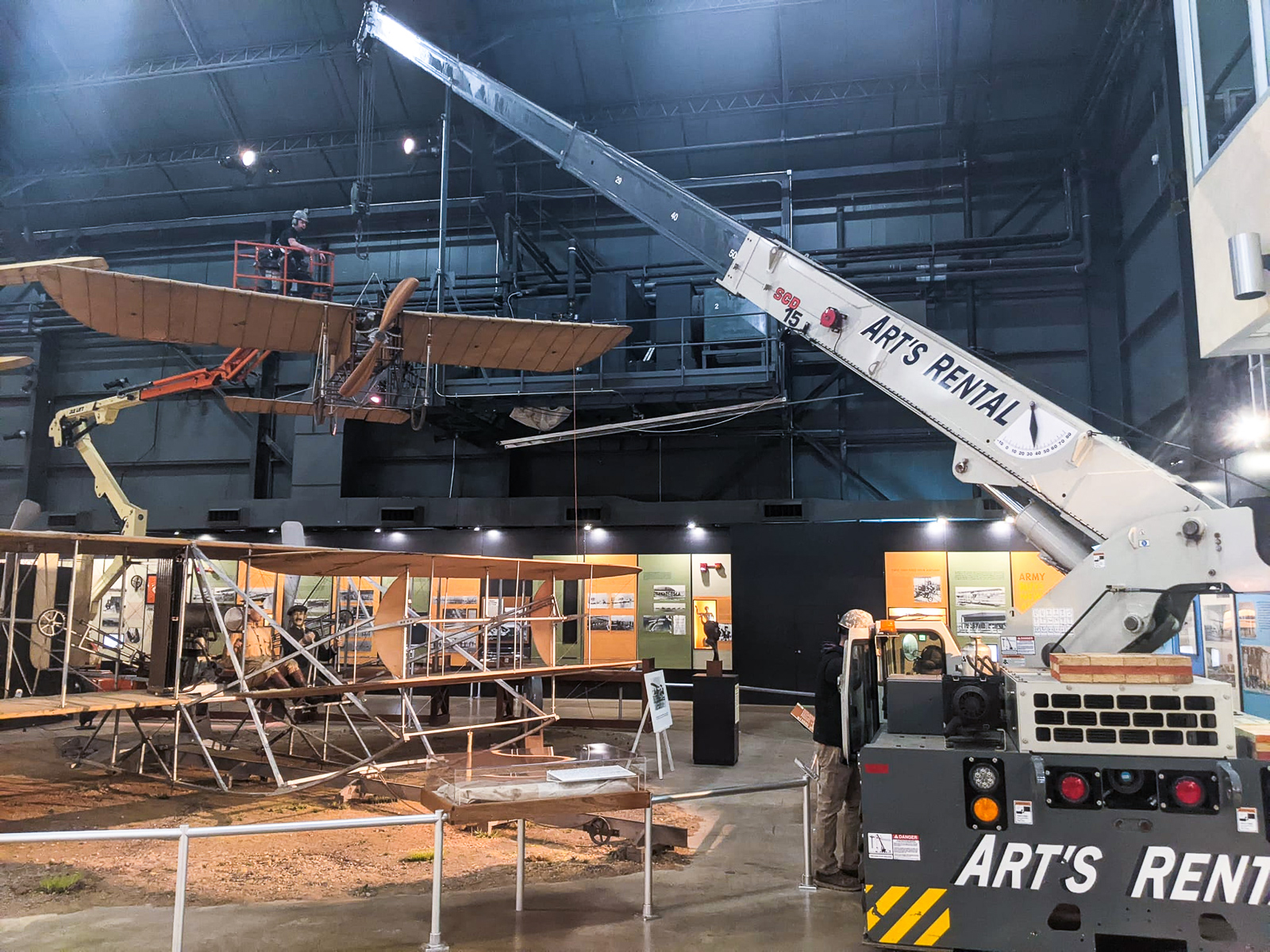
For about 50 years, the Bleriot was suspended from the ceiling of the museum’s Early Years Gallery, but in February 2023, it was lowered to the gallery’s floor, carefully disassembled, and brought to the museum’s restoration hangar inside Wright-Patterson AFB (See our 2023 article HERE). The main reason the aircraft was selected for restoration was that the degrading fabric had been gradually pulling on the wooden structure of the Bleriot.
The Bleriot coming down from its perch in the Early Years Gallery. (Image credit: Ken LaRock)Ernest C. Hall’s Bleriot monoplane displayed in the National Museum of the USAF’s Early Years Gallery before being sent to the museum’s restoration hangar. (Image credit: National Museum of the USAF)
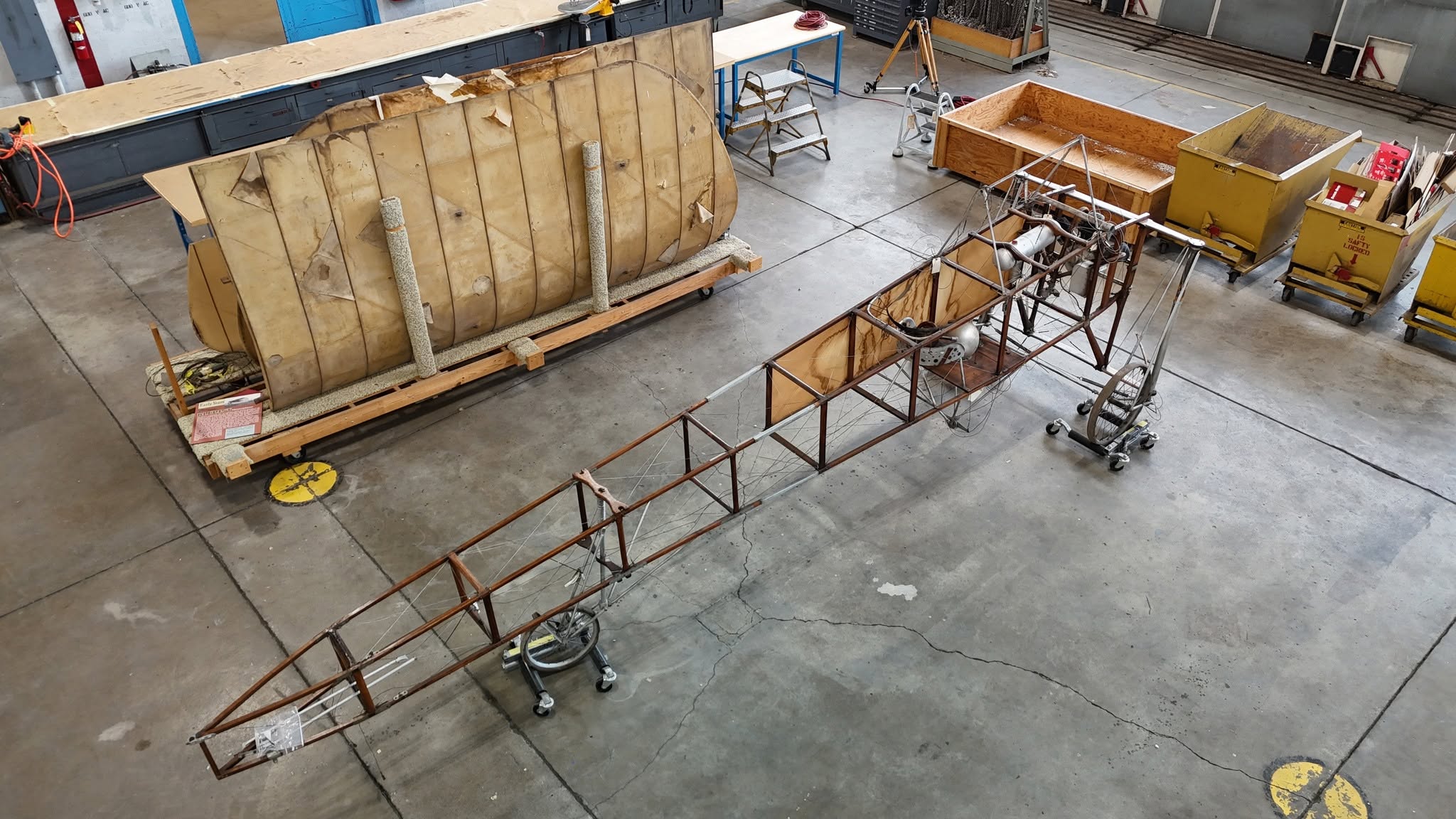
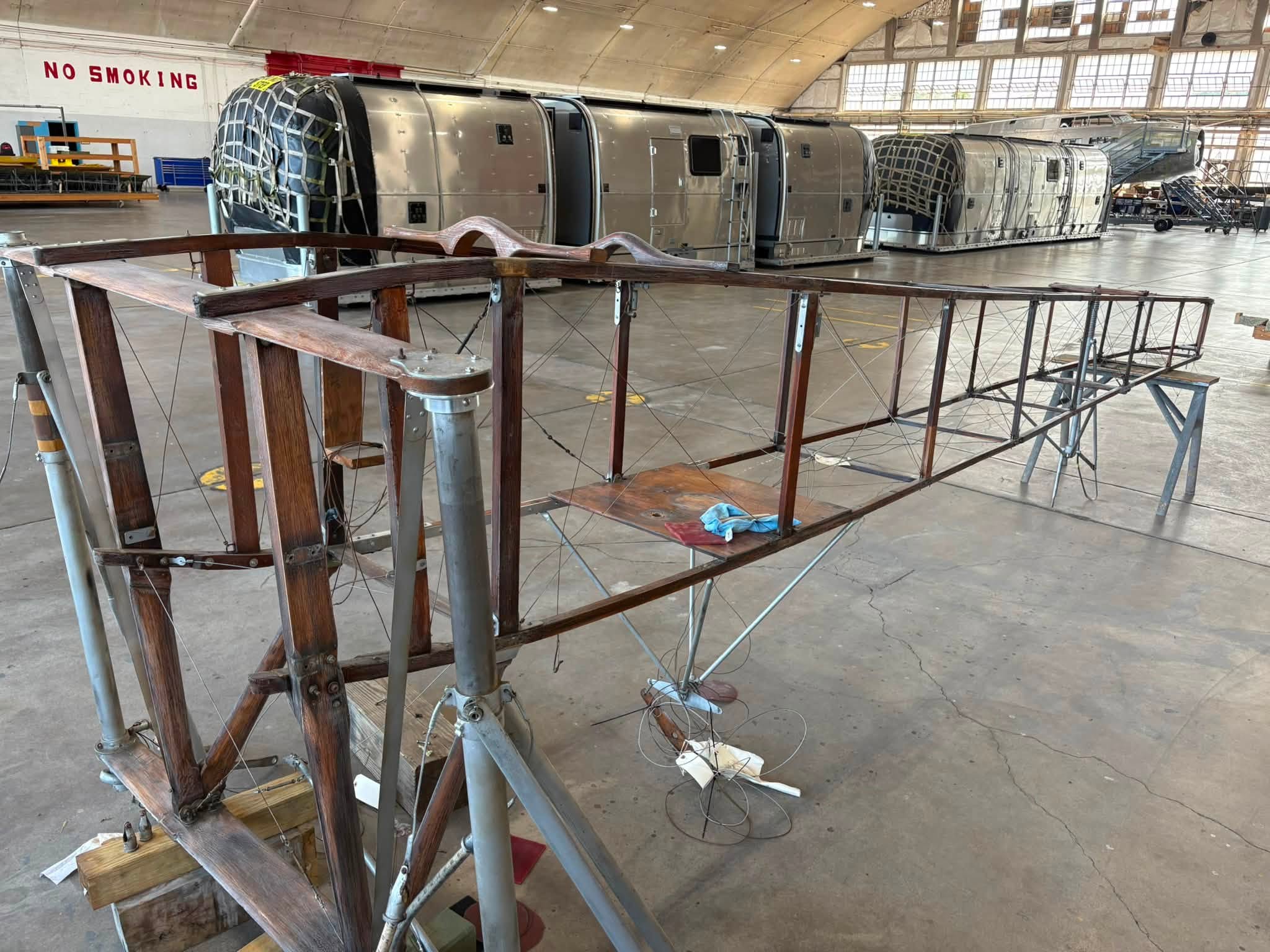
In the three years since being brought to the restoration hangar, Ernest Hall’s Bleriot sat in storage while other restoration projects were being completed, its wings and tail sitting in a jig adjacent to the fuselage, which was placed onto dollies to make movement around the hangar easier. In February 2026, restoration work began on the Bleriot monoplane, with restoration specialist Casey Simmons taking charge of the Bleriot project.
Overhead view of the Hall-Bleriot monoplane inside the National Museum of the USAF’s restoration hangar prior to the start of its restoration.
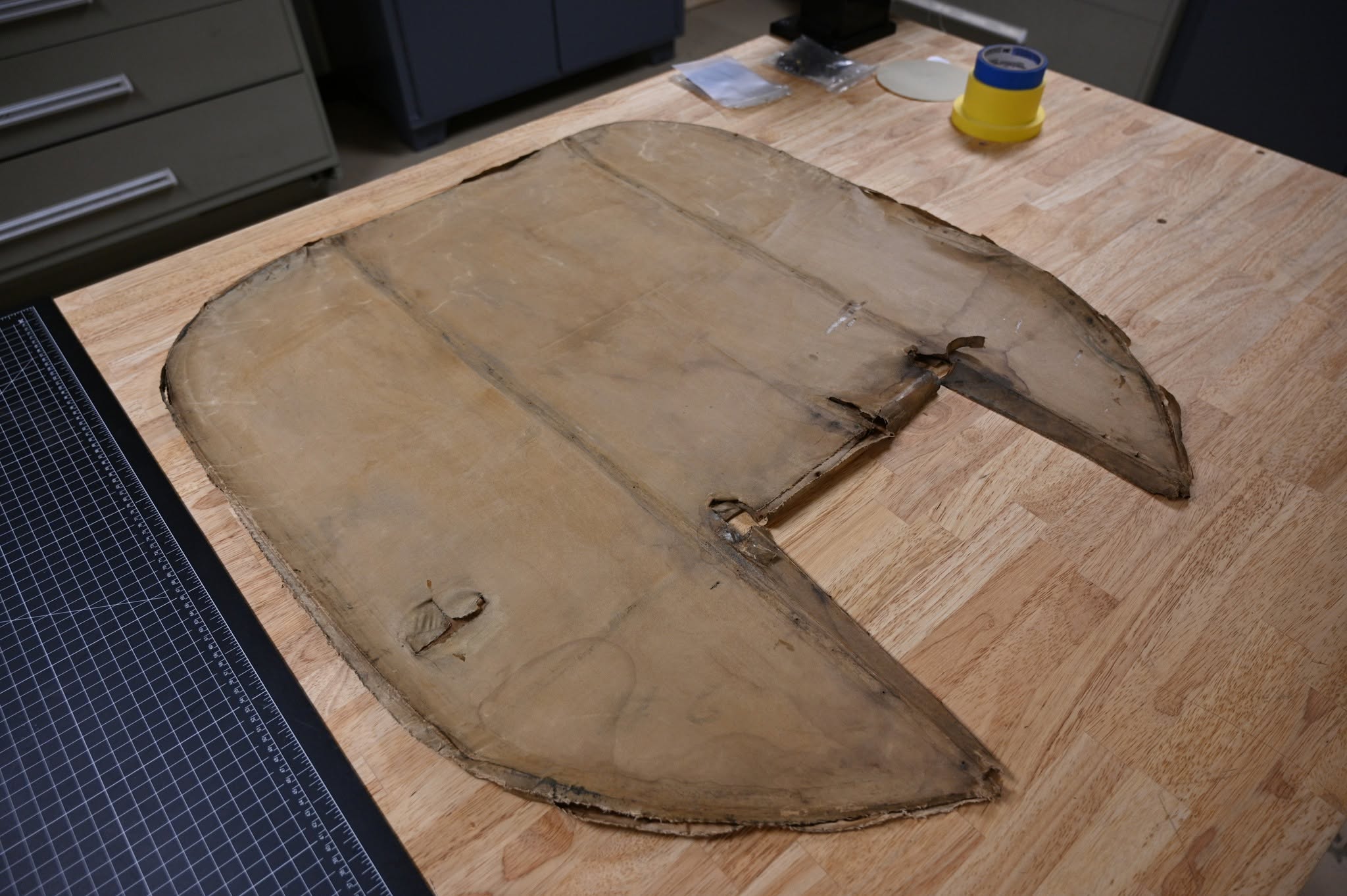
Original fabric on the rudder of the National Museum of the USAF’s Bleriot monoplane restoration project.
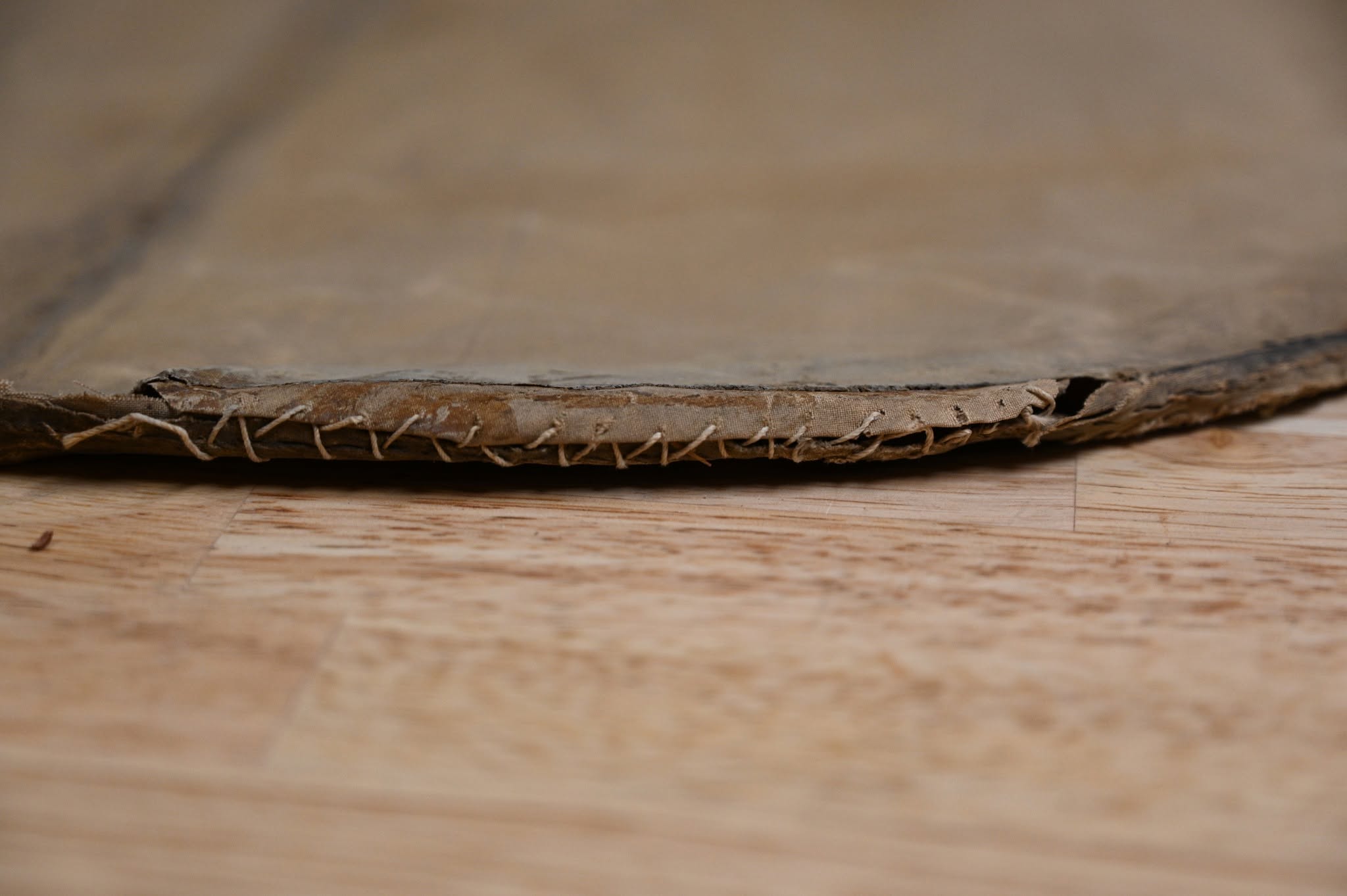
Original stitching for the fabric on the wings of the Bleriot monoplane being restored by the National Museum of the USAF.
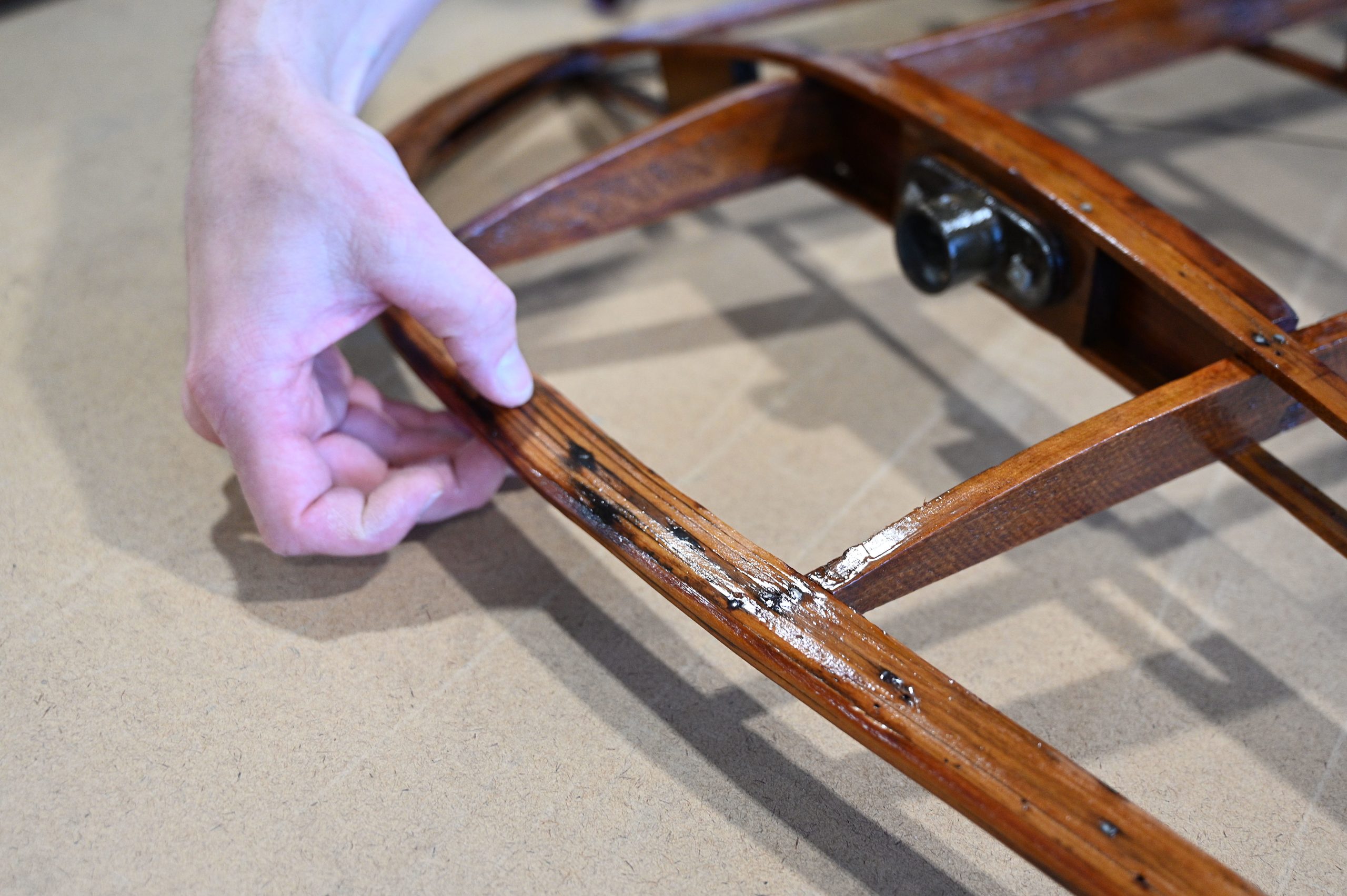
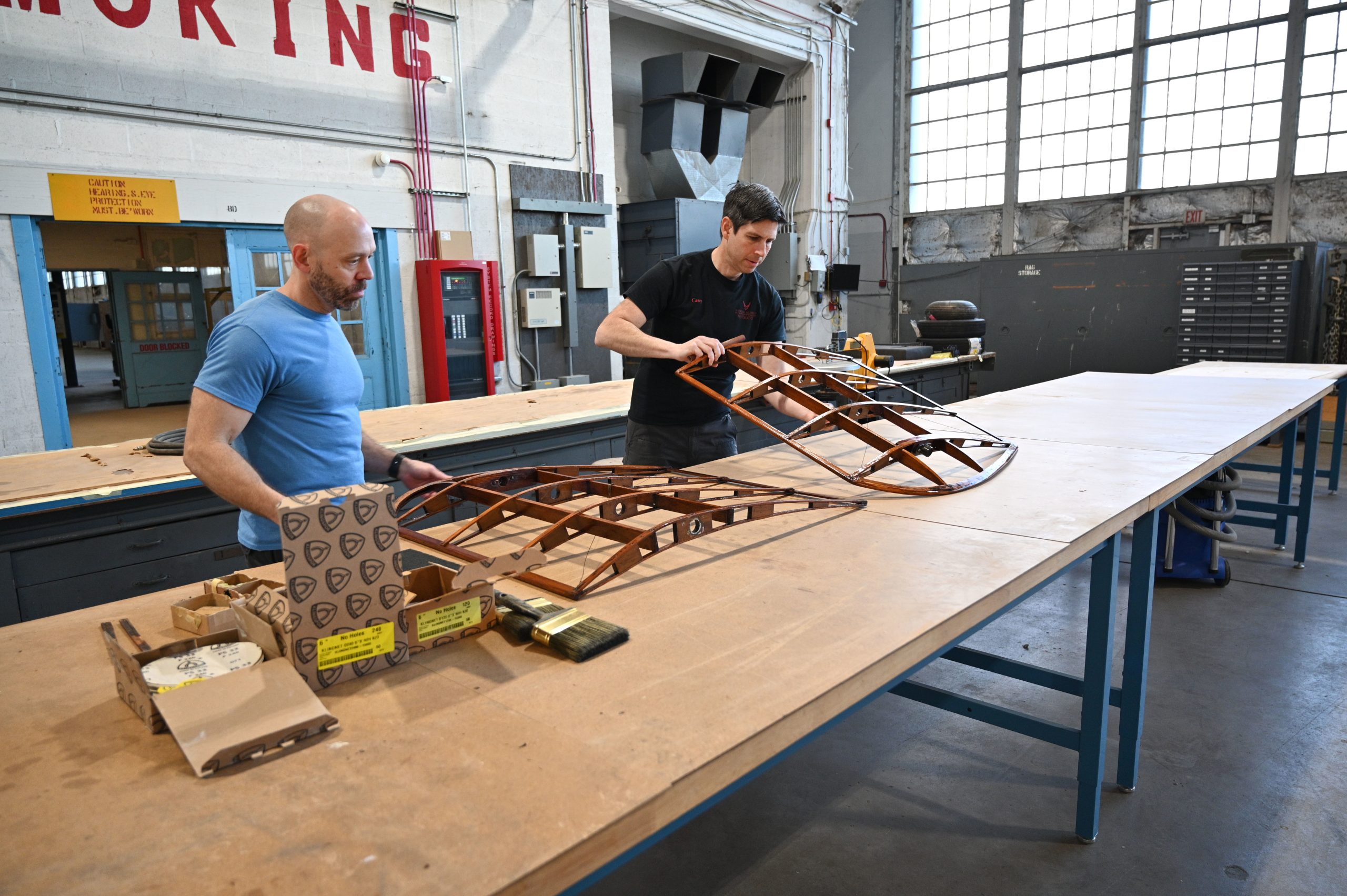
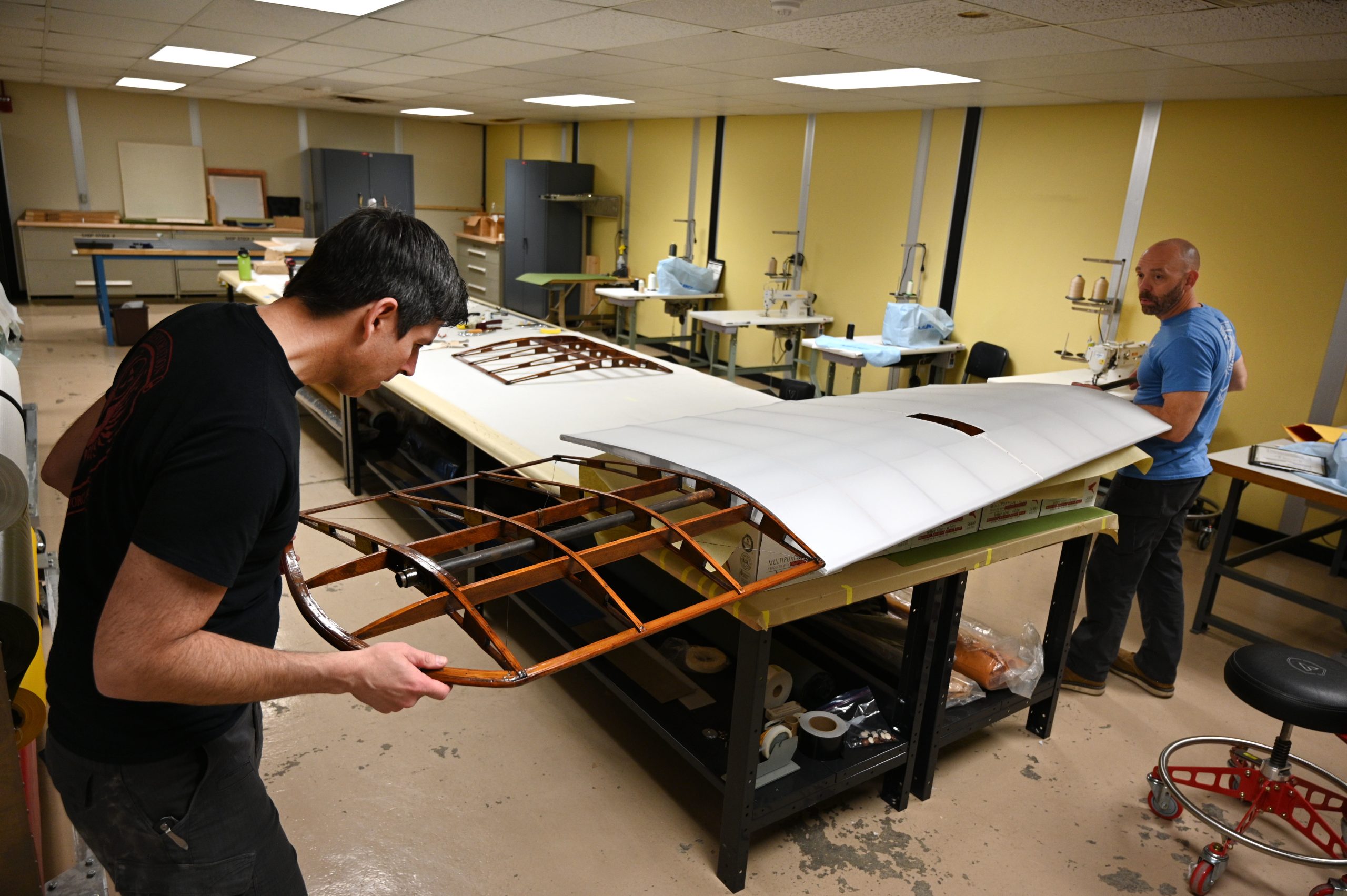
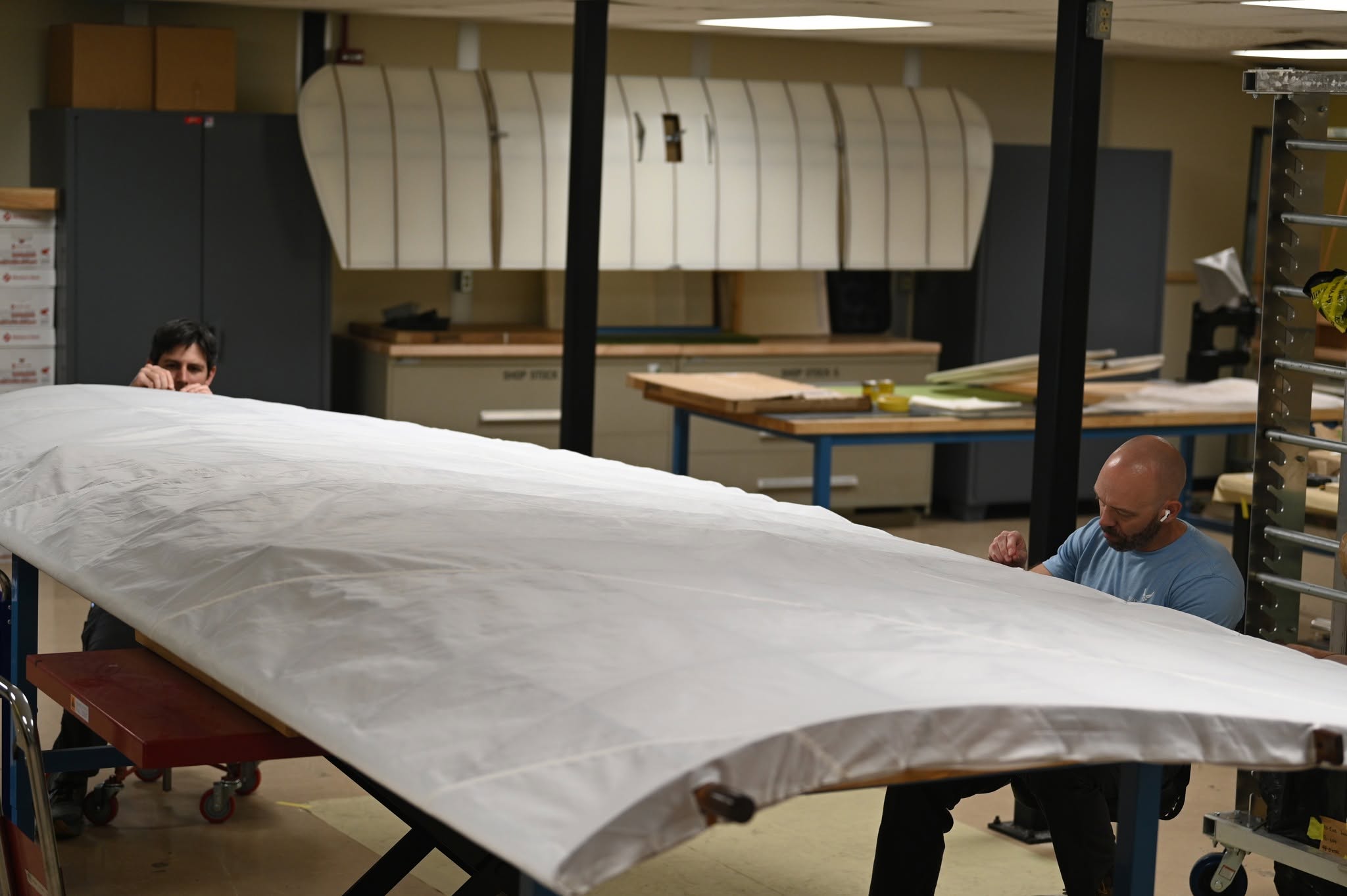
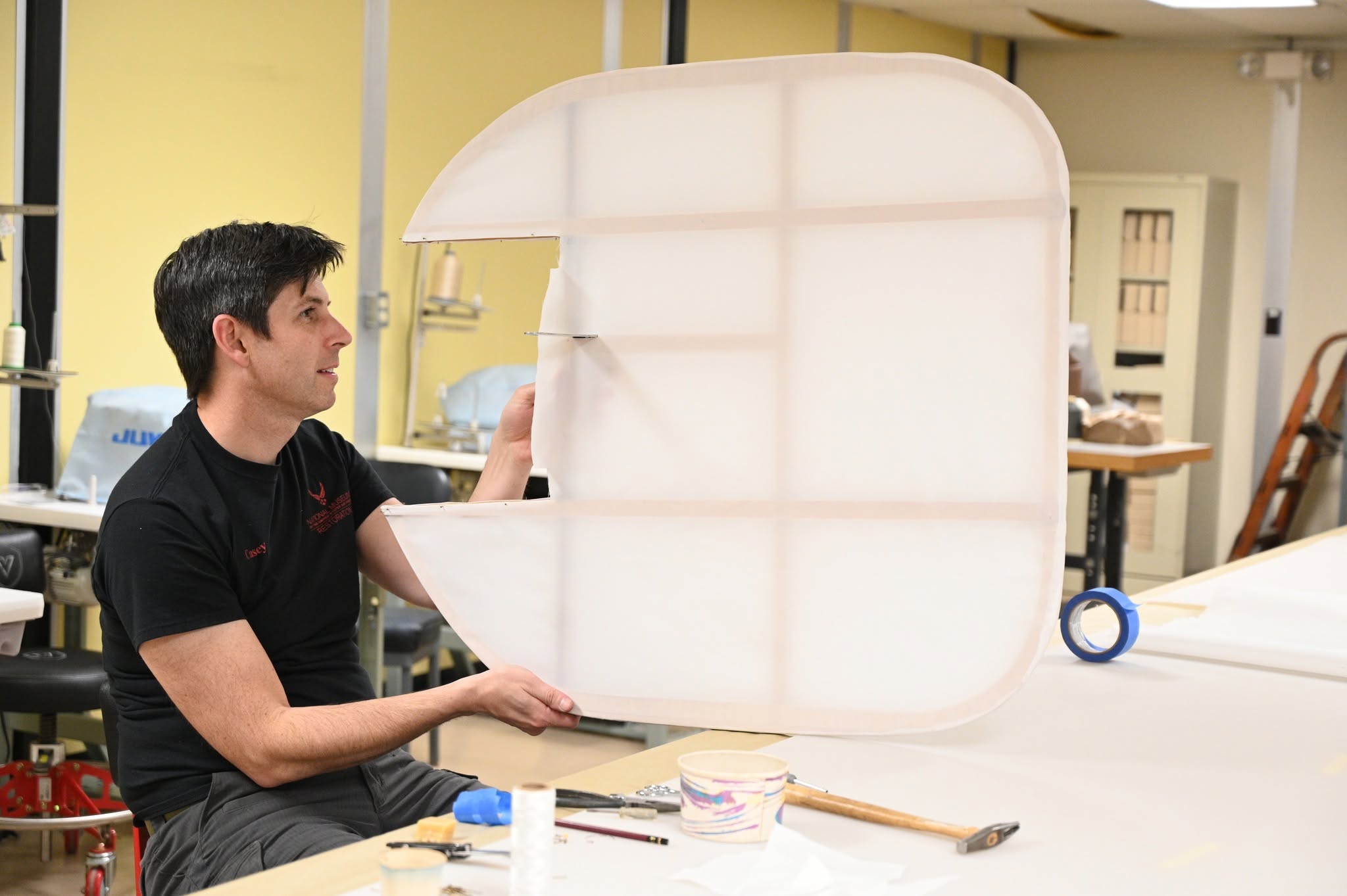
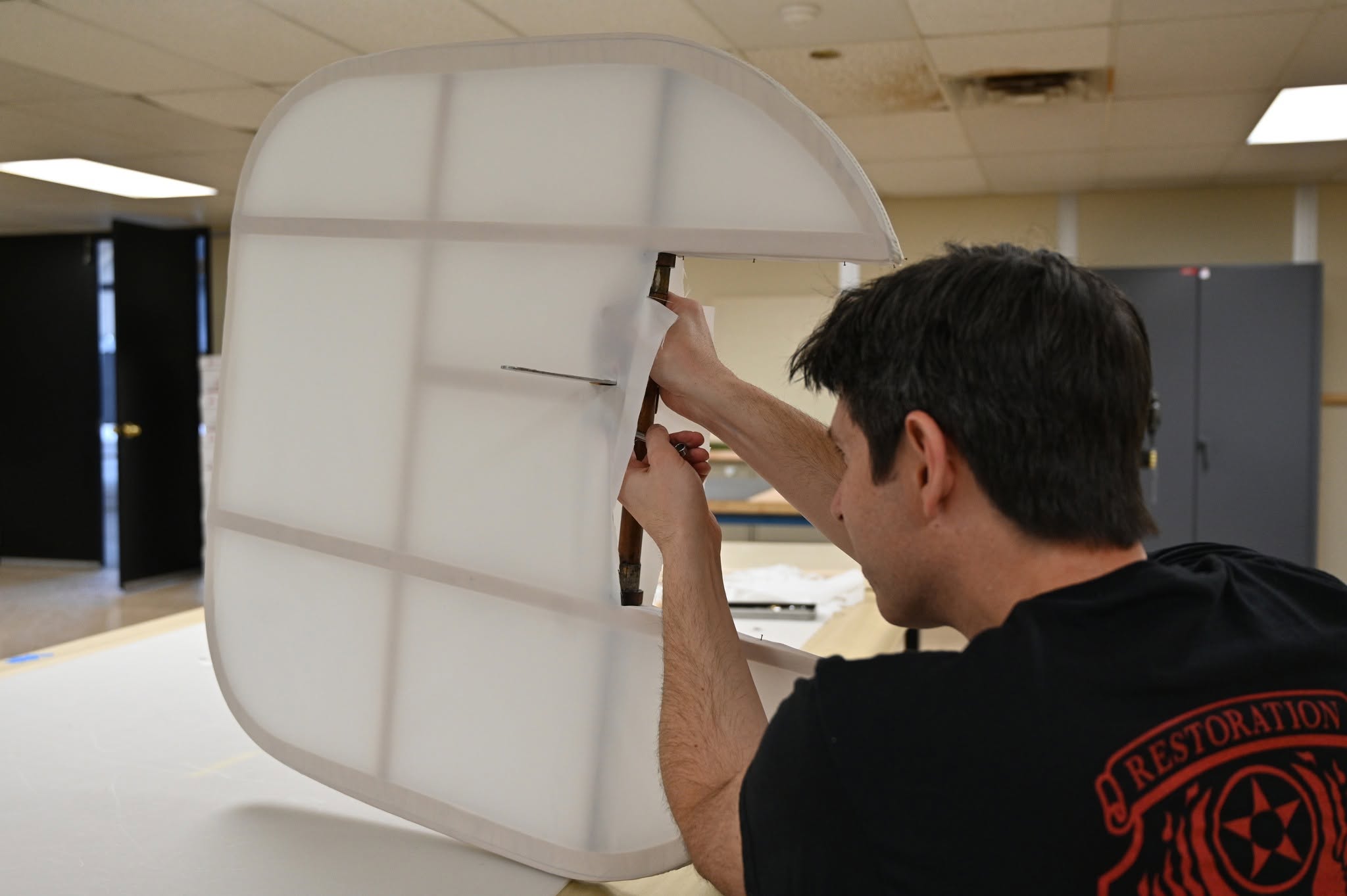
At the start of the restoration, the Bleriot’s aging fabric was removed, and the wooden structure was treated and varnished, with a focus on maintaining as much of the original structure as possible. The tail assembly was recovered with new fabric in late February, and by April, Casey and his fellow restorers began stitching new fabric to the wing ribs of the 110+ year-old monoplane, with the last of the fabric being applied and doped in August.
Detail of the wooden wing structure of the NMUSAF’s Bleriot monoplane after being varnished during the aircraft’s restoration.
Frame of the fuselage of the Bleriot monoplane in the NMUSAF restoration hangar.
NMUSAF restoration specialists working on re-varnished wooden sections of the museum’s Bleriot monoplane restoration project.
NMUSAF restoration specialists at work on the horizontal stabilizer of the museum’s Bleriot monoplane restoration project.
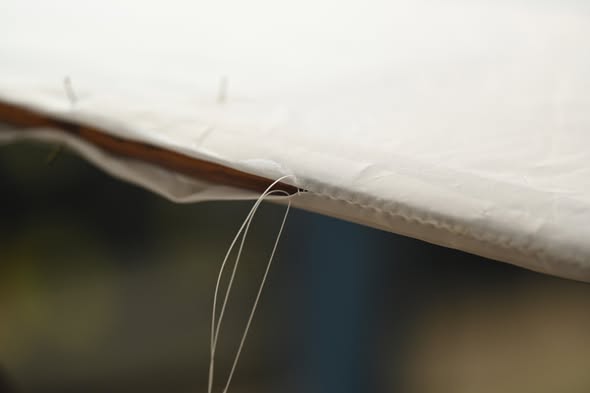
New stitching being applied to the fabric on the wings of the NMUSAF’s Bleriot monoplane.
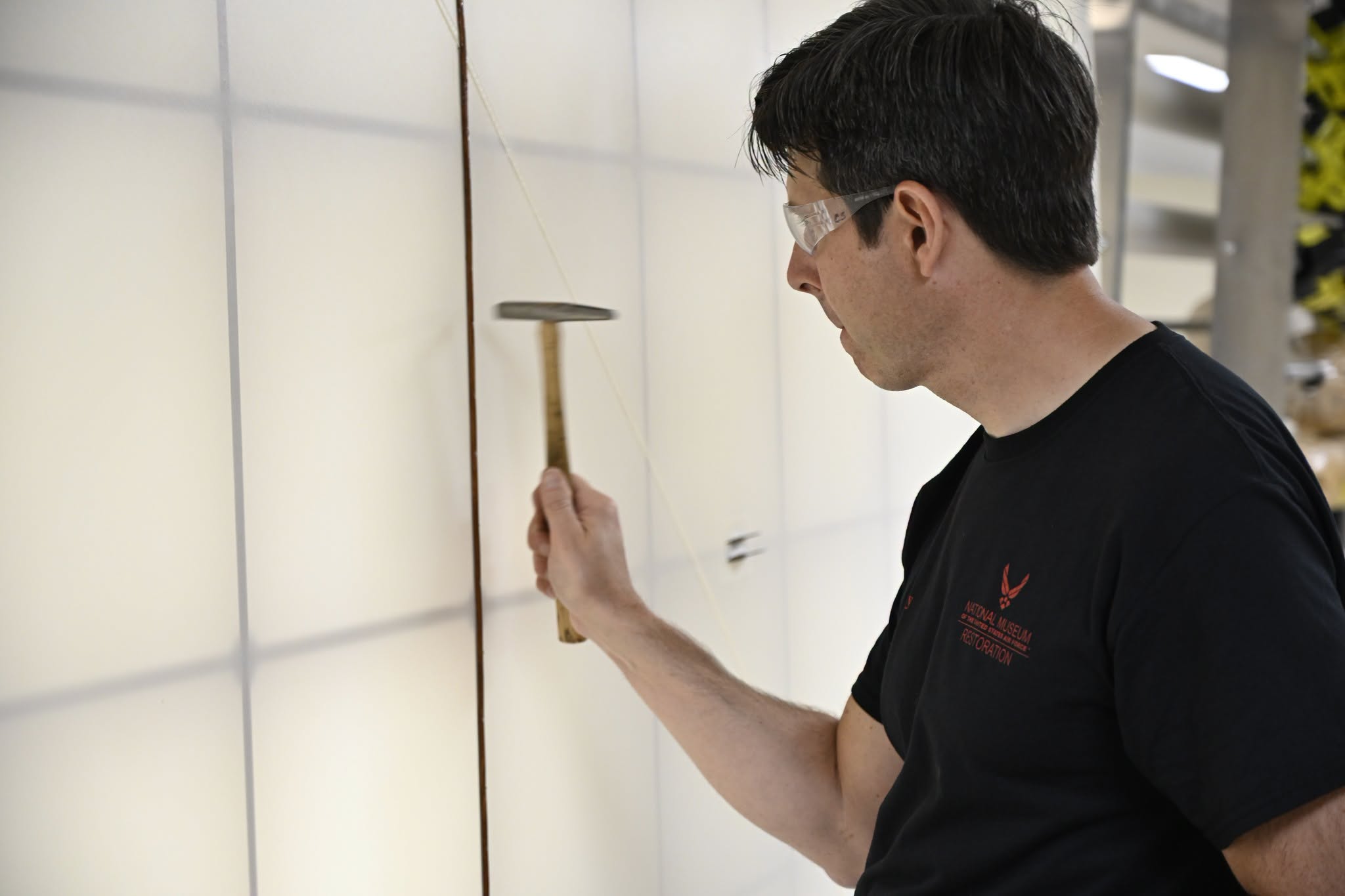
Restoration specialist Casey Simmons gently hammers nails into the wing ribs of the NMUSAF Bleriot monoplane restoration project.
New fabric being fitted to one of the wings of the NMUSAF’s Bleriot monoplane restoration project, with the recovered horizontal stabilizer hanging in the background.
Restoration specialist Casey Simmons holds up the recovered rudder for the NMUSAF’s Bleriot monoplane restoration project.
Restoration specialist Casey Simmons works on the recovered rudder for the NMUSAF’s Bleriot monoplane restoration project.
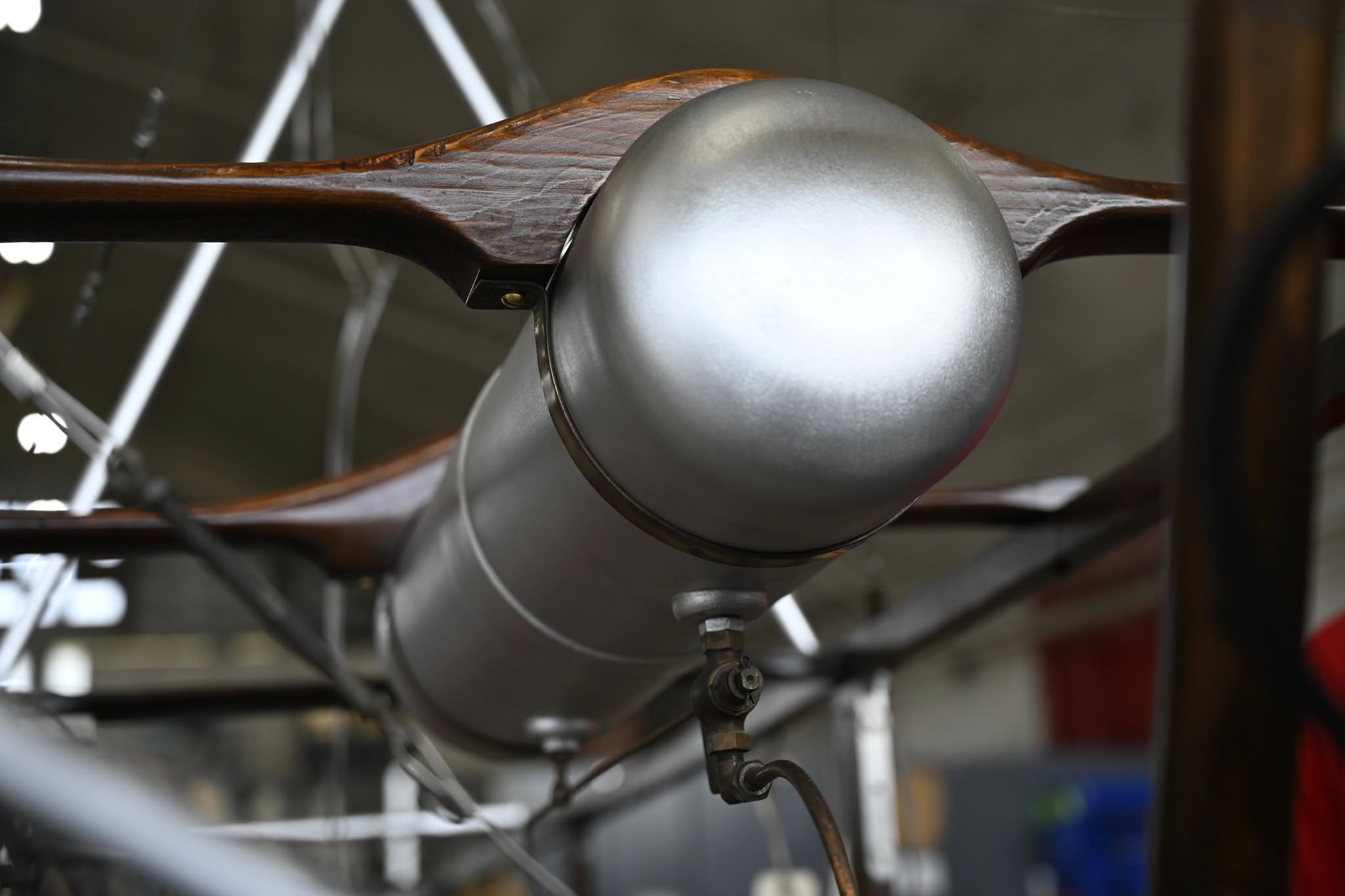
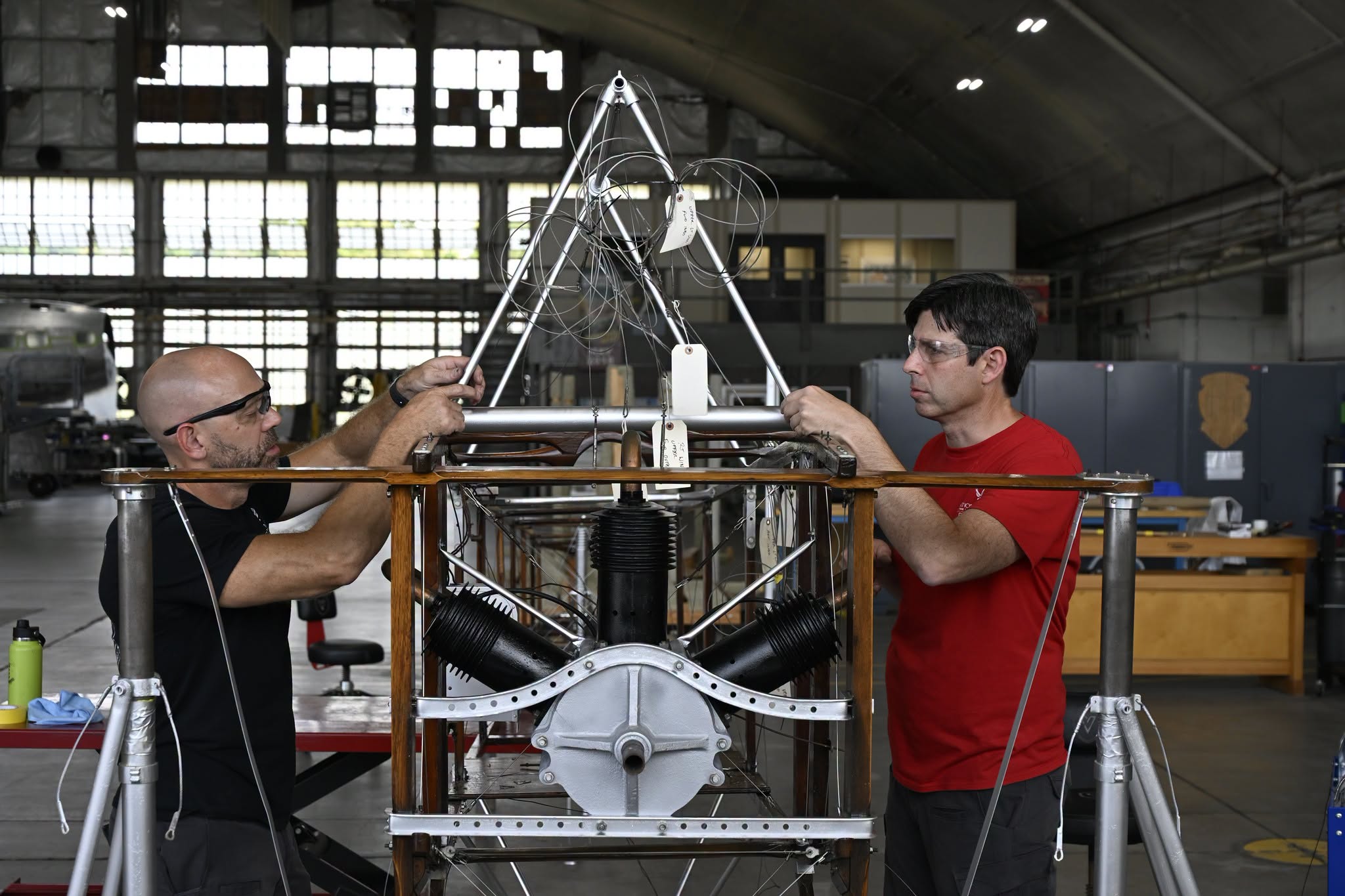
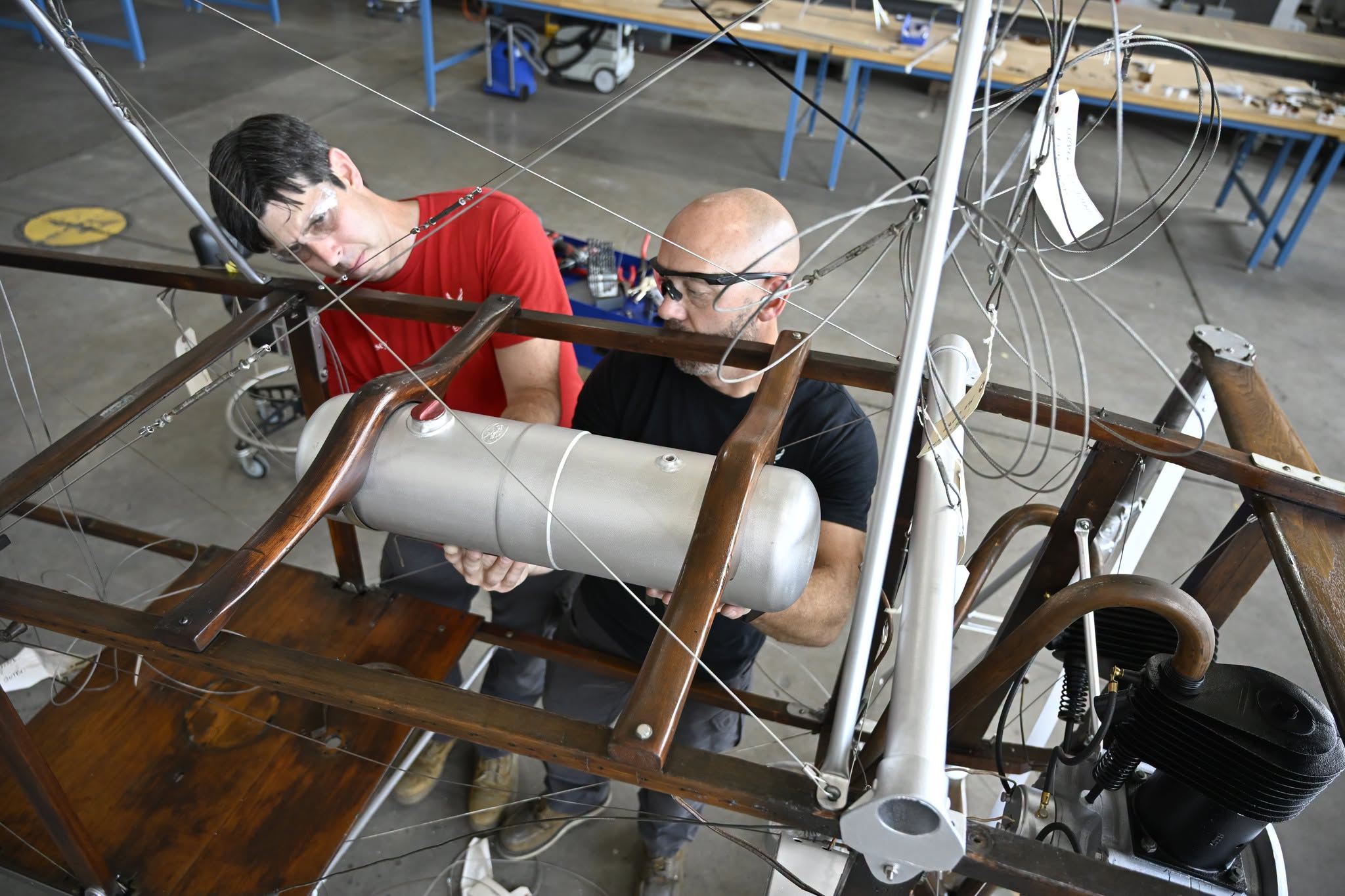
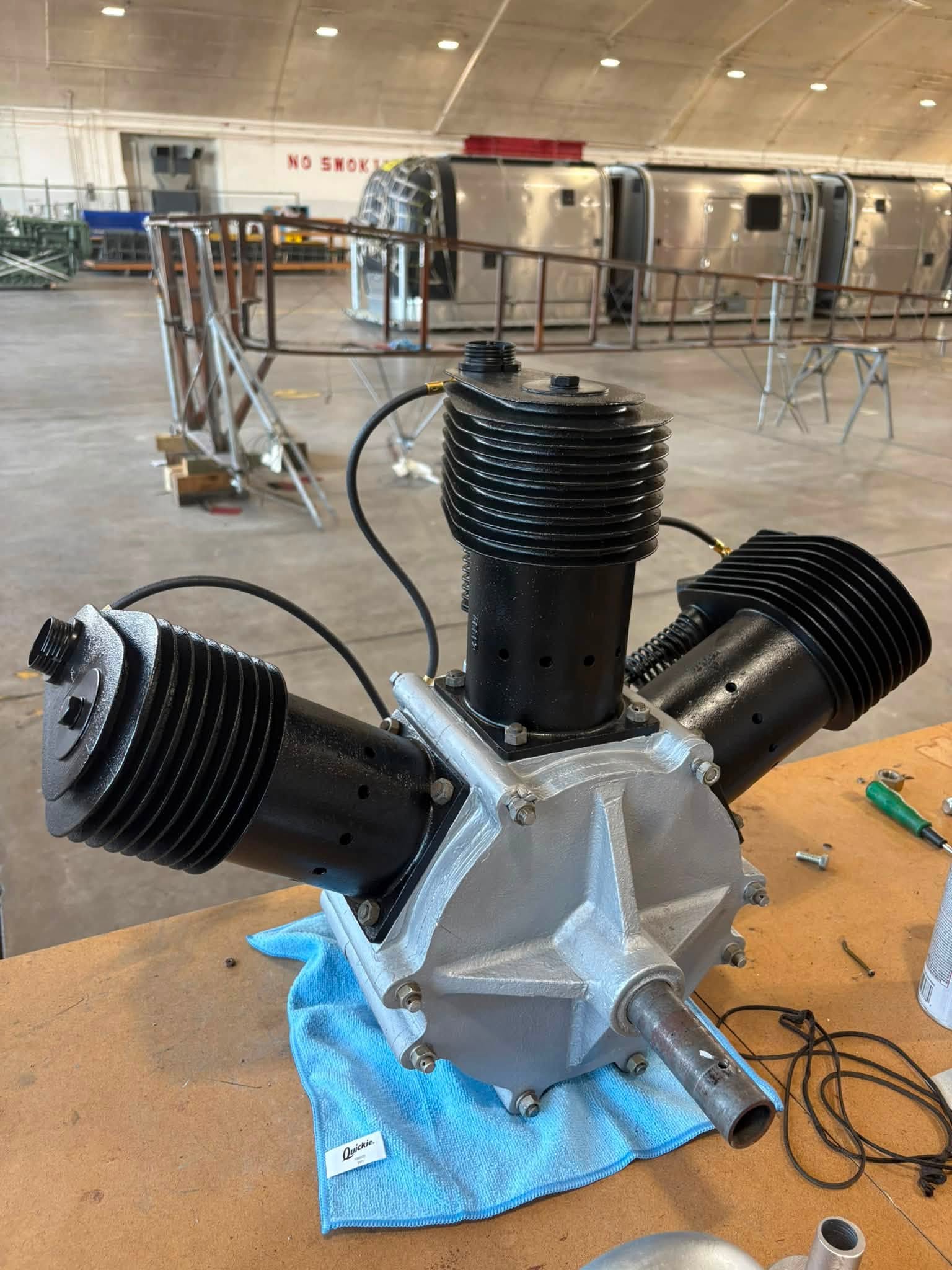
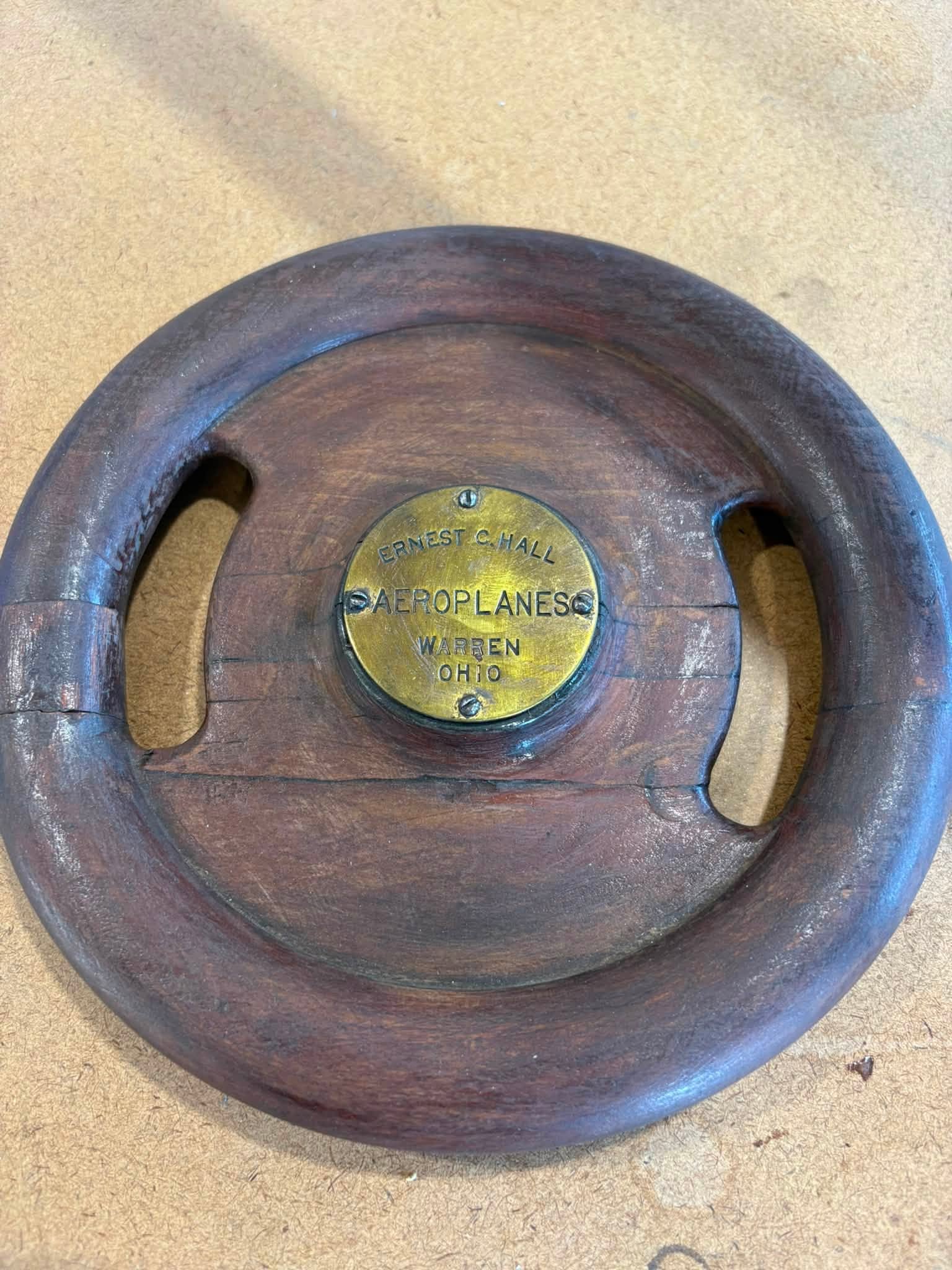
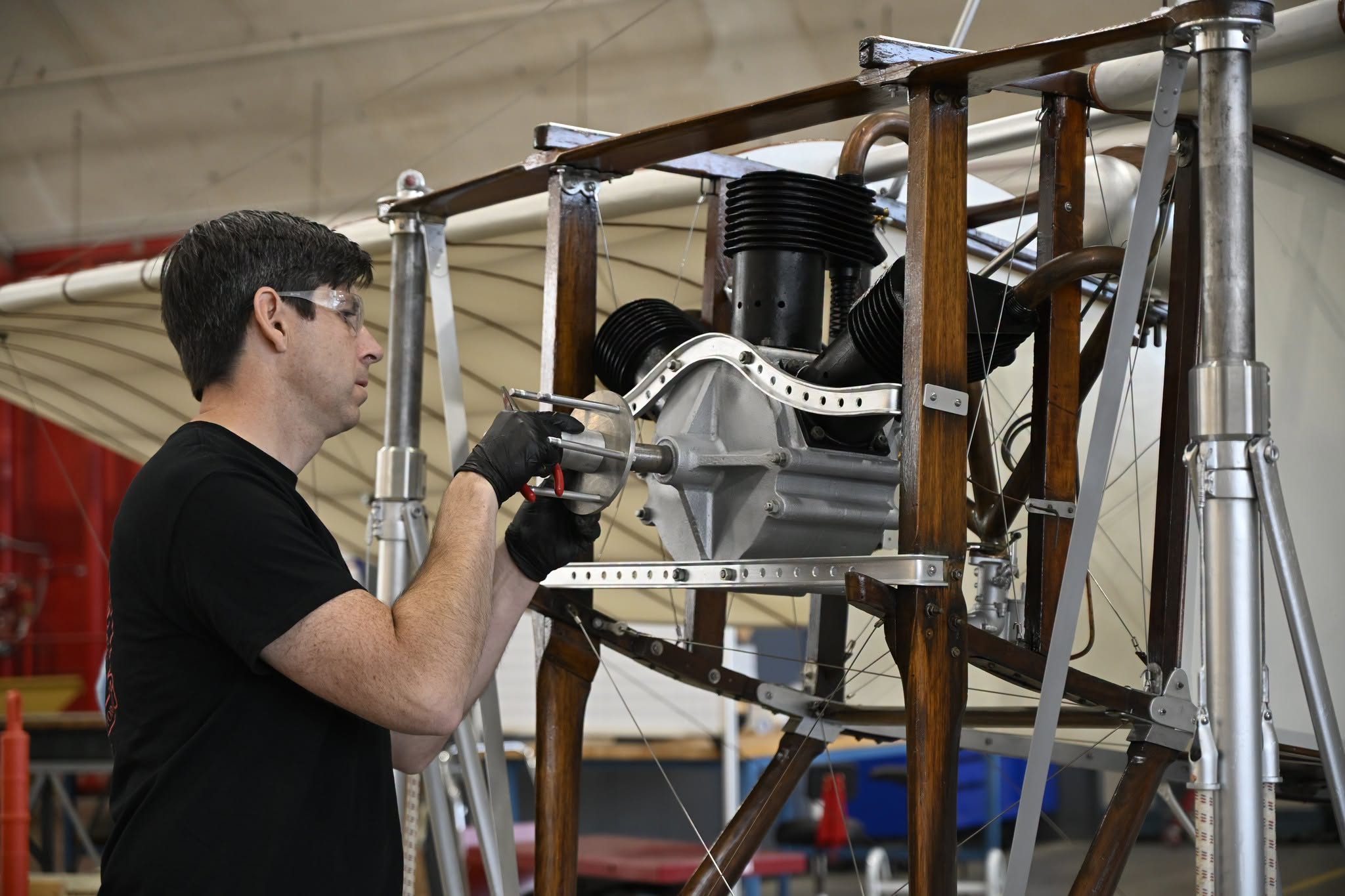
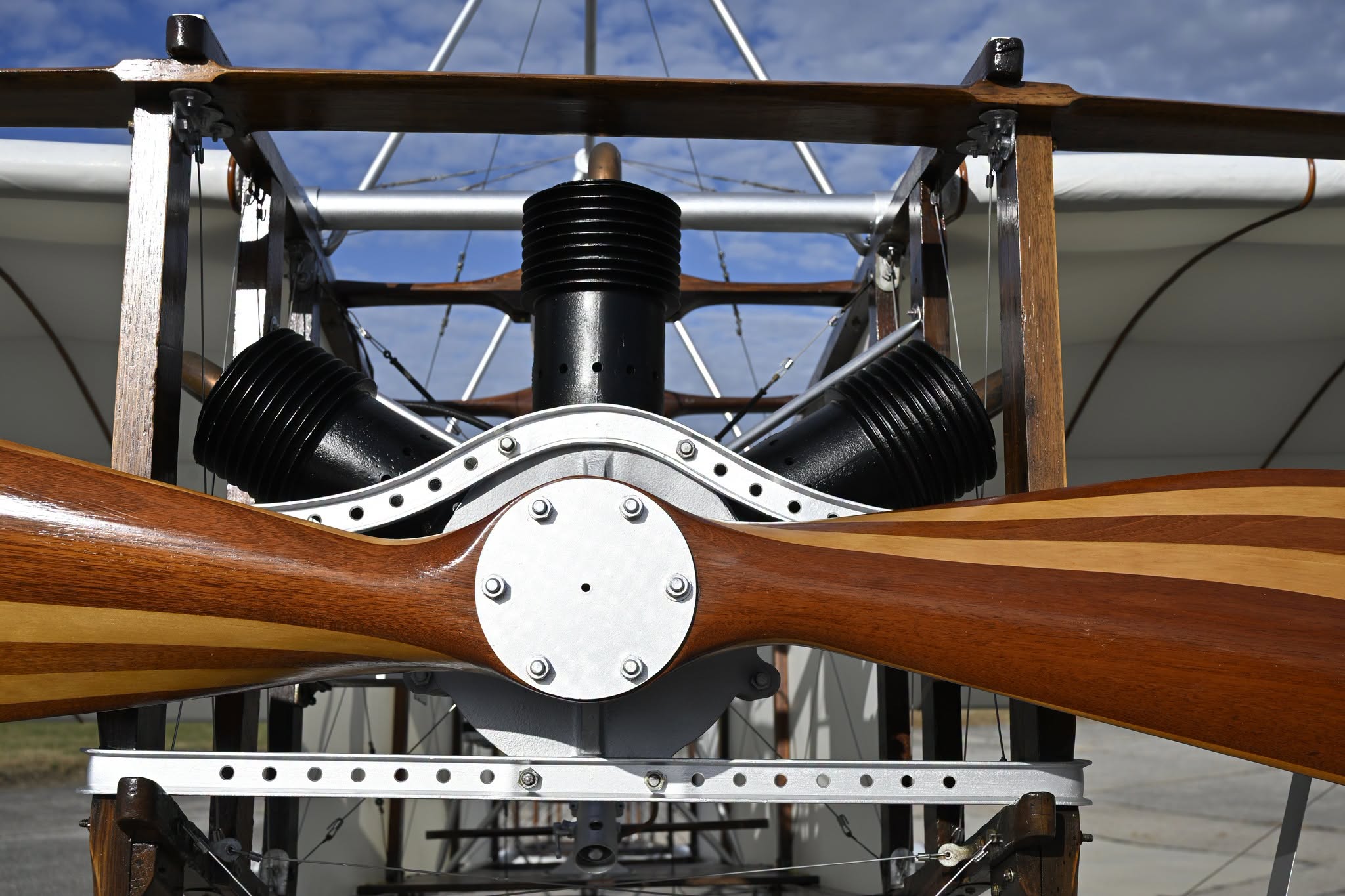
Along with the new fabric being doped to the Bleriot’s wings, tail and fuselage, the museum’s restoration team has also fabricated a new wooden mockup of the Anzani fan-shaped three cylinder engine, which was installed on the Bleriot in September. The original engine will be kept in the NMUSAF’s collections. Also in September, the refurbished fuel tank was reinstalled, along with the cables, wooden control wheel, and the cabane struts.
The newly-built wooden mockup of the Anzani fan-type engine before being installed in the NMUSAF’s Bleriot monoplane. (Image credit: National Museum of the USAF)
The restored fuel tank reinstalled in the fuselage of the National Museum of the USAF’s Bleriot monoplane restoration project.
NMUSAF volunteers install the cabane struts to the fuselage of the museum’s Bleriot monoplane, built by Ernest C. Hall in 1911.
NMUSAF volunteers install the fuel tank to the fuselage frame of the museum’s Bleriot monoplane, built by Ernest C. Hall in 1911.
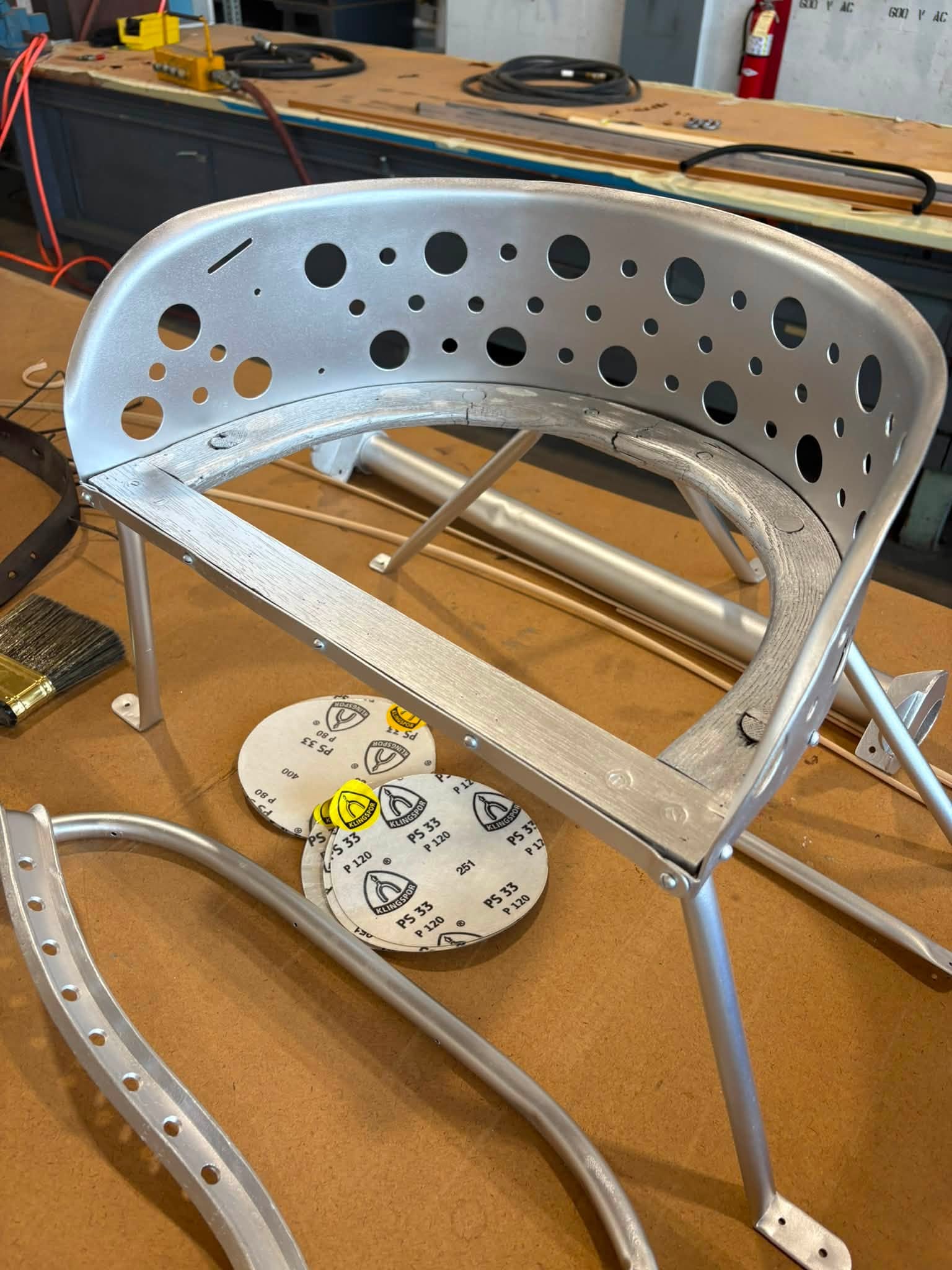
Restored seat for the NMUSAF’s Bleriot monoplane.
The newly-built wooden mockup of the Anzani fan-type engine before being installed in the NMUSAF’s Bleriot monoplane.
Wooden control wheel from the NMUSAF’s Bleriot monoplane, built in 1911 by Ernest C. Hall of Warren, Ohio.
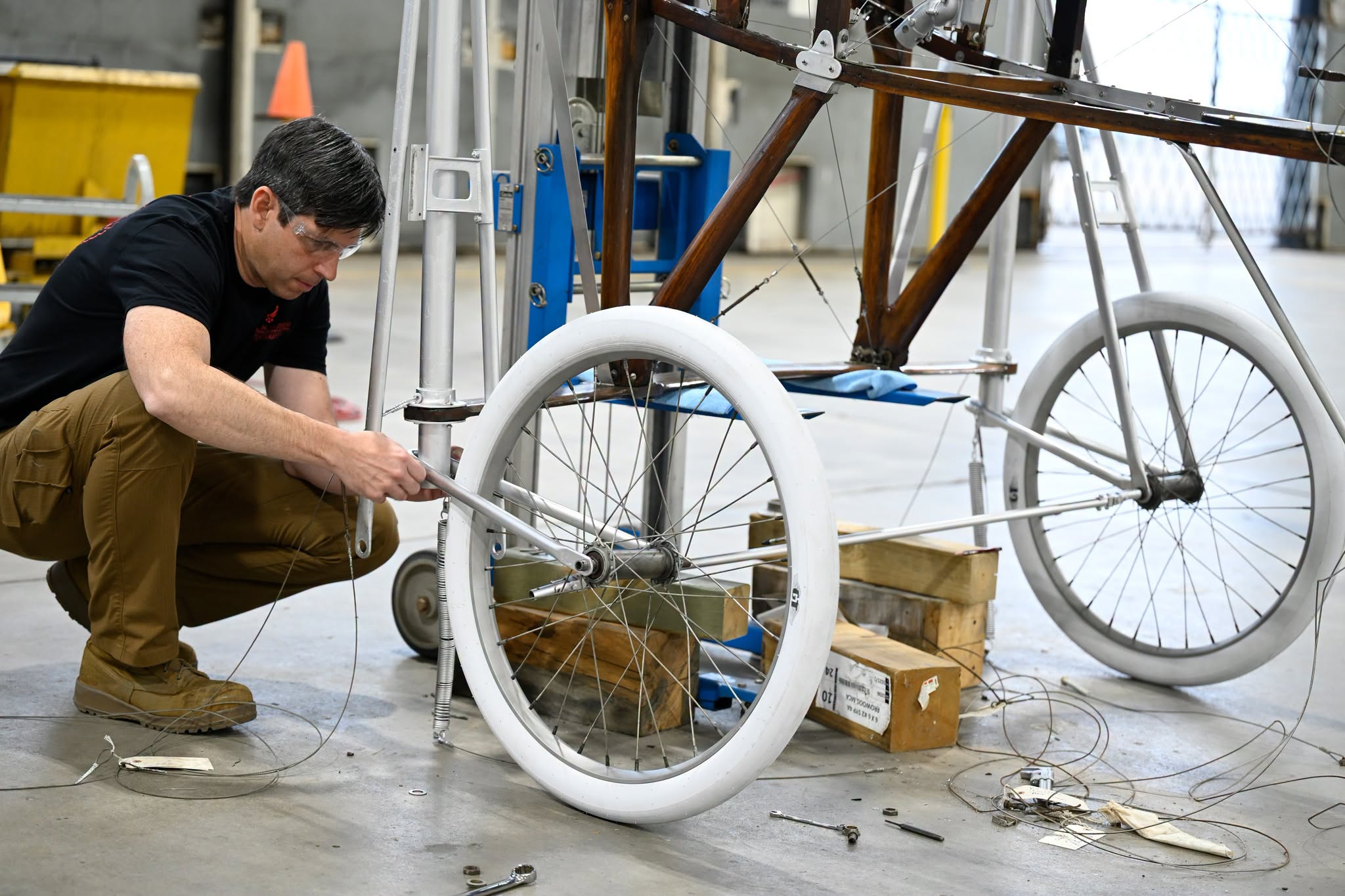
NMUSAF restoration specialist Casey Simmons installs one of the restored wheels to the NMUSAF’s Bleriot monoplane.
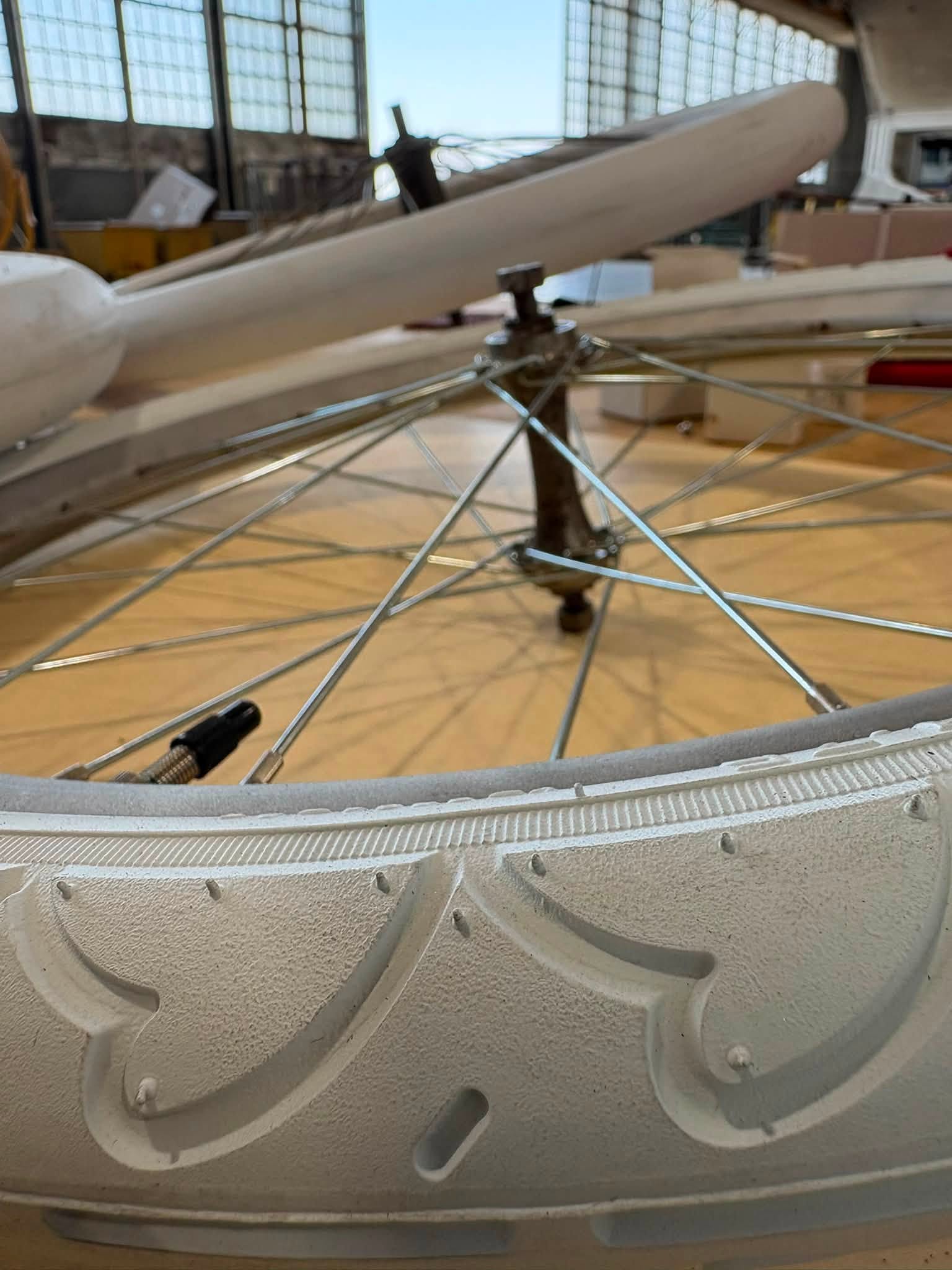
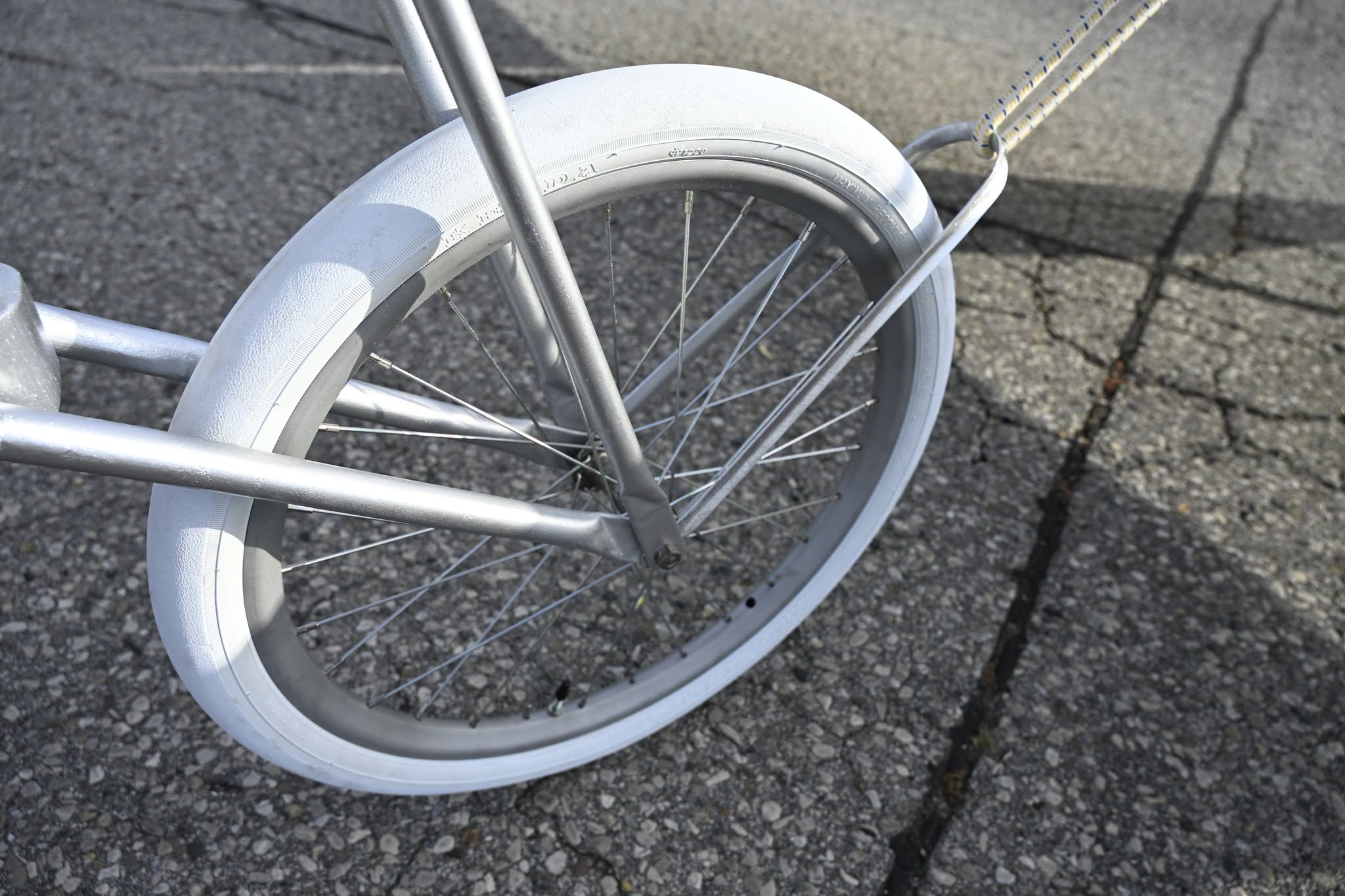
Detail of one of the restored wheels for the NMUSAF’s Bleriot monoplane originally built by Ohio aviation pioneer Ernest C. Hall.
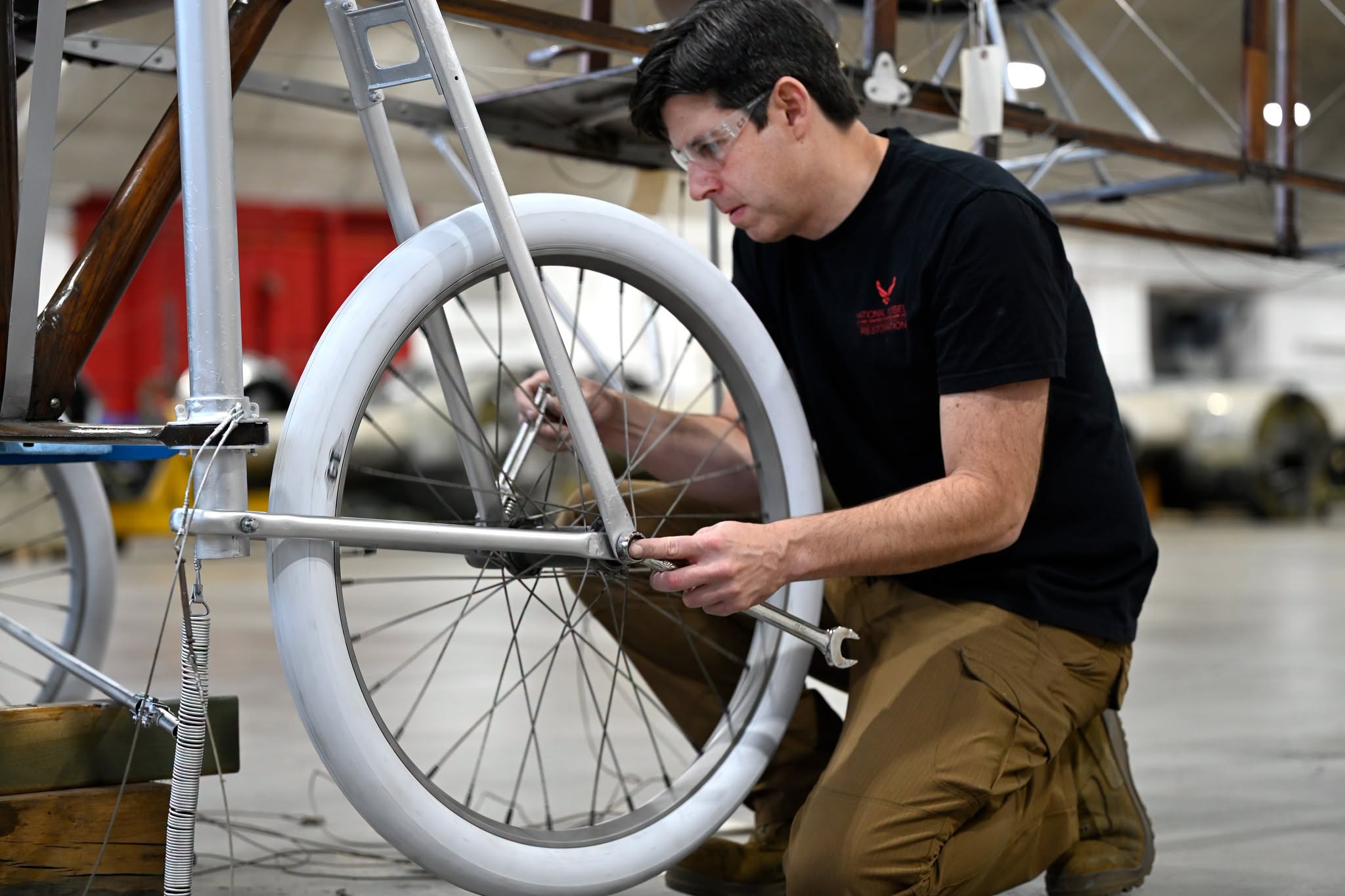
NMUSAF restoration specialist Casey Simmons installs one of the restored wheels to the NMUSAF’s Bleriot monoplane.
The restored fuel tank reinstalled in the fuselage of the National Museum of the USAF’s Bleriot monoplane restoration project. (Image credit: National Museum of the USAF)
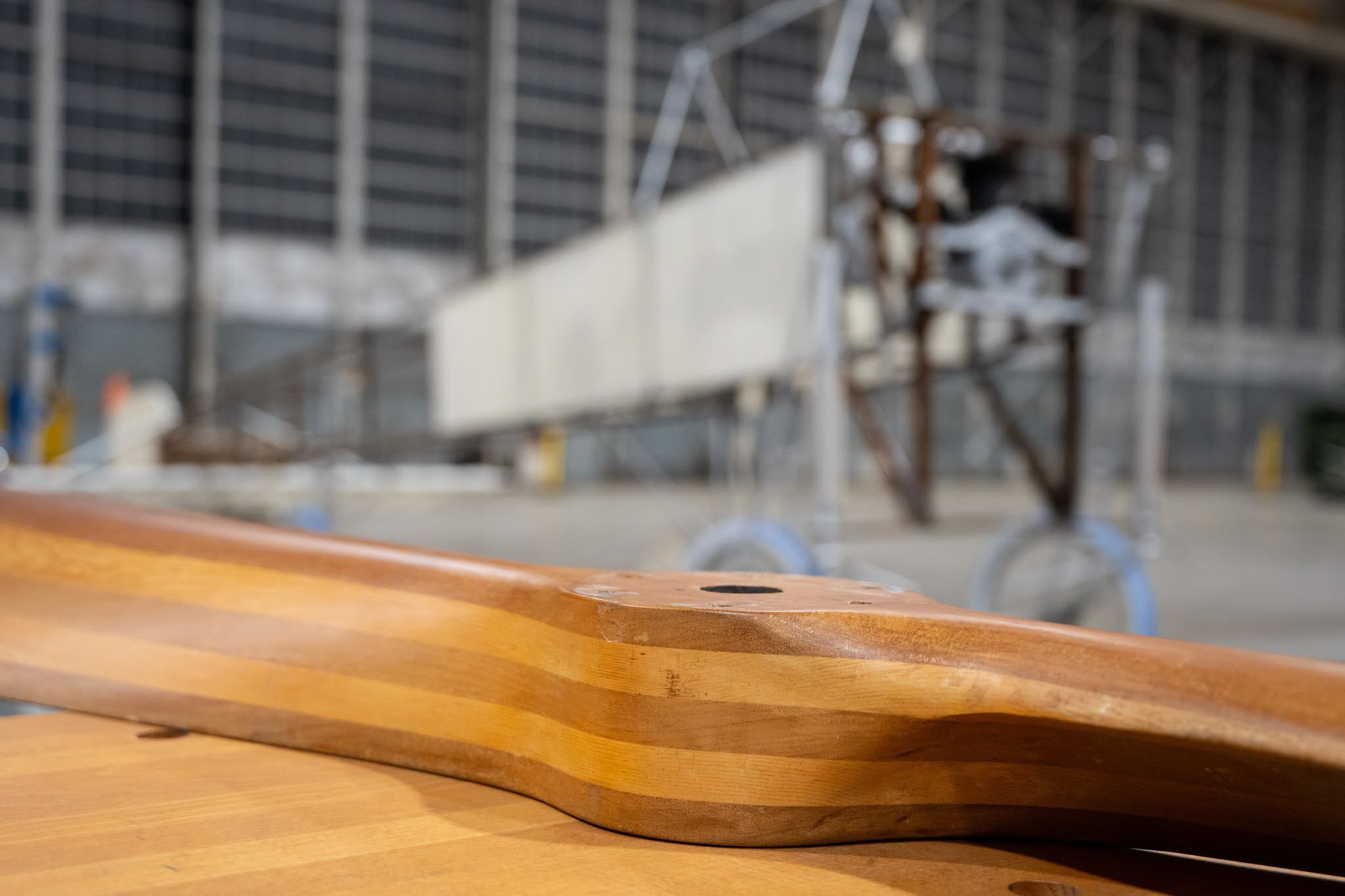
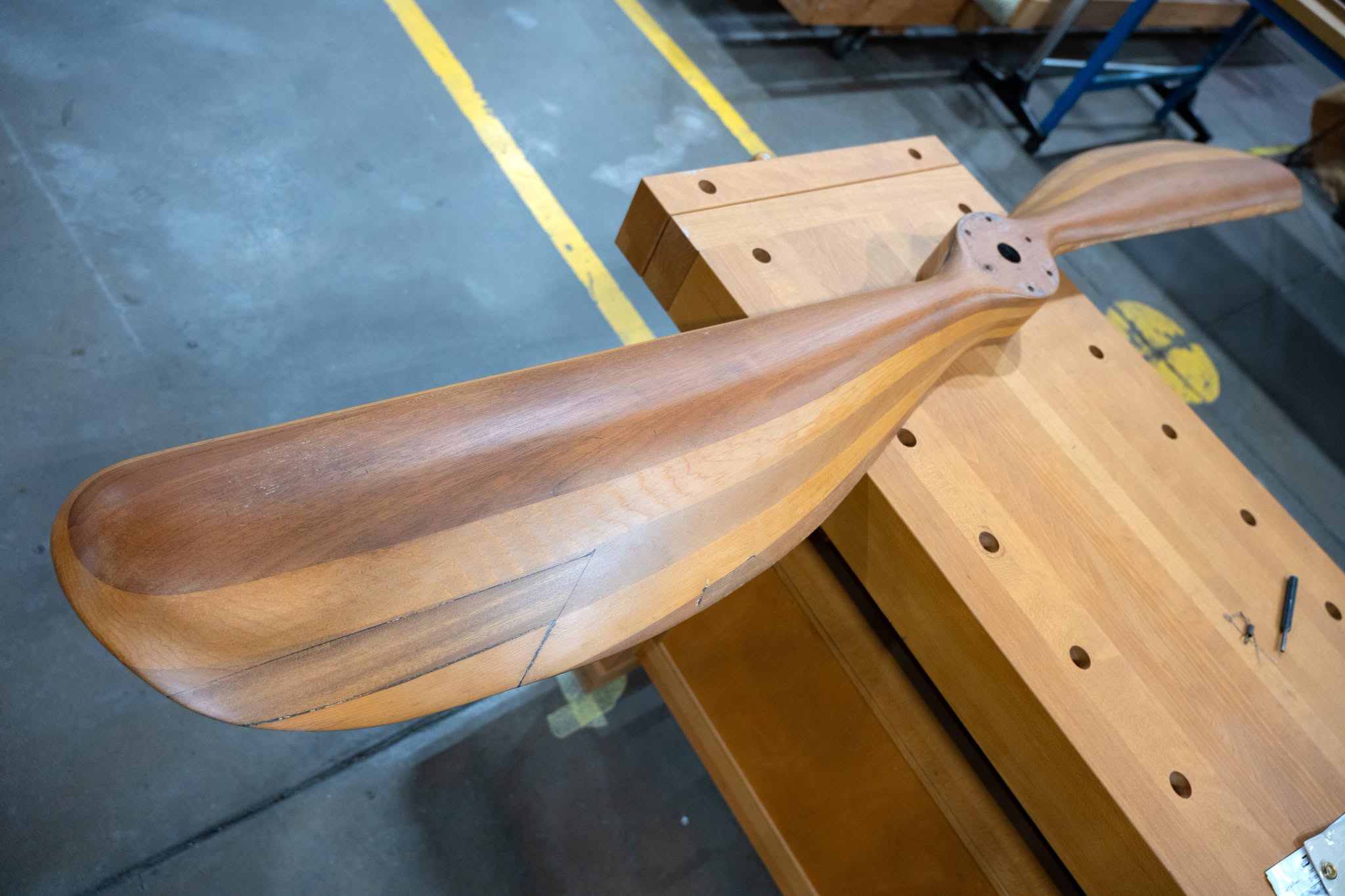
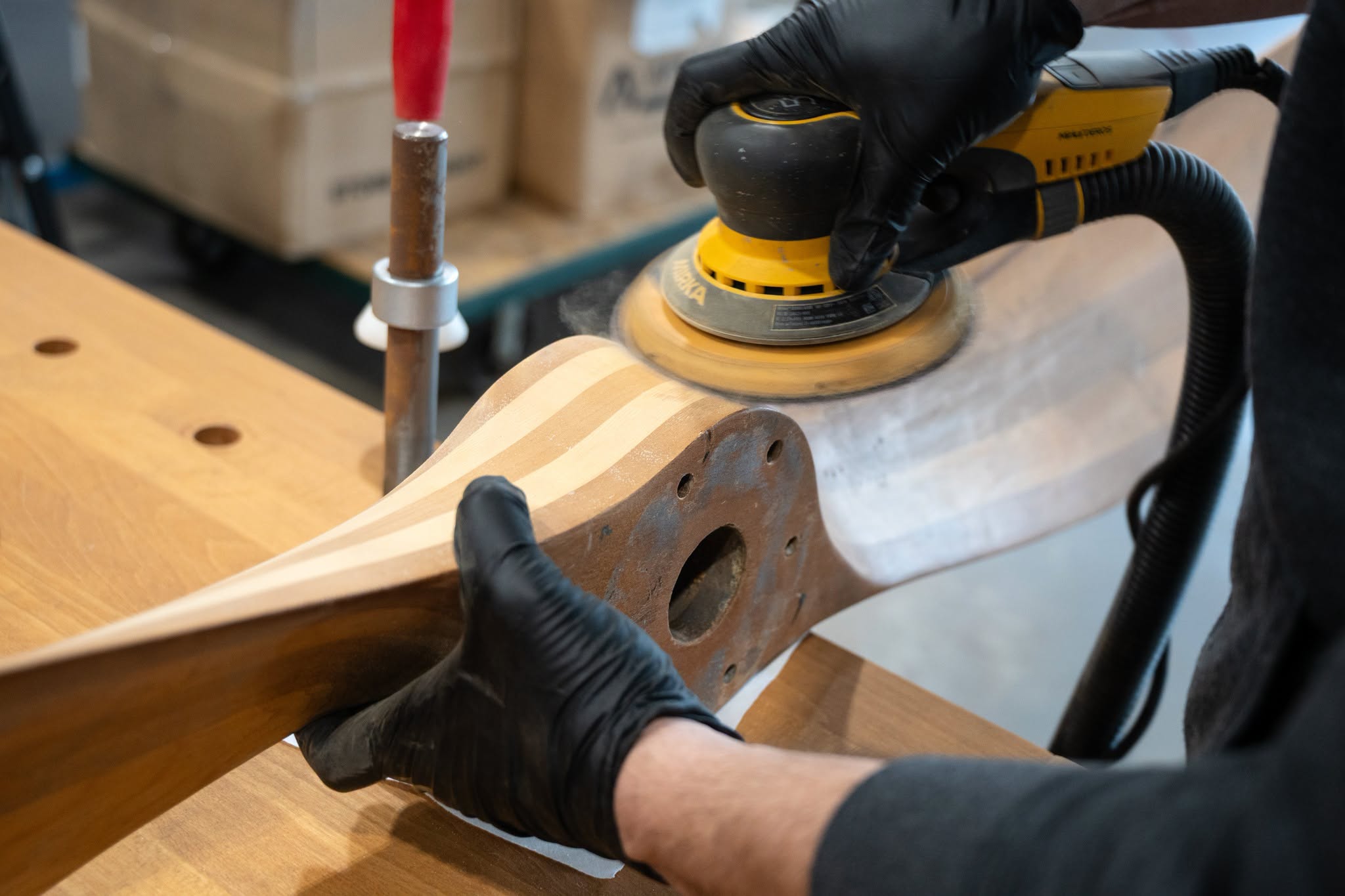
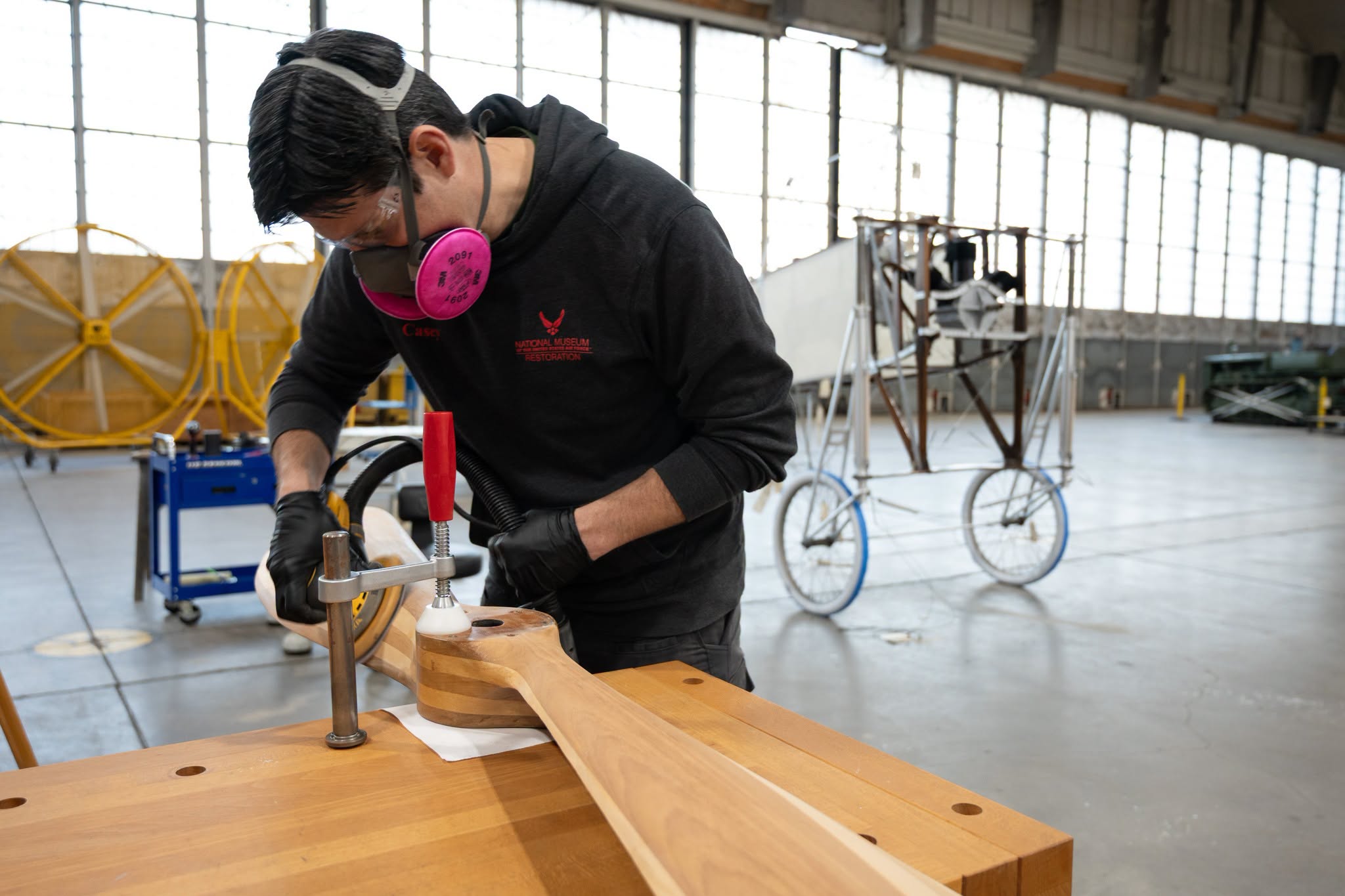
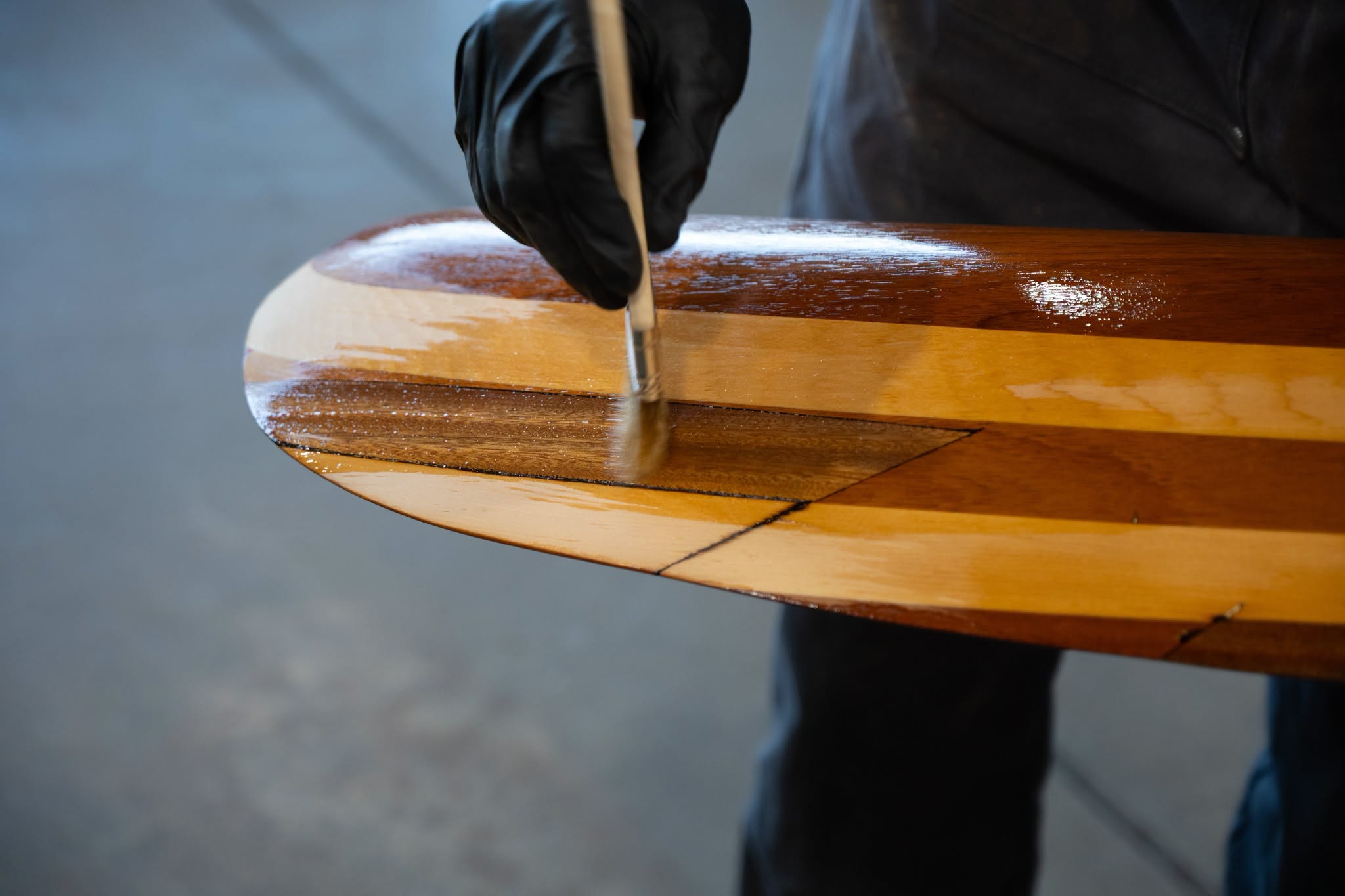
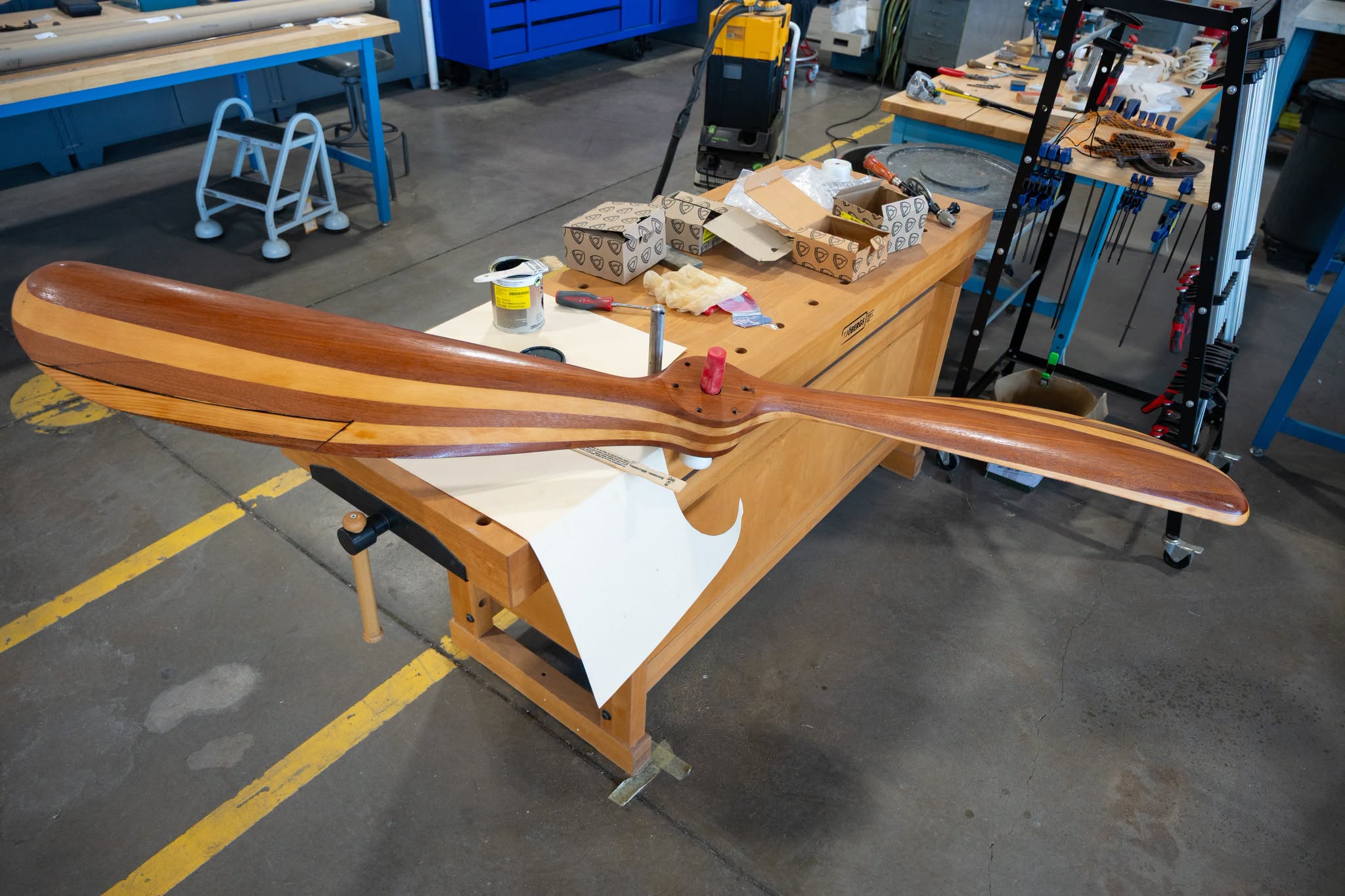
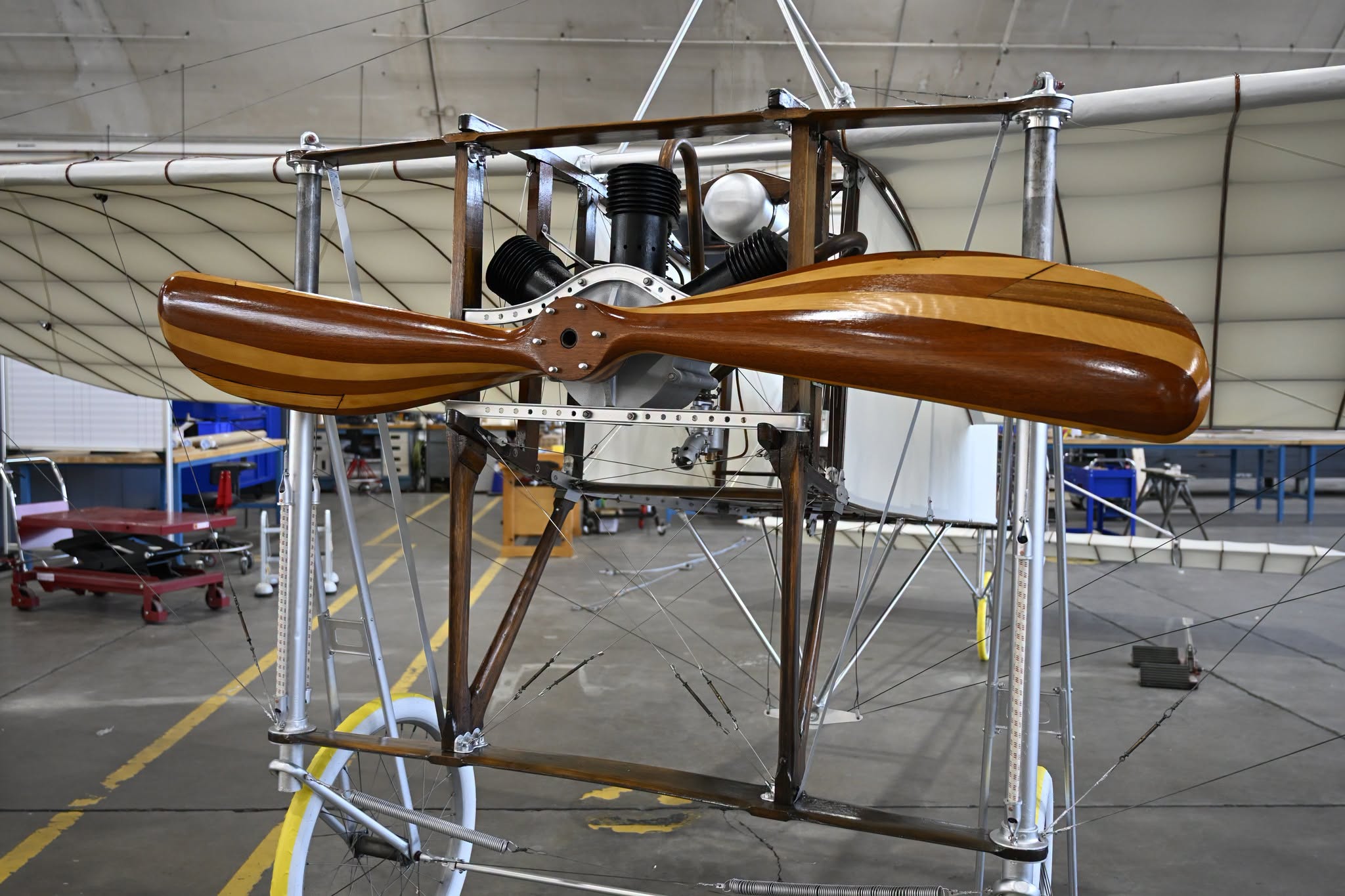
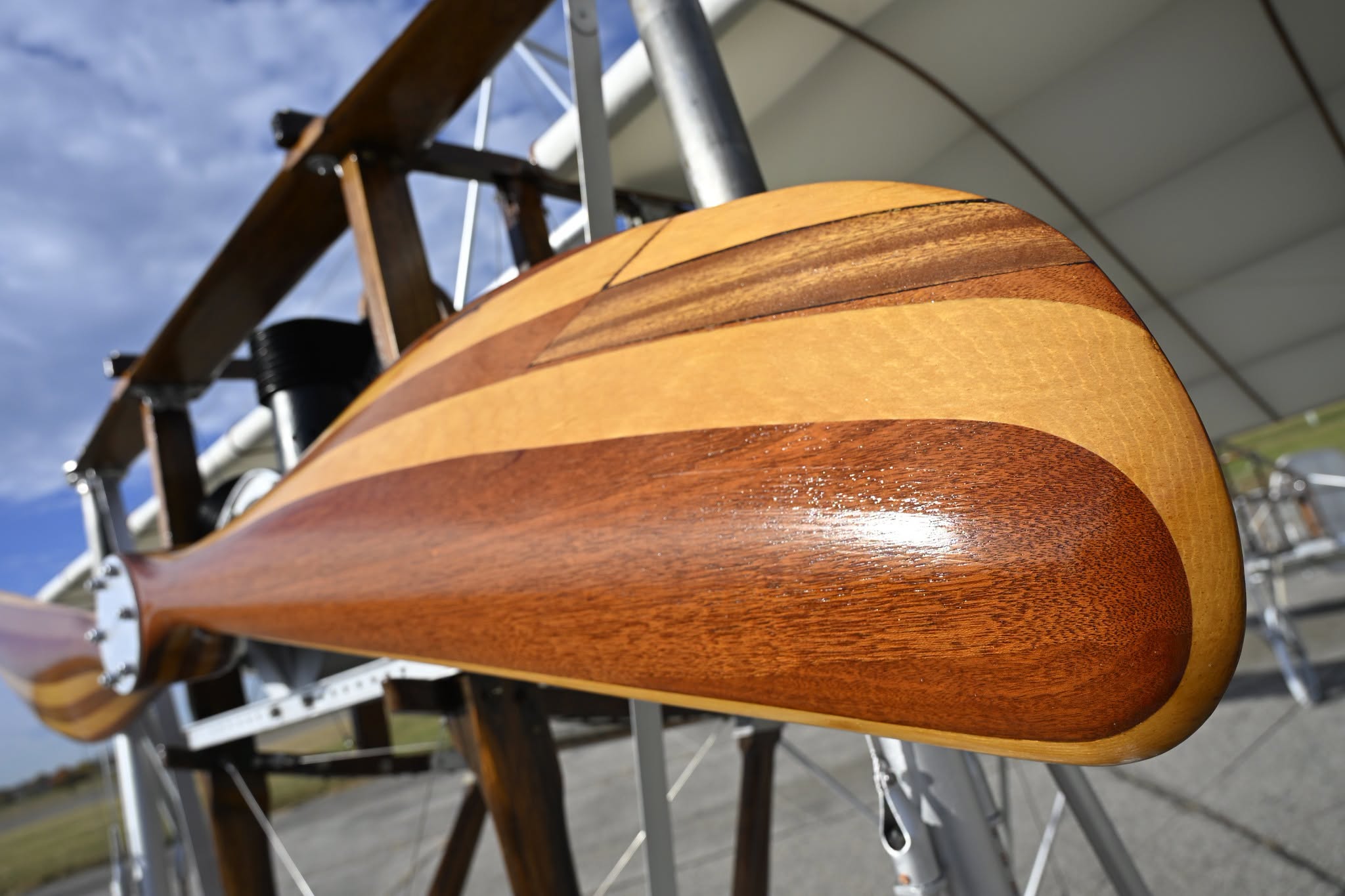
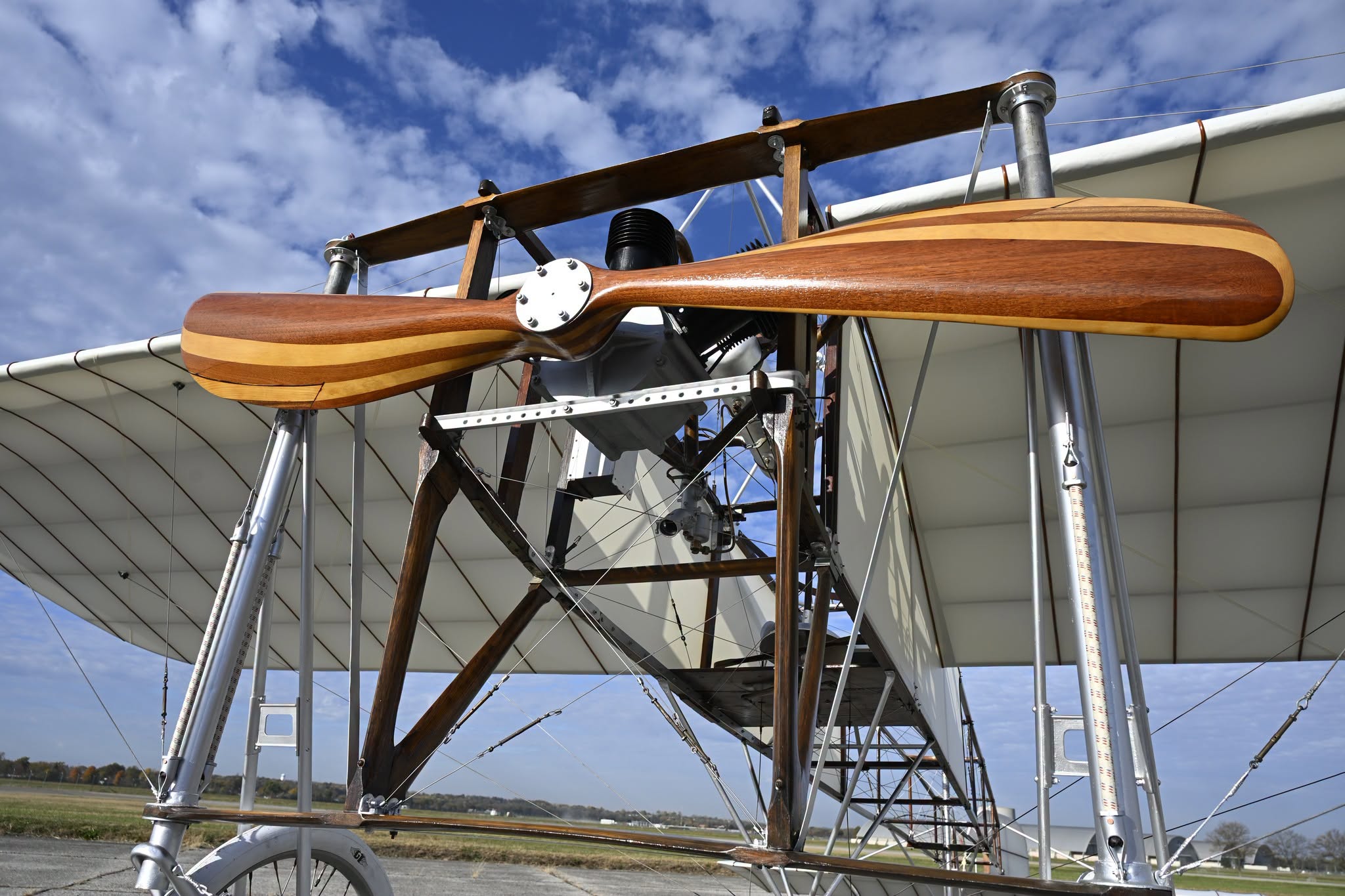
In October, the Bleriot was fitted with a new of white rubber tires for its wheels and its wooden propeller (believed to be made of Spruce, Honduran Mahogany, and possibly African Mahogany), was sanded and given two coats of varnish. With the propeller freshly varnished and the tail assembly refitted to the fuselage, the NMUSAF will fully reassemble Ernest Hall’s Bleriot monoplane by reattaching the wings, along with the bracing wires used for external support and the wing-warping cables used for control inputs from the pilot.
Spruce and mahogany propeller for the NMUSAF’s Bleriot monoplane with the fuselage of the aircraft sitting in the background.
The wooden propeller of the NMUSAF Bleriot monoplane was sanded and varnished in preparation for its reinstallation on the aircraft for display.
Museum restoration specialist Casey Simmons sands the surfaces of the Bleriot propeller in preparation for applying new coats of varnish.
Museum restoration specialist Casey Simmons works on the propeller for the NMUSAF’s Bleriot monoplane, with the fuselage of the aircraft sitting in the background.
Museum restoration specialist Casey Simmons applies varnish to one of the blades of the propeller of the NMUSAF’s Bleriot monoplane restoration project.
The propeller for the NMUSAF’s Bleriot monoplane after being sanded and varnished.
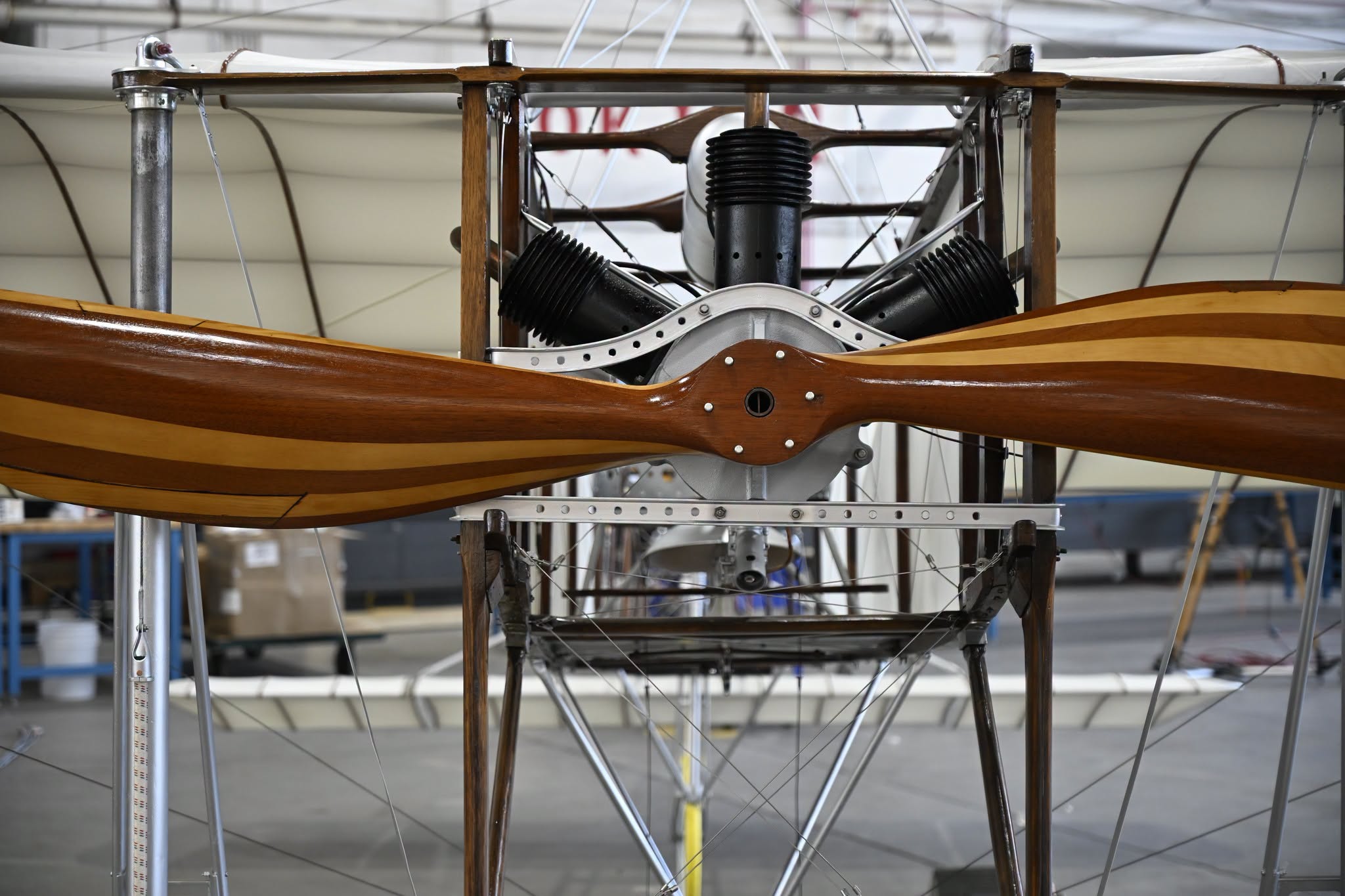
Restoration specialist Casey Simmons works on the attachment points for the wooden replica of the Anzani fan-type engine mounted on the NMUSAF’s Bleriot monoplane.
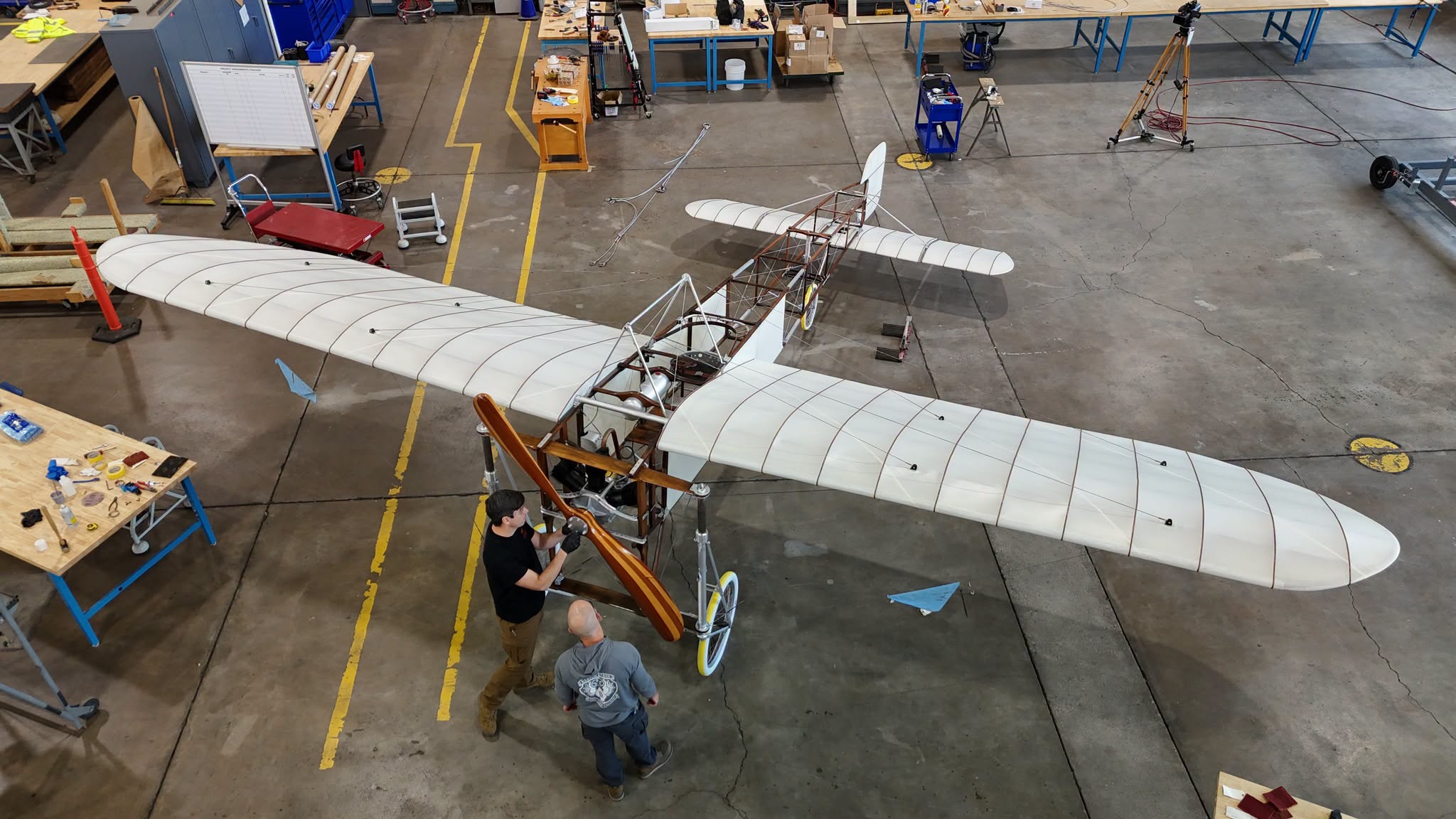
Overhead view of the National Museum of the USAF’s restored Bleriot Monoplane receiving its refurbished propeller.
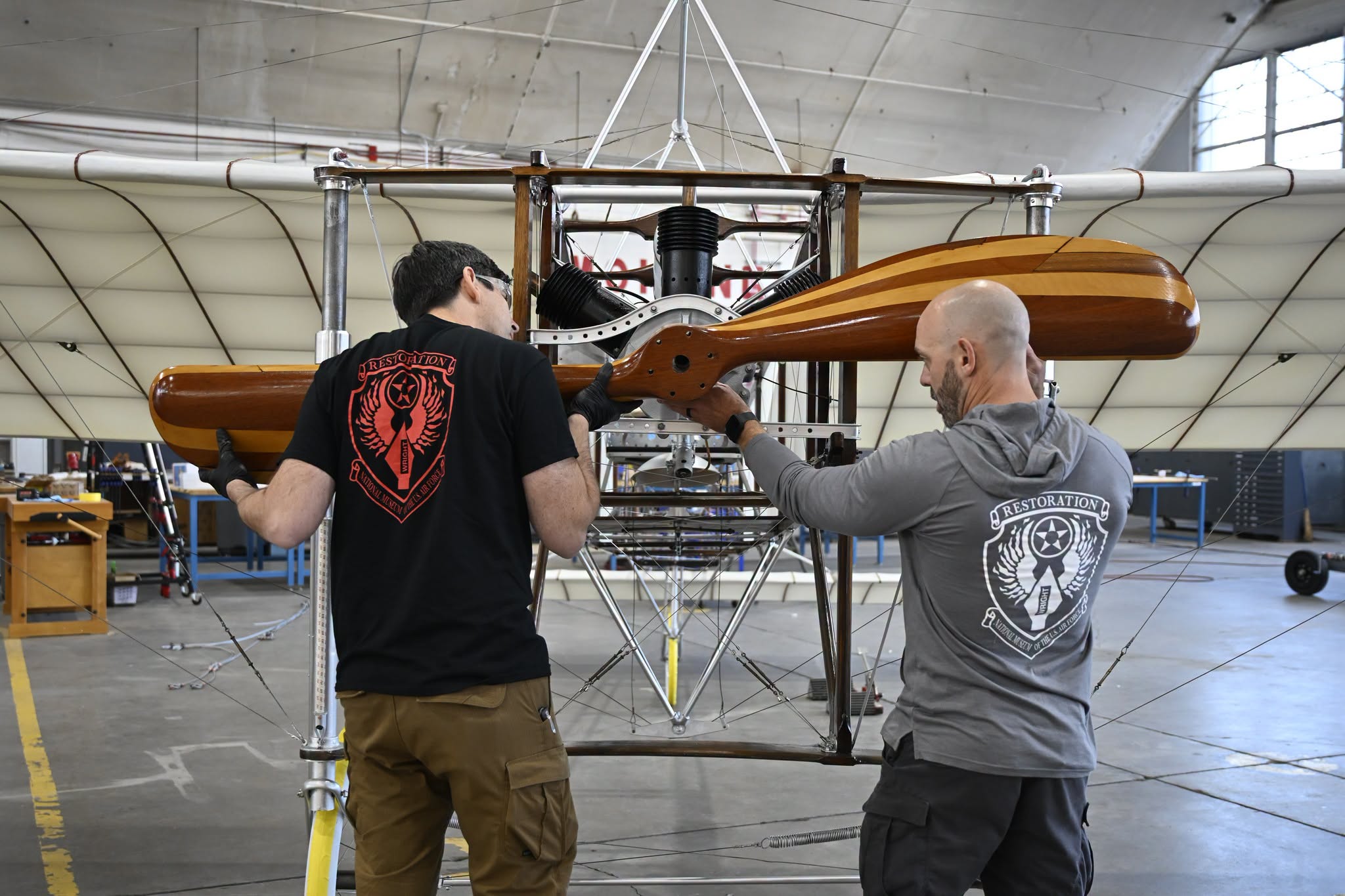
Restoration specialist place the refurbished spruce and mahogany propeller onto the the restored Bleriot Monoplane in the NMUSAF’s restoration hangar.
The newly-restored Bleriot Monoplane (built in 1911 by Ernest C. Hall) inside the National Museum of the USAF’s restoration hangar.
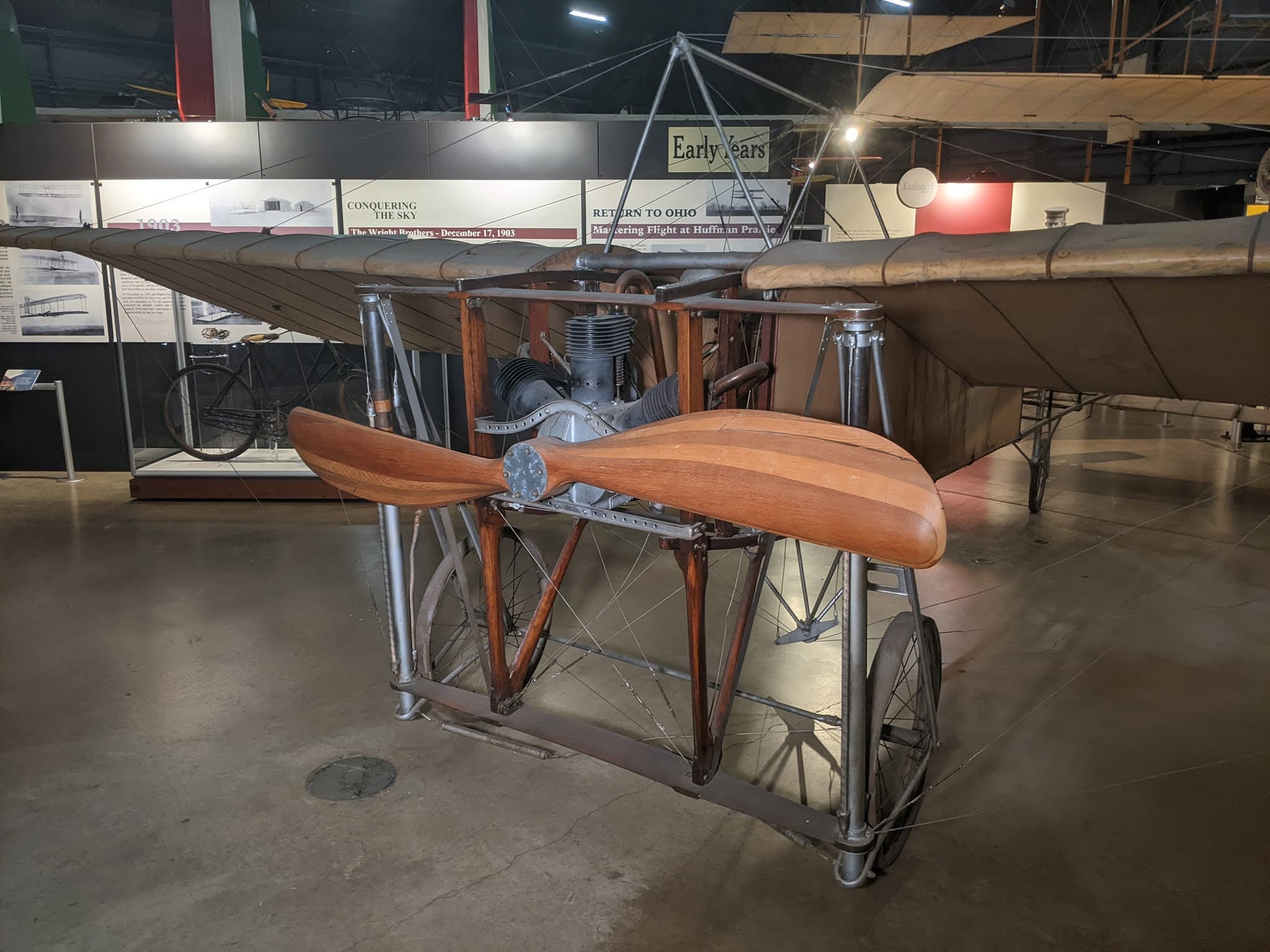
Head-on view of the National Museum of the USAF’s Bleriot Monoplane.
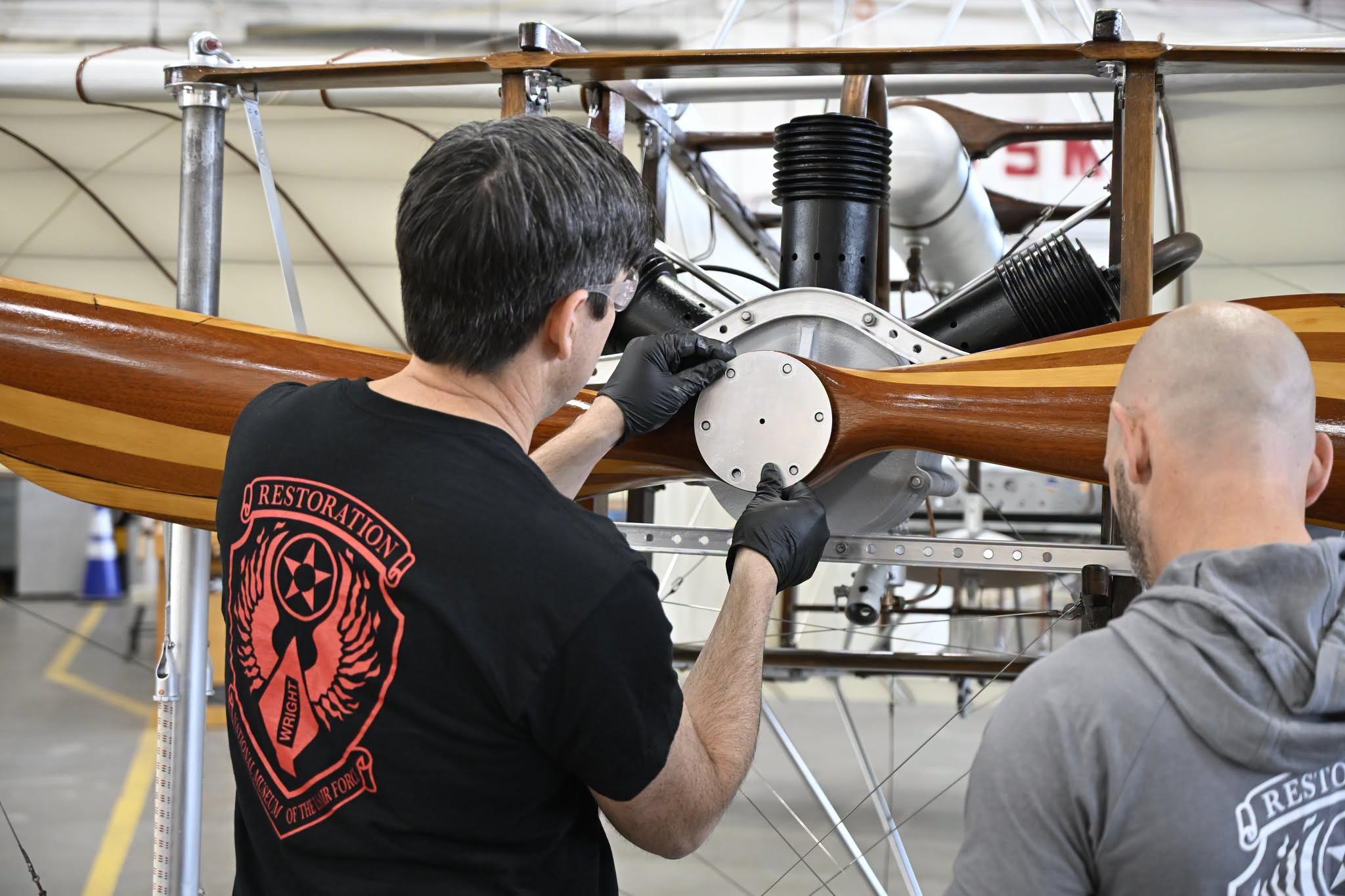
Casey Simmons installs the propeller hub cover for the National Museum of the USAF’s new restored Bleriot Monoplane.
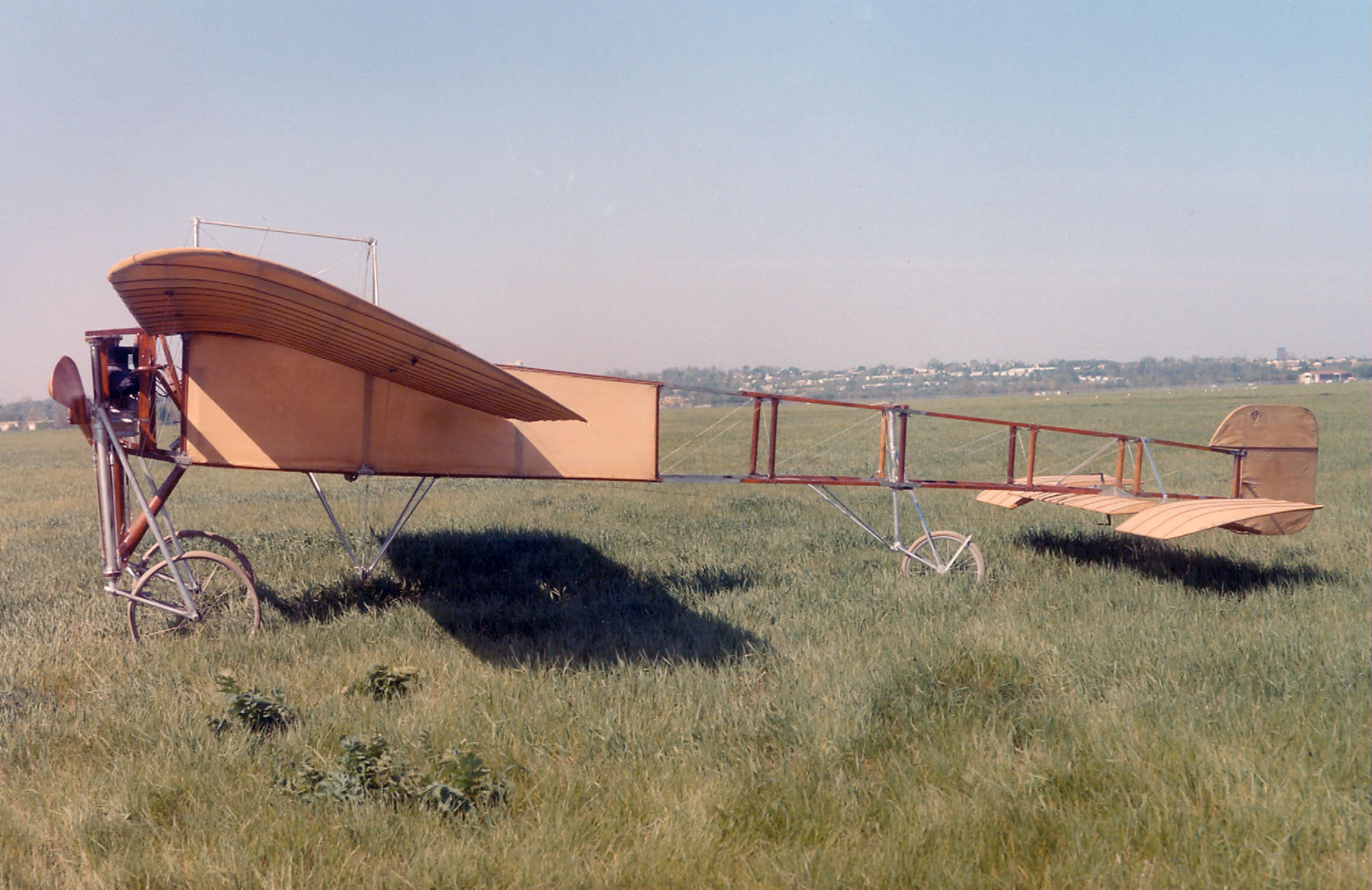
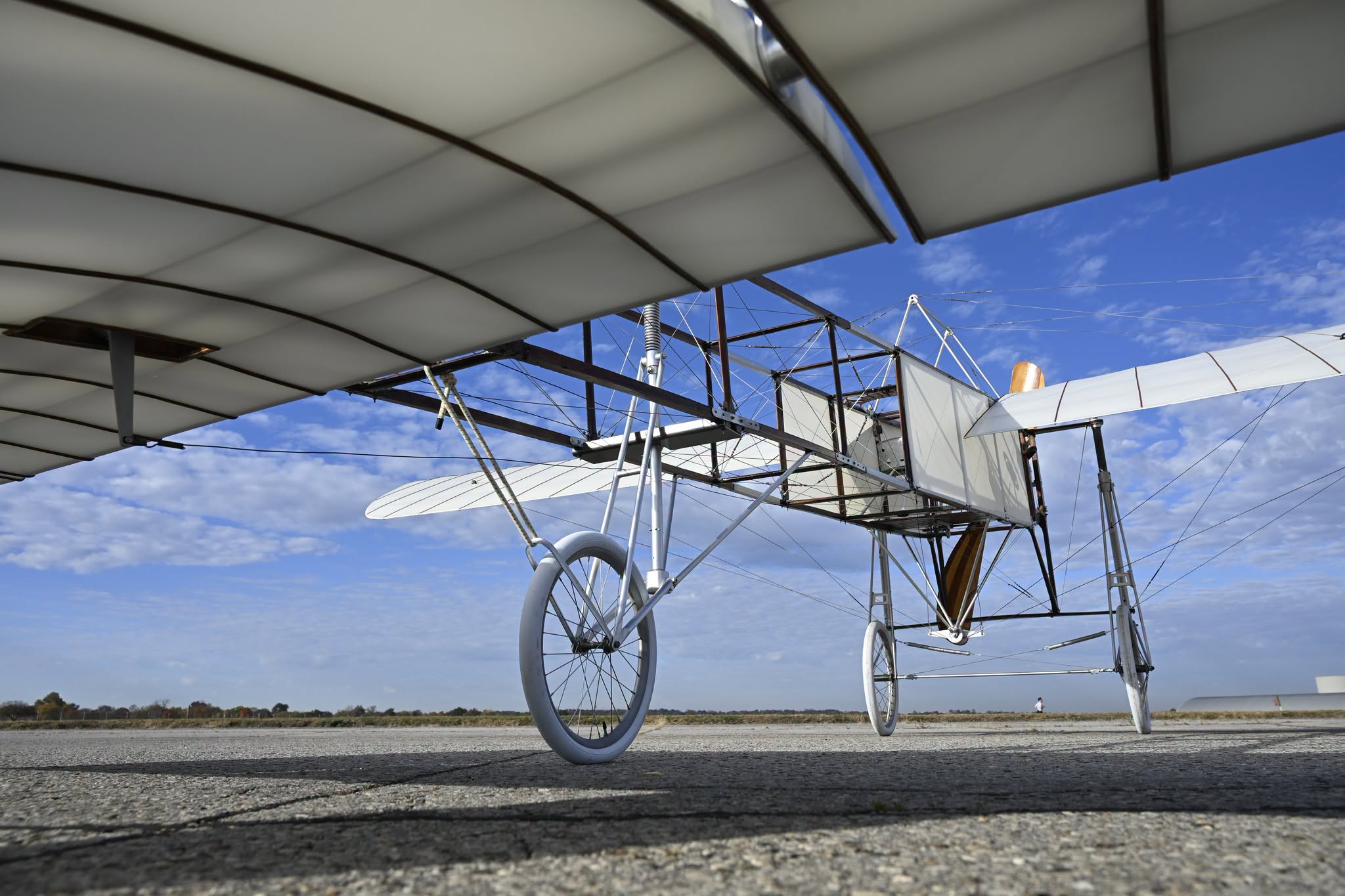
The National Museum of the USAF’s Bleriot Monoplane following the completion of an eight-month restoration from February-October 2026. (Image credit: National Museum of the USAF)
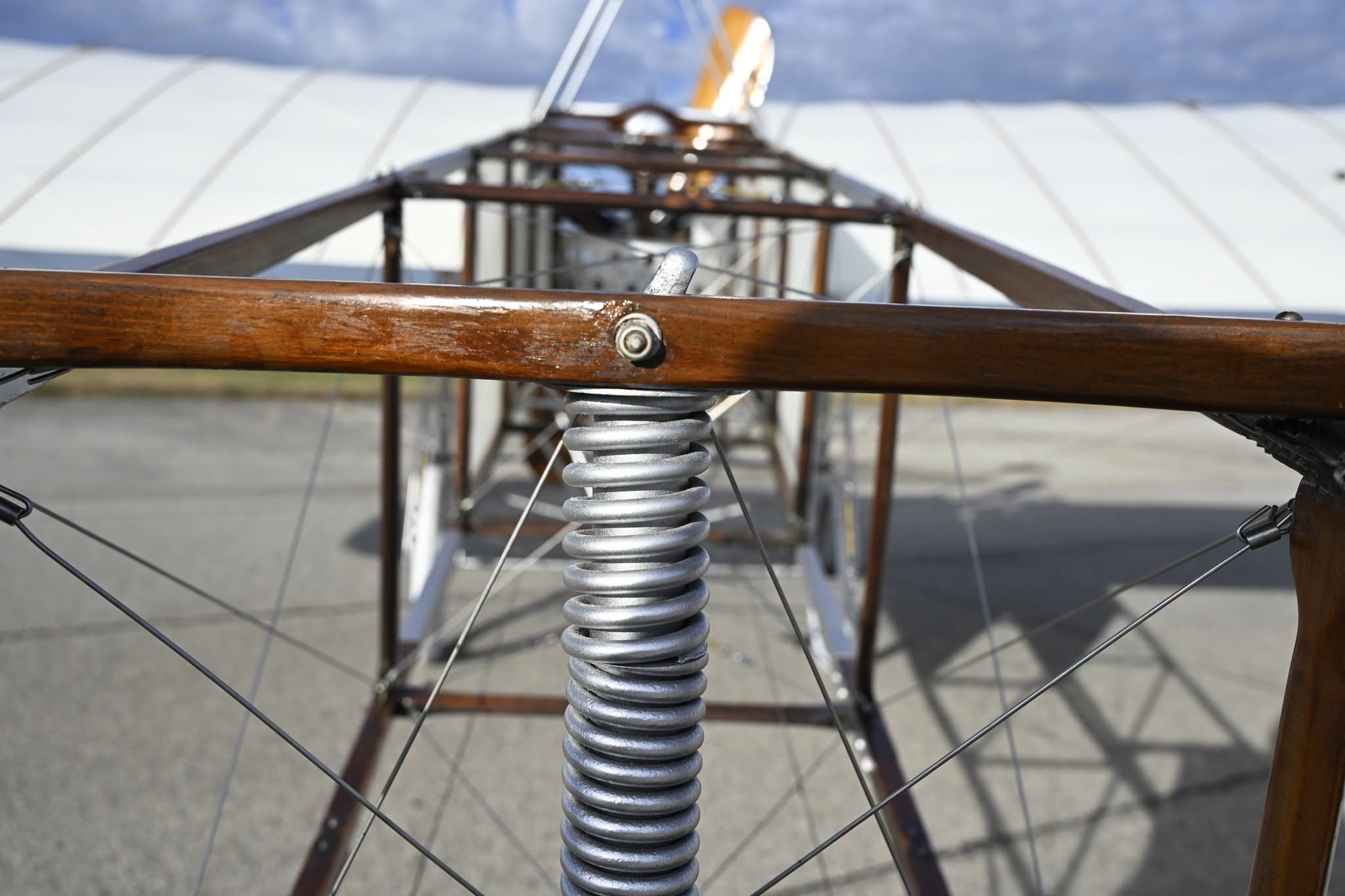
View of the fuselage longerons of the National Museum of the USAF’s Bleriot Monoplane built by Ernest C. Hall in 1911 following the end of its restoration.
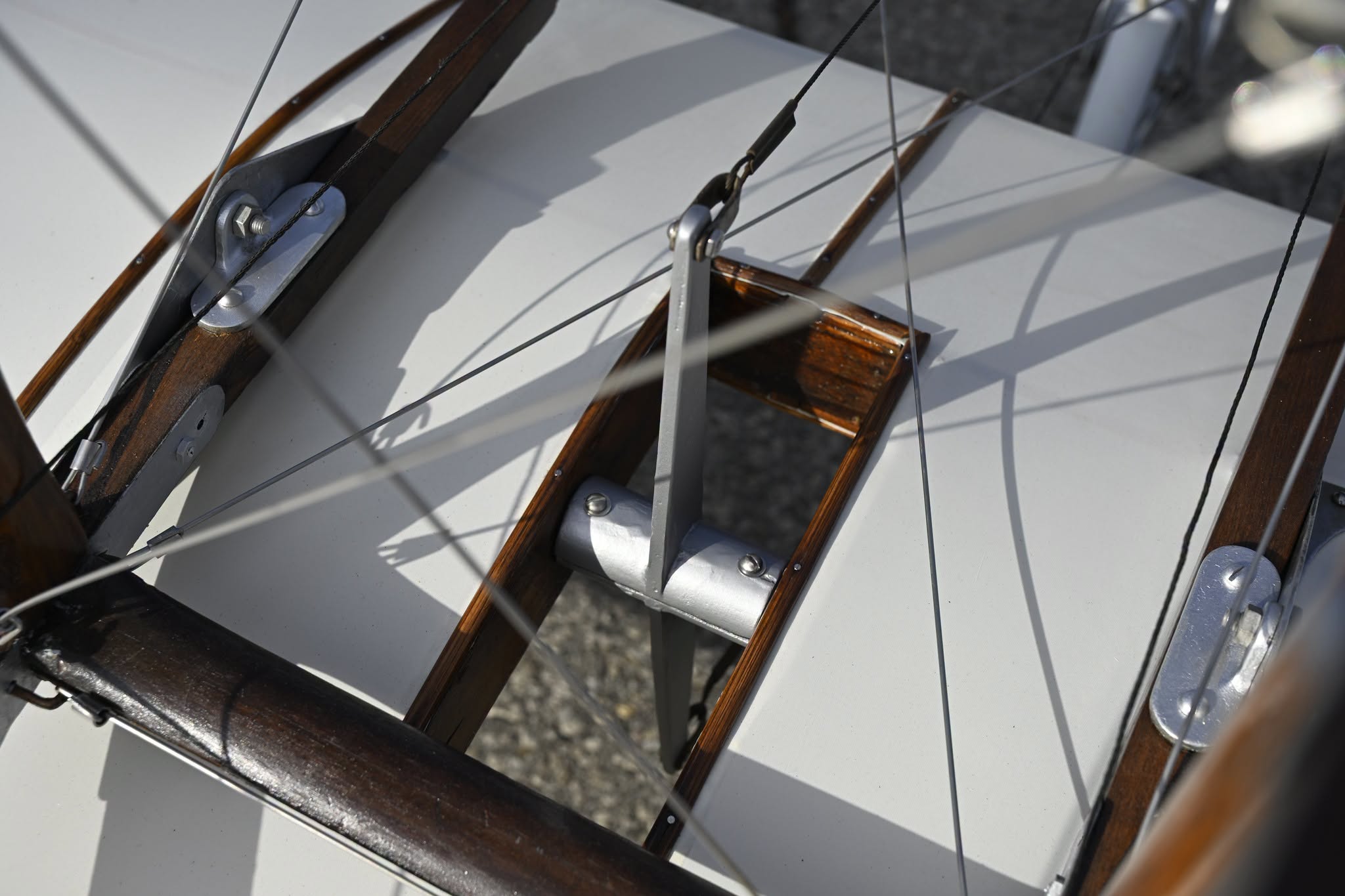
Detail of the control system for the elevator on the National Museum of the USAF’s Bleriot Monoplane built by Ernest C. Hall in 1911 following the end of its restoration.
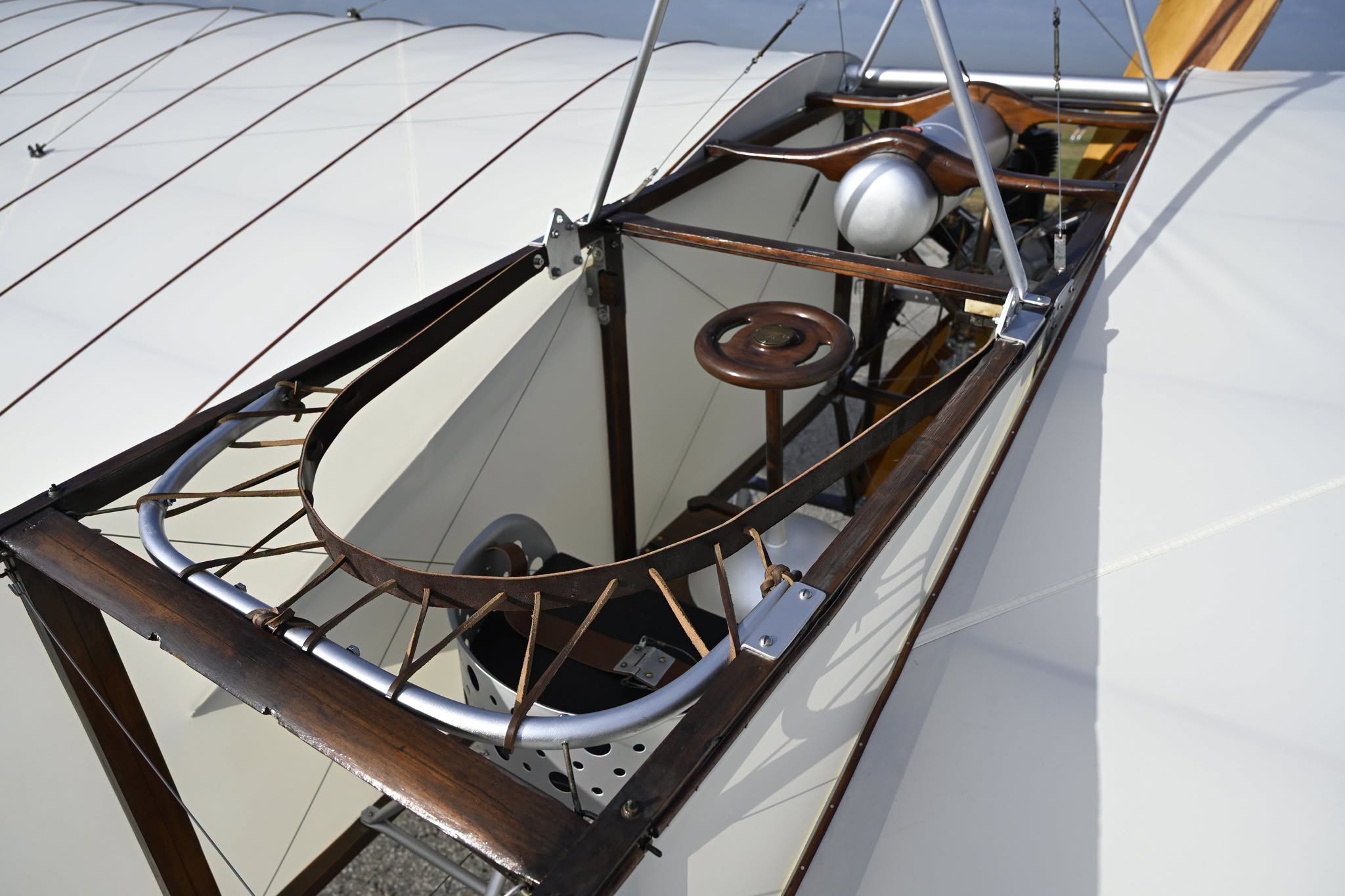
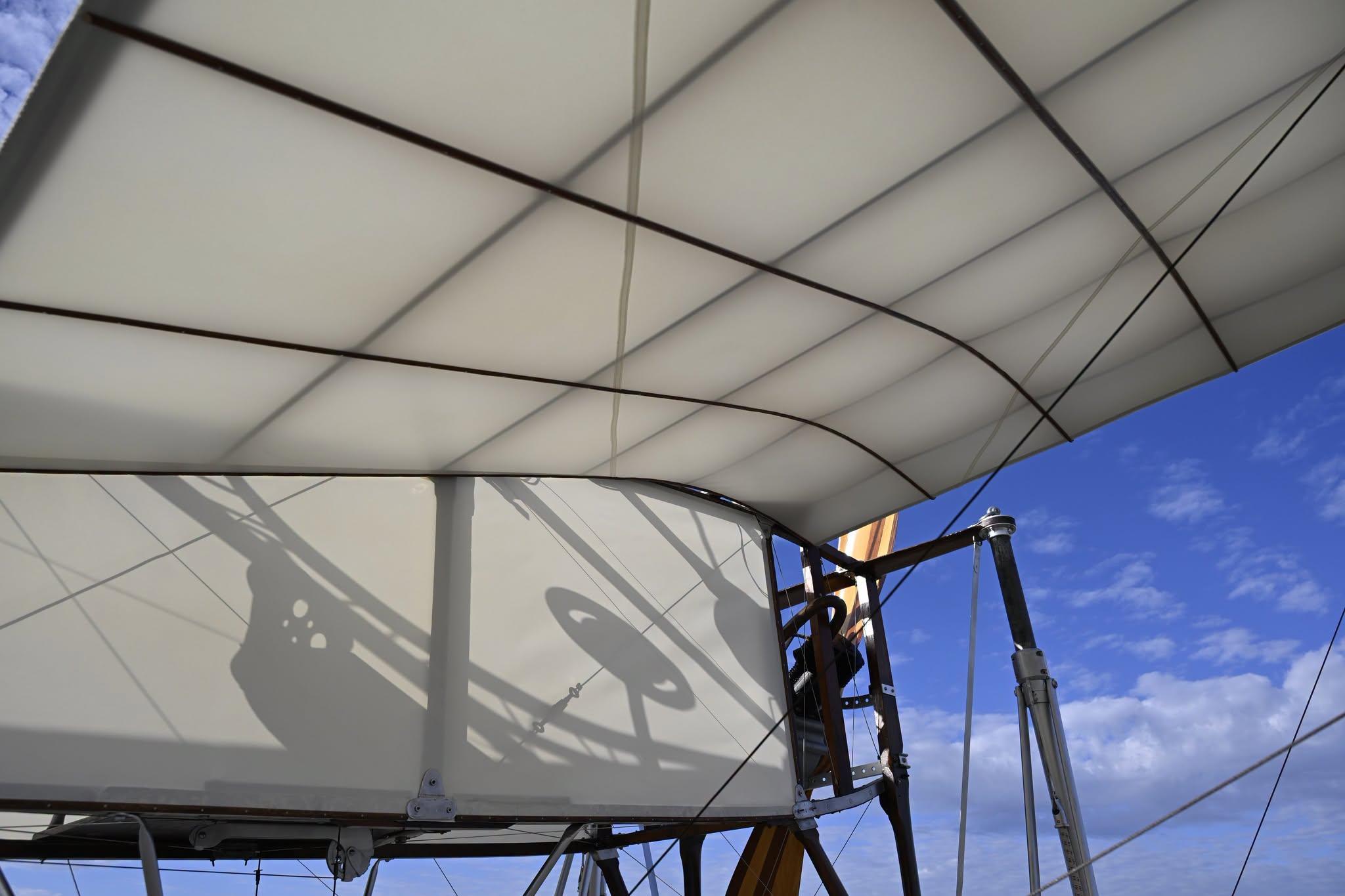
Exterior of the cockpit of the National Museum of the USAF’s Bleriot Monoplane built by Ernest C. Hall in 1911 following the end of its restoration.
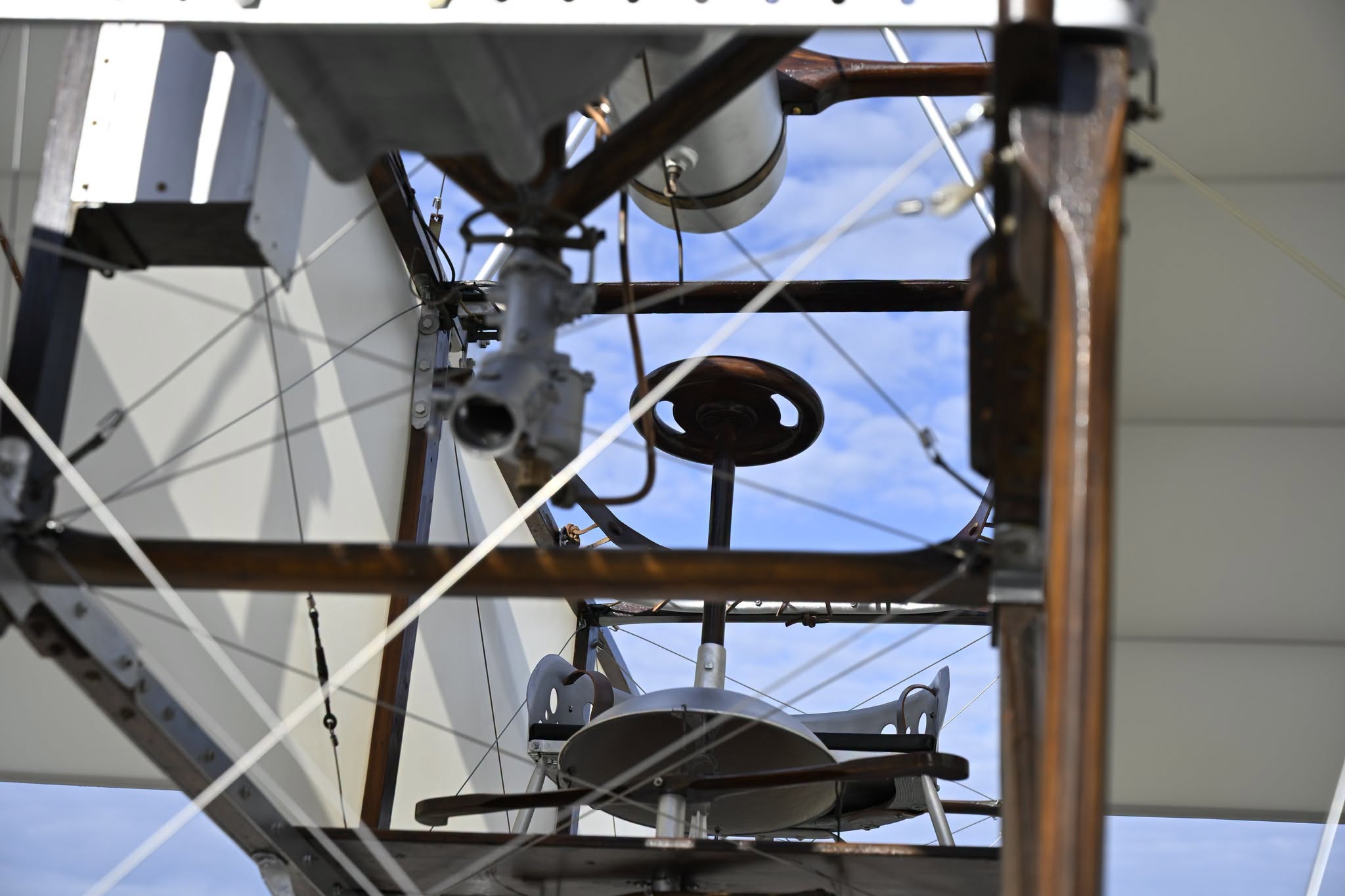
Underside view of the cockpit of the National Museum of the USAF’s Bleriot Monoplane built by Ernest C. Hall in 1911 following the end of its restoration.
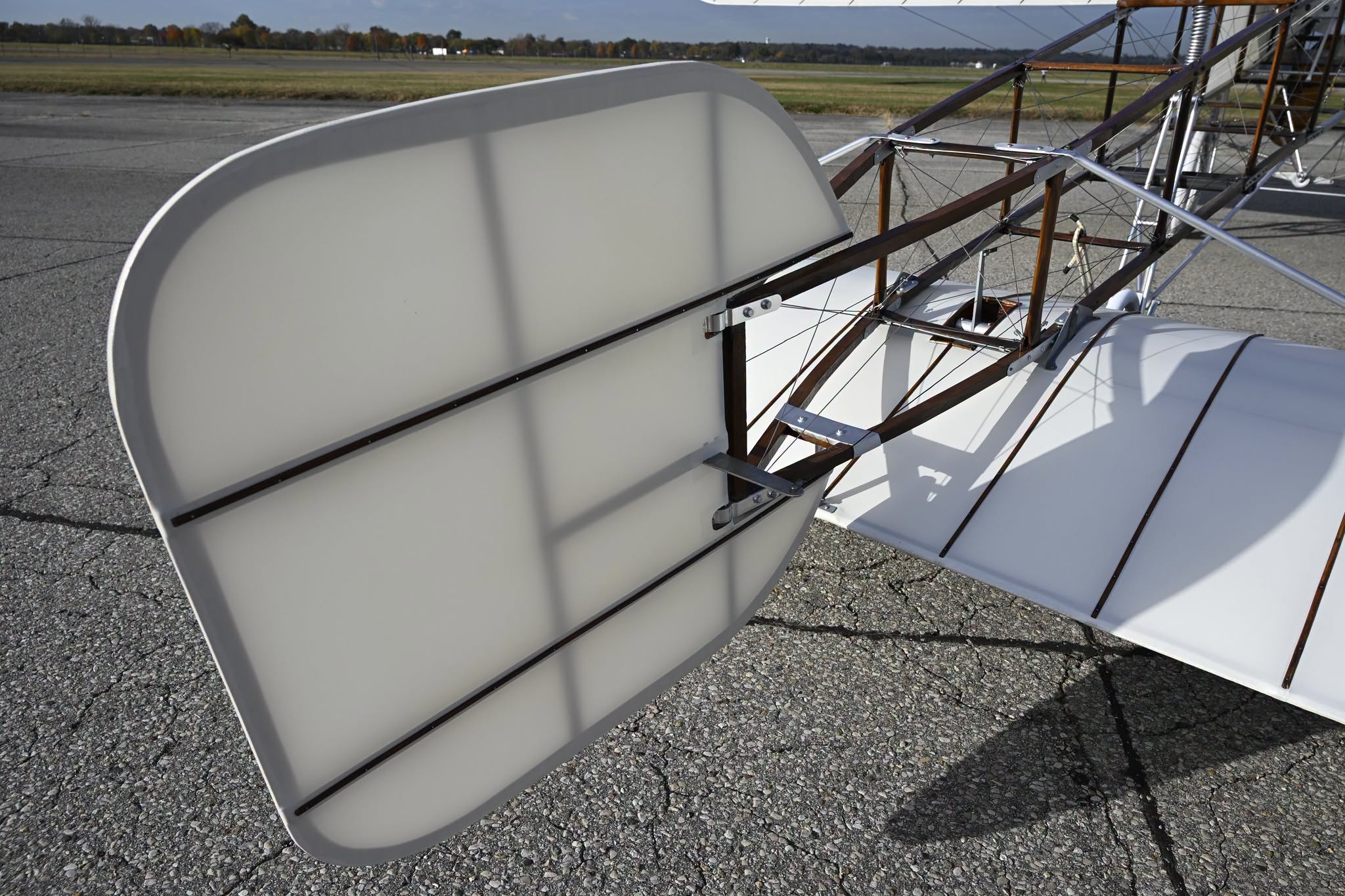
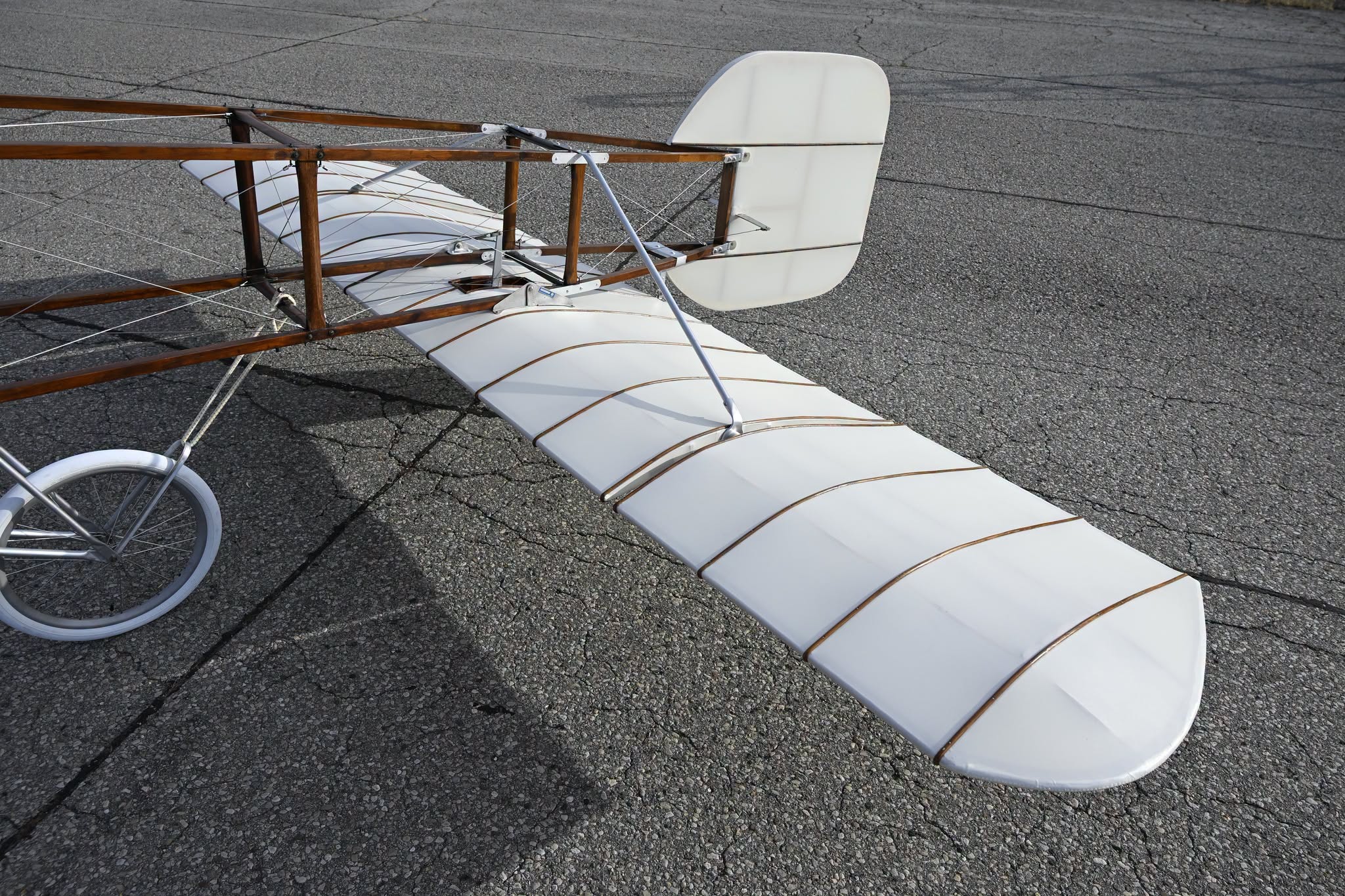
Detail of the rudder of the National Museum of the USAF’s Bleriot Monoplane built by Ernest C. Hall in 1911 following the end of its restoration.
View of the forward fuselage and right wing of the National Museum of the USAF’s Bleriot Monoplane built by Ernest C. Hall in 1911 following the end of its restoration.
Close-up head-on view of the propeller and wooden replica engine for the National Museum of the USAF’s Bleriot Monoplane built by Ernest C. Hall in 1911 following the end of its restoration.
Close-up of the propeller of the National Museum of the USAF’s Bleriot Monoplane built by Ernest C. Hall in 1911 following the end of its restoration.
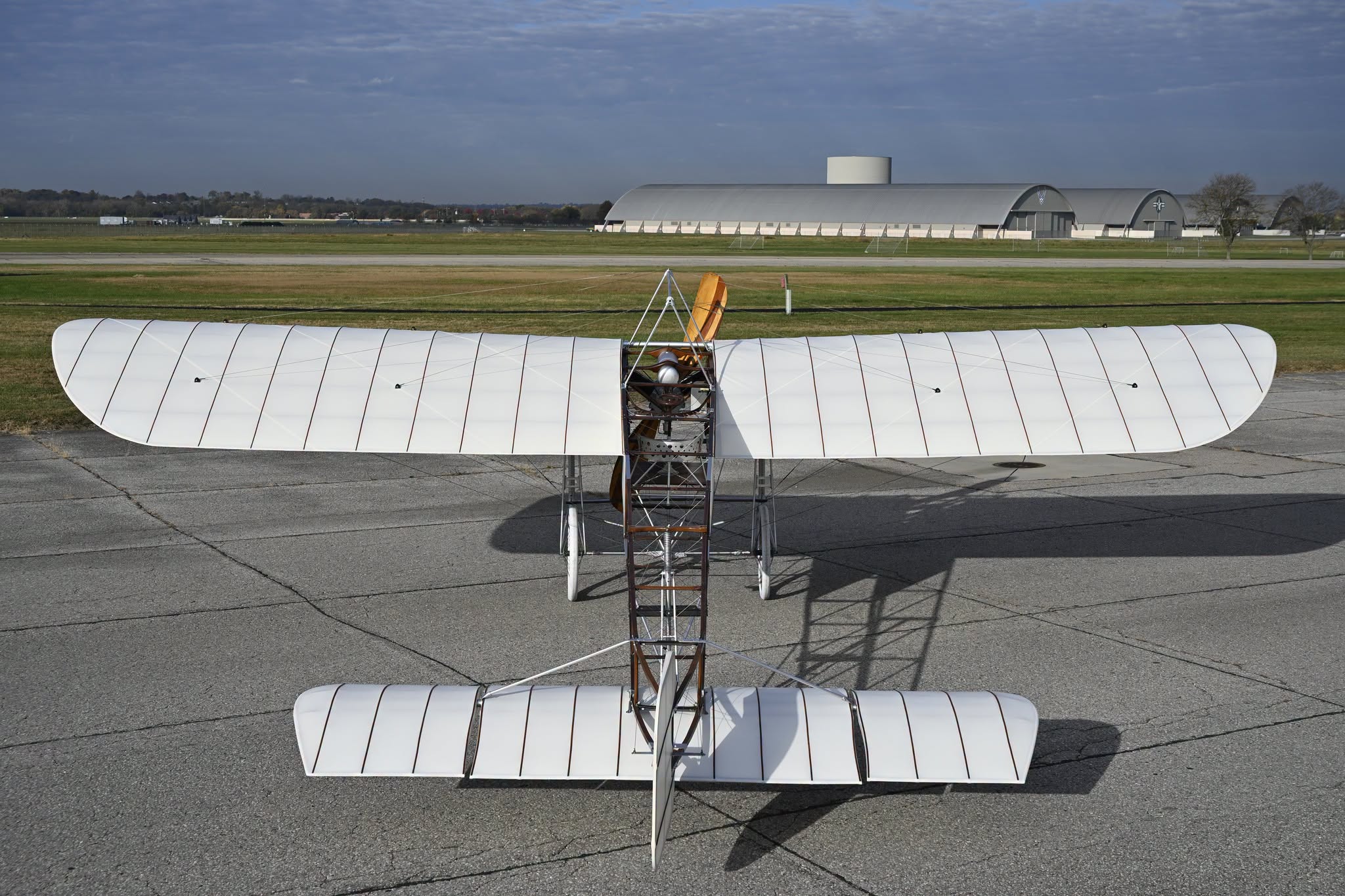
The National Museum of the USAF’s Bleriot Monoplane built by Ernest C. Hall in 1911 following the end of its restoration.
Tail of the National Museum of the USAF’s Bleriot Monoplane built by Ernest C. Hall in 1911 following the end of its restoration.
Detail of one of the landing gear wheels of the National Museum of the USAF’s Bleriot Monoplane built by Ernest C. Hall in 1911 following the end of its restoration.
The National Museum of the USAF’s Bleriot Monoplane built by Ernest C. Hall in 1911 following the end of its restoration.
Now, the Bleriot monoplane has been fully restored and reassembled, and having completed its official photo shoot, it will be placed back on display in the museum’s Early Years Gallery by November 17. While this particular aircraft may not have flown in any of the predecessors of the modern United States Air Force, it will honor the pioneering spirit of men like Ernest C. Hall, who, on their own initiative, took to the skies and, in some cases, like that of Ernest Hall, lived long enough to see aviation become a mainstay of our modern world, and aircraft advance far beyond the dreams of those pioneers.
The National Museum of the USAF’s Bleriot Monoplane built by Ernest C. Hall in 1911 following the end of its restoration.
The National Museum of the USAF’s Bleriot Monoplane built by Ernest C. Hall in 1911 following the end of its restoration.
The National Museum of the USAF’s Bleriot Monoplane built by Ernest C. Hall in 1911 following the end of its restoration.
The National Museum of the USAF’s Bleriot Monoplane built by Ernest C. Hall in 1911 following the end of its restoration.
The National Museum of the USAF’s Bleriot Monoplane built by Ernest C. Hall in 1911 following the end of its restoration.
The National Museum of the USAF’s Bleriot Monoplane built by Ernest C. Hall in 1911 following the end of its restoration.
The National Museum of the USAF’s Bleriot Monoplane built by Ernest C. Hall in 1911 following the end of its restoration. (Image credit: National Museum of the USAF)
For more information, visit the National Museum of the USAF’s website HERE.
Raised in Fullerton, California, Adam has earned a Bachelor's degree in History and is now pursuing a Master's in the same field. Fascinated by aviation history from a young age, he has visited numerous air museums across the United States, including the National Air and Space Museum and the San Diego Air and Space Museum. He volunteers at the Planes of Fame Air Museum in Chino as a docent and researcher, gaining hands-on experience with aircraft maintenance. Known for his encyclopedic knowledge of aviation history, he is particularly interested in the stories of individual aircraft and their postwar journeys. Active in online aviation communities, he shares his work widely and seeks further opportunities in the field.
Vintage Aviation News now offers an ad-free reading experience. Enjoy faster-loading pages, uninterrupted stories, and the satisfaction of helping us preserve aviation history.