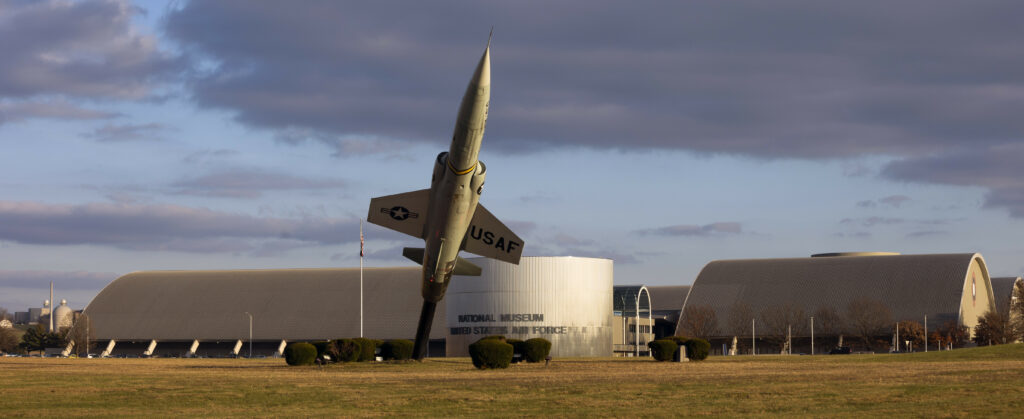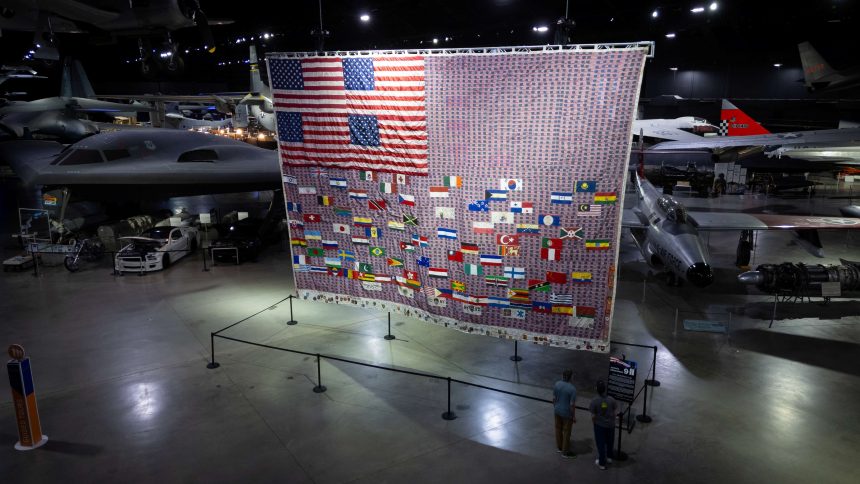

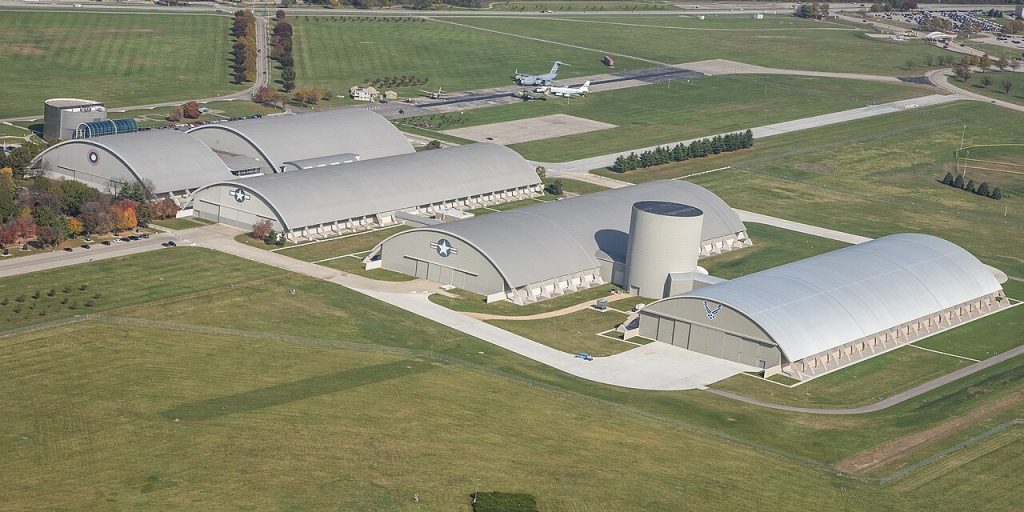
The National Museum of the U.S. Air Force, Dayton, Ohio, is displaying the 9/11 Memorial Flag, a handmade tribute honoring the victims of the Sept. 11, 2001, terrorist attacks. The memorial is now on exhibit in the museum’s Cold War Gallery and will remain on display through the end of August. Measuring 22 feet by 32 feet, the flag was created in the months following the attacks through United We Stand, United We Sew, a volunteer effort organized by creator and curator Thomas McBrien. More than 450 volunteers, including students, teachers, children, and senior citizens from Pennsylvania, New Jersey, and the New York area, spent five months assembling the memorial.
McBrien, who lived in Bucks County, Pennsylvania, about 68 miles from New York City at the time of the attacks, said the project grew out of a personal desire to respond in the aftermath of Sept. 11. “I needed to do something,” McBrien said. “I felt compelled to show support, healing, and patriotism.” The memorial contains 2,983 miniature American flags, each bearing the name of a victim of the attacks. It also features 86 national flags representing the countries of origin of those who lost their lives, along with flags, patches, and emblems recognizing rescue, recovery, and emergency response organizations.
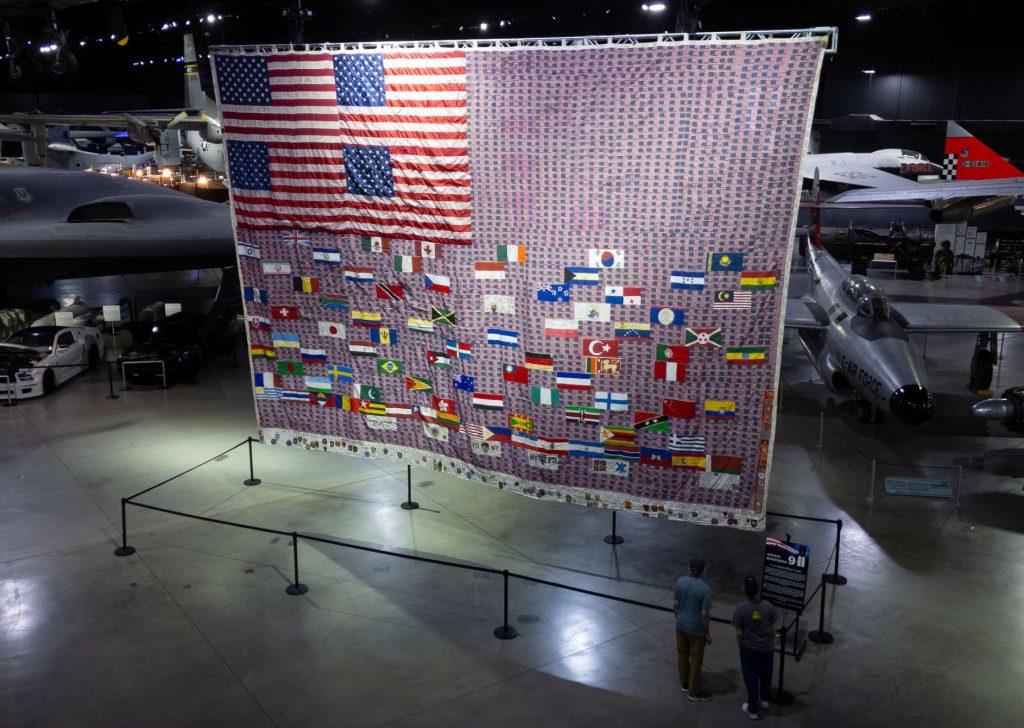
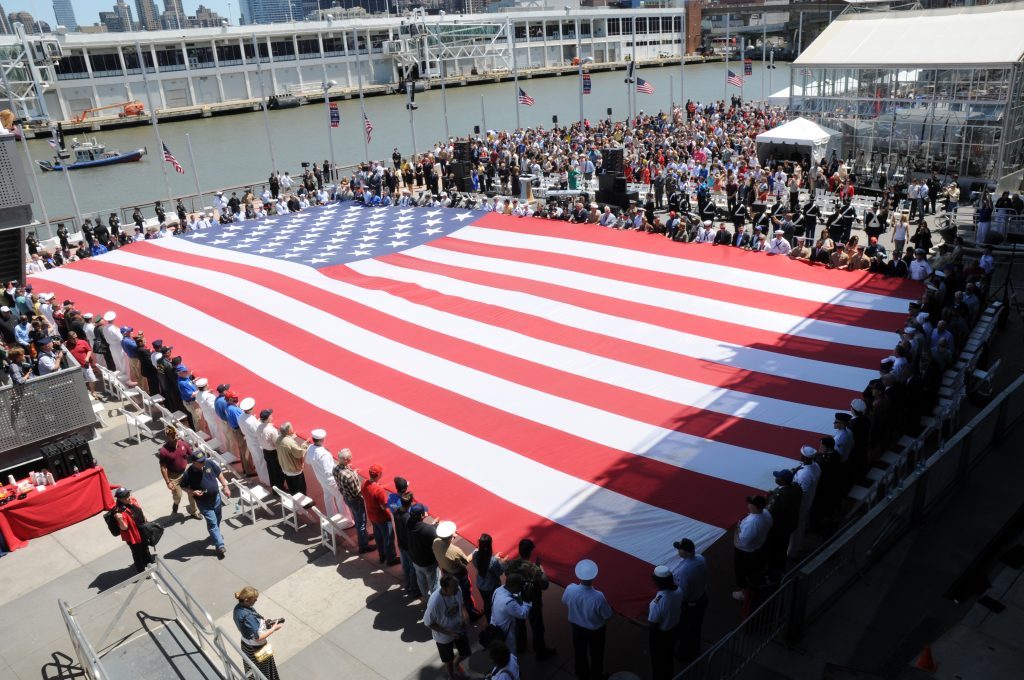
According to McBrien, the memorial also incorporates four full-size American flags that flew over the U.S. Capitol, the New York State Capitol, the Pennsylvania State Capitol, and the Bucks County Courthouse on Dec. 21, 2001. The flags were flown to commemorate what would be the first Christmas season for many families who had lost loved ones in the attacks. The completed memorial made its public debut at the USS Intrepid Sea, Air & Space Museum in New York on March 11, 2002, six months after the attacks. During the past 24 years, McBrien has displayed the flag at military bases, museums, state capitols, the Pentagon, the USS Intrepid, and locations across Canada and overseas, including Iraq.
As the memorial has traveled, it has continued to evolve through the addition of signatures and patches contributed by service members, first responders, civic leaders, and visitors. “This belongs to everybody,” McBrien said. “It’s considered a national treasure and a piece of American history.” Admission to the National Museum of the U.S. Air Force is free. The museum is open daily from 9 a.m. to 5 p.m. For more information and to support the National Museum of the USAF, click on this link: www.nationalmuseum.af.mil.