







On this day in aviation history, 64 years ago (November 25, 1962), the Nicollier HN 433 Menestrel took flight for the first time. Designed by French aircraft engineer Henri Nicollier, the small, single-seat aircraft was developed as an economical homebuilt airplane. Its simple construction and modest power requirements made it an accessible design for amateur aircraft builders. The Menestrel was a low-wing cantilever monoplane constructed primarily from wood and covered with fabric. Its wing incorporated a single spar, with constant-chord inner panels and semi-elliptical outer sections. The aircraft featured conventional landing gear and an open cockpit, although the original prototype was later fitted with a streamlined Plexiglas canopy. Many examples used lightweight wheels adapted from Vespa scooters.
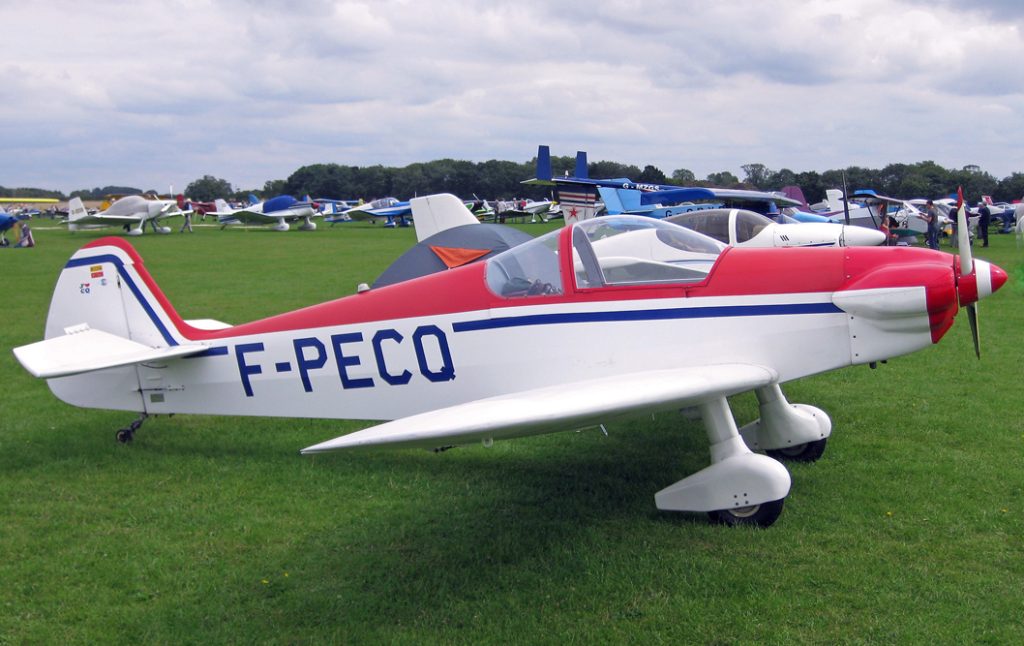
The original HN 433 was followed by several improved versions. The HN 434 Super Menestrel, introduced in 1985, featured a larger cockpit, increased fuel capacity, and more powerful engines. In 1989, Nicollier introduced the HN 700 Menestrel II, a larger two-seat development with side-by-side seating. The Menestrel family achieved lasting popularity among homebuilders, with more than 95 aircraft constructed and additional examples built from plans. The original HN 433 had a wingspan of 23 feet and was powered by a 30-horsepower, 1.3-liter Rectimo/Volkswagen four-cylinder engine. Later examples used Volkswagen-based engines producing between 30 and 50 horsepower. For comparison, the larger two-seat HN 700 Menestrel II measured 17 feet 5 inches in length with a wingspan of 25 feet 7 inches. Powered by an 80-horsepower Limbach L2000 engine, it could cruise at approximately 116 mph, had a range of 620 miles, and a maximum takeoff weight of 1,102 pounds.