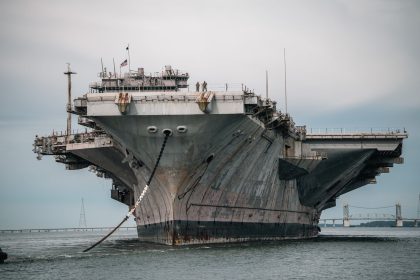


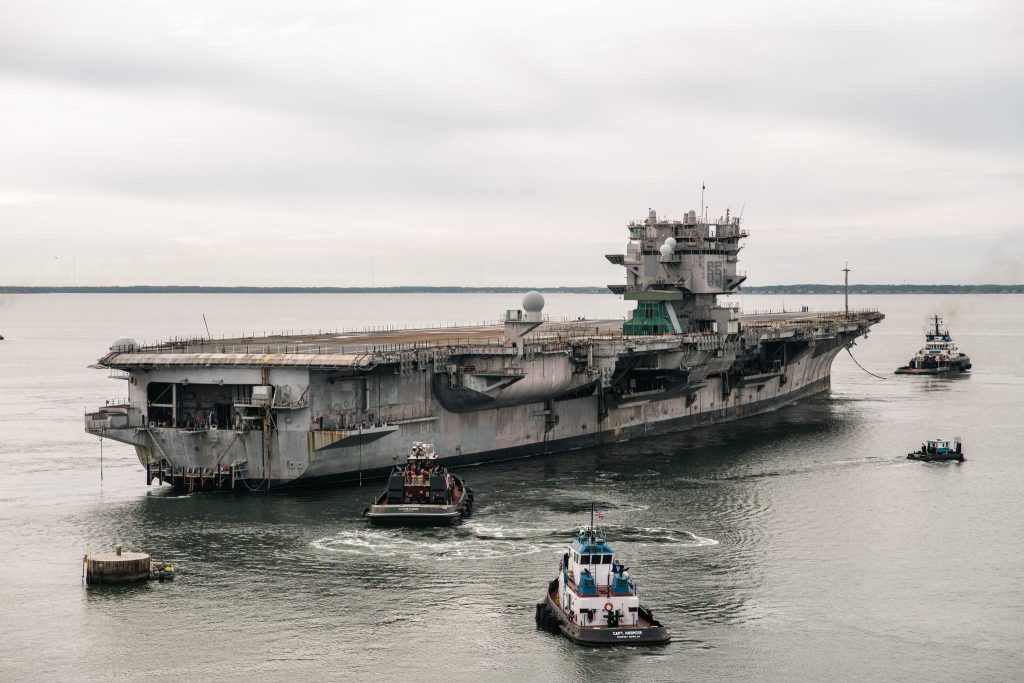
The former USS Enterprise (CVN-65), the world’s first nuclear-powered aircraft carrier, departed Newport News Shipbuilding in Virginia under tow on November 2, 2026, beginning its final journey to Mobile, Alabama, for dismantling. The departure marks another closing chapter for a ship whose service spanned more than five decades of American naval aviation. Known as the “Big E,” Enterprise was commissioned on November 25, 1961, and completed 25 deployments during 51 years of operational service. Its career stretched from the Cuban Missile Crisis and Vietnam War to operations over Afghanistan and Iraq, placing the carrier and its air wings at the center of successive generations of naval operations.

Built at Newport News, Enterprise was christened on September 24, 1960, by Bertha Irene Franke, wife of then-Secretary of the Navy William B. Franke. The eighth U.S. Navy vessel to bear the name, it carried forward a lineage that included the celebrated WWII aircraft carrier USS Enterprise (CV-6). The ship demonstrated the reach of nuclear propulsion early in its career. In 1964, Enterprise joined the nuclear-powered USS Long Beach and USS Bainbridge for Operation Sea Orbit, circumnavigating the globe without refueling. The following year, its aircraft flew combat missions during the Vietnam War, making Enterprise the first nuclear-powered ship to engage in combat.

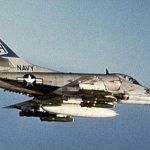
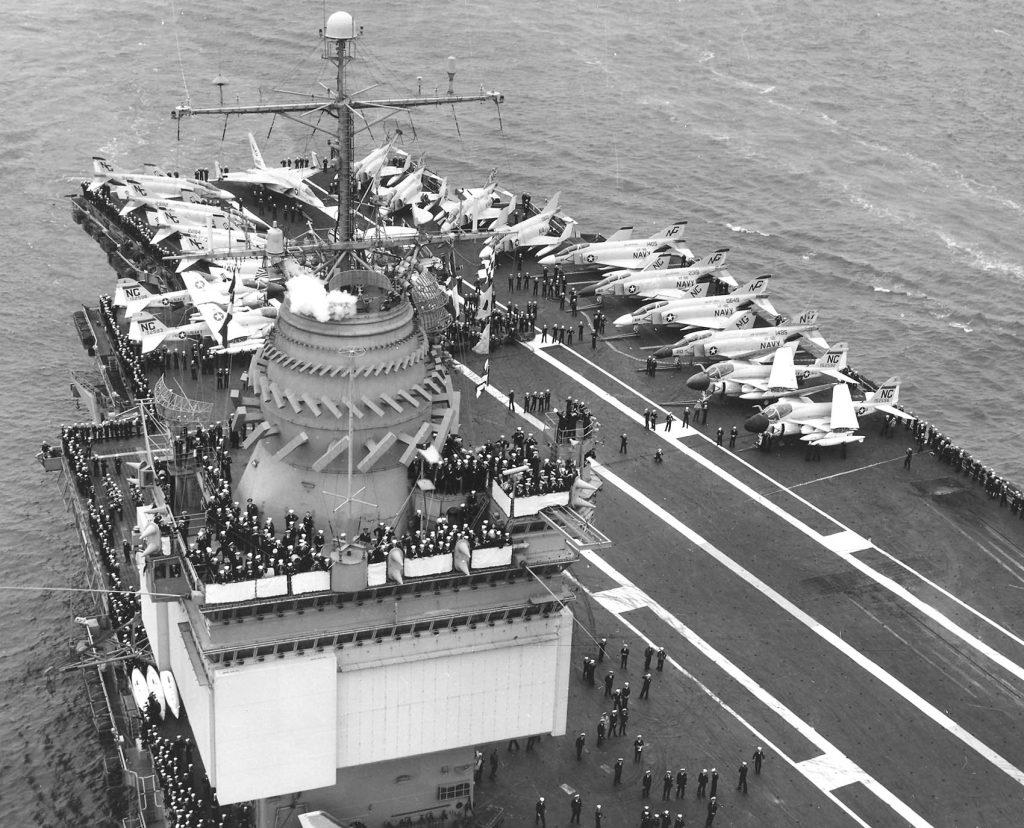
Over its five decades of operations, Enterprise’s flight deck hosted aircraft that traced the evolution of naval aviation. During its early Vietnam deployments, these included McDonnell F-4B Phantom IIs of VF-92 and VF-96, Douglas A-4C Skyhawks of squadrons including VA-93 and VA-94, and North American RA-5C Vigilante reconnaissance aircraft of RVAH-7. In September 1974, the carrier introduced the Grumman F-14A Tomcat to operational deployments, embarking VF-1 “Wolfpack” and VF-2 “Bounty Hunters.” Their Tomcats subsequently provided air cover during the evacuation of Saigon in April 1975. By its final deployment in 2012, Enterprise was operating Boeing F/A-18E/F Super Hornets, including those of VFA-136 “Knighthawks,” VFA-11 “Red Rippers,” and VFA-211 “Fighting Checkmates”—a progression that reflected the changing aircraft, technology, and missions of American carrier aviation.
According to USNI News, the final tow followed a dispute over the Navy’s selection of NorthStar for the disposal work. The company received a $418 million contract in July 2026, and HII, the parent company of Newport News Shipbuilding, dropped its legal challenge to the award in October. HII had previously performed the carrier’s inactivation and defueling work. Dismantling Enterprise presents an unprecedented task for the Navy. Although its nuclear fuel has been removed, the remaining reactor structures and radioactive materials still require disposal. The carrier was powered by eight reactors, compared with the two installed in each Nimitz- and Ford-class carrier. USNI News reported that approximately $1.3 billion had already been spent on Enterprise’s inactivation, separate from the newly awarded disposal contract. The project will help establish procedures for retiring future nuclear-powered aircraft carriers.
Enterprise was inactivated in December 2012 and formally decommissioned on February 3, 2017, during a ceremony in its hangar bay—the first decommissioning of a nuclear-powered aircraft carrier. The Navy completed defueling its reactor plants in 2017. In announcing the departure, Kevin Cormier, Deputy Portfolio Acquisition Executive Maritime for Aircraft Carriers, credited the sailors and support personnel who sustained the ship throughout its service. Their work kept Enterprise ready for operations during a career in which it traveled more than one million nautical miles under nuclear power. While CVN-65’s final destination is a dismantling facility, the name will return to the fleet aboard the future Ford-class carrier Enterprise (CVN-80), the ninth U.S. Navy ship to carry it.