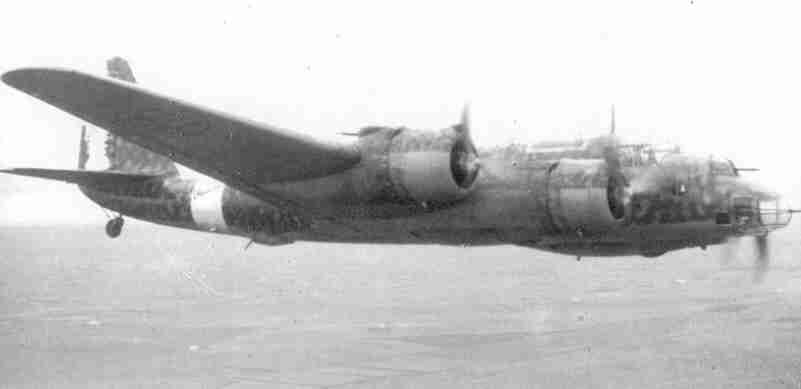


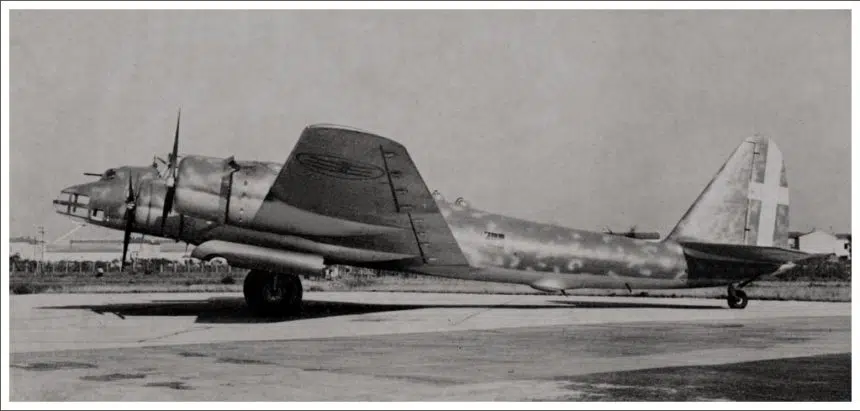

On this day in aviation history, 87 years ago (November 24, 1939), the Piaggio P.108 Bombardiere took flight for the first time. Developed in Italy as a four-engine heavy bomber, the P.108 was designed to provide the Regia Aeronautica with a long-range strategic bombing capability. It would become the only four-engine strategic bomber to see operational service with the Italian Royal Air Force during WWII. Designed by Giovanni Casiraghi, the P.108 was developed from Piaggio’s earlier P.50 bomber project. Unlike its predecessor, the new aircraft featured an all-metal structure, a low-mounted wing, retractable landing gear, and four powerful Piaggio radial engines. The prototype flew on November 24, 1939, and demonstrated promising performance during early testing. The aircraft also incorporated an unusual defensive arrangement, including remotely controlled machine-gun turrets mounted in the outer engine nacelles.

The P.108 entered service with the Regia Aeronautica’s 274th Squadron in 1941. Its operational career was limited by mechanical problems, accidents, and small production numbers. Nevertheless, the aircraft participated in bombing missions against Gibraltar and Allied targets in North Africa and the Mediterranean. An experimental anti-shipping version, the P.108A, was fitted with a massive 102 mm cannon, while transport variants were also developed. Following Italy’s 1943 armistice, several P.108 transports were operated by the German Luftwaffe. The Piaggio P.108B measured 73 feet 2 inches in length with a wingspan of 105 feet and was powered by four Piaggio P.XII R.C.35 radial engines producing 1,500 horsepower each for takeoff. It could reach a maximum speed of approximately 295 mph, had a range of 2,047 miles, and a published service ceiling of 34,400 feet. Defensive armament included six 12.7 mm and two 7.7 mm Breda-SAFAT machine guns, while its bomb load could reach 7,700 pounds.