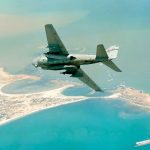





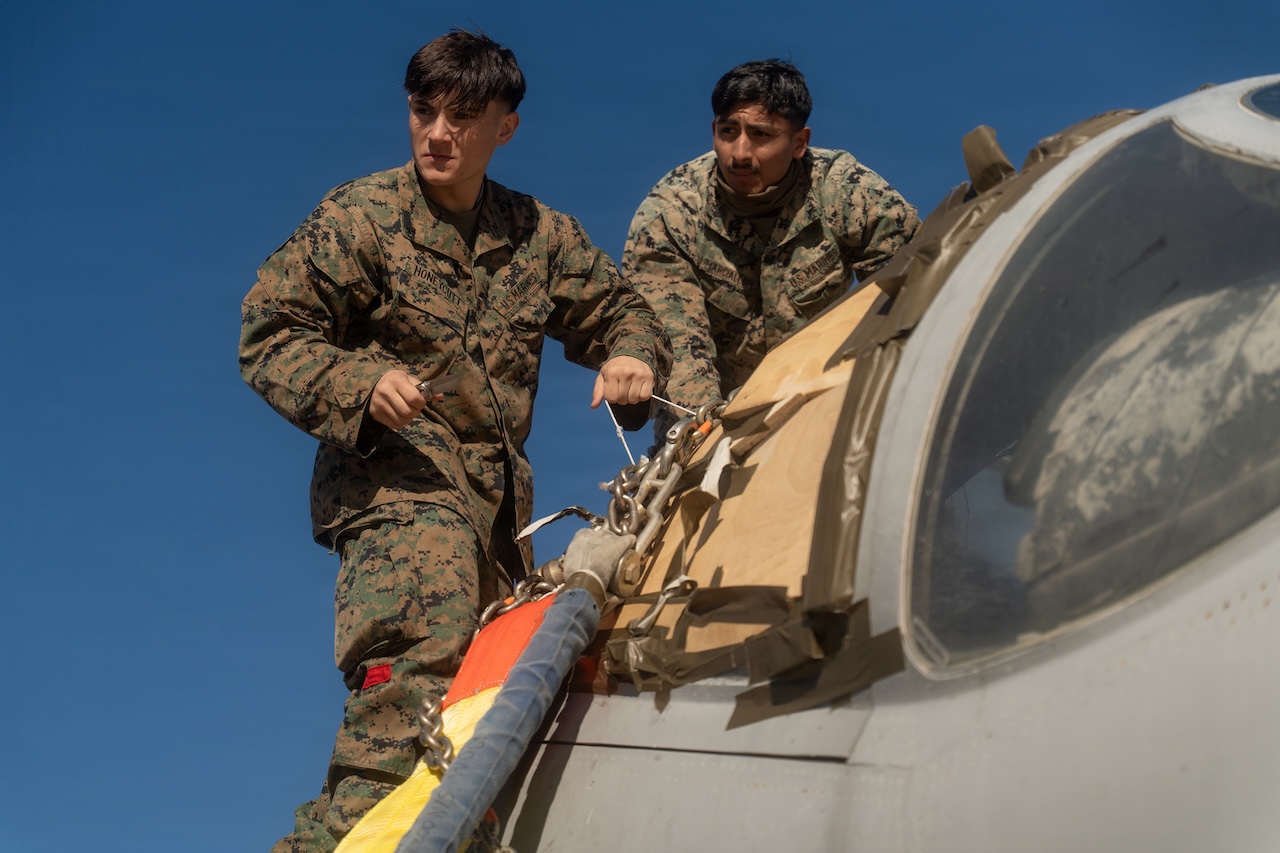
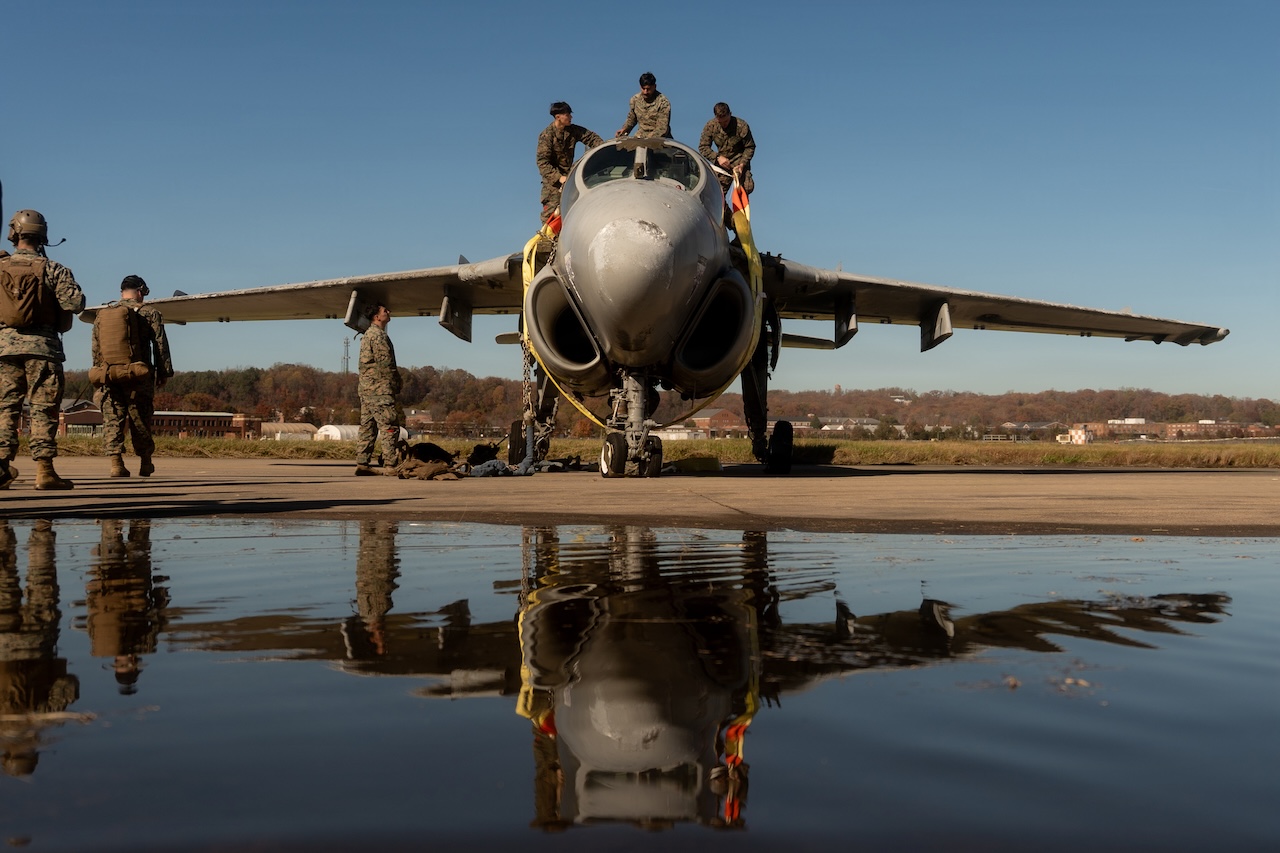
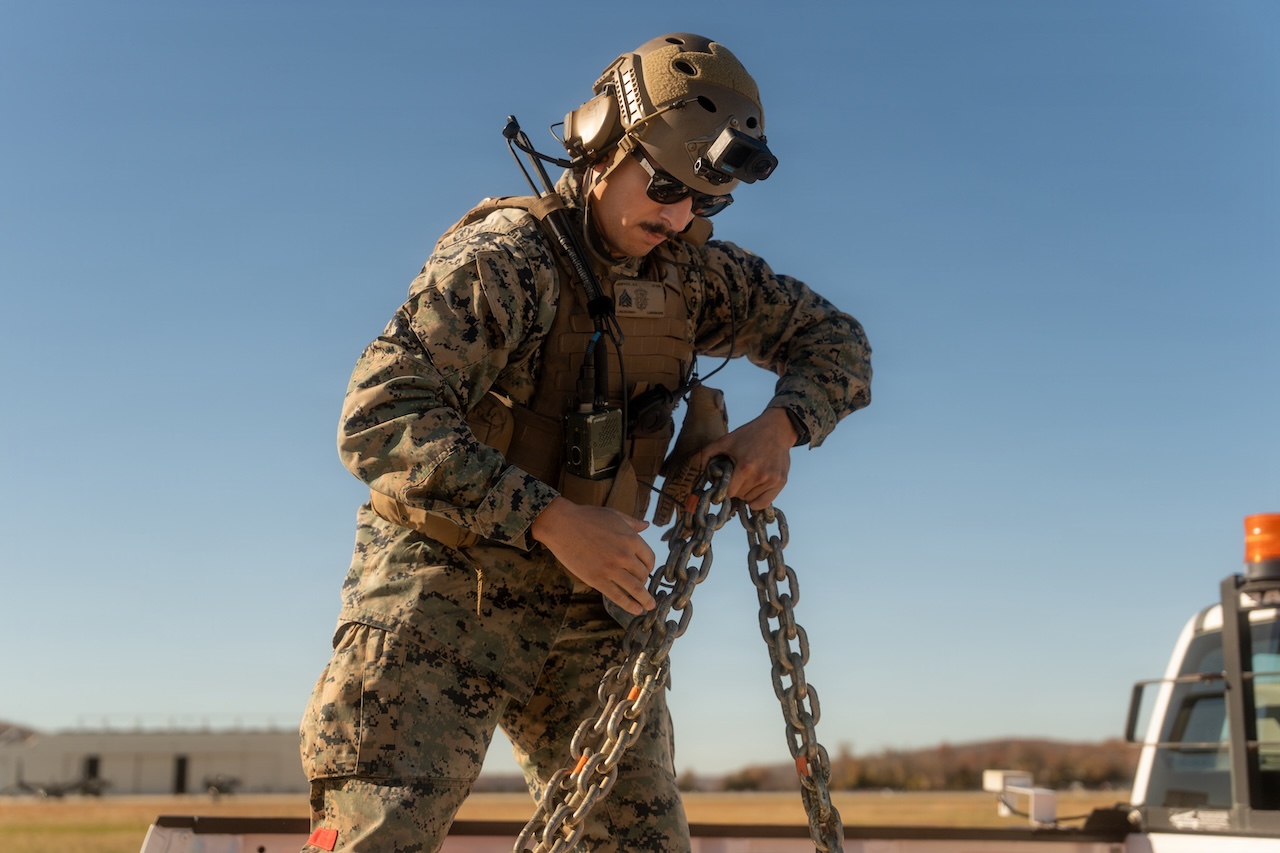
On November 18, 2026, U.S. Marines used a retired Grumman A-6E Intruder to practice an external lift. A CH-53K King Stallion picked up the jet at Naval Support Facility Dahlgren, Virginia, and carried it to Marine Corps Air Facility Quantico, where the airframe will be used for further training. A job is what kept this particular Intruder around in the first place. After the Navy struck Bureau Number (BuNo) 159567 off charge in September 1996, the aircraft remained at Dahlgren to support test operations. Three decades later, Marine Heavy Helicopter Squadron 461, the Ironhorse squadron, coordinated its move with personnel at Quantico. Marines from the 2nd Distribution Support Battalion helped rig the Intruder at Dahlgren and removed the lifting gear after it arrived.
From Navy Test Aircraft to Marine Squadron Service
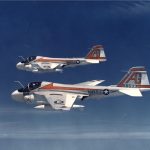
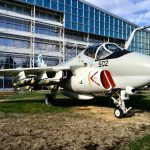
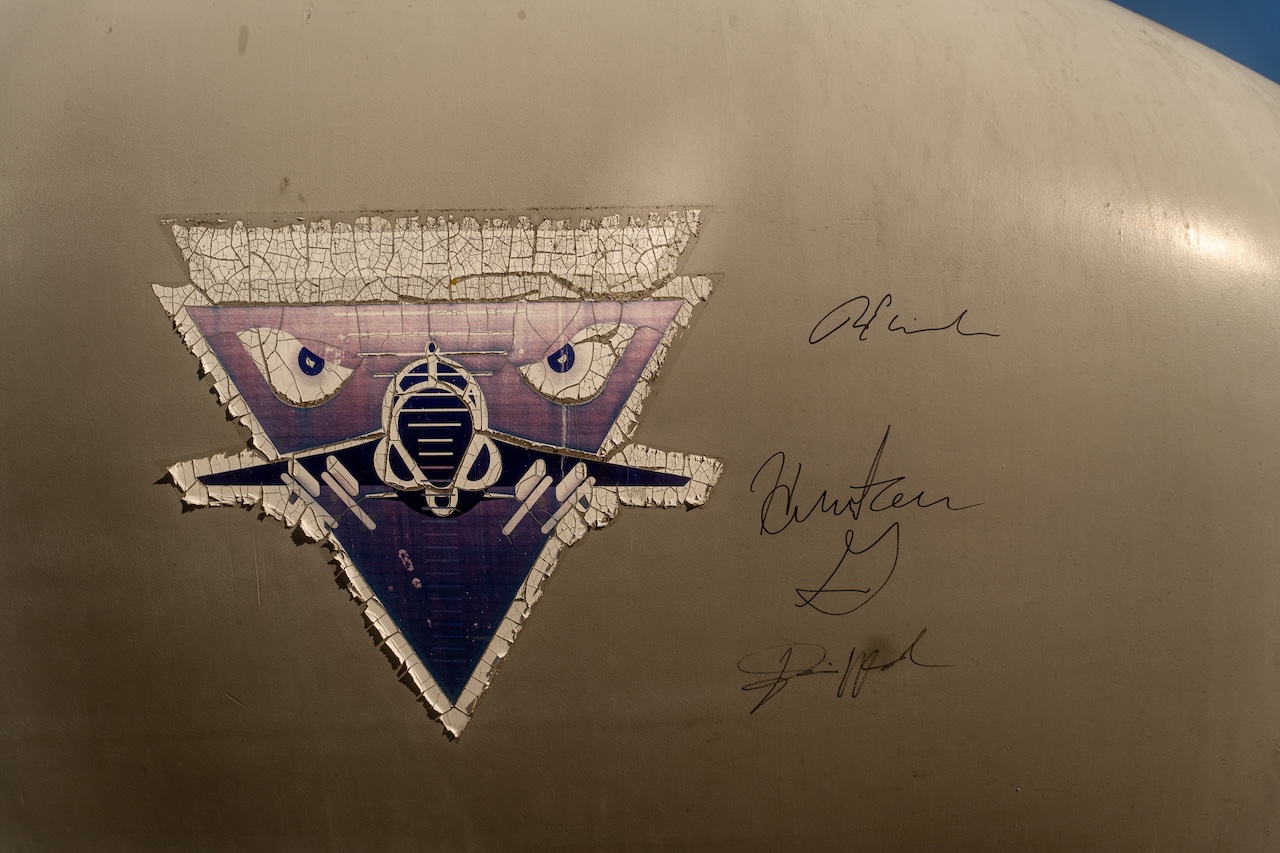
Delivered to the U.S. Navy in 1975, BuNo 159567 was flying with the Naval Air Test Center at Naval Air Station Patuxent River, Maryland, by 1979. A November 1985 photograph shows it wearing bright orange-red test markings and the nose number 500. In March 1986, the same Intruder was photographed with its wings folded on the flight deck of USS John F. Kennedy (CV-67). The Intruder later flew with two Marine all-weather attack squadrons. In 1989, it carried the code EA-503 with VMA(AW)-332, the Moonlighters. A July 1991 photograph taken at Boeing Field in Seattle, Washington, shows it coded WK-503 with VMA(AW)-224, the Bengals.


The Navy’s All-Weather Intruder
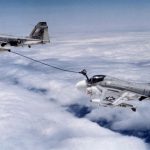
Grumman developed the Intruder to give Navy carrier air wings a long-range attack aircraft capable of operating at night and in poor weather. The prototype first flew on April 19, 1960, and the A-6 entered fleet service in 1963. The pilot and bombardier-navigator sat side by side, a distinctive feature of the twin-engine jet. The A-6E later introduced the Target Recognition Attack Multisensor (TRAM) system, which combined forward-looking infrared and laser sensors in a turret beneath the nose. Navy and Marine Corps Intruders saw combat in Vietnam and the Gulf War, and the last front-line A-6s retired in 1997. The design also gave rise to the KA-6D aerial tanker and the EA-6A electronic warfare aircraft, which laid the groundwork for the EA-6B Prowler.