
By Randy Malmstrom
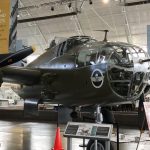
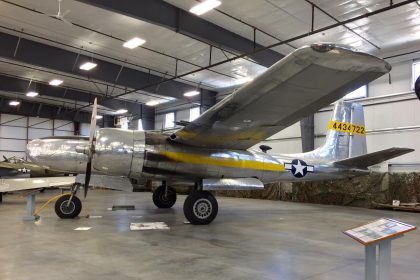
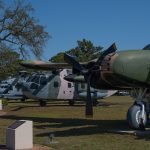
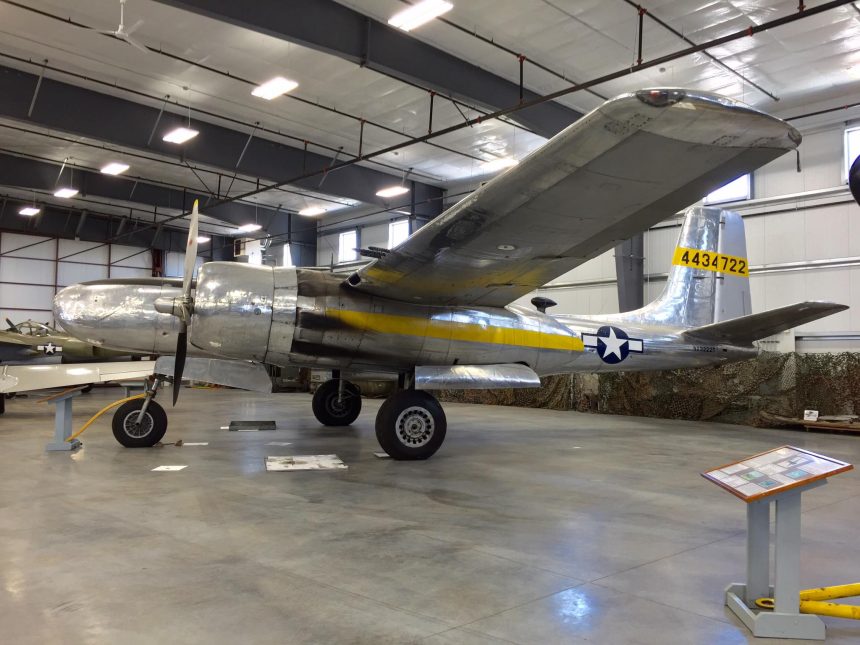
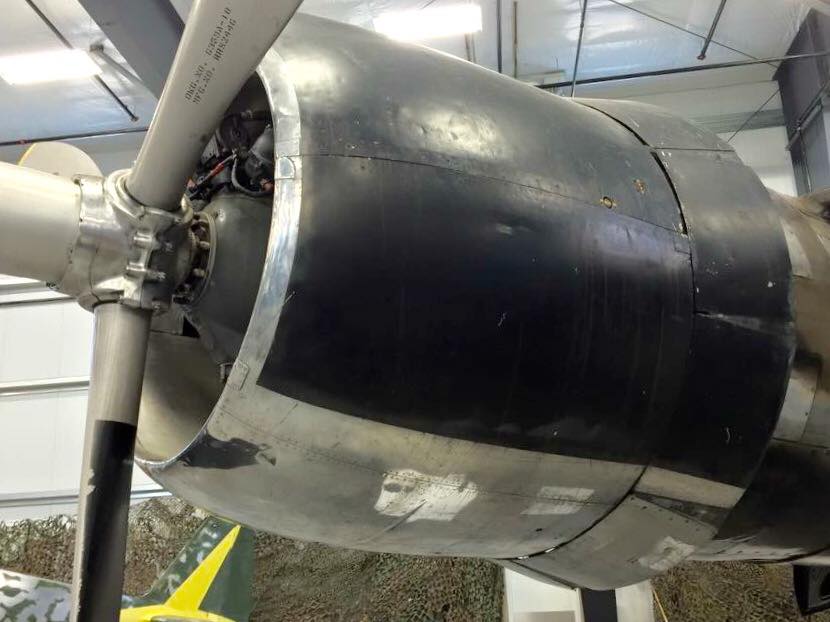
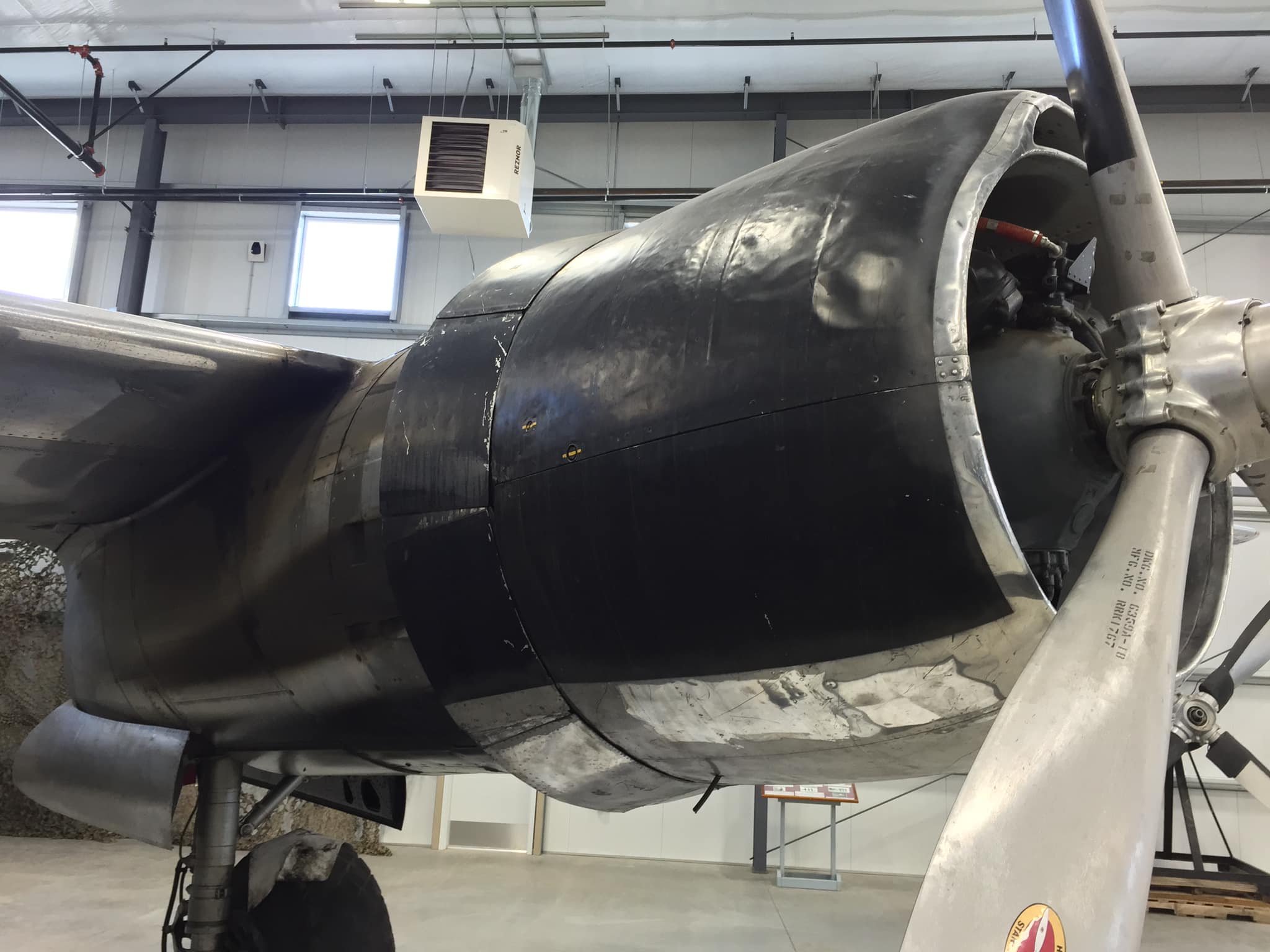
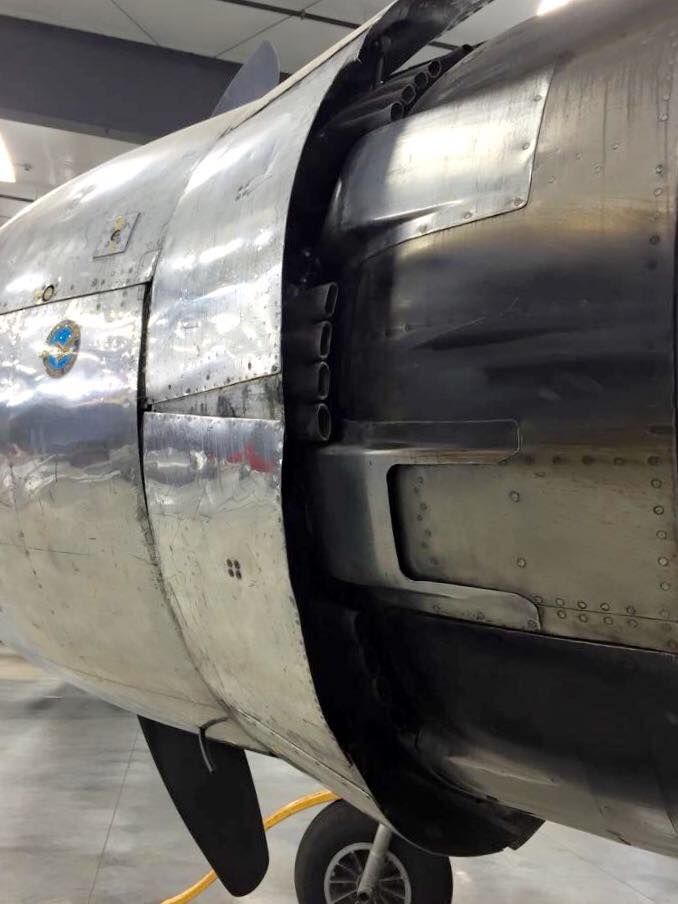
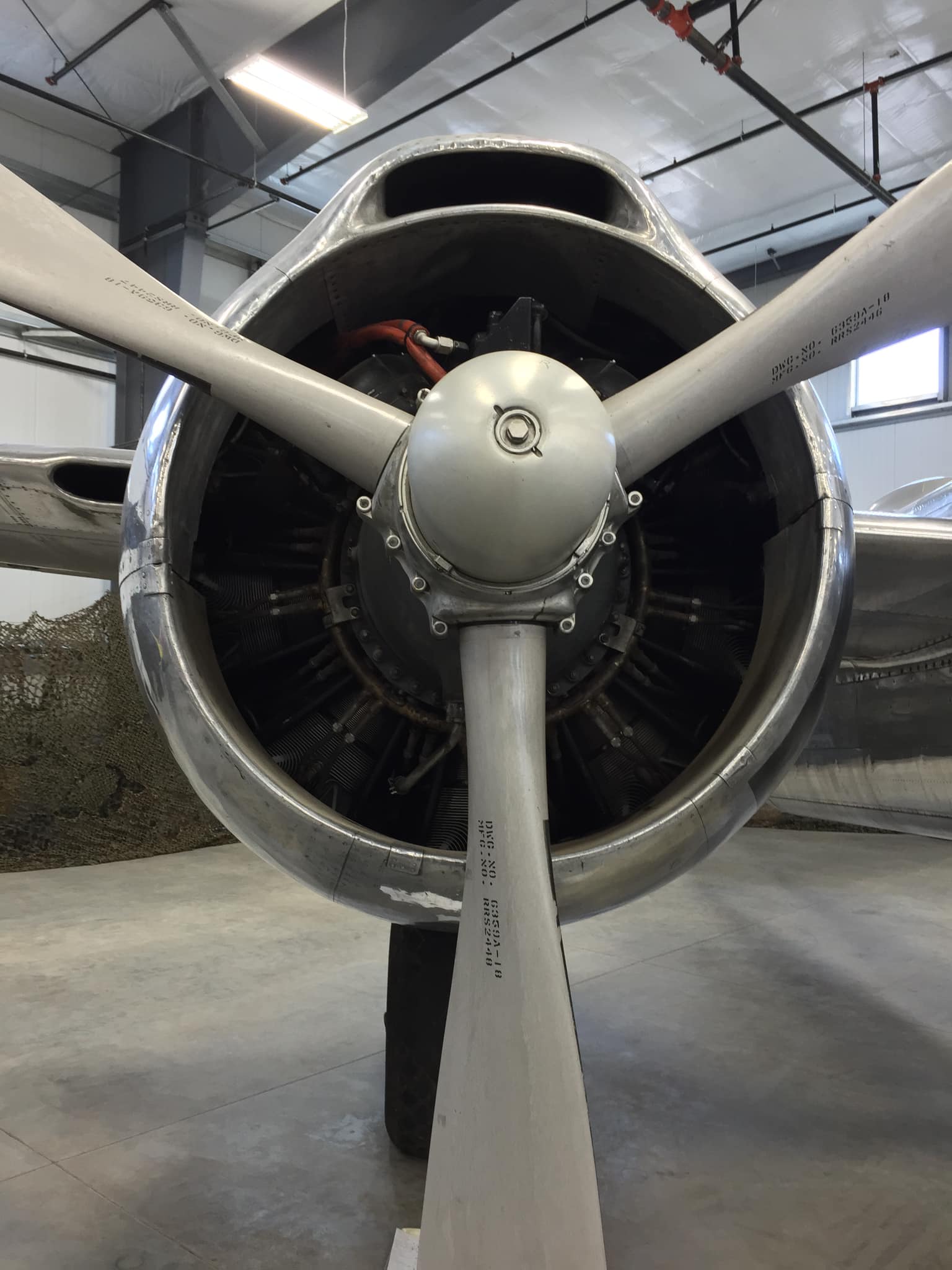
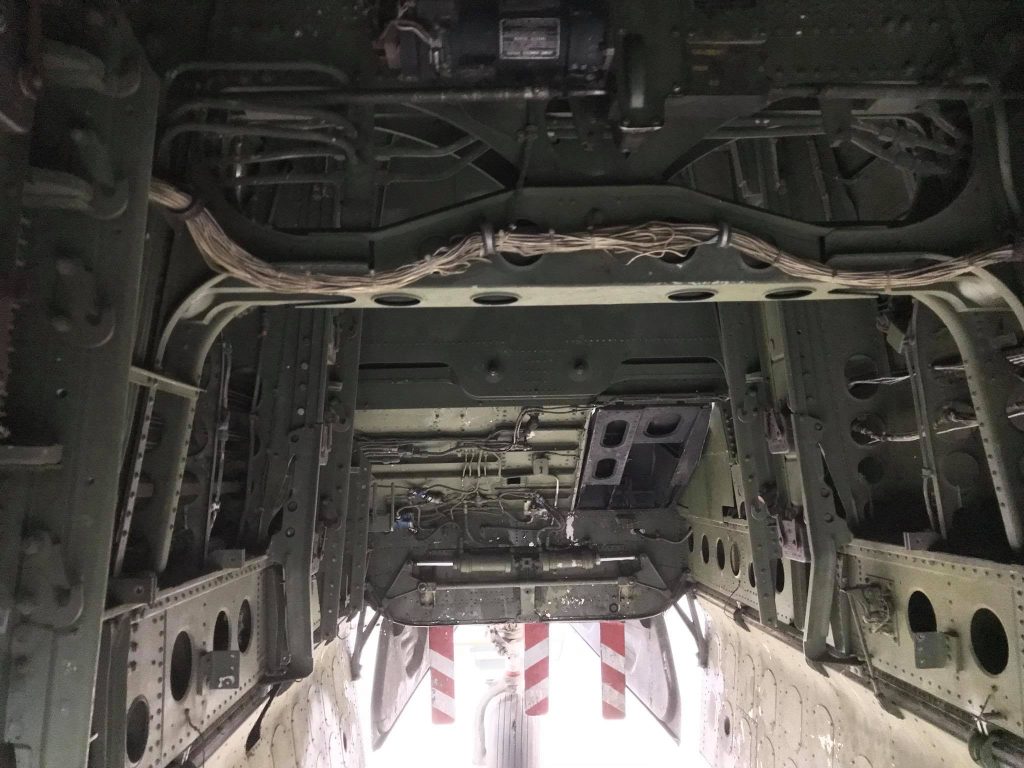
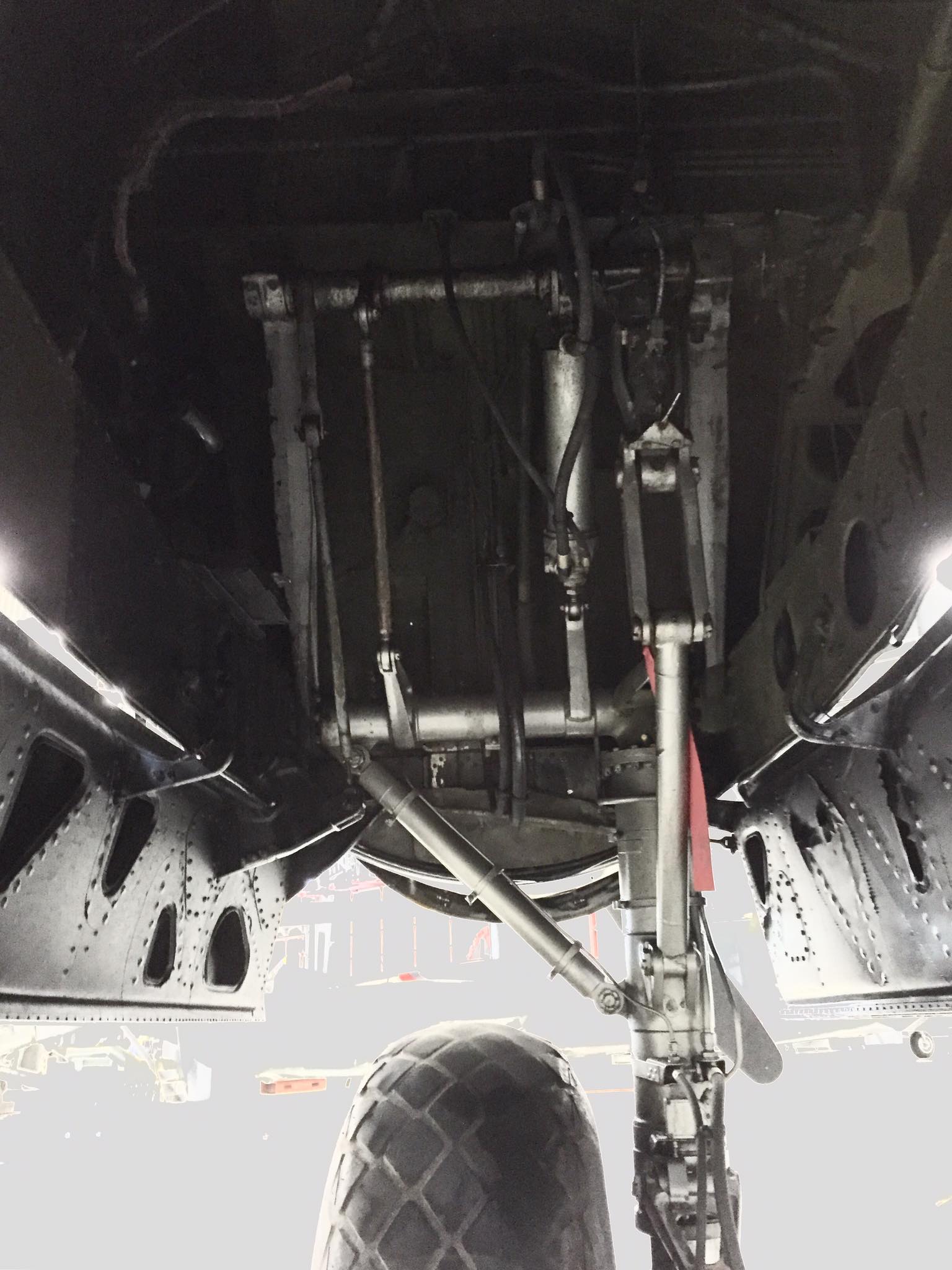
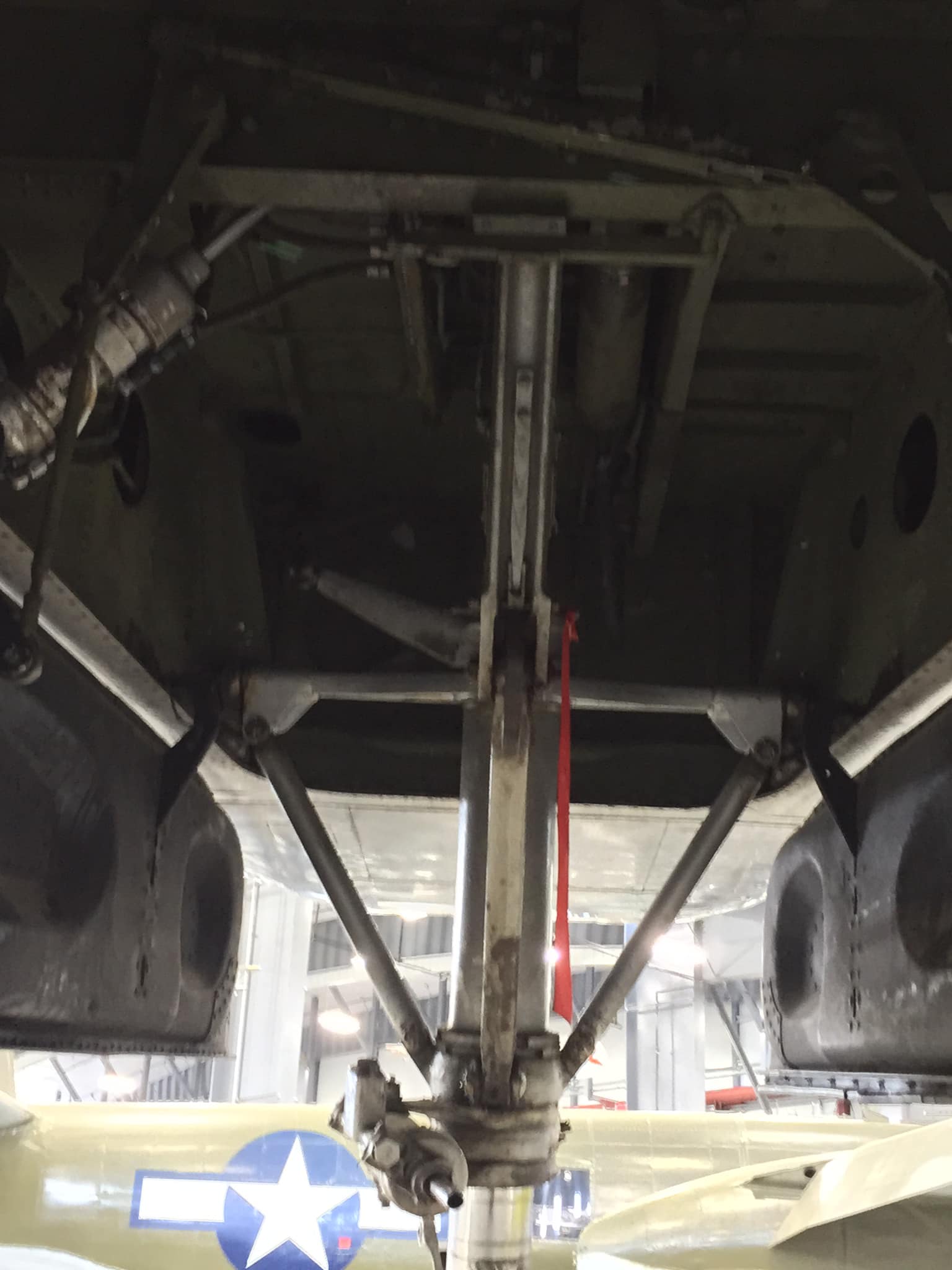
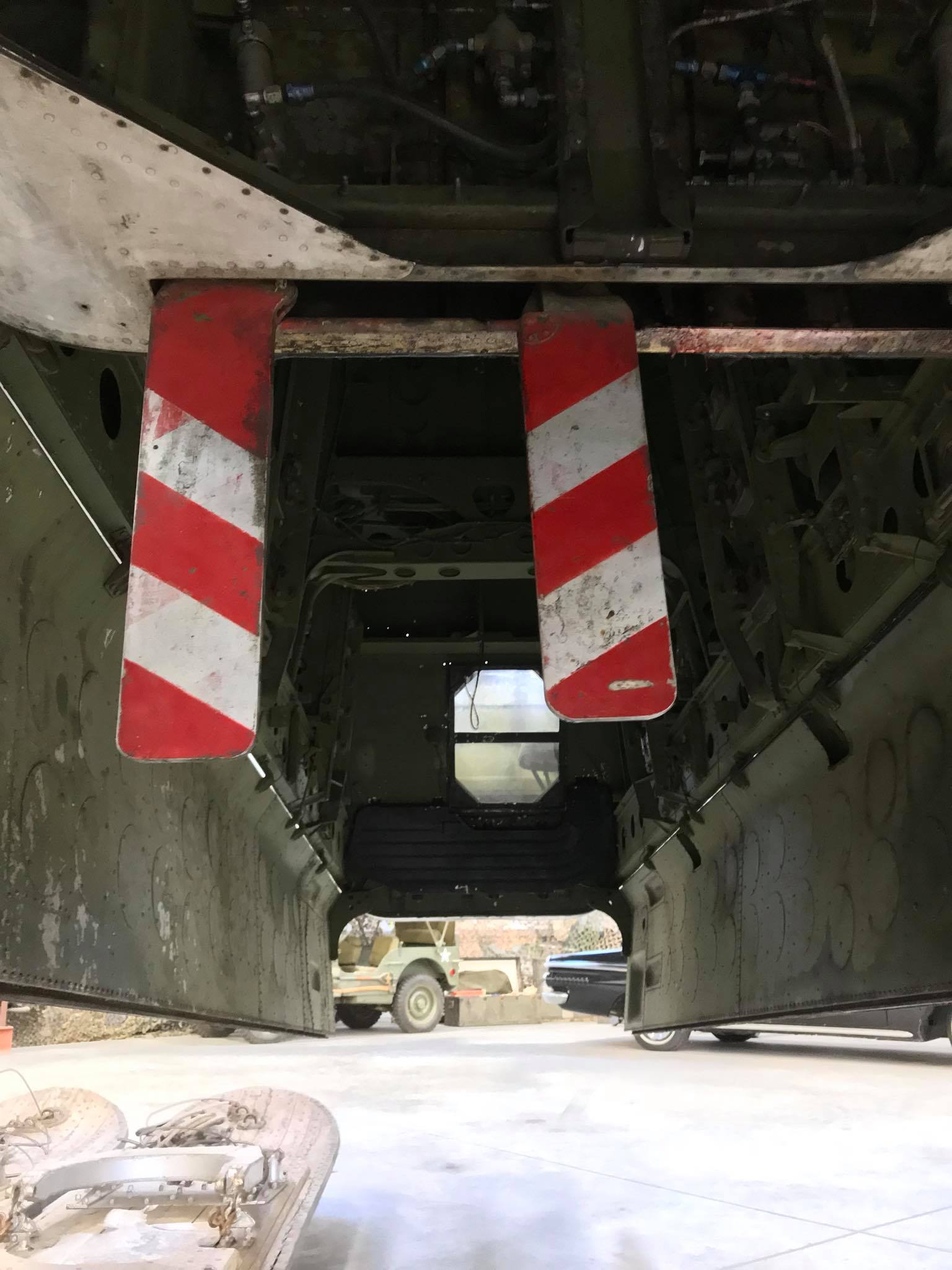
Douglas A-26B Invader, serial #44-34722, N3222T. This particular aircraft was built by Douglas Aircraft in Long Beach, California, and delivered to the U.S. Army Air Forces in August 1945; it served with several squadrons before being declared surplus in 1957 and put into storage. Its history after that is not entirely clear, but it may have been used by the U.S. Central Intelligence Agency (other A-26s were used for CIA ops) during the Bay of Pigs Invasion of 1961 to train Cuban exile air crews. After that, it served with the Salvadoran Air Force as #600 between 1969-74. There is a history of private owners, and it was acquired in 1995 by Jack Erickson and is now owned by his company, Nakajima N43JE LLC and is part of the Erickson Aircraft Collection located in Madras, Oregon. My photos.
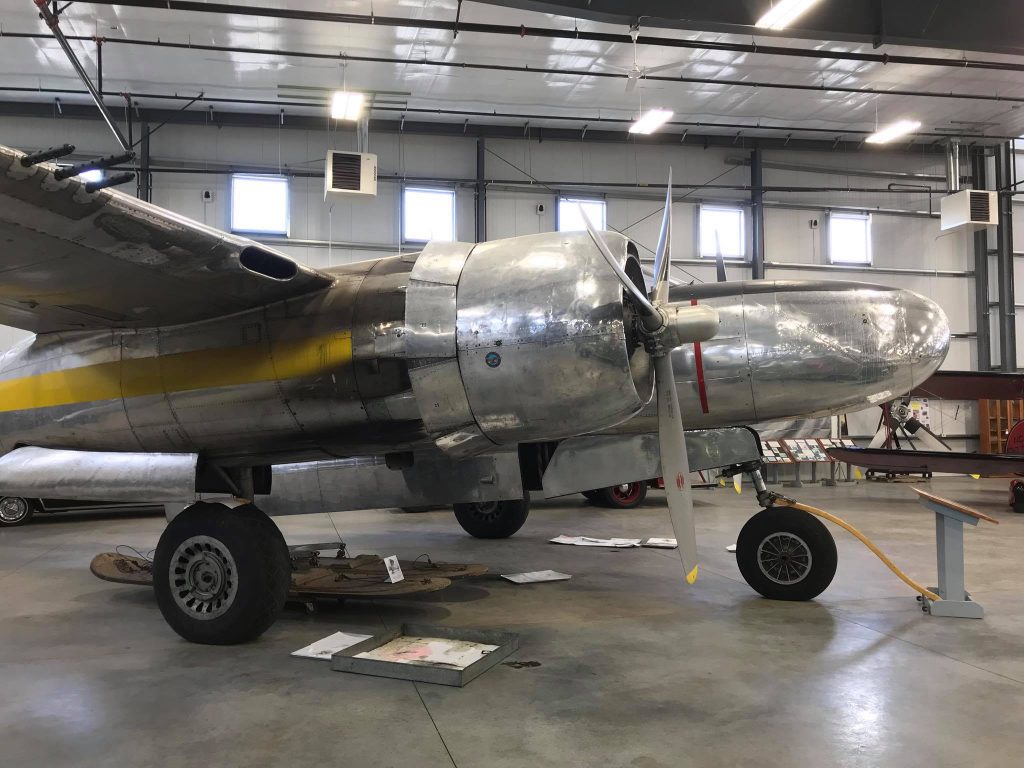
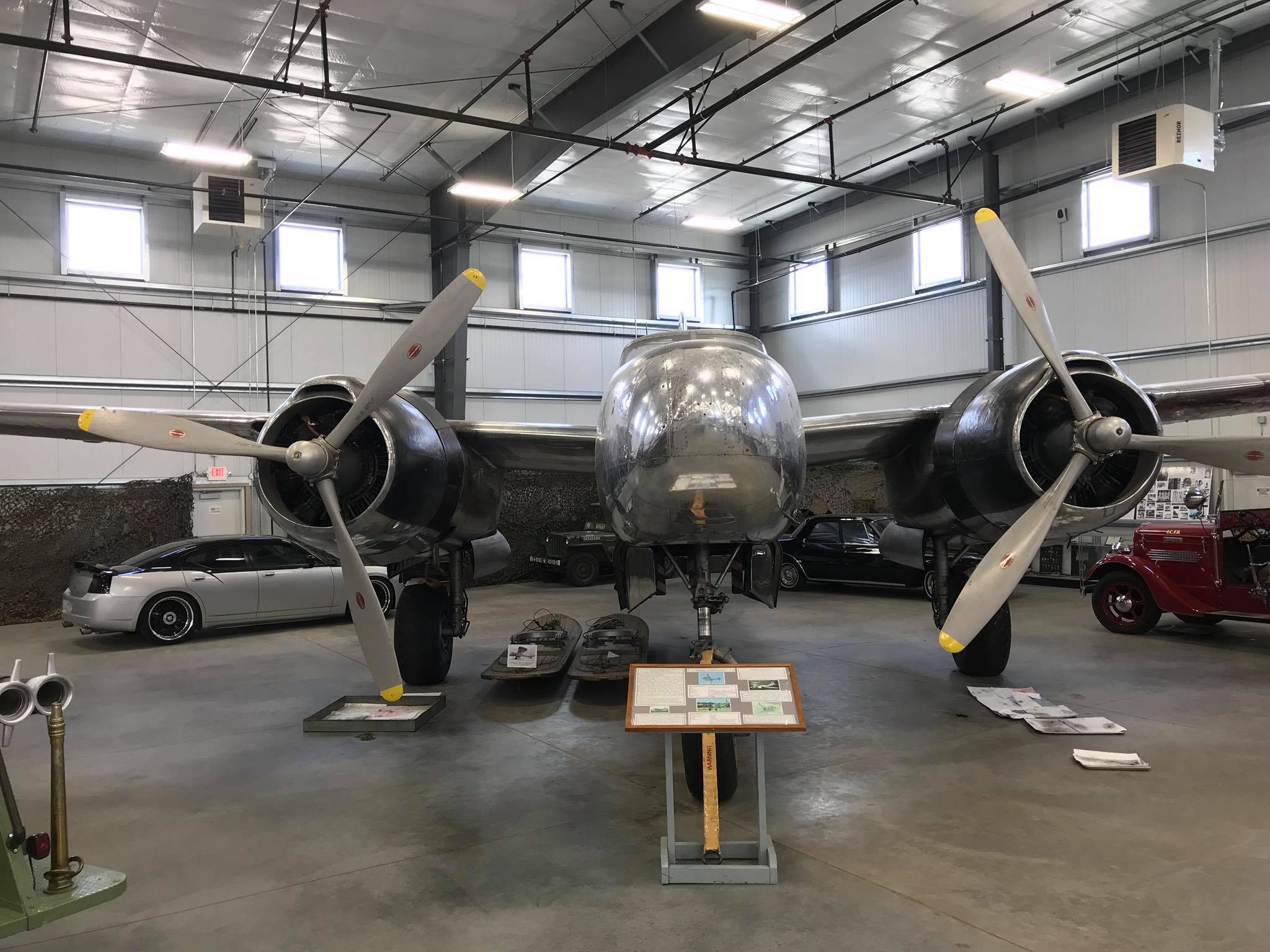
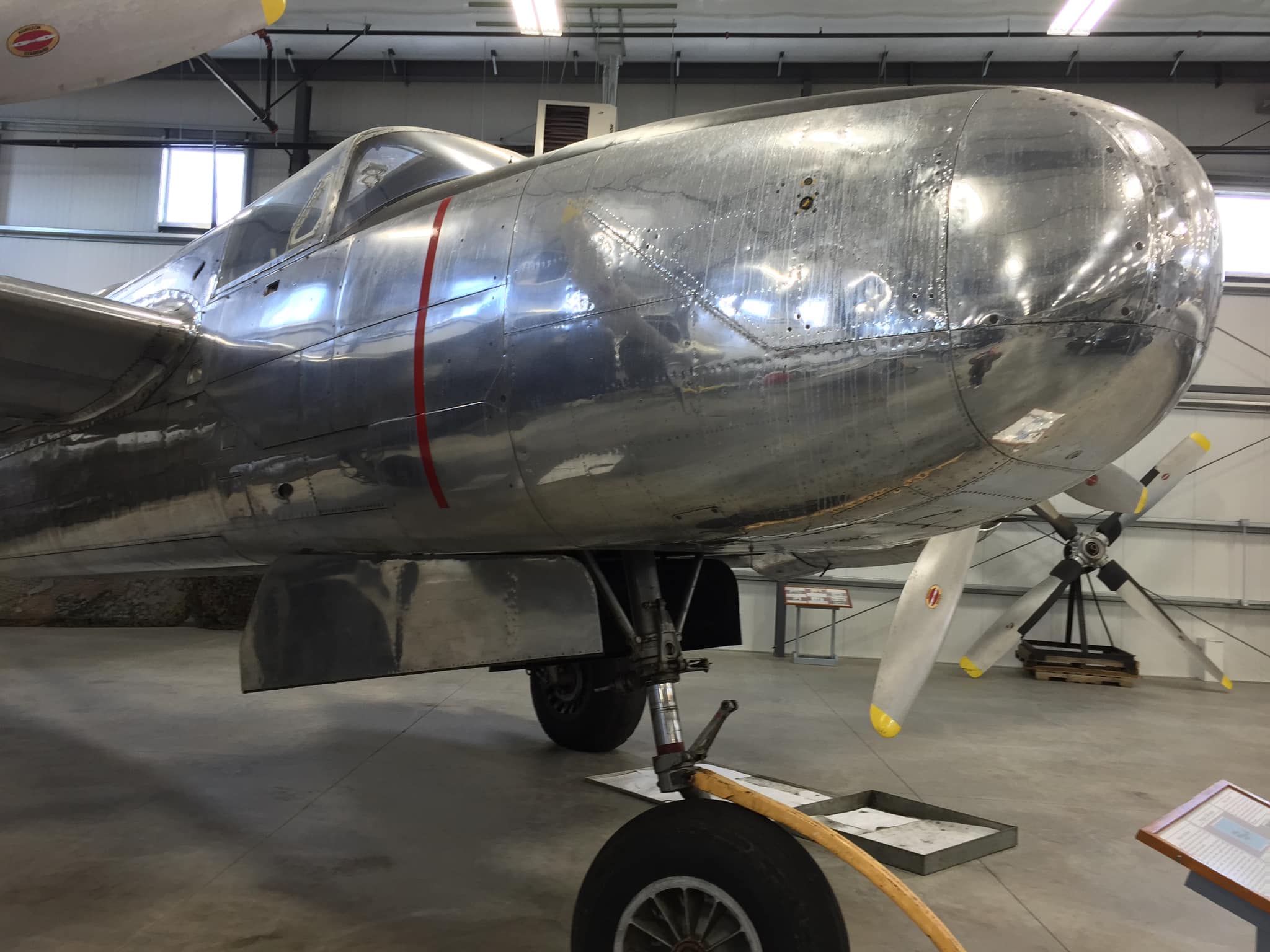
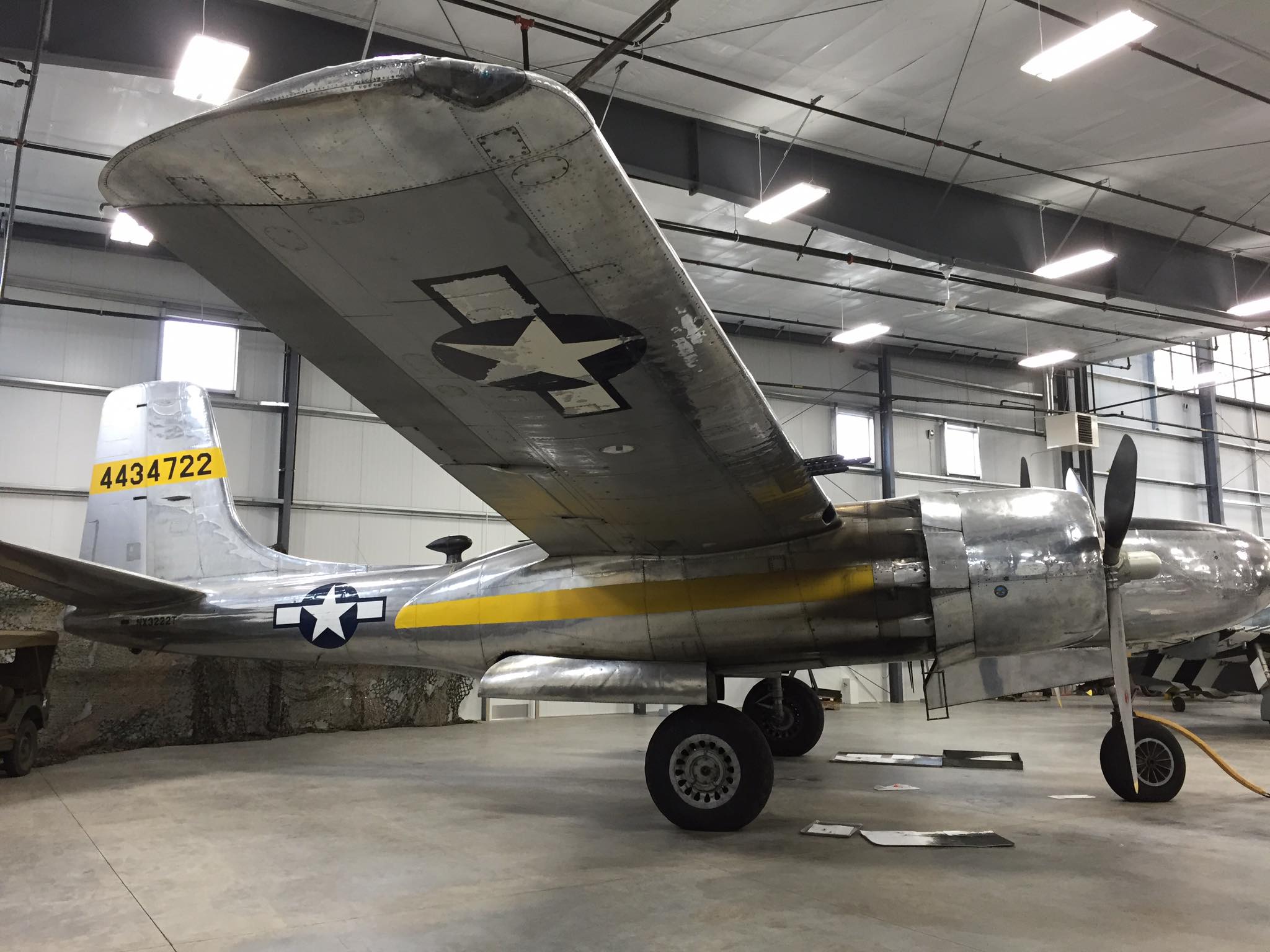
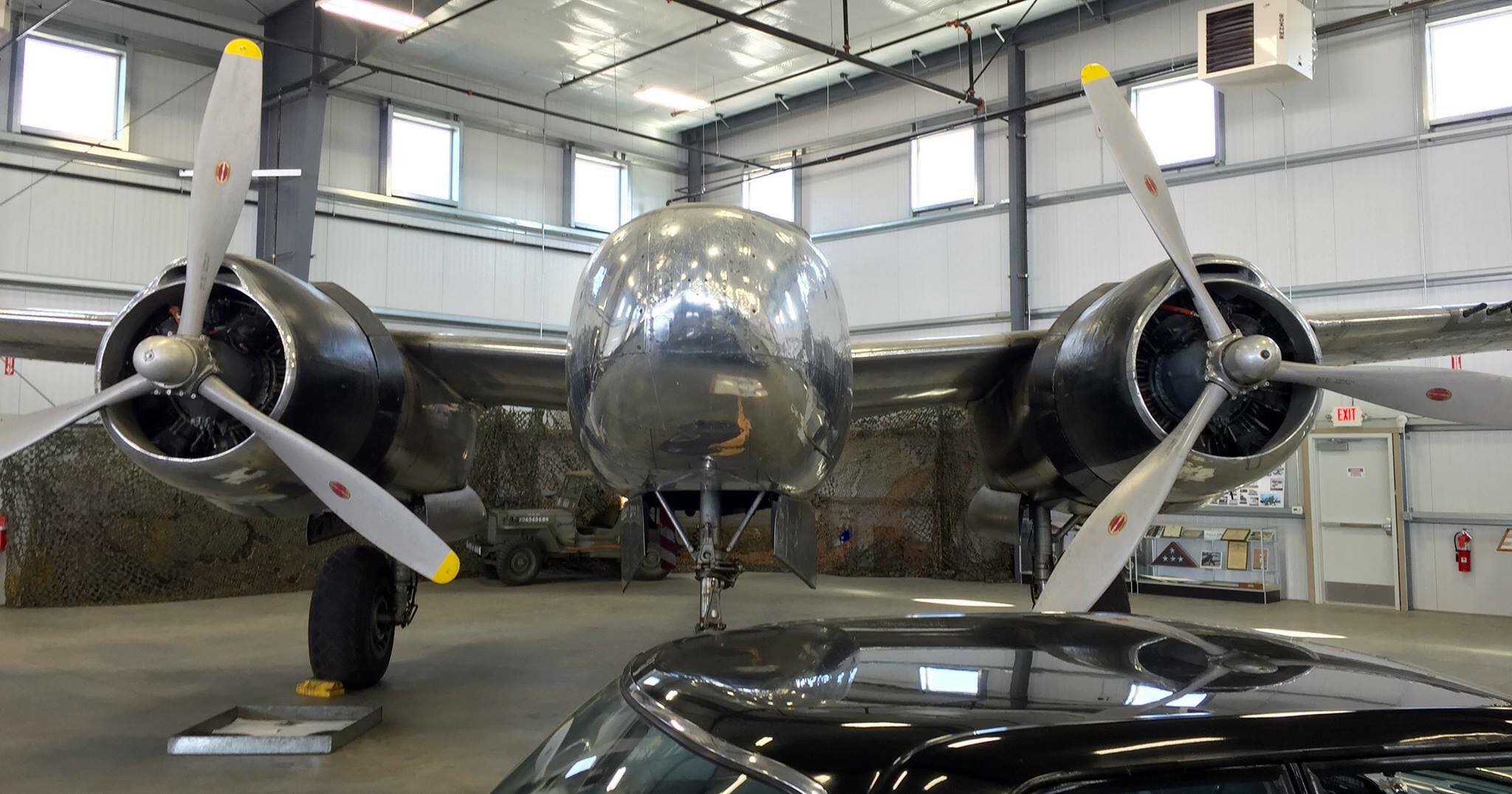
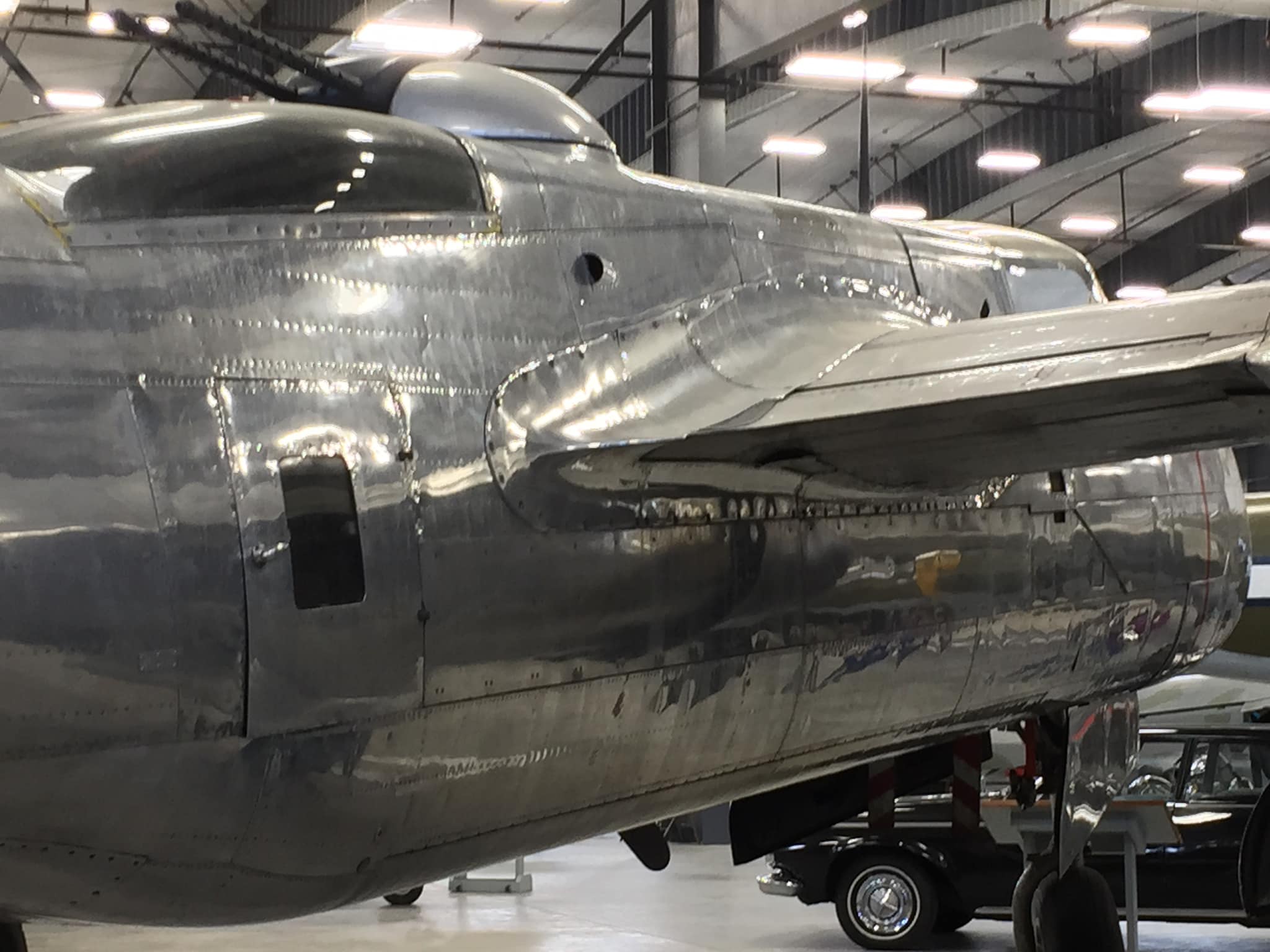
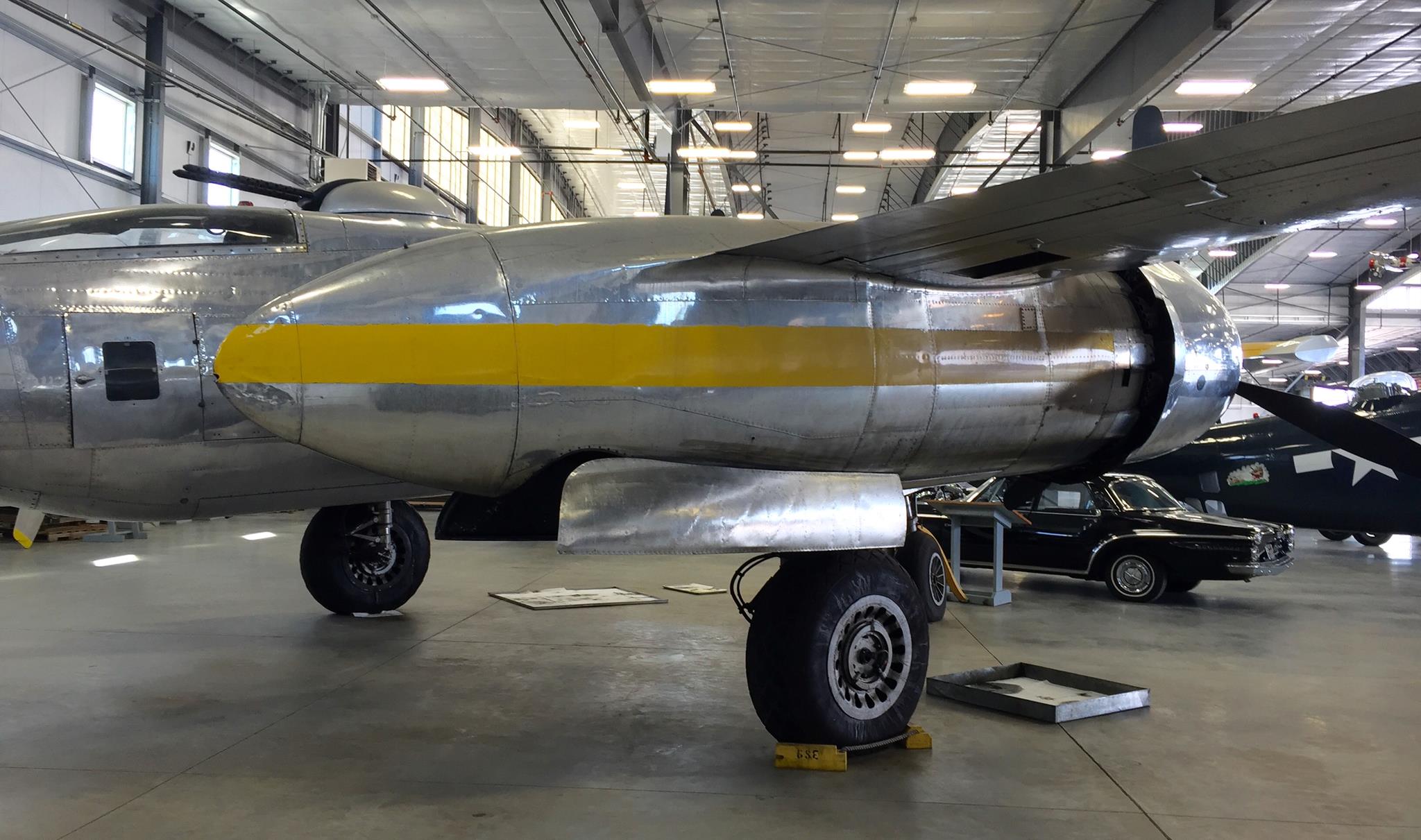
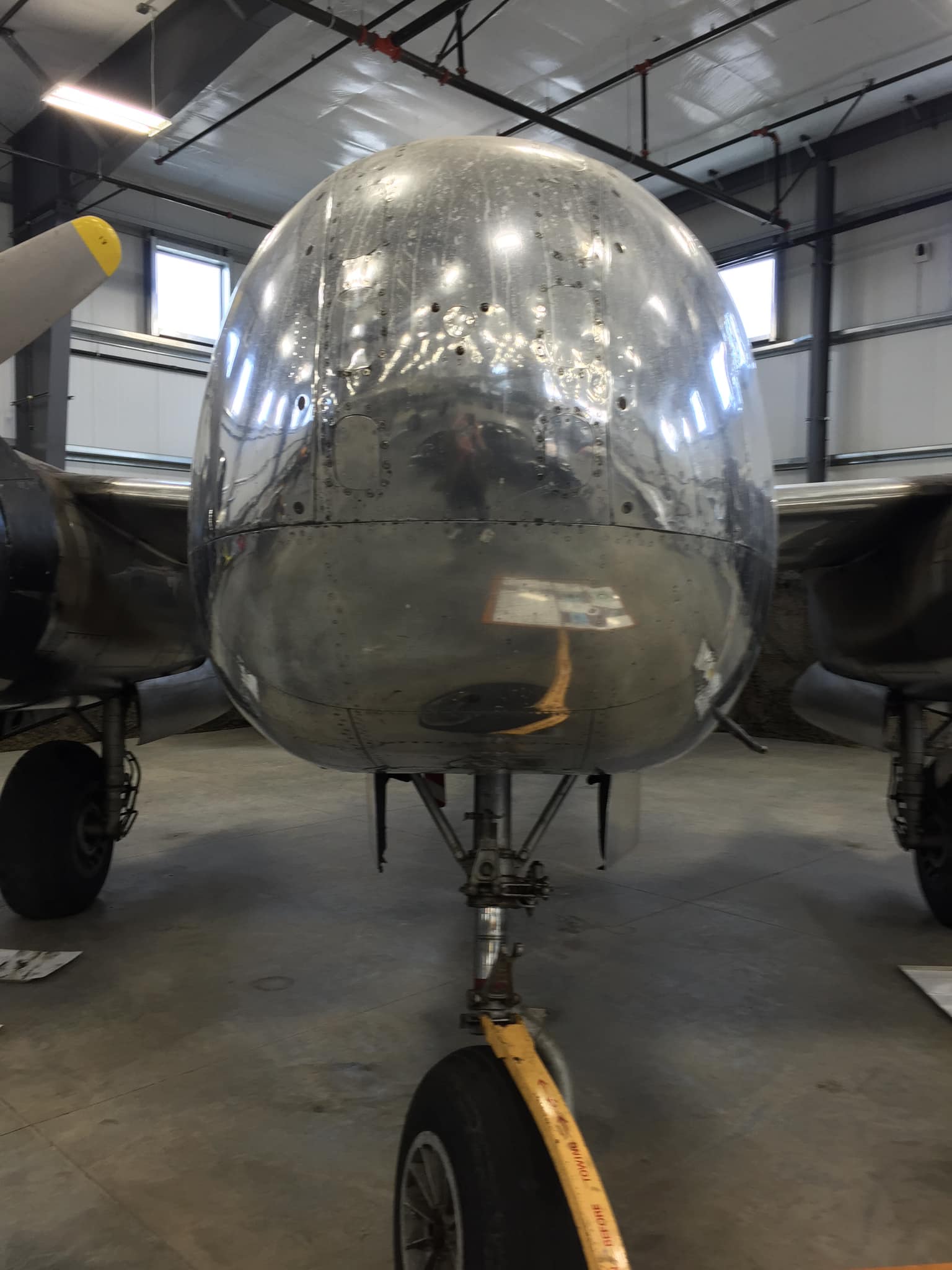
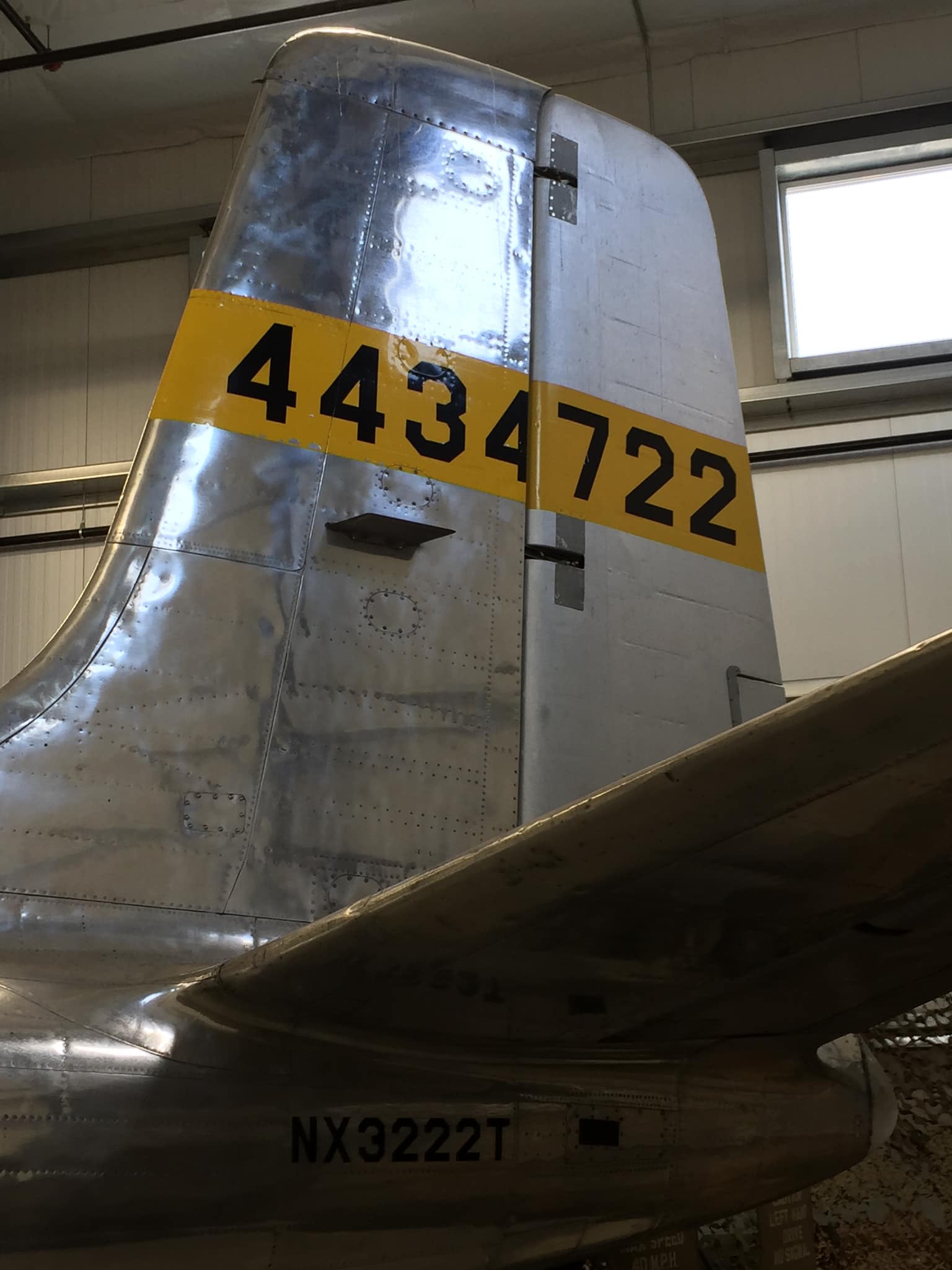
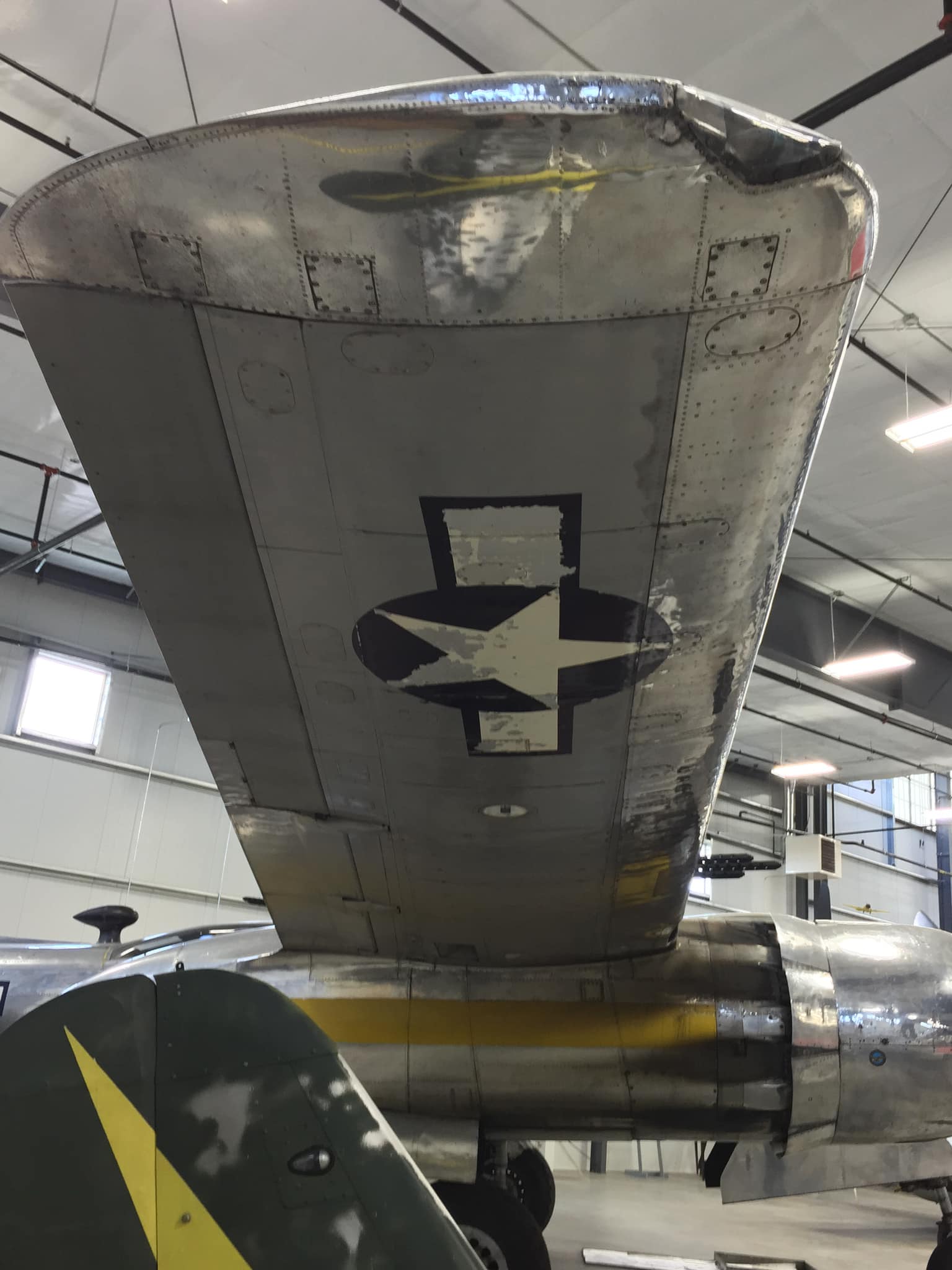
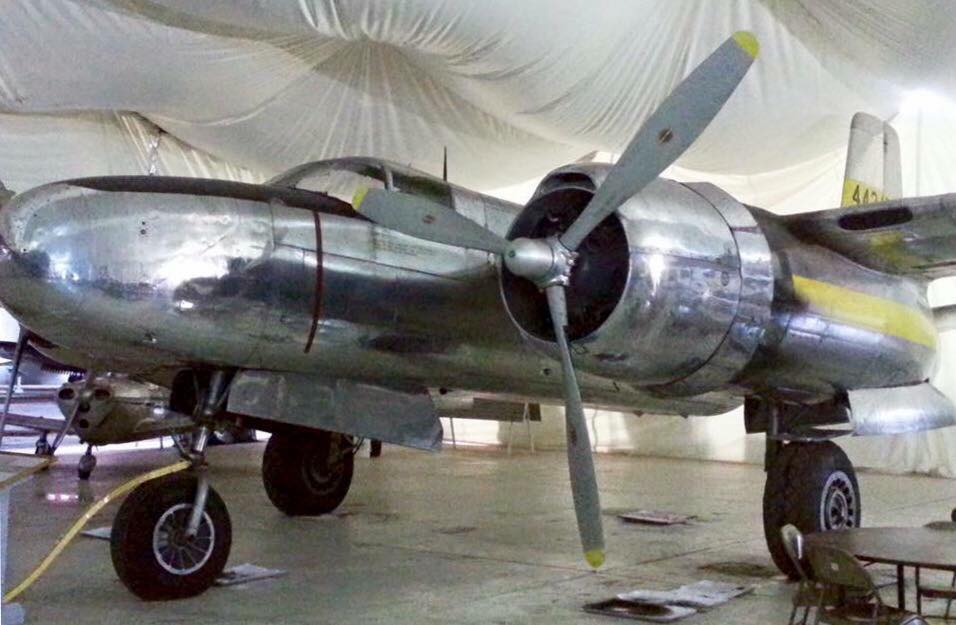
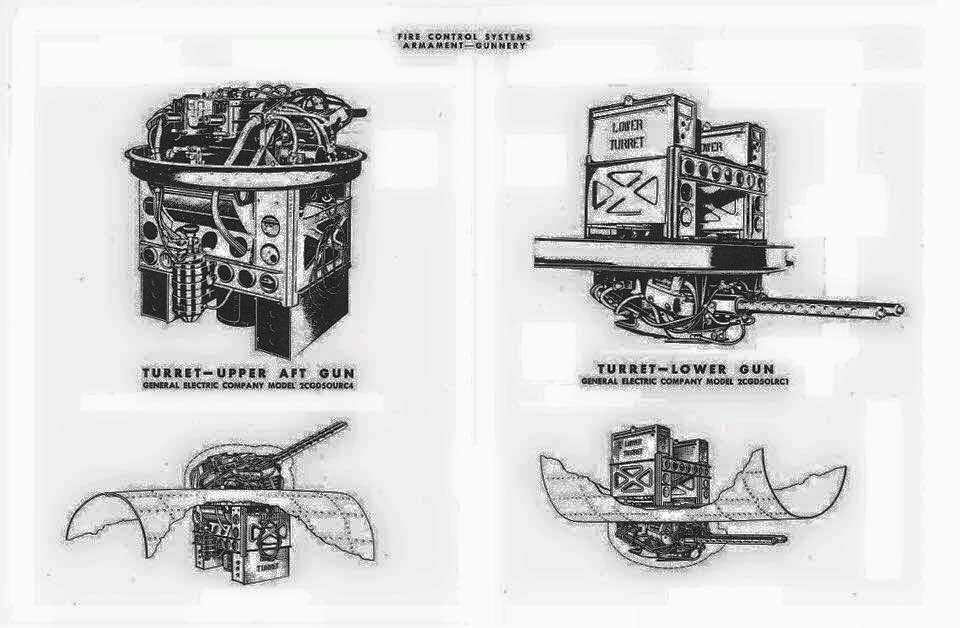
This is by no means intended to be a thorough survey of the history of this aircraft type. The Invader was designed by Douglas Aircraft as the successor to the A-20 Havoc and was the last aircraft designated as an “attack bomber,” and in 1948 it was redesignated as “B-26” when the Martin B-26 Marauder was deactivated. The first deliveries of the Invader went to the U.S. Army Air Forces in June 1943. The “B” models had a solid nose assembly, whereas the “C” variants had a greenhouse nose for a bombardier/navigator (manning a Norden bombsight and a pair of .50 cal. machine guns) and became lead ships for the B models. Powerplant: a pair of Pratt & Whitney R-2800 engines. Armament varied but included: six or eight fixed .50 cal. machine guns in a solid nose (if eight, they were aligned in 2 vertical groups of four), or a pair manned by the bombardier/navigator; three in each wing (the twin under-wing blister packs which were fitted in pairs under each wing were later replaced by internally-mounted wing-mounted guns); two in a twin-mount General Electric remote-controlled dorsal turret and, in some cases, a GE ventral gun tub.
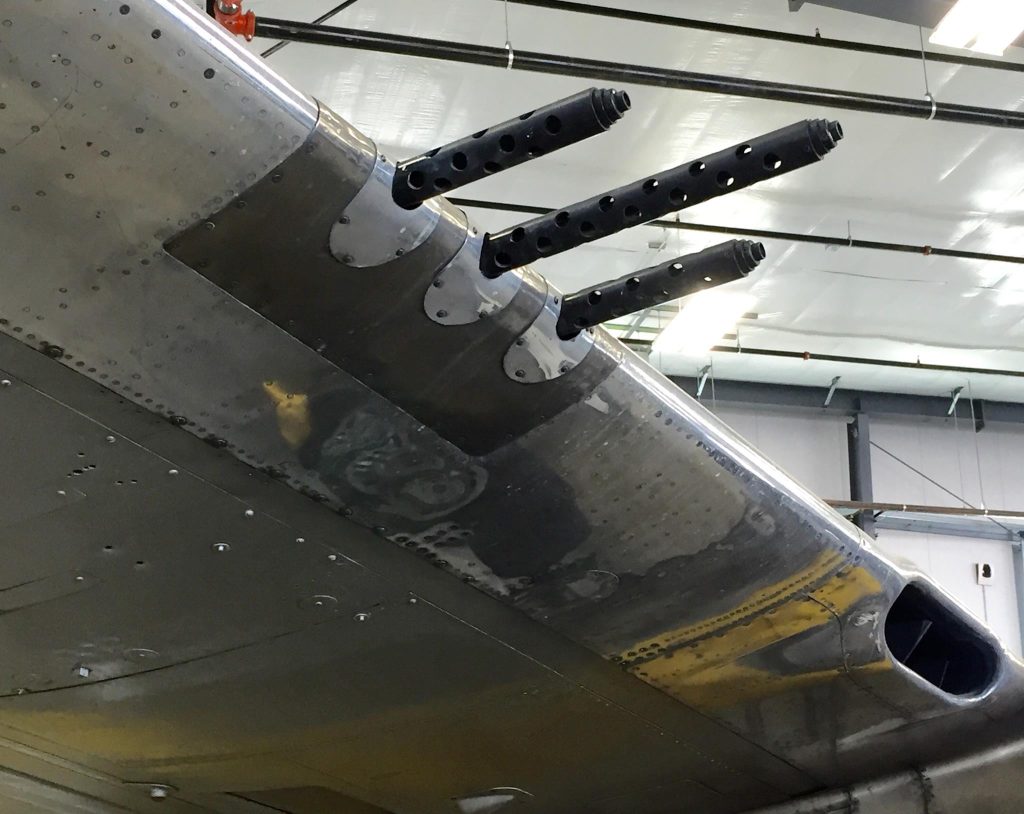
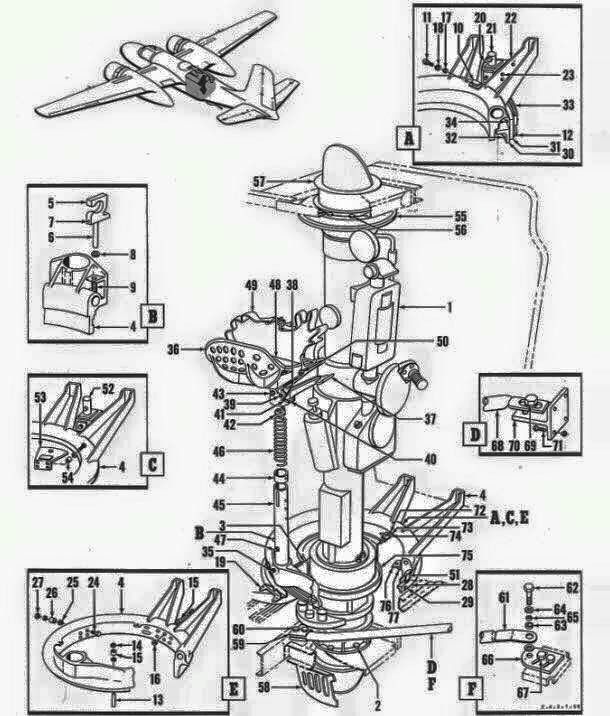
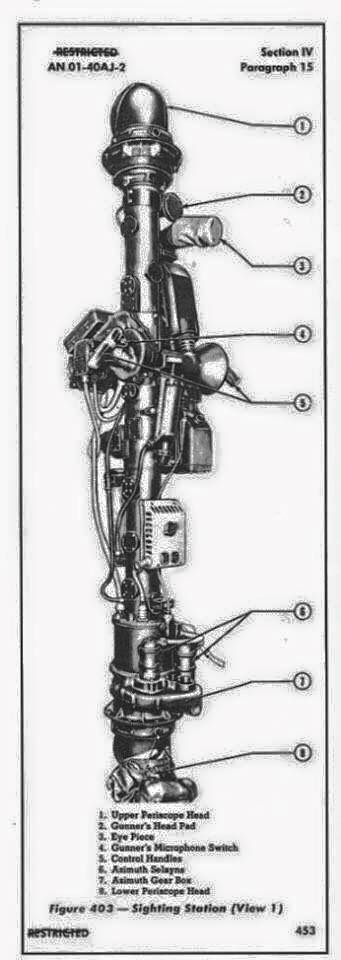
Both the dorsal and ventral turrets had fire interrupter assemblies to avoid hitting the tail fin or firing through the propeller arcs and were aimed with a single AN 01-40AJ-2 periscopic gun sight. The non-compensating gun sight had both upper and lower periscope heads extending above and below the fuselage. The gunner’s seat was attached to the periscopic sight, and it rotated on a circular track around the vertical sighting unit. The pilot also had a “telltale indicator” which gave him the position of the turrets so he could align the aircraft to give the gunner the best field of fire. On early A-26’s with a flat canopy, the upper turret could be locked in a straightforward position and control of the gun firing was transferred to the pilot. The transfer of control was done by a switch in the gunner’s compartment, and the pilot could then select the upper turret guns for use with or separately from the other forward firing guns. However, the gunner still maintained control of the lower turret.
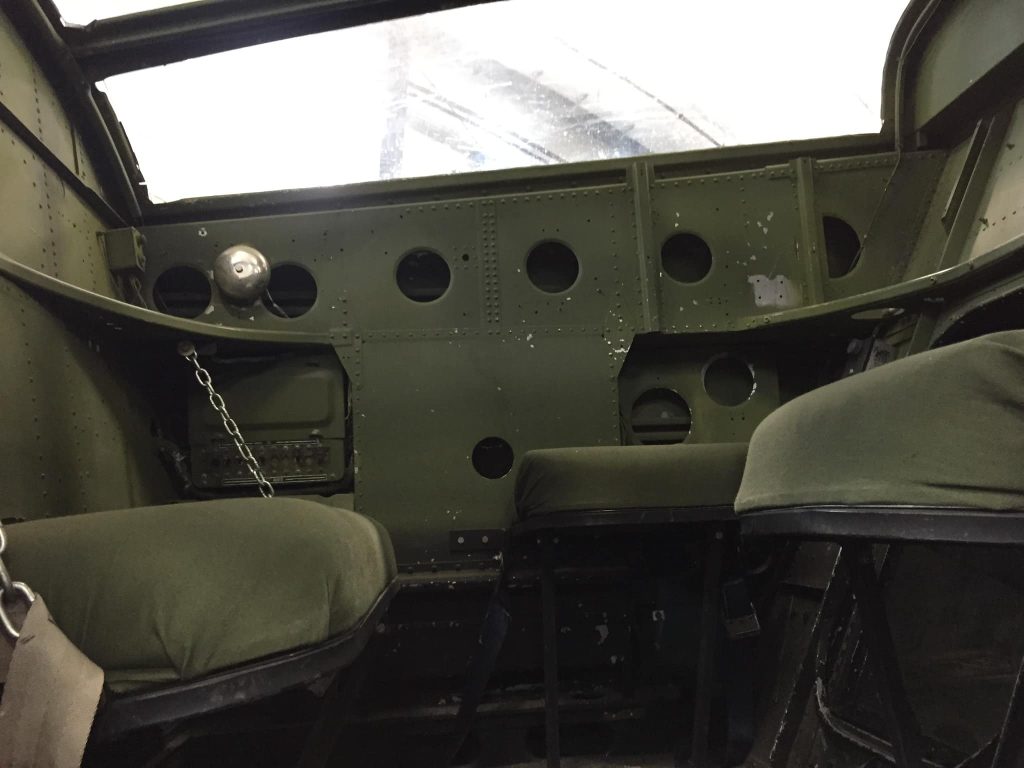
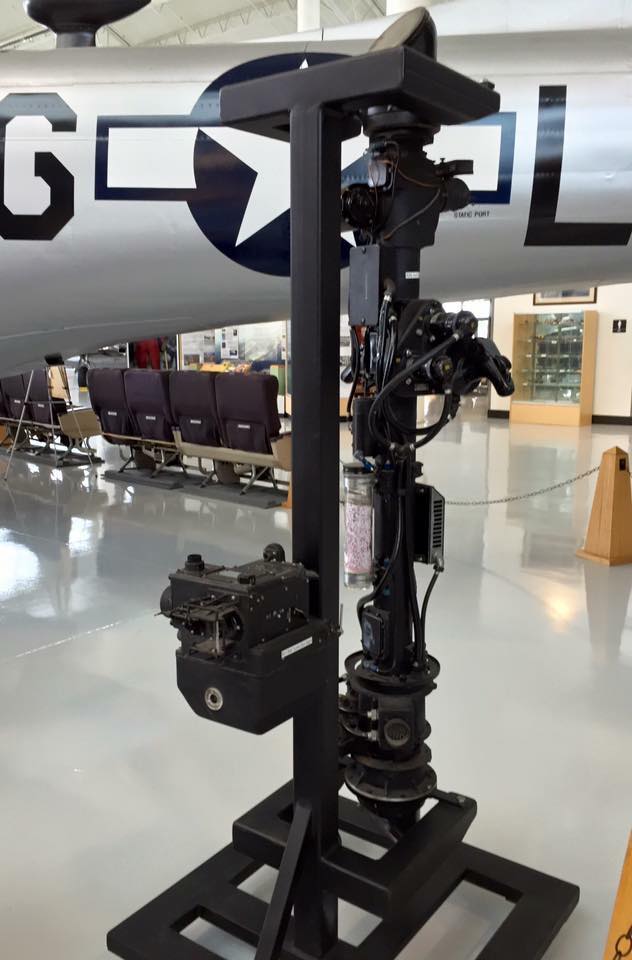
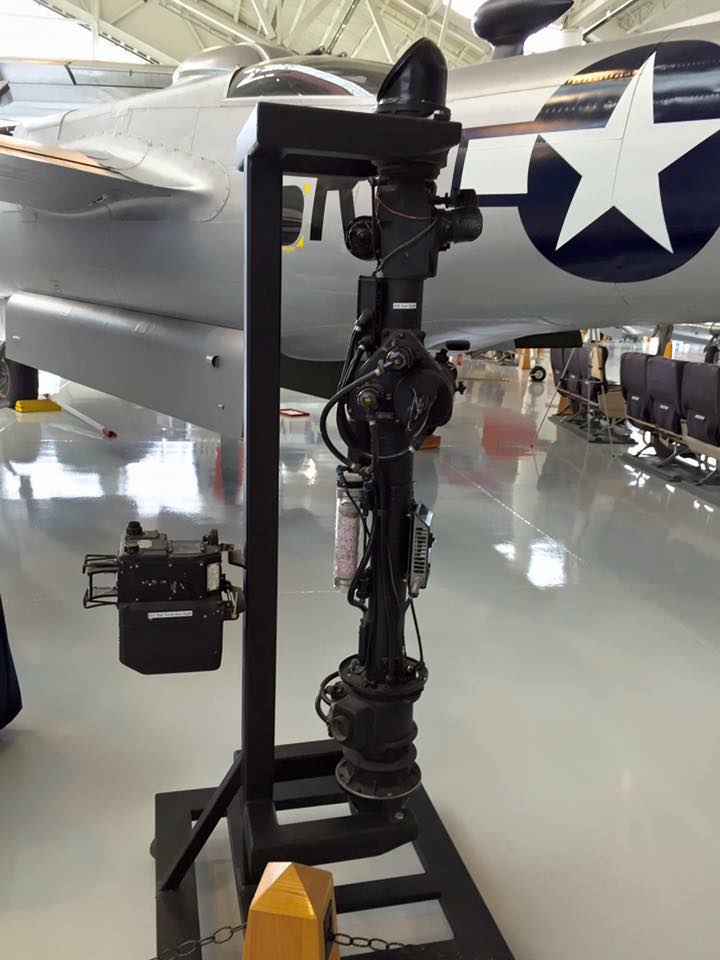
Ordnance capability included 4,000 lbs. in the bomb bay and another 2,000 lbs. total (rockets, bombs) on wing hardpoints. A-26s were sent to the Fifth Air Force in the Pacific Theater of Operations and first saw action in June 1944, and to the Ninth Air Force in the European Theater of Operations by the fall of 1944. The U.S. Navy used them as target tugs. Post-WWII, among other deployments, the (now) B-26 saw extensive use in the Korean War and was flown by the French Armée de l’Air in the First Indochina War and Indonesia. The U.S. deployed them to Southeast Asia beginning in December 1960 at the Royal Thai Air Force Base at Takhli, and they were flown by the CIA using unmarked aircraft for Operation HAIK in Indonesia and the Philippines during the Eisenhower administration (although never officially acknowledged by the CIA). Their deployment to South Vietnam developed with Project “Farm Gate” in 1961 and continued thereafter. About 20 Invaders were deployed from Guatemala by the CIA as part of the Bay of Pigs Invasion to train Cuban exile pilots. U.S. Air National Guard units also flew the Invader. 1972 saw the retirement of the last of the Invaders. The crew typically consisted of 3 or 4: pilot, gun loader/navigator (in the right seat), bombardier/navigator (C models) and a gunner sitting aft using the AN 01-40AJ-2 periscopic sight (see photos and diagram).
About the author 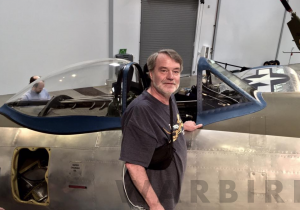
Randy Malmstrom grew up in a family steeped in aviation culture. His father, Bob, was still a cadet in training with the USAAF at the end of WWII but did serve in Germany during the U.S. occupation in the immediate post-war period, where he had the opportunity to fly a wide variety of types that flew in WWII. After returning to the States, Bob became a multi-engine aircraft sales manager and, as such, flew a wide variety of aircraft; Randy frequently accompanied him on these flights. Furthermore, Randy’s cousin, Einar Axel Malmstrom, flew P-47 Thunderbolts with the 356th FG from RAF Martlesham Heath. He was commanding this unit at the time he was shot down over France on April 24th, 1944, and spent the rest of the war as a prisoner of war. Following his repatriation at war’s end, Einar continued his military service, attaining the rank of Colonel. He was serving as Deputy Wing Commander of the 407th Strategic Fighter Wing at Great Falls AFB, MT, at the time of his death in a T-33 training accident on August 21, 1954. The base was renamed in his honor in October 1955 and continues to serve in the present USAF as home to the 341st Missile Wing. Randy’s innate interest in history in general, and aviation history in particular, plus his educational background and passion for WWII warbirds, led him down his current path of capturing detailed aircraft walk-around photos and in-depth airframe histories, recording a precise description of a particular aircraft in all aspects.