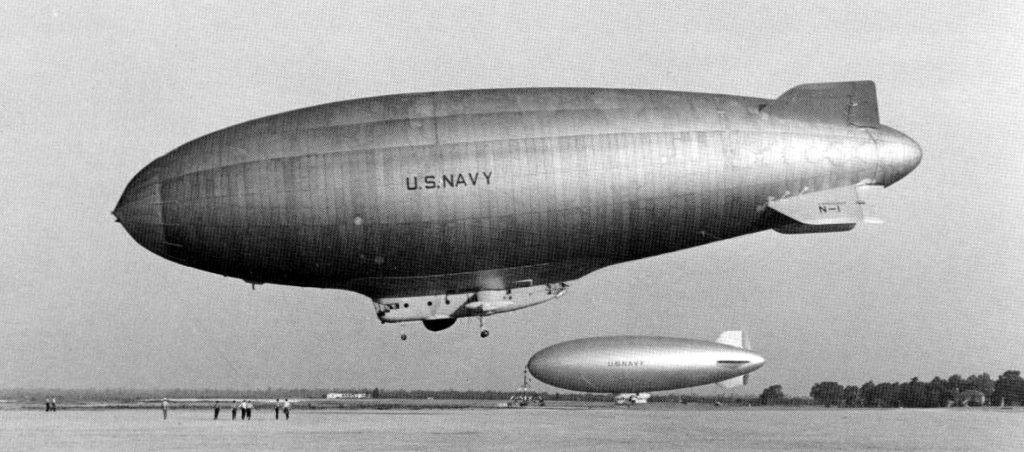


Goodyear’s work in aerospace started with the Aeronautics Department of Goodyear Tire & Rubber Co. After WWI, Germany had to cut down its airship industry and stop Zeppelin operations as part of war reparations. In 1924, Goodyear teamed up with the German company Luftschiffbau Zeppelin and owned two-thirds of the joint venture, called the Goodyear Zeppelin Corporation, while Zeppelin owned one-third. The partnership allowed Goodyear to use Zeppelin’s patents and brought several German engineers and technical staff to the US. Karl Arnstein, the chief engineer of the Zeppelin company, became the Vice President of Engineering at Goodyear. The company then built both rigid airships (Zeppelins) and non-rigid airships (blimps) for the US military. Goodyear also built a large hangar where it constructed large rigid airships for the US Navy, including the USS Akron and the USS Macon. During the Great Depression, the company faced a lack of business. To adapt, it used its aeronautics expertise to design and build the high-speed Comet train for the Boston-Providence route. On December 5, 1939, the company became Goodyear Aircraft Corporation after receiving a contract from the Glenn L. Martin Company. The latter needed Goodyear to design and build the empennage section for the new B-26 Marauder plane. The US Army had placed a large order, and Goodyear had plenty of room to build the blimps at its Airship Dock in Springfield Township, Ohio, near Akron.

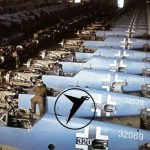
As Europe grew unstable and war with Germany loomed, Goodyear formed Goodyear Aircraft Corporation in 1939 to fulfill US military contracts. In 1941, the German-US partnership dissolved, and Goodyear moved its military and commercial airship operations to a new company. By 1941, manufacturing facilities were operating at full capacity, and construction began on July 15, 1941, at a new site just west of Phoenix, Arizona. Goodyear was already familiar with this area, as it had operated a large cotton ranch there for years. During WWII, Arizona produced over three million pounds of airframes. The Akron plant, where FG-1 Corsairs were built, was given to the US Navy and became Naval Air Station Akron in January 1948. In 1951, Goodyear Aircraft Company employee Carl Wiley invented Synthetic Aperture Radar (SAR). His invention led to the first SAR patent, the first digital SAR processor, and the development of several high-performance SAR systems for surveillance, aerial warfare, and cartography. The Arizona plant made various defense products over the years, including jet aircraft canopies, bulletproof glass, vehicle armor, military shelters, and missile transporters. Darrell C. Romick, who was the Chief Engineer at Taylorcraft Airplane Company, worked closely with Wernher von Braun.
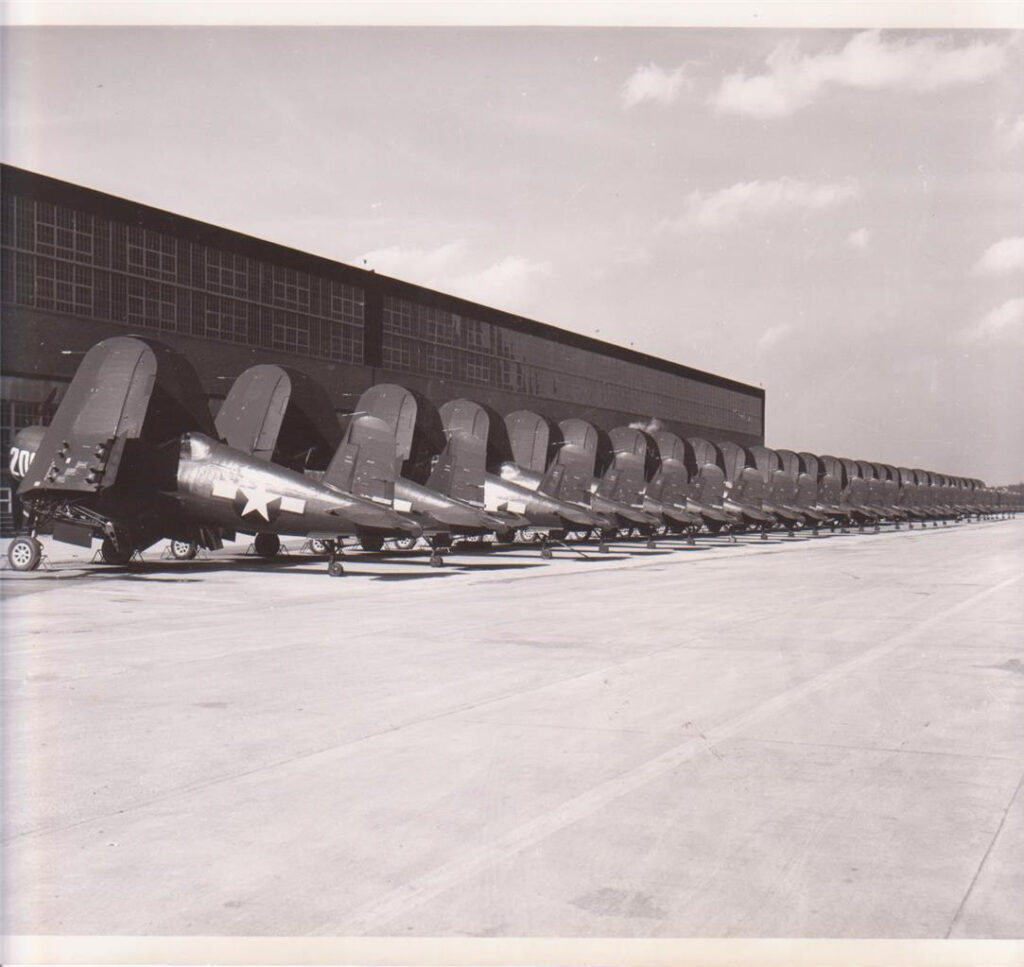
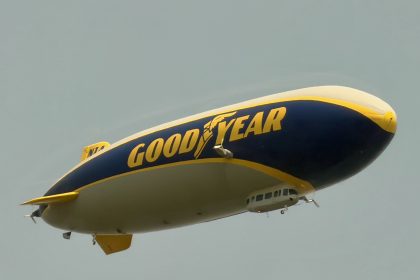
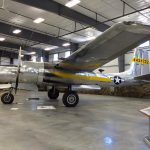
In the 1950s, Romick worked at Goodyear Aircraft and designed a rocket and spacecraft called the Goodyear Meteor Junior. This three-stage rocket had features similar to the later Space Shuttle. It was crewed, had reusable stages, and the top stage was meant to carry people and cargo to a large space station orbiting Earth. The company created the design between 1954 and 1958, and the planned launch date was 1962. In 1963, the company changed its name to Goodyear Aerospace Corporation to highlight its broad product range. In 1987, Loral Corporation bought it for $640 million after Goodyear faced major restructuring following a hostile takeover attempt by James Goldsmith and the Hanson Trust. After the sale, Goodyear dropped its name and became Loral’s defense systems unit. In 1996, Lockheed Martin acquired Loral’s defense electronics and systems-integration businesses, including the former Goodyear Aerospace operations. Goodyear produced many aircraft. Its airship range featured the C-class, D-class, F-class, J-class, and K-class blimps, as well as the E-, G-, H-, L-, M-, and N-class airships used for patrol, training, testing, and observation. The company also built specialized airships such as the Goodyear RS-1, GZ-19, GZ-20, Loral GZ-22, Type AD sporting airship, and the Akron-class rigid airships. However, Goodyear never built the ZWG airborne early warning airship. In fixed-wing aviation, Goodyear produced 4,017 FG Corsairs during WWII, along with the F2G Corsair, Goodyear Duck, and the unique Goodyear Inflatoplane. Other aerospace projects included the GA-400R Gizmo helicopter and the UUM-44 Subroc missile. Read more Forgotten Factories articles HERE.