






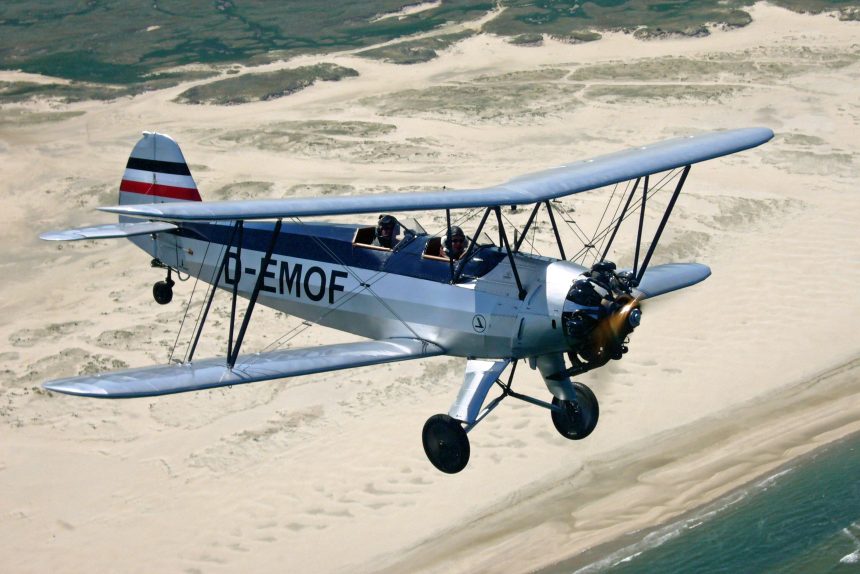

A German aviation company became famous for building efficient military aircraft in WWII. The company was Focke-Wulf, makers of the celebrated Fw 190 “Würger” (“Butcher Bird”) fighter that, for a brief period, gave Nazi Germany air superiority over Western Europe. The company was founded on October 24, 1923, in Bremen by Prof. Henrich Focke, Georg Wulf, and Dr. Werner Naumann. It was later renamed Focke-Wulf Flugzeugbau AG and then Focke-Wulf Flugzeugbau GmbH. In 1931, Focke-Wulf merged with Albatros Flugzeugwerke from Berlin due to government pressure. Kurt Tank, an Albatros engineer and test pilot, became head of the technical department and began to develop the Fw 44 Stieglitz (Goldfinch). Dr. Ludwig Roselius was chairman from 1925, handing over to his brother Friedrich in early 1933. In 1938, Roselius’ HAG combine increased its ownership to 46%, while C. Lorenz AG took 28%. The company was then reorganized as Focke-Wulf Flugzeugbau and no longer had to publish its financial records. At this time, it also received new capital. In August 1933, Rudolf Schubert and Hans Holle were provided power of attorney for the Berlin branch of Focke-Wulf. In October 1933, Focke-Wulf Flugzeugbau Albatros Berlin was officially registered with the Department of Trade. Dr. Roselius was always an important leader at Focke-Wulf. He often met with his close collaborator, Barbara Goette, and the technical director, Professor Tank.
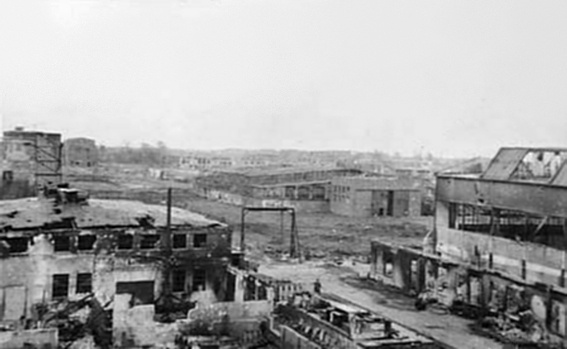
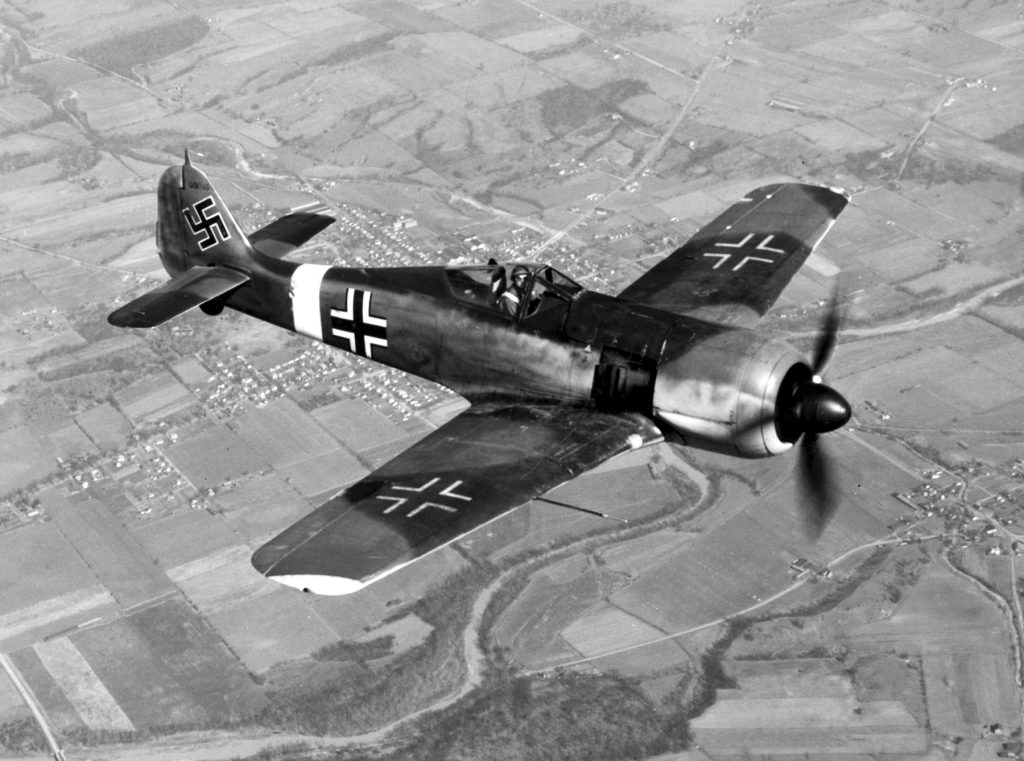
When Dr. Ludwig Roselius died in May 1943, Heinrich Puvogel, who later became chair of Focke-Wulf, raised 4 million RM. He continued to manage the financial affairs as the head of Seehandel A.G. In 1938, Hanna Reitsch demonstrated the Fw 61, the first helicopter that could be fully controlled, in Berlin. On August 10, 1938, the four-engine Fw 200 airliner made a nonstop flight from Berlin to New York City. It completed the trip in 24 hours and 56 minutes, becoming the first plane to fly that route without stopping. The return flight on August 13, 1938, took 19 hours and 47 minutes. Designers began working on the Fw 190 Würger, a single-seat fighter, in 1938. It was produced in large numbers from early 1941 to 1945 and became an important aircraft for the Luftwaffe during WWII. Bombing raids on Bremen during WWII led to the movement of production plants to eastern Germany and the General Government. AGO Flugzeugwerke in Oschersleben became a major subcontractor for the Fw 190 aircraft. These plants employed many foreign workers, forced laborers, and, from 1944, prisoners of war. Focke-Wulf’s 100-acre plant in Marienburg produced about half of all Fw 190s and was bombed by the Eighth Air Force on October 9, 1943.
After the war, many Focke-Wulf employees, including Kurt Tank, worked at the Instituto Aerotécnico in Córdoba, Argentina, from 1947 to 1955. Others, like Henrich Focke, joined Brazil’s Department of Aerospace Science and Technology to help build Embraer. Focke-Wulf started building gliders in 1951, and motorized aircraft in 1955. In 1961, Focke-Wulf, Weserflug, and Hamburger Flugzeugbau merged into a company called Entwicklungsring Nord (ERNO) to develop rockets. Before WWII, ITT Corporation owned 25% of the company. In the 1960s, it received $27 million in compensation for damage to its share of the Focke-Wulf plant from Allied bombing during the war. In 1936, Colonel Sosthenes Behn, Ludwig Roselius, and Barbara Goette outsmarted Hitler when he tried to remove Roselius as a major shareholder of Focke-Wulf A.G. This led to the restructuring of the company into the privatized Focke-Wulf Flugzeugbau GmbH. In 1964, Focke-Wulf merged with Weserflug to become Vereinigte Flugtechnische Werke (VFW), which later merged again to form the European Aeronautic Defence and Space Company N.V. (EADS). EADS was eventually renamed Airbus. In early 2021, Focke-Wulf Aircraft was re-registered as a trademark in the EU, the UK, and Australia to sell aviation watches and official Focke-Wulf merchandise.








I find the term ” forgotten” used in the headings of the articles relating to the German Aircraft manufacturers to be erroneous – No-one has forgotten these companies or aircraft if they are at all interested and involved in Aviation History ~