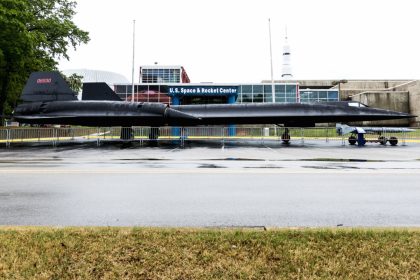
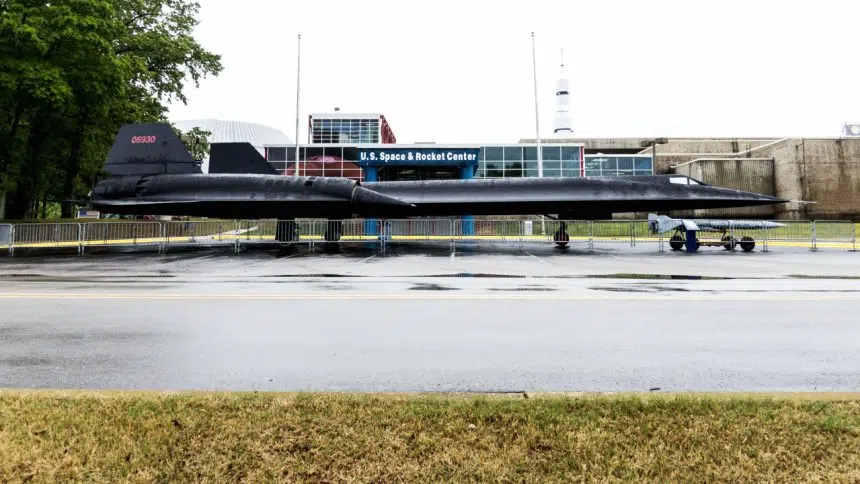

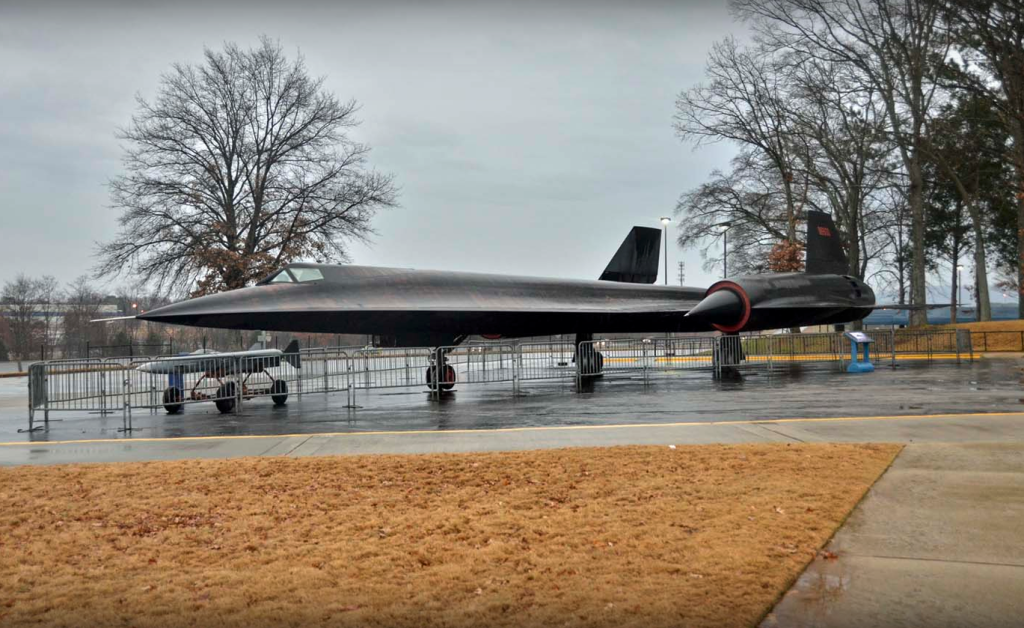
The U.S. Space & Rocket Center in Huntsville, Alabama, is preparing a new permanent display for its recently restored Lockheed A-12 Oxcart reconnaissance aircraft, with installation expected no earlier than spring 2027. The aircraft is temporarily parked at the west end of the museum’s parking lot while crews prepare a display mount near the main museum building, close to its previous location. Work is currently focused on preparing the site. Museum officials told FOX54 they are coordinating with the contractor responsible for moving and mounting the aircraft to establish a schedule.
The exterior restoration involved stripping the aircraft to its titanium skin, followed by fresh primer, paint, and updated markings. In December 2025, workers removed the inflatable enclosure that had protected the A-12 during the months-long project. Known as Article 127, the museum’s A-12 was the seventh aircraft in the production sequence. It was dedicated at the Space & Rocket Center on February 1, 1991, and previously repainted in 2017. The aircraft remains on loan from the National Museum of the U.S. Air Force.
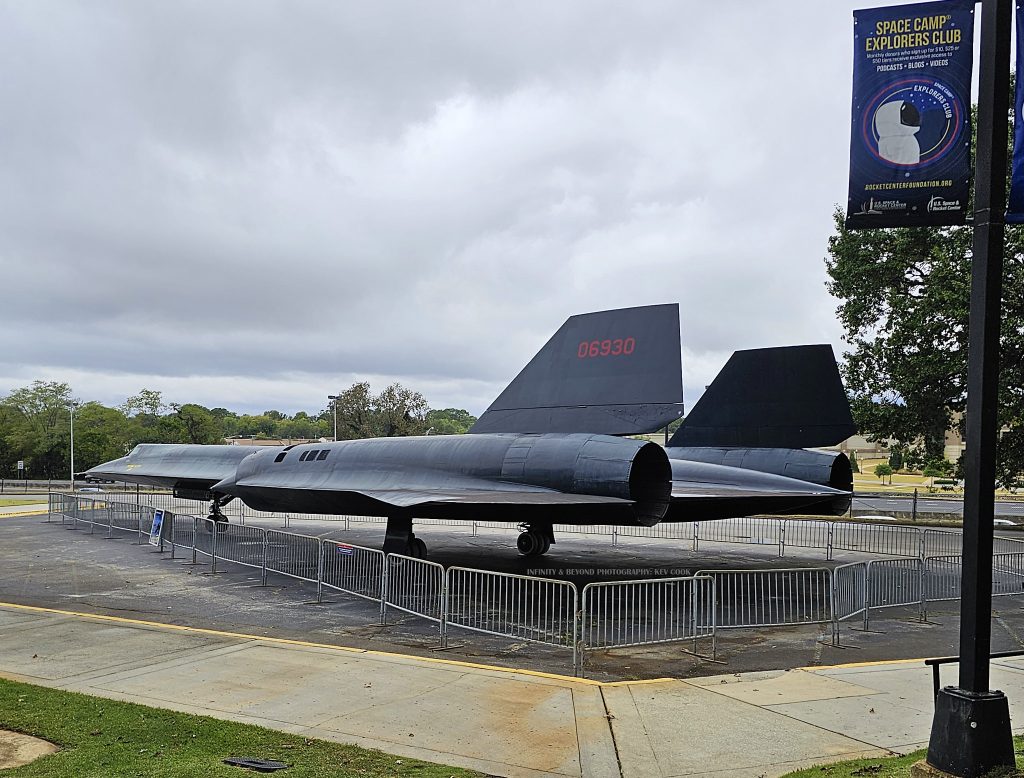
Developed by Lockheed’s Skunk Works division for the CIA, the A-12 preceded the U.S. Air Force’s SR-71 Blackbird. Its development required advances in titanium fabrication, propulsion, fuel, reconnaissance systems and pilot protection to sustain flight above Mach 3 at approximately 90,000 feet. Lockheed built 15 A-12s, including a dedicated trainer. The type’s operational career was brief. Under the CIA’s Black Shield program, three A-12s deployed to Kadena Air Base in Okinawa flew 29 reconnaissance missions over East Asia between May 1967 and May 1968. The program ended in 1968 as the SR-71 assumed the reconnaissance role.
The A-12 is part of a broader collection at the U.S. Space & Rocket Center, which serves as the official visitor center for NASA’s Marshall Space Flight Center and is a Smithsonian Affiliate. Described as the world’s largest spaceflight museum, the center houses more than 1,500 rockets, spacecraft and related artifacts exploring the history and development of human spaceflight. It also operates STEM education programs, including Space Camp, Aviation Challenge, Space Camp Robotics and U.S. Cyber Camp, welcoming visitors from all 50 states and more than 80 countries each year. For more information about the U.S. Space & Rocket Center, visit rocketcenter.com