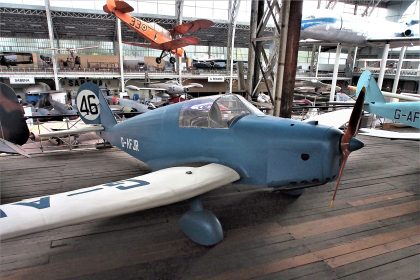
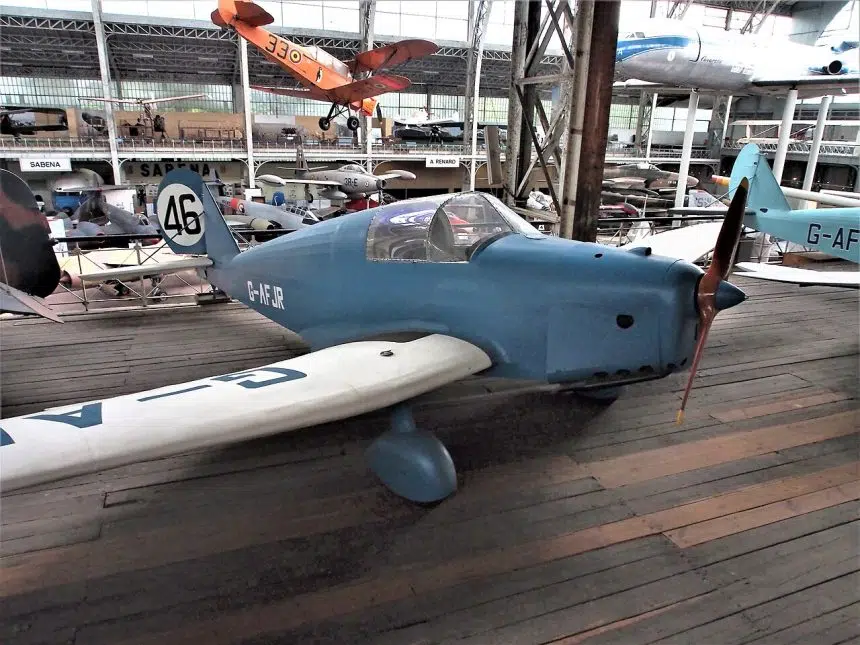

On this day in aviation history, 80 years ago (November 11, 1946), the Avions Fairey Belfair took flight for the first time. Also known as the Tipsy Belfair, the Belgian two-seat light aircraft was designed by Ernest Oscar Tips as an economical touring and sporting airplane. Despite its promising performance, the Belfair struggled to find buyers in the crowded postwar aviation market. The Belfair was developed from the prewar Tipsy B, incorporating a fully enclosed cabin and refined aerodynamic features. The aircraft was a low-wing cantilever monoplane with a conventional tailwheel undercarriage and streamlined wheel fairings. Its clean design and lightweight construction allowed it to achieve impressive performance despite being powered by a relatively small engine.

Although the Belfair was intended for private owners, it faced stiff competition from inexpensive military-surplus aircraft following WWII. With a selling price of approximately 200,000 Belgian francs, compared to roughly 30,000 francs for surplus Piper Cubs, the Belfair proved commercially uncompetitive. Only seven aircraft were completed. Nevertheless, the design demonstrated its capabilities by establishing two world distance records in its weight class. On August 21, 1950, Albert van Cothem flew a Belfair 587 miles, while P. Anderson extended the record to 1,637 miles on August 3, 1955. The Avions Fairey Belfair measured 21 feet 8 inches in length with a wingspan of 31 feet 2 inches and was powered by a 62-horsepower Walter Mikron II four-cylinder inverted inline engine. It could reach a maximum speed of 110 mph, cruise at approximately 99 mph, and had a standard range of 470 miles. Its service ceiling was 20,000 feet, with a rate of climb of approximately 500 feet per minute. The aircraft had a maximum takeoff weight of 1,102 pounds and accommodated two occupants.