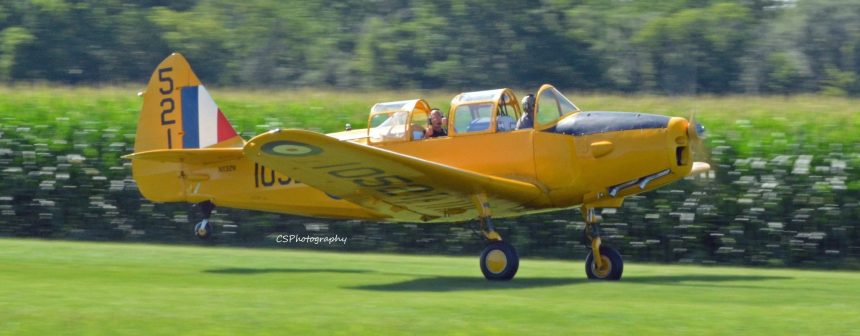

“Great moments are born from great opportunity.” Those words, familiar to anyone who has watched Miracle, have stayed with me since I first saw the film as a kid. I have always kept my eyes open for great opportunities, especially when it comes to aviation and warbirds. In the summer of 2025, the National Warplane Museum in Geneseo, New York—my home airfield—acquired a Fairchild PT-26 Cornell from one of its members. For a pilot interested in following the WWII training progression, this was an opportunity worth pursuing.
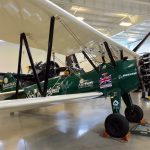
During WWII, the Boeing-Stearman Model 75 family, including the PT-17 Kaydet, played a major role in primary flight training. The Stearman was—and remains—a remarkable aircraft, but its biplane configuration differed considerably from the monoplanes that cadets would encounter later in their training. Its limited forward visibility and demanding ground handling also gave new pilots plenty to learn. A cadet who mastered its takeoffs and landings had developed skills that would serve well in other aircraft. The Army Air Corps also sought a rugged monoplane primary trainer. A low-wing aircraft with a wider landing gear track and better forward visibility offered students a different introduction to military flying, one more representative of the aircraft they would encounter as they progressed through basic and advanced training. Fairchild’s answer was the Model M-62, developed under chief engineer Armand Thiebolt. Powered by an inverted, six-cylinder Ranger engine, the prototype first flew on May 15, 1939. It subsequently won an Army competition against 17 other designs. Designated the PT-19, the aircraft entered quantity production in 1940.
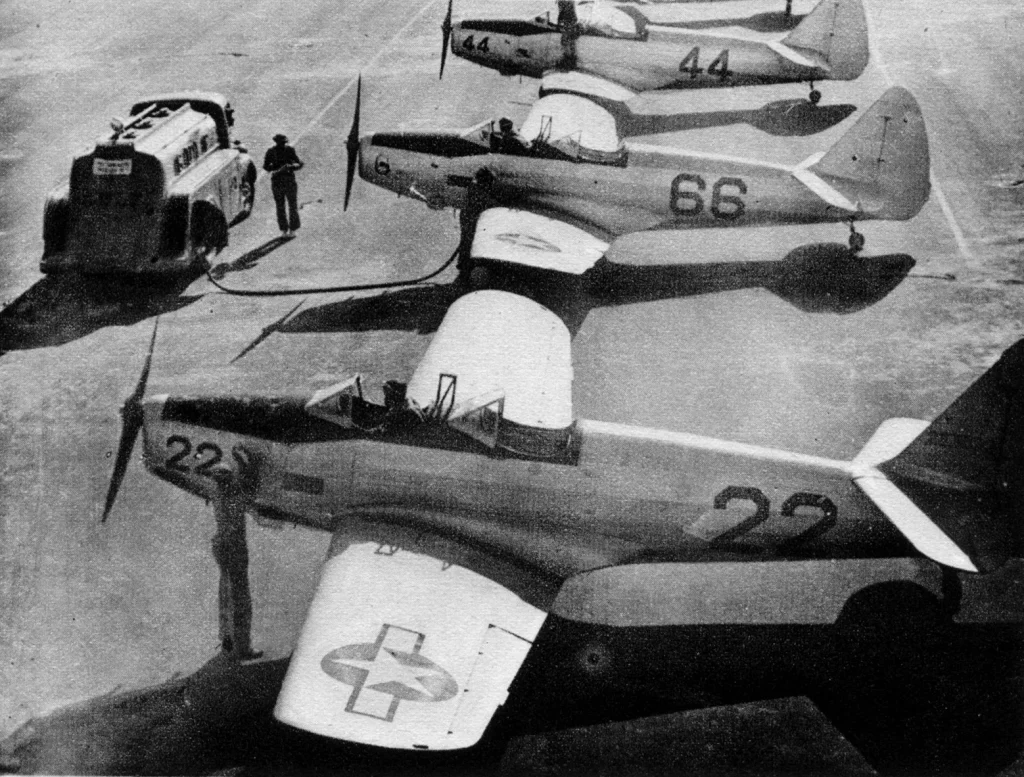
The design combined a fabric-covered, welded steel-tube fuselage with wooden wing construction. Its use of wood reduced reliance on strategic metals, while its wide-track landing gear and narrow engine cowling helped make it approachable for students. The Ranger’s inverted configuration kept the nose relatively slim, providing good forward visibility. As wartime demand grew, production of the Fairchild trainer family expanded to additional manufacturers and woodworking subcontractors. The open-cockpit PT-19A used a 200-hp Ranger engine, while the PT-19B was equipped for instrument training with a hood over the front cockpit. When airframe production outpaced the supply of Ranger engines, the 220-hp Continental R-670 radial provided an alternative powerplant for the PT-23. Behind the firewall, it retained the familiar Fairchild trainer layout. Wooden construction had its drawbacks, particularly when exposed to the heat and humidity of southern training bases. Wing deterioration and delamination became maintenance concerns, underscoring the importance of inspecting and protecting the aircraft’s wooden components.

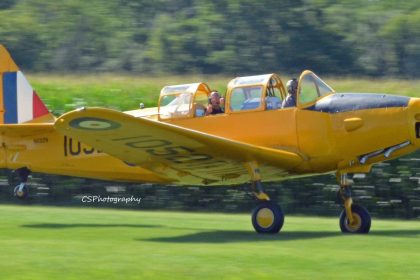
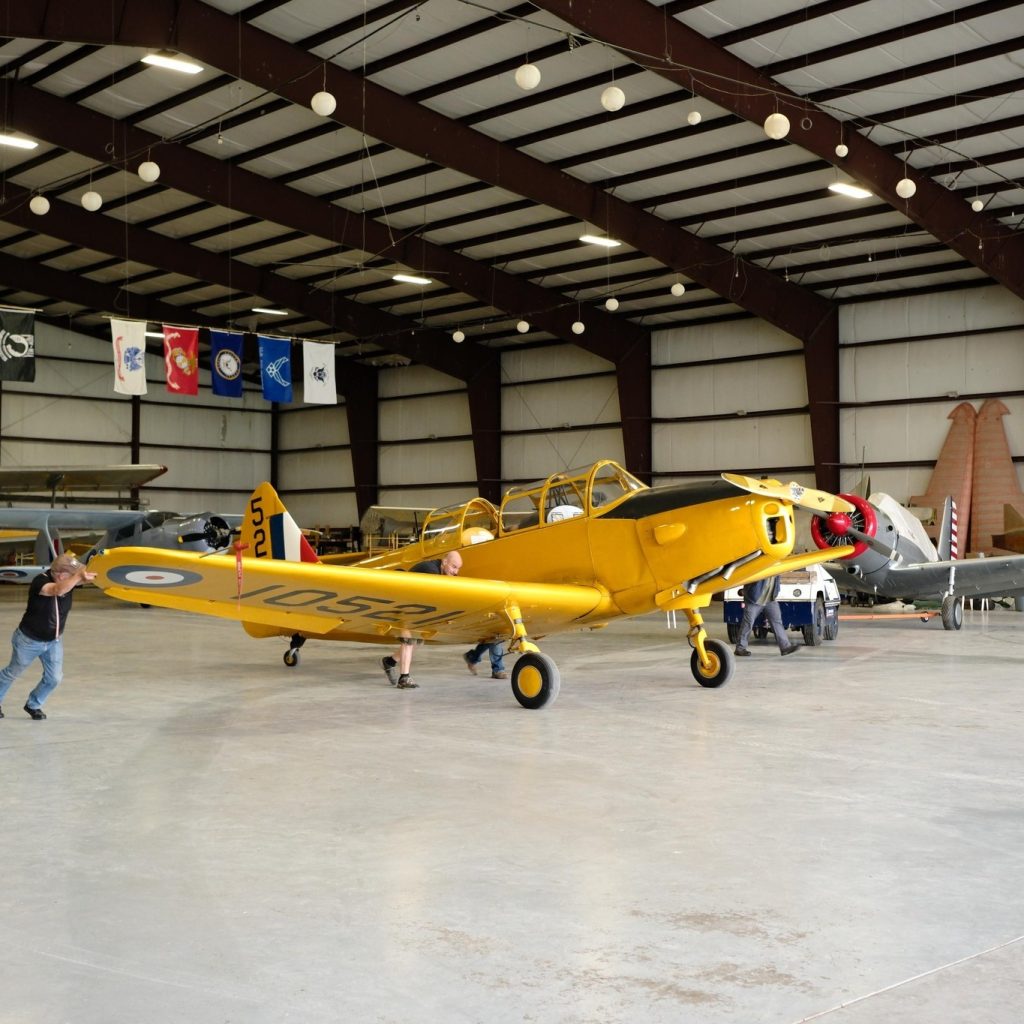
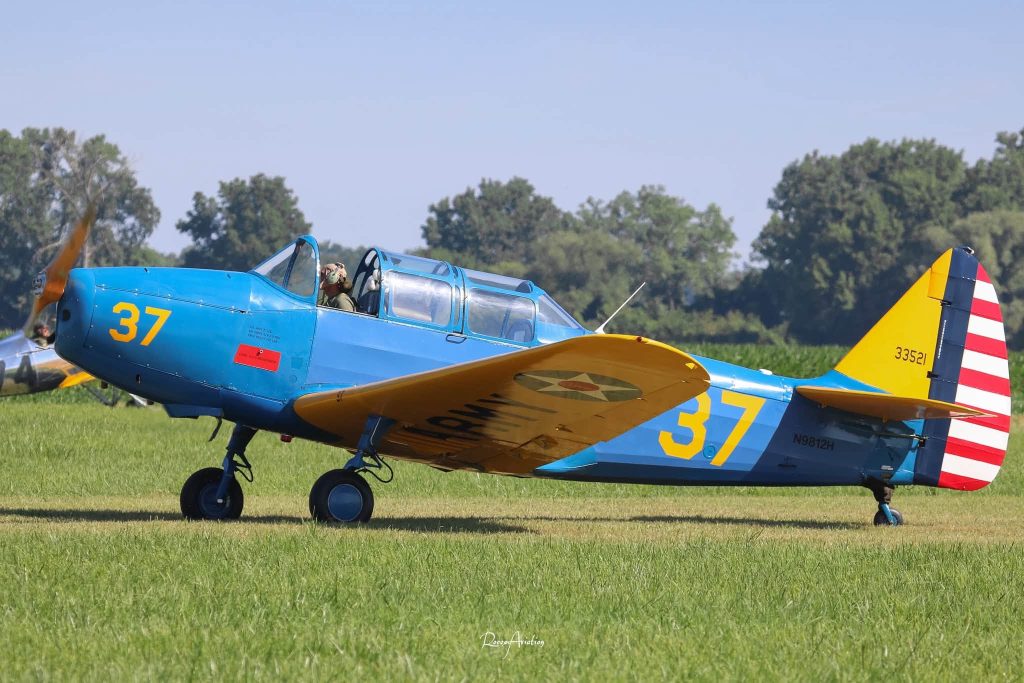
The enclosed-cockpit PT-26 adapted the design for cold-weather operations. Fleet Aircraft manufactured Cornells in Canada for use under the British Commonwealth Air Training Plan, where they served at Elementary Flying Training Schools. Our museum’s aircraft is a Cornell Mk. II, construction number FC-27 and RCAF serial 10521. I covered its history in an earlier article, “A Cornell for Geneseo: The National Warplane Museum Adds a PT-26 to Their Fleet.”
(Image credit: Austin Hancock)
This past June, I organized “Meet the PT-26” Day to introduce our volunteers and visitors to the museum’s newest aircraft. At the same time, I began developing a PT-26 training program using WWII training manuals and the FAA’s current Commercial Pilot Airman Certification Standards. My friend and fellow Fairchild pilot Paul F. met me at Niagara Falls International Airport and gave me a thorough ground-school introduction using his PT-26. My fellow volunteers recognized my enthusiasm for getting our Cornell active and graciously offered me the opportunity to begin flying it. My longtime museum colleague and friend Jared C. offered to instruct me. Jared owns a pristine PT-26 himself and has a wonderful way of sharing his knowledge, both on the ground and in the air. My training was in good hands. As training began, I learned that “PT” could have two meanings: primary training and physical therapy. The Cornell is not difficult to fly, but it requires new muscle memory and habits compared with the Champ/L-16 I was accustomed to. Over several days, Jared and I logged multiple hours while working through the maneuvers in our training course outline. I quickly grew fond of the airplane. Its smooth control action was especially noticeable: small, precise inputs produced a reassuring response.
(Image credit: Austin Hancock)
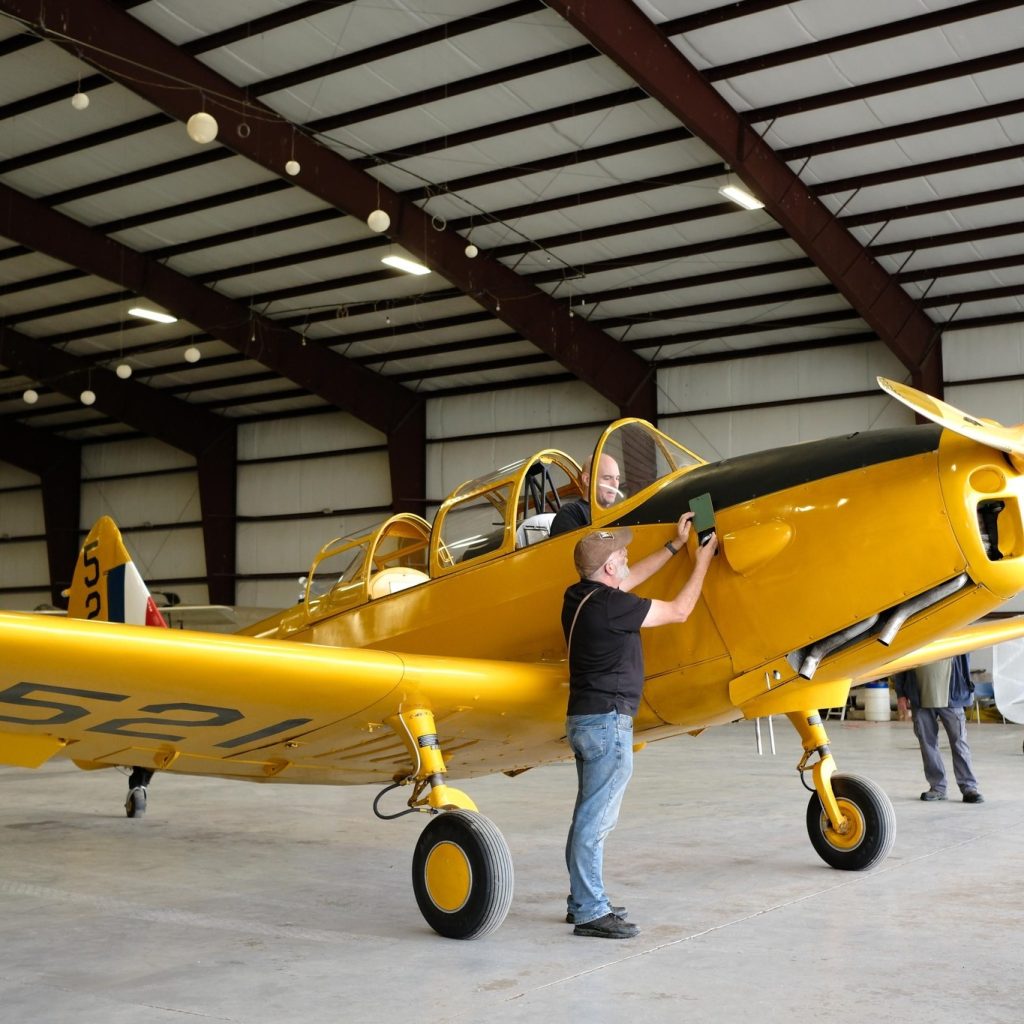
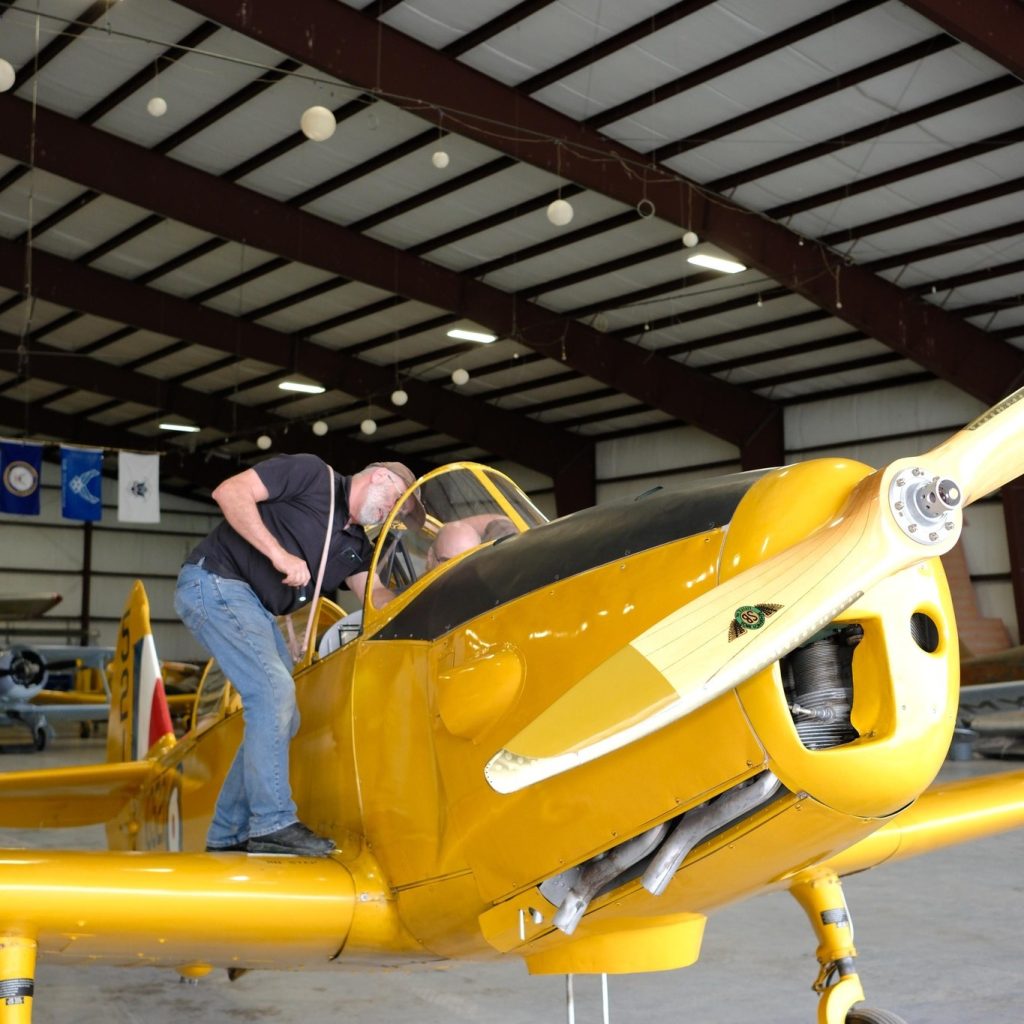
Preflight is straightforward, with a few details worth learning. Our aircraft’s fuel tanks hold 49 U.S. gallons, of which 45 are usable. Checking the levels through the narrow filler necks can be tricky. Although the wing-mounted fuel gauges are visible from the cockpit, I prefer to verify the quantity directly, so I developed a dipstick for our tanks. Oil is another important part of the inspection. Our maximum capacity is 4.1 U.S. gallons, and I add oil if the quantity is below three gallons. The 120-grade oil has a consistency that makes “pancake batter” an appropriate nickname. The long pitot tube also deserves attention. I was taught to remove its cover last before flight and replace it first afterward. I have been told that, at airshows, children have occasionally mistaken it for a convenient pull-up bar. A cover and a nearby orange cone help protect a component that would be difficult to replace.
(Image credit: Austin Hancock)
Compared with the L-16 I had been flying, the Cornell spoils you in one respect: it has a starter. In our aircraft, the start begins on the left magneto before switching to both. We wait for the oil temperature to reach 35°C before advancing the engine beyond 1,000 rpm and taxiing. While waiting for the oil to warm, I could not help thinking about the young cadets who had sat in that same position during WWII, with adrenaline coursing through their veins much as it was through mine. Their eventual missions, of course, carried far higher stakes.

Once the oil is warm, taxiing is straightforward—quite literally. Forward visibility from the front seat is excellent for a pilot of average height. I practiced S-turns, or “fishtails,” to keep that skill sharp for aircraft with more restricted visibility, but routine taxiing in the Cornell is generally uneventful. Following the run-up of our Ranger L-440-7, it is time for takeoff. I line up on the centerline with the stick back and the appropriate aileron correction for the wind, then smoothly advance the throttle. With the engine instruments indicating normally and the airspeed coming alive, I raise the tail and let the airplane become light on its wheels. Liftoff typically comes at approximately 60–65 mph. I then lower the nose slightly, accelerate in ground effect to our 80-mph best-rate-of-climb speed, and begin a leisurely climb. The Cornell was built to teach, rather than impress anyone with its climb rate.
(Image credit: Rocco Aviation)
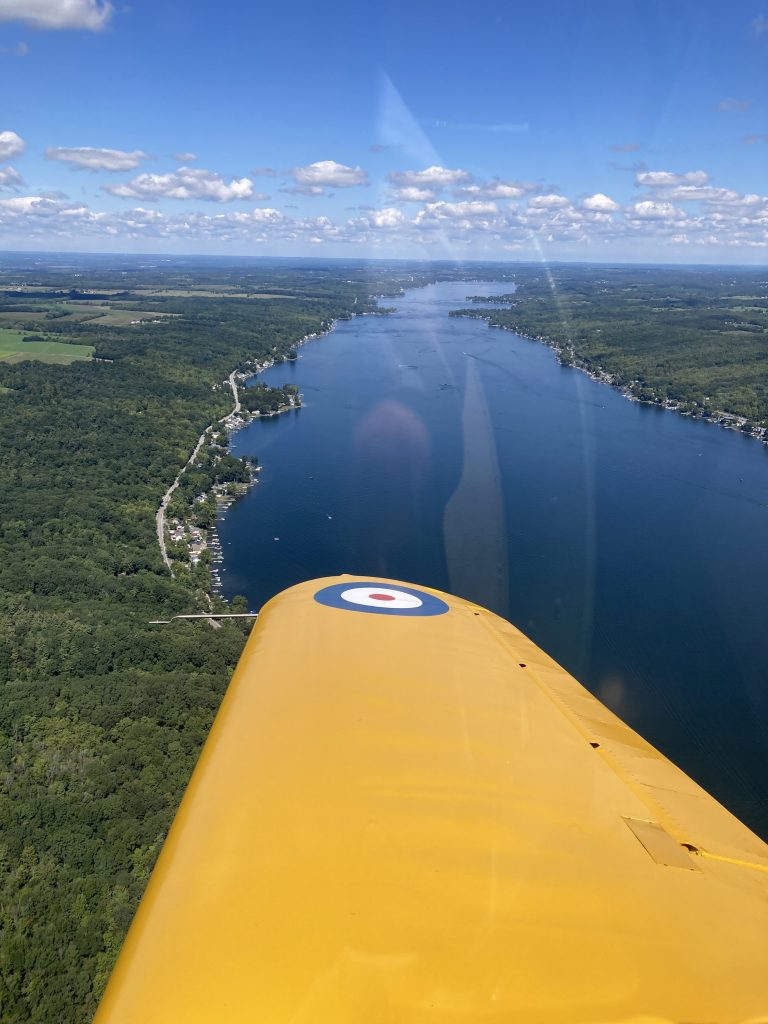
Leveling off and setting our usual cruise power of 2,050 rpm reveals another interesting feature. The mixture control operates in the opposite direction from what many modern pilots expect: full rich is aft, and idle cutoff is forward. In cruise, the mixture and throttle controls can be aligned, with a mechanical stop linking their movement as the throttle is retarded. Releasing the stop allows the controls to move independently for further mixture adjustment. In our aircraft, cruise generally falls between 95 and 105 mph, with average fuel consumption of approximately 12 gallons per hour. The smooth controls become particularly apparent during maneuvering flight. Steep turns, chandelles, and lazy eights are all well within the Cornell’s capabilities. For me, the biggest adjustment was learning the correct sight picture. The narrow, tapering nose makes straight-and-level flight look more like a descent in another trainer. Initially, looking toward the wings gave me a better reference for the airplane’s attitude than relying on the vintage attitude indicator alone. The maneuvering speed used in our training is 115 mph, while best glide is 80 mph—the same speed we use for the climb.
(Image credit: Austin Hancock)
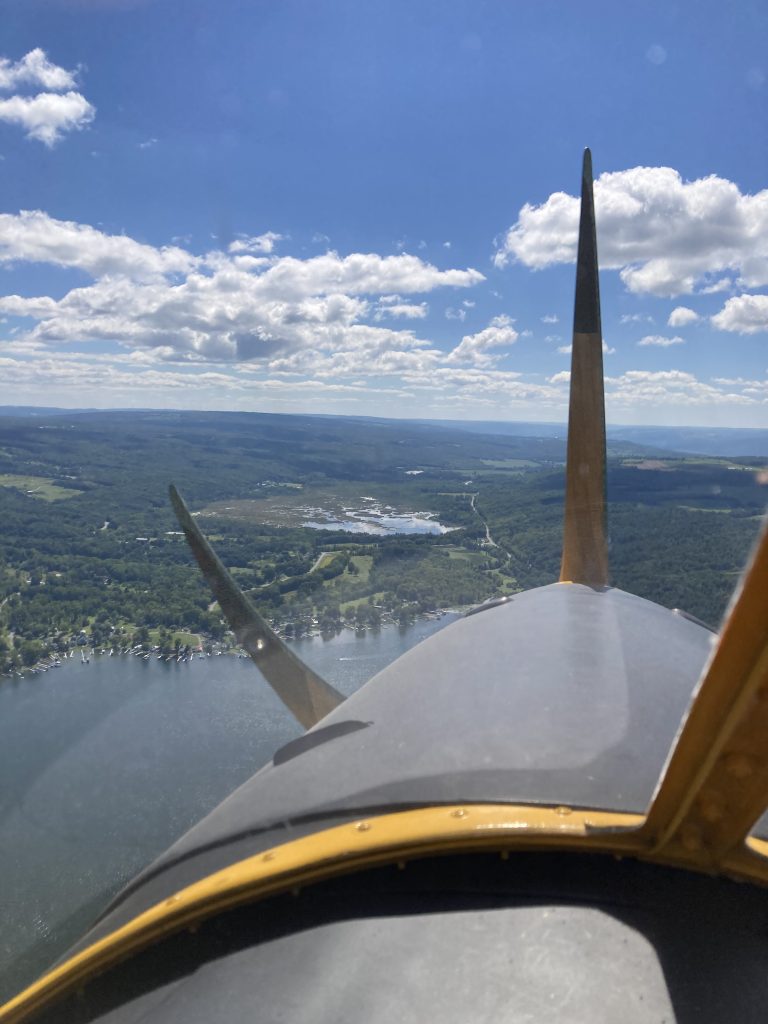
The PT-26 has been an honest airplane in my experience, particularly during slow flight and stalls. It gives noticeable warning as the stall approaches, with buffeting followed by a nose drop. Its large rudder provides useful directional control at low speed, a welcome characteristic in a primary trainer. Ground-reference maneuvers are equally enjoyable. Eights on pylons, already one of my favorite exercises, were especially satisfying in the Cornell. When I drifted outside the desired parameters, small corrections were usually enough to restore the maneuver. Landing brings its own rhythm. In our training, I enter the pattern, reduce power to approximately 2,000 rpm on downwind, apply carburetor heat, and complete the prelanding checklist. Abeam the runway numbers—the “perch point”—I reduce power to approximately 1,500–1,700 rpm and lower the nose to establish the descent. Timing the turn toward final requires a little finesse and a feel for the airplane’s descent rate. During the turn toward final, I open the canopy and select the first notch of flaps, or half flaps, below the 95-mph flap-extension limit used in our aircraft. On final, I line up an imaginary gunsight with my aiming point, usually the runway numbers, and maintain an 80-mph approach with half or full flaps. So far, half flaps have been sufficient for my landings. As I reach the level-off point, I shift my view farther down the runway. Reducing power has generally helped me settle into a gentle three-point landing, while retaining a little power has worked well for wheel landings. After a three-point touchdown, I hold the stick back. For a wheel landing, a small forward input keeps the mains planted; as the tail settles, I ease the stick back while maintaining the necessary crosswind correction.
(Image credit: Austin Hancock)
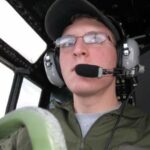
Once clear of the runway, I turn off the carburetor heat, raise the flaps, and lean the mixture. Another flight in the Fairchild is complete—a small connection to the cadets who began their own journeys in these trainers before progressing to more powerful aircraft and wartime service. With my checkout complete, flying in the 2026 Geneseo Airshow, the Greatest Show on Turf, became a real possibility. In the days before the show, I sharpened my skills with repeated circuits in the pattern. Then, on show day, my opportunity arrived. Jared brought his beautiful PT-26 and led our flight. I was so excited during the briefing that I am still not sure how I contained myself. When it was time to fly, we started our engines and taxied out in trail, with the L-Bird flight behind us. After the run-up, I paused to take it all in. I recorded a short video so I would never forget a moment I had been working toward for much of my life. What a privilege, and what an honor.
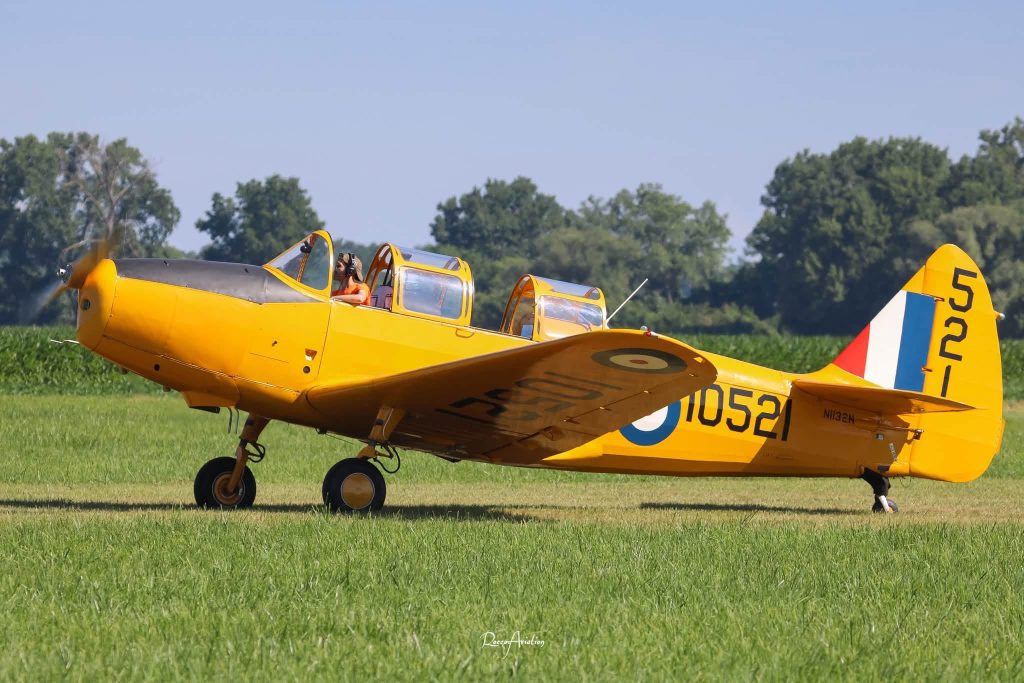
(Image credit: Austin Hancock)
Once cleared for takeoff, Jared and I flew above the L-Birds as they circled below. We made roughly a dozen circuits to open the show. Time seemed to stretch as I settled into the flight, completely absorbed in the experience. To top it off, I made wheel landings that I hoped would make Jared proud. Sharing the skies above Geneseo with pilots I admire, including Lou Horschel and Thom Richard, and receiving such a warm welcome from my museum family afterward made the experience especially meaningful. I knew my father was watching, and I could not help feeling that he was glowing with pride.
(Image credit: Rocco Aviation)
What comes next? Plenty of pilots are eager to build hours and move up the warbird ladder, and I understand why. Personally, I want to enjoy the journey. My goals are well known, and I feel I am on the right path. I will keep flying our PT-26 whenever I can while continuing to help with the restoration of our Geneseo AT-6 and P-51 Lucy Gal. That progression follows the familiar training pipeline, but I remain open to other opportunities as well. I will also continue flight instructing and flying commercially to broaden my experience. I am grateful to be where I am today, thanks in large part to the people who have supported me throughout the warbird community. To Jared, Pete, Craig, Paul, and my entire Geneseo family: thank you for helping me grow as a pilot. I look forward to what the future holds.
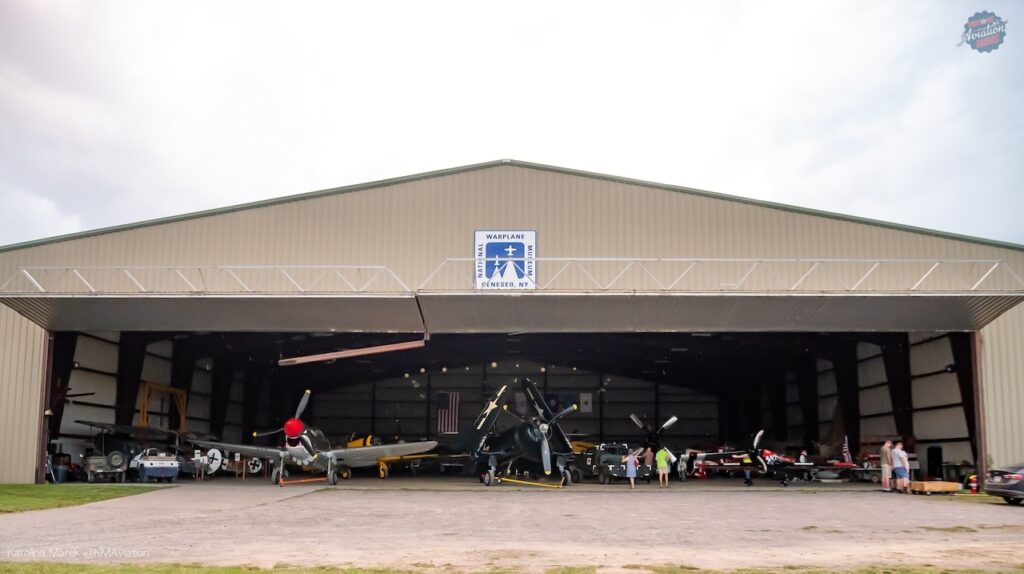
(Image credit: Karolina Marek)