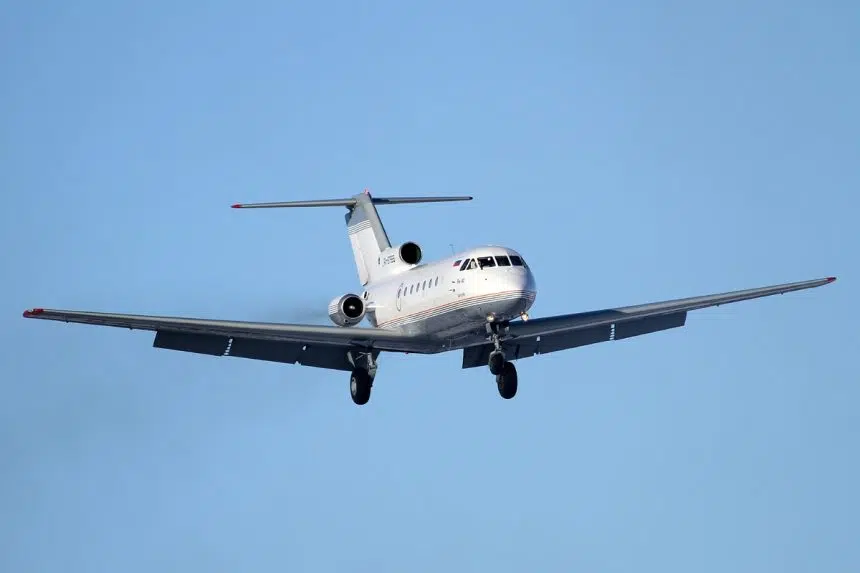

On this day in aviation history, 60 years ago (October 21, 1966), the Yakovlev Yak-40 took flight for the first time. Known to NATO as the “Codling,” the Soviet-built regional jet was designed to bring jet-powered passenger service to small communities and remote airfields that had previously relied on aging piston-powered transports. During the early 1960s, many of Aeroflot’s local routes were still operated by aircraft such as the Ilyushin Il-12, Il-14, and Lisunov Li-2. Yakovlev was tasked with developing a turbine-powered replacement capable of operating reliably from poorly equipped airports with unpaved runways of less than 2,300 feet. After considering turboprop and even vertical-takeoff concepts, the design bureau settled on a straight-winged trijet powered by three Ivchenko AI-25 turbofans.

The first of five Yak-40 prototypes flew on October 21, 1966, followed by the beginning of production in 1967. Aeroflot placed the type into passenger service in September 1968. Its rugged construction, built-in auxiliary power unit, rear airstairs, and short-field performance made the Yak-40 well suited to operations away from major airports. The aircraft also became an export success, and more than 1,000 were constructed before production ended in 1981. The Yak-40 measured 66 feet 10 inches in length with a wingspan of 82 feet and was powered by three Ivchenko AI-25 turbofans producing 3,300 pounds of thrust each. It could carry up to 32 passengers, cruise at approximately 340 mph, had a range of around 1,100 miles, and a service ceiling of 26,000 feet.