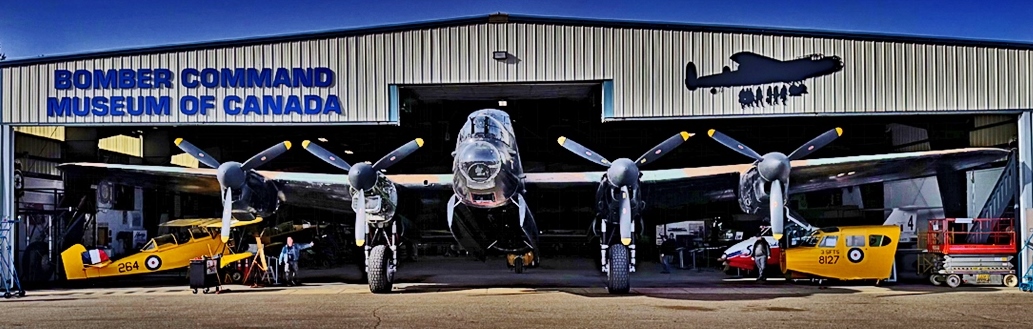





In previous articles, we have covered the ongoing efforts of the Bomber Command Museum of Canada of Nanton, Alberta in rebuilding an example of the Handley Page Halifax bomber to represent the ones flown by thousands of Royal Canadian Air Force (RCAF) bomber crews of WWII, but October of 2026 also saw the BCMC acquire two more WWII-era aircraft to their collection, a North American B-25 Mitchell and a Fairchild PT-26 Cornell, both of which were former RCAF aircraft that had flown in RCAF training units and both will be preserved by the BCMC as part of their ongoing mission to honor the legacy and sacrifices of the men who served alongside other airmen of the British Commonwealth as part of RAF Bomber Command. While most famous for its work in the U.S. Army Air Forces during WWII, the North American B-25 Mitchell also found a role in the Royal Canadian Air Force from 1942 to 1963. While there were RCAF airmen who flew the Mitchell into combat in Europe while serving in RAF units, the Mitchells flown by RCAF units in Canada were primarily used for crew training or taking photos at high altitude. After WWII, many surplus USAF B-25s were exported to the RCAF and were used primarily to train pilots, navigators, and radar operators while also fulfilling the role of a transport aircraft, and with the retirement of the last RCAF Mitchells in October 1963, many were later sold to private owners in both Canada and the United States, and several B-25s that still exist in the USA today are ex-RCAF Mitchells.
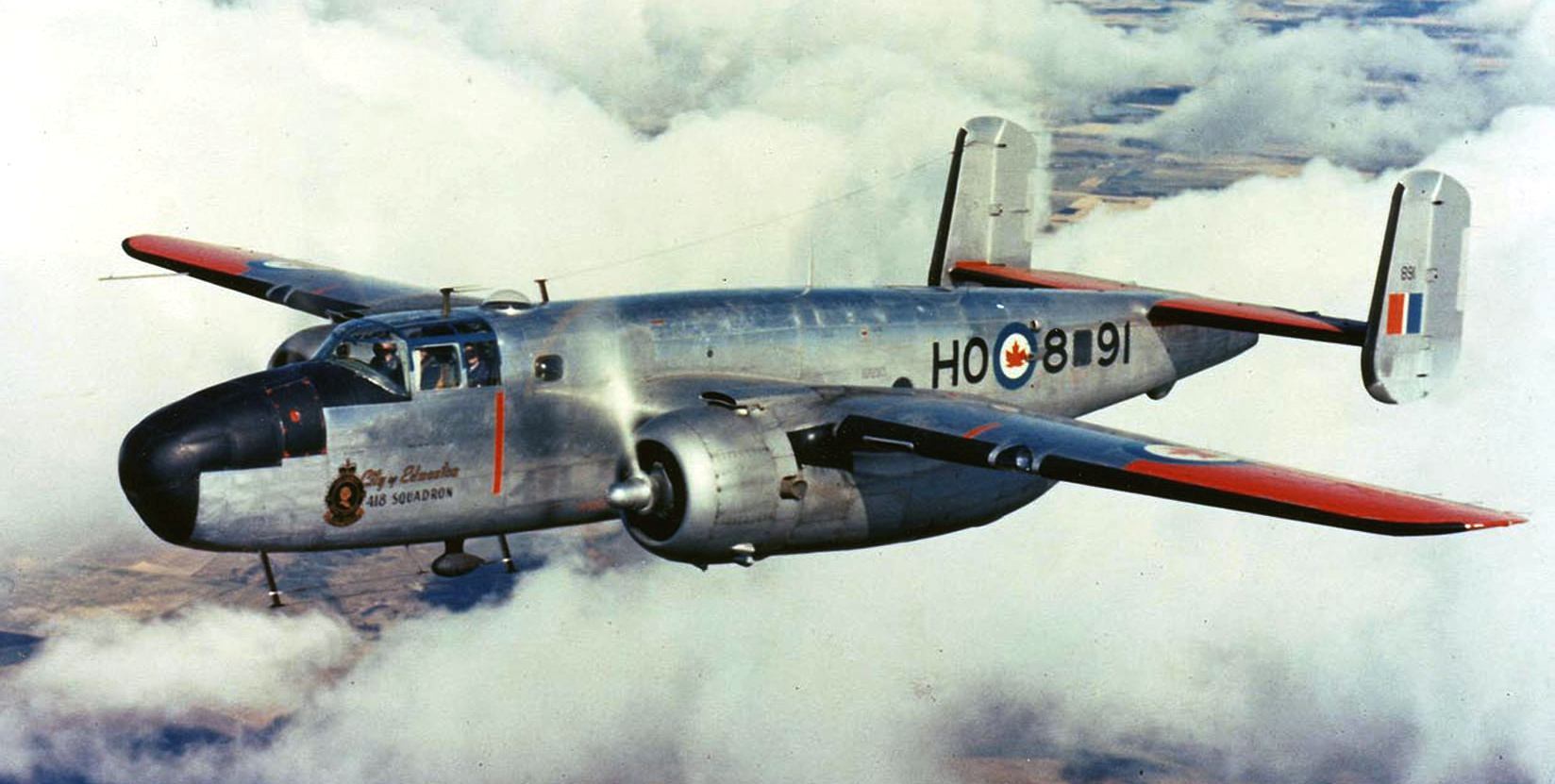
The B-25 Mitchell that has been recently acquired by the BCMC began life in the North American Aviation factory at Fairfax Municipal Airport, Kansas City, Kansas as B-25J-30/32-NC construction number 108-37520 and was delivered to the US Army Air Forces as serial number 44-86726. The aircraft never went into combat during WWII, but would remain in postwar service with the newly-independent United States Air Force. By the start of the 1950s, the B-25s that remained in USAF service were increasingly relegated to noncombat roles from VIP transport to navigator/bombardier training aircraft. Others were exported to Canada, including 44-86726, which was delivered to the Royal Canadian Air Force when it was flown from Brookley Air Force Base near Mobile, Alabama to No. 6 Repair Depot RCAF at RCAF Station Trenton, Ontario.

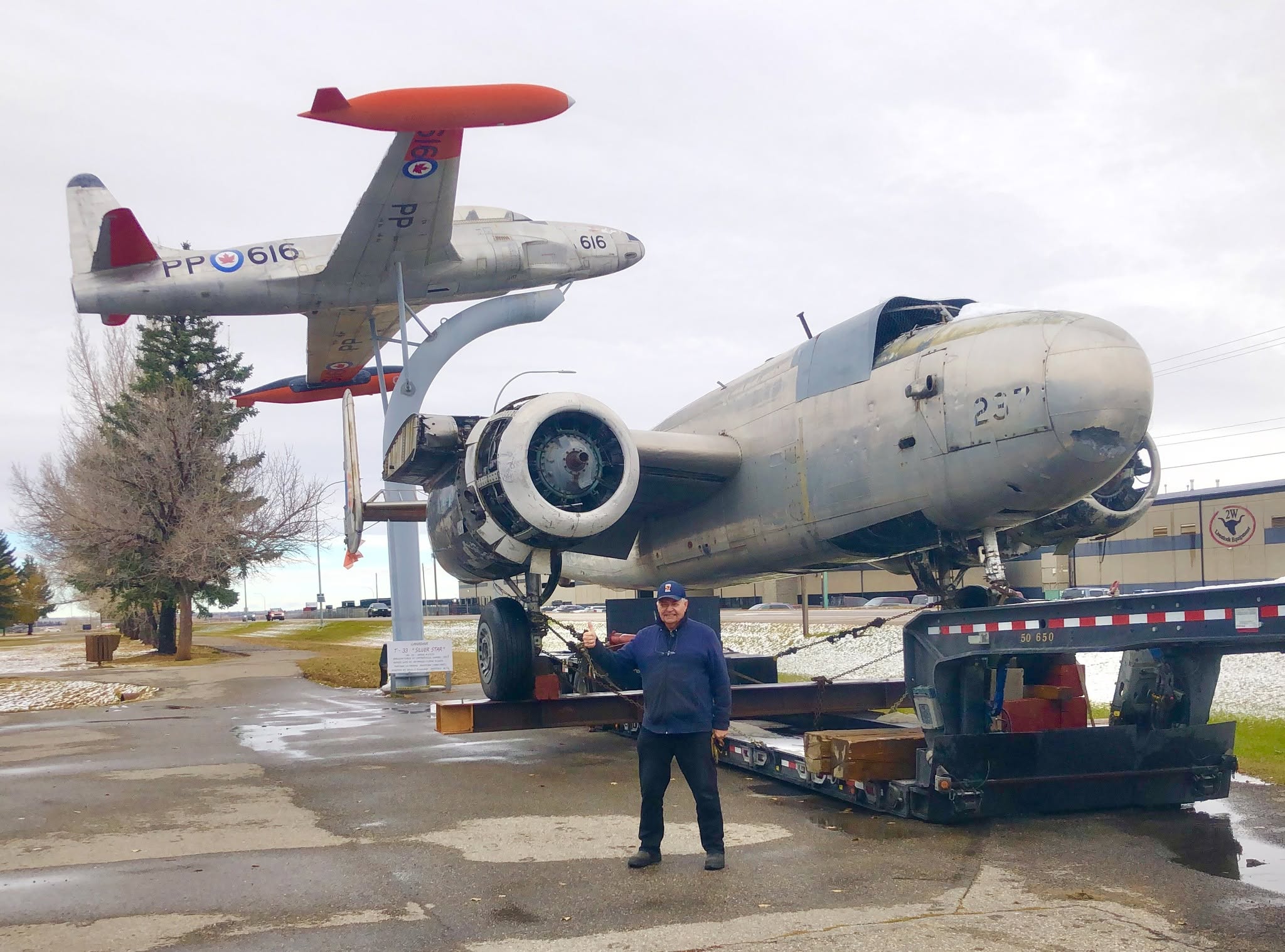
On January 24, 1952, 44-86726 was formally adopted into the RCAF, becoming Mitchell Mk. III RCAF s/n 5237. One month later, on February 20, RCAF 5237 was delivered to Training Command at RCAF Station Saskatoon, Saskatchewan, also home to No. 406 (Light Bomber) Squadron RCAF. From July 14 to October 1, 1952, the aircraft would receive modifications for RCAF service at North West Industries in Edmonton, Alberta, before returning to Saskatoon. On April 17, 1958, Mitchell 5237 was sent to Bristol Aerospace in Winnipeg for further modifications, and by March 23, 1959, the aircraft would stay in Winnipeg as part of No. 2 Air Observer School at RCAF Station Winnipeg. On October 7, 1960, 5237 was placed into the RCAF’s inactive reserve at RCAF Station Lincoln Park in Calgary, Alberta, and was later stored at RCAF Station Claresholm near Claresholm, Alberta. On February 19, 1962, Mitchell Mk III RCAF 5237 was officially stricken from the RCAF inventory and was later sold to the company Skyline Development in Calgary. From here, Mitchell 5237’s initial history on the civilian registry becomes somewhat murky, considering the fact that it is cited as having the same Transport Canada Civil Aviation registration CF-NTP and the same FAA N-number N92880 as another former RCAF Mitchell, RCAF 5212 (B-25J 44-30947). What is clear, though, is that in 1981, Mitchell 5237 was placed on display at the Altamont Museum in the small border village of Coutts, Alberta, right next to the small town of Sweet Grass, Montana. The Altamont Museum was run by Belmore H. Schultz, and the museum was largely composed of artifacts from the pioneering days of the Canadian Prairies (Photo of Mitchell III 5237 at the Altamont Museum HERE). In 1989, the Altamont Museum was closed, and much of its collections were absorbed into the Galt Museum & Archives in Lethbridge, Alberta, but the B-25 Mitchell was soon put up for auction. The winning bid came from the Reynolds-Alberta Museum of Wetaskiwin, and the Mitchell was soon transported to the museum, sitting adjacent to Wetaskiwin Regional Airport. However, Mitchell 5237 was not restored for display and was instead kept in the museum’s outdoor storage collection for over 30 years.

In 2026, the Bomber Command Museum of Canada was given an offer from the Reynolds-Alberta Museum to take Mitchell III 5237 to Nanton free of charge. The BCMC sent a crew up to Wetaskiwin, loaded the aircraft by its landing gear onto a trailer, and trucked it over 400 kilometers south to Nanton, and the aircraft made headlines across Canada when images of the aircraft rolling down the highways of Alberta went viral.

Regarding the newly acquired Mitchell, Karl Kjarsgaard, curator of the Bomber Command Museum of Canada and director of the Halifax 57 Rescue project, stated the reason for adding the aircraft to the collection: “Because any bomber with our Bomber Boys in it, the Royal Canadian Air Force, we’re gonna save it, and this B-25 was an additional gift, and it’s been my honor and privilege to save these aircraft in memory of those Bomber Boys. Swords of freedom are sometimes made of aluminum, and remember, freedom is not free. Somebody paid for you.” Today, Mitchell 5237 is being kept in storage at an off-site location near Nanton, as the museum currently has other projects besides the Halifax underway both in Nanton and at Arnprior Airport, Ontario, such as an Avro Anson. However, with the museum planning to expand its existing facilities in Nanton, the Mitchell will be kept in Nanton to become the focus of another restoration project, where it will eventually be displayed in its RCAF colors.
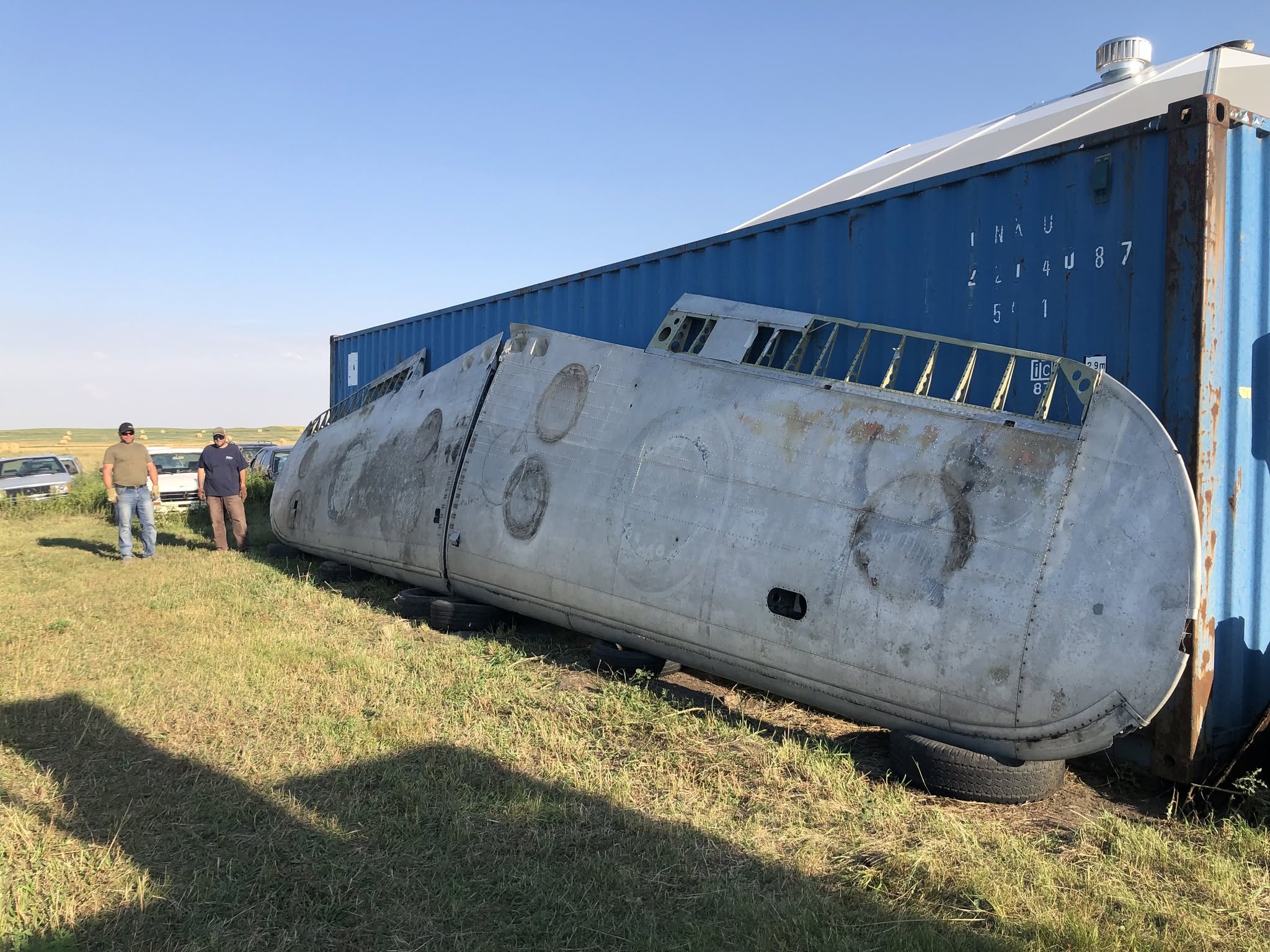
The second aircraft recently acquired by the BCMC, a Fairchild PT-26 Cornell, may be small in size compared to the museum’s Avro Lancaster or the Halifax restoration project, but it had an outsized impact on the Canadian war effort in that it was one of thousands of trainers that were used for primary flight training by the British Commonwealth Air Training Plan (BCATP) to instruct thousands of pilot cadets from across the British Commonwealth in the skies of Canada prior to their deployment to the European Theater of Operations.
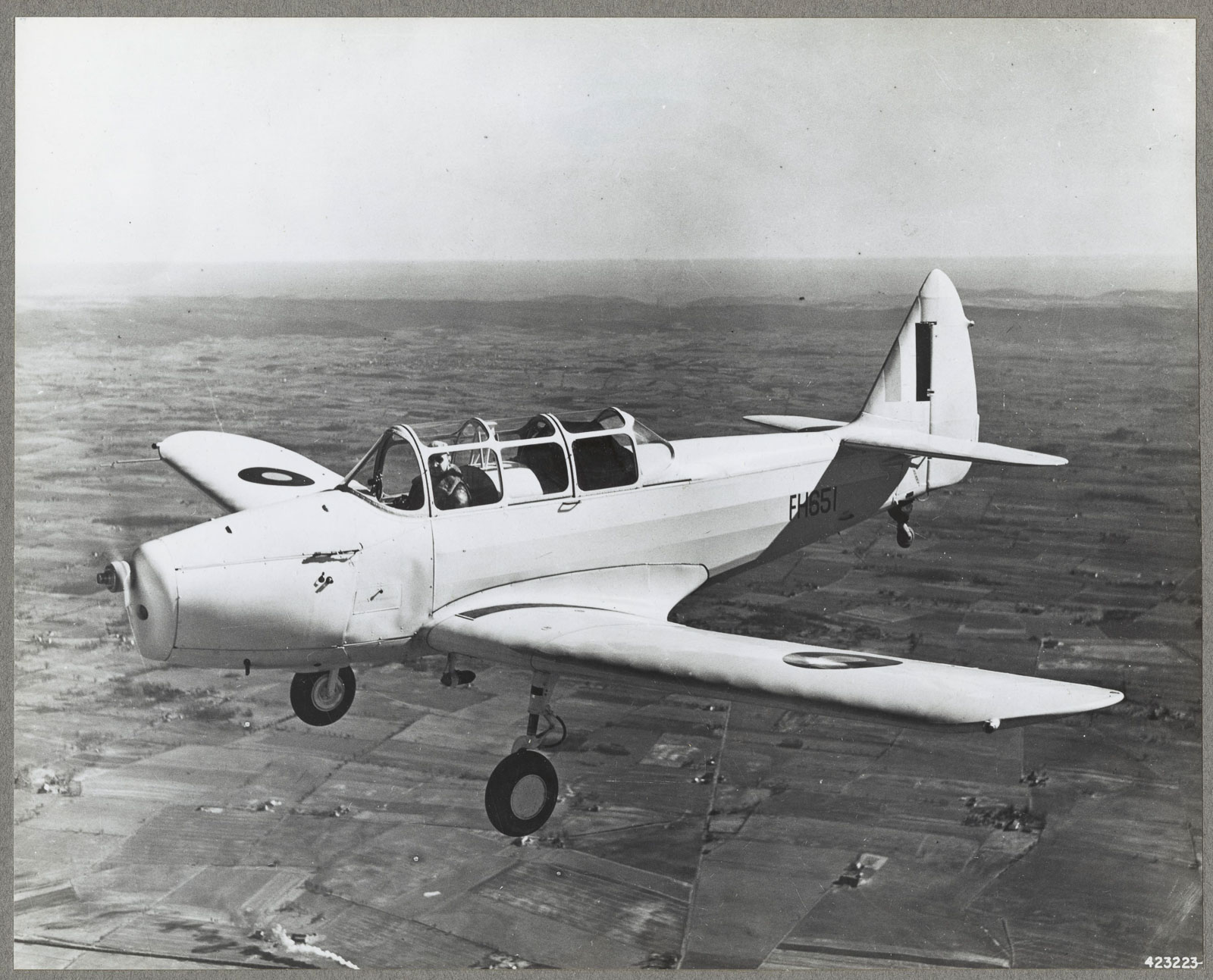
The Cornell that has just been inducted into the BCMC’s collections was built as a Fairchild M62A3/Cornell Mk II at the Fairchild Aircraft Ltd plant in Fore Erie, Ontario as construction number 1097, delivered to the RCAF on September 22, 1944 as serial number FV729, and assigned to No. 1 Training Command. By this point in the war, the outcome for the Allies was very clear, and flight training programs were being gradually scaled back, leading to some aircraft like Cornell FV729 being kept in storage rather than being assigned to any training units. On January 15, 1945, FV729 was reassigned to No. 1 Air Command and by July 7, 1945, the aircraft was in storage at No. 5 Reserve Equipment Maintenance Unit (REMU) at Picton, Ontario. The end of WWII would result in the thousands of Fairchild Cornells built being rendered surplus, and on May 9, 1947, Cornell Mk II FV729 was stricken from the RCAF inventory and was given to the Royal Canadian Flying Club Association, where it made its way to the Winnipeg Flying Club and was issued the civil registration code CF-CVO.

On July 26, 1968, the aircraft was acquired by Donald McLean of Lethbridge, Alberta, and he maintained it in airworthy condition for nearly 50 years with a blue and white paint scheme. In 2016, McLean flew CF-CVO as part of a two-aircraft flyover for the dedication of a memorial on the site of #31 Elementary Flying Training School (EFTS) at the former BCATP Station De Winton, with the other aircraft being a Stearman flown by Alex Bahlsen. By October 20, 2026, Don McLean would donate Cornell CF-CVO to the Bomber Command Museum of Canada, making it the fifth airplane in the collection in running condition. According to the BCMC, Cornell CF-CVO will be repainted in the yellow colors of the BCATP trainers, much like the museum’s other trainers on display, including a Cessna Crane, de Havilland DH.82 Tiger Moth, Fleet Fawn, and North American Harvard.

The arrival of the Mitchell and the Cornell marks another achievement for the Bomber Command Museum of Canada, as both aircraft will be used to inspire visitors to remember the bomber crews of the Royal Canadian Air Force during WWII, many of whom learned to fly on the Fairchild Cornell, while also honoring both those RCAF airmen who flew the Mitchell into combat over Europe with RAF units and the men who flew and maintained these bombers as training aircraft during the 1950s and early 1960s. For more information, visit the Bomber Command Museum of Canada’s website HERE.