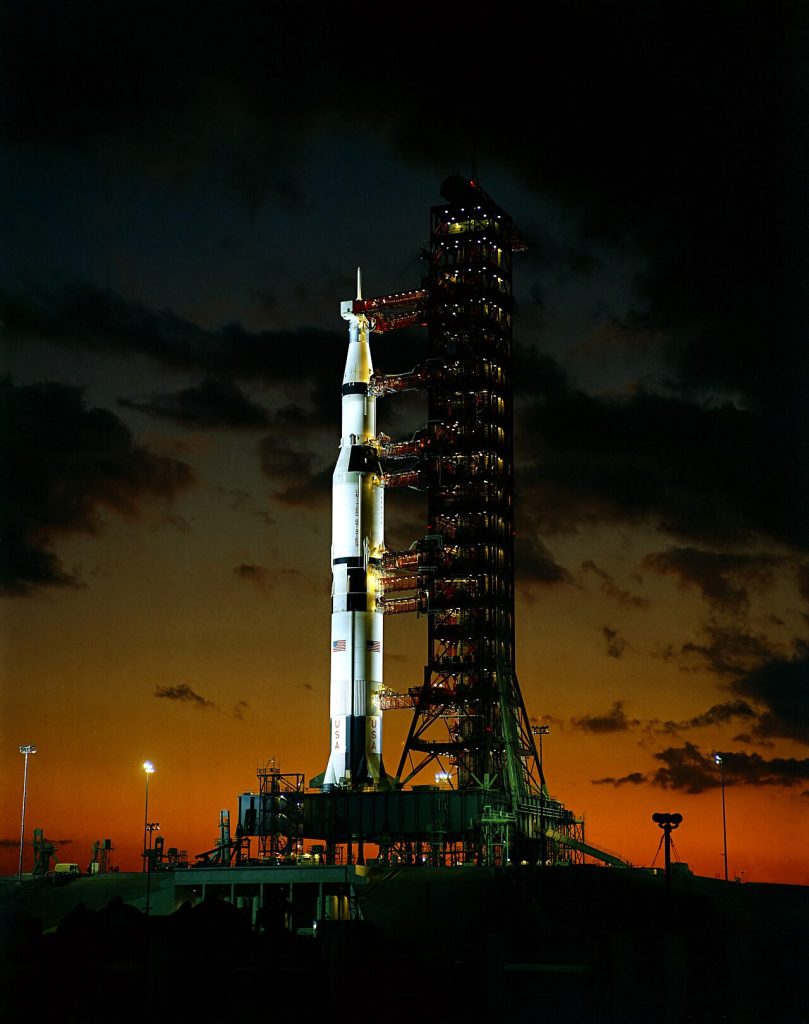


On this day in aviation history, 59 years ago (November 9, 1967), NASA launched Apollo 4, the first flight of the mighty Saturn V rocket. Lifting off from Kennedy Space Center’s Launch Complex 39A in Florida, the uncrewed mission marked a major milestone in America’s effort to land astronauts on the Moon before the end of the decade. Apollo 4 was designed as an ambitious test of the Saturn V launch vehicle and Apollo spacecraft. Rather than testing each rocket stage separately, NASA adopted an “all-up” approach, flying all three operational stages together on the first mission. The launch also marked the first flight of the Saturn V’s enormous S-IC and S-II stages, while the S-IVB third stage was tested for its ability to restart in space.
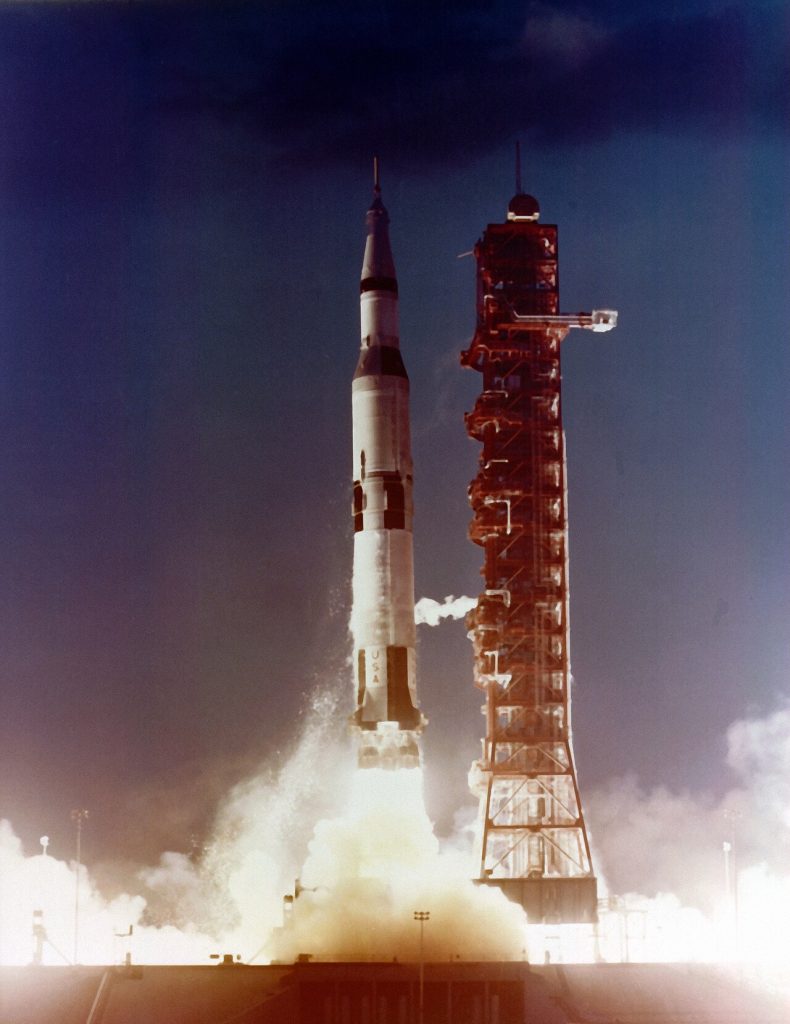
The rocket lifted off at 7:00 a.m. Eastern Standard Time, generating an immense amount of thrust as it climbed away from Launch Complex 39A. The mission successfully placed the Apollo command and service module into Earth orbit before sending it onto a high-altitude trajectory. During its return, the spacecraft reached a speed of approximately 25,000 mph, allowing NASA to evaluate its heat shield under conditions simulating a return from the Moon. After approximately eight hours and 37 minutes, the command module splashed down in the Pacific Ocean and was recovered by the aircraft carrier USS Bennington. The Saturn V stood 363 feet tall and measured 33 feet in diameter at its base. Its first stage was powered by five Rocketdyne F-1 engines producing a combined 7.5 million pounds of thrust, while the second stage used five J-2 engines and the third stage employed a single restartable J-2. The rocket weighed approximately 6.2 million pounds fully fueled and was capable of sending roughly 100,000 pounds toward the Moon. Apollo 4’s successful flight provided critical confidence in the Saturn V and helped pave the way for the first crewed lunar landing less than two years later.