

Adapted from David Legg’s “World Catalina News,” originally published by The Catalina Society and drawn from the Autumn/Winter edition of its members’ magazine, The Catalina News. Vintage Aviation News, a Society member, shares this roundup as part of its continuing support for the organization and its work to keep Catalina Miss Pick Up flying.
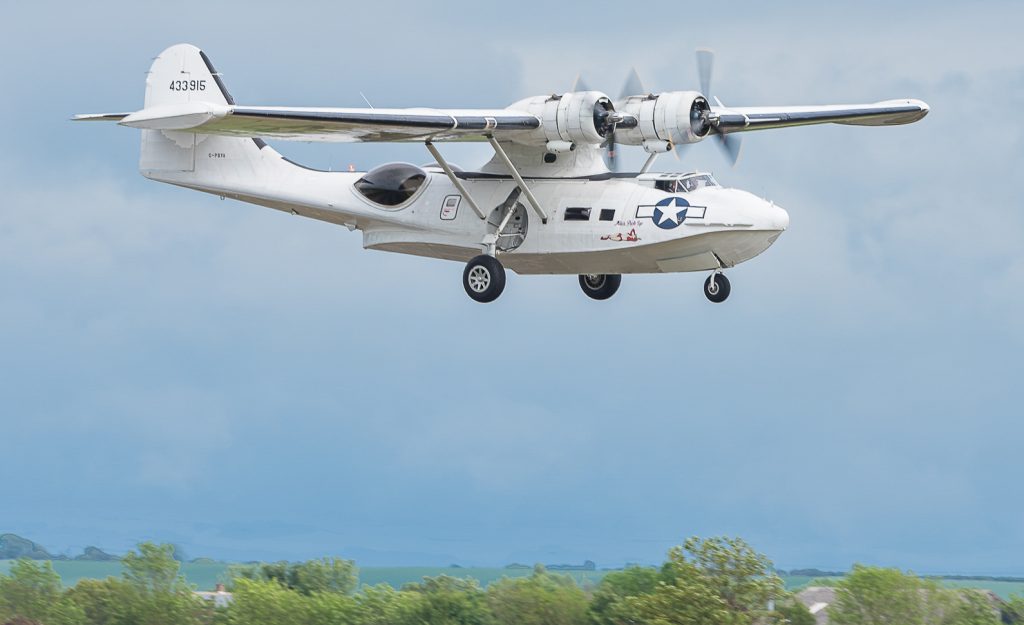
The return to flight of the world’s oldest airworthy Catalina leads this latest roundup of news from the international Catalina and Canso community. Alongside that milestone, restoration teams are making progress on museum aircraft, other examples remain grounded for substantial repairs, and surviving airframes continue to reveal stories spanning military service, firefighting, and preservation. The following updates reflect the aircraft status and project progress reported in Legg’s Autumn/Winter roundup. The Catalina Society also maintains a regularly updated Survivors list covering the remaining aircraft worldwide. For consistency, aircraft designations follow their original construction identities, which can differ from their present civil registrations. The Society’s own G-PBYA, for example, was built as a Canso A and subsequently modified to Canso 2F configuration, although the UK civil register identifies it as a PBY-5A.
Seven Catalinas and Cansos in the Active Flying Fleet
Using recent flight activity—within the preceding several months or, at most, the past year—as his benchmark, Legg places the active Catalina and Canso population at seven. The latest addition is PBY-5A N459CF, owned by the Collings Foundation. The oldest airworthy Catalina returned to the air during the summer following an extensive restoration to its original configuration. Completed in time for EAA AirVenture at Oshkosh, Wisconsin, the aircraft earned two prestigious awards during its appearance. The other six aircraft in the flying group are:
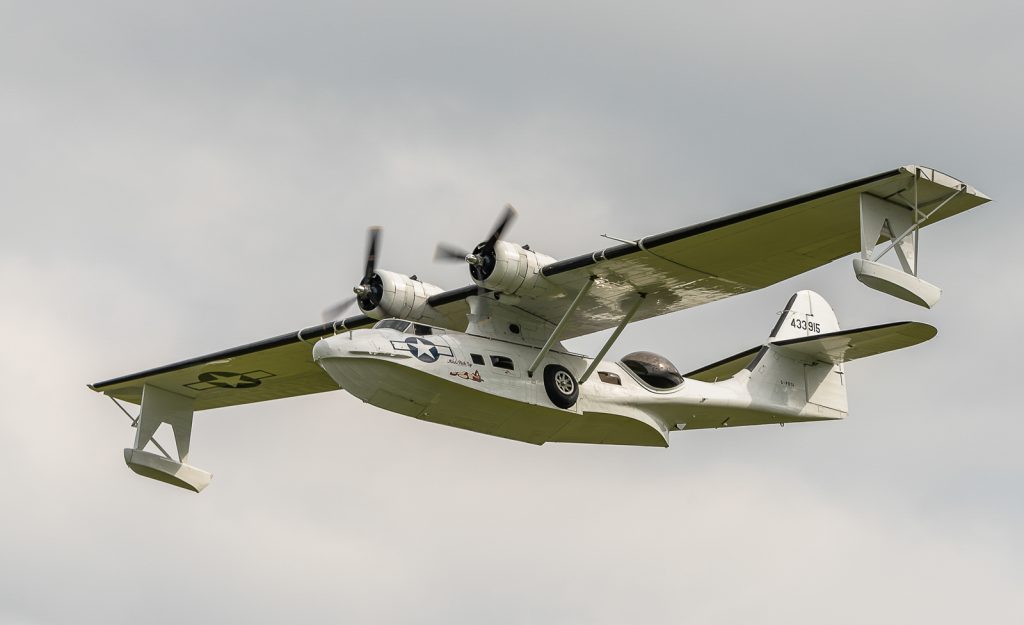
- Canso A G-PBYA, Miss Pick Up — The Catalina Society’s UK-based aircraft.
- Canso A C-FNJE — Fairview Aircraft Restoration Society, Fairview, Alberta.
- Canso A C-FPQL — Canadian Warplane Heritage Museum, Hamilton, Ontario.
- Canso A N427CV — National Museum of World War II Aviation, Colorado Springs, Colorado.
- PBY-5A N9521C — The Fighter Factory collection, Virginia Beach, Virginia.
- Canso A N9767 — Soaring By The Sea Foundation, Eugene, Oregon.
Only two of these seven are former U.S. Navy PBY-5As; the remaining five are former Royal Canadian Air Force Canso As. With the exception of N9521C, all spent substantial portions of their civilian careers as firefighting waterbombers—a role that helped ensure their survival long after military retirement. At least four or five additional aircraft in Australia, Canada, Greece, and the United States remain potential future flyers, although they have not flown for some time.

Michigan Restoration Prepares a Catalina for Hawaii
At the Air Zoo in Kalamazoo, Michigan, restoration continues on PBY-5A BuNo 46602, formerly registered N607CC, for eventual display at the Pearl Harbor Aviation Museum. Following U.S. Navy service, the aircraft operated with the Mexican Navy before becoming a waterbomber with The Flying Fireman Ltd. of Victoria, British Columbia. By 1994, it had reached the National Museum of Naval Aviation—now the National Naval Aviation Museum—in Pensacola, Florida. Years of outdoor storage exposed the Catalina to weathering and storm damage. A loan to the Pearl Harbor Aviation Museum was agreed in 2023, with restoration taking place in Michigan before shipment to Hawaii. Legg reports work on the tail assembly and engine cylinders. The project is intended to prepare the aircraft for static exhibition rather than a return to flight.

Landing Accident Grounds N222FT
Another previously active aircraft, Canso A N222FT, faces an uncertain path following its October 31, 2025, landing accident at Mark Anton Airport in Dayton, Tennessee. According to Legg’s account of the subsequently available National Transportation Safety Board report, the left main landing gear collapsed during the landing roll, resulting in a ground loop and considerable damage. Once a frequent flyer, N222FT has therefore been removed from his active-aircraft count. A future return remains a possibility, but the damage represents a substantial setback.

(Image credit: Aviatoin 24/7)
The “Catalina Garden” in the Solomon Islands
Although underwater wrecks generally fall outside the scope of the Society’s survivors list, one site near Gavutu Island in the Solomon Islands offers a notable exception for discussion. Researcher and diver Ewan Stevenson, who explored the site with Bob Norton, identified the remains as PBY-5 BuNo 08136, a VP-44 aircraft carrying the number 44-P-8. On March 24, 1943, the Catalina suffered a double engine failure after taking off from Halavo Beach, near the wartime flying boat base on Florida Island. It sank following a forced water landing. The yard net tender USS Butternut (YN-4) subsequently raised the aircraft for salvage. After recoverable components had been removed, the airframe was cut into sections, loaded onto a barge, and scuttled in Gavutu Harbour, in outer Halavo Bay. Discovered during a Sealark Exploration Inc. survey, the scattered sections remain on the sandy seabed. Stevenson describes aircraft structure interspersed with marine growth and bluefin trevallies, giving the site its evocative name: “The Catalina Garden.”

A Canadian Canso Hull Survives in Ontario
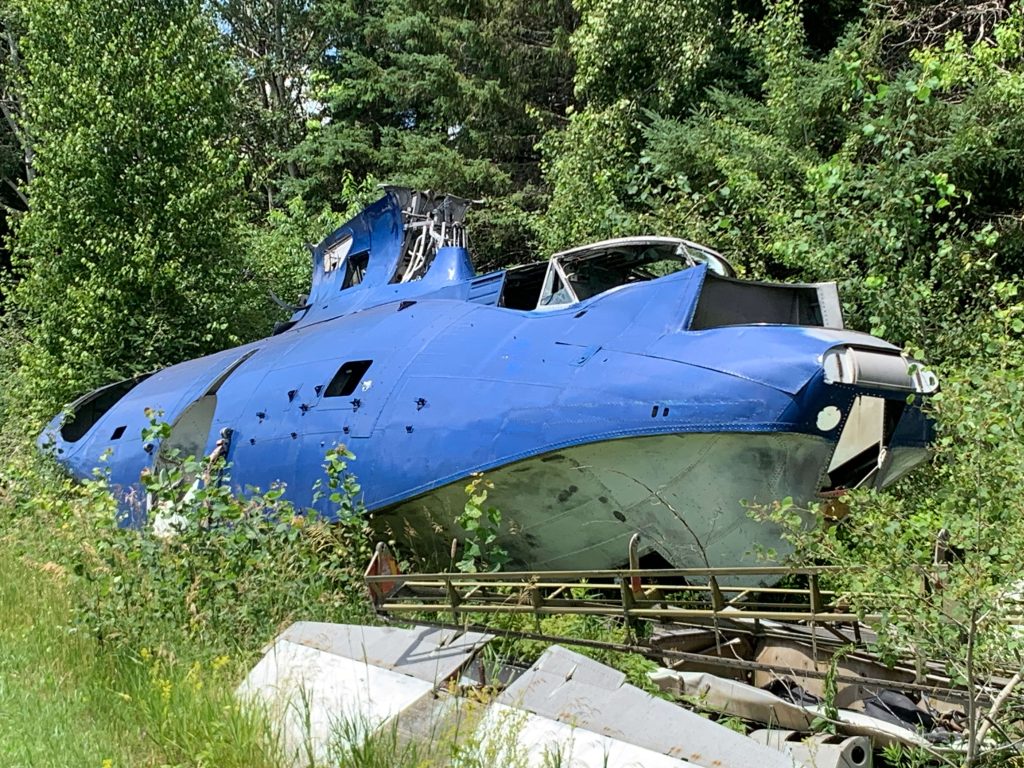
Air-Britain member Andy Marden has confirmed the continued survival of Canso A RCAF 9825 during a visit to Uxbridge, Ontario. The wingless hull belongs to Vince O’Connor’s O’Con-Aircraft Supplies business, also known as The Movie Hangar Inc. Recently painted bright blue, it remains far removed from its former military appearance. Surplused by the Royal Canadian Air Force in 1950, the aircraft eventually joined farmer George Ventress’s well-known collection of Cansos at Brighton, Ontario. It later passed to Harold Carlaw’s Memorial Military Museum in Campbellford before being acquired by Canadian Warplane Heritage in 2010. Its stay there was relatively short. Around 2016–2017, the hull was sold to O’Connor. Its eventual disposition remains to be seen.
Australian Projects: Merredin, Point Cook, and HARS
Several Australian aircraft feature in Legg’s latest report, with projects ranging from outdoor display preparation to substantial structural restoration. At the Merredin Military Museum in Western Australia, work continues toward bringing former RAAF PBY-5 A24-46 to display standard. Photographs supplied by Down Under Aviation News indicate limited visible progress in recent months, although supporting struts are now fitted beneath the wing and the starboard engine mount is in place. In Victoria, the disappearance from public view of Canso A ex-VH-EXG at the RAAF Museum, Point Cook, prompted questions about its whereabouts. Previously operated in Australia as a Wright Cyclone-powered “Super Catalina” on geological survey work, the aircraft’s hull was later restored to represent a wartime PBY-5A. Although displayed without wings, it carried bow and blister turrets, an overall Foliage Green finish, and the identity A24-104/NR-H, representing an aircraft of No. 113 Air-Sea Rescue Flight in 1945. David Gardner, Senior Air Force Heritage Collections Manager, confirmed to Legg that the hull had moved into storage during a major museum display upgrade. Gardner’s connection with the aircraft dates to 1989, when he helped acquire VH-EXG while serving in the RAAF. He is now managing restoration of the wings, described as nearly complete, with the empennage to follow. The outer wings and trailing edges are at Wangaratta, Victoria, and the center section is expected to go there for restoration in due course. The longer-term hope is to assemble and display the complete aircraft. Meanwhile, PBY-6A VH-PBZ, formerly a regular flyer with the Historical Aircraft Restoration Society at Shellharbour Airport, New South Wales, remains undergoing extended restoration and repair. HARS contact Peter Costigan reports that one large trailing-edge section is receiving new fabric, while another requires repairs following the discovery of corrosion. Aileron control tubes and supporting structures also await replacement as volunteer time and manpower permit.
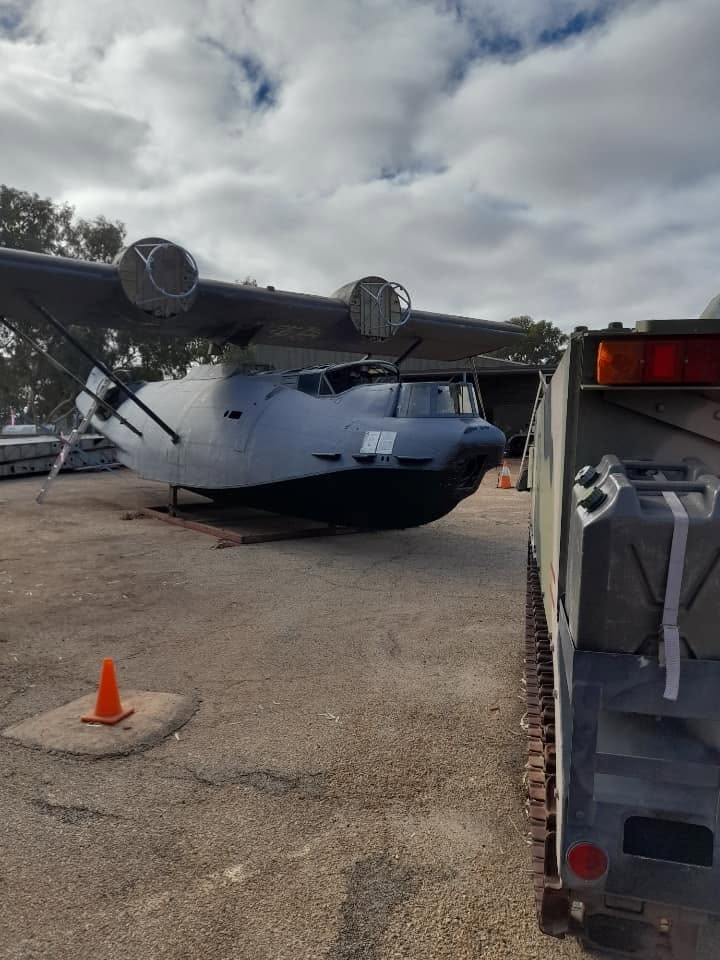
(Image credit: Merredin Military Museum)
Concern for the RAF Museum’s Catalina
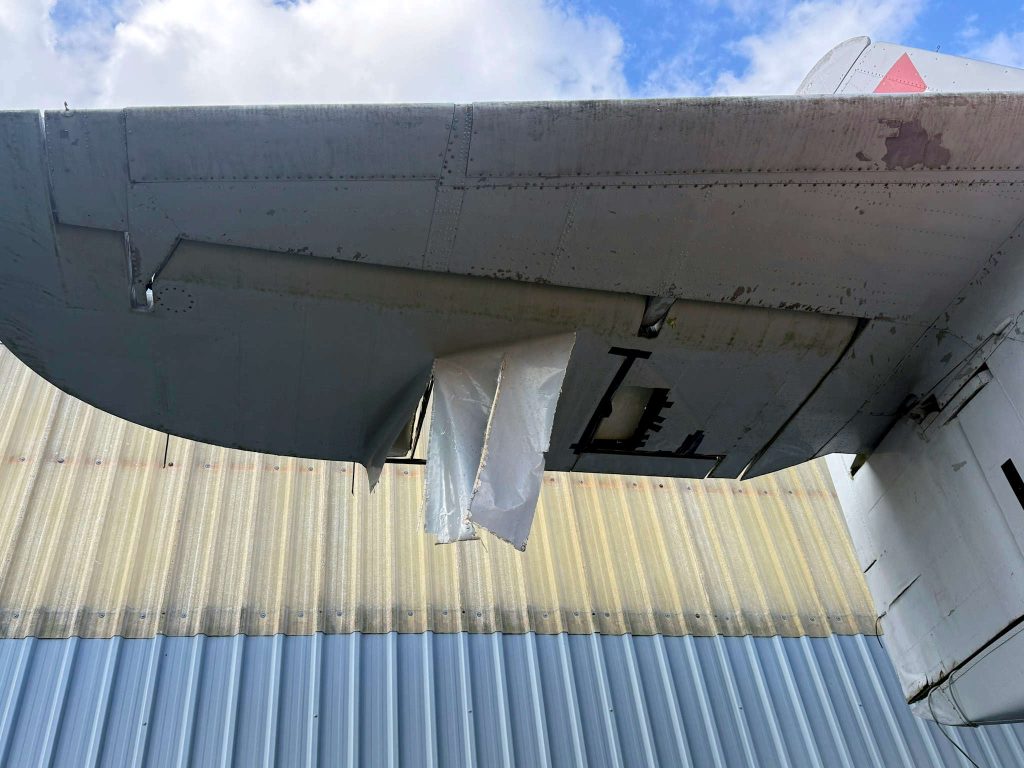
The roundup closes with concern over PBY-6A L-866, formerly operated by the Royal Danish Air Force and displayed outdoors at the RAF Museum Midlands, Cosford. Legg reports continuing deterioration, with a photograph taken in May showing damage to the starboard horizontal stabilizer. He notes that the port stabilizer is in similarly poor condition.
Supporting The Catalina Society
From award-winning flying restorations to vulnerable outdoor exhibits, these updates show the continuing effort required to preserve the world’s surviving Catalinas and Cansos. Vintage Aviation News is a member of The Catalina Society and supports its mission to keep Miss Pick Up airworthy. The Society brings together enthusiasts who help sustain the aircraft and receive The Catalina News, the members’ magazine from which this roundup is drawn. Readers can explore the Society’s Catalina Survivors list, read David Legg’s original “World Catalina News” article, or visit the Memberships page to learn how to join and support Miss Pick Up.