







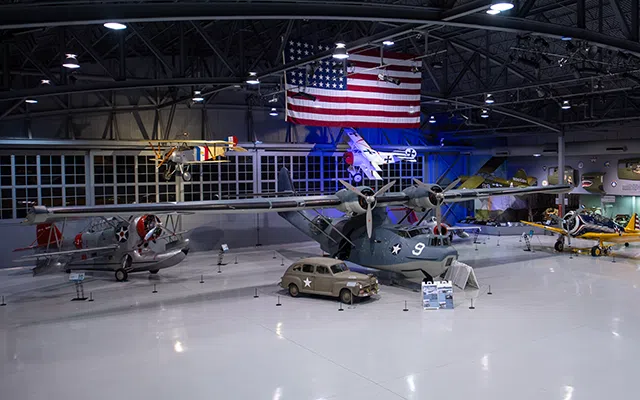
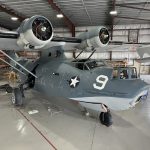
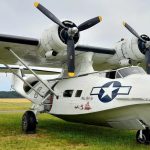
The American Heritage Museum’s recently restored Consolidated PBY-5A Catalina, BuNo 2459, is now on display in the Eagle Hangar at the EAA Aviation Museum in Oshkosh, Wisconsin. The historic aircraft, which received Grand Champion WWII honors at EAA AirVenture Oshkosh 2026, is expected to remain at the museum until next summer. Believed to be the oldest surviving PBY Catalina, BuNo 2459 has an exceptional combat history. During a 19-month deployment to Iceland in WWII, the aircraft completed 195 combat missions and accumulated more than 1,675 combat hours. Its crews recorded 13 U-boat sightings, attacked 10 submarines, and were credited with sinking three: U-464, U-582, and U-194. A fourth submarine, U-528, was badly damaged and subsequently destroyed.
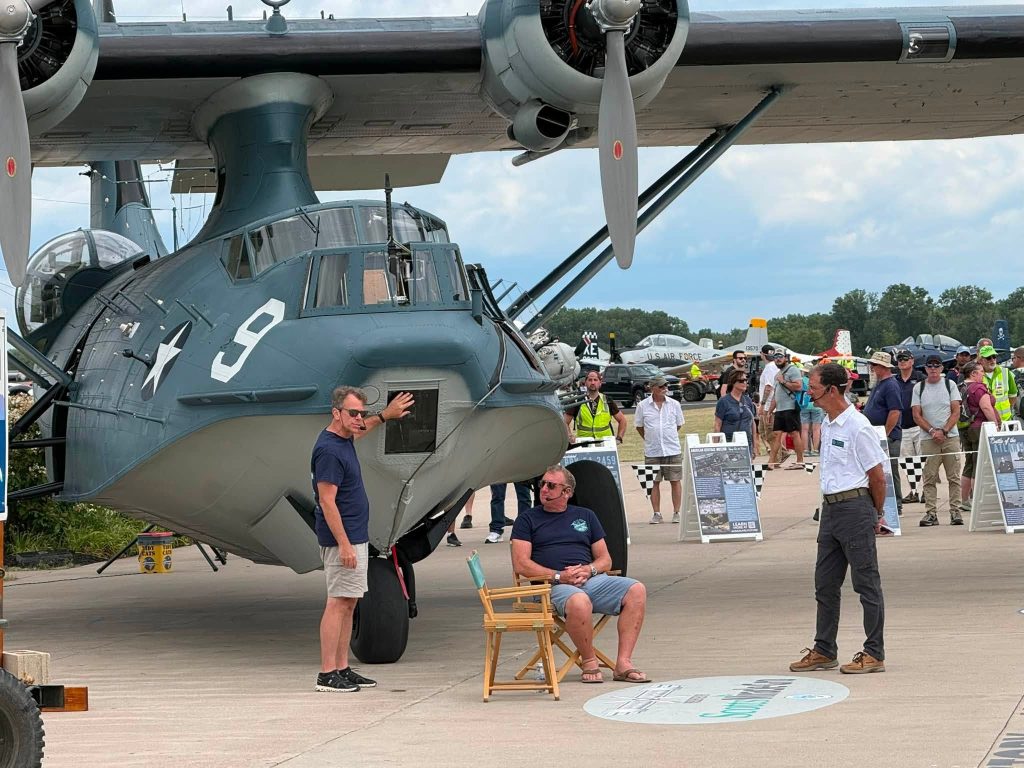
(Image credit: American Heritage Museum)
The Catalina was assigned to Patrol Squadron 73 at Fleet Air Base Reykjavík, Iceland, during the Battle of the Atlantic. From there, its crews patrolled the cold waters of the North Atlantic in search of German submarines threatening the Allied supply lines to Europe. On August 20, 1942, the aircraft was flown by Lt. Robert B. Hopgood and his crew during an attack on U-464, a large “Milchkuh” submarine used to resupply other U-boats at sea. After the submarine was sunk south of Iceland, a brief message was transmitted to the base: “Sank sub, open club!” The message referred to a decision by Capt. Daniel V. Gallery, VP-73’s commanding officer in Iceland, to close the officers’ club until the squadron recorded a successful attack against a U-boat.
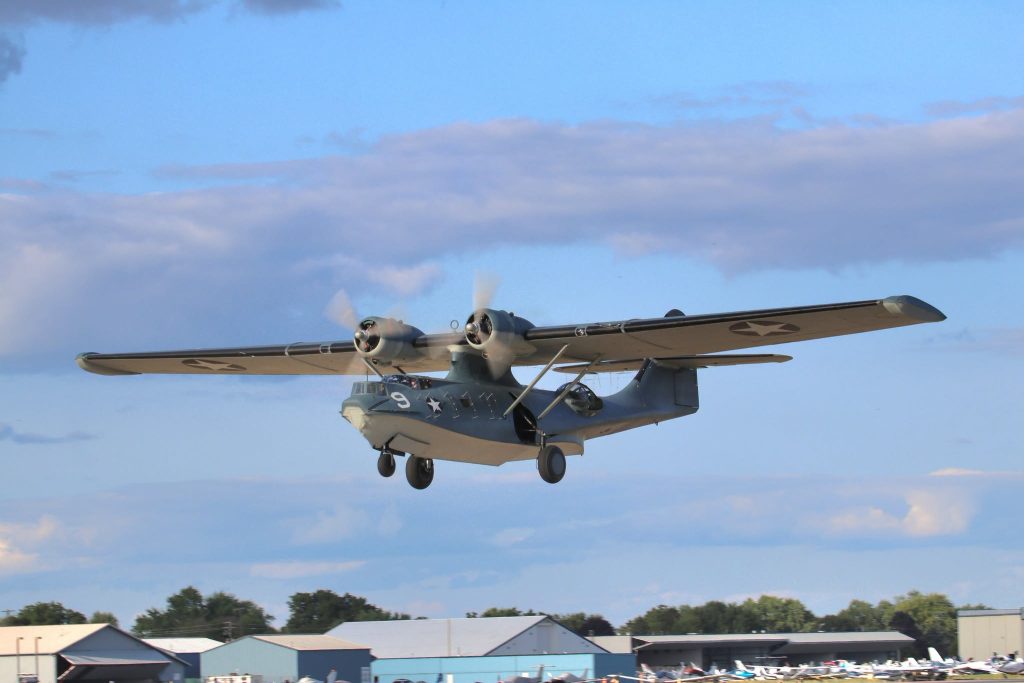
BuNo 2459 continued operating from Iceland and became one of the most successful anti-submarine Catalinas of the war. Aircraft such as the PBY played a critical role in protecting the convoys that carried troops, fuel, equipment, and other essential supplies across the Atlantic. Maintaining those supply routes was vital to the survival of Great Britain and the buildup of Allied forces ahead of the invasion of continental Europe. Following its North Atlantic deployment, BuNo 2459 returned to the United States and was assigned to several Navy installations, including Anacostia, Gainesville, and Pensacola. It was also operated from Coast Guard Air Station Elizabeth City.
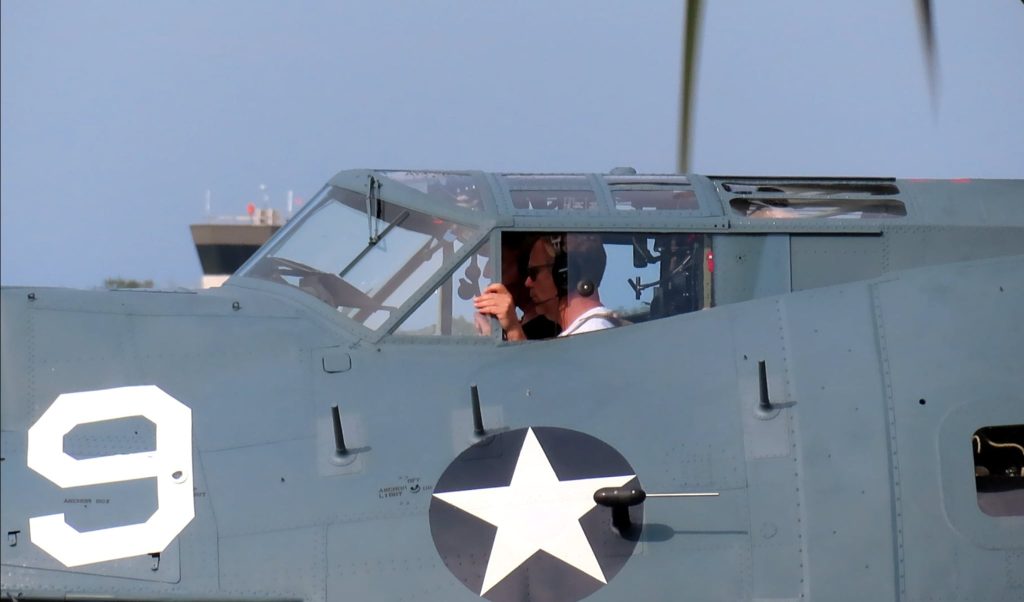
The aircraft entered civilian service in 1946 and was eventually converted into a water bomber. It spent years fighting forest fires in Canada before being retired from that role during the 1980s. The Catalina was later preserved by a Dutch organization and repainted in Royal Netherlands Navy markings in 1995. In 2019, it was acquired through donor support for the American Heritage Museum in Stow, Massachusetts. It was then ferried across the North Atlantic and delivered to American Aero Services in New Smyrna Beach, Florida, for an extensive restoration. Over the next seven years, the aircraft was returned as closely as possible to its August 20, 1942, wartime configuration. Civilian passenger fittings and firefighting equipment were removed, while the turrets, crew stations, radar installation, radio compartment, and other military details were rebuilt or re-created.
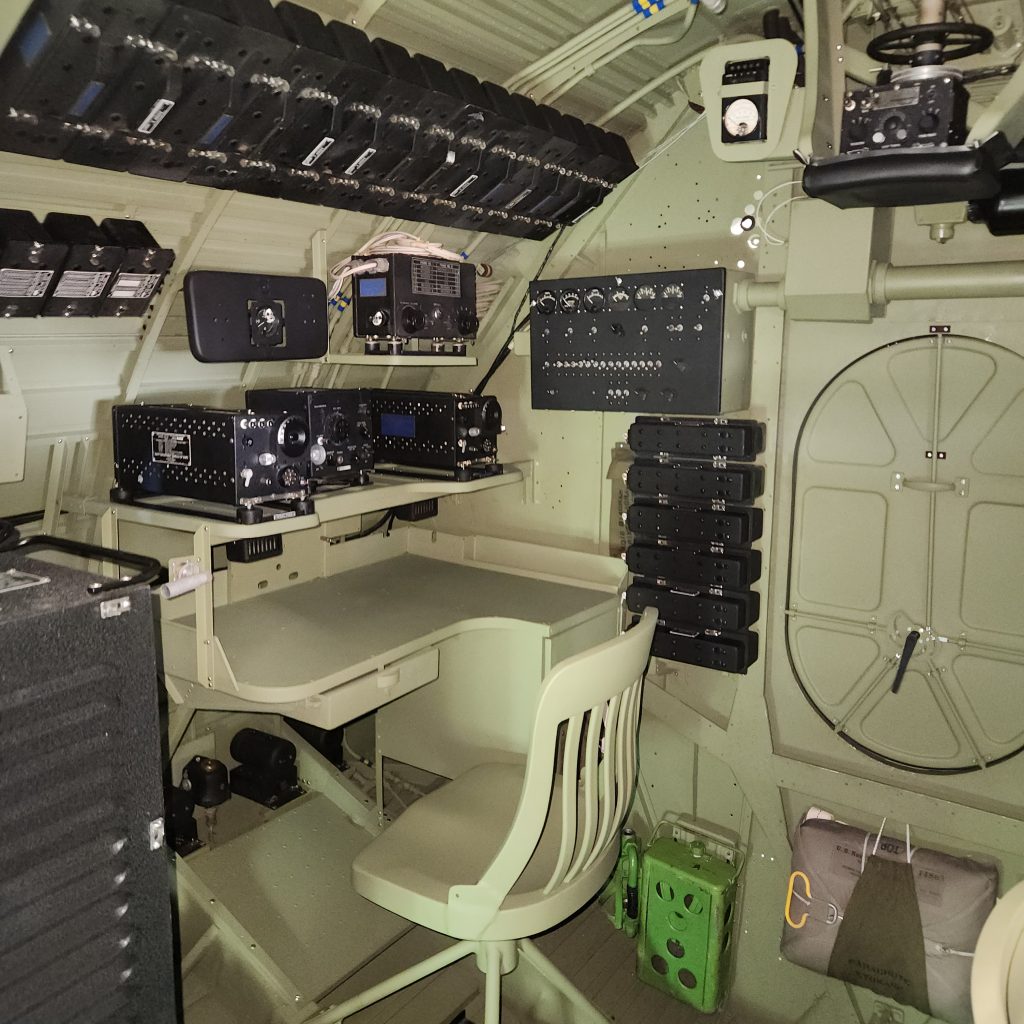
Considerable effort was devoted to locating period-correct equipment. Radios and other components were selected according to their production dates so that the completed aircraft would accurately represent a Catalina operating during the opening months of America’s involvement in WWII. Returning the PBY to its wartime configuration required its civilian type certificate to be surrendered, with the aircraft subsequently operated in the experimental category. Its original-style rudder, bomb nose, turrets, and military equipment were reinstated during the restoration. BuNo 2459 returned to the air on July 6, 2026, shortly before its appearance at AirVenture. Its history and restoration were also featured during a Warbirds in Review presentation with American Heritage Museum President Rob Collings and PBY pilot and historian Joe Scheil.

Following its award-winning appearance at AirVenture, the Catalina has been placed inside the EAA Aviation Museum’s Eagle Hangar. Its extended stay will provide museum visitors with an opportunity to view one of the most historically significant surviving Catalinas and learn more about the aircraft’s role in the Battle of the Atlantic.












Thank you for doing this. My Dad was a C 46/ C 47 load master, in the PTO, 20 th AAF. His cousin was a B-24 pilot in the ETO, 8th AAF . Another cousin was a C 46 pilot, shot down, killed over China. 3 boys went, 2 came home. Way it was. Al Johnson .
The Catalina, one of those Great Aircraft that just ….. Look’s Right!
And, looks aside, did Sterling Service in All The War Theatres of WW2.
Let’s also not forget the R.A.F Coastal Command Catalina, with an American… ”Instructional Pilot” … that found the disappeared German Battleship Bismarck – He was flying at the time.
From: http://www.defensemedianetwork …
”The news that reached London on May 24, 1941, could not have been worse for the Admiralty. The German battleship Bismarck and heavy cruiser Prinz Eugen had sunk the battlecruiser HMS Hood, and damaged the new battleship Prince of Wales. That the Bismarck had been slightly damaged was cold comfort to a Royal Navy that had suffered its greatest defeat in living memory. British armed forces rallied every resource to avenge the loss, resources that included Ensign Leonard B. “Tuck” Smith of the U.S. Navy, who would have a pivotal role in the sinking of the Bismarck.”
A major role played-out by the Catalina, at One of WW2’s Crucial Pivotal Moments.