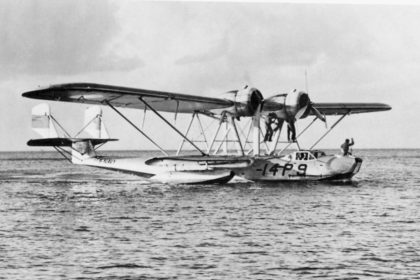
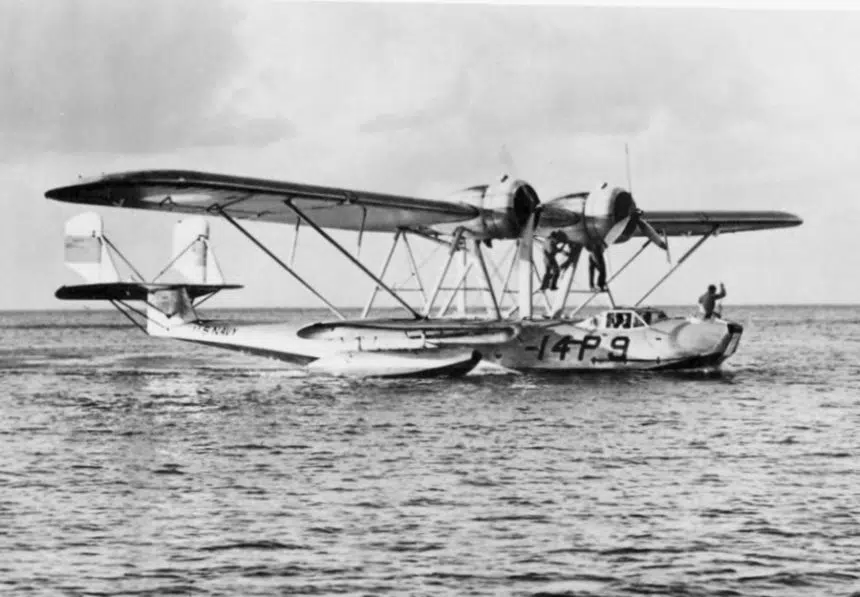

Patrol Squadron 29 was a US Navy unit that served in naval aviation from before WWII through the early Cold War. It was formed as Patrol Squadron 14-F at NAS Norfolk, Virginia, on November 1, 1935. At first, it flew six PM-2 flying boats with help from the seaplane tender USS Owl. Over the next 14 years, the squadron changed its name multiple times and used various aircraft, including the PBY Catalina and PB4Y-2 Privateer. It operated in the Atlantic, Caribbean, Central Pacific, and Aleutian Islands. Before the US entered WWII, the squadron conducted neutrality patrols; it later carried out combat missions against Japanese forces, laid aerial mines, performed air-sea rescue missions, and conducted Arctic patrols. The squadron became Patrol Squadron 29 on September 1, 1948. In its early years, the squadron focused on training and fleet exercises. In March 1938, it took part in Fleet Landing Exercise No. 4 and visited Miami, Guantanamo Bay, Port Padre, San Juan, and St. Thomas. In June that year, the squadron received 11 P2Y-2 flying boats from another patrol squadron moving to the newer PBY Catalina. The larger aircraft allowed the squadron to increase its authorized strength from six to 12 planes, although only 11 P2Y-2s were assigned. The unit was redesignated Patrol Squadron 14 on September 4, 1937. Less than two years later, on July 1, 1939, it became Patrol Squadron 52. When war broke out in Europe in September 1939, the United States stayed neutral. President Franklin D. Roosevelt announced this neutrality on September 5, leading to the start of the Neutrality Patrol.

By September 20, the patrol was active along the US coast. Patrol Squadron 52 teamed up with another patrol squadron and a group of destroyers to protect the area around Norfolk. On October 1, 1939, Patrol Squadron 52 moved to Naval Station Charleston, South Carolina, to keep a closer watch on the southern Atlantic coastline. In 1940, the squadron operated from locations like Parris Island and Winyah Bay, with support from the seaplane tenders USS Owl and USS Thrush. During this time, the squadron’s aircraft also changed. Between December 1940 and January 1941, it replaced its old P2Y-2 planes with newer PBY-5 Catalinas. The P2Y-2s were the last of their type still in use. On January 1, 1941, Patrol Squadron 52 returned to NAS Norfolk. In the following month, Patrol Squadron 52 moved to the unfinished Naval Air Station in San Juan, Puerto Rico. From Puerto Rico, Patrol Squadron 52, along with another squadron, conducted Neutrality Patrol operations throughout the Caribbean, from the West Indies to Trinidad. In 1941, the squadron became part of a larger Atlantic patrol group. Rear Admiral Arthur L. Bristol took command of the Support Force, US Atlantic Fleet, which ran the Neutrality Patrol. Patrol Squadron 52 joined other patrol squadrons under this new command. On May 5, 1941, Patrol Squadron 52 moved to NAS Quonset Point in Rhode Island, which provided better coverage of northern Atlantic sea lanes and helped protect the transport of war materials to Britain.

Ten days later, on May 15, the squadron deployed to NAS Argentia in Newfoundland, a recently acquired American base through the Destroyers for Bases Agreement. The squadron operated 10 PBY-5 Catalinas from Newfoundland, while two aircraft initially stayed at Norfolk. One of the squadron’s most famous missions before the war took place in May 1941. The German battleship Bismarck had sunk HMS Hood in the Denmark Strait and was being pursued by British forces. On May 24, all available Patrol Squadron 52 aircraft launched in strong winds to search for the Bismarck. The aircraft did not find the battleship because it had moved south of the designated search area. The weather also posed a challenge. None of the 11 planes involved in the search could return directly to NAS Argentia because conditions at the base were worsening. However, all planes eventually returned safely. Days later, on May 29, four Patrol Squadron 52 aircraft traveled to Iceland aboard USS Belknap, operating from Reykjavík. Its mission was to check the east coast of Greenland, where Danish weather stations were suspected of helping German forces send weather reports to U-boats. The crews found the facilities abandoned and returned to NAS Argentia on June 8. On July 1, 1941, the Navy reorganized the Support Force into Patrol Wing 7, and Patrol Squadron 52 became Patrol Squadron 72. The Japanese attack on Pearl Harbor changed the mission of Patrol Squadron 72 completely. Just days after the attack, on December 9, the squadron received orders to travel across the United States and prepare for a flight to Hawaii. It moved to NAS Alameda, California, to start its journey west.

Between December 21 and 23, seven aircraft flew to NAS Kaneohe Bay in Hawaii. Three more aircraft left Alameda later with another patrol squadron. Two of those three were lost at sea, but their crews were rescued. One aircraft was salvaged, while the other sank. On December 24, Patrol Squadron 72 began patrols from Kaneohe Bay. The aircraft flew missions that covered areas about 700 miles wide, with each mission lasting 11 to 12 hours. A two-plane team was also sent to Johnston Island. Two aircraft that stayed behind in Alameda eventually crossed the Pacific and rejoined the squadron on January 31, 1942. The shift to wartime operations had losses. On February 17, a squadron Catalina crashed during an early-morning takeoff from Kaneohe Bay. All but one crew member was killed. Patrol Squadron 72 started operating across the Pacific. From March 14 to May 23, 1942, a six-aircraft group worked from Nouméa. During this time, one aircraft hit a coral head while taxiing at Kanton Island and needed two weeks of repairs. The squadron also began using the PBY-5A amphibious Catalina. The Navy shared aircraft among patrol squadrons at Kaneohe Bay, requiring crews to train on both the traditional flying-boat PBY-5 and the amphibious PBY-5A. At first, the crews disliked the amphibious version. It was slower, harder to take off, more vulnerable during open-sea landings, and less capable of flying with one engine.

By September 1942, Patrol Squadron 72 moved deeper into the combat zone. The squadron deployed in sections to Luganville Seaplane Base on Espiritu Santo. On October 7, it had its first direct encounter with Japanese forces when Lieutenant Cocowitch’s aircraft came under fire from a Japanese ship. The squadron later received more PBY-5A aircraft. By January 1943, the squadron had 16 amphibious Catalinas. On January 23, a squadron aircraft on patrol in the Solomon Islands area claimed a probable Japanese submarine kill. However, postwar Japanese records did not confirm any submarine loss on that date. By mid-1943, Patrol Squadron 72 returned to the continental United States after its first major Pacific deployment. In August 1943, the squadron returned to Hawaii and established new detachments across the Central Pacific. In October and November, its aircraft operated from Kanton, Baker, Johnston, and Midway islands before focusing on Funafuti. By December 1943, its main focus shifted to rescuing downed airmen. Catalina crews worked from small Pacific bases such as Funafuti, Nanumea, Apamama, Tarawa, and Makin. Dumbo missions involved locating airmen downed during combat and guiding ships or submarines to them. When conditions were good, the PBY aircraft could land and pick up survivors.

In January 1944, the squadron’s mission expanded again as its Catalinas were modified for aerial mine-laying. It conducted missions to block sea resupply to Japanese-held islands. The squadron continued to combine patrol and rescue work in the following months. Aircraft were stationed at Makin, Kwajalein, and Eniwetok, with support from the seaplane tender USS Mackinac. By June, Patrol Squadron 72 had gathered at Ebeye Island for maintenance and to prepare for its return to the United States. The squadron was relieved in July and arrived in San Diego on August 1, 1944. After returning to California, Patrol Squadron 72 reformed at NAAS Brown Field and began training with the PB4Y-2 Privateer, a land-based patrol bomber based on the B-24. On October 1, 1944, the squadron became Patrol Bombing Squadron 122. Initially, the unit was small. By November, six of its seven crews were sent to another patrol squadron to help them reach full strength. Patrol Bombing Squadron 122 stayed inactive until new crews joined and restored its numbers in early 1945. In March 1945, the squadron moved to NAAS Crows Landing, California. There, it operated PB4Y-1 aircraft around San Francisco and nearby shipping routes. The training ended in May. On June 1, Patrol Bombing Squadron 122 moved to Ault Field at NAS Whidbey Island, Washington. It trained over Puget Sound and began receiving new PB4Y-2 Privateers in July. The squadron was finally sent to the combat zone in August.

On August 5, 1945, Patrol Bombing Squadron 122 moved to Shemya in the Aleutian Islands. From there, its Privateers flew reconnaissance missions toward northern Japanese-held islands, getting within about 50 miles of Paramushir. This deployment came as the Pacific War neared its end. After Japan surrendered, the squadron’s wartime mission finished. On October 1, 1945, it was temporarily based at Casco Field on Attu Island while personnel were sent to Seattle to be discharged. The Navy reorganized its patrol forces several times after the war. Patrol Bombing Squadron 122 became Patrol Squadron 122 on May 15, 1946, and then Medium Patrol Squadron (Seaplane) 11 on November 15, 1946. Finally, the squadron was renamed Patrol Squadron 29 on September 1, 1948. By June 1948, it was based at NAS Kodiak, Alaska. The squadron concentrated on the Navy’s Arctic and northern interests. Crews performed navigation training, ice patrols between Kodiak and Point Barrow, and missions to collect information on the Arctic ice cap’s landscape. After nearly 15 years of service under different names, Patrol Squadron 29 was disbanded at NAS Whidbey Island on January 18, 1950. Read more Squadron Histories articles HERE.