

Based on Aldo Fassari’s article, “Quella volta che la Rossa mise le ali: la storia dell’F-104G Ferrari,” published on Motoridilusso.com.
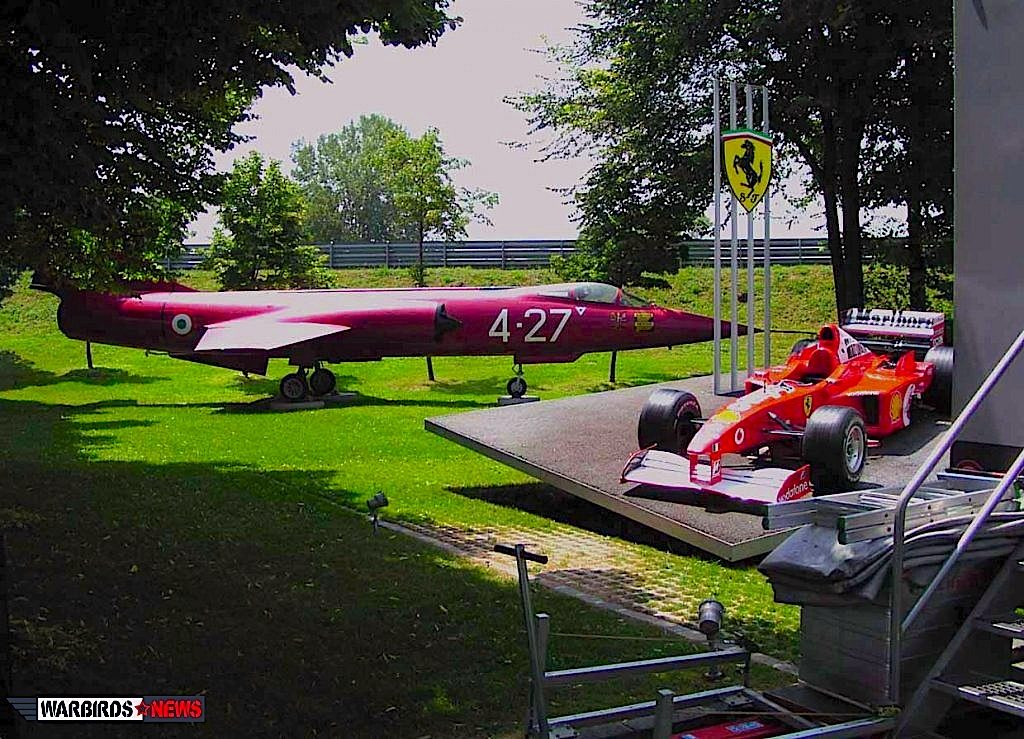
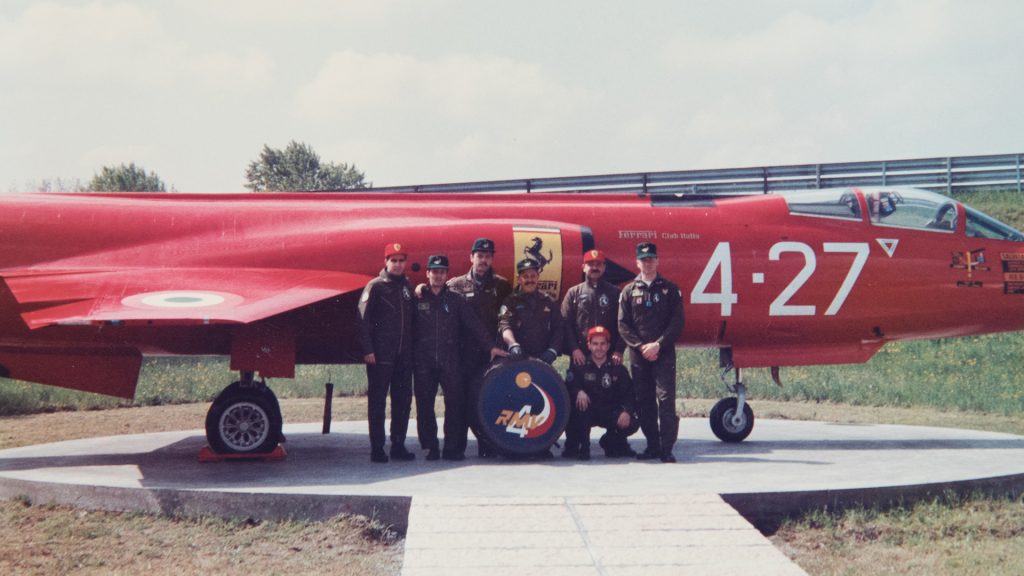
At Ferrari’s Fiorano test circuit near Maranello, Italy, a red-painted Lockheed F-104G Starfighter stands as an unusual monument to the relationship between aviation and motor racing. Wearing Ferrari shields and the fuselage code “4-27,” the aircraft brings together the history of the Italian Air Force’s 4° Stormo, Ferrari, and Canadian racing driver Gilles Villeneuve. The aircraft, serial MM6546, made its public debut in its distinctive colors at Grosseto Air Base on September 17, 1989. Its unveiling celebrated the relationship between the fighter wing and Ferrari Club Italia while honoring a driver whose association with the Italian Air Force had produced one of the most memorable encounters between a racing car and a military jet.
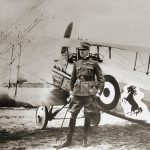
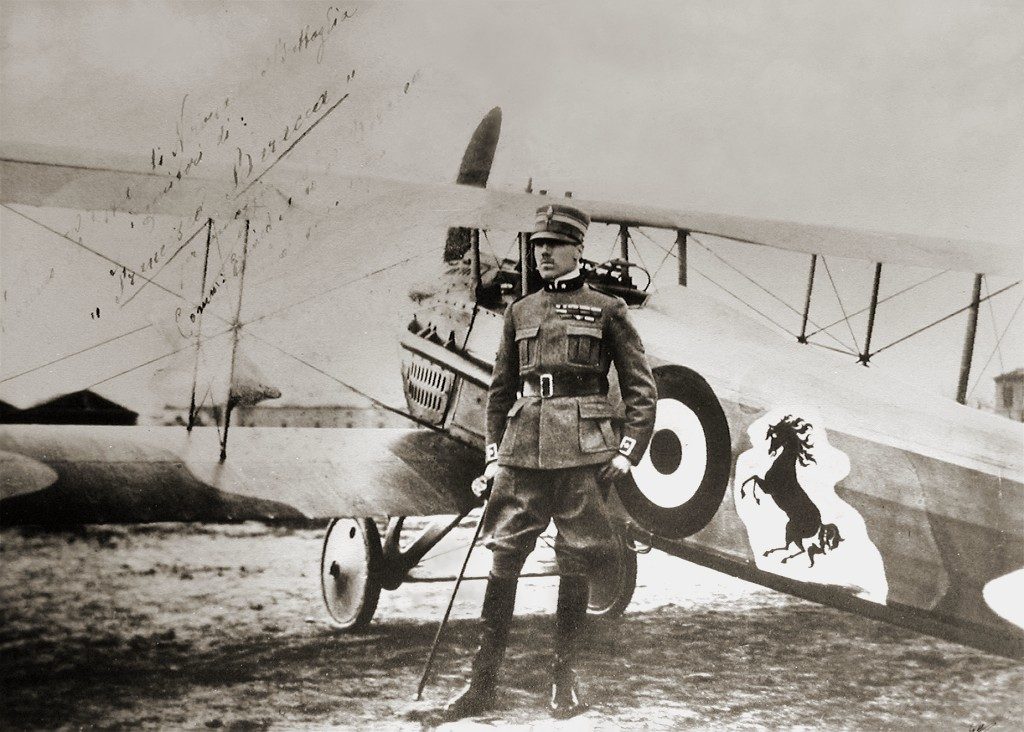
The shared emblem at the heart of the story—the Prancing Horse—had connected Italian aviation and motor racing long before Villeneuve climbed into a Ferrari cockpit. During WWI, Italian fighter ace Francesco Baracca carried the horse on his aircraft. Following his death, his mother encouraged Enzo Ferrari to adopt the emblem as a good-luck symbol. Ferrari placed the black horse against a yellow background, the color associated with his hometown of Modena. The Prancing Horse also became the emblem of the 4° Stormo, giving the racing team and fighter wing a common link to Baracca’s legacy.
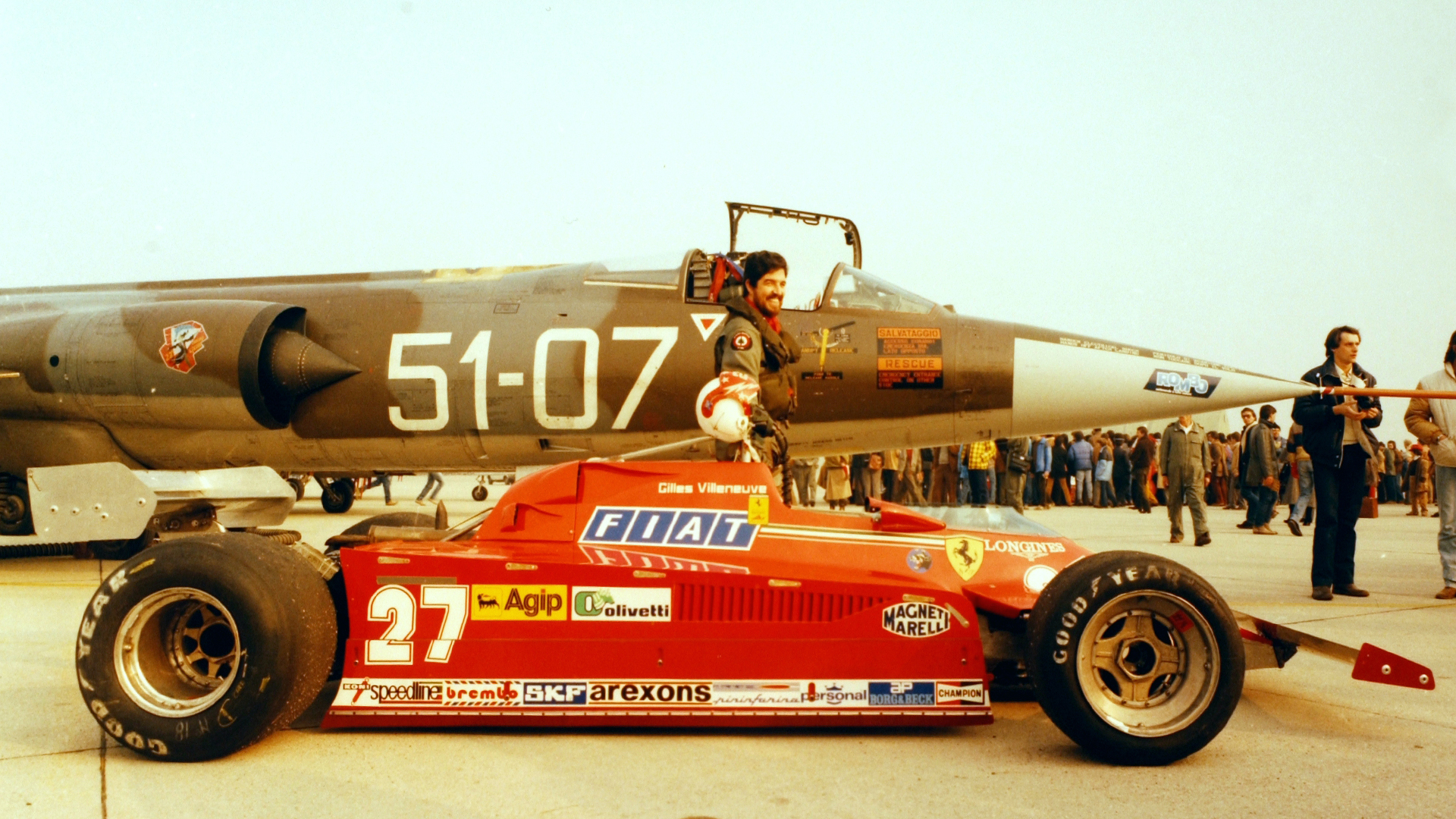
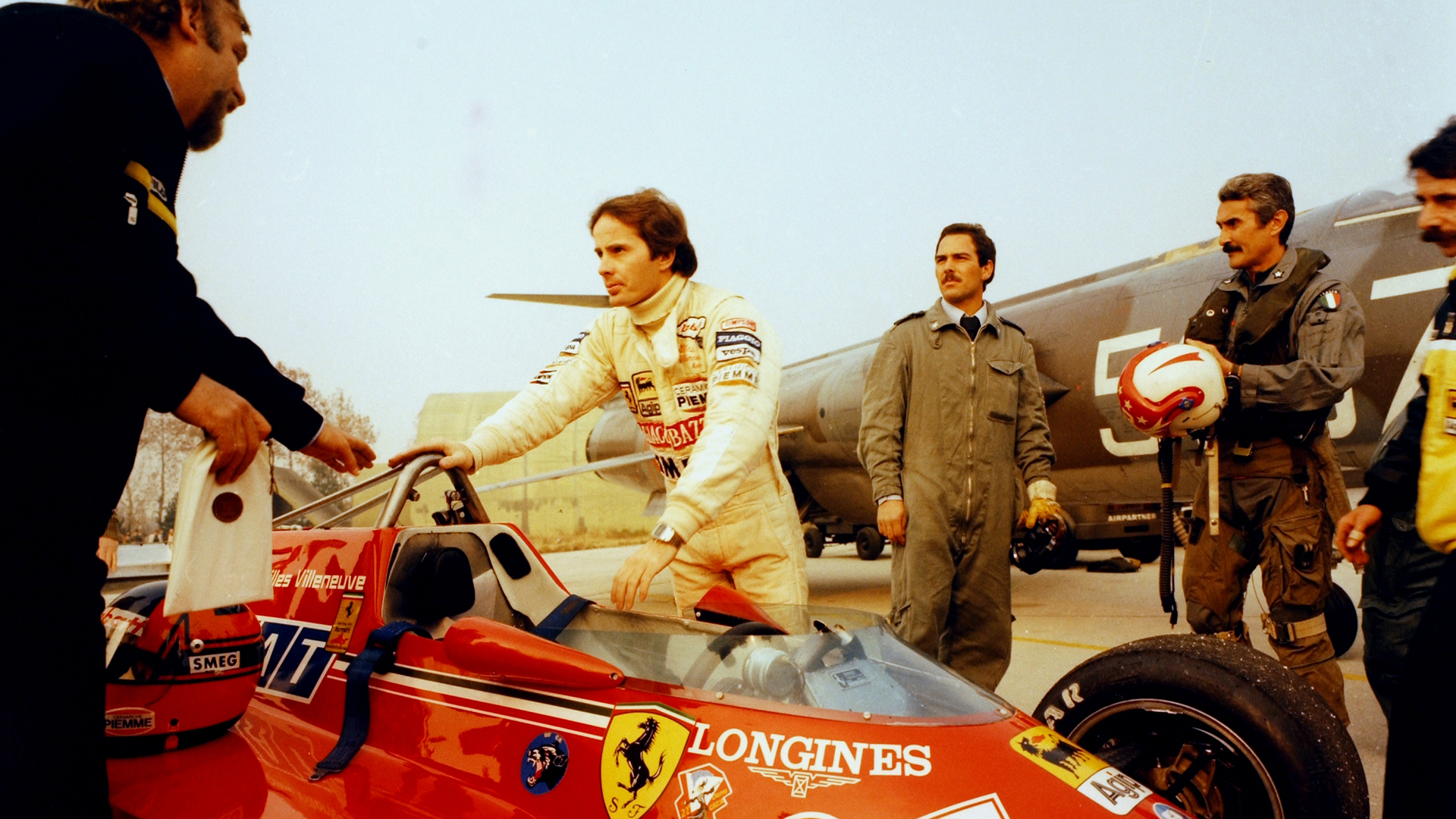
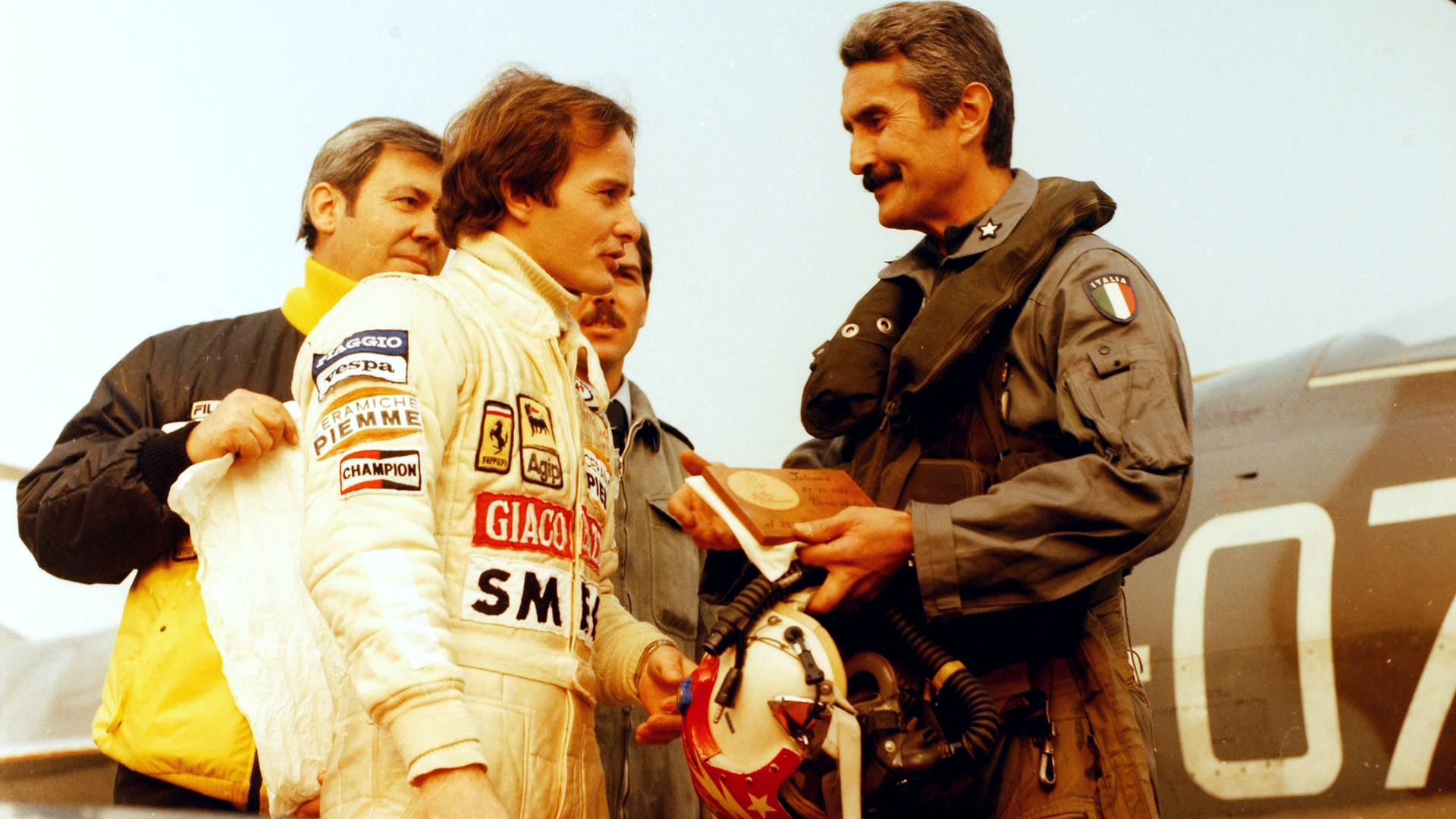
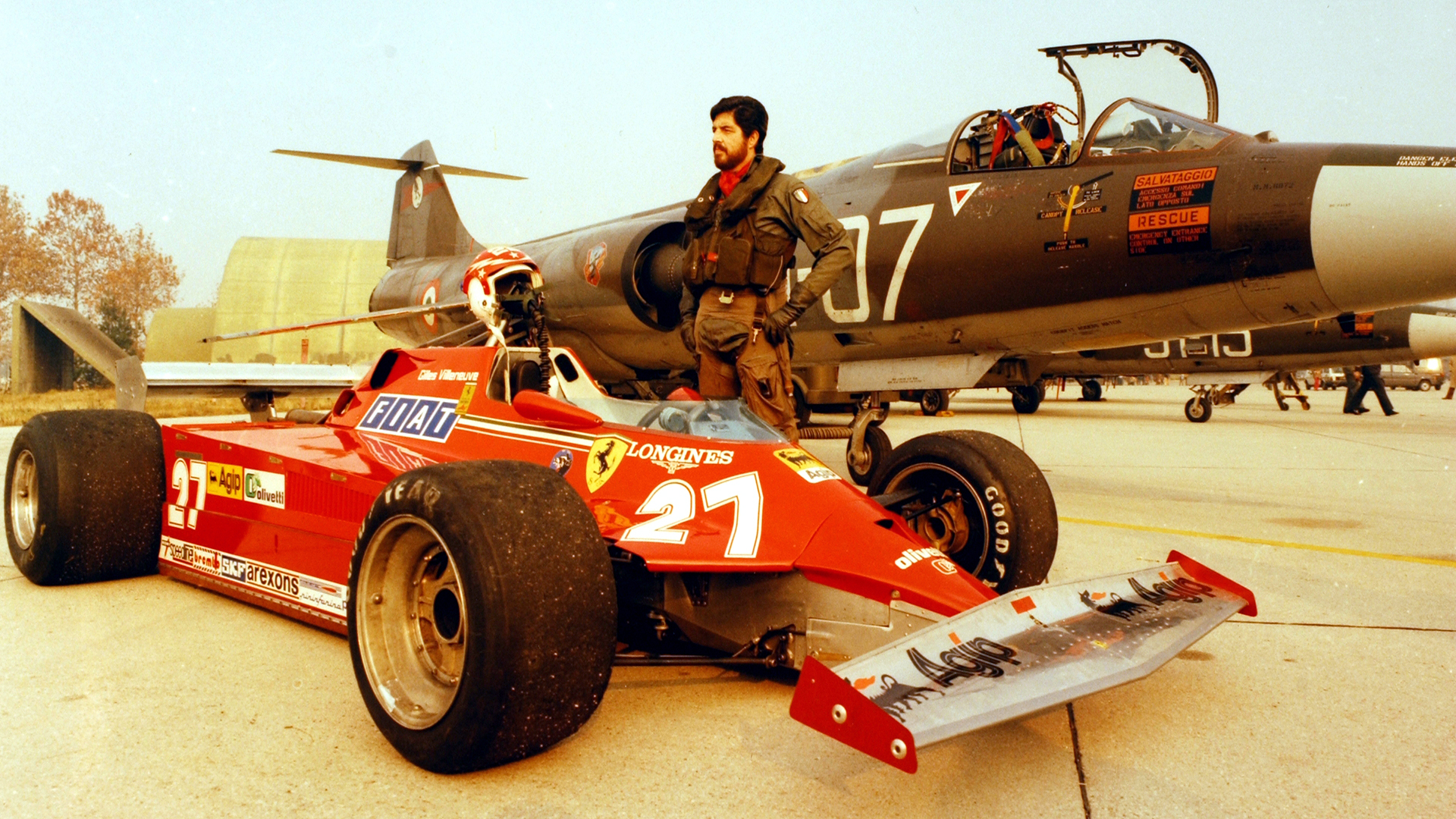
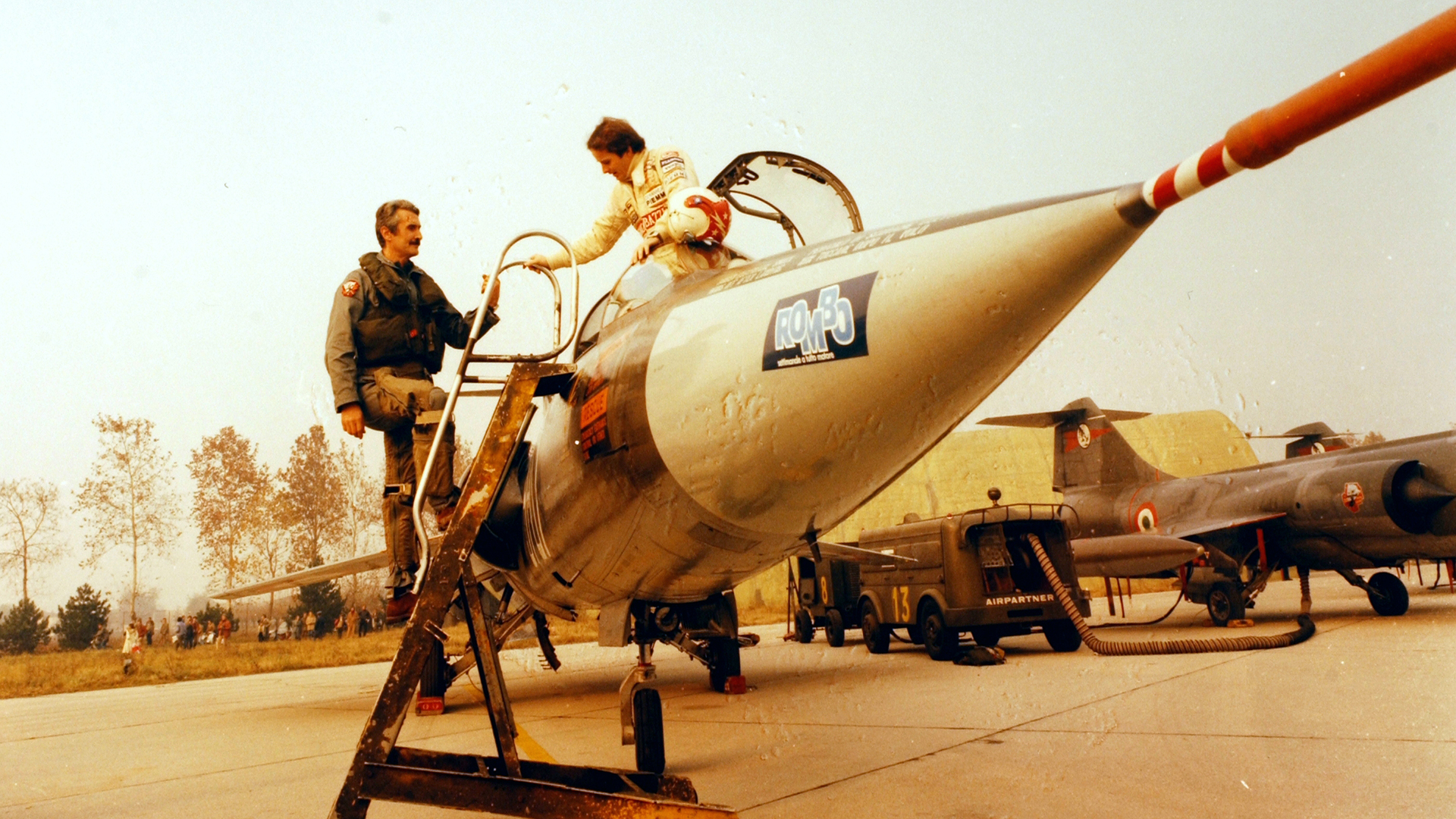
That connection became particularly visible during the 1981 Monaco Grand Prix. Villeneuve won the race in his Ferrari 126 CK while wearing a 4° Stormo emblem on his helmet. For the wing, the photographs of his victory carried its insignia to an international audience. Later that year, Villeneuve became part of a very different spectacle. On November 21, 1981, crowds gathered at Istrana Air Base to watch Formula One cars compete against the Italian Air Force’s F-104S Starfighters in acceleration runs. Alongside Villeneuve’s Ferrari were cars driven by Nelson Piquet, Riccardo Patrese, and Bruno Giacomelli. Villeneuve emerged as the event’s fastest Formula One driver, adding another chapter to his reputation for extracting remarkable performances from his machinery. The contest offered an irresistible pairing: Ferrari’s first turbocharged Formula One car against the slender supersonic fighter that had become one of the defining aircraft of the Italian Air Force. Known to Italian crews and enthusiasts as the Spillone, or “Hatpin,” the Starfighter was as recognizable on an airfield as a red Ferrari was on a racing circuit.
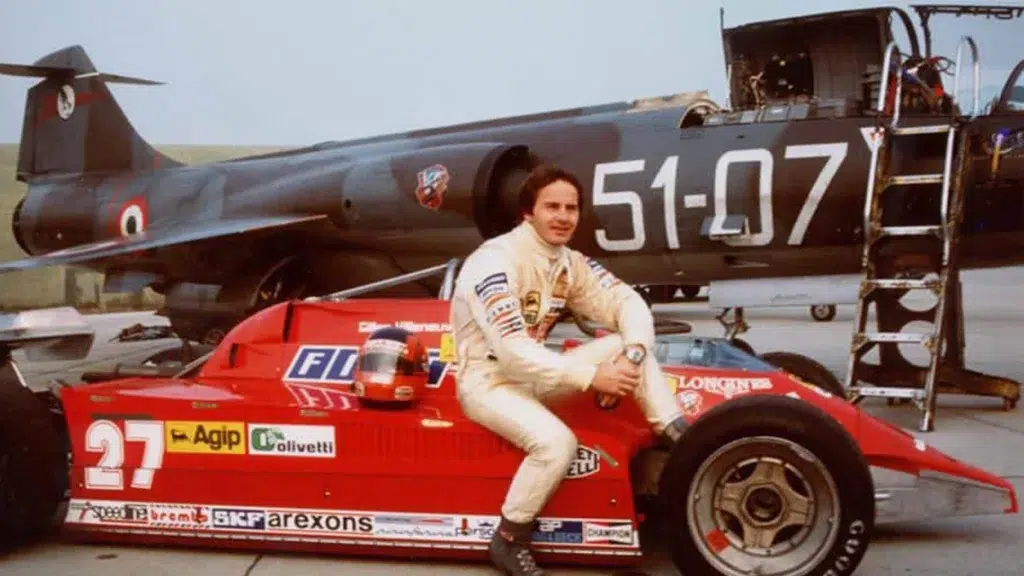
The conditions were tailored to an acceleration contest rather than a demonstration of either machine’s ultimate performance. The Ferrari ran without its aerodynamic wings to reduce drag. Fassari’s account describes additional restrictions on the Starfighter, including the requirement to remain on the ground through the measured section, while fog complicated fuel planning by raising the possibility of a diversion after takeoff. Villeneuve’s success at Istrana became part of the enduring mythology surrounding the Canadian driver. His death during qualifying for the Belgian Grand Prix at Zolder on May 8, 1982, gave those earlier encounters added significance.
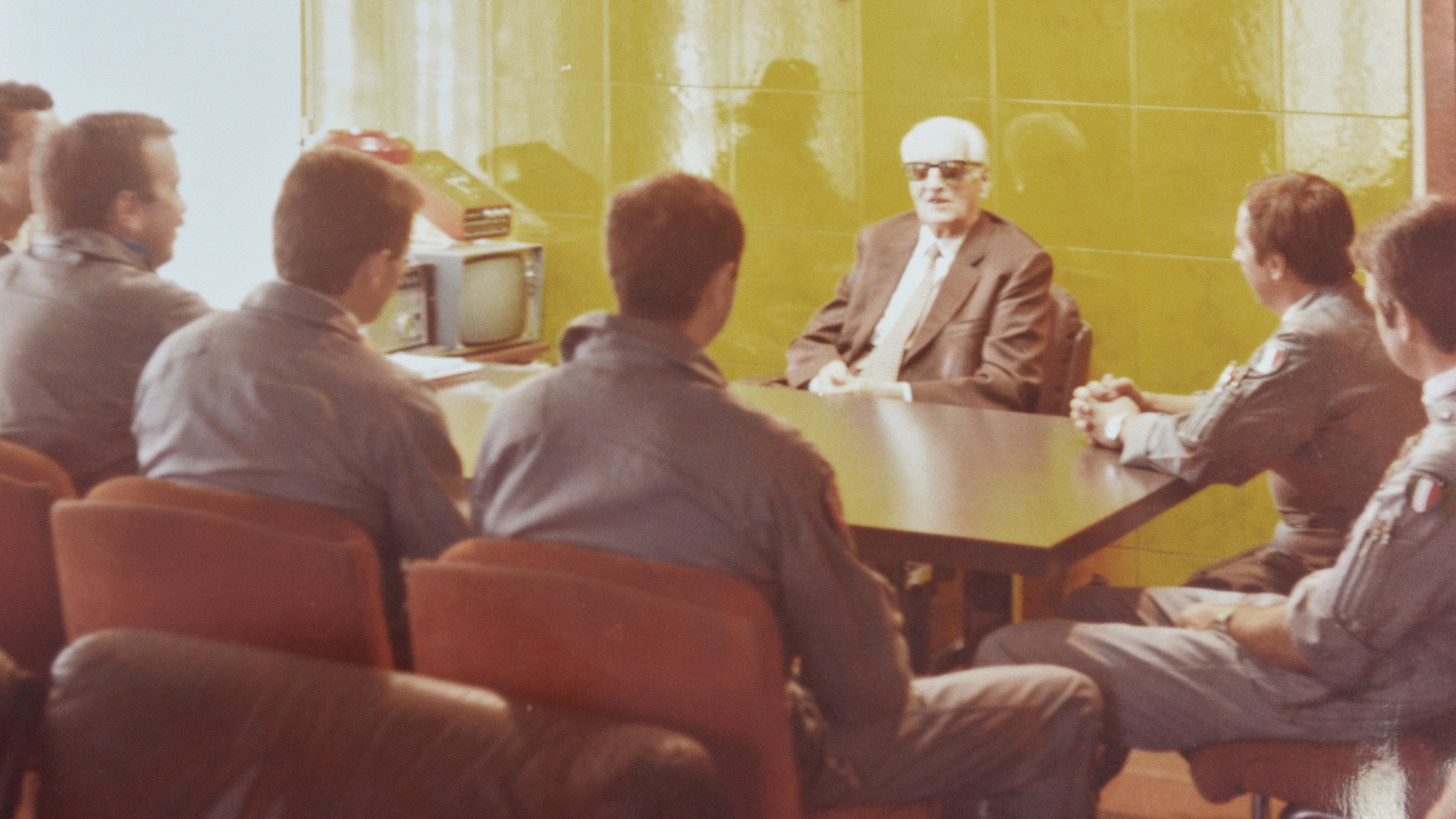
Seven years later, the relationship between Villeneuve, Ferrari, and the Italian Air Force found a permanent expression in MM6546. According to Fassari, former wing commander Colonel Domenico Mazza helped inspire the project. Technicians from the 4° Reparto Manutenzione Velivoli, or 4th Aircraft Maintenance Unit, transformed the F-104G with an overall Ferrari-red finish. The aircraft carried the wing’s Prancing Horse on its tail and Ferrari shields beside the air intakes.
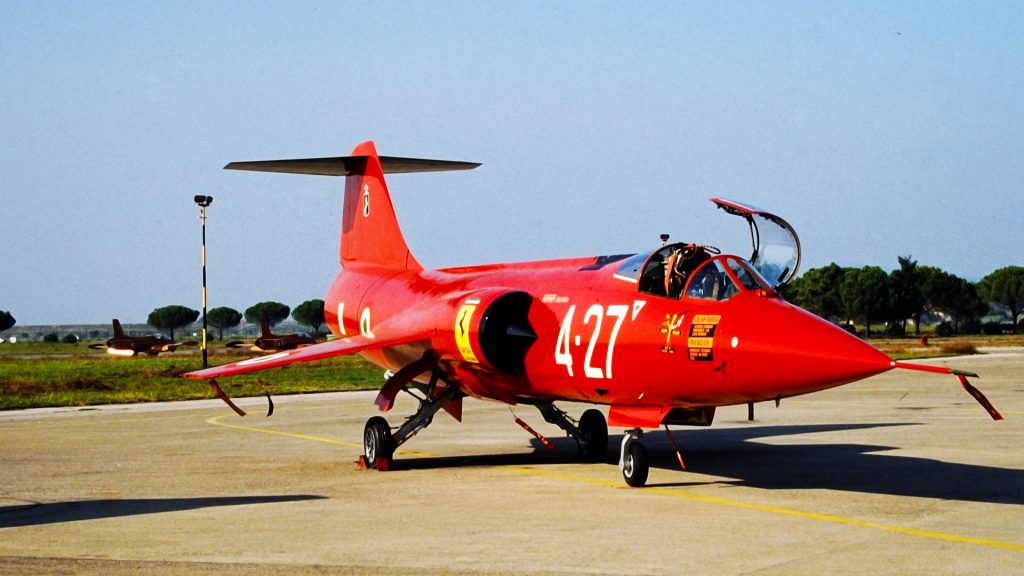
(Image credit: 4º Stormo Aeronautica Militare)
Its “4-27” fuselage markings explained the tribute: “4” represented the 4° Stormo, while “27” recalled Villeneuve’s Ferrari racing number. The aircraft was a commemorative F-104G, distinct from the F-104S aircraft involved in the 1981 Istrana event. The unveiling took place inside the 20° Gruppo’s hangar at Grosseto. As Fassari recounts, those attending included Ferrari Club Italia President Sergio Cassano, Villeneuve’s widow Joann, Ferrari representative Franco Gozzi, company executives and test drivers, senior military personnel, and local officials. Ferrari Club Italia members brought approximately 100 cars to the base. Ferrari also supplied three F40s and a Testarossa, accompanied by factory test drivers, turning the occasion into a celebration of the machinery and people on both sides of the partnership.
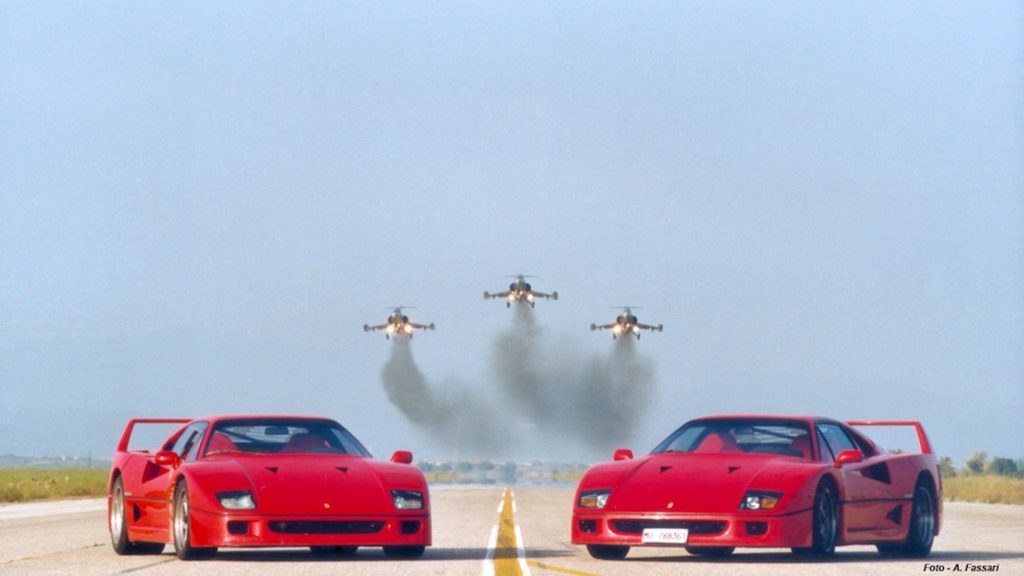
(Image credit: A. Fassari)
When the airfield opened to the public that afternoon, the program extended beyond static displays. Italian Air Force officers paired with Ferrari test drivers for a timed driving competition on a circuit within the base. Participants included Lieutenant Colonels Franco Girardi, Carlo Marsilli, and Benedetto Testa. Testa recorded the winning performance and received his award from Mrs. Villeneuve. Also present was Gilles’ son Jacques, who would later win the Indianapolis 500 and CART championship in 1995, followed by the Formula One World Championship in 1997. The red Starfighter subsequently became a permanent fixture at Fiorano. Preserved within the grounds of Ferrari’s private test circuit, it remains a physical link between the fighter wing, the manufacturer, and the driver remembered by its number.
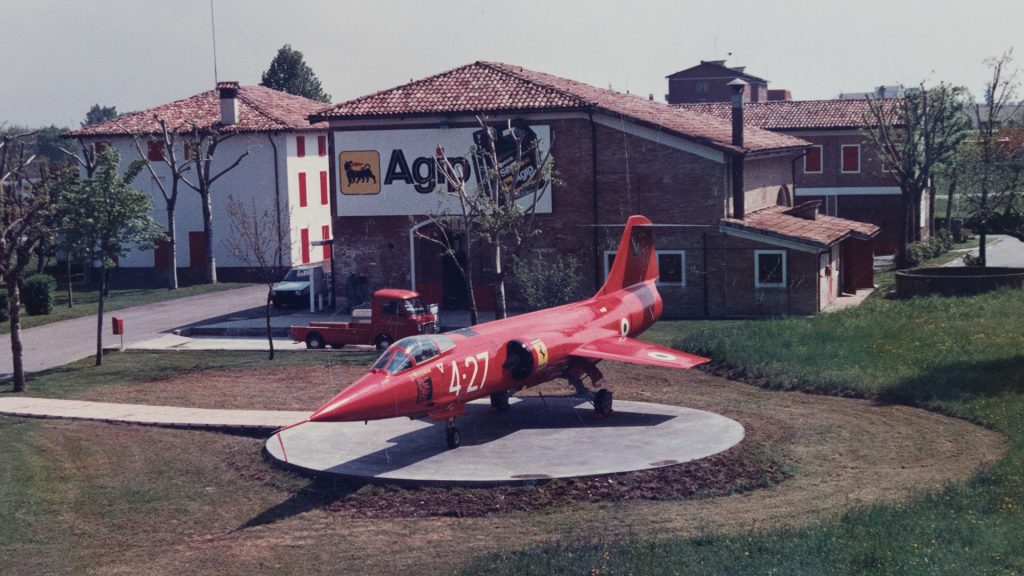
(Image credit: 4º Stormo Aeronautica Militare)
MM6546’s significance extends beyond its striking paint scheme. The aircraft preserves the memory of a relationship built around a shared emblem, personal friendships, and a memorable day when Formula One cars lined up against Starfighters. At Fiorano, the Prancing Horse appears on both the cars being developed on the circuit and the fighter standing nearby—a reminder of the aviation heritage behind one of motor racing’s most familiar symbols.
(Image credit: 4º Stormo Aeronautica Militare)