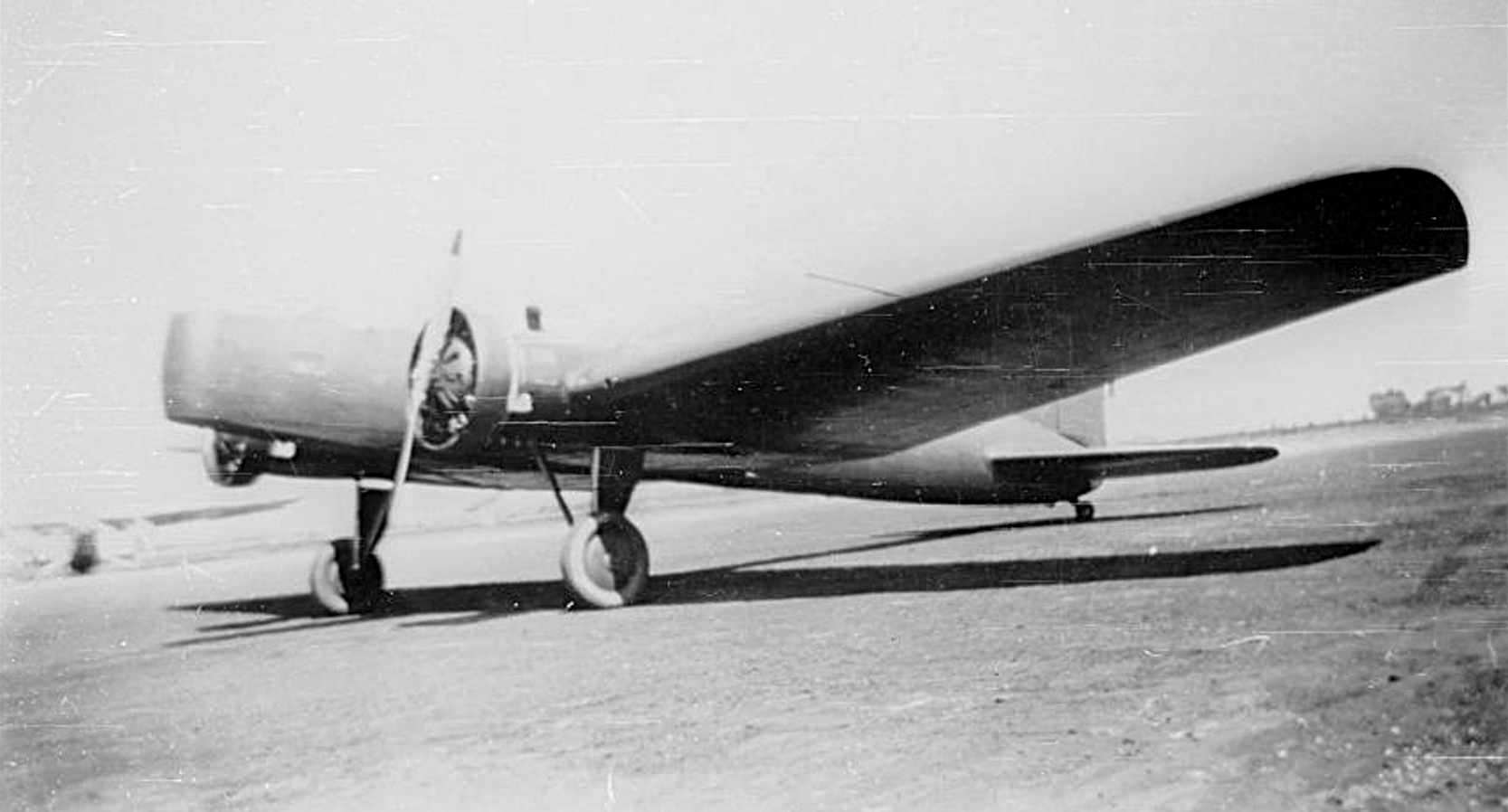
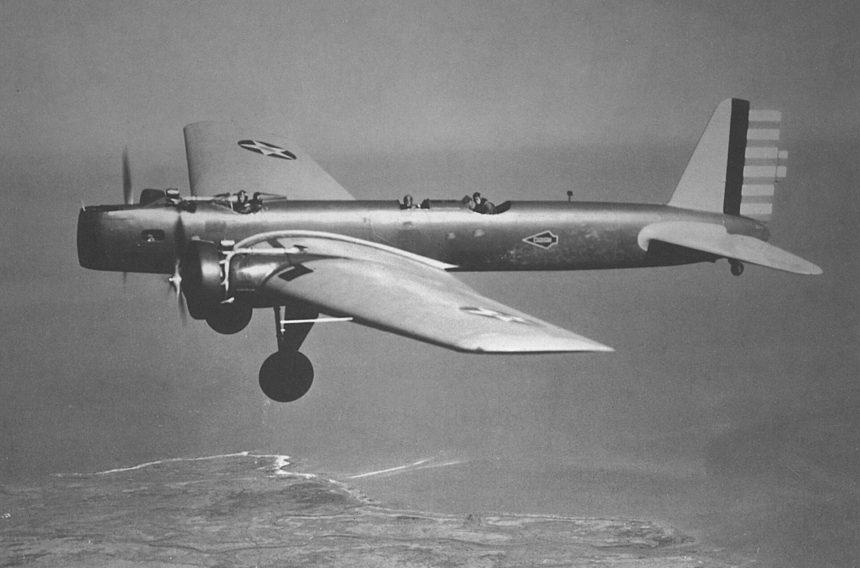

On this day in aviation history, 95 years ago (April 13, 1931), the Boeing YB-9 took flight for the first time. The YB-9 was designed for the United States Army Air Corps as the first all-metal monoplane bomber. Boeing developed the YB-9 from their single-engine Model 200 Monomail commercial aircraft. Only a handful of YB-9s were manufactured, but they entered service in September 1932. These bombers would serve until early 1935, with no serial production occurring beyond the prototypes built. Boeing’s Model 200 Monomail first flew in May of 1930, and it was a revolutionary design at the time. The Model 200 was a semi-monocoque, stressed skin cantilever monoplane with a retractable undercarriage. At the time of the Monomail’s emergence, the Air Corps was still flying strut-braced bomber biplanes. Built from steel-tube frames and covered in doped fabric, these bombers were slow and uninspiring as a potential machine of war. Boeing offered to better equip the Air Corps with a new bomber, based on the Monomail design.
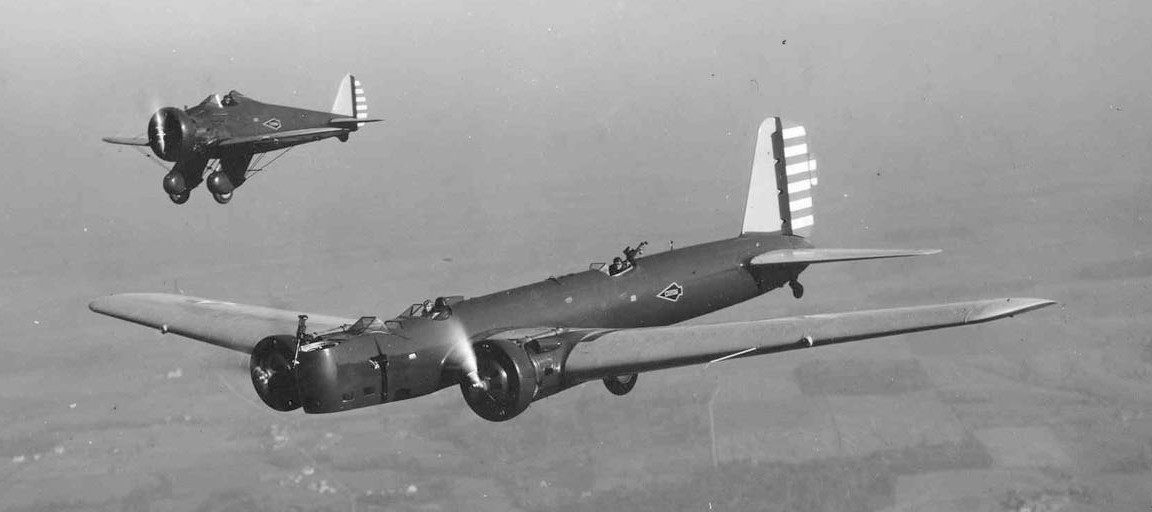
The first two prototype YB-9 bombers, Model 214 and Model 215, were built as a private venture by Boeing. The 214 was powered by two liquid-cooled Curtiss V-1570-29 Conqueror engines, while the 215 made use of two Pratt & Whitney R-1860 Hornet B radial engines. The new bomber could accommodate a crew of five. Model 215 X-10633 was the first to fly, on 4/13/31. The aircraft was then leased to the Air Corps under the designation XB-901 for further testing. The Model 215 proved to be effective, and the aircraft was ordered by the Air Corps as the YB-9. The Model 214 would also be ordered later as the Y1B-9, on August 13, 1931.
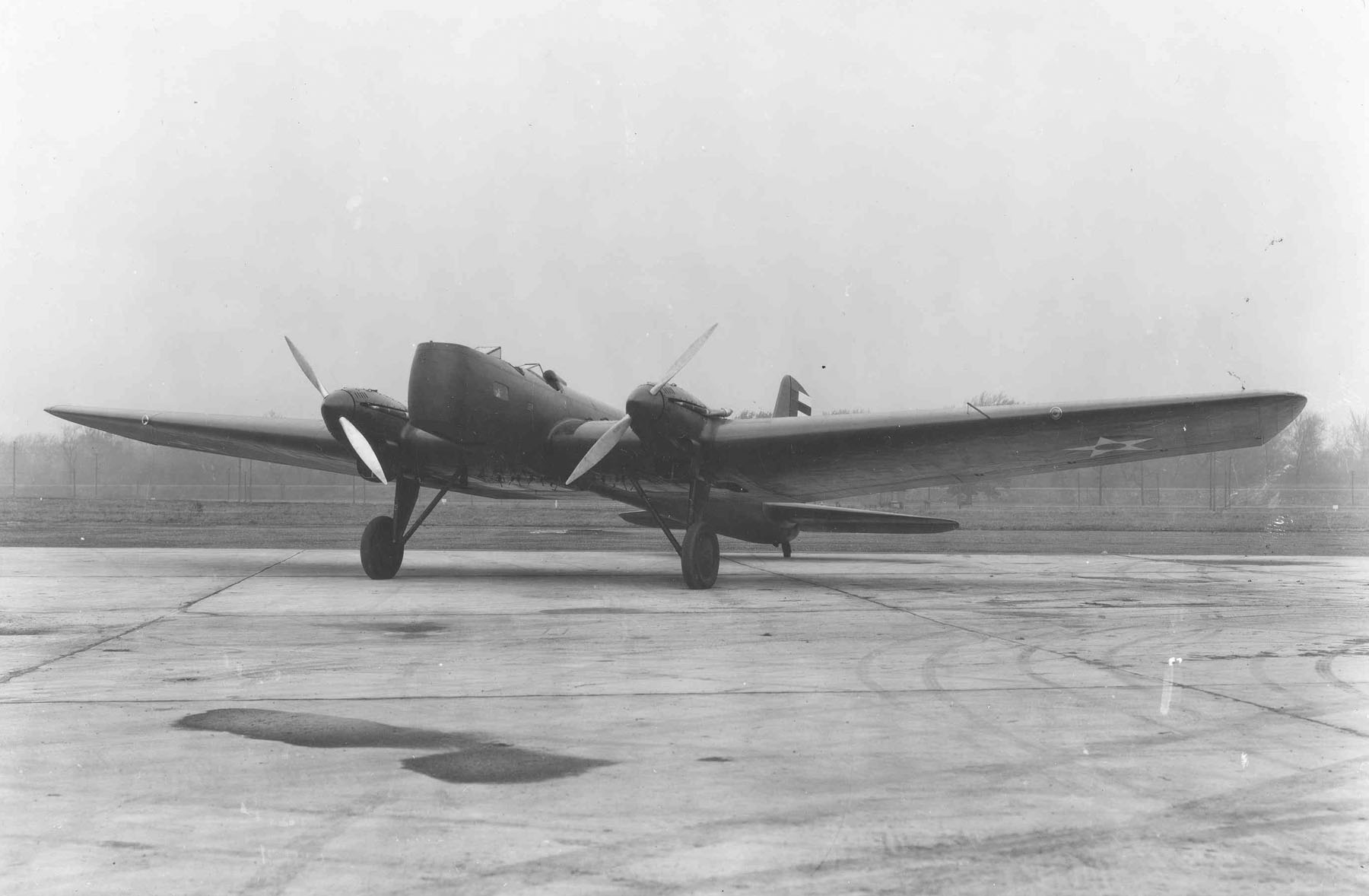
Five Y1B-9A bombers would be produced, powered by two 600-horsepower Pratt & Whitney R-1860-11 Hornet B radial engines. On September 14th, 1932, the first Y1B-9As would enter service with the 20th and 49th Bombardment Squadrons of the 2nd Bomb Group. During Air exercises held in May of 1932, the Y1B-9A was found to be impossible to intercept. The aircraft had a maximum airspeed of 188 mph and would typically cruise at 165 mph. The Y1B-9A had a range of 470 nautical miles and a service ceiling of 20,750 feet. Boeing armed the Y1B with two .30 caliber machine guns and a 2,260-pound bomb capacity.