






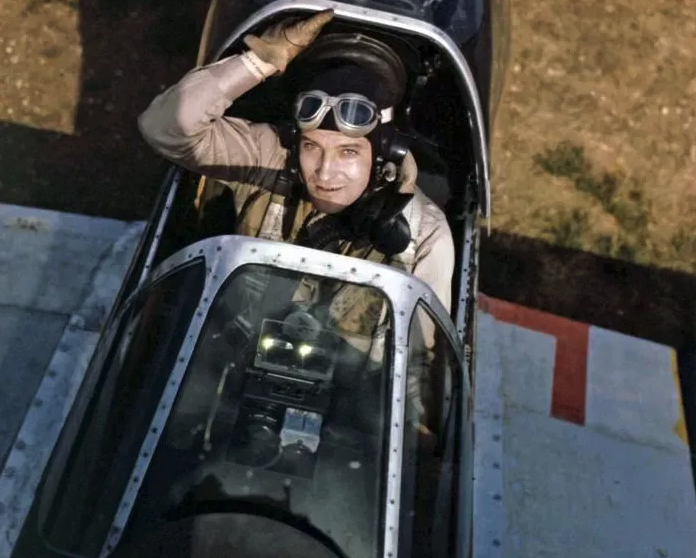

“Men, welcome to the 4th Fighter Group,” announced the square-jawed, blue-eyed commanding officer to a group of new pilots. “You have been assigned here after completing your training in the Third Air Force. There, you were required to comply with a myriad of rules, regulations, and orders governing your conduct in the air and on the ground. These requirements were designed to promote safety for you and your fellow flyers during your training period. Now you are trained combat fighter pilots assigned to a top fighter group in the Eighth Air Force. We have the same rules, but we are capable and aggressive, and you must be also. To this end, whenever you leave this base on a flight, do not return to land without breaking some of those rules. But don’t get caught, or you will never fly with this group again. Secondly, if anyone prangs a kite while stunting, he’s out!” That’s how Don Blakeslee introduced himself to newcomers, with confidence bordering on arrogance, an emphasis on doing things the right way, and more than a hint of rebelliousness. Those characteristics made Blakeslee perhaps the most effective leader in the USAAF in WWII, even if they made his superiors nervous and occasionally rubbed pilots in other fighter groups the wrong way.
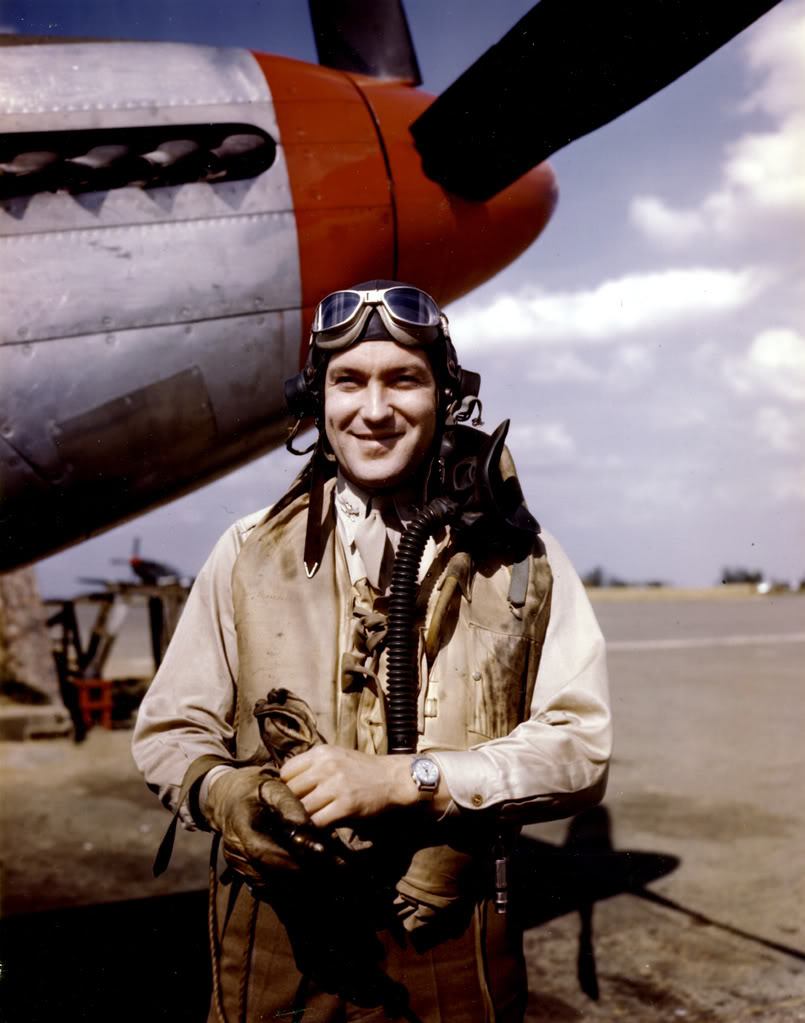
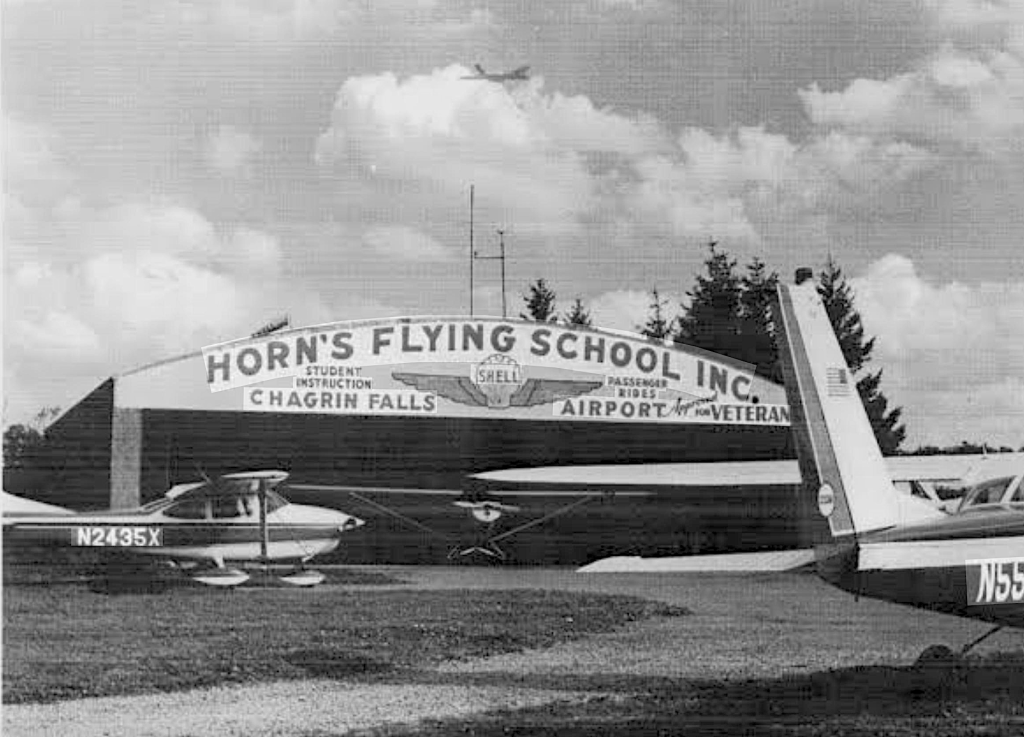
Blakeslee was born on September 11, 1917, in Fairport Harbor, Ohio. As a boy, he became captivated by planes while watching the Cleveland National Air Races, held only 30 miles away from his home. In 1938, when he turned 21, Blakeslee joined the U.S. Army Reserves and used his wages, plus his salary from his job at the Diamond Alkali chemical plant, to save up enough money to buy a Piper J-3 Cub with his friend, William Morgan. Blakeslee and Morgan joined Horn’s Flying School, and in return for instruction, they allowed the school to use the Cub. Blakeslee soon earned his private pilot’s license and continued to loan the Cub to the flying school, eventually trading the plane for a more powerful three-place Waco. Just two weeks later, in September of 1940, the Waco suffered an engine failure while being flown by one of his close friends and fellow students, who bailed out of the plane at 500 feet but died when his parachute failed to open in time. The Waco crashed not far away.
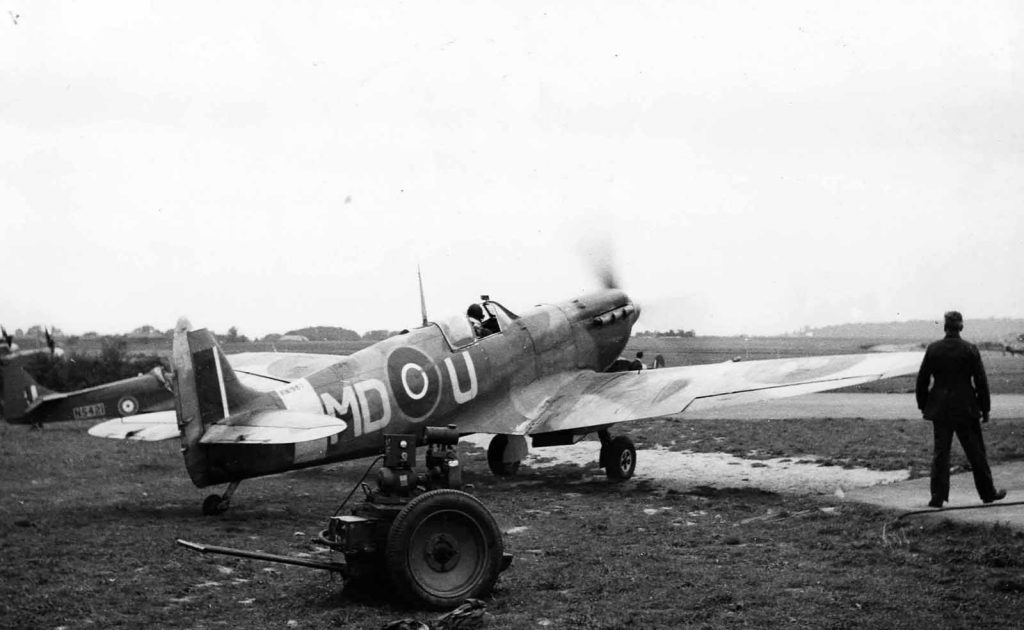
Now, with no aircraft at his disposal and no prospects for buying another, Blakeslee realized that the best way to keep flying was to volunteer to fight in the rapidly expanding war in Europe.”I had to have another plane,” he said, “so I joined the RCAF.” Since he didn’t have a college education and wouldn’t be allowed to join the U.S. Army Air Corps, Blakeslee requested his discharge from the Army Reserves. It was granted on 13 September 1940, and he soon made his way to Windsor, Ontario, for induction into the Royal Canadian Air Force, much to his mother’s objections. In letters home, Blakeslee reassured her that he would become an instructor and never see combat, a fib he continued to repeat even after he scored his first aerial victory. Blakeslee became part of Class 16 of the Air Training Plan, composed of two-thirds Australians and one-third Canadians. He graduated from pilot training at Camp Borden on March 17, 1941, and soon sailed east to Great Britain. RAF personnel were surprised when the six-foot American pilot, straight from central casting, refused assignment to the Eagle Squadrons, the three fighter units staffed entirely by American volunteers. Blakeslee had researched the Eagles and thought they were self-promoting prima donnas; “They played sister in making their claims,” Blakeslee said. Initially stationed at Digby in Lincolnshire, Blakeslee soon earned a reputation as “that difficult American.” When the station commander told Blakeslee it was his turn to march the enlisted men to a church service one Sunday, Blakeslee refused, saying that was a duty for the non-flying officers. “You’ll do it or else,” ordered the station commander. “I’m not joking.” Blakeslee wouldn’t back down. And with that, he was booted from Digby, “banished” to Biggin Hill and No. 401 Squadron RCAF. Flying Spitfire Vs, the squadron was engaged in flying sweeps over northern France, exactly what Blakeslee wanted to do.
On Nov. 18, 1941, the squadron flew a sweep around Le Toquet, and Blakeslee saw his first air-to-air combat, damaging a Bf 109. On Nov. 23, the squadron stirred up more action, tangling with about 60 Bf 109s around Le Toquet, and Blakeslee scored his first confirmed victory. “All we did was dive, and a one-second burst got my man,” he said. “He simply exploded.” Blakeslee also shared in damaging a second fighter with Sgt. Don Morrison. Blakeslee didn’t make any further claims until April 1942, in part because he was an admitted poor shot compared to some of his fellow flyers. “You dead-eye shots take all the fun out of it,” Blakeslee said. “When a guy like me is motoring along and has to start hosing them down to see where the bullets are going, that’s when it’s fun.”
What was not fun was the advantage the Fw 190A had over the Spitfire V; losses were painfully common. On April 28, during a sweep over France, two pilots were lost on a mission where Blakeslee claimed two Fw 190s as probables. On May 1, the squadron lost two more Spitfires to JG.2 over Le Havre. The Spitfire Mk. IX would even the tables on the Fw 190A, but 401 Squadron would not receive Spitfire Mk. 9s until after Blakeslee departed the unit. Still, he added three further fighters to his scoreboard. When Blakeslee reached 200 combat hours in June 1942, his superiors told him that he had earned a tour in training command. Eschewing a chance to make real his promise to his mother, he instead angled for an opportunity to stay in combat, and found one: a transfer to the Eagle Squadrons, the unit he had worked so hard to avoid.
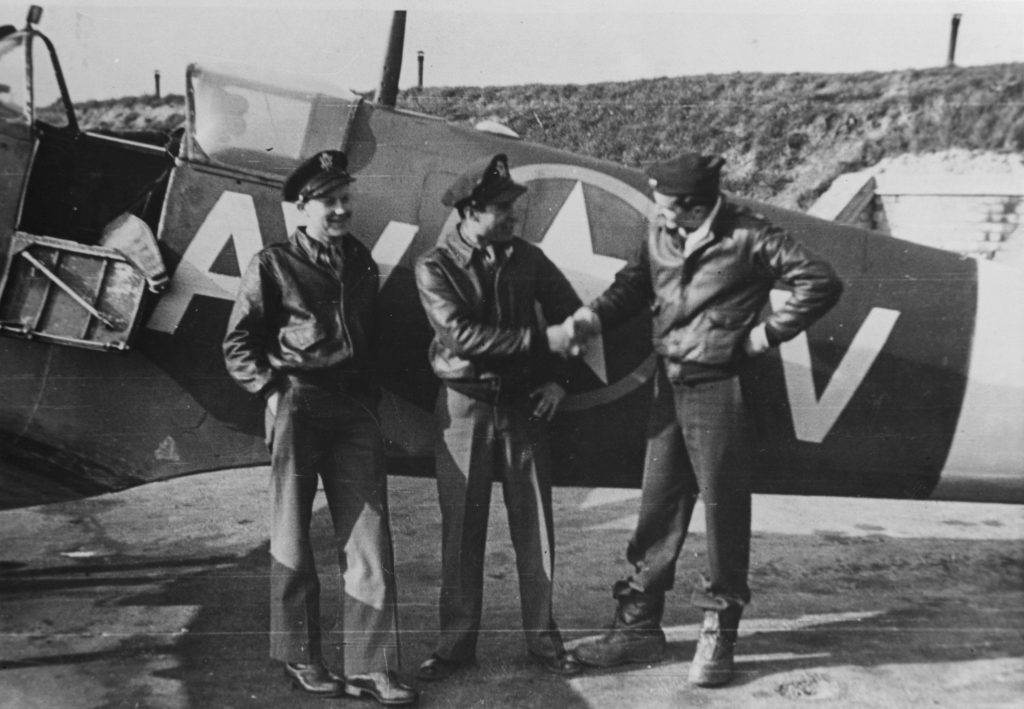
Blakeslee, by now a Flight Lieutenant, was sent to 133 Squadron as a flight commander. He leaped into operations with gusto; on June 3, he flew a bomber escort mission in the morning, returned for lunch, led a bomber support mission in the afternoon, and capped off the day with a convoy patrol. He flew sorties for the next five consecutive days, acting as the squadron leader on another bomber support mission. When 133 Squadron’s commander was promoted in July 1942, and his obvious replacement, Carroll “Mac” McColpin, was rewarded for his long service with a 10-week bond drive tour in the United States, it left an opening, and Blakeslee was elevated to the role in early August, 1942, becoming the squadron’s first American commander. Victories were elusive for Blakeslee and for the Eagles in general until Operation Jubilee, the Canadian-British-American raid on Dieppe on August 19. As the commando raid went sour, efforts to use air power to reverse the course of the battle triggered the biggest fighter-vs.-fighter action of the war to that point, and 133 Squadron was right in the thick of it.
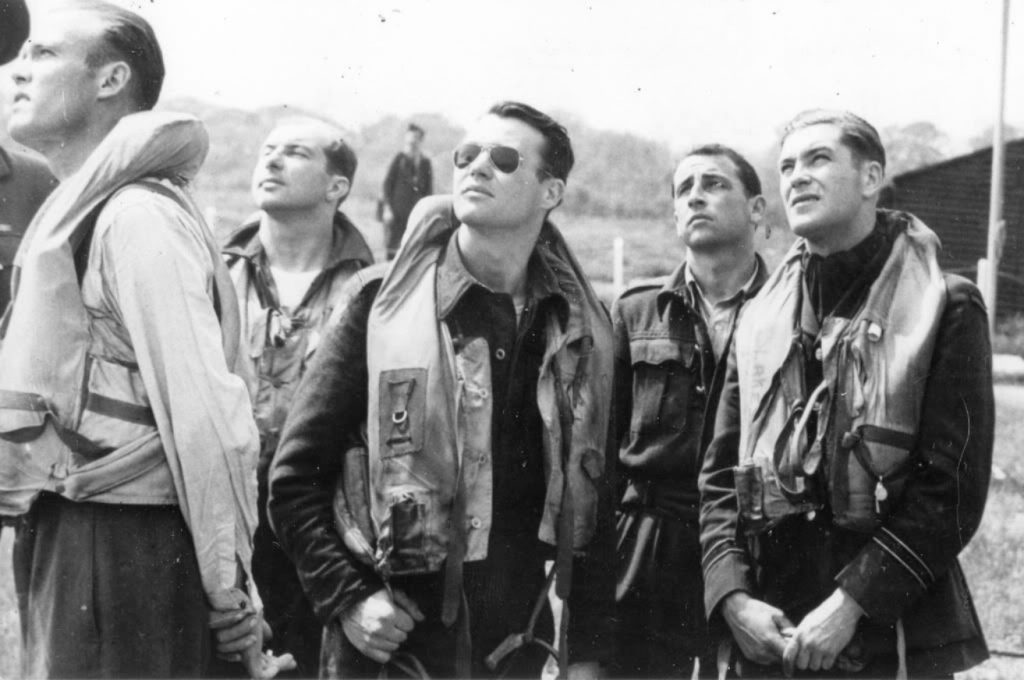
The first mission of August 19 lifted off from Biggin Hill at 0720 with orders to orbit Dieppe at 7,000 feet. Almost immediately, “We saw a formation of Focke-Wulfs 2,000 feet below us as we were crossing the coast,” Blakeslee said. “We dived on them. One pulled right in my gunsights. I let him have just one short burst of cannon and machine gun fire, and he dived away and crashed into the sea. Just before that happened, a colleague of mine saw the Hun pilot bail out.” Shortly thereafter, the squadron dispatched a second fighter and claimed a third as a probable, then disrupted attacks by Fw 190 fighter-bombers and a trio of Ju 88s. The squadron was back in the air at 1015 to take up top cover over Dieppe at 12,000 feet. Again, the Spitfires were engaged as soon as they reached the target area; Blakeslee and F/O Don Gentile claimed two Fw 190s and a Ju 88 between them (officially changed to damaged), and the rest of the squadron damaged four Fw 190s and three Do 217s. Hurrying back to Lympne, the ground crews’ exceptional efforts had the 12 planes back in the air at 1200. The squadron downed a Do 217, and Blakeslee added another Fw 190 damaged to his score for the day. As the evacuation of surviving troops was underway, Blakeslee led the squadron’s fourth mission of the day, lifting off just before 2000 hours to cover the convoys returning from the raid. By now, the air was mostly devoid of enemy aircraft, although one section of the squadron was bounced by two Fw 190s. A pilot put in a claim for a probable. For the day, 133 Squadron was officially credited with three destroyed, two probables, and 11 damaged against no losses, making it one of the few allied squadrons to come out of the battles over Dieppe on the positive side of the ledger.
Blakeslee’s leadership was particularly notable. He was the only Eagle Squadron commanding officer to fly all four missions of the day. For his efforts, he was awarded the British DFC by King George and had tea with the king and queen afterward. Three days after the Dieppe raid, 133 Squadron was detached from Biggin Hill to re-equip with Spitfire Mk. IXs and to practice gunnery with the new fighters at Martlesham Heath. While there, word came from Fighter Command: Don Blakeslee had been busted. It seemed amazing, but it was true. Blakeslee was reduced in rank from squadron leader to flying officer and was sent to a training unit to tow targets. The offense: entertaining female company in quarters after hours. Three of his friends brought their WAAF girlfriends to his quarters on the way to the officers’ mess, and the CO found out. Blakeslee’s demotion would have dire implications for 133 Squadron. Mac McColpin assumed command on his return from the states, just as the Eagle Squadrons began to prepare for absorption into the U.S. Army Air Forces. McColpin also inherited a worrisome operation: a mission to escort B-17s to Morlaix in France, which would put them at the limits of their range into a hotly contested area during a period of adverse weather. McColpin made his arguments known and was promptly ordered to transfer to a different RAF unit. To spite his British superiors, he instead transferred to the USAAF. The new commander of 133 Squadron was F/O Gordon Brettell, a British officer understood by the other Eagles as a pilot inserted by the RAF to re-establish discipline among the Americans. The raid on Morlaix was casually briefed; only Brettell and one other pilot bothered to attend it, and the meteorological brief was fatally flawed, projecting a 35 mph headwind on the outbound leg when, in fact, the Spitfires faced a 135 mph tailwind. The 12 Spitfires launched but never had a chance to rendezvous with the bombers, which were blown off course and turned for home after nearing the Spanish border.
Hoping to find the bombers, the squadron orbited what they thought to be the Bay of Biscay several times, all the while being pushed further south by the strong winds. The British ground controller eventually instructed the squadron to try to overtake the bombers by proceeding south. After 45 minutes, the pilots joined up with some B-17s headed north. Based on timing and extremely low on fuel, Brettell assumed he was near the English coastline and dove through a small gap in the clouds when he spotted land below. The entire squadron followed. Instead, the 12 pilots found themselves at low altitude in tight formation over Brest, with its impressive flak defenses, which immediately opened fire. German fighters were also airborne nearby, and within minutes, Brettell and five other pilots were shot down. Each spent the rest of the war as a POW. Five others were less lucky and were killed when they were shot down or ran out of fuel. One pilot evaded capture with the aid of the French underground, and Richard Beaty managed to make it back to England only to be badly injured while crash-landing on the Cornish coast. That night, three newly-assigned pilots arrived at 133 Squadron’s base at Great Sampford – James Goodson, Ray Fuchs, and William White, all American volunteers. They found the officer barracks silent, dark, and empty. A pilot finally appeared – Don Gentile, who had been scheduled as a spare for the day’s mission. “None of them came back,” Gentile said. “I guess you can take any room. They’re all empty.”
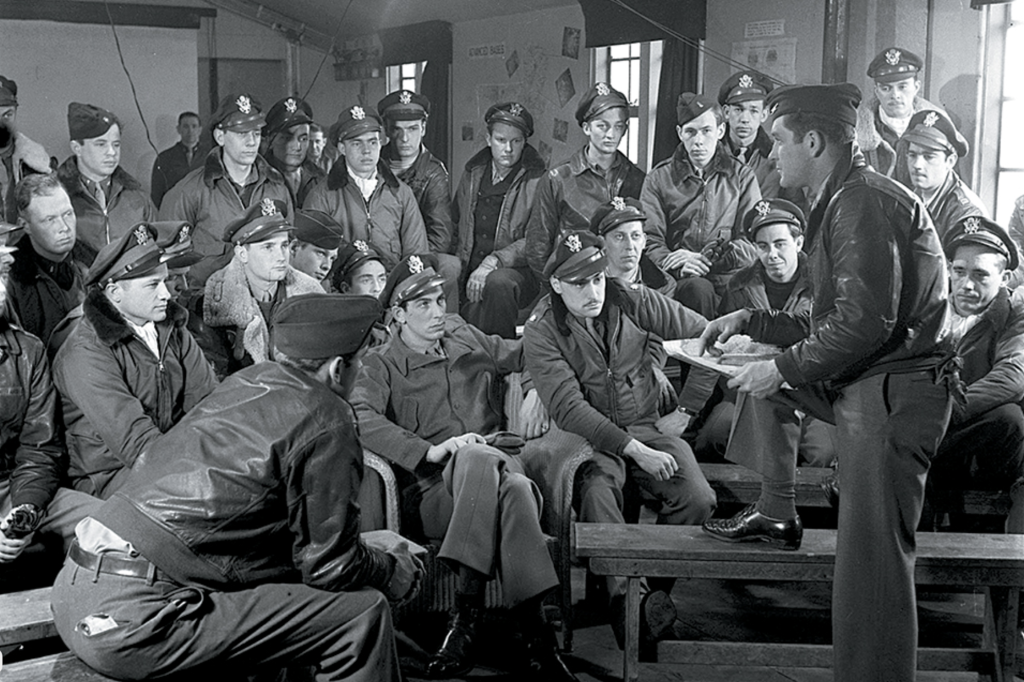
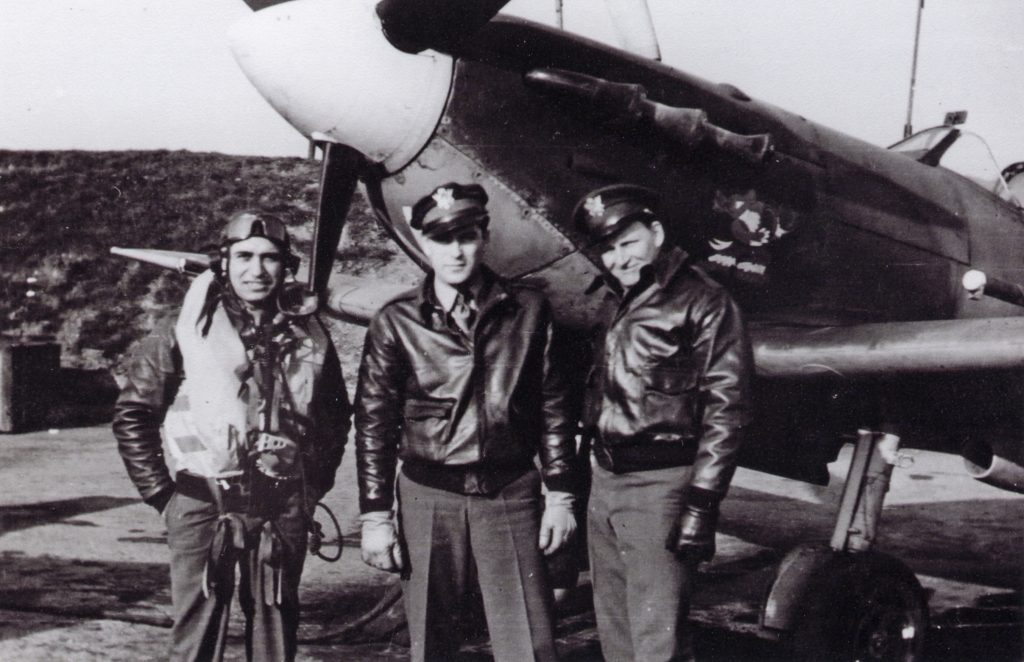
Just three days later, the three Eagle Squadrons transferred to the USAAF as the 4th Fighter Group, and with them came Blakeslee, rescued from his training assignment. He was restored to the rank of captain, and when Maj. William Daly’s tour of duty ended; command of the 335th Fighter Squadron, as 133 Squadron had been renamed, passed to Blakeslee on Nov. 22, 1942. He inherited a demoralized unit, exiled to Great Sampford, a run-down facility with an oddly-shaped landing field. Rather than make a speech to announce himself as the new commanding officer, Blakeslee stood on the bar of the officers’ mess and shouted that drinks were on him, to the glee of his men. “(Blakeslee) was a great believer in the RAF tradition of hard drinking and high living,” said James Goodson, “and never permitting either of them to interfere with constant readiness to fly, and fly well, at any time.” After significant consumption, Blakeslee announced to the pilots at 1 a.m. that they needed to be ready for a 6 a.m. takeoff. At the next morning’s briefing, Blakeslee informed them they were to taxi out to the perimeter of the field. “When I give the signal, the squadron will take off in formation,” Blakeslee announced. The room went silent. “Move!” Blakeslee barked. Spitfires launched in pairs, at most, from the odd Great Stampford field; many of the pilots were frightened at the prospect of a mass takeoff. But, on Blakeslee’s signal, the 16 Spitfires went to full throttle, bounced across the uneven field, and pulled into the air; some of the trailing aircraft swerved to avoid trees. “Tighten it up! Let’s show the bastards!” Blakeslee called as the squadron neared Debden, where the group’s other two squadrons were located, and the 335th buzzed the base in formation at 500 feet.
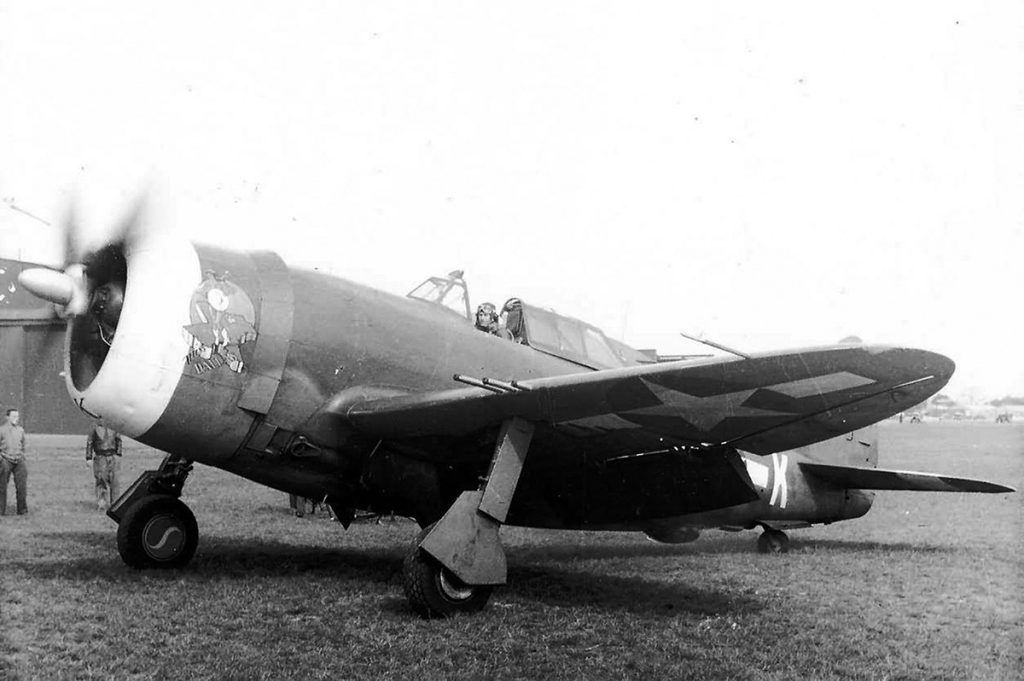
“The formation was even better when we came back over the base, peeled off, and landed at Great Stampford,” reported Goodson. “It was when we climbed out of the planes that I understood. There was excitement, enthusiasm, boasting, and pride… That evening, Blakeslee wasn’t the only 133 pilot with the belligerent swagger as we arrived in the officers’ mess at Debden.” The next day, most of the squadron moved to Debden itself and took its proper place in the group. The rest of 1942 and the beginning of 1943 were marked by poor weather, which limited most flying as 335 Squadron added personnel, especially enlisted men, to become truly operational. Now, Major Blakeslee left the squadron for three weeks starting on January 14 for training with the USAAF, and just after his departure, eight more men were dispatched for training, not on squadron management but on the P-47 Thunderbolt. Blakeslee’s low regard for the P-47 is well known. Compared to the sporty Spitfire, the Thunderbolt seemed like a moving van: huge, bulky, and brutish. “I checked Don Blakeslee out on the P-47,” said James Goodson. “Of course, he didn’t like it. It was daunting to haul seven tons of plane around the sky after the fingertip touch needed for the Spit. I tried to sell Blakeslee on the opportunities the plane could open for us. ‘For one thing,’ I said, ‘they’ll never be able to dive away from us again.’” Blakeslee was unmoved.
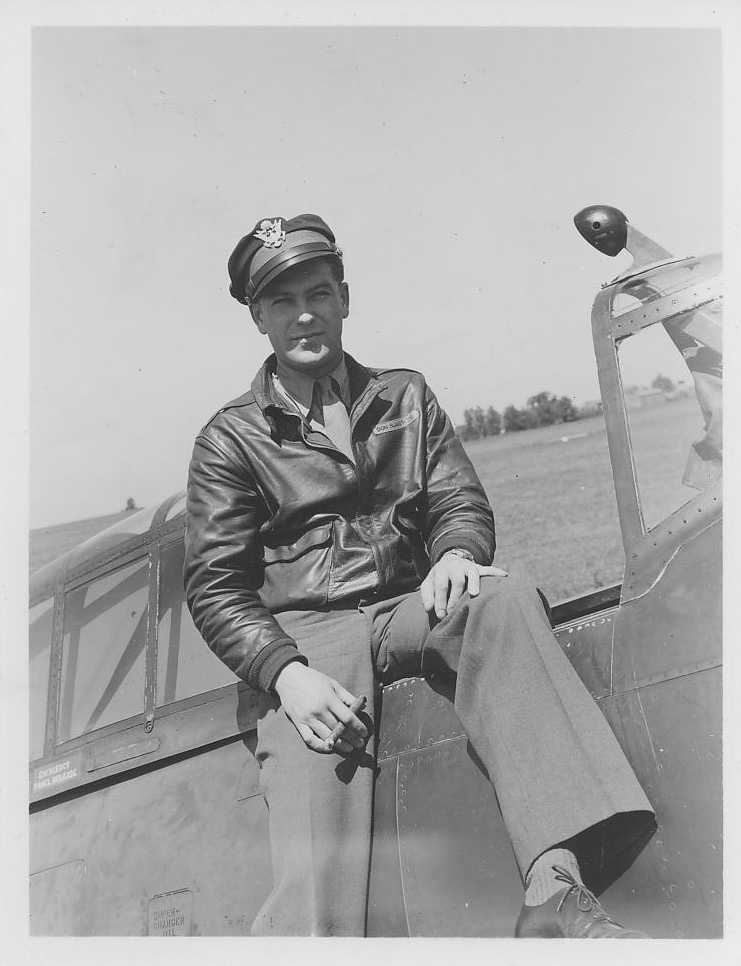
The squadron continued flying sweeps and convoy escorts in their Spitfires, but the Mk. Vb’s days were numbered. “Flyers are definitely against the P-47,” the squadron diary reported on February 7, 1943. “Pilots already on them are calling themselves the ‘suicide squadron.’” From the middle of February on, the squadron flew a few missions besides convoy patrols, waiting for conversion to the Thunderbolt. Blakeslee was becoming anxious; on February 15, he and Capt. Gene Fetrow took off on a local flight, but Blakeslee impetuously took Fetrow to perform convoy duty for 50 minutes. The next day, Lts. Victor France, Vernon Boehle, and Duane Beeson took a shortcut from their aircraft across the field and runways at Debden; Blakeslee gave the trio a monumental dressing-down for the infraction. Ironically, Blakeslee firmly established his colorful reputation as a headache for his own superiors by choosing the night before Gen. Frank “Monk” Hunter’s inspection tour of Debden to entertain two WAAF officers in his barracks room. “Warned of the approaching danger, the two WAAFs just had time to cover some of their embarrassment and scramble out the barracks window, right into the path of Gen. Hunter and his staff,” said Goodson. “Told that Blakeslee would be demoted and transferred, Gen. Hunter remarked, ‘for one maybe, but for two he should be promoted!’” After a February 19 fighter sweep, the weather closed in, and it wasn’t until February 26 that the squadron saw any real action, when it flew three escorts to Dunkirk for RAF Ventura bombers. On the 27th, the entire group flew convoy protection and sweeps in the Dunkirk area, and some of the pilots organized their own mass take-off. Upon return, their efforts to land together nearly resulted in a series of collisions. Blakeslee threatened the group with landing and takeoff practice. The day’s sweep marked his 119th sortie since re-joining the squadron.
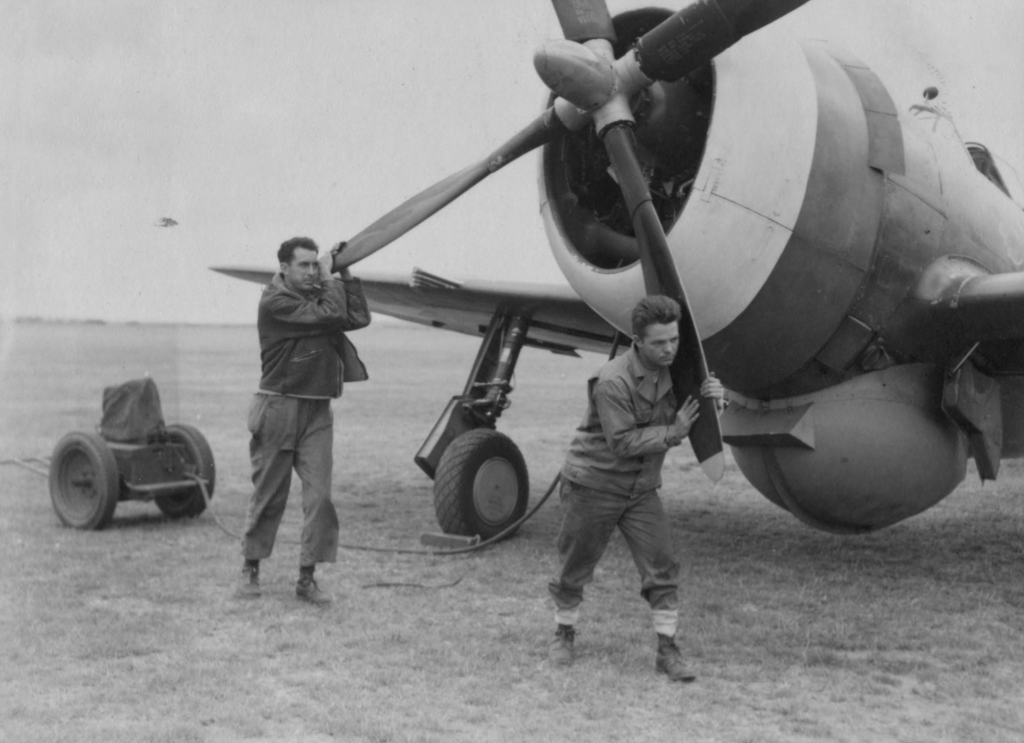
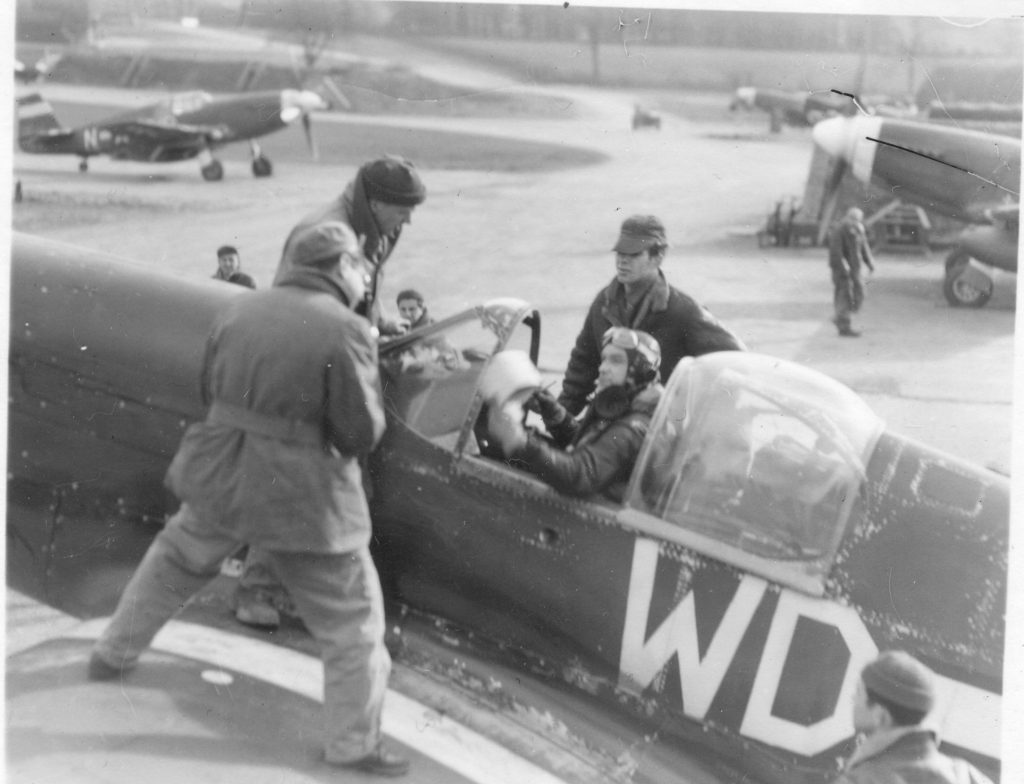
On March 16, the 335th flew its last group mission in Spitfires. At the end of a convoy escort, the Spitfires were taxied over to the 336 Squadron dispersal and tied down. The Thunderbolt would be the squadron’s future. The weather bought some time for the men to become trained on the P-47 and for the planes to be put in good flying condition. On April 10, two pilots flew the very last convoy escort mission in the Spitfire before the 335th FS became ready to take the Thunderbolt into combat. The Thunderbolts, while longer-legged than the Spitfire, still had an issue with range. On April 11, Blakeslee led six P-47s on a sweep over France. Four days later, the group flew a “Rodeo” to the area between Furnes, Belgium, and Cassel, France. Blakeslee’s 335th Squadron led with two squadrons of 56th FG Thunderbolts following. Just after 1700, near Knocke, the Netherlands, Blakeslee spotted three Fw 190s 5,000 feet below him and dove to attack. The Germans made the mistake of diving for safety, and Blakeslee closed quickly, firing two bursts that set the Fw 190 afire. The Fw 190 “lurched sharply and a fraction of a second later crashed into the ground, exploding,” Blakeslee said. The German pilot attempted to bail out at low altitude, but his parachute failed to open. Blakeslee himself had to haul back on the stick to avoid sharing his foe’s fate, pulling out over the Ostend suburbs at just 500 feet. It was his fourth victory, and the first for the Thunderbolt. When the 335th landed, Goodson caught the victorious Blakeslee at the debriefing. “See, I told you the Jug could out-dive them!” Goodson crowed. “Well, it damn well ought to be able to dive – it sure as hell can’t climb!” Blakeslee shot back. For the day, the group counted four victories against two P-47s lost in combat and one to mechanical trouble. It did little to convince the skeptics. It took Blakeslee almost a month to add to his score. The 4th FG flew a Ramrod mission to Antwerp on May 14, and near Hulst, 335 and 336 Squadrons jumped several yellow-nosed Fw 190s. In a twisting, turning fight that lasted almost 20 minutes, Blakeslee stitched one of them and sent it plummeting to earth. Blakeslee was now an ace.
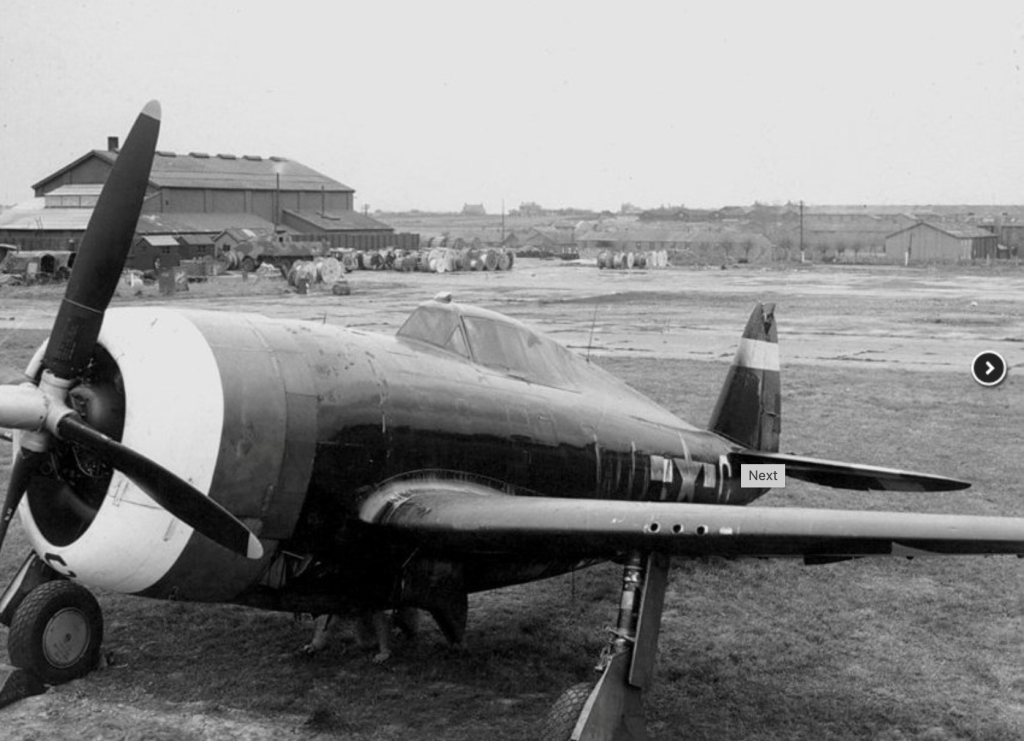
“While no one questioned his talent in the air, many in the top command had less confidence in his behavior on the ground,” said Goodson. Just the same, the galvanizing effect Blakeslee had on the men he led could not be denied, and five days after notching his fifth victory, Blakeslee was named group executive and operations officer. This enabled him to fly with any of the group squadrons on their missions, and he took advantage of the opportunity. The first week of June saw rain and cloud; “weather was only good for low-flying ducks,” reported the 335 Squadron daily diary, but Blakeslee sneaked in a Rodeo over France on June 7 with 344 Squadron, and put himself on 10 other operations during the month. The poor weather was a boon to the Germans; the 4th Fighter Group managed to knock down just five fighters during the month. At the start of July, group commanding officer Col Edward Anderson relieved Blakeslee of his duties as executive officer. As a consolation prize, on July 7, Blakeslee was promoted to Lt. Colonel and sent to Martlesham Heath for nearly the entire month. Before he could get back into action, the group began to score in bunches, downing five on July 28 and five more on July 30. Blakeslee’s fighting spirit was catching. On August 12, with Blakeslee leading, the group rendezvoused with the bombers over Holland, where a dozen German fighters were already lining up for an attack. Four fighters were dispatched in an effective defense of the bombers. On August 15, Blakeslee led two shows, even as the duration of missions was extended by the fitting of jettisonable 200-gallon belly-tanks to the Thunderbolts. On August 16, Blakeslee led a Ramrod to Paris, arriving just as the bombers were enduring head-on attacks from Luftwaffe fighters. A 40-minute dogfight erupted in which the 4th destroyed 18 fighters for the loss of a single Thunderbolt. Blakeslee was a constant presence on the radio, calling warnings and directing fighters to cut off the Germans. In return, Blakeslee narrowly escaped himself; his Thunderbolt landed back at Debden with several holes punched by 20mm shells in its airframe. Itching for more combat, Blakeslee led missions on August 17, 19, 23, and 24, but found “nothing to shoot at,” as the 334 Squadron diary put it. September started with more of the same; the German tactics called for avoiding engagement with the American escorts whenever possible, waiting to attack the bombers after the Thunderbolts turned for home. On September 25, 334 Squadron would receive a visitor who was destined to ruin the Luftwaffe’s strategy. A P-51B – 43-6388, one of the first in the theater, arrived at the squadron for evaluation for the entire Eighth Air Force. With the Merlin engine, its performance was solid to 40,000 feet and, perhaps more importantly, with maximum internal and external fuel, it had a combat radius advantage over similarly-loaded Thunderbolts of almost 300 miles (705 for the Mustang, 425 for the P-47). Opinions were universally positive among the senior pilots who flew the new machine, and Blakeslee immediately saw it as the aircraft that would allow the Fourth to force the issue against the Luftwaffe.
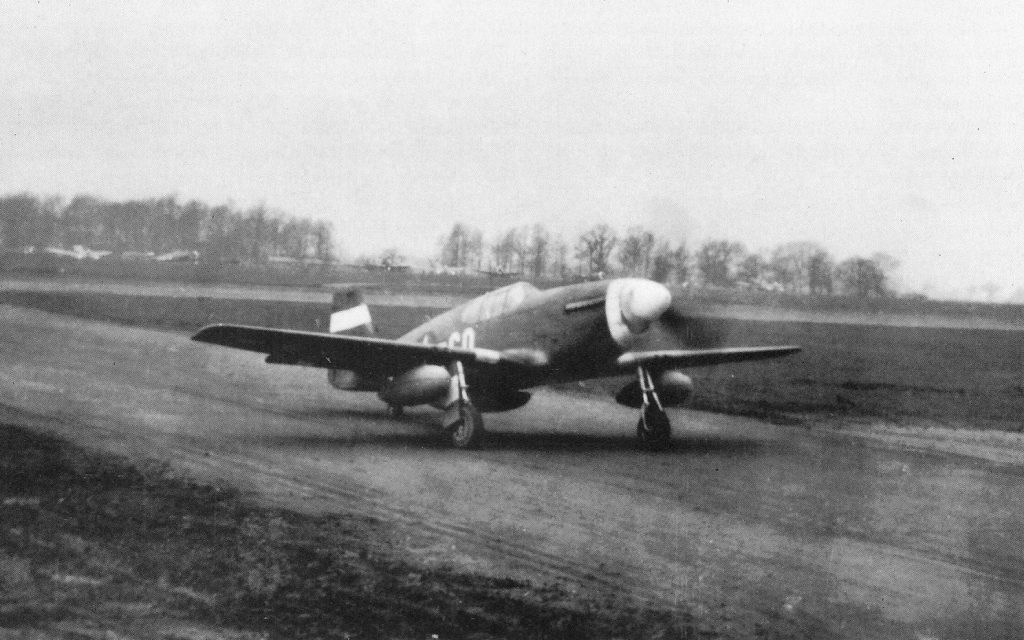
While pining for the P-51B, the group continued to go to war in their Thunderbolts. On September 27, Blakeslee led an escort to Emden. Willard Millikan scored the only victory of the mission, an Fw 190. However, Blakeslee was less than satisfied by the day’s results; the 56th FG scored four, and the 78th FG downed eight. Blakeslee was driven to make the group the high-scoring unit in the theater, and the short legs of the Thunderbolt were holding his ambitions back. Another Ramrod on Oct. 2 resulted in two victories for the group. On October 8, Blakeslee led another Ramrod supporting a bombing mission to Bremen. At the rendezvous at 1419 over Texel Island, 30 enemy fighters were already setting up their attacks on the bombers. Blakeslee ordered his men in, and six Luftwaffe fighters went down at a cost of two P-47s. None of the German fighters managed to attack the bombers. Blakeslee kept up his pace, leading six missions in October and six more in November. As December began, Blakelee’s reputation was such that he was tapped to lead a new unit on its first missions, the 354th FG, flying the Mustang. On December 1, Blakeslee arrived to brief the green group before their first mission, a sweep along the French/Belgian coast. The rookies were immediately impressed. “He pinned you with a penetrating gaze from steel-gray eyes which, if not accompanied by a smile, made one decidedly uncomfortable,” said Richard Turner of the 354th FG. “He was all business, and the business was killing. In the briefing, he let us know that he was a master of his craft, and that he would brook nothing less than perfection from those who flew with him. Blakeslee left us with the impression that it would be far better to not return from the mission than to be the unfortunate flier guilty of a breach of radio or air discipline. I’ve often wondered which scared us most on that first mission, meeting the Germans or displeasing Col. Blakeslee.”
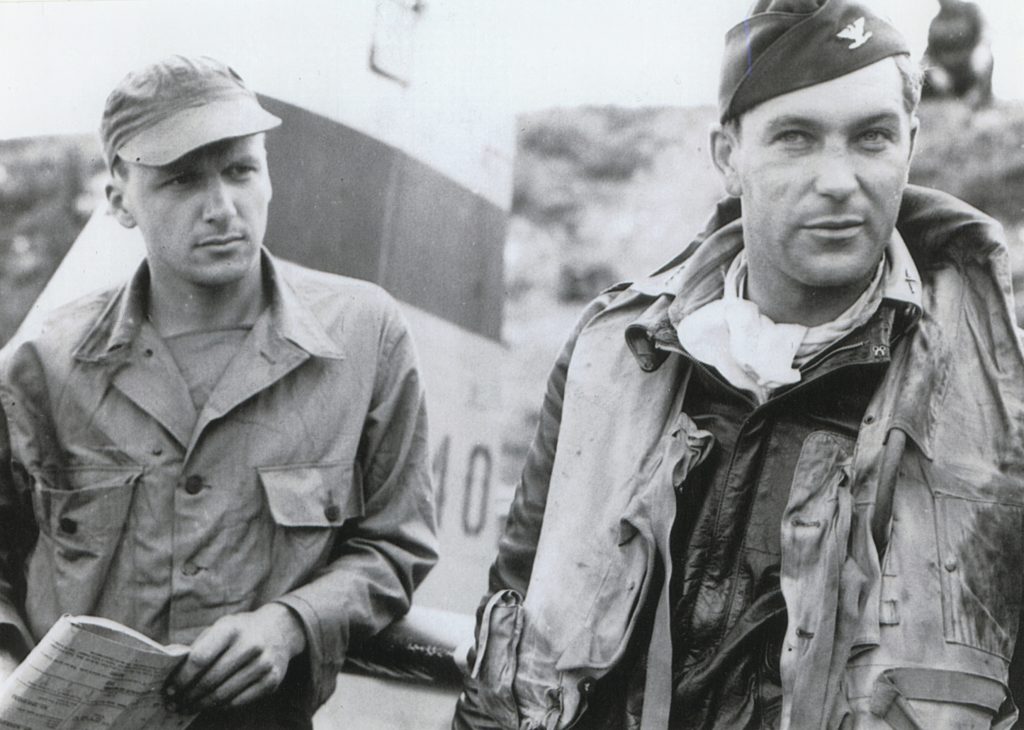
The December 1 mission met sporadic flak but nothing more, but Blakeslee suggested that the group spend the next few days practicing formation and instrument flying, based on their first show. He was back with the 354th on their second mission, a penetration support flight to Paris that saw no opposition. Blakeslee was enjoying his time in the Mustang and did not hesitate to fly wing to the CO for the 354th’s third mission, this one an escort to Emden, and again on their December 13 mission to Kiel, Eighth Fighter Command’s longest mission to date. The Mustangs foiled the German strategy of keeping their fighters out of range of the P-47s; when the 354th arrived, they surprised the Bf 110 heavy fighters stalking the bombers and damaged one. On Dec. 16, the 354th scored their first official victory, and on Dec. 20, with Blakeslee again along for the show, they again surprised the German heavy fighters, this time over Bremen/Wilhelmshaven. Blakeslee was flying wing with Major Jim Howard, and the two proved a deadly combination. Blakeslee shot apart a Bf 110, which fell away in flames, then covered Howard as he scored hits across the wings and fuselage of an unfortunate Bf 109. In all, four Bf 109s and two Bf 110s fell to the Mustangs, which also damaged eight more. Blakeslee left the group in a confident condition, coveting Mustangs for his own outfit. Two days later, Blakeslee was back in his P-47, leading a target withdrawal mission to Munster. He was increasingly bitter about the P-47 and about the way the 4th FG was being treated. Only now was the group up to its full strength of 75 Thunderbolts; meanwhile, the rival 56th and 78th FGs had 108 aircraft. To make matters more unfair, the 56th had started to receive the new Curtiss-Electric paddle-blade propeller, which significantly improved the Thunderbolt’s performance. As the 56th FG pulled ahead in the scoring race, Blakeslee began a behind-the-scenes campaign to get the P-51B. On January 1, Col. Peterson was promoted to Combat Operations Officer for the Ninth Air Force, and Lt. Col. Blakeslee was given command of the 4th Fighter Group. “We are here to fight,” he told the men of the group. “To those who don’t believe me, I would suggest transferring to another group. I’m going to fly the arse off each one of you. Those who keep up with me, good. Those who don’t, I don’t want them.”
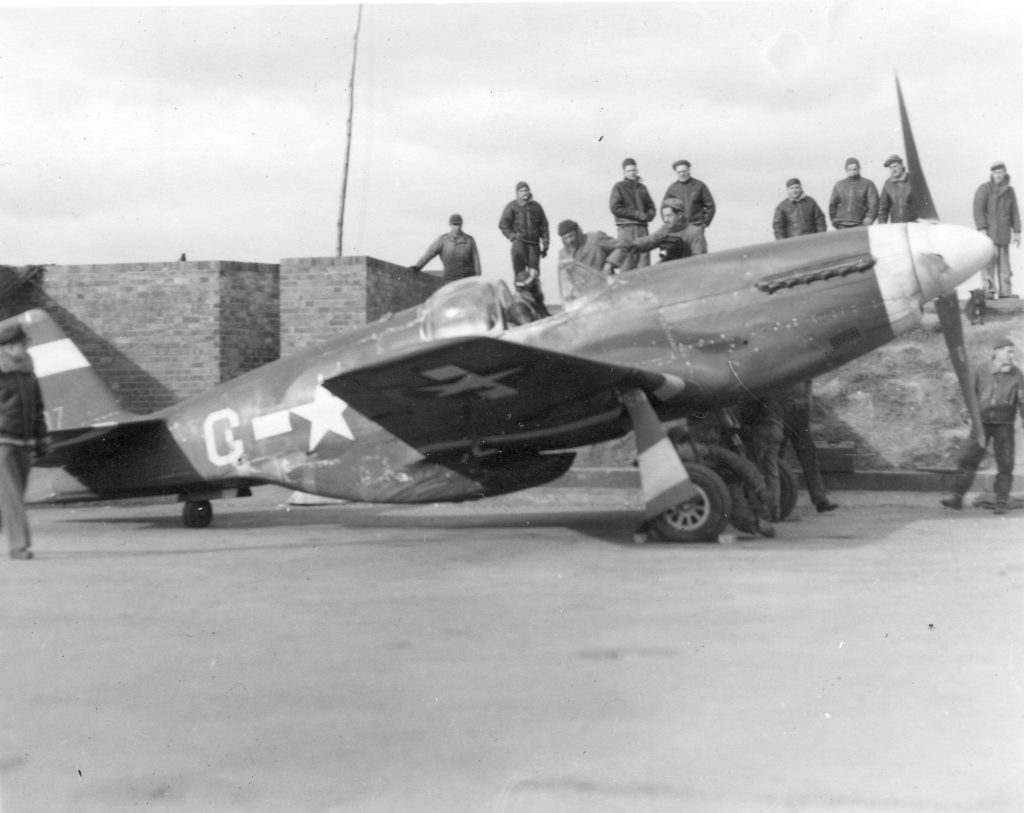
Blakeslee led the first five missions of the new year. On the fourth of these, on January 7, Blakeslee ran his score to seven but nearly paid for it. He was flying with the 336th FS covering the withdrawal of B-17s from Ludwigshafen when he spotted several Fw 190s attacking Fortresses near Hosdin. “I went down to attack, but was cut off by some Spitfires,” Blakeslee reported. “I broke up violently, and in the manuever lost my number 2, 3, and 4 men, and joined up with Red Section, which was led by Capt. Goodson.” Blakeslee squirted off a shot at an Fw 190 that dived past his nose, then spotted more Fw 190s attacking some straggling B-17s. “I went down on these, being covered by Capt. Goodson’s section, and chased one enemy aircraft down to about 2,000-3,000 feet after another Fw 190 made a few head-on passes at me. At 3,000 feet I was holding my own with the Fw 190 in turning maneuvers when I was attacked by three Fw 190s from astern. One of these scored hits on my aircraft, but they were taken off my tail by Capt. Goodson.”
“When I started getting strikes on him, he broke hard port,” said Goodson, “but although he pulled streamers from his wingtips, I was able to pull my sight through him. He finally did two and a half flick-rolls and then split-essed vertically through some light cloud. I followed in a steep wing-over and had to pull out hard to miss some trees as the cloud was lower than I had realized. As I did so, I caught sight of an explosion on the deck. Since the 190 had gone through vertically, I felt sure he could not have pulled out even if he had not been damaged.” Goodson rushed back to cover Blakeslee. “Before I could get close enough to prevent it, a 190 came in on Lt. Col Blakeslee and commenced firing at quite short range,” Goodson said. “I was able to pull in line astern on him at about 250 yards and was relieved to see strikes all over him, and see him peel away and crash in flames on the ground, which was quite close. Lt. Col. Blakeslee, although I knew he had been hit, was now attacking another 190 at very close range, and with very good results, but another 190 was coming in at about 8 o’clock above. This was unfortunate because I was now completely out of ammunition. However, I turned into him, and he broke away to the deck.” Lt. Vermont Garrison damaged Blakeslee’s third pursuer.
Meanwhile, Blakeslee’s quarry broke off his turn, straightened out, and dove for the deck. “I followed, and as he came out, I was dead line astern,” said Blakeslee. “I opened up from 250 yards and fired a 3-4 second burst, observing strikes on the tail and starboard wing. Pieces came from the cockpit. The enemy aircraft then did a half flick to the right and went in.” Blakeslee hadn’t escaped unscathed, however; his radio was out, the R-2800 engine was spraying oil, and German fighters repeatedly tried to bounce the P-47s. Garrison and Goodson made mock attacks, having exhausted their ammunition, and it was enough. Blakeslee reached the channel over Boulogne at 4,000 feet and soon made an emergency landing at Manston. The group scored eight without loss on January 14, scored eight more on January 29, and added six more on January 31 for a 27-2 score for the month. Blakeslee still wanted more. Ever since the first Mustang had arrived for evaluation in September, Blakeslee had been pressing Gen. William Kepner, commander of Eighth Fighter Command, to reequip the group with Mustangs. Kepner initially opposed the idea. With the bomber offensive sputtering, Kepner believed he could not afford to pull Blakeslee’s group out of action long enough for the pilots and ground crews to familiarize themselves with the new fighters. “How much time can you give us to switch, sir?” Blakeslee asked. “If the 4th is out of action more than 24 hours, we’re in trouble,” Kepner said. “General, give me the Mustangs, and I give you my word I’ll have them in combat in 24 hours,” Blakeslee said. “I promise!” His constant badgering paid off: on Valentine’s Day, three new P-51Bs flew into Debden, and Blakeslee made the strong suggestion that his men familiarize themselves with the aircraft. Since many of his senior pilots had flown Spitfires, Blakeslee felt confident he could keep his promise. Before the group had enough Mustangs, however, the Eighth Air Force launched Operation Argument, or “Big Week,” the embodiment of Gen. Jimmy Doolittle’s objective of luring the Luftwaffe into combat and destroying it before the invasion of Europe. Missions to Kirkburg, Brunswick, Schweinfurt, and Stuttgart yielded 11 victories for the group, while two Thunderbolts were lost.
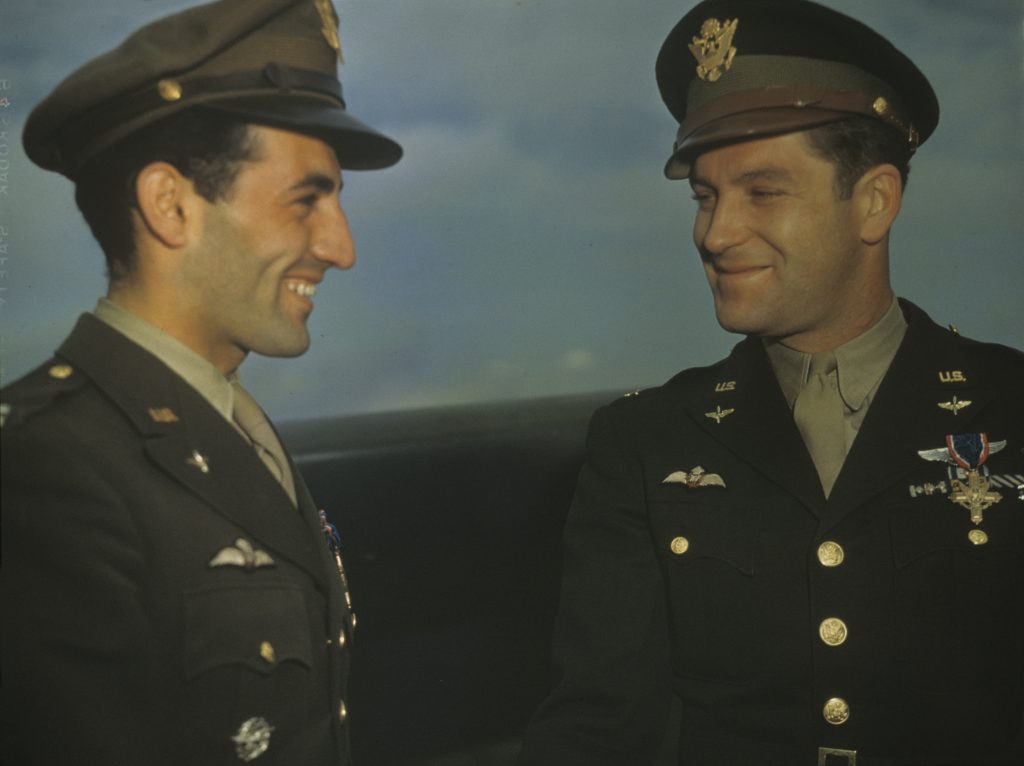
On February 23, 31 P-51Bs were delivered to the group; pilots were flying missions in their P-47s, returning, and taking up Mustangs for familiarization flights. On February 25, 15 more Mustangs arrived, and 24 hours later, as promised, the group was ready for its first P-51B mission – only to have it scrubbed by weather, buying more time for the pilots to learn their new plane’s characteristics. Winslow “Mike” Sobanski was one of these pupils; unfortunately for him, on his return from a flight, he lost track of the position of his landing gear and raised it just as he dropped flaps and cut the engine, bellying the new Mustang and earning Blakeslee’s fury. “Why couldn’t it have been one of those seven-ton monsters?” Blakeslee raged, referring to the unloved P-47s. Finally, on February 28, the group mounted its first Mustang mission. The group prowled the area between Boulogne and Compiegne, finding no airborne opposition; the 336th strafed an airfield, destroying a Ju 88 on the ground. The next day, the group escorted bombers to Brunswick and again missed out on enemy aircraft. However, on both days, there were multiple aborts; mechanical problems plagued the Mustangs, and had to be worked out by ground crews. Even Blakeslee’s own Mustang was not free of issues. The right bank of the engine in Blakeslee’s kite had a tendency to smoke and miss, despite the best efforts of crew chief S/Sgt. Harry East. Even so, the other pilots in the group shared Blakeslee’s enthusiasm for the Mustang. Don Gentile enthused that the fighter “could go in the front door of the enemy’s home and blow down the back door and beat up all the furniture in between!“
On March 3, the Eighth Air Force was assigned Berlin as a target. Blakeslee made sure to be in the lead for this mission. German opposition was heavy; at one point, nine 336 Squadron Mustangs tangled with 60 Fw 190s and Bf 110s. Don Gentile claimed two Fw 190s in what he described as a “hairy fight,” and survived only because wingman Johnny Godfrey covered his tail scrupulously throughout, and three other fighters were claimed at the cost of three Mustangs, two POWs, and a pilot killed in action. The next day, the group returned to “the Big B.” Just before the bombers under escort reached the initial point, 20 Bf 109s attacked; four of them were sent crashing to earth by the group, but three Mustangs were lost. One shed a wing during violent maneuvers, another suffered an engine failure, and the third crashed on landing. Much to Blakeslee’s frustrations, his guns jammed as he was lining up a potential victim, a common malady for the P-51B. Blakeslee led a mission to Limoges on March 5, but his engine forced him to hand off the lead to Duane Beeson, and he missed a fracas that saw nine German fighters fall at the cost of a single Mustang. On March 6, the Fourth again ranged to Berlin, with Blakeslee in the lead. The Luftwaffe was ready for them; 80 planes were arrayed against the section of bombers the 4th was covering, attacking head-on and from the sides. A swirling dogfight erupted, and the German heavy fighters endured a particularly bad day, with eight of them being shot from the sky, including one Me 410 picked off by Blakeslee for his eighth victory. Adding five single-engine fighters to the bag made 13 confirmed against the loss of four planes.
Blakeslee sat out the March 8 mission to Berlin, entrusting command to Lt. Col. Seldon Edner, who was the only combat casualty for the group. In exchange, Luftwaffe losses were 16 fighters to the 4th, including six between Gentile and John Godfrey, establishing them as media darlings. Blakeslee was promoted to full colonel that day. The technical issues plaguing the Mustangs caused the force to be grounded for three days while problems were addressed. Most were not fully addressed during the stand-down, but over the next few months, fixes were developed by the men in the field, and eventually the Mustang would become a more perfect machine as a result. On March 16, the 4th was back in the air, with Blakeslee in the lead. Over Munich, the group found itself among a group of Bf 110s attempting to fire rockets at the back of the bomber stream; 13 of them were cut down. Two days later, Blakeslee led the group back to the same target; this time, two sections of Mustangs were sent out ahead of the bombers to scare up game and claimed a trio of He 111s. The escorting fighters sent eight more German planes crashing to earth, fending off attacks by more than 60 Luftwaffe aircraft. “We were with the bombers when six Fw 190s made a head-on pass at them,” said Don Gentile, flying as Blakeslee’s wingman. “As they turned to go down to make a pass at another box, we went down to engage. They saw us and began to dive away. Col. Blakeslee told me to take the one on the left while he took the other straggler.”
“As we approached them, the enemy aircraft split with four diving in line abreast, so we followed them to the deck, closing to 50 yards before opening fire,” said Blakeslee. “I took the No. 3 enemy aircraft and Capt. Gentile took the No. 4. The enemy aircraft attempted to evade by running away, and when they turned, they swung into line astern.” Gentile’s target flicked and separated from the others. “I stayed behind Col. Blakeslee to cover him, telling him that I was doing so. I closed in on another one on the starboard side of the colonel, got good strikes, and saw pieces come off. The pilot bailed out.”
Meanwhile, Blakleslee closed to within 200 yards of his target and commenced his usual close-in fire. “I saw strikes all along the tail, fuselage, cockpit and engine,” he reported. “The cockpit hood fell off, and the engine started to smoke and burn, and the left undercarriage fell down. I pulled up when 150 yards from the enemy aircraft and did not see him go in, but Capt. Gentile saw him hit the ground.” “Col. Blakeslee told me to come up abreast and go home,” said Gentile. “Just then, two long-nosed Fw 190s came astern of me and hit me in the engine. I yelled break and kept turning. I outturned them. The colonel told me to keep turning so he could work around behind them. I did so, but when Col. Blakeslee was coming ’round on them, they broke away from me and started after him. I reversed my turn quickly and fell in behind them. They flicked over and went down. We came home line abreast, full bore for about 15 minutes. The 190s followed for a while but finally gave up.” Blakeslee had earned his ninth victory. Blakeslee led another mission to Berlin on March 22, but no opposition could be found. The next day, he led a trip to Bruinswick, where the group put up big numbers; 12 destroyed with no loss. By the time the month ended, the Fourth Fighter Group had set a record for the ETO: 156 victories in a single month. Blakeslee wanted more; he said he expected 200 in April. Under Blakeslee’s command, Don Gentile and Duane Beeson had excelled. On April Fools’ Day 1944, over Mannheim, each destroyed a Bf 109 – Gentile’s 22nd and Beeson’s 21st, but the race came to an end three days later. Blakeslee led the group on a strafing mission to airfields at Stendal, Plaue, Brandenburg, and Potsdam. While they obliterated 43 planes on the ground and shot down two more, two pilots were lost to ground fire, including Beeson, who became a PoW. Another struck high-tension power lines, and a fourth bailed out into the channel after his engine failed and died from hypothermia.
On April 8, Blakeslee had a day off from flying while the group traveled to Brunswick. In a large-scale battle that spanned 30 miles and saw combat from 23,000 feet all the way to the deck, the group had its best haul yet: 33 enemy fighters, with Gentile, Willard Millikan, and Louis “Red Dog” Norley each bagging three. Blakeslee was back in the lead the next day, escorting B-24s, but detached from the bombers to strafe airfields once again. On April 12, he led a mission that claimed four more German fighters, and was at the head of the group the next day as Don Gentile made the final flight of his tour. Blakeslee avoided personal markings or scoreboards on his plane; his ethos about such things was the opposite of most pilots, including Gentile. Five fighters fell to the 4th on the mission. Awaiting their return to Debden was a crowd of press corps reporters and photographers eager to get the Gentile story, and Gentile decided to give them a show. Buzzing the field or doing victory rolls was forbidden by Blakeslee because of the danger of unseen battle damage. “Gentile knew that, but he did it anyway,” Blakeslee groused 55 years later, still angry about what came next. Buzzing the field in front of the cameras, Gentile failed to recognize the gentle crown of the Debden airfield, and his propeller dug in halfway across it, leaving a 50-foot furrow. He pulled the damaged plane up to 50 feet, then belly-landed right in front of the media, just missing them and the operations hut and wrecking his P-51B. Blakeslee was just climbing out of his Mustang when the crash happened, and he exploded. “That pilot will never fly for me again!” he exclaimed, which was true. Gentile walked away from the crash, grabbed his gear, and escaped the hazards of Blakeslee for a slightly less perilous war bond drive. On April 18, Blakeslee was in command of a penetration escort to Berlin that saw seven aircraft destroyed by the 4th in the air and 12 more on the ground in strafing attacks, but the big days were never totally one-sided; two pilots were killed, and one became a PoW. The group was engaged in a relentless war of attrition, but Blakeslee would not tolerate hesitation or complaints about losses from the men. Briefing some replacements, Blakeslee pounded home one of his cardinal rules about combat: always turn head-on into a German attack, and never deviate from your course toward the enemy fighter. “But Colonel! What if the German pilot doesn’t break either?” squeaked a young second lieutenant. Blakeslee fixed the pilot with a stare, paused, and said, “Well, sonny, then you will have just earned your hazardous duty pay.”
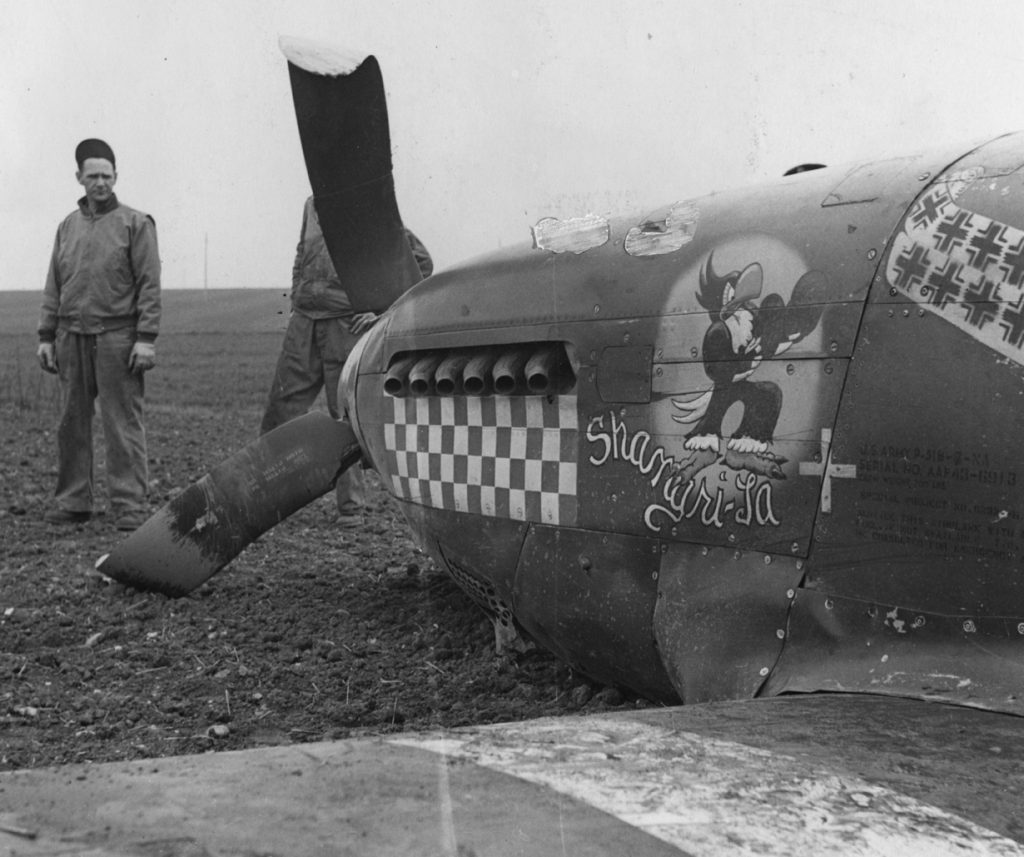
On April 22, before leading the Fourth on a sweep in the area between Kassel and Hamm, Blakeslee met with his squadron commanders and flight leaders to tell them he expected flying practice from dawn to dusk; he was concerned about the readiness of the new pilots. The Fourth took off for Germany, with Blakeslee up front. Upon arriving in their designated area, he found the table was already set. “Over Kassel, there were 20-plus Bf 109s orbiting at 4,000 feet,” Blakeslee said. He took 335 and 336 Squadrons down to attack, positioning 334 as top cover; he had time to swing the Mustangs in a descending right turn, putting the sun at their backs. “As we approached, they were flying in a Lufbery, making it difficult for any individual attacks until two of the Bf 109s broke away, leaving a gap. Our aircraft attacked by sections, and the fight was on, with many of the enemy aircraft going for the deck,” he said. “I saw a Bf 109 with a belly tank, headed northwest up a shallow valley, just skimming the trees,” Blakeslee continued. “I gave a short burst at 300 yards, then closed to 200 yards and gave him a second burst. I was closing fast, indicating 350mph, when I saw his tank strike the ground. I was not more than 15 feet above as I passed over him, and I saw his prop churn into the ground, throwing pieces, and the aircraft then crashed violently. Captain Sobanski of 334 Squadron later flew over this aircraft and saw the pilot’s body halfway out of the cockpit. I then climbed up to about 5000 feet to rejoin the battle.”
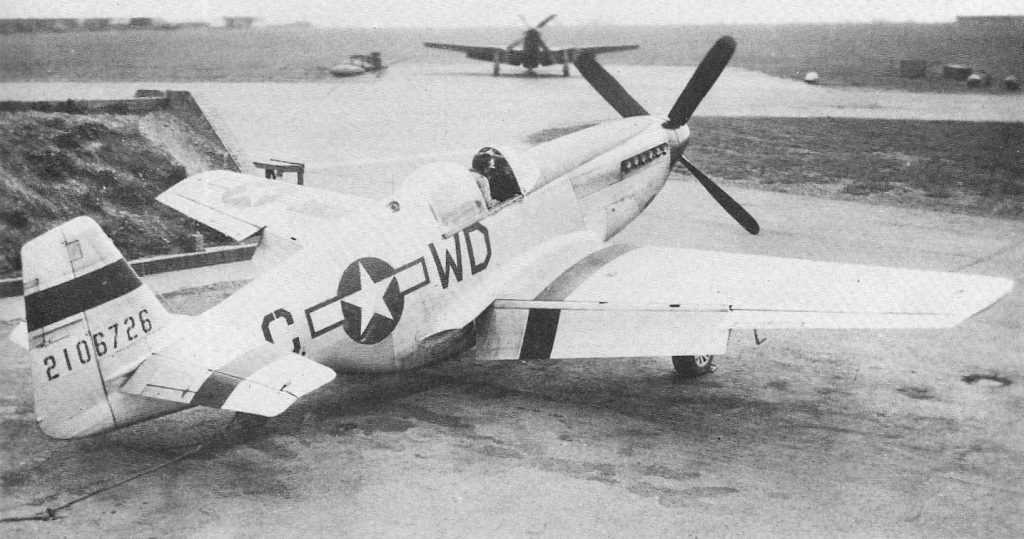
“I sighted another Bf 109, about 3,000 feet below me, being chased by other P-51s. I dropped flaps and dove. The enemy aircraft straightened out as I got to him and fired a two-second burst from 200 yards as he was pulling up over some trees. My fire hit the enemy aircraft on his wing roots and cockpit, and his prop and wing hit a tree top, cartwheeling him into the deck.” Blakeslee’s double was part of a 17-aircraft haul for the group; Willard Millikan downed four by himself. Blakeslee’s successes did not make him less demanding. The next day, he posted a letter taking his men to task: Men would wear proper uniform, control their dogs, show up for duty on time, salute, and behave as if they were part of a military outfit. “We are just beginning to work; the busy season is at hand,” he wrote. “We have been living under very easy conditions for a long time, and some of us still want to be babied. Already, I hear complaints of overwork, references to rotations, promotions, and petty problems. For these, I have no sympathy. The next few months will test the guts of a lot of people. I hope you stand the test.” The group, including Blakeslee, flew practice until after midnight, then had to be ready for liftoff the next morning. Blakeslee led the group on a freelance sweep to the Frankfurt area in conjunction with a bombing attack around Munich. After the group reached Frankfurt, “a gaggle of about 35 Fw 190s were reported as being at 10,000 feet going south toward the bomber track,” Blakeslee reported. 335 and 334 Squadrons fell upon the unwary Fw 190s as 336 Squadron provided top cover. “I picked out an Fw 190 third or fourth in from the port side of the gaggle and opened fire, obtaining strikes,” said Blakeslee. “The enemy aircraft broke hard left and up and then evaded to the deck. I started to give chase, but had several others on my tail, so I broke off and engaged another Fw 190. We went around in tight circles, and I got in a few bursts; when he headed to the southeast, I got on his tail, opening at 300 yards with a two-second burst, finally closing to 150 yards. I was getting strikes on him when I saw him jettison his hood and helmet. I overshot him, and as I did so, I saw him unfastening his straps and watched him jump out at 600 feet. His chute opened just above the ground.”
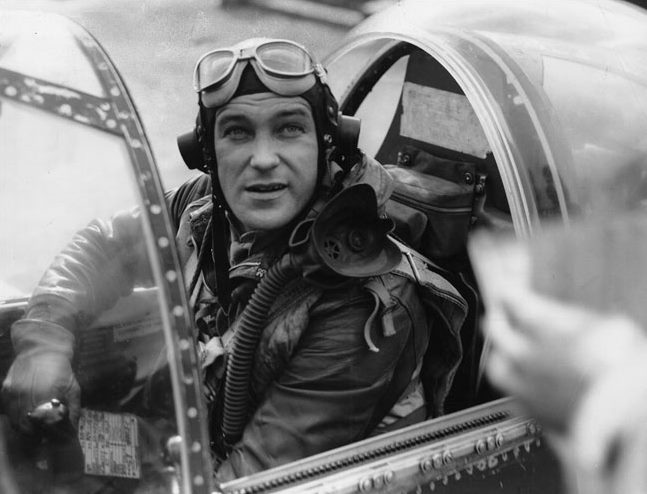
Blakeslee regained altitude and “at 6,000 feet I saw an Fw 190 diving away to the south. I dove after him, and at 2,000 feet, he started a left turn. I opened fire at 300 yards, closing to 200 yards, and saw strikes along the cockpit. The enemy aircraft straightened out and glided for an open field as if to crash land. I got on his tail and was ready to fire when Captain (Albert) Schlegel of 334 Squadron came in, getting strikes in the cockpit. The enemy aircraft went straight into the ground and exploded.” Blakeslee personally led three more missions in April, pushing the group to notch its 500th victory by the end of the month. On April 30, after a successful strafing mission and a Bf 110 shot down, the group’s score stood at 503 ½, making it the most successful fighter unit in the ETO. Furthermore, the group destroyed 207 in April, again meeting Blakeslee’s demand. A wild party ensued at Debden that night, followed, naturally, by an escort mission the following afternoon that the Colonel led himself. Blakeslee led six of the group’s 25 missions in May. Only 69 ½ victories were scored by the 4th, but part of that was because it was undertaking more strafing missions, especially of railroads, as the date of the invasion neared. On the night of June 5, the crews were ordered to paint black-and-white ID stripes on all the aircraft, and the planes were armed with bombs. Blakeslee announced the invasion and briefed the pilots at 2300 on the various missions they were assigned for the day of the invasion. It would be a costly day for the 4th. The group flew six missions on D-Day, starting at 0320 in the morning. The missions were not the usual fare of the Fourth but instead a mix of patrol and bombing missions. Blakeslee led the most ill-fated, a two-squadron effort from Rouen to Dreux. After one flight attacked a truck convoy, it was bounced by 15 German fighters and all four pilots were killed. Two other pilots were jumped and shot down in the same area, and Mike McPharlin, a 334th FS veteran who came over from the 339th FS to fly “the big one” with his old friends, disappeared after aborting. The seven losses, combined with three on earlier missions, made this the costliest day for the group since the botched Morlaix raid two years earlier. Bad luck persisted the next day; as Blakeslee was forming up the group for an armed reconnaissance, two aircraft from the 336th collided and crashed, with one pilot being killed, and a third was lost over France.
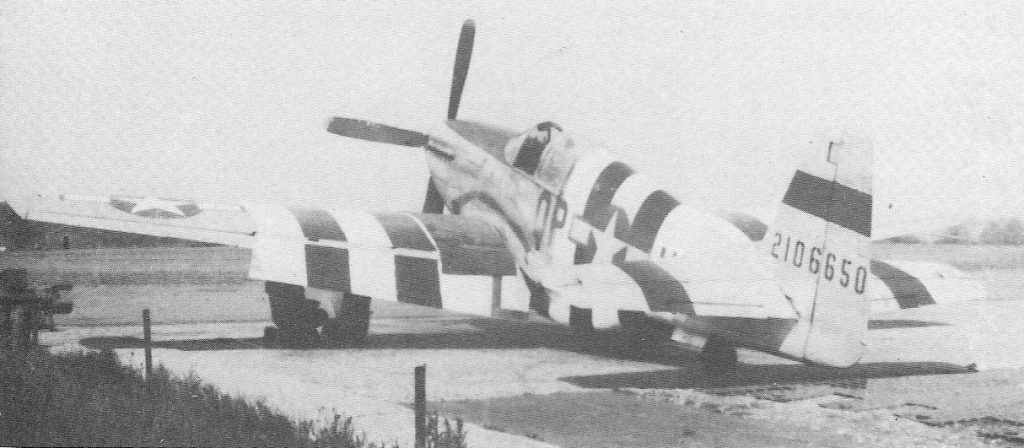
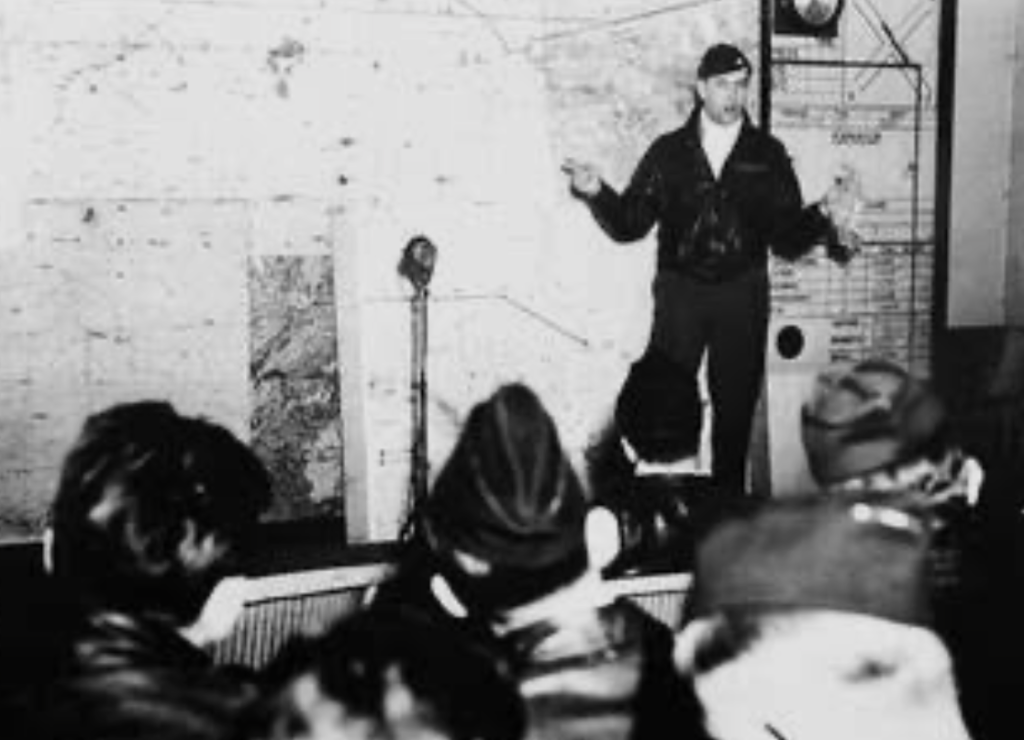
The intense ground attack campaign continued until June 15, with six more Mustangs lost to flak, collision and mechanical problems. Mid-month, Blakeslee was drawn into planning for the operation he would be most proud of: Operation Frantic, the first shuttle mission to Russia. The plan called for Eighth Air Force bombers and fighters to fly from England to attack targets in eastern Germany and then keep flying all the way to Russian territory, where they would rearm and refuel at Piryatin. Next, the American force would fly from Russia to Italy with a stop to bomb a target in Poland along the way. Finally, the mission would fly from Italy to England, bombing a target in France. The mission was scheduled initially for June 15, but the weather postponed it. On June 20, the alert to make ready went out again, and the ground crews worked all night to prepare the Mustangs. Blakeslee’s early-morning briefing contained some unusual instructions. The pilots were instructed to avoid combat on the Debden-to-Piryatin leg, not to drop tanks, and to stay off the radio. The mission would be flown at 15,000 feet to conserve oxygen. “If you get dizzy, go down under the bombers for a while,” Blakeslee advised. “The whole thing is for show. That’s why everything must be pansy. It’s not what you do, it’s what you seem to do.” Leading the group meant navigating long distances. Blakeslee had a sequence of 18 maps in his cockpit to help him navigate to an unfamiliar landing ground in Russia. He led 45 4th FG P-51s, along with 16 Mustangs from the 352nd FG, into the air at 0755, caught up with the bombers over Leszno after they had bombed Ruhland, and 90 minutes later, 25 Bf 109s attacked the formation. Two Bf 109s were shot down while one Mustang was lost. Meanwhile, the rest of the Mustang force had to fly 580 miles beyond Russian lines to Piryatin, with Blakeslee navigating. When the field came into sight, exactly on time, a relieved Blakelee tossed his map collection into the air within his cockpit in relief.
The bombers landed at Poltava, but they had been followed by a German snooper, and that night the Luftwaffe put up a series of raids against the Russian base. The action was close enough that the Mustang fliers spent an uneasy night in the trenches surrounding Piryatin, and on June 22, the planes were dispersed to three other fields. On June 26, the force lifted off to bomb Drohobycz, Poland, landing at Lucera, Italy, short four of their number who were delayed by mechanical difficulties. The Eighth Air Force pilots were feted by their counterparts from the 15th Air Force, and libations flowed into the early hours. With the 332nd Fighter Group in the process of converting to Mustangs, the shuttle group was “volunteered” to stand in on a fighter sweep ahead of a bombing raid to Budapest on July 2. Blakeslee led the group into a swarm of 80 German and 18 Hungarian Bf 109Gs, and a violent dogfight erupted that saw eight Messerschmitts shot down. Howard Hively bagged three but was injured in the face and eye when his canopy was shattered by a cannon shell. One of the Bf 109s was claimed by Blakeslee for his 14th victory, but the cost was high. Two pilots became POWs, and two were killed. After flying an escort for bombers hitting a rail yard in Yugoslavia on July 3, the group traveled from Italy back to Debden, a seven-hour trip, with many of the planes laden with souvenirs of their trip. On July 6, nine late arrivals (four repaired Mustangs repaired in Russia and five aborts from Italy) reached Debden, and Frantic was over; a mission that covered 6,000 miles, 10 countries and 29:15 hours of operational flying. Despite the success of the mission, group discipline started to slide. Morale was still impacted by the losses around D-Day, and the Luftwaffe had suddenly become scarce. When a Mustang and its pilot were lost to mechanical problems, and air discipline fell to a level Blakeslee found unacceptable, he announced a new set of rules “intended to rebuild this group to its former status as the best outfit in the world,” including the creation of an operational training unit for new pilots and anyone who did not perform to the best operational standards. Failure to salute Blakeslee would mean two weeks with no flying. Accidents would not be tolerated.
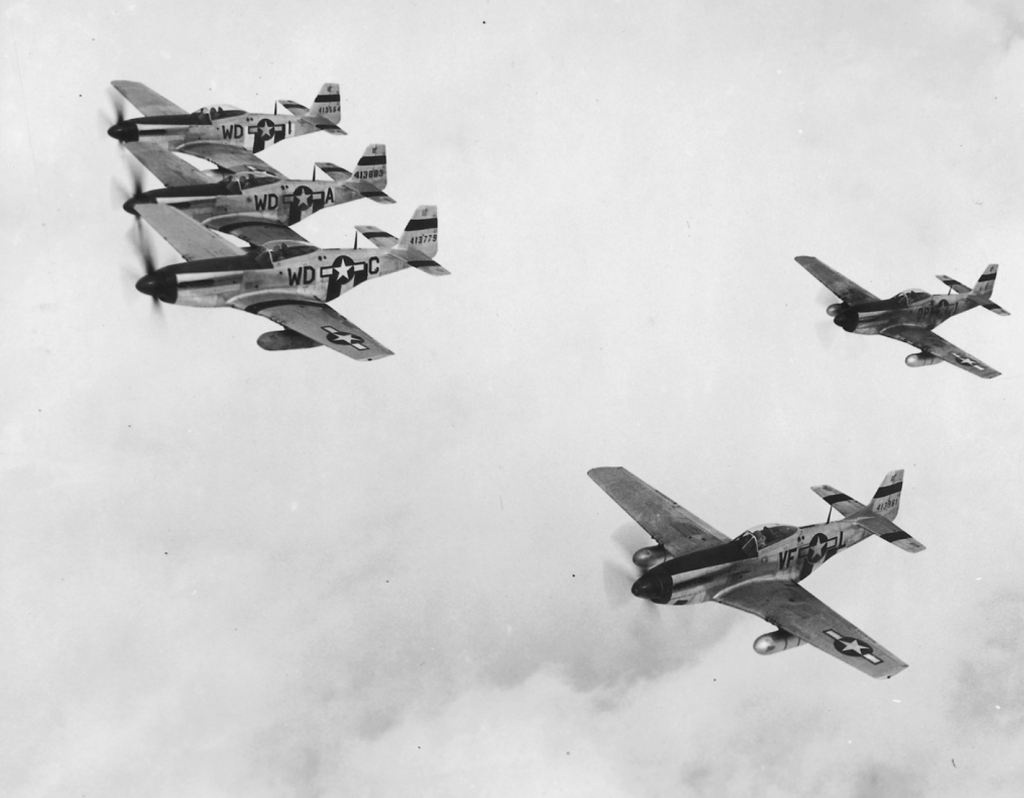
Blakeslee led five uneventful escorts in July and a strafing mission on July 24. Scuttlebutt suggested the Fourth would soon move to a new theatre where there was still action to be had. As if in response, on August 8, the Fourth was assigned to escort RAF Beaufighters to attack shipping along the Norwegian coast. The next day, Blakeslee led an escort for bombers returning from Stuttgart and a fighter-bomber mission to France. On August 18, Blakeslee commanded the group’s escort of bomb-toting P-47s to Beauvais, France. That afternoon, another mission to the same area had the Mustangs loaded with bombs, and finally, the Luftwaffe showed up. 65 German fighters bounced the group, shooting down nine of them. The group’s mood fell further, and the August 28 mission to Sarrebourg, which cost the group five planes and three pilots, did nothing to alleviate the funk. On August 30, a Blakeslee released a treatise on strafing that recommended low flying: “I don’t mean five feet up. I mean, so low the grass is brushing the bottom of the scoop.” On September 1, 1944, Blakeslee’s remarkable stretch of uninterrupted combat flying came to a forced end. He was put on leave and sent to the U.S. for six weeks. In his hometown of Fairport, a reception in his honor sponsored by the Chamber of Commerce and Better Business Board of Painesville and the Men’s Civic Club of Fairport drew thousands of local people and featured a parade and a testimonial dinner in his honor. He couldn’t wait to return to Debden. Blakeslee was back in the air on October 26 on an escort to Minden that saw little action, and a second escort on October 30 to Hamburg, seeing no enemy fighters on either mission. When he returned to Debden after the Hamburg show, General Kepner was waiting with bad news. Hub Zemke, the former commander of the 56th Fighter Group, had been shot down and captured while flying with the 479th FG. That left Blakeslee as the last original senior commander in the Eighth Air Force. “You’re grounded,” Kepner said. “I can’t afford to lose both of you.”
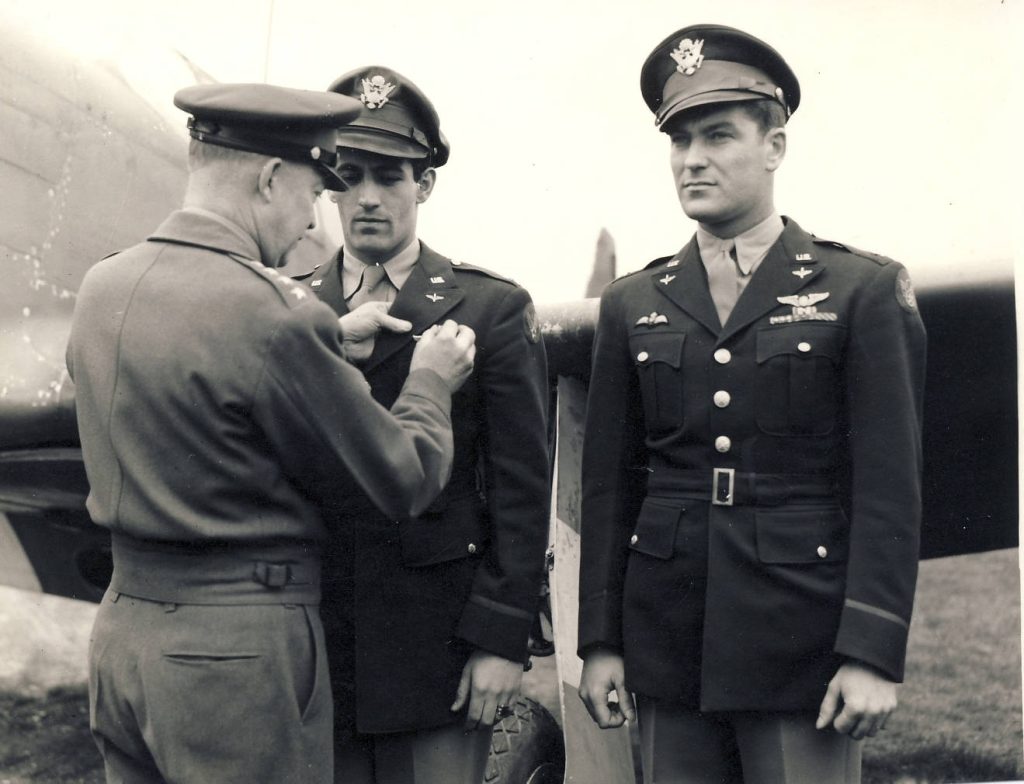
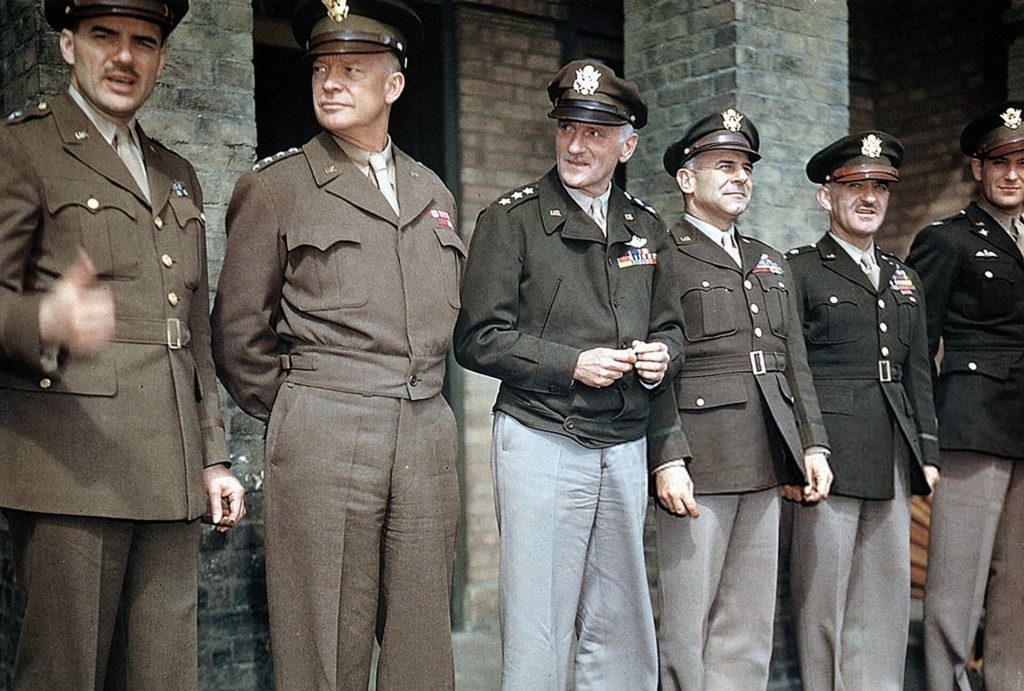
Blakeslee was crushed. In a news article published in November, he said, “How can they do this to me?” On November 1, the Fourth Fighter Group pilots had a farewell party for their longtime leader. Three days later, Blakeslee was formally relieved and Claiborne Kinnard became CO of the group; on the November 19, a dejected Blakeslee left Debden for the states, “without his decorations or his RAF wings, or the silver beer mug his men gave him,” according to the group diary.
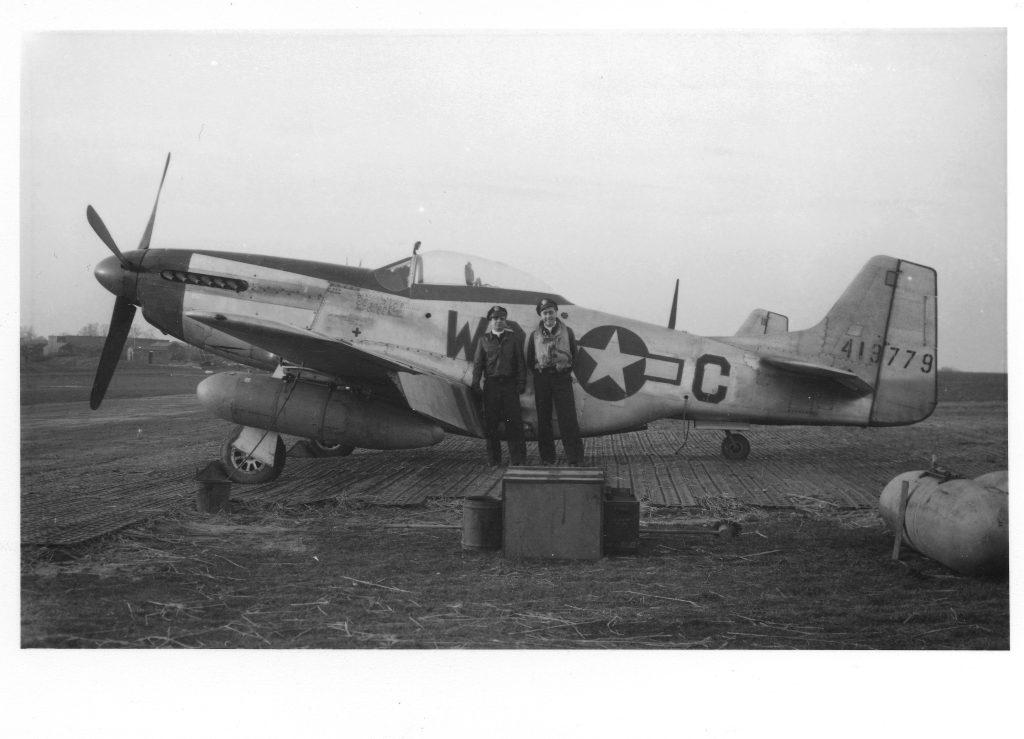
Blakeslee returned home and married Leola Fryer, whose name had been on the side of his 401 Squadron Spitfire. He served in several staff and training roles before flying combat during the Korean War in F-84 Thunderjets with the 523rd Fighter Squadron, where he was again decorated for his leadership. After Korea, he served in a host of staff and base command roles as well as commander of the 4440th Aircraft Delivery Group at Langley AFB from January to July 1958. The fact that he remained a Colonel for the rest of his career suggests he carried his no-nonsense approach into the peacetime Air Force, where that leadership approach was undoubtedly less appreciated than it had been during the war. Blakeslee left the Air Force in 1965 and enjoyed a long retirement before passing away in 2008. His WWII record was unmatched: with between 400 and 500 combat missions and about 1000 hours of combat flying time, Blakeslee flew and fought more than any American pilot in WWII.
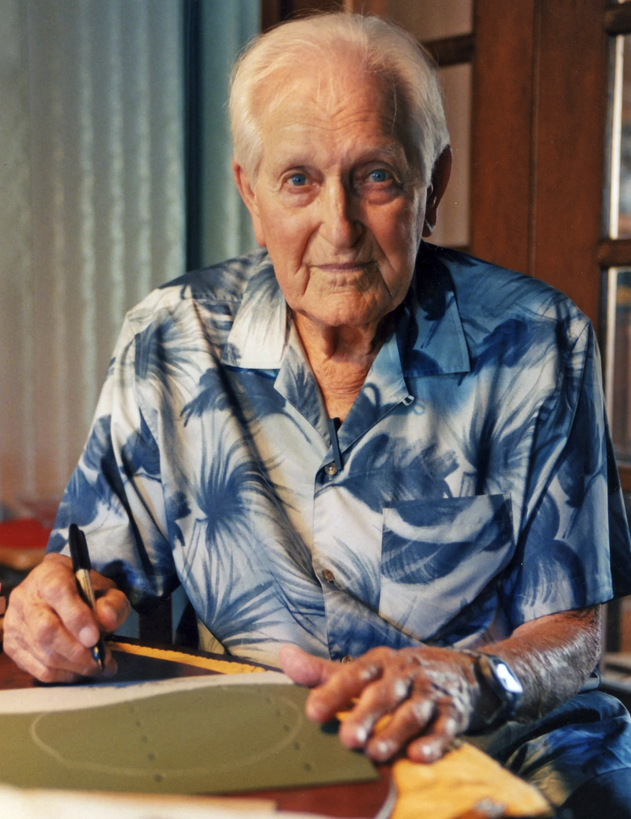
(Image credit: John DIbbs/Ron Kaplan)



Great article, Chris Bucholtz! Thank you for putting it together.
Thanks, Mike! I’m glad you enjoyed it.
Great story but the last two sentences are not correct. One of the greatest fighter pilots and leaders in the history of American military aviation was Lt Col Grant Mahony of Bridal Veil, OR 5 kill ace and Depiuty CO of the 8th FG at the time of his death. He also fought in the Philippines in 1941, Java, China and in Burma has CO of the Fighter Section, 1st Air Commando Group. Top American fighter leader of WWII if not ever……….over 550 combat missions over 5 combat tours from 1941 until he was KIA in 1945. More combat missions and hours than any other US pilot in WWII. He only stopped when he was killed in action. Because he’s the ultimate unknown he rarely even rates a mention in history.
Thanks, Mike! I’m glad you enjoyed it.
There ought to be a movie made about Don Blakeslee . What a driven , motivated flyer who became one of America’s toughest fighter pilots and leaders. This guy was ultra “shit hot .”
The other Ohioan, who was another legend , was Don Gentile in Blakeslee’s unit. Gentile had about 20 to 25 aerial victories .
Two young men who grew up in the thirties and wanted to fly airplanes more than anything else ……. And they did to the max.