

In the 1980s, before the fall of the Soviet Union, its Air Force was divided into three main groups based on aircraft types. The first was Long Range Aviation (VVS-DA), which focused on bombers; the second was Frontal Aviation (VVS-FA), which included fighters, fighter-bombers, and attack aircraft; and the third was Military Transport Aviation (VVS-VTA), which handled transport aircraft. There was another branch, called the PVO (Voyska protivovozdushnoy oborony), responsible for air defense and operating independently of the Air Force. The PVO operated the A-50 Mainstay Airborne Warning and Control System (AWACS) aircraft, and its predecessor, the Tu-126 Moss. But these aircraft were used only by the PVO and did not support tactical missions.
Design of Antonov An-71
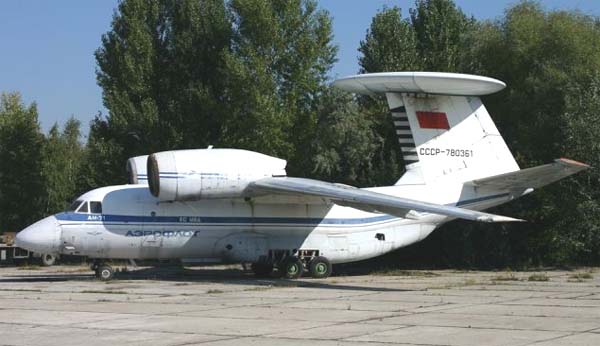
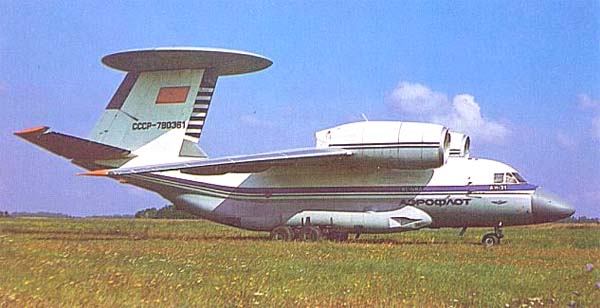
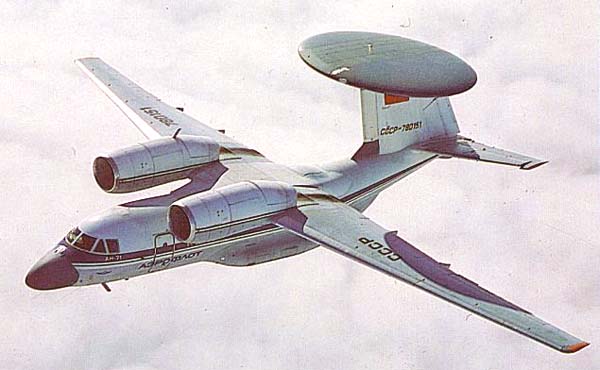
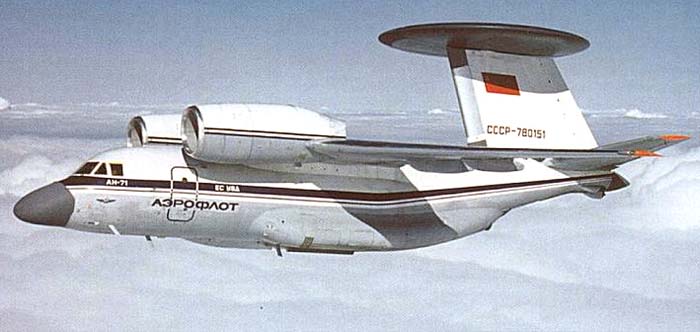
As a result, a new AWACS aircraft, designated Antonov An-71, was developed to meet the needs of the VVS-FA in ground operations. The design of the An-71 was based on the An-72 transport aircraft, but it was equipped with a new rear fuselage that supported the radar dome on top of the wide, forward-swept fin. The cargo hold included electronic equipment and had six operator stations. The Antonov An-71 first flew on July 12, 1985. With a crew of six, the aircraft was 77.1 feet long, 30.2 feet high, with a wingspan of 104.8 feet. The empty weight of the aircraft was 43,563 pounds, and the maximum takeoff weight was 70,768 pounds. The aircraft was powered by two Progress D-436K turbofan engines. Its maximum speed was 400 mph, the cruise speed was 330 mph, and the service ceiling was 35,400 feet. The Antonov An-71 was equipped with the Vega-M Kvant search radar and could detect 400 targets at up to 230 miles. The Antonov An-71 performed well during flight tests. However, the program was canceled after the fall of the Soviet Union due to issues with the Vega-M Kvant radar. The Antonov An-71 is often mistakenly called a carrier-based AWACS aircraft, but this is not correct. However, a modified An-75 was proposed for Soviet aircraft carriers under construction.
The Cancellation
But the Soviet Naval Aviation (AV-MF) canceled its development when the service realized that it would require too many changes to be safe for use on those carriers. The AV-MF then looked for a new, purpose-built AWACS aircraft, using an improved Kvant-M version of the radar from the An-71/An-75. The An-75 was designed to have engines mounted under the wings, similar to the later An-74TK-300. It also had many other changes to its structure and aerodynamics. In the end, the An-75 would have been completely different from the An-71/An-72 aircraft families and was considered too expensive to continue developing, especially compared to a completely new design like the Yak-44E. In the early 2000s, Ukraine attempted to sell an An-71 to India for $200 million, but the negotiations were unsuccessful. In 2010, a prototype of Antonov An-71 was transferred to the Ukraine State Aviation Museum for restoration and display. In the Grounded Dreams series, the Antonov An-71 was a good aircraft with excellent capabilities, but the fall of the Soviet Union and a doctrine that supported each military branch having its own AWACS planes, which increased the development costs, led to its cancellation after only three prototypes were built. Read more Grounded Dreams articles HERE.