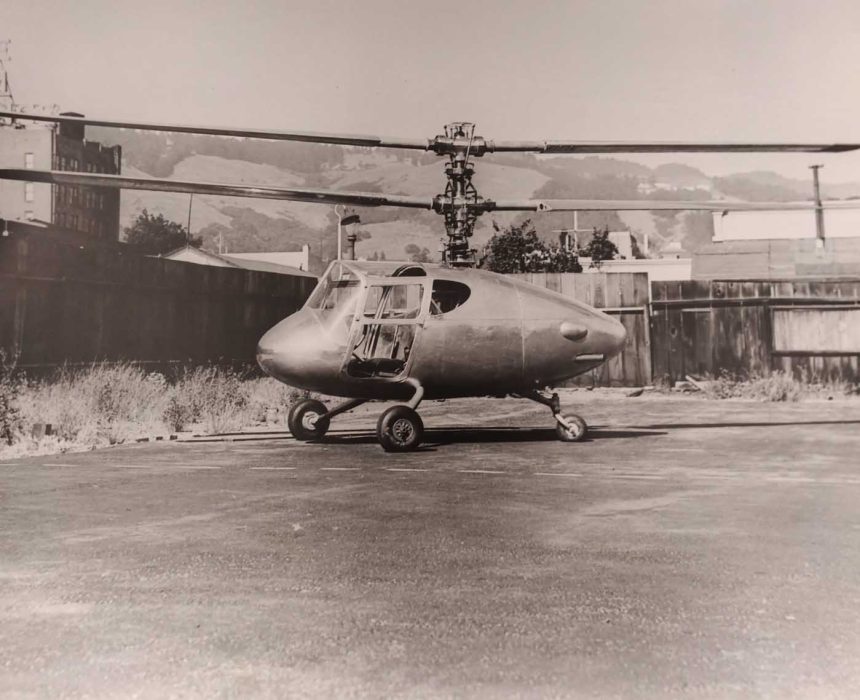


When helicopters first arrived in the second half of WWII, many companies, such as Sikorsky and Bell, realized that rotorcraft would be the future of military and civilian aviation. As a result, each company developed various helicopter models during and after WWII. At the same time, 19-year-old Stanley Hiller, Jr. designed, built, and flew the first successful helicopter with coaxial rotors in the United States. The helicopter, called the XH-44, was also the first American helicopter to use all-metal blades and a rigid rotor. Hiller chose the counter-rotating coaxial design to set his helicopters apart from Sikorsky’s single-main-rotor models, which were common in the mid-1940s. However, Hiller’s design acted more as an experimental aircraft and did not produce orders, leaving him short of funds for further development. To receive funding, he reached out to shipbuilder Henry J. Kaiser, who loved helicopters, and provided support for helicopter development. However, Kaiser wanted to build a new helicopter at his Fleetwings facilities in Pennsylvania, which Hiller refused. But Hiller agreed to the production contract, and under the Kaiser contract, he designed, built, and tested a new two-seat coaxial helicopter based on the XH-44 but with super-rigid metal rotor blades. Each of the two main rotors had two blades. The aircraft, designated the Hiller X-2-235, was powered by a Lycoming 235-horsepower engine and designed for speed.
Design of Hiller X-2-235
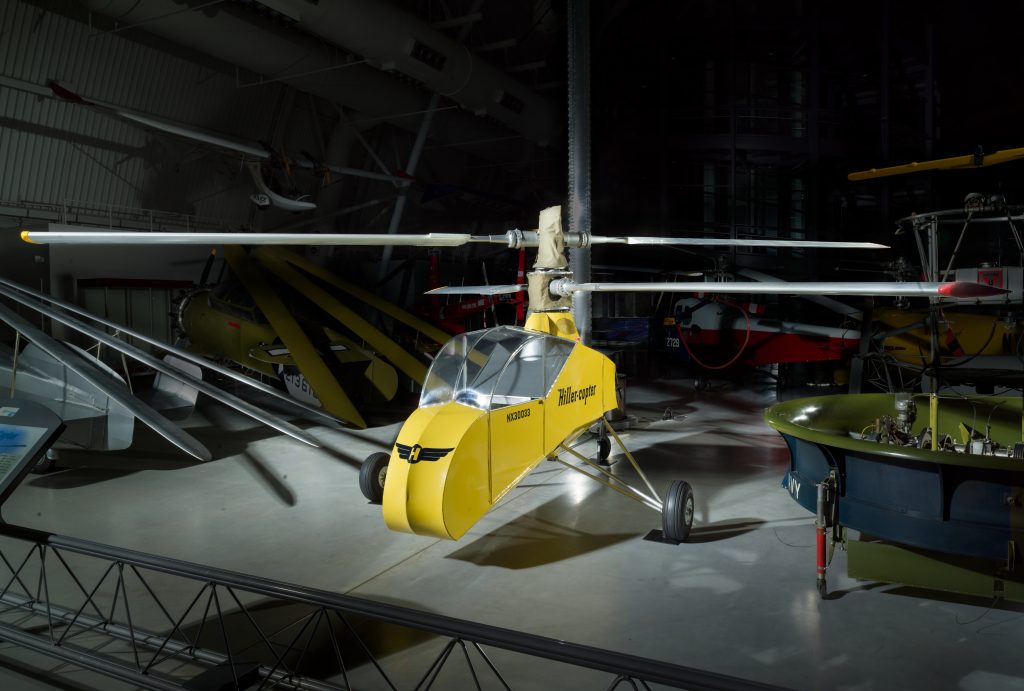
In October 1944, Hiller started building three X-2-235 helicopters, with ground tests beginning in the summer of 1945. But he did not have military contracts at the time and approached the US Navy to use the new helicopter for observation and training. However, there was no specific military need for such a machine for the Navy. Hence, the Navy did not place an order for it, but the service did buy the third incomplete Hiller X-2-235, which became known as the UH-1X, for testing in National Advisory Committee for Aeronautics wind tunnels at Langley Field, Virginia. But the program was canceled due to vibration issues with the X-2-235 to prevent damage to the wind tunnel. However, the tests validated Hiller’s idea that super-rigid coaxial rotors could achieve very high-speed helicopter flight. As a result, Hiller redesigned the X-2-235’s main rotors to have three blades and also added a rear propeller, stub wings, and retractable landing gear. The redesigned X-2-235 was intended to fly at much higher speeds than current helicopters could reach. In early 1945, the new helicopters were close to starting tethered flight, but Hiller and Kaiser entered into a financial dispute. Hiller requested additional funding to move the aircraft into production. Kaiser agreed to keep funding the project but refused to provide any extra funding. Because of this disagreement, Hiller and Kaiser separated, and the Hiller X-2-235 program ended.
The Cancellation
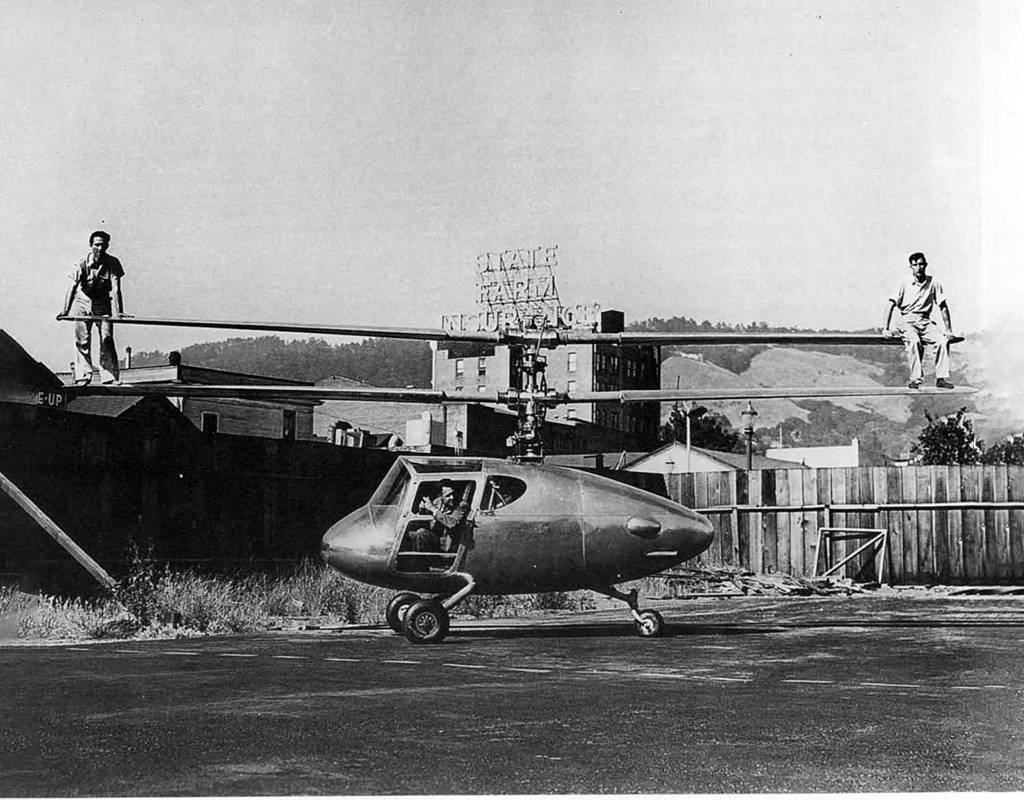
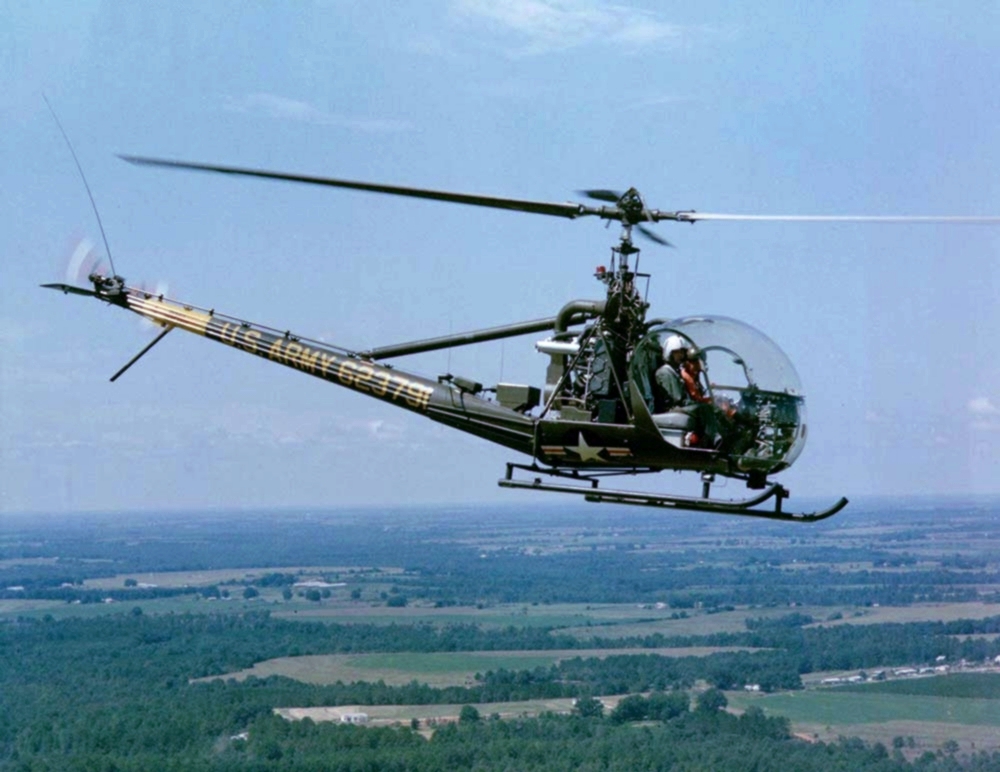
The Hiller X-2-235 program might have ended, but the work on the X-2-235 proved useful. Hiller founded a new company, United Helicopters, and secured financial backing in California, which helped him certify and manufacture the Hiller Model 360 three-seat helicopter. The Hiller Model 360 was based on the lessons learned from the Hiller X-2-235 program. Both aircraft used Hiller’s Roto-Matic control system and had rigid rotor designs. The Hiller Model 360 received its commercial certification from the CAA (now FAA) in October 1948. It went on to become a very successful helicopter for both commercial and military use, eventually designated the US Army’s H-23 Raven. More than 2,000 helicopters were built before production ended in 1965. About 300 of these were exported, with military and civilian versions operating in more than a dozen countries. Some reports indicate exports to at least 18 countries. In the Grounded Dreams series, the Hiller X-2-235 could have become what Model 360 later became, but financial issues among its owners led to its cancellation. Read more Grounded Dreams articles HERE.