






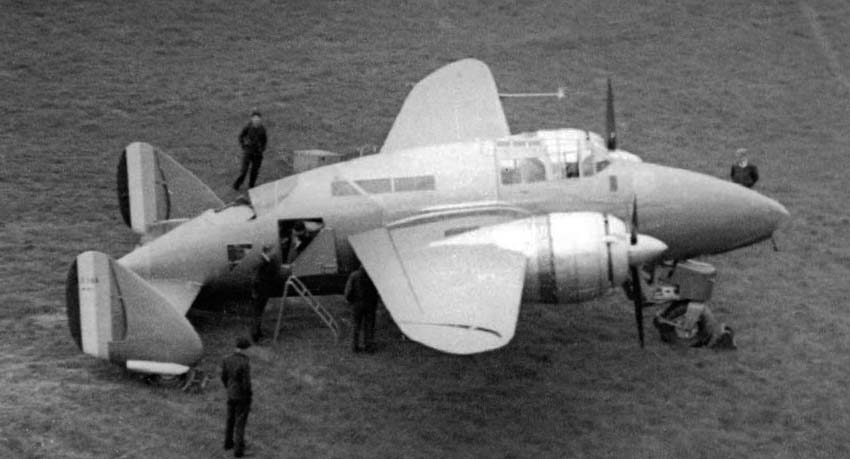

In the 1930s, when the French Air Force was looking for a faster fighter than its current Potez 631 twin-engine aircraft, engineers at the aircraft manufacturer Lioré et Olivier developed the LeO 50. The aircraft was originally powered by two Gnome-Rhône 14M engines, which were not powerful enough. Following the nationalization of the French aircraft industry in 1937, Lioré et Olivier merged into the state-owned SNCASE, which took over the further development of the LeO 50. To improve its performance, the aircraft was modified to use two powerful Gnome-Rhône 14N-20/21 14-cylinder air-cooled radial piston engines, each producing 1,081 horsepower. The engines were the same ones used in the Lioré et Olivier LeO 451 bomber. As a result, the aircraft was renamed the SNCASE SE.100.
Design of SNCASE SE.100
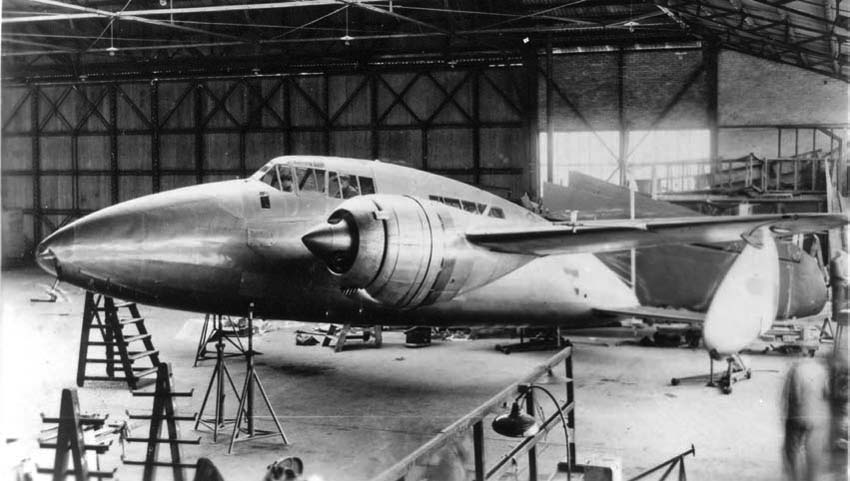
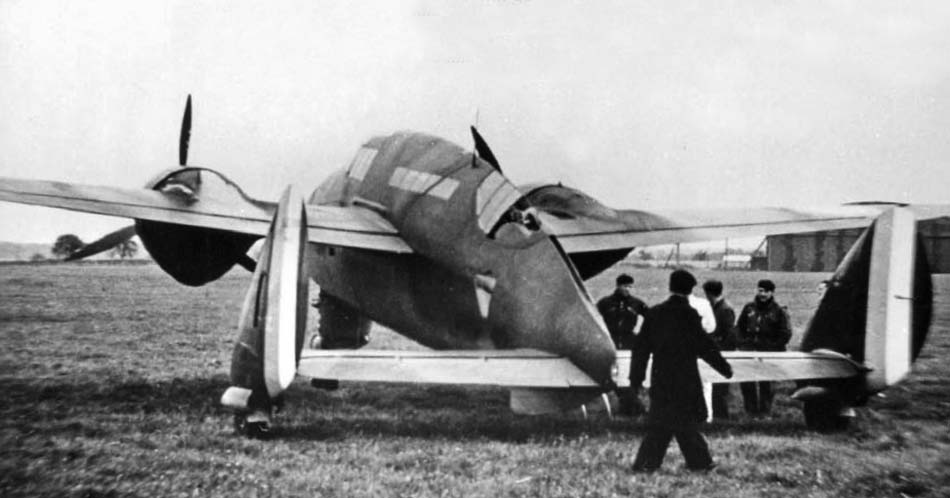
The first prototype of the SNCASE SE.100 flew for the first time on March 29, 1939. The aircraft had a standard all-metal design with a mid-wing configuration. Like many French twin-engine planes of the time, one engine turned clockwise and the other anti-clockwise to reduce torque. The aircraft also featured a twin tail. Operated by a crew of two, the aircraft was 38.9 feet long, 14.1 feet high, with a wingspan of 51.6 feet and a wing area of 360 square feet. The SNCASE SE.100’s gross weight was 16,535 pounds, and the maximum speed was 360 mph at 21,300 feet, with a cruise speed of 310 mph. The aircraft was armed with four 20 mm Hispano-Suiza HS.404 cannon in the nose and one 20 mm Hispano-Suiza HS.404 cannon in the rear gunner’s position. In the production models, the wing was envisioned to be redesigned to use parts from the LeO 451 wing to simplify mass manufacturing. The cockpit was connected to the gunner’s position behind it through a windowed corridor. The undercarriage was unusual; it used a taildragger design with a single main wheel at the front and one rear wheel under each vertical tail that retracted into them. It was different from the typical setup, which usually has two main wheels under the wings or engine nacelles and a single tail wheel. In its flight tests, the SNCASE SE.100 performed well, was nearly 60 mph faster than the Potez 631, and was approved for production. However, some issues were also identified, which were to be corrected in the second prototype and production models.
The Cancellation
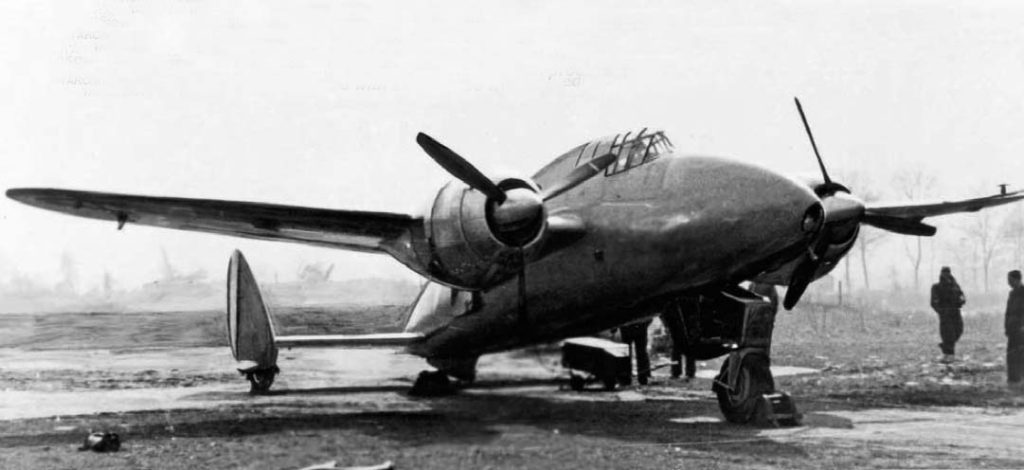
The first prototype of the SNCASE SE.100 was destroyed in a crash on April 5, 1940, but it didn’t affect the program, and development of the second prototype with modifications continued. The most important change was taking out the windowed corridor from the fuselage and adding extra fuel tanks instead. The aircraft’s armament was to be increased to six cannons in the nose, two in the gunner’s position, and one more cannon in the floor of the gunner’s area. While building the second prototype, the Citroën company was preparing to mass-produce the aircraft at its Paris facility, with deliveries set to begin in late 1940. The developers were also studying to develop two new versions of the SNCASE SE.100. The first was the SE.101, which would use Pratt & Whitney R-1830 Twin Wasp engines. The second was the SE.102, which would be powered by a different type of Gnome-Rhône 14N engine. They also planned the SE.500, a 12-passenger transport, and the SE.800, a four-engine transport, both based on the SE.100 design. Everything for the SNCASE SE.100 was going well, but the fall of France in June 1940 led to the cancellation of the project. France officially surrendered to Nazi Germany, and French officials signed an armistice agreement at Compiègne. After this, Nazi Germany took control of French aviation, and France had to hand over all equipment and factories. As a result, the French aviation industry was nearly entirely dismantled, and production, including that of the SNCASE SE.100, stopped. In the Grounded Dreams series, many aircraft were canceled for various reasons, but the story of the SNCASE SE.100’s abandonment was completely different. Despite being a good aircraft, it even entered production, but paid a heavy price due to the onset of WWII. Read more Grounded Dreams articles HERE.







That is as ugly, as the Spitfire is beautiful! 😳