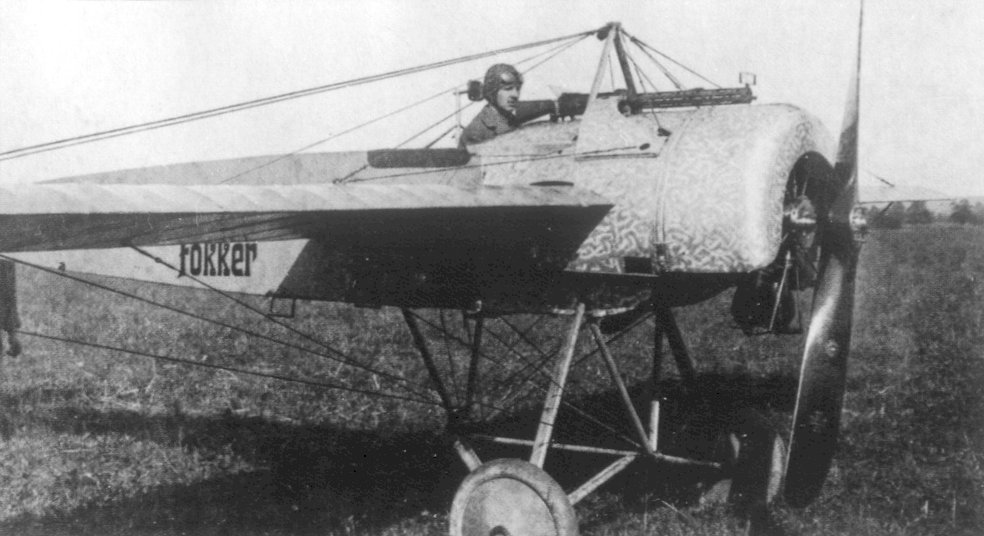
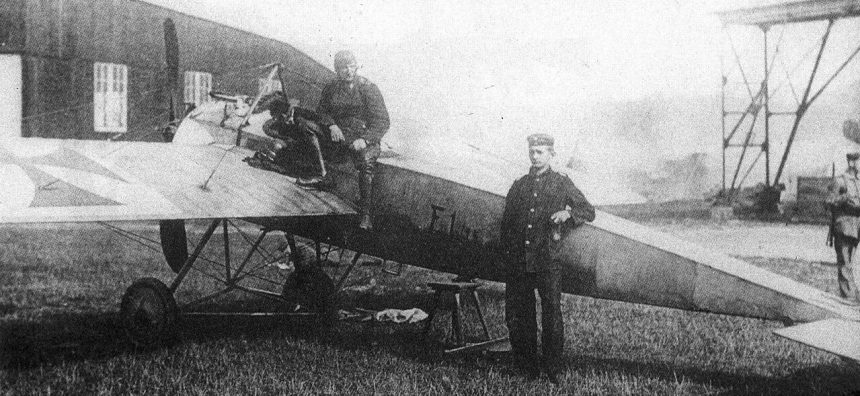


On this day in aviation history, 111 years ago (May 23, 1915), the first flight of the Fokker Eindecker took place. German for “Monoplane,” the Eindecker was a single-seat fighter aircraft that was based on Fokker’s unarmed M.5K scout. The term Eindecker encompasses a complete series of fighters, with a modified M.5 A.16/15 serving as a fighter variant E.I. This first E.I was Fokker factory number 216, which was originally built as an A-series unarmed scout aircraft with the serial number A.16/15. During WWI, A.16/15 was flown by Lt. Otto Parschau during sorties on both the Eastern and Western Fronts.
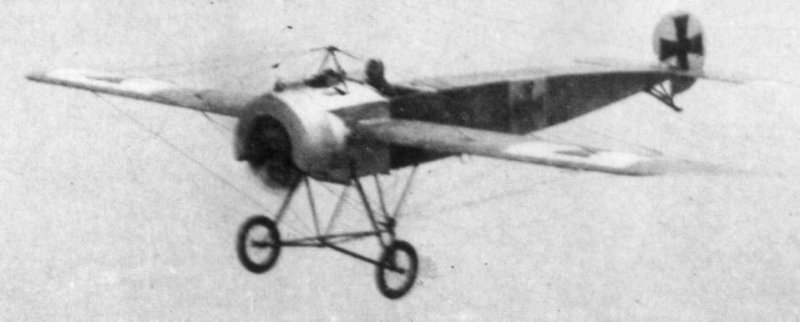
Towards the end of May 1915, A.16/15 was based at Douai with Feldflieger Abteilung 62. Here, the Fokker factory armed Lt. Parschau’s aircraft with a trial version of the Fokker Stangensteuerung synchronizer, tied to a Parabellum MG14 machine gun. This setup was demonstrated as part of the E.I, the fighter variant’s first flight on 5/23/15, by Anthony Fokker himself. In June of 1915, Lt. Parschau attempted aerial combat several times with the E.I. However, the early synchronizer gears proved very unreliable, leading the Parabellum gun to repeatedly jam. The kinks would ultimately be worked out, but the E.I provided a point of entry to a more refined fighter plane.
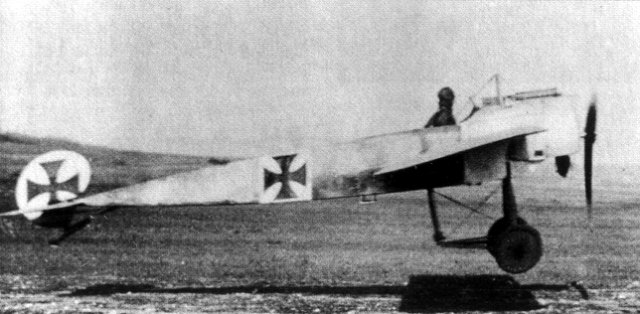
The slightly more advanced Fokker E.III Eindecker was powered by a 100-hp Oberursel U.I 9-cylinder air-cooled rotary engine. This fighter could attain a maximum airspeed of 87 mph, and climb at just over 650 fpm. An altitude of 3,281 ft could be reached in 5 minutes, while 9,843 ft was attainable in 30 minutes. The E.III’s service ceiling was 11,810 ft, while range was 107 nmi, or 1.5 hours. A single 7.92 mm lMG 08 Spandau machine gun, offset to starboard and synchronised to fire through the propeller, provided the E.III with its means of armament. Fokker built a total of 416 Eindeckers during WWI, and today, only one original remains. Eindeckers E.III (IdFlieg serial number 210/16) is on display at the Science Museum in London.