





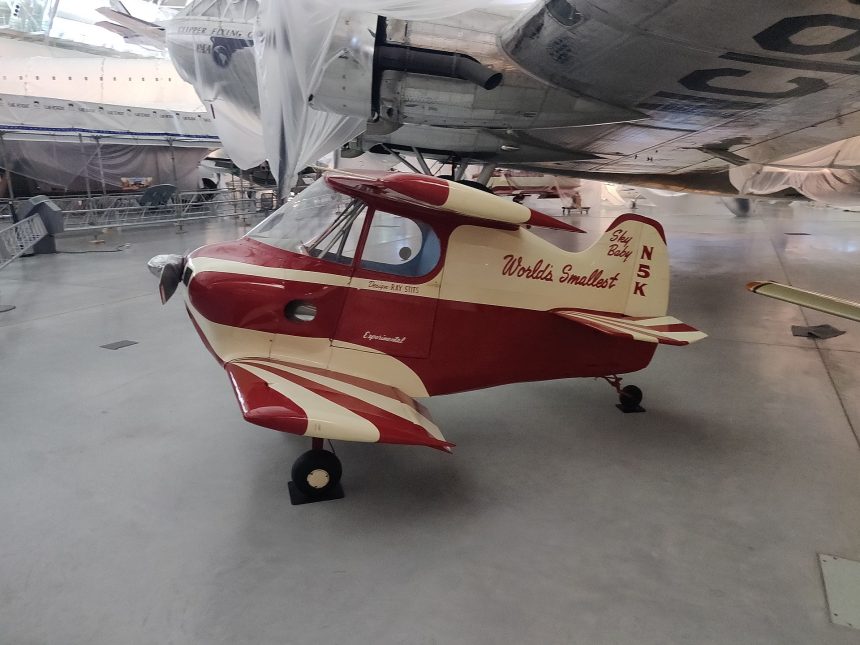

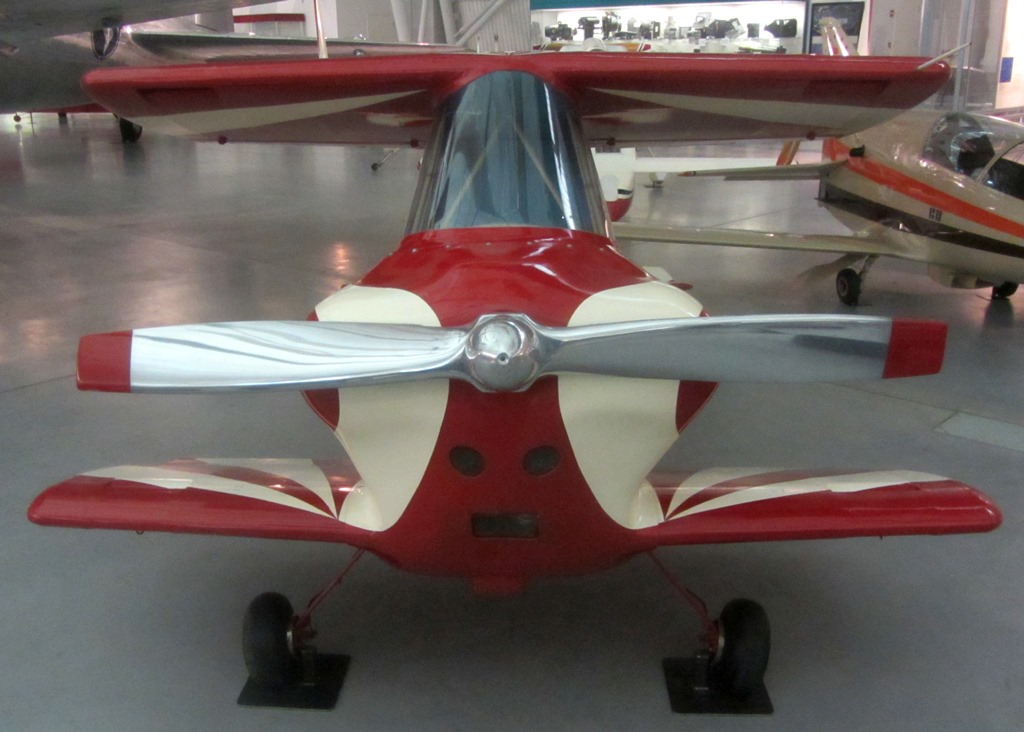
On this day in aviation history, 74 years ago (May 26, 1952), the Stits SA-2A Sky Baby took flight for the first time. A micro-sized biplane, the SA-2A was designed by American inventor Ray Stits in an attempt to claim the title of “The World’s Smallest” airplane. The Sky Baby was developed by Stits and partner Robert H. Starr as a furtherance of their Junior midget racer. Despite the micro-scale of the SA-2A, the aircraft packs a lot in a small package. The cockpit is enclosed, and the upper wings have flaps. Rather than a flat firewall between the pilot’s feet and the engine, the Sky Baby is built in such a way that the engine practically sits in the pilot’s lap. The pilot’s feet rest on rudder pedals that are directly beneath the oil sum, toward the front of the cowling. Stits utilized the same powerplant that found success with the ERCO Ercoupe, the 112-hp water-injected Continental C85.
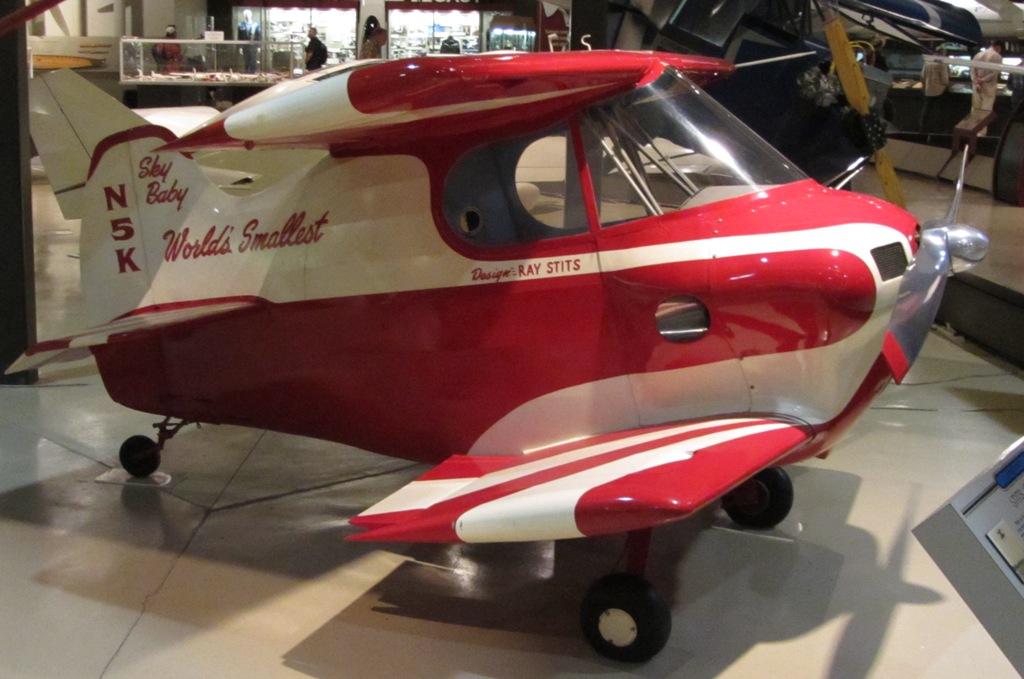
Robert H. Starr first flew the SA-21 on May 26, 1952, from a field in Palm Springs, California. Originally, the micro-plane was equipped with tricycle landing gear, but this was swapped for a tailwheel configuration in an effort to save weight. The pilot needed to weigh 170 lbs to make the center of gravity “work” for safe flight. In the pattern, an airspeed of 125 mph was flown up until the final approach. From here, 80 mph was flown down to 55 mph at touchdown. Being short-coupled and short-winged, airspeed control was critical to keep the pilot and the airplane intact. The SA-2A Sky Baby measured in with a length of 9 ft – 10 in, a wingspan of 7 ft – 2 in, and stood 5 ft tall. The aircraft had an empty weight of only 452 lbs, and max gross was 666, a number that would have intimidated any less of the pilots who test flew the micro-plane. Fuel capacity was meager, but adequate at 5 US Gals. A maximum airspeed of 220 mph was attained during flight testing. The Sky Baby would be flown up until October 1952, when it was retired with 25 total hours of flight time. The sole SA-2A survives today, and is on display at the Steven F. Udvar-Hazy Center of the National Air and Space Museum located in Chantilly, Virginia.









The Starr Bumble Bee broke the record again in 1982. It carried 2 gallons of fuel and only flew once, just to break the existing record. It is now at the Pima Air and Space Museum in Tucson, Arizona.
I was born in October 1952 yet somehow never heard of this remarkable little aircraft. Thank you for sharing it!