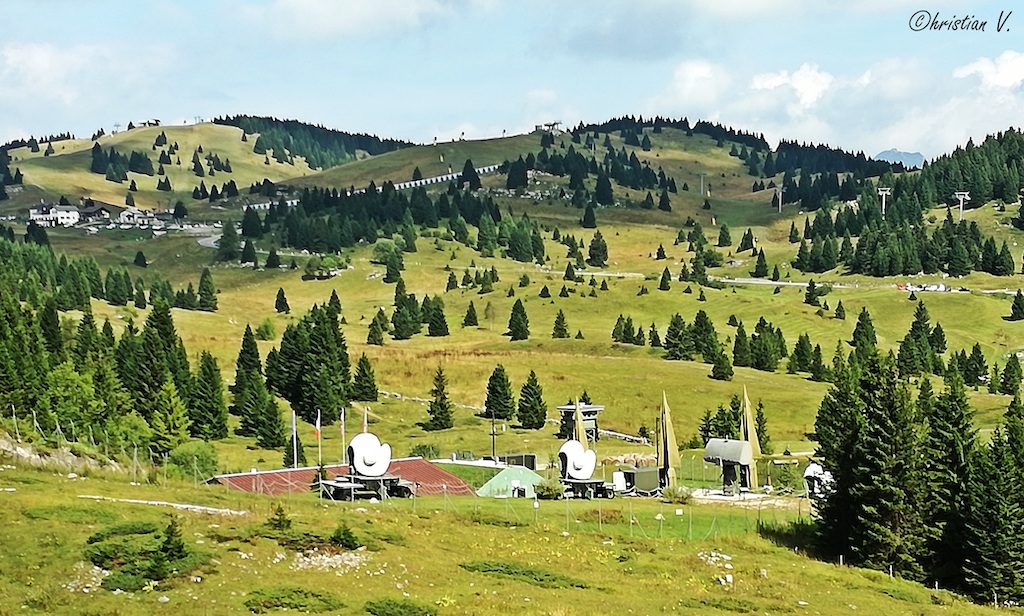

Base Tuono is the only museum in Europe dedicated solely to the Nike-Hercules NATO missile defense system and the Cold War. Situated in the Alpine foothills of northeastern Italy, the museum has been steadily expanding its exhibition space in recent years. What began as the vision of a few passionate individuals has grown into a remarkable military museum that continues to develop while remaining true to its original mission. Located on a former Nike Hercules surface-to-air missile base, Base Tuono—meaning “Lightning Base” in Italian—has successfully recreated much of the atmosphere and appearance the site would have had during its operational years. We had the opportunity to visit the base in 2019 and published an article detailing that experience.
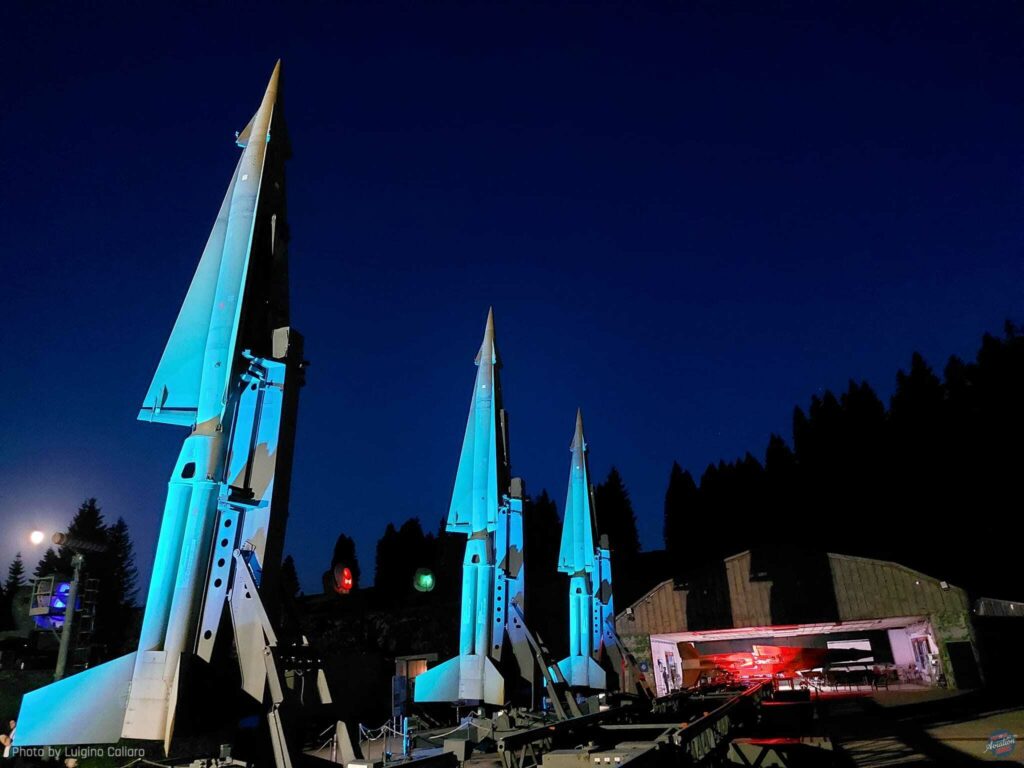
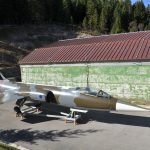
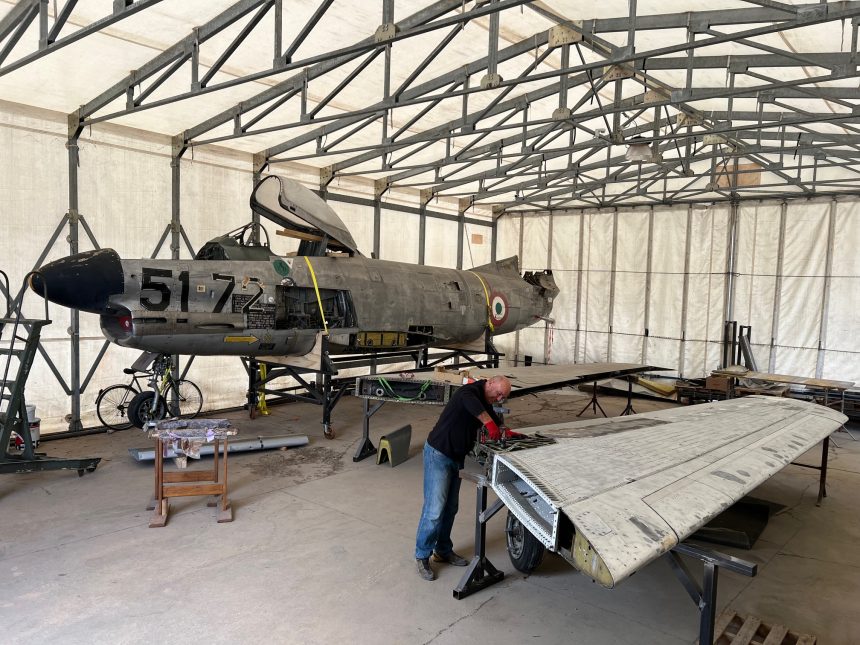
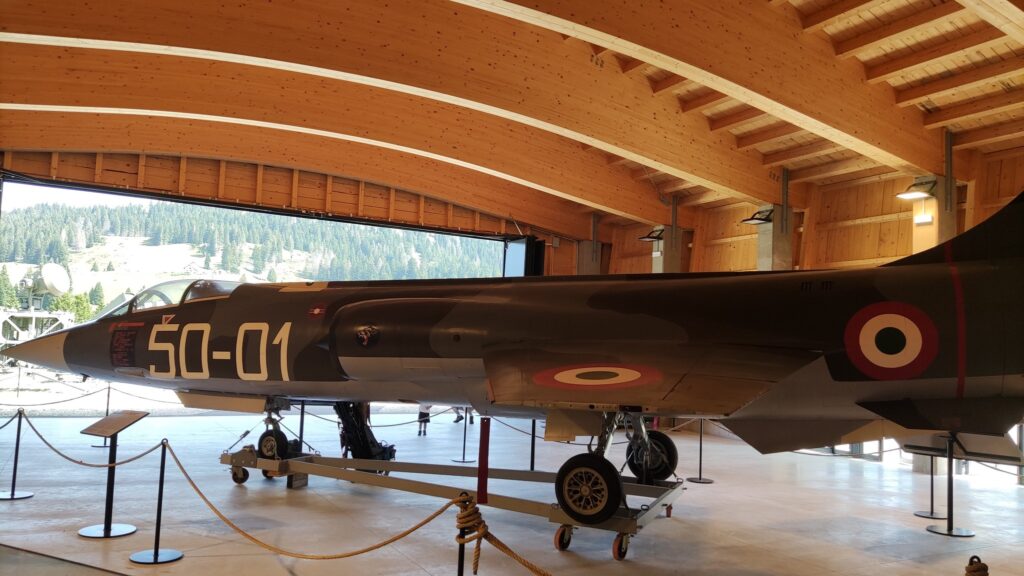
Following the addition of a Lockheed F-104S Starfighter (MM6781) in 2020, Base Tuono has now acquired a Fairchild F-86K Sabre, formerly operated by the Italian Air Force in the early Cold War period. This latest addition further strengthens the museum’s mission to tell the story of Cold War air defense in Europe.
The F-86K Sabre, commonly known in Italy as the “Cappone” (or “Big K”), was a single-seat, all-weather interceptor equipped with radar capable of acquiring targets in low or zero visibility conditions. Developed by North American Aviation in the early 1950s for NATO air forces, it was a modified version of the F-86D, whose development had been accelerated during the Korean War (1950–1953). To speed up deliveries to Europe, production was licensed to FIAT, which built 221 of the 341 F-86Ks produced. North American supplied aircraft to several NATO countries, while FIAT deliveries included 63 aircraft to the Italian Air Force, along with others to France, Germany, the Netherlands, and Norway. The first Italian-built example flew on May 23, 1955, and was delivered to the Italian Air Force two months later.
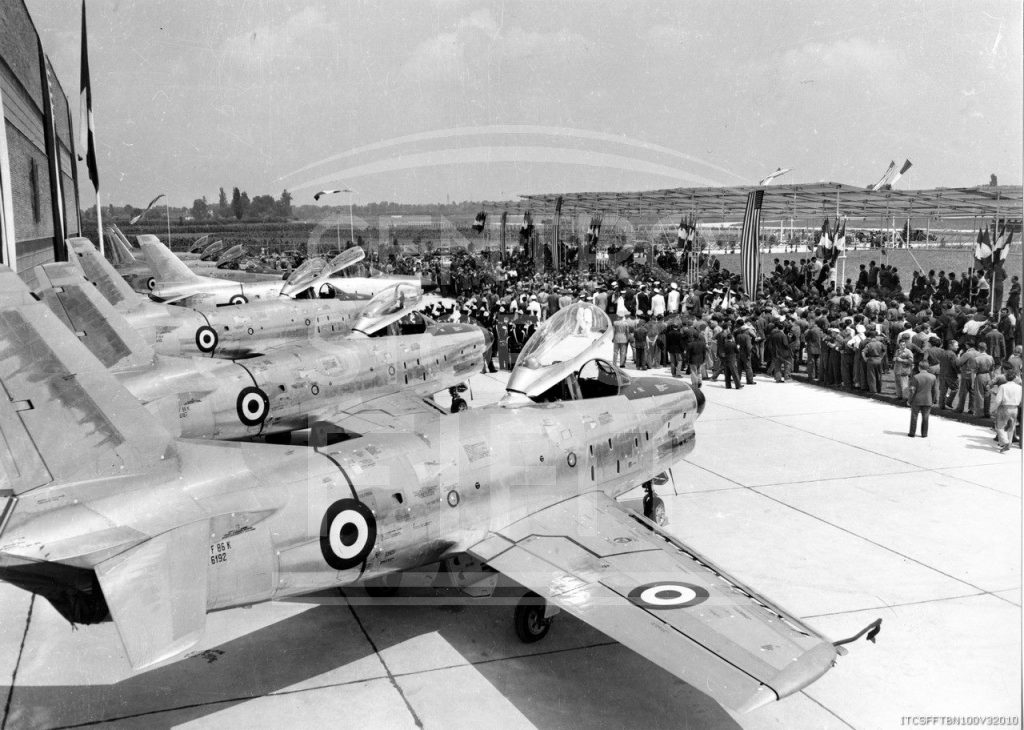
The aircraft entered Italian service with the 1st All-Weather Fighter Wing at Istrana on May 1, 1956, becoming the country’s first unit equipped with radar-intercept fighters. The operational career of the “Big K” in Italy concluded in 1973. During its eighteen years of service, the F-86K—armed with four 20 mm cannons, unlike the rocket-armed F-86D—played a key role in air defense and in training a generation of pilots in radar interception techniques.
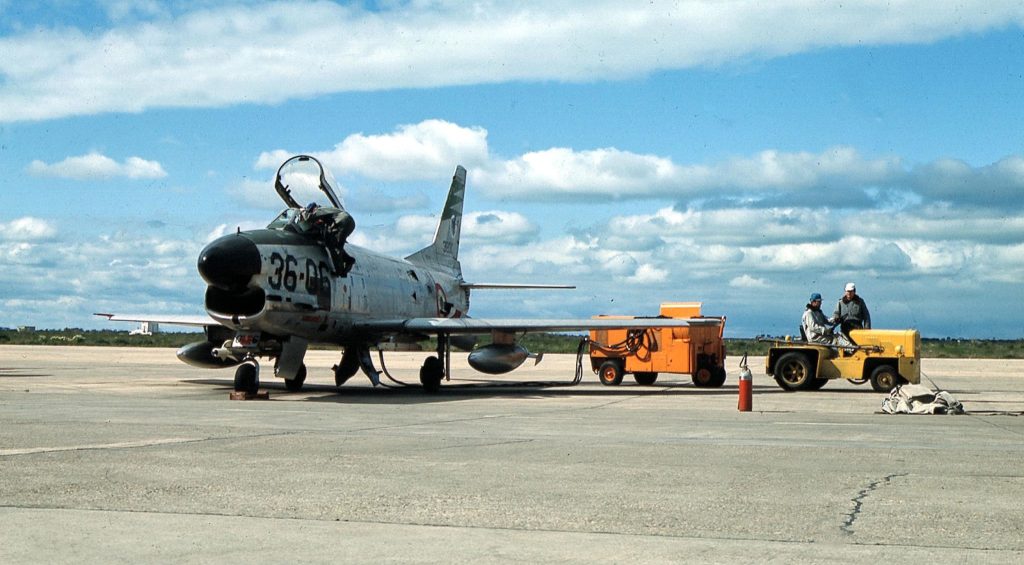
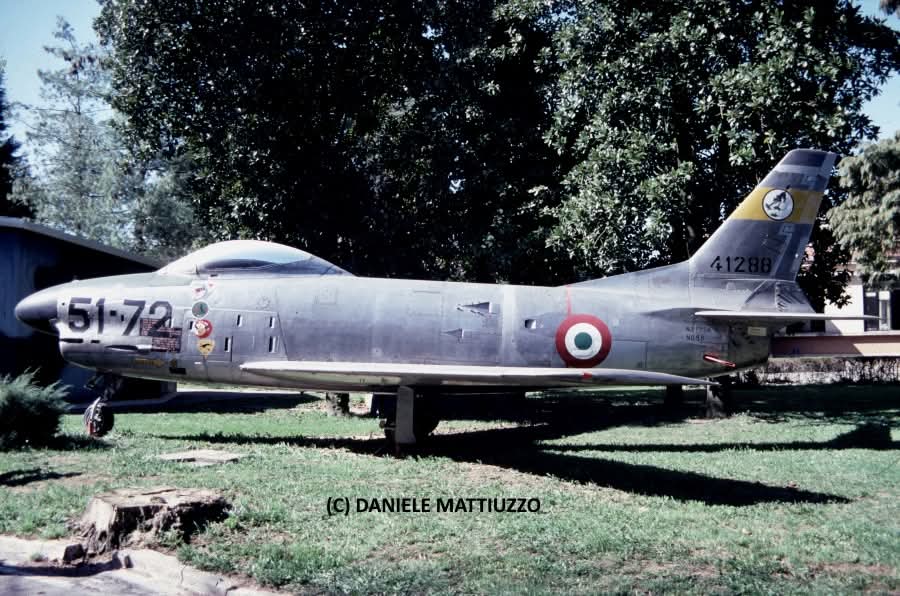
The example now displayed at Base Tuono is a North American-built aircraft (serial number 54-1288, powered by a J47-GE-17B engine) originally delivered to the Royal Netherlands Air Force in 1956. Seven years later, it was transferred to Italy. On March 25, 1963, it entered service with the Italian Air Force at Istrana with the 21st All-Weather Fighter Group, before moving later that year to Gioia del Colle in southern Italy, where it served with the 12th Group and carried the code 4-74. After undergoing a major overhaul at FIAT, which included structural reinforcements to the fuselage and wings, the aircraft returned to Istrana with the 22nd Group of the 51st Wing. Re-designated with the code 51-72, it remained in service until August 1972, when it reached the end of its operational life and was subsequently withdrawn.
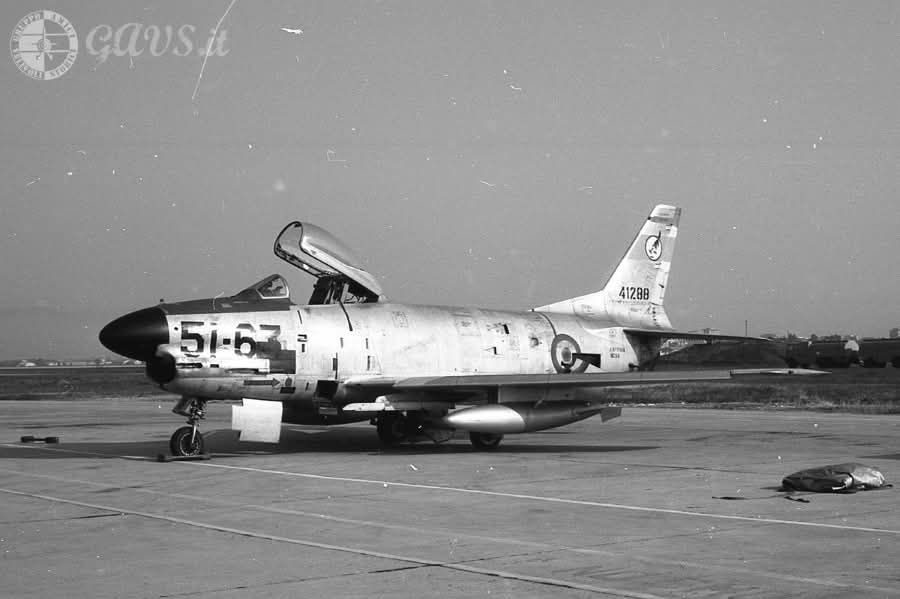
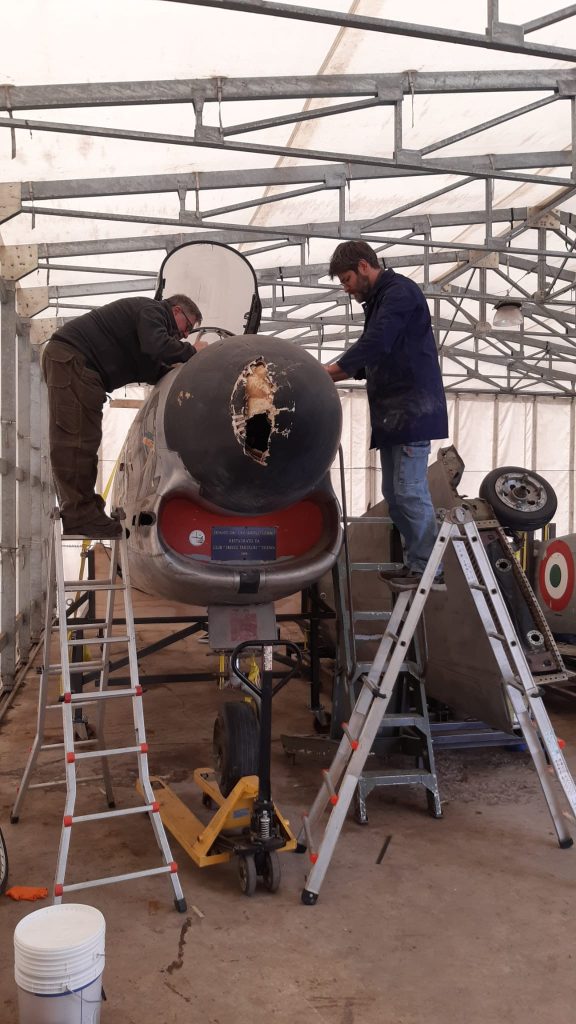
In 1988, the aircraft was acquired by Angelo Gemmo, owner of Metalsider in Noventa Vicentina, and displayed in the company’s yard. A decade later, it was donated to the Vicenza Frecce Tricolori Club for inclusion in an aviation history museum at the Dal Molin military airfield. However, the closure of the airport in 2008 led to the museum’s dissolution. Despite efforts to preserve the collection, no new location could be secured. As a result, the Vicenza Frecce Tricolori Club distributed much of its collection to other institutions, entrusting the F-86K—its most significant exhibit—to Base Tuono, along with several additional artifacts that will now be displayed alongside the F-104S Starfighter.
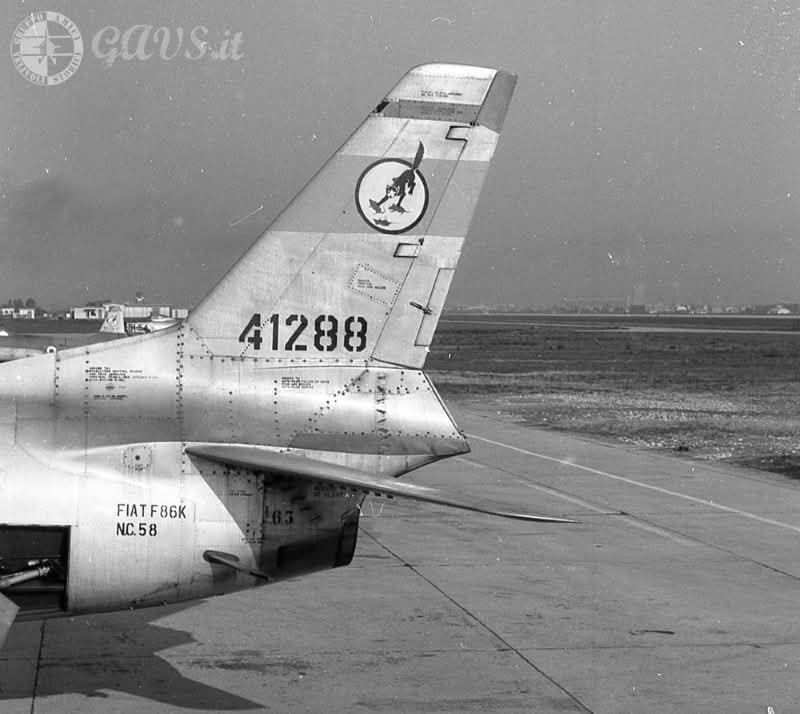
Interestingly, this particular aircraft is something of a hybrid. Its fuselage originates from the North American-built airframe (54-1288), while its tail section comes from a FIAT-built aircraft originally delivered to the French Air Force (55-4858), one of a batch later transferred to Italy in the early 1960s.
For Base Tuono, located at the former NATO site at Passo Coe near Folgaria, this represents a significant acquisition. The F-86K preceded the Starfighter in the interceptor role during the early Cold War, making it a natural and historically coherent addition to the museum’s narrative.
The aircraft is also relatively rare. Only three other examples are currently on public display in Italy, located at the Italian Air Force Museum in Vigna di Valle, Volandia Flight Park near Malpensa, and the Museum of Piana delle Orme in the province of Latina. With this addition, the Passo Coe site continues to expand its role as both a missile base museum and an increasingly important center for Cold War aviation history, offering visitors a broader and more immersive understanding of the era. For more information about Base Tuono, visit www.basetuono.it.