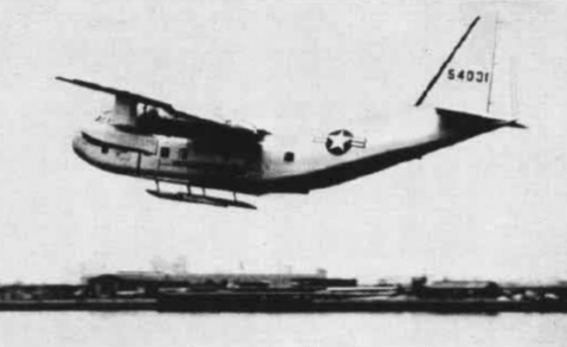
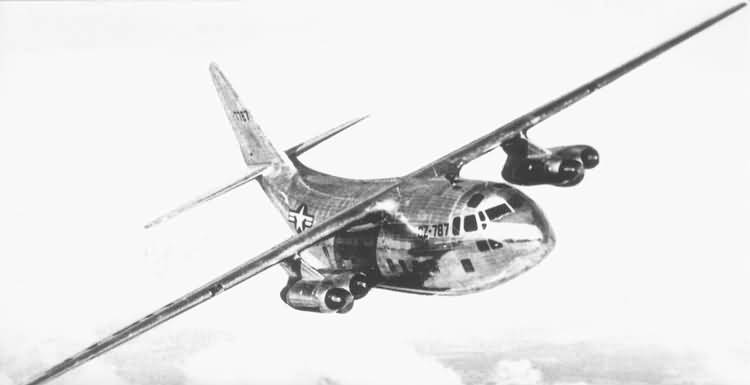

In the late 1940s, American plane manufacturer Chase Aircraft developed the largest glider ever built in the US, the XG-20. However, by then, US military doctrine had already shifted away from the use of gliders in combat. As a result, Chase converted two XG-20s into transport aircraft. The first was equipped with twin piston engines and designated Chase XC-123, and the second, designated Chase XC-123A, was equipped with four jet engines. Because the XG-20 gliders did not require fuel, the fuel tanks in the XC-123A were installed under the cabin floor. The Chase XC-123A flew for the first time on April 21, 1951, and became the first jet-powered transport aircraft to fly in the US. The XC-123A was developed as a fast transport aircraft for urgent cargo and personnel delivery.
Design of Chase XC-123A
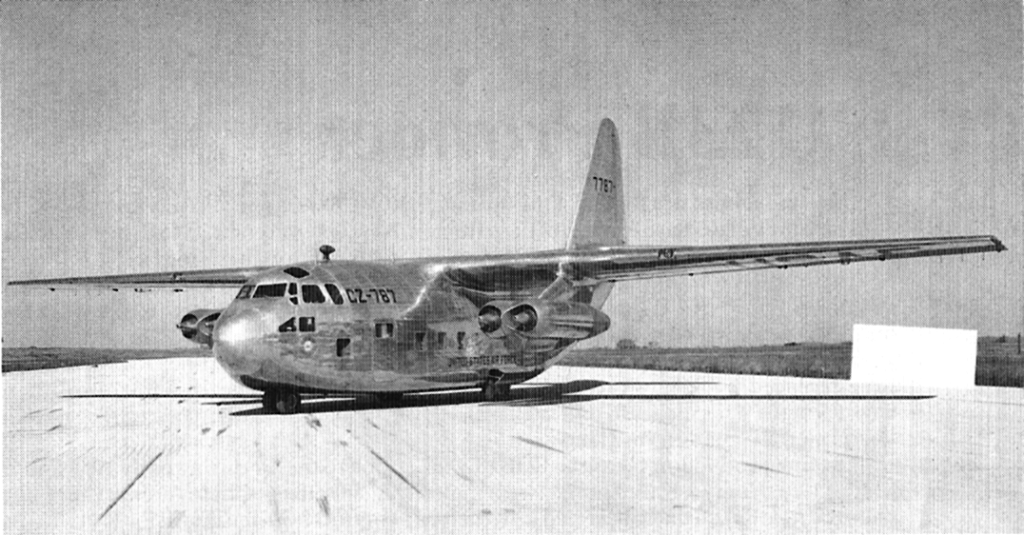
Operated by a crew of three, the aircraft was 77.1 feet long and 33.10 feet high. It had a wingspan of 110 feet and a wing area of 1,222 square feet. The empty weight of the aircraft was 25,000 pounds, and the maximum takeoff weight was 60,000 pounds. The Chase XC-123A was powered by four General Electric J47-GE-11 turbojets, each producing 5,200 pounds of thrust. The maximum speed of the aircraft was 500 mph, and its cruise speed was 400 mph. The Chase XC-123A, dubbed “Avitruc” by its manufacturer, performed excellently in flight tests, with good short takeoff and landing capability. Despite good results, the XC-123A was not considered good enough to go into production. While it had good short-field performance, the low-mounted jet pods on rough, uneven ground would pick up debris, which could damage the engines. In addition, the aircraft’s design did not match its engines, which meant that the XC-123A could not carry enough cargo compared to how much fuel its jet engines used. Because of these issues, the XC-123A project was canceled before any additional aircraft were built.
The Cancellation
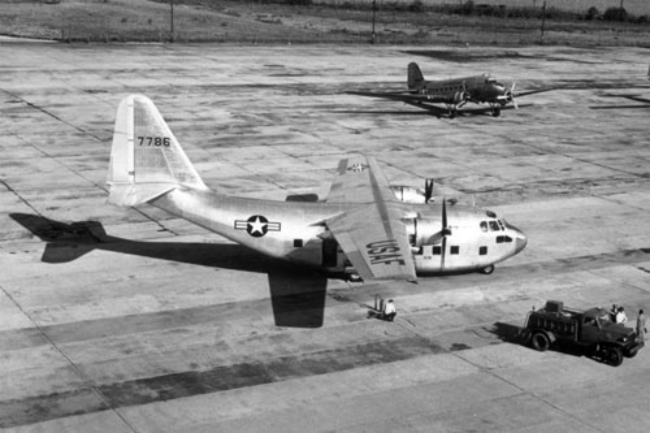
After the trials ended, the Chase XC-123A was modified by Stroukoff Aircraft and renamed YC-123D in 1954. The engines were upgraded to two 3,500 hp Wright Turbo Compound R3350-89A radial engines, which powered four-bladed, thirteen-foot Aeroproducts propellers that can adjust their pitch. Additionally, the YC-123D was equipped with a boundary-layer control system. With Chase XC-123A’s design, the YC-123D also needed much less runway for takeoff and landing. It could land in just 755 feet instead of 1,200 feet and take off in 850 feet instead of 1,950 feet, even with a total weight of 50,000 pounds. In 1955, Stroukoff made a single YC-123E aircraft for the US Air Force. The aircraft could take off from any surface and had a boundary layer control system. It also used Stroukoff’s Pantobase system, which included skis, a sealed body, and floats on the wings, while keeping its regular landing gear. The skis worked on snow and water, allowing the plane to land on water, land, snow, or ice. In 1956, the US Air Force awarded Fairchild a contract to design a better version of the C-123, the C-136, but canceled the contract before building the aircraft. At the end, the Chase XC-123A, despite being a good aircraft, was canceled. In the Grounded Dreams series, the Chase XC-123A stands out as an aircraft that witnessed the peak of the aviation experimental age, from the removal of gliders to the arrival of jet engines, and even as an experimental boundary-layer control aircraft. But that peak experimental age also led to its cancellation. Read more Grounded Dreams articles HERE.