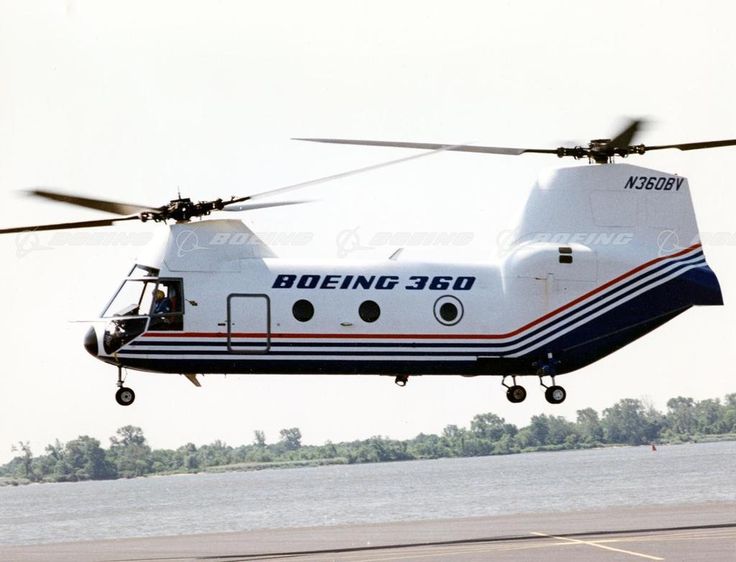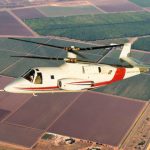
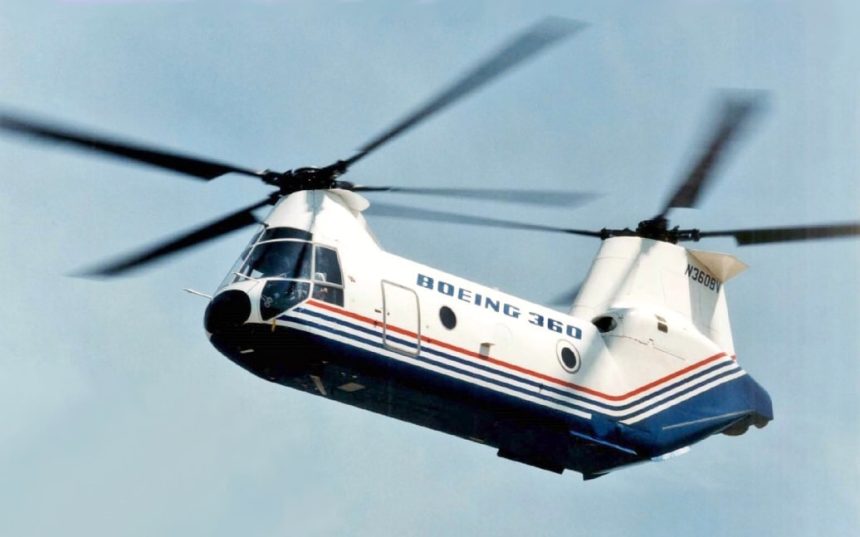


In the 1980s, Boeing developed a new experimental helicopter to test various advanced technologies. Designated Boeing Model 360, the medium-lift tandem rotor cargo helicopter was different from other tandem rotor helicopters available at the time. The demonstrator helicopter was developed from company funding and tested technologies to be used in other helicopters. The focus was on integrating new technologies across materials, aerodynamics, flight controls, avionics, and cockpit design. Most of the helicopter’s structure was made from strong, lightweight composite materials.
Design of Boeing Model 360
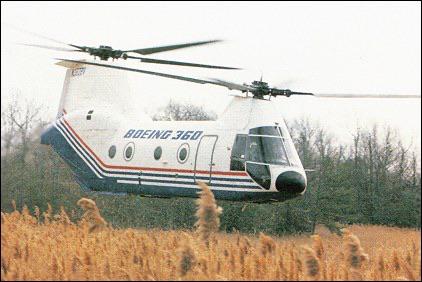
The Boeing Model 360 was equipped with graphite-covered rotor blades with tapered tips, mounted on a composite rotor hub, to increase speed while reducing noise and vibration. The aircraft also had a retractable tricycle landing gear and buried fuselage engines aft to improve the aircraft’s performance. It had a digital automatic flight control system to reduce the pilot’s workload, and the integrated avionics system included a glass cockpit with six multifunction displays. The helicopter was 51 feet long, 19.4 feet high, with a cabin height of 5.11 feet and a cabin width of 6.4 feet. The two tandem four-bladed counter-rotating rotors each had a diameter of 50 feet and an area of 3,927 square feet. The Boeing Model 360 was powered by two Textron Lycoming AL5512 turboshaft engines, each producing 4,200 shaft horsepower. The gross weight of the aircraft was 30,500 pounds, and it could carry 824 US gallons of fuel. The maximum speed was 230 mph, with a cruise speed of 210 mph, and the never-exceed speed was 270 mph. The development of the Model 360 included over 5,000 hours of wind tunnel testing and extensive simulator evaluations to assess its flying and handling qualities. The helicopter first flew on June 10, 1987, in suburban Philadelphia.
The Cancellation
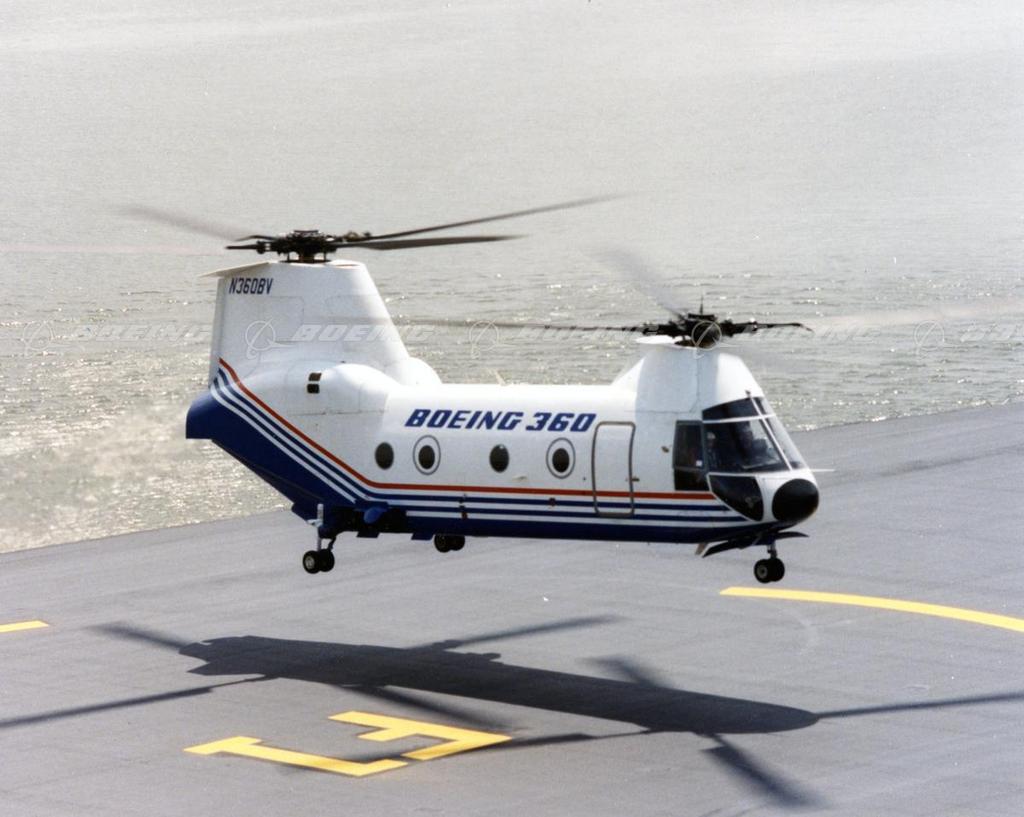
Tests of the Boeing Model 360 demonstrated that a helicopter can fly smoothly at 200 knots. Wind tunnel tests, wake analyses, structural checks, and proof-load tests showed that new airfoil designs, tapered blade tips, and better wake modeling can reduce vibration and improve performance. Composite materials for the body, shafts, and hub systems met all the required strength and size standards. Overall, the program identified the challenges of high-speed helicopter flight and proved that the rotor can fly well at these speeds. It also demonstrated that a mostly composite helicopter can fly safely. The Boeing Model 360 was designed as a technology demonstrator and never intended for production, but many of its design features were later used in other projects, such as the RAH-66 Comanche and the V-22 Osprey. The only prototype of Boeing Model 360 is now on display at the American Helicopter Museum in West Chester, Pennsylvania. In the Grounded Dreams series, the Boeing Model 360 stands out not as a canceled aircraft, but as an aircraft that shows the modern aviation world was not built on paper alone, but tested and refined step by step. Each round of testing improved the design and gave the engineers greater confidence that the helicopter could really fly at higher speeds without losing control or durability. Read more Grounded Dreams series articles HERE.