






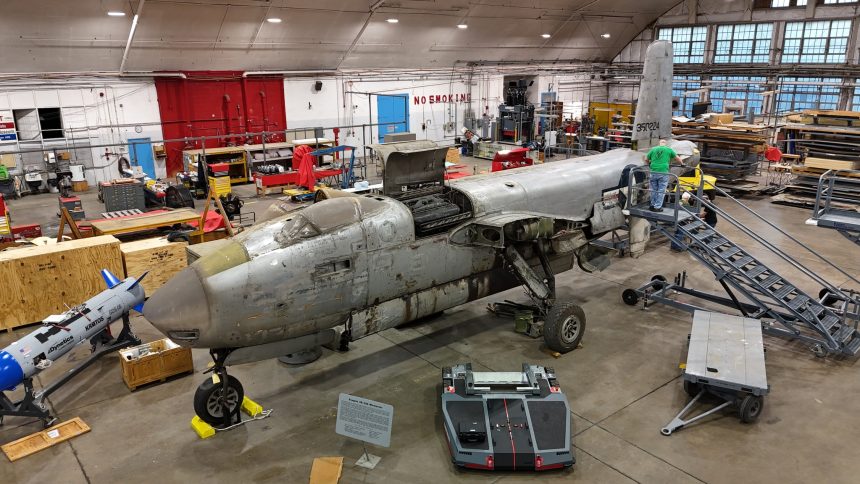

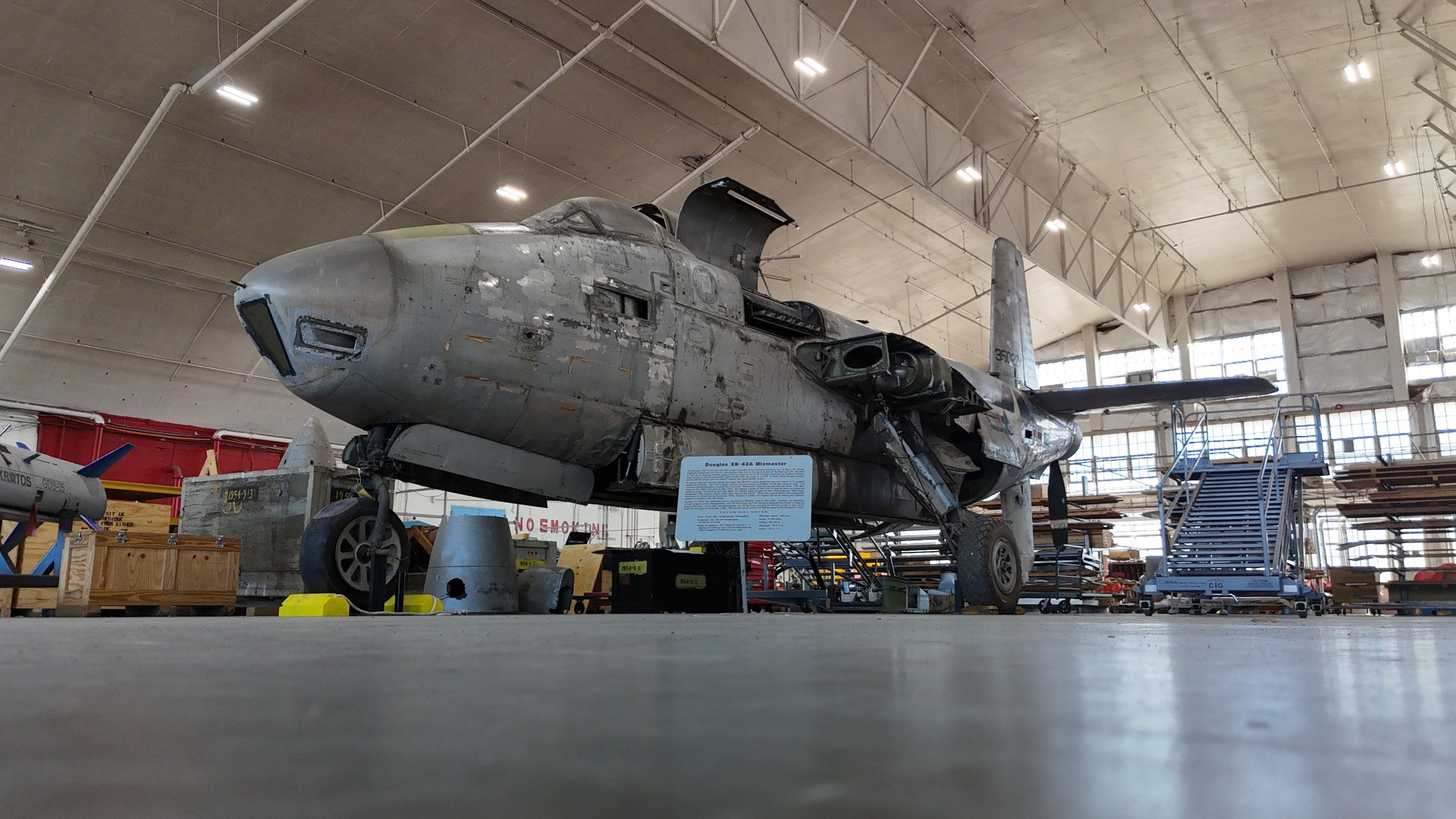
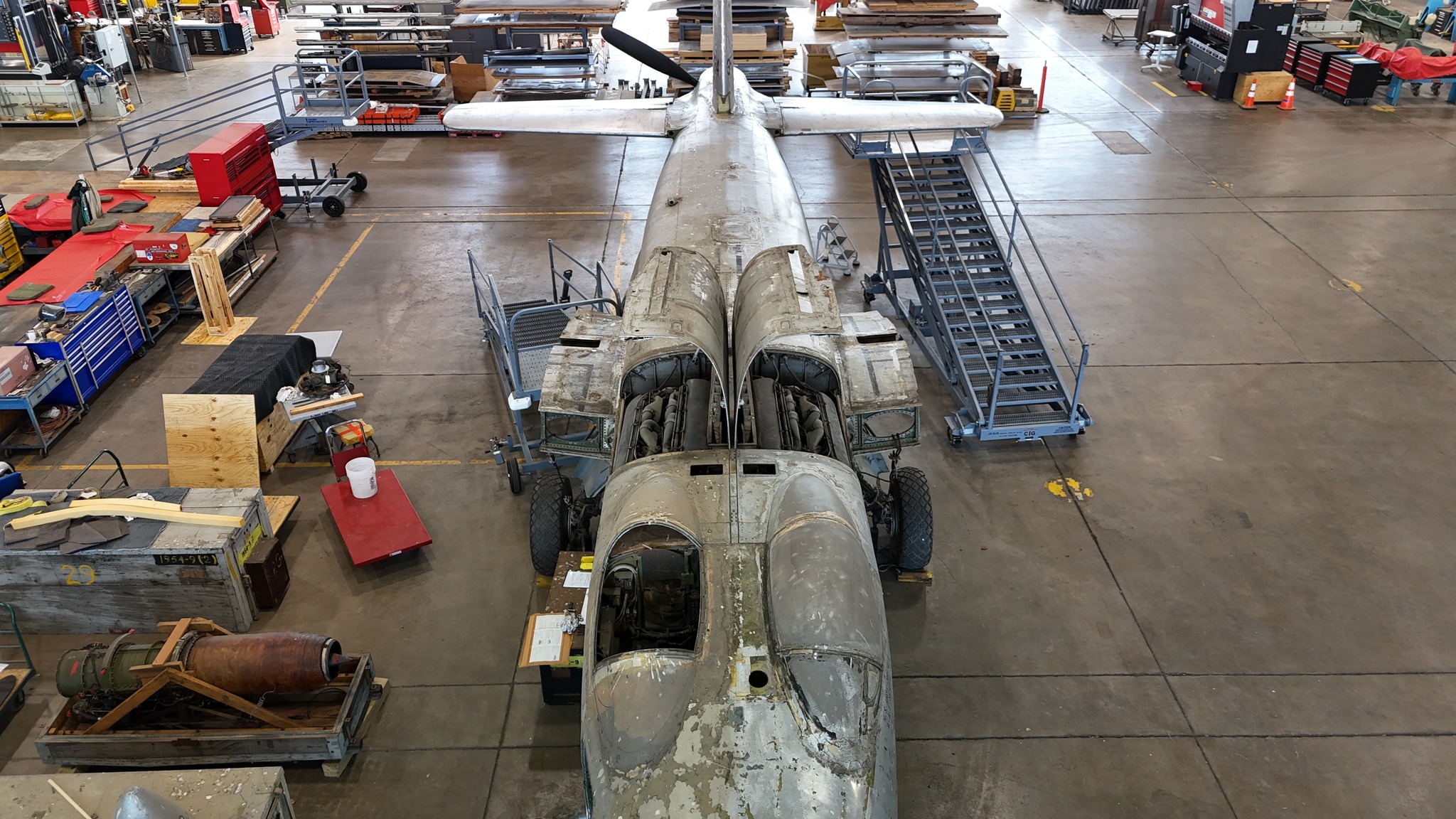
In a recent announcement, the National Museum of the USAF has confirmed that it will be refurbishing the last surviving example of the Douglas XB-42 Mixmaster bomber to go on temporary display in the museum with the goal of being ready for display this September. This will represent the first time that this experimental bomber from WWII will be placed on public display, 16 years after it was permanently transferred to the NMUSAF from the Smithsonian’s National Air and Space Museum in 2010.
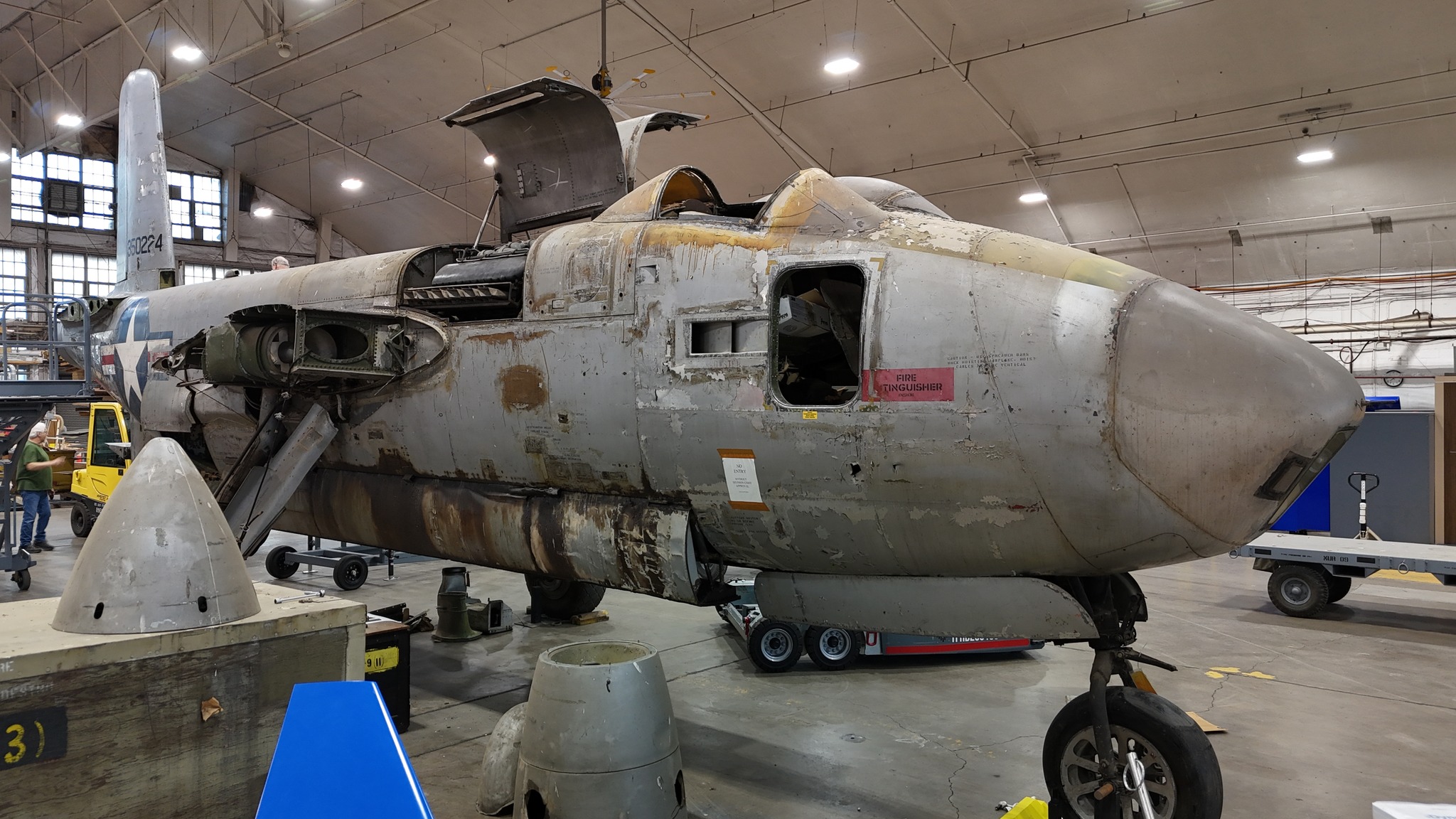
The Douglas XB-42 Mixmaster began life on the drawing table of Edward F. Burton, Chief of Engineering at the Douglas Aircraft Company. Without any Army Air Force contract stipulated to the company, Burton and his design team drew up plans for a twin-engine bomber with a set of coaxial contra-rotating propellers in a pusher configuration at the tail of the airplane that could fly over 400 mph to carry a 2,000 lb. bombload 2,500 miles away, and use its speed to outrun enemy interceptors, foregoing the need for any defensive armament and gunners. When presented with the proposal for what was initially called the Douglas Model 459, the U.S. Army Air Force was impressed enough to order a pair of prototypes for flight testing on June 25, 1943, and officially designated the design as the XA-42, but five months later, on November 25, the design was redesignated as the XB-42, and unofficially referred to among Douglas engineers as the Mixmaster, with the engineers likening the design of the contra-rotating propellers to a kitchen mixer.
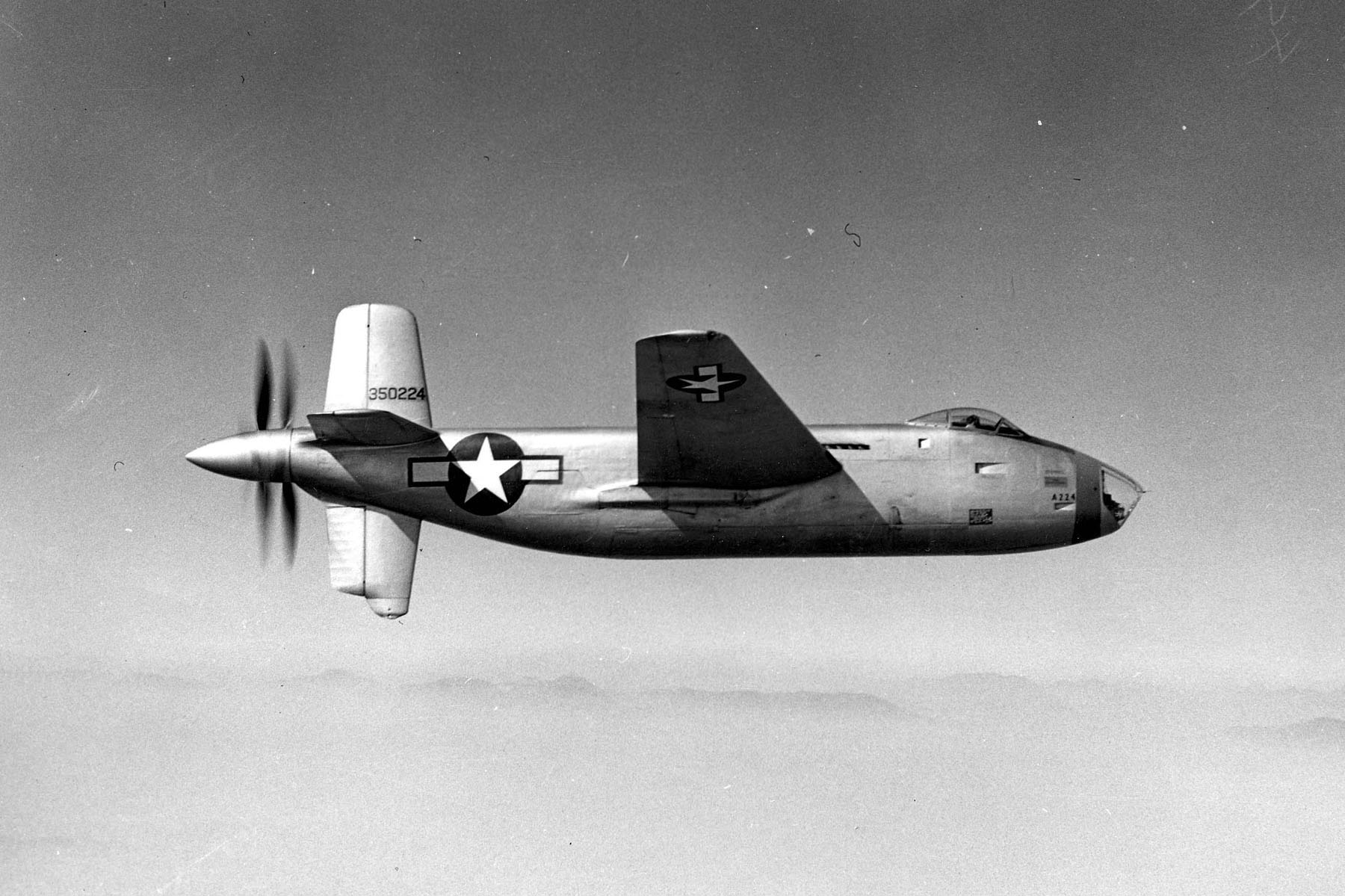
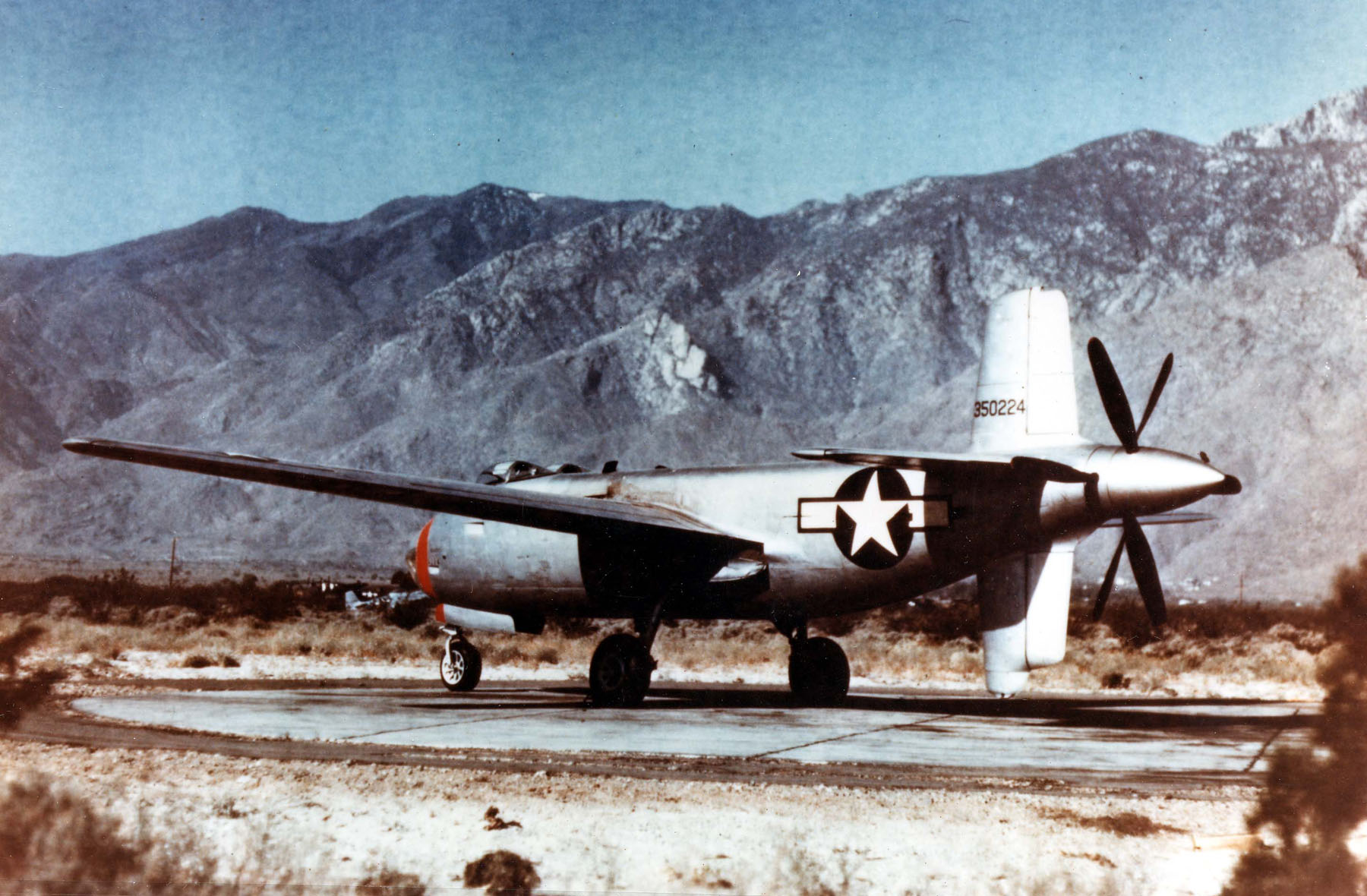
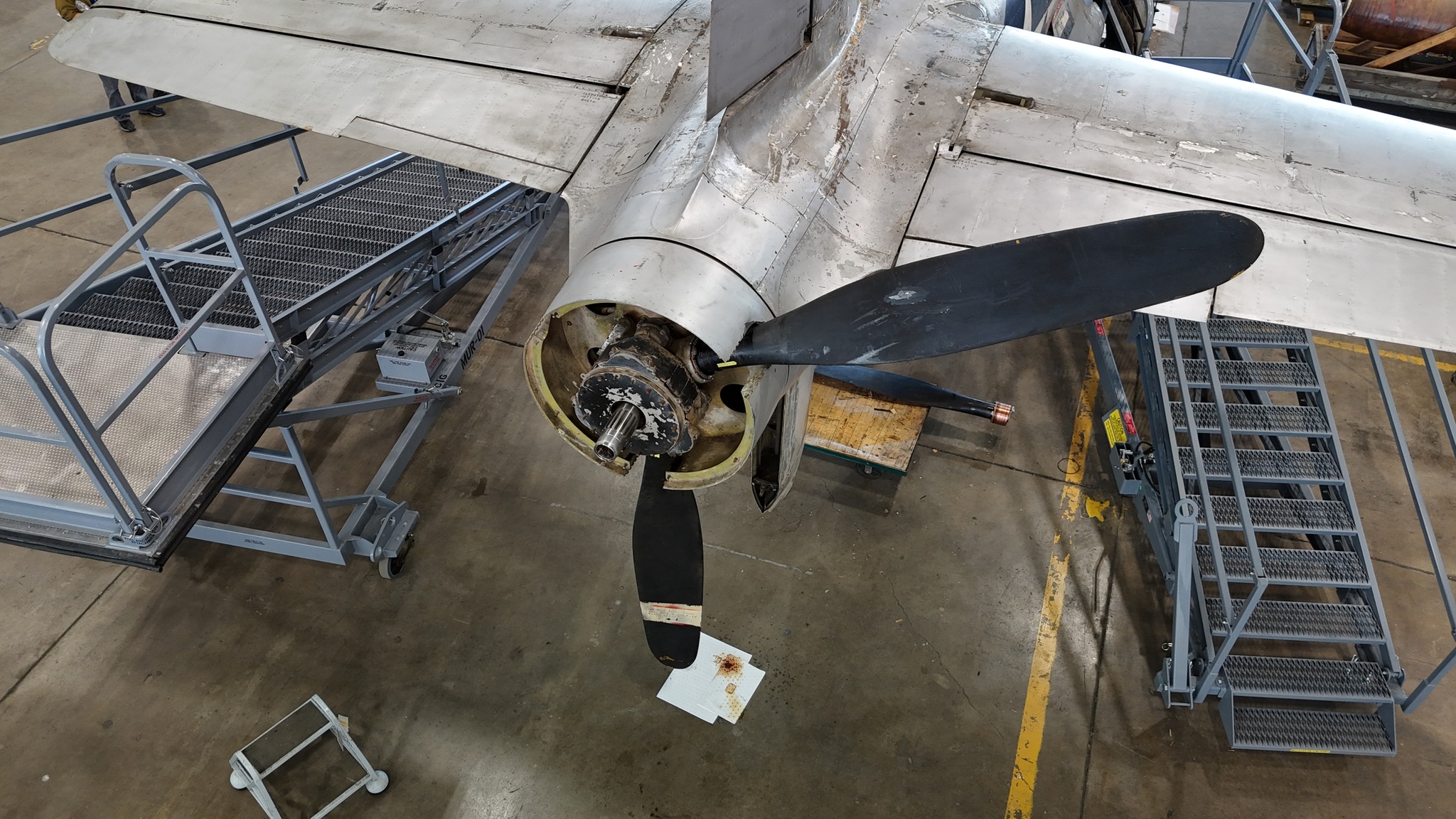
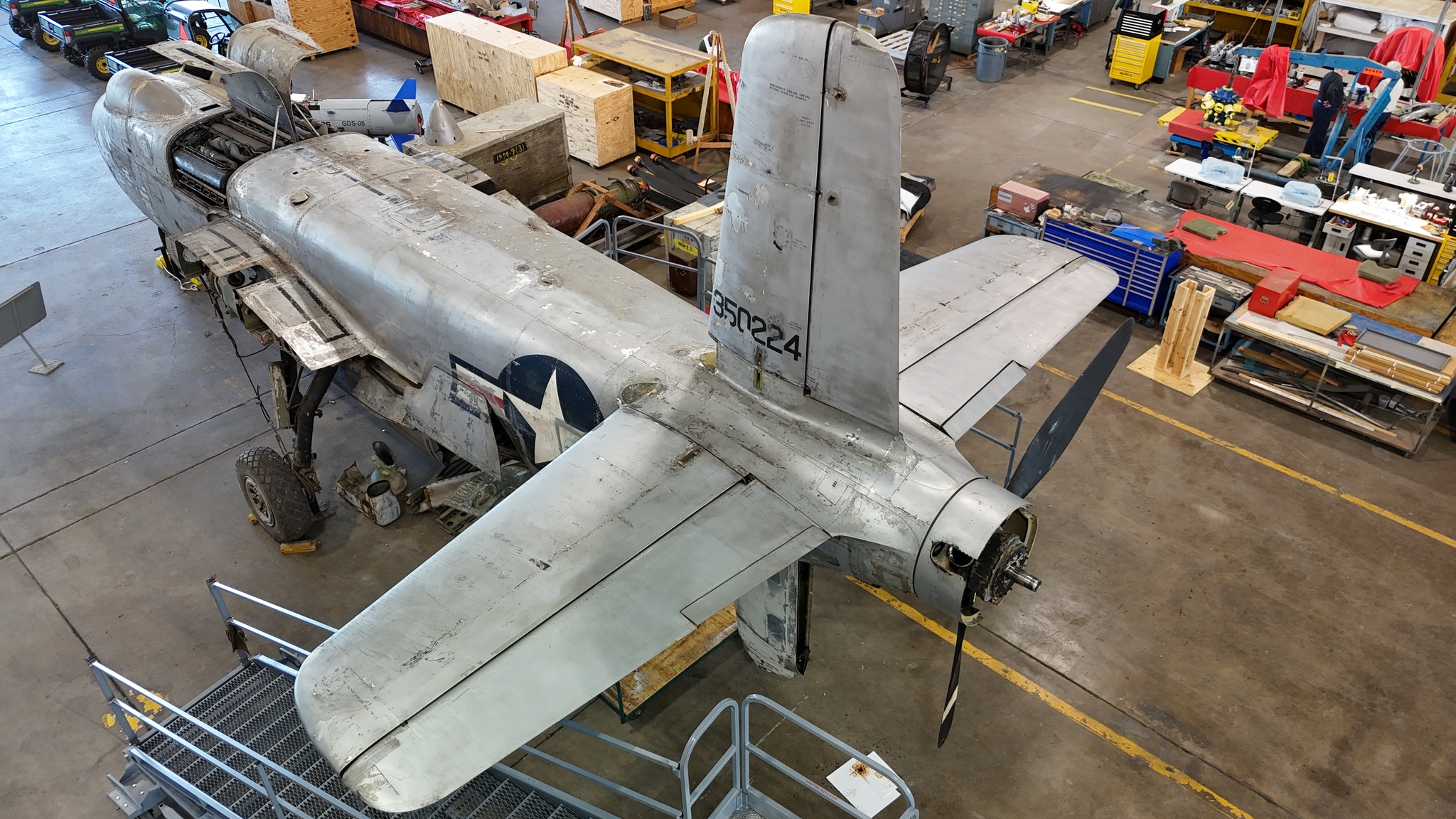
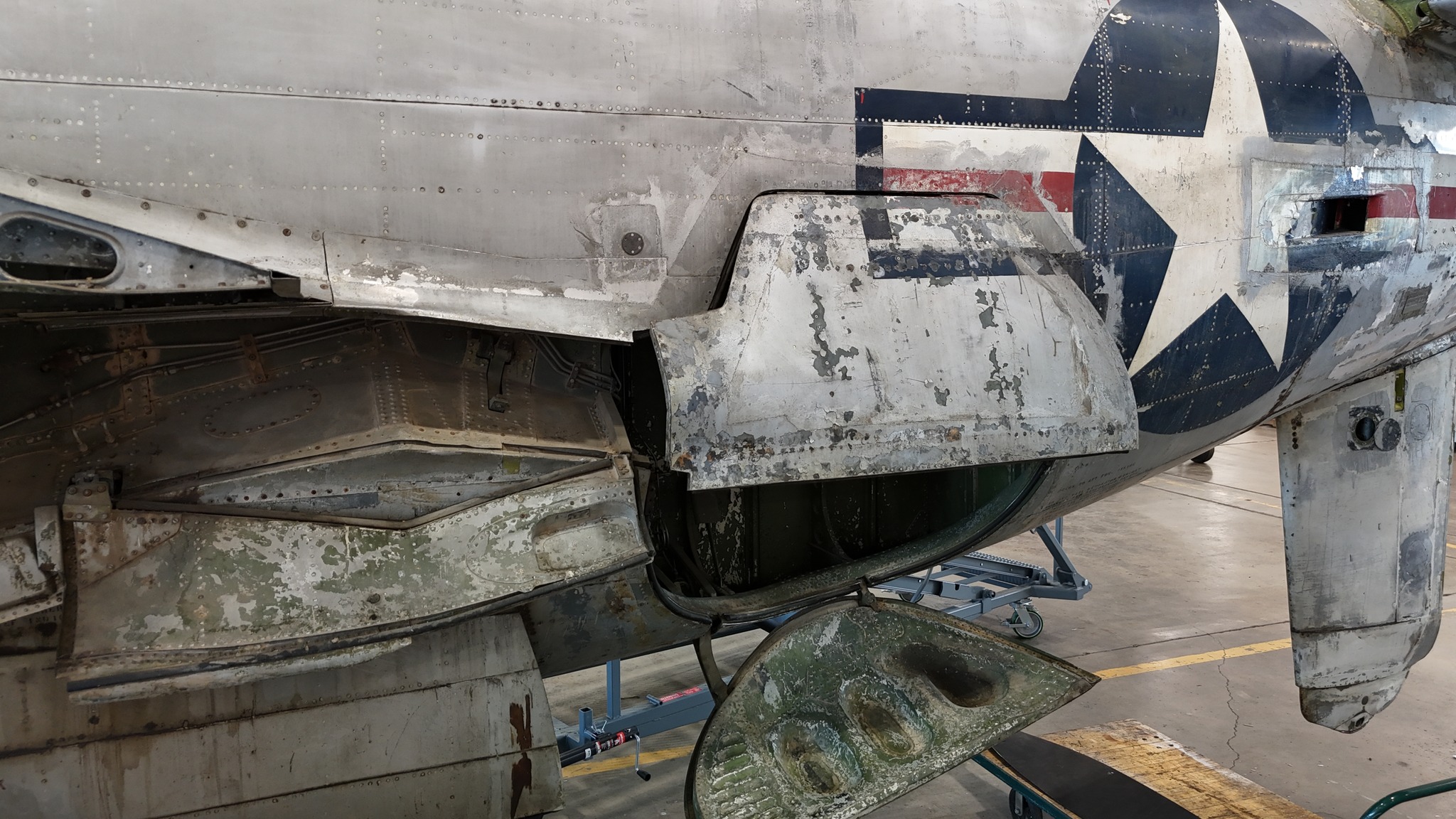
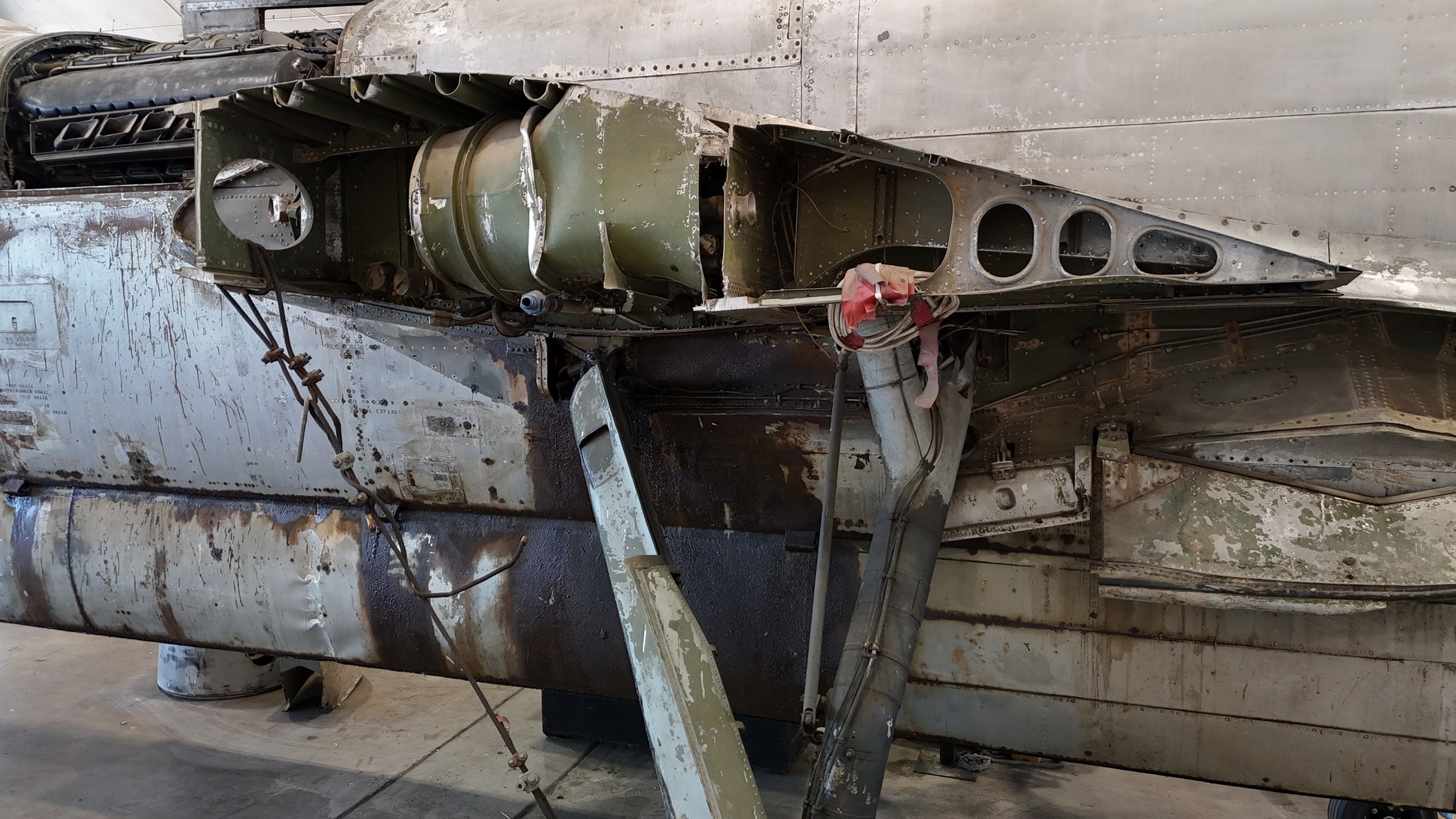
The XB-42 was powered by a pair of Allison V-1710 liquid-cooled V-12 inline engines mounted side by side just behind the pilot’s cockpits with drivetrains running through the tail to the propellers. Air intakes for the two engines were installed in the wing roots, with the wings mounted at the mid-section of the fuselage. The flight crew consisted of three personnel (a pilot, a copilot, and a bombardier). While both prototypes were initially fitted with separate plexiglass canopies for each of the pilots, the second prototype was later fitted with a more conventional cockpit canopy. In the event of a bailout, the propellers could be jettisoned by the pilots using explosive bolts to prevent the crew from striking the spinning propellers. Below the engines mounted in the mid-section was the internal bomb bay, while the main landing gear was mounted behind the bomb bay, and would rotate to retract into or extend from its wells. Another distinguishing feature of the XB-42 was its cruciform tail, with an upper and lower vertical stabilizer, and the lower stabilizer was also fitted with an oleo-pneumatic bumper to prevent the propellers from being damaged in a tail-strike on takeoff or landing.
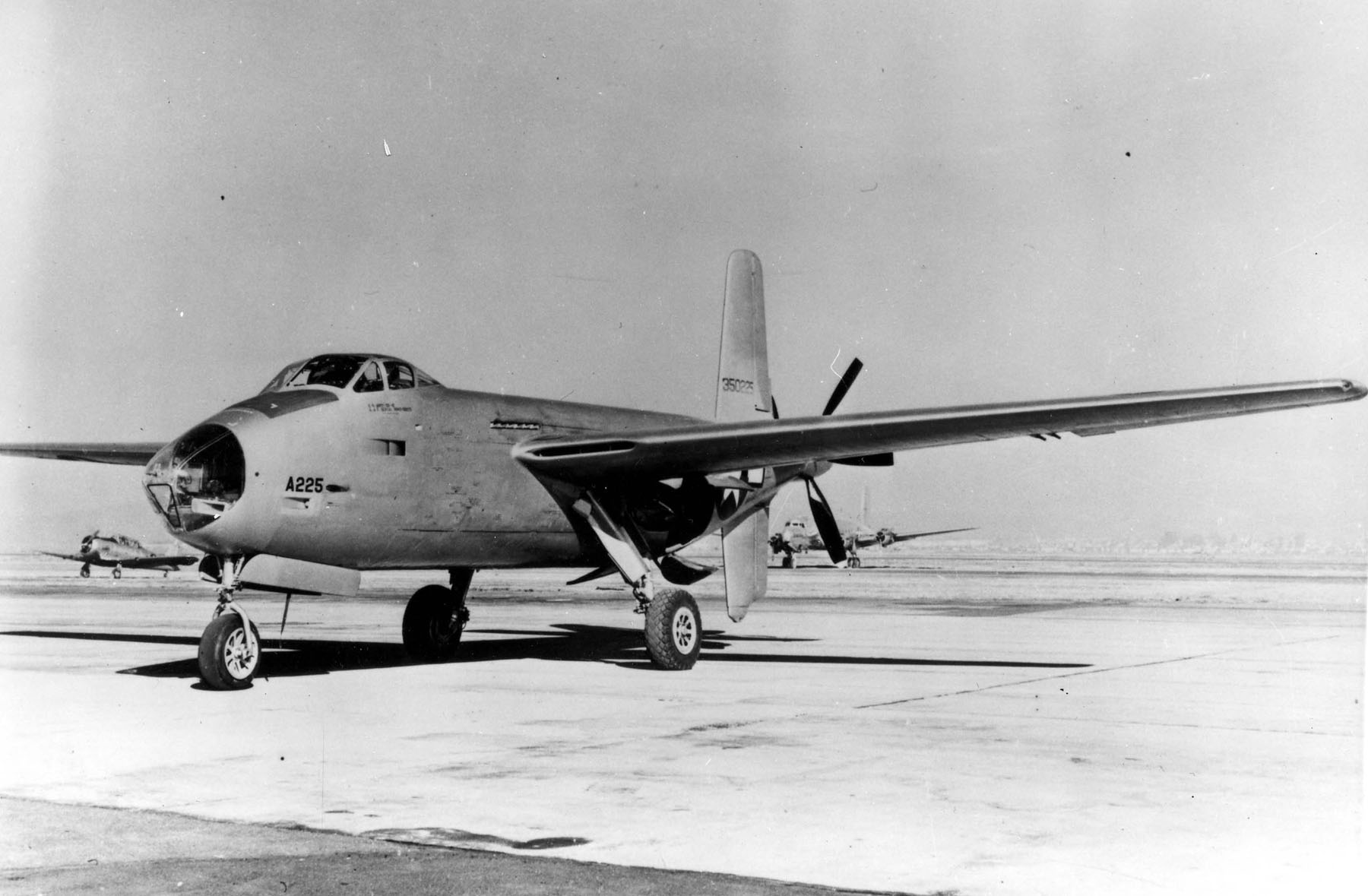
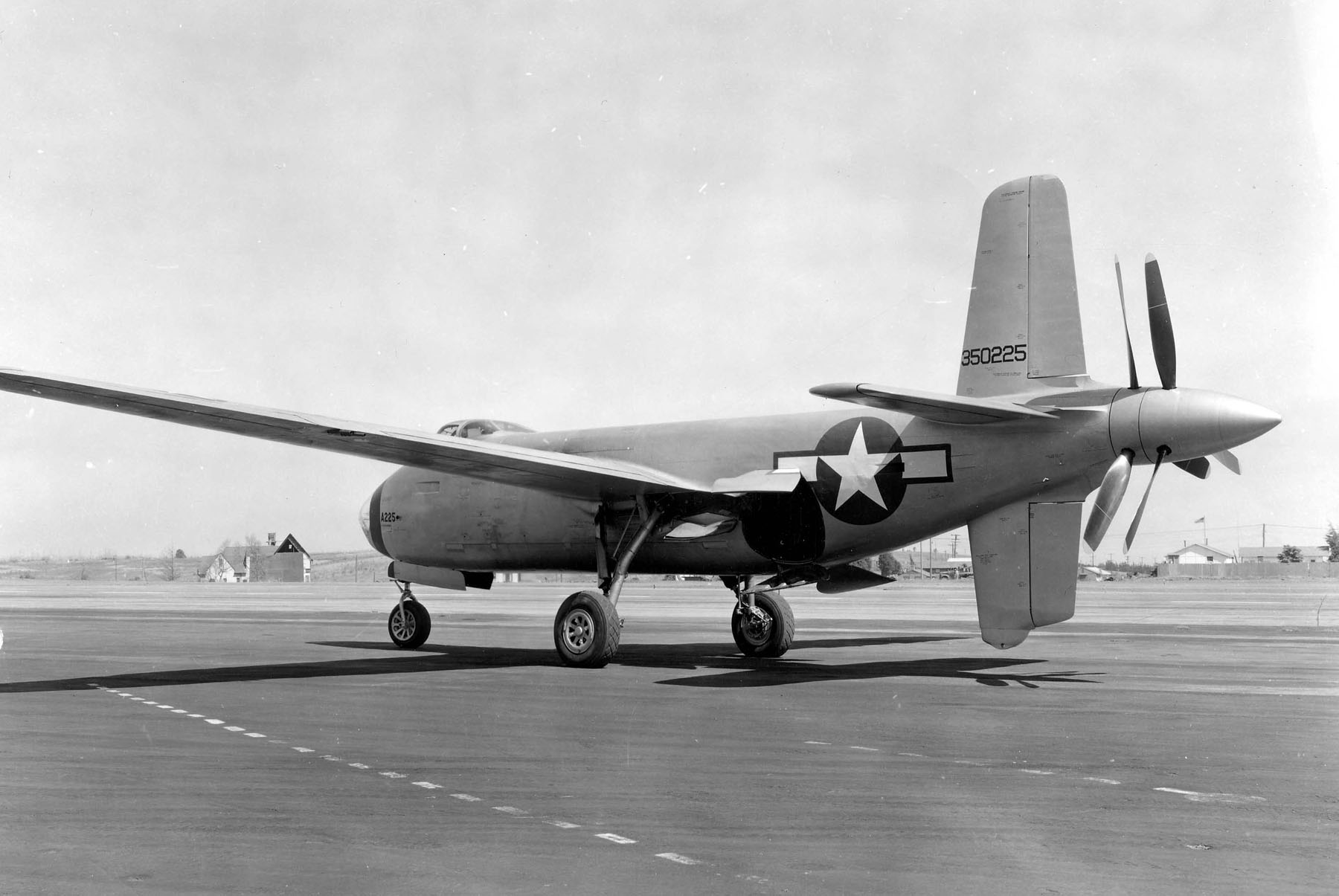
Production of the aircraft went quickly, and on May 6, 1944, the first prototype, 43-50224, made its first flight from Palm Springs Army Airfield (now Palm Springs International Airport) with test pilot Robert Brush at the controls. Three months later, on August 1, 1944, the second prototype, 43-50225, made its first flight at Santa Monica Airport. Flight testing revealed that both prototypes suffered from instability issues, were heavier on the controls than expected, and had troubles with propeller vibration and poor engine cooling. These issues were not severe enough to cancel the program, though, and on December 8, 1945, XB-42 43-50225 made headlines when it set a transcontinental speed record flying from Long Beach, California, to Bolling Field, Washington, D.C. in 5 hours, 17 minutes, 34 seconds, averaging 433.6 miles per hour (697.8 kilometers per hour). At the controls were test pilots Lieutenant Colonel Henry E. Warden and Captain Glen W. Edwards, the latter being the namesake of Edwards Air Force Base. The flight was also intended to transfer the second XB-42 prototype to the USAAF for flight testing, but just 8 days later, on December 16, 1945, 43-50225 was destroyed during a test flight out of Bolling Field over Maryland, but fortunately all three crewmen aboard were able to successfully bail out of the stricken aircraft after one engine overheated and died and the other began overheating while the crew were troubleshooting a landing gear extension issue.
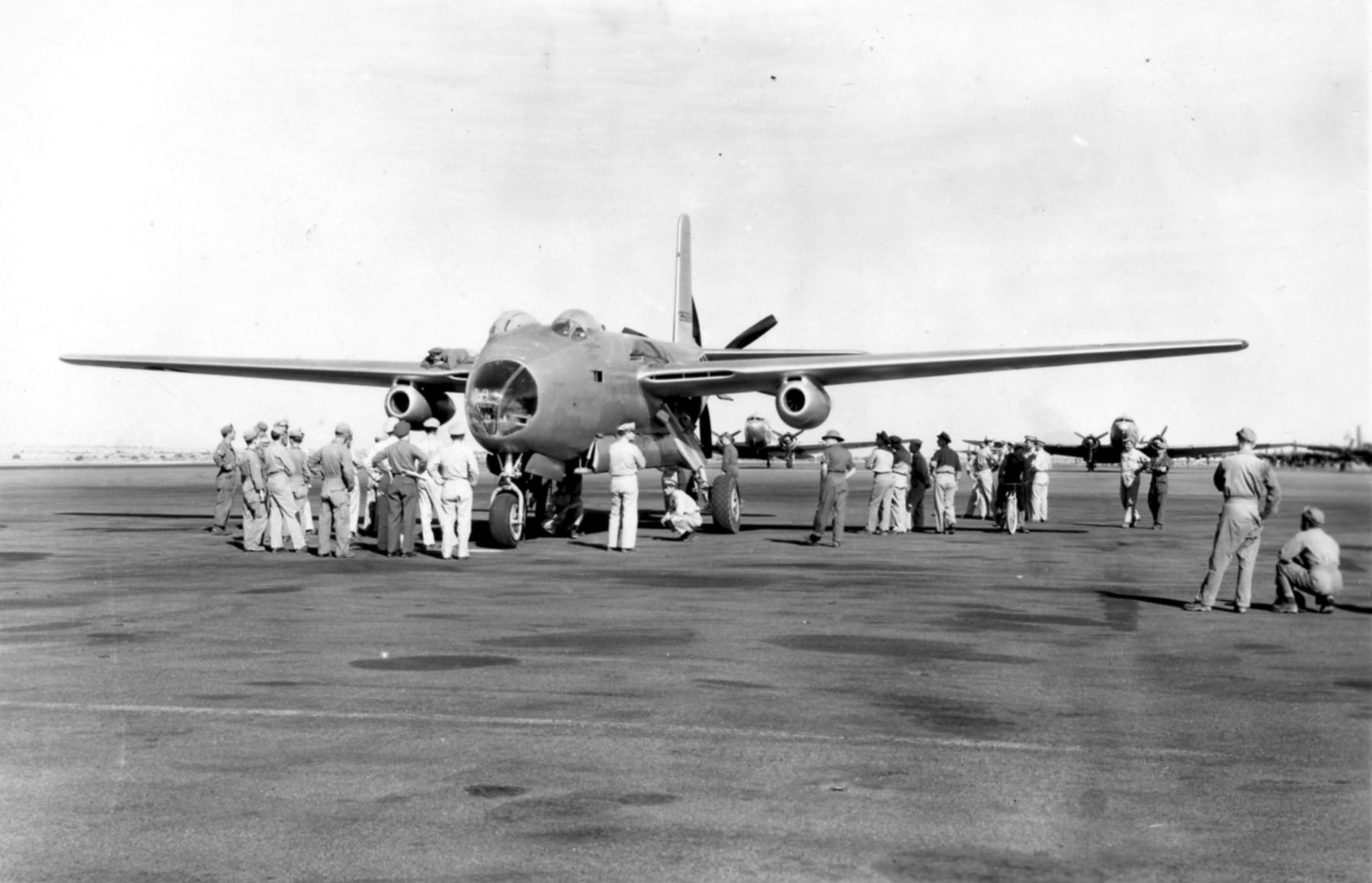
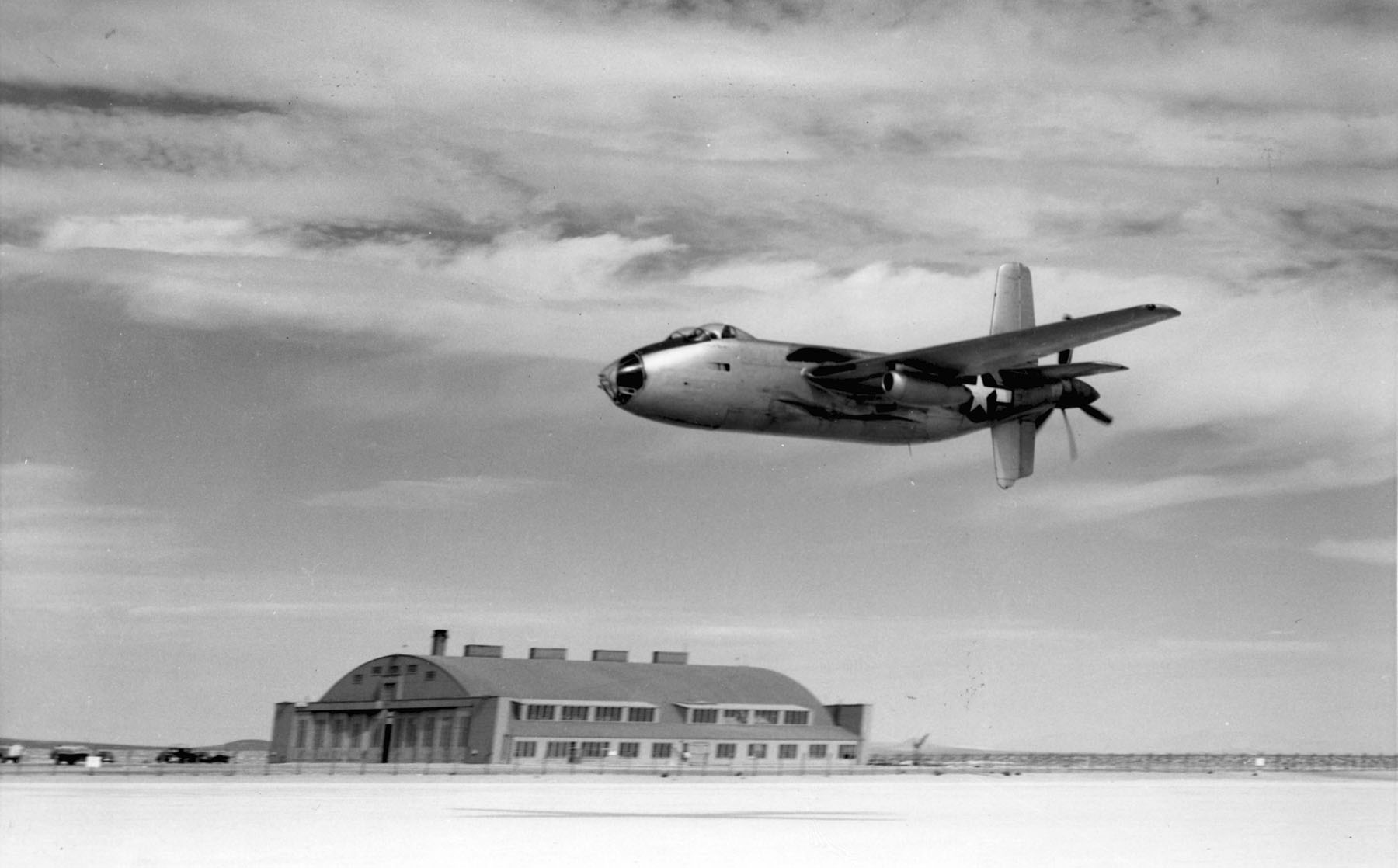
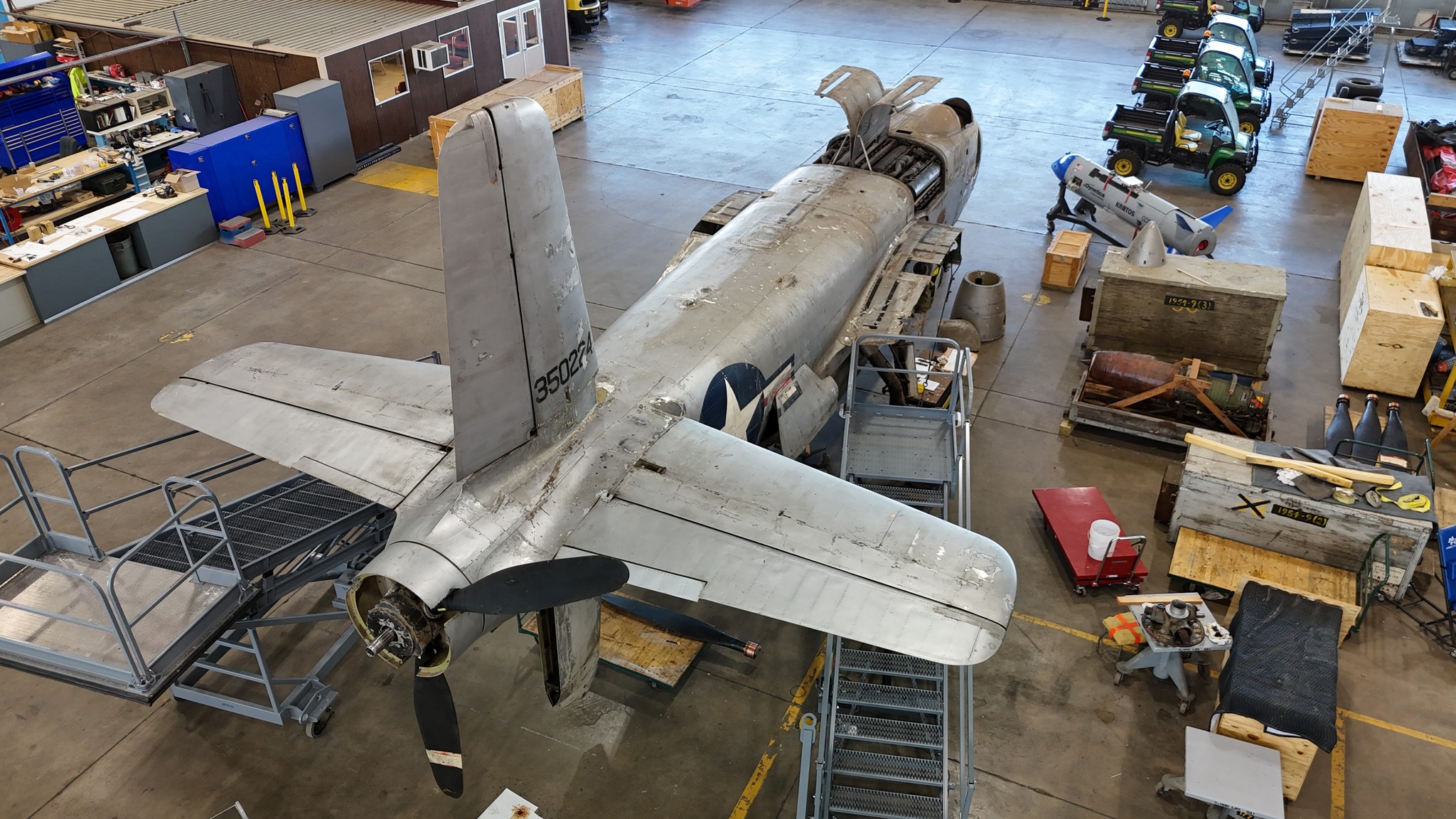
In spite of the crash, flight testing on the first XB-42, 43-50224, continued in California. In October 1946, the aircraft was fitted with a pair of Westinghouse J30 jet engines mounted in underwing pods and the aircraft was redesignated as the XB-42A. Flight testing on the XB-42A commenced at Muroc Army Airfield (now Edwards Air Force Base) in the Mojave Desert, but even before the XB-42A was fitted with jet engines, Douglas used the design of the XB-42 Mixmaster to create the XB-43/YB-43 Jetmaster, the first American jet bomber prototype to fly. Nevertheless, the XB-42A was deemed significant enough to be donated to the Smithsonian’s new National Air Museum on June 30, 1949, and stored alongside other aircraft at a former Douglas C-54 plant at Orchard Place Airport in the Chicago suburb of Park Ridge (now part of Chicago O’Hare International Airport). However, when the Smithsonian was forced to move to what became the Silver Hill Storage Facility (later Paul E. Garber Preservation, Restoration, and Storage Facility) in Suitland, Maryland in 1952, the wings of the XB-42A went missing and were never found.
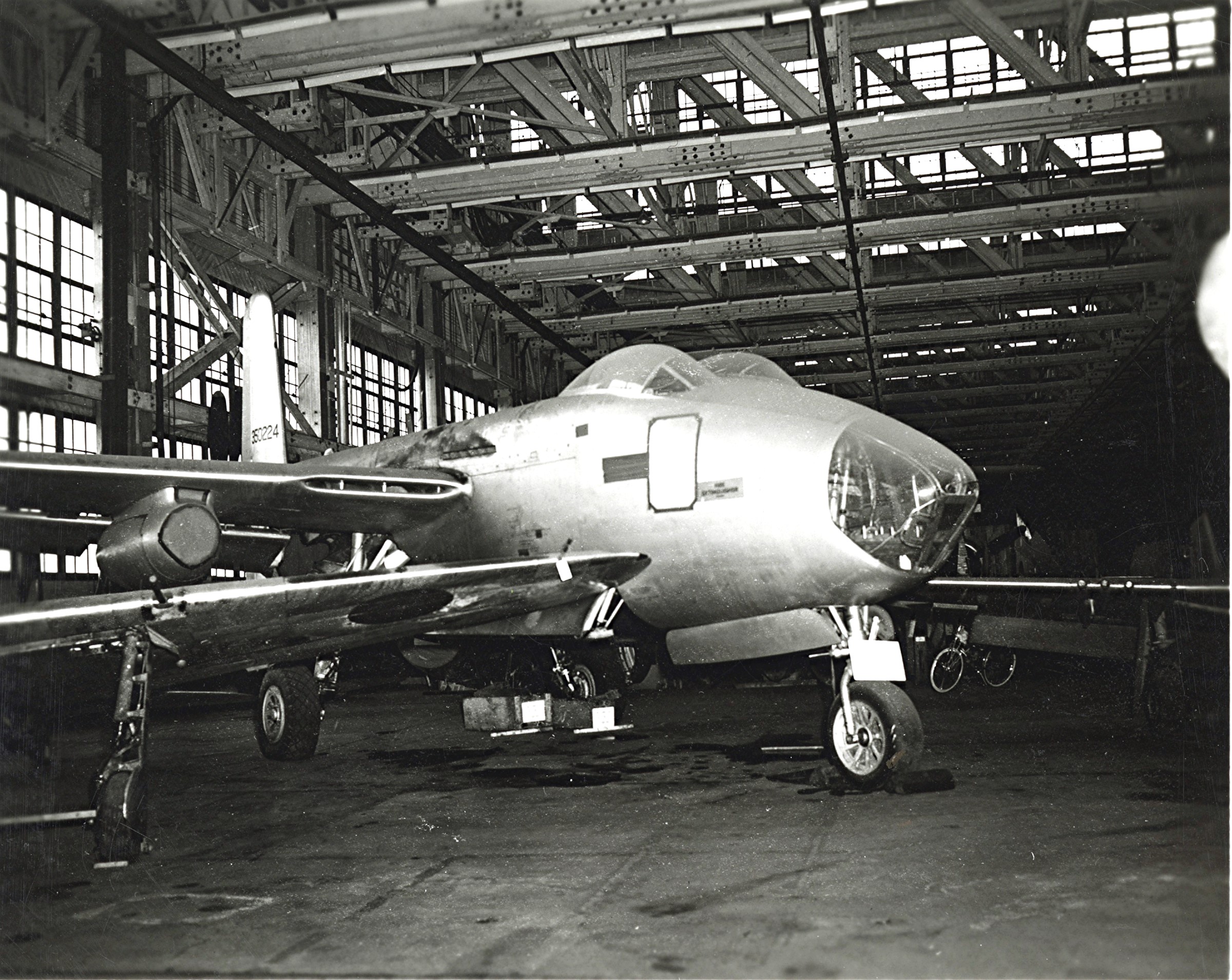
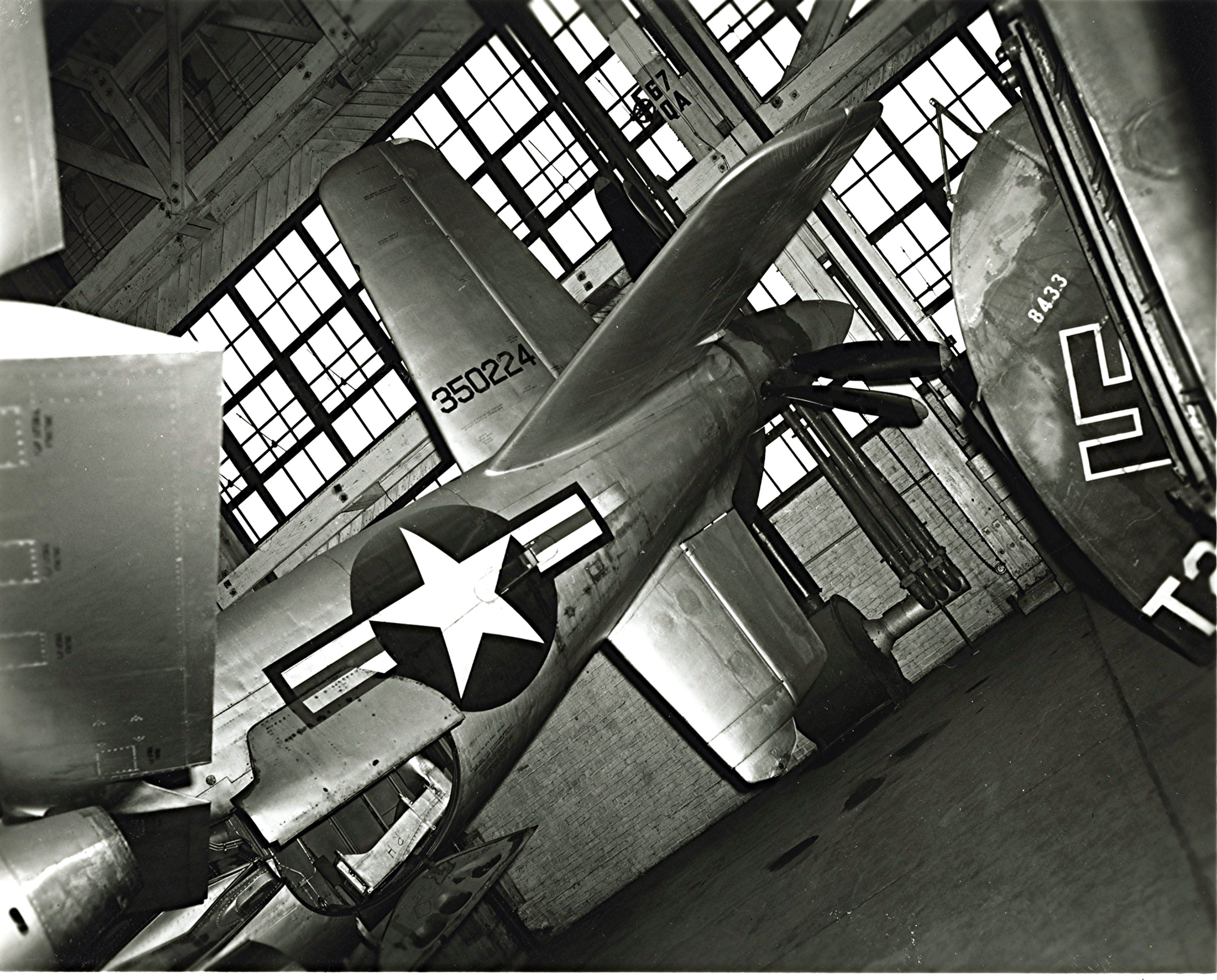
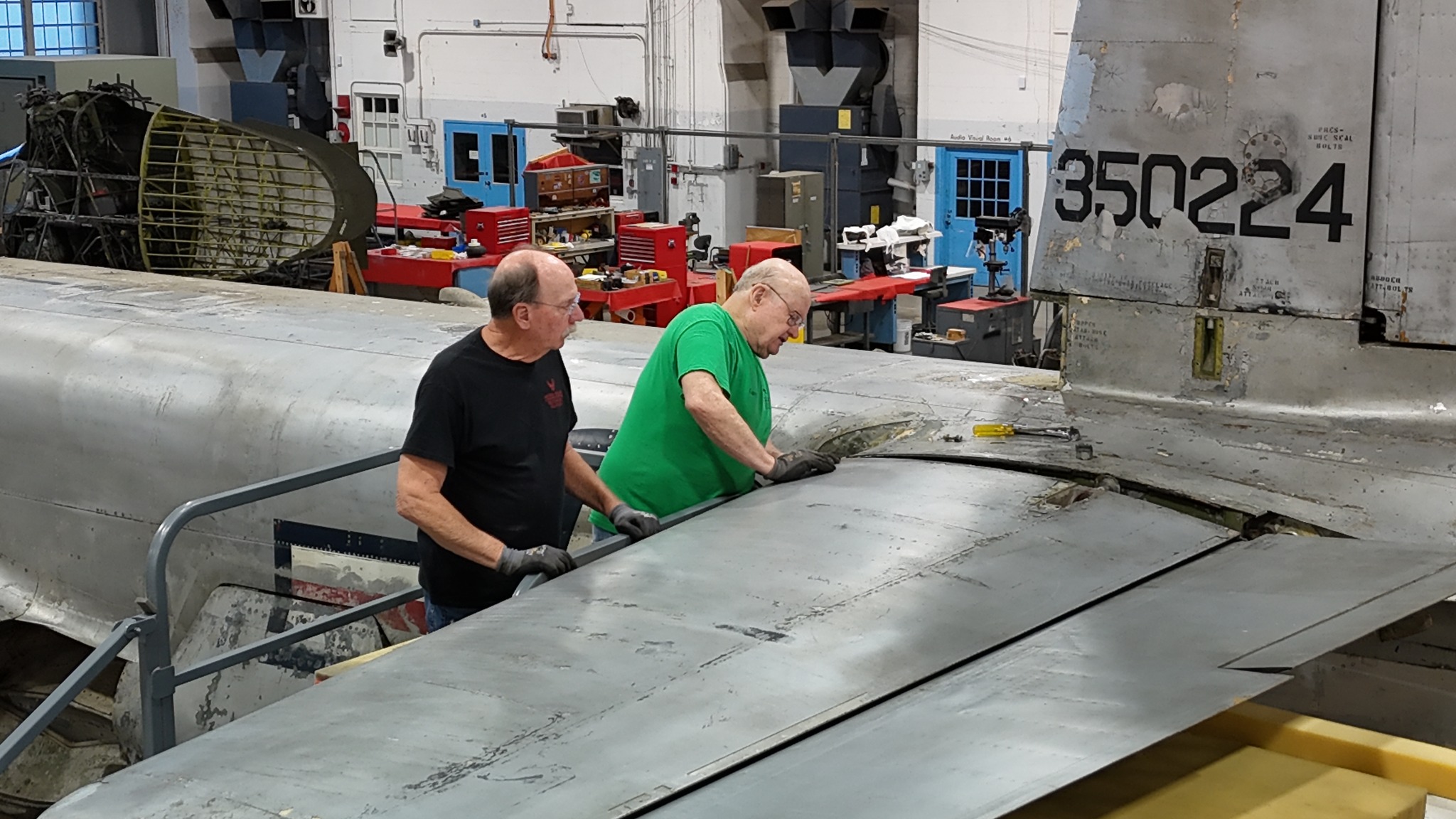
For the next 60+ years, the fuselage of Douglas XB-42A 43-50224, along with the intact Douglas YB-43 Jetmaster 44-61509 (named “Versatile II”) were kept in storage with the National Air and Space Museum but in 2010, a committee from the Smithsonian elected to deaccession the two aircraft from the collection, and both the XB-42 and YB-43 were shipped to Wright-Patterson Air Force Base, Dayton, Ohio, to join the National Museum of the USAF. These two aircraft, however, would remain in storage, but with the recent success of the ongoing temporary display of the museum’s Mikoyan-Gurevich MiG-25 “Foxbat”, which also lacks its wings (see this article HERE), the museum has begun the process of preparing the last surviving XB-42 Mixmaster to go on public display for the first time. While it is currently planned to be placed on temporary display starting in September of this year, there is no timeframe for how long the display will last or what aircraft may come to replace it. One thing that can be said for certain, however, is that many enthusiasts across the aviation community are eagerly awaiting to finally get their opportunity to see one of the rarest prototype bombers from the Second World War that still survives to this day.
For more information, visit the National Museum of the USAF’s website HERE.






I’ve wondered if they couldn’t create a second pair of basic, empty wings for static display for the XB-42 using the layout of the YB-43’s as reference. Perhaps someday in the future?
I think you mean ‘verticle’ stabilizer.
No, I think they mean “vertical.” 😂😂😂
I can’t wait to see this interesting bomber!!