






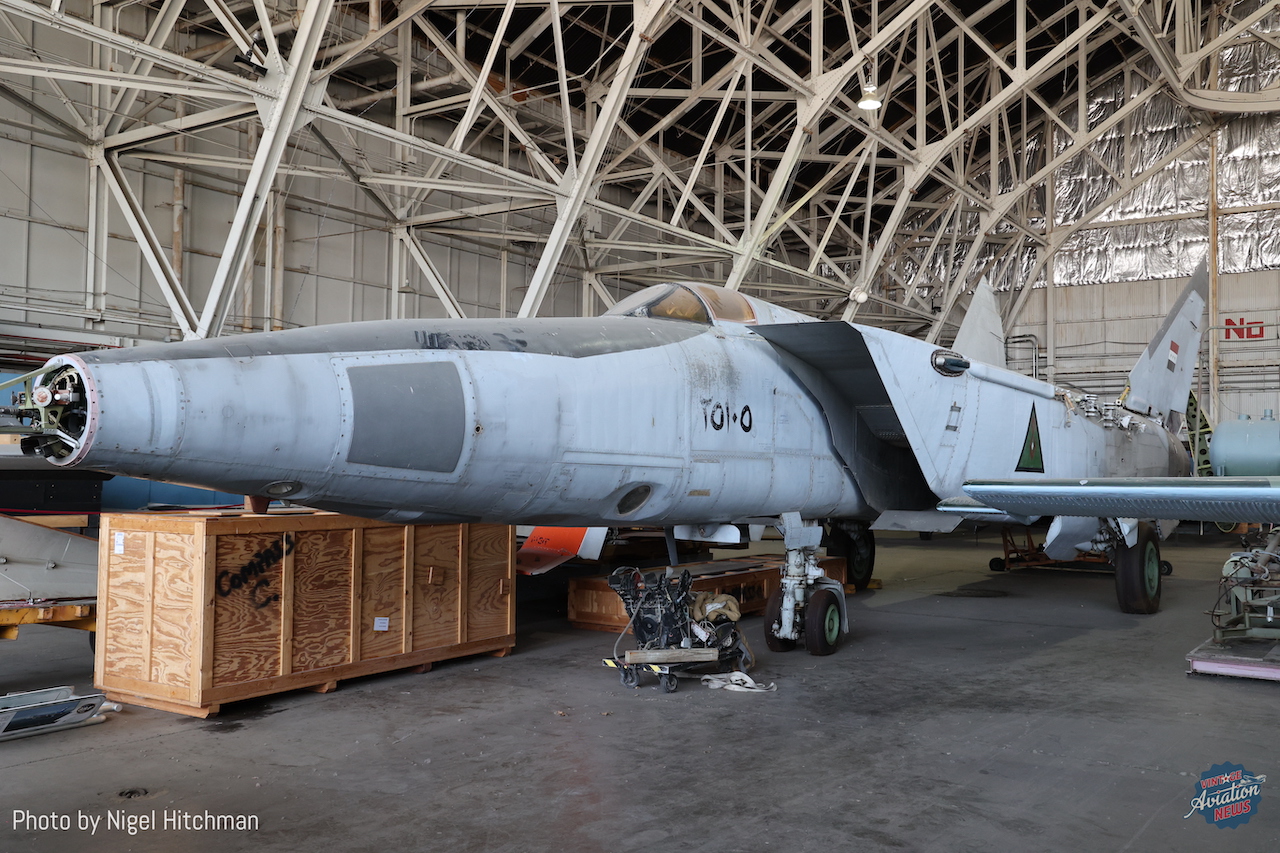

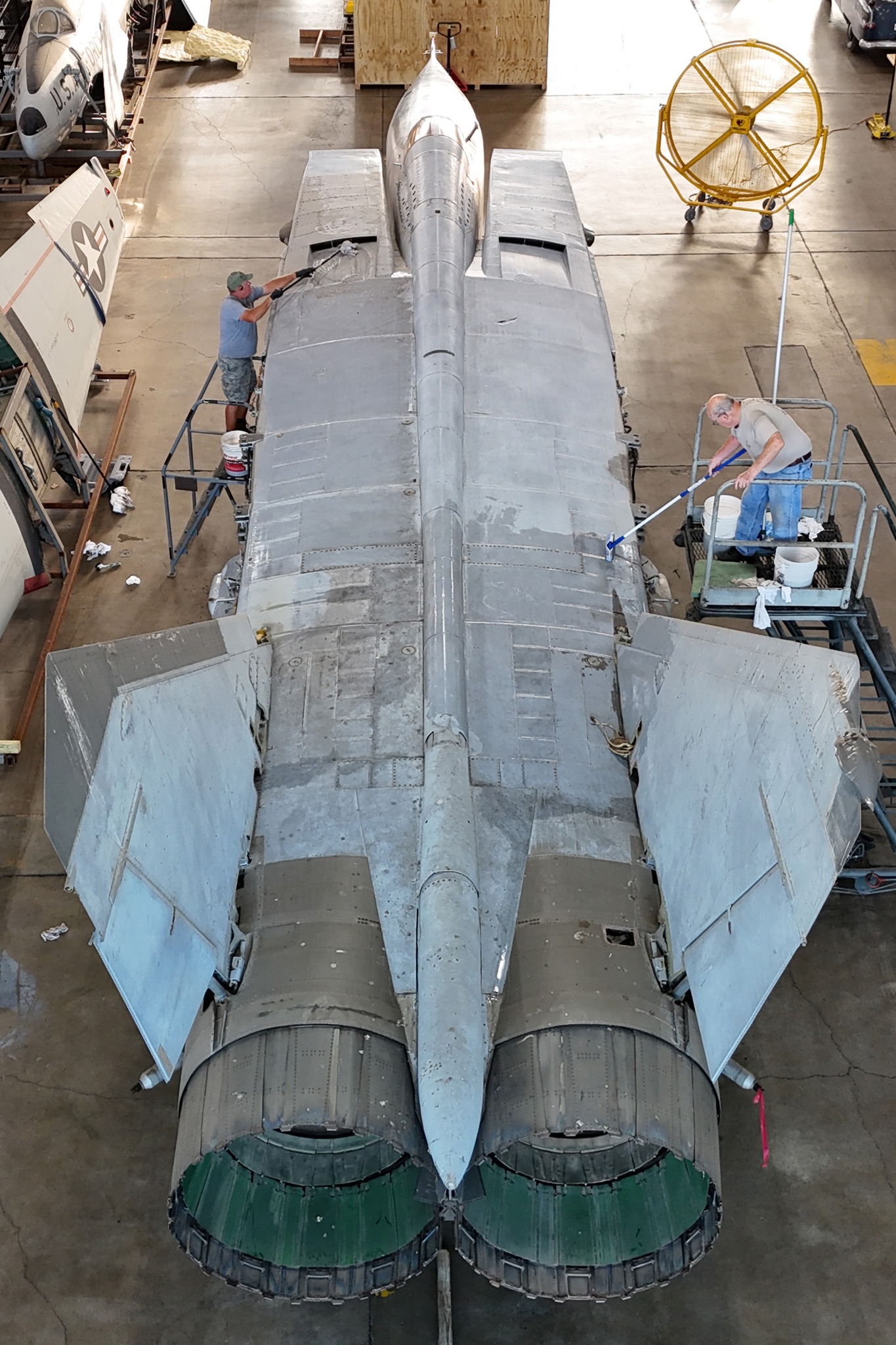
Recently, the National Museum of the USAF at Wright-Patterson AFB, Dayton, Ohio, announced the restoration of its Mikoyan-Gurevich MiG-25 (NATO codename: “Foxbat”), the only one of its kind displayed in the United States. Known by Cold War aviation aficionados for its high-speed, high-altitude performance, the display of the MiG-25 will allow visitors an opportunity to see the aircraft that has been in storage since the museum acquired the aircraft in 2006.

The Mikoyan Gurevich MiG-25 was originally developed by the Soviets in the 1960s as part of an effort to counteract high-speed, high-altitude American bombers such as the North American XB-70 Valkyrie. After the prototype was first flown on March 6, 1964, the public reveal of the MiG-25 was made during an airshow held at Moscow’s Domodedovo Airport in July 1967. Though the MiG-25 was capable of flying at speeds of up to Mach 3.2, this drained fuel from the aircraft at an exponential rate and would require the replacement of the aircraft’s two Tumansky R-15 engines, which were originally designed to be used in large cruise missiles. As such, the aircraft’s operational top speed was generally confined to Mach 2.83. Additionally, the aircraft was constructed largely of stainless steel rather than aluminum to withstand the excessive heat generated by the friction of moving at speeds over Mach 2.8. While this was cheaper and easier than building the aircraft out of titanium, it also meant the plane was too heavy to be an agile dogfighter, but the aircraft was primarily used for long-range engagements or for reconnaissance.
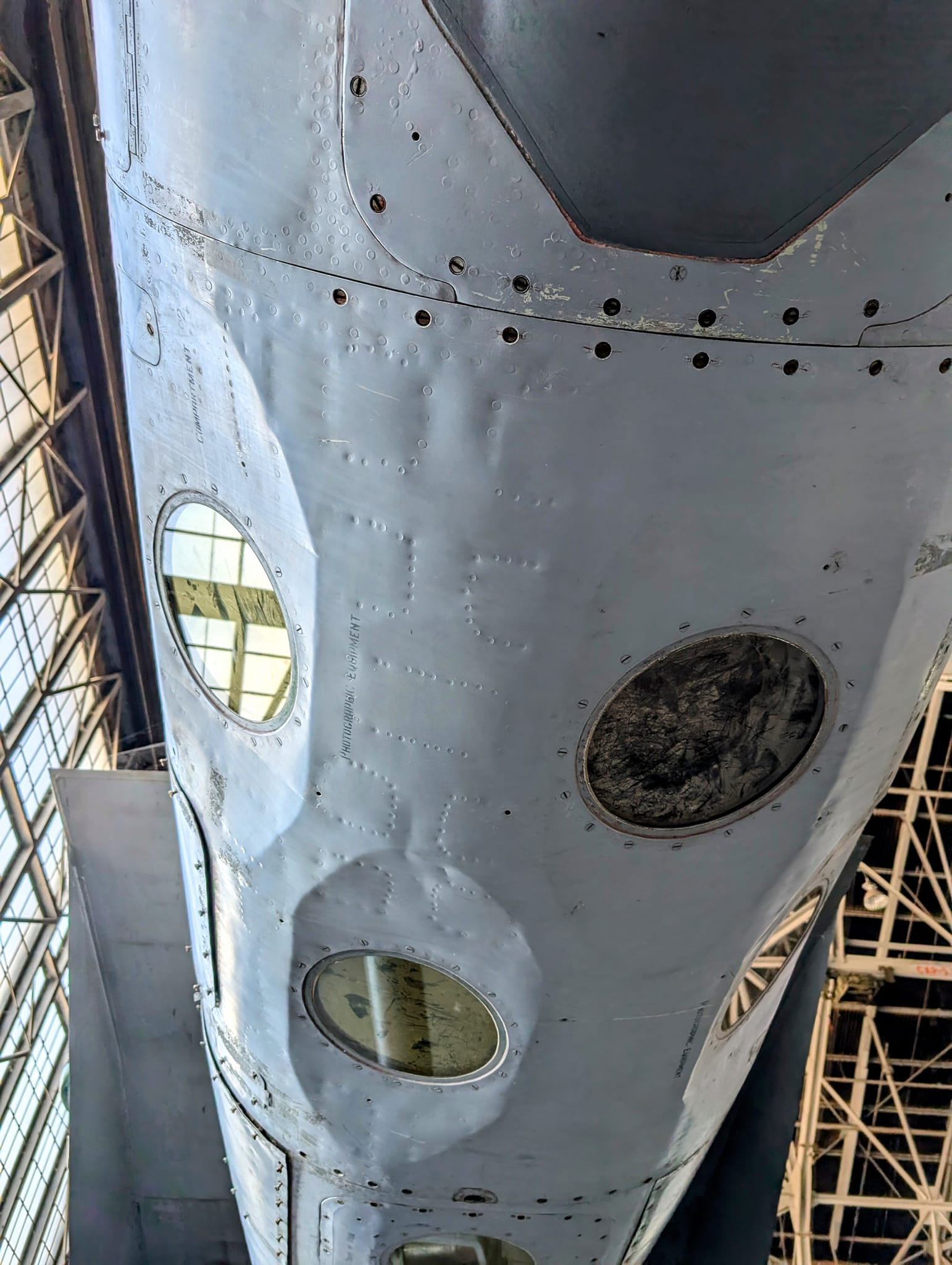

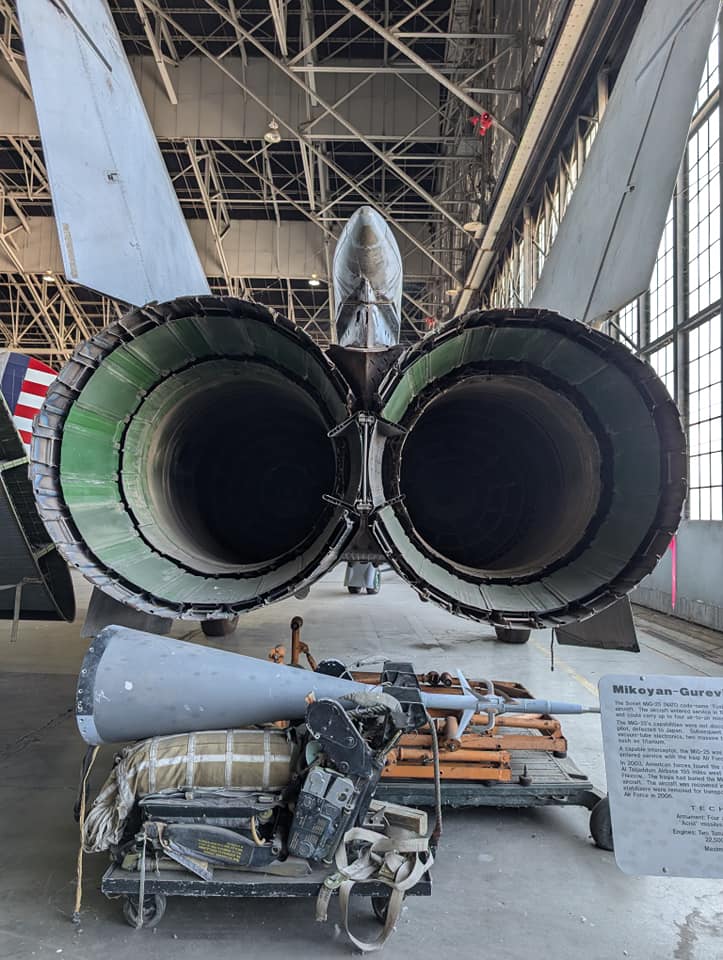
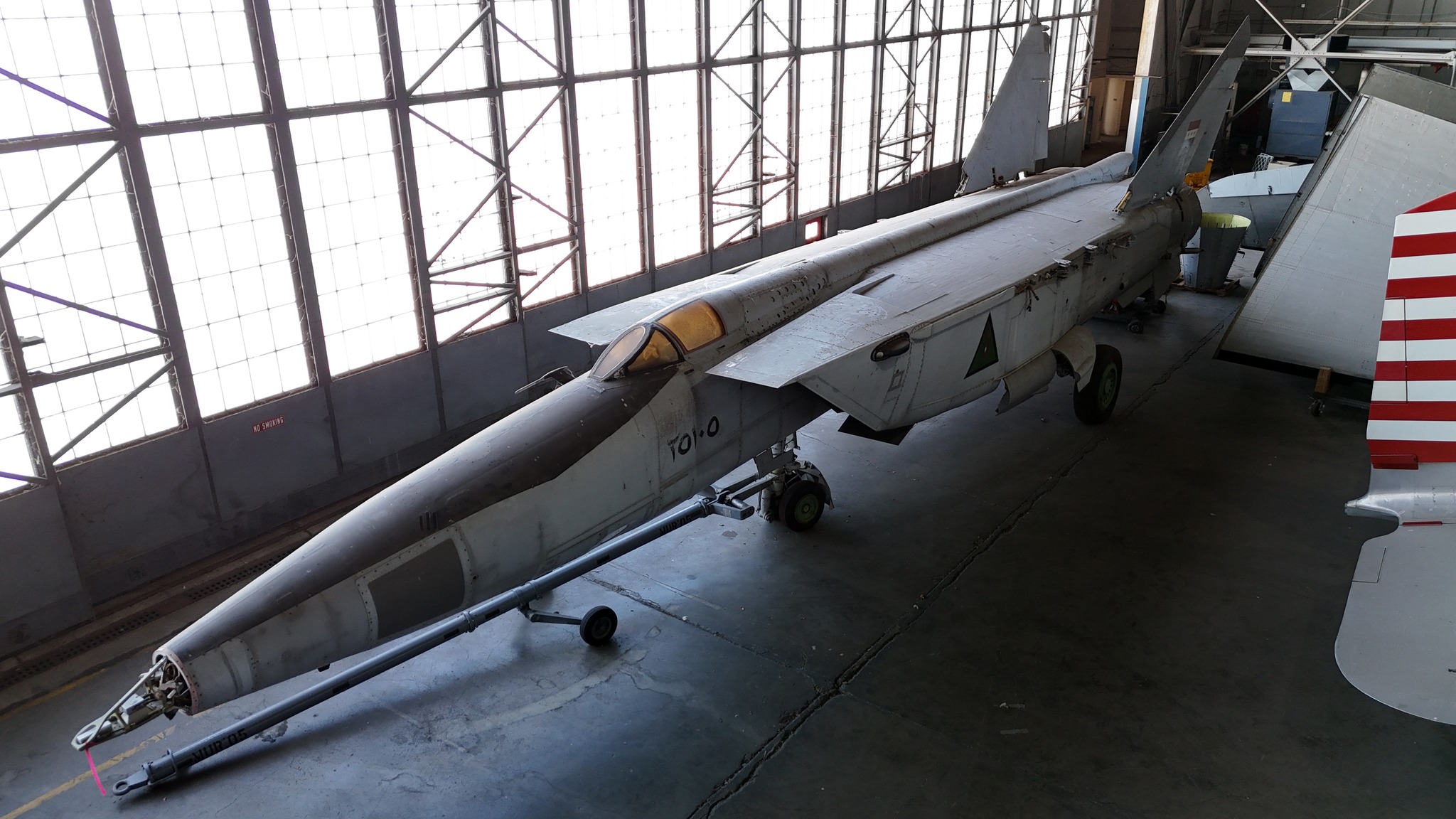
The NMUSAF’s example is a MiG-25RB single-seat reconnaissance-bomber variant that was named the Foxbat-B by NATO. This particular aircraft, serial number 020657, was exported by the Soviet Union to Iraq, where it was flown by the Iraqi Air Force. In 2003, when the United States-led invasion of Iraq took place, U.S. forces took over the Al-Taqaddum Air Base, about 74 kilometers (46 miles) west of Baghdad. There, they found that in an effort to prevent their aircraft from being destroyed by American attacks, the Iraqis at Al-Taqaddum had buried their planes in the sand near the air base. Among these was MiG-25RB s/n 020657. The aircraft, however, was found incomplete. The Americans never discovered the wings of the aircraft, but it was still in the best condition of the Iraqi MiG-25s at Al-Taqaddum. The U.S. Air Force then loaded it onto a transport aircraft bound for Wright-Patterson Air Force Base for technical study.



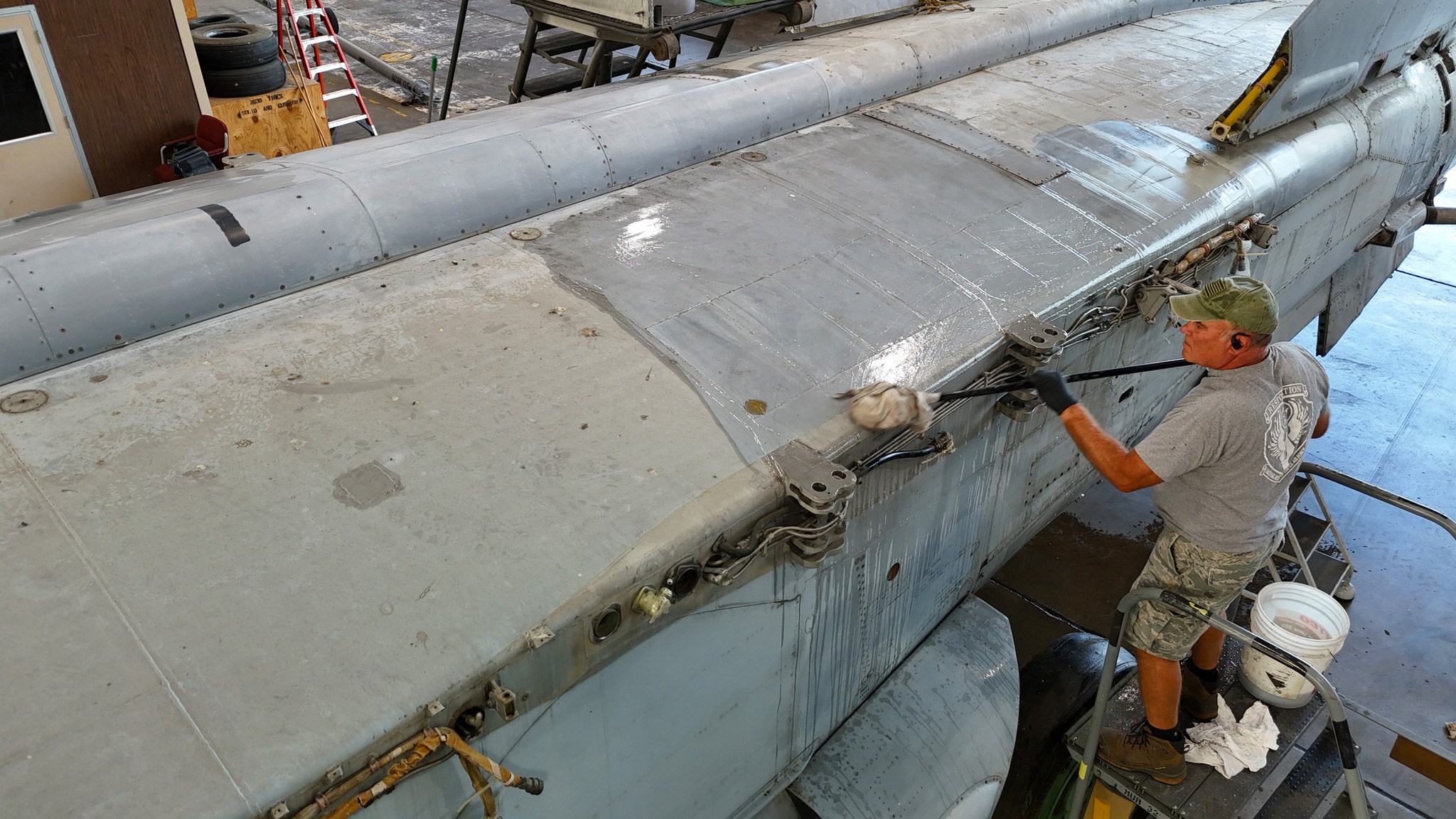
In 2006, the aircraft was officially transferred to the National Museum of the USAF, but has been kept in storage due to its incomplete status. However, with the completion of some of the museum’s other restoration projects, such as their Fieseler Fi-156 Storch (which we have covered HERE) and the nose section of Douglas A-26B Invader 41-39486, now painted as The Little Heathen, being placed on display in the WWII Gallery, the Iraqi MiG-25 is being refurbished to go on display. The museum had announced that it the MiG-25 will go on display on October 7 as part of a six-month temporary display, but with the closure of the National Museum of the USAF due to the U.S. government shutdown that began on October 1, the MiG-25 will remain in the museum’s restoration hangar until further notice. Once the museum reopens to the public, though, visitors to the NMUSAF will finally have the chance to see the only Mikoyan-Gurevich MiG-25 Foxbat in the United States, and if the display of the aircraft is subject to change, as the museum has stated before the shutdown of the U.S. government, we can only hope that the success of the future exhibition of the MiG-25 will lead to it going on permanent display at the museum.
For more information, visit the National Museum of the United States Air Force’s website HERE.















Like this article
Why don’t we ask computer whizzes come with a computer program to design two new wings to be affixed to each side of the MIG-25 before it is transported to repose alongside planes in the museum? To display the MIG-25 sans wings is not how we design displays.
It is time to show the Russians what America can do to design a pair of wings for that plane!