







By Katherine Hamilton
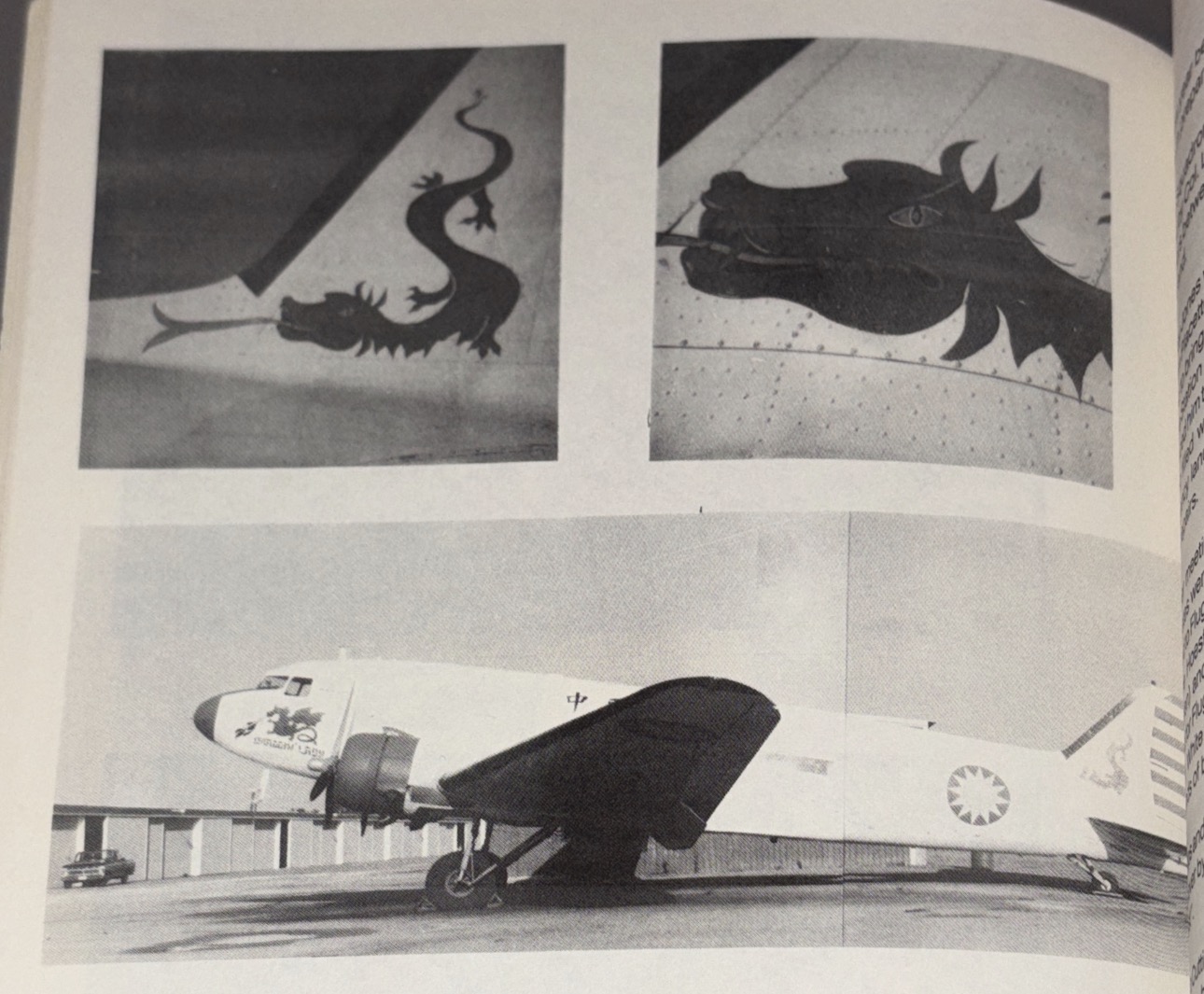
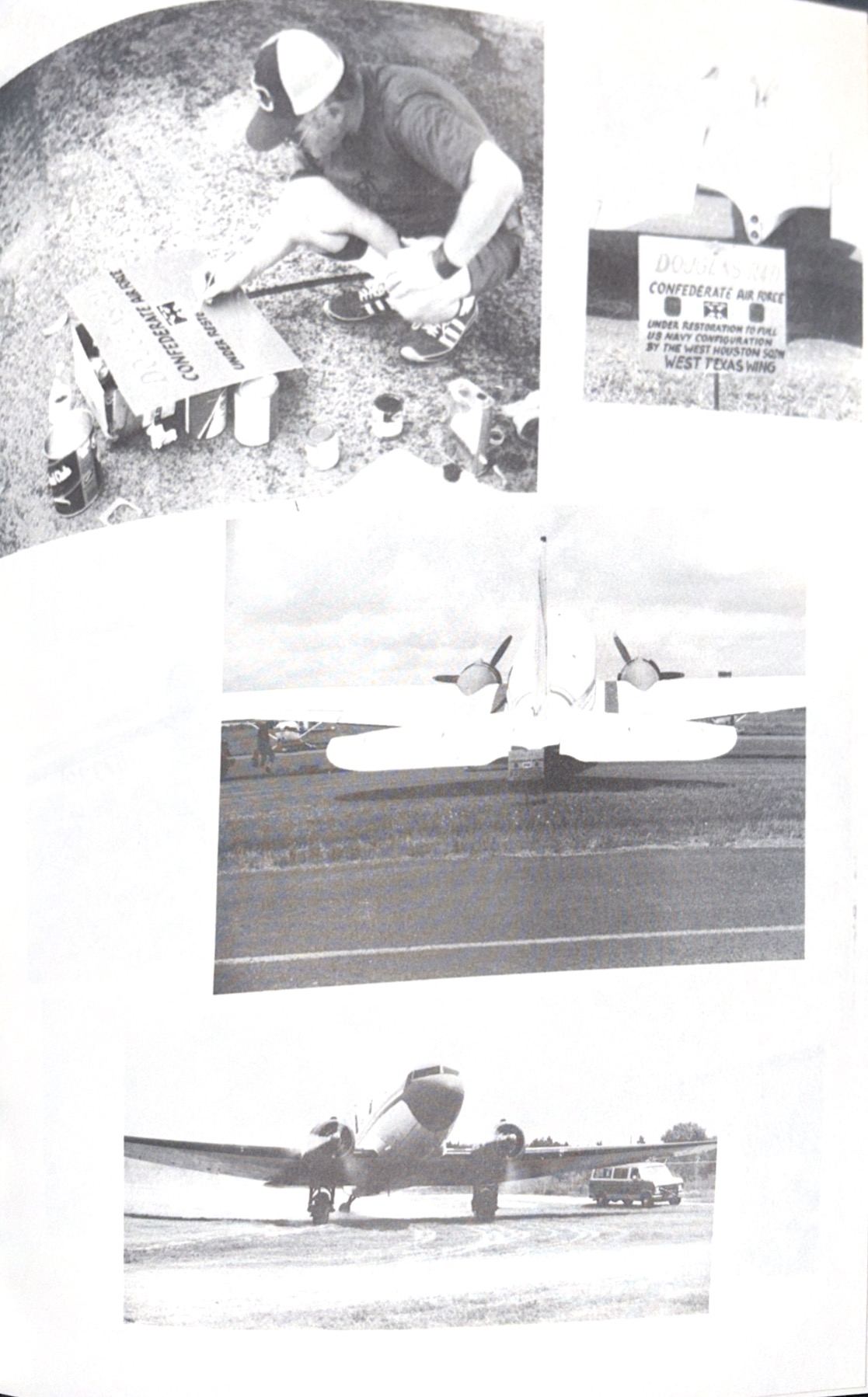
The CAF Houston Wing (formerly known as West Houston Squadron and West Texas Wing) is one of the Units in Texas, a part of the Commemorative Air Force. It was formed in 1978 with the combining of the West Texas Wing and the newly formed West Houston Squadron. Originally started as a three-member and only member-operated aircraft out of Wiesner Airport, then eventually became the Houston Wing’s final home at Lakeside Airport (now West Houston Airport). In 1982, the squadron had 35 members, and its first flying aircraft was a Douglas DC-3 (N17332), variously referred to as “Draggin Lady” or “Dragon Lady.” The nickname was unique to the aircraft and should not be confused with the Lockheed U-2’s well-known “Dragon Lady” moniker.
After several years of maintenance and being with a smaller unit, “Draggin Lady” was then returned to CAF headquarters and eventually privately owned, and as of 2000, was located in Townsend, Delaware. The last known flight of the “Draggin Lady” was in May of 2021. Eventually throughout the years, the CAF Houston Wing would acquire multiple aircraft such as a Naval Aircraft Factory N3N “Yellow Peril“, AT-6 Texan “Ace in the Hole” (N97907), an Vultee BT-13 Valiant (N27003), Lockheed C-60A Lodestar “Goodtime Gal“, A Fairchild PT-19A Cornell, a now under maintenance North American L-17 Navion, and formerly the home of a Stinson 108 (eventually then homed at the Gulf Coast Wing, now privately owned). In 1985, the Houston Wing and the Gulf Coast Wing combined their work and now host Wings Over Houston airshow out at Ellington Field. The CAF Houston wing now has over 100+ Members and an active Cadet Program as of 2026.
The CAF Houston Wing’s First Aircraft
The Houston Wing started out as a member aircraft type of unit, but as time went on and membership grew, the talk of acquiring an aircraft was in the works. In April of 1982, a squadron meeting was held to discuss acquiring a DC-3. In July of 1982, that dream became a reality when the acquisition of the DC-3 was successful. The DC-3 was then picked up from Hooks Airport and was ferried to West Houston Airport, the home of the Houston Wing.
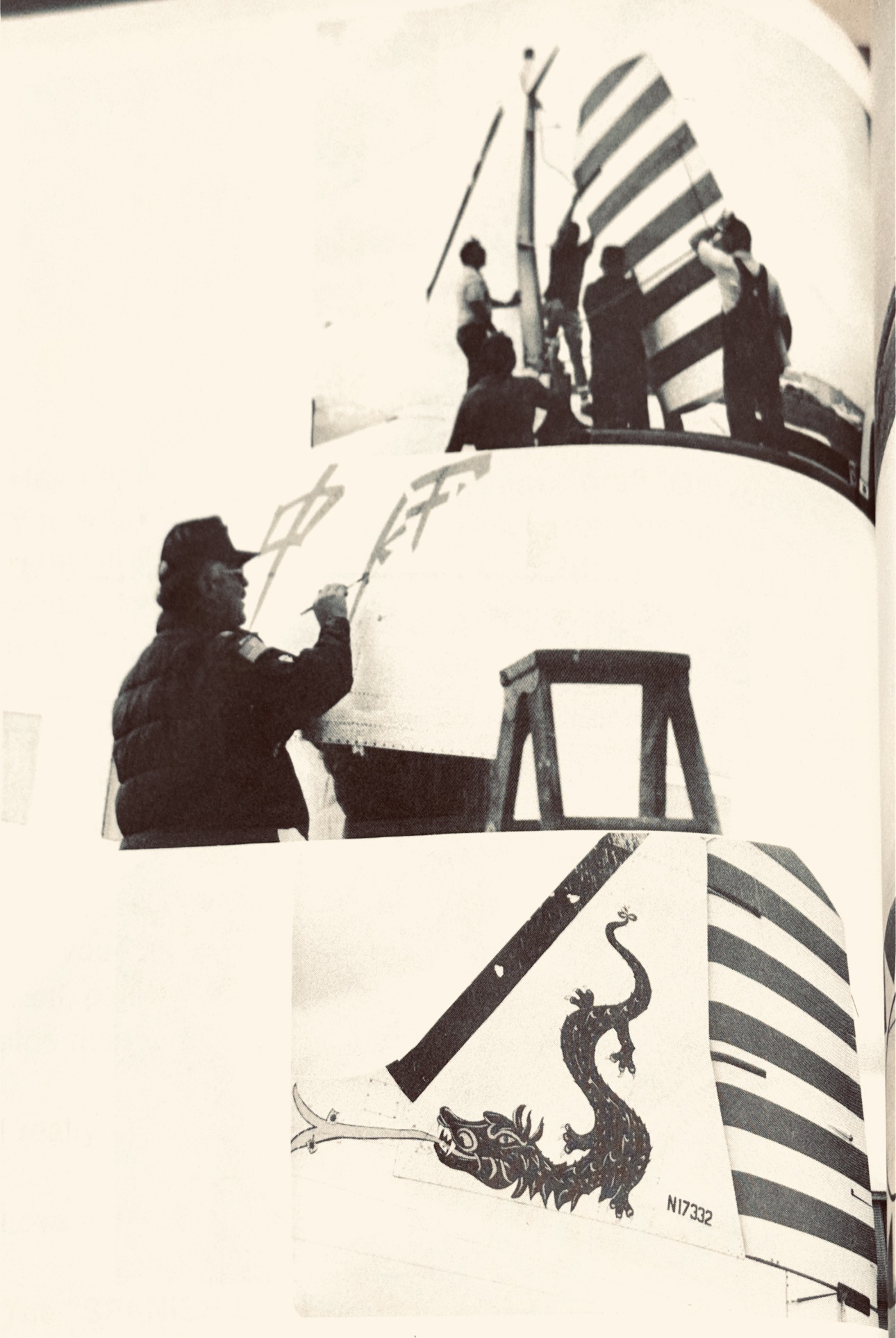
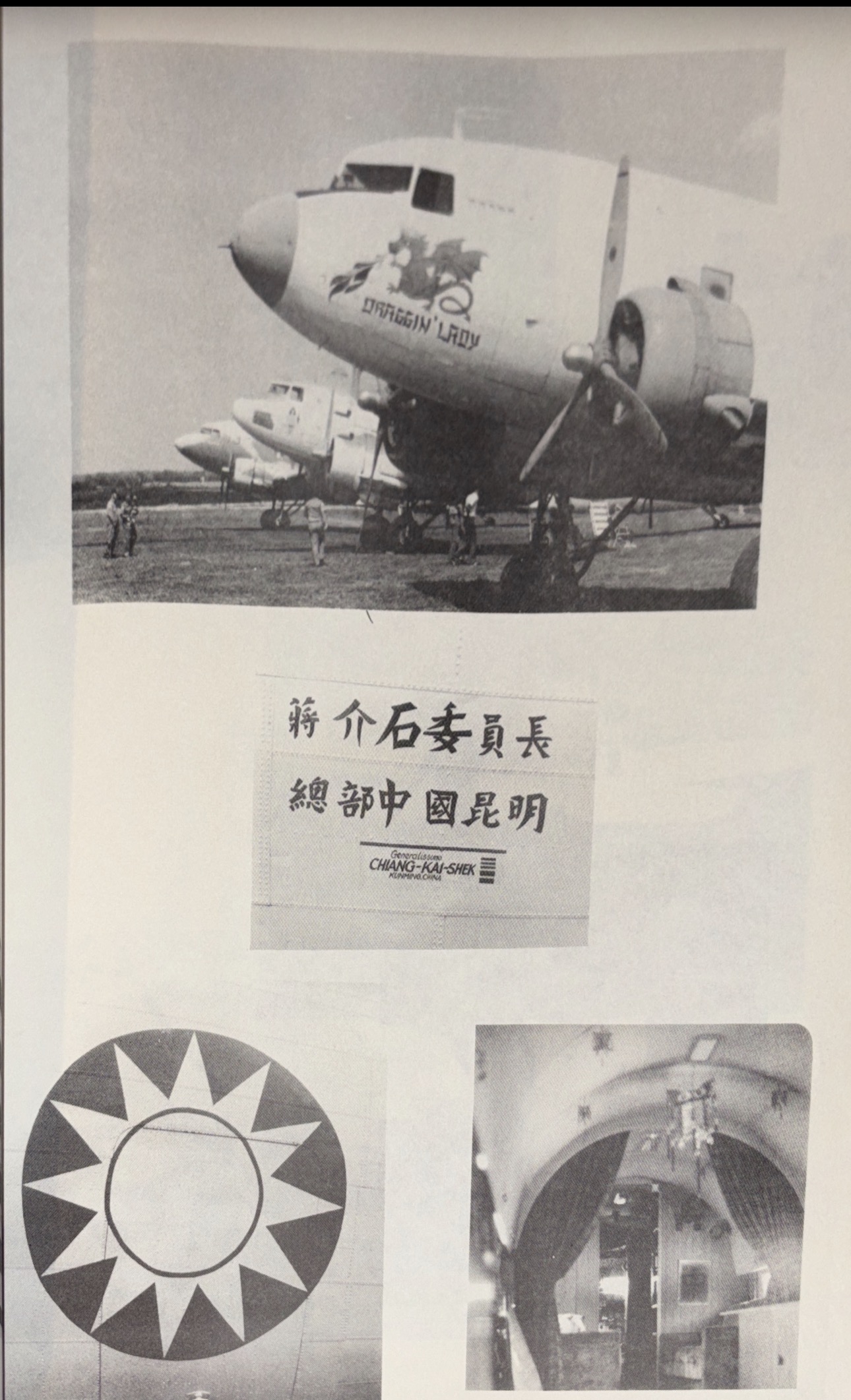
September 6, 1982, everyone in the squadron had lined up the taxiway with cameras to take pictures of their new friend. The DC-3 would go on to be named “Draggin Lady“. Based on the character Dragon Lady, from the radio serial “Terry and the Pirates“. The variant of the name “Draggin” was also based on the nose art described as a majestic taildragger, and when the nose art/artwork was completed by Col. Dieter Klein, the name stuck. After years of engine issues and constant maintenance, “Dragon Lady” was acquired back by CAF headquarters and eventually sold off to be privately owned. As of 2026, the Houston Wing currently has 6 aircraft and one fuselage display from an L-39 Albatross.

The CAF Houston Wing’s Dedication to Education
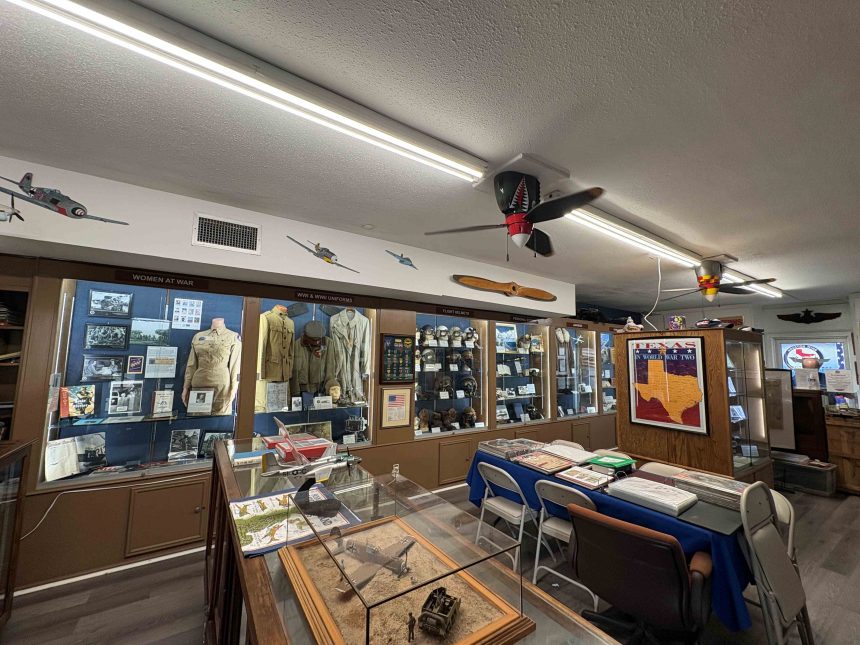
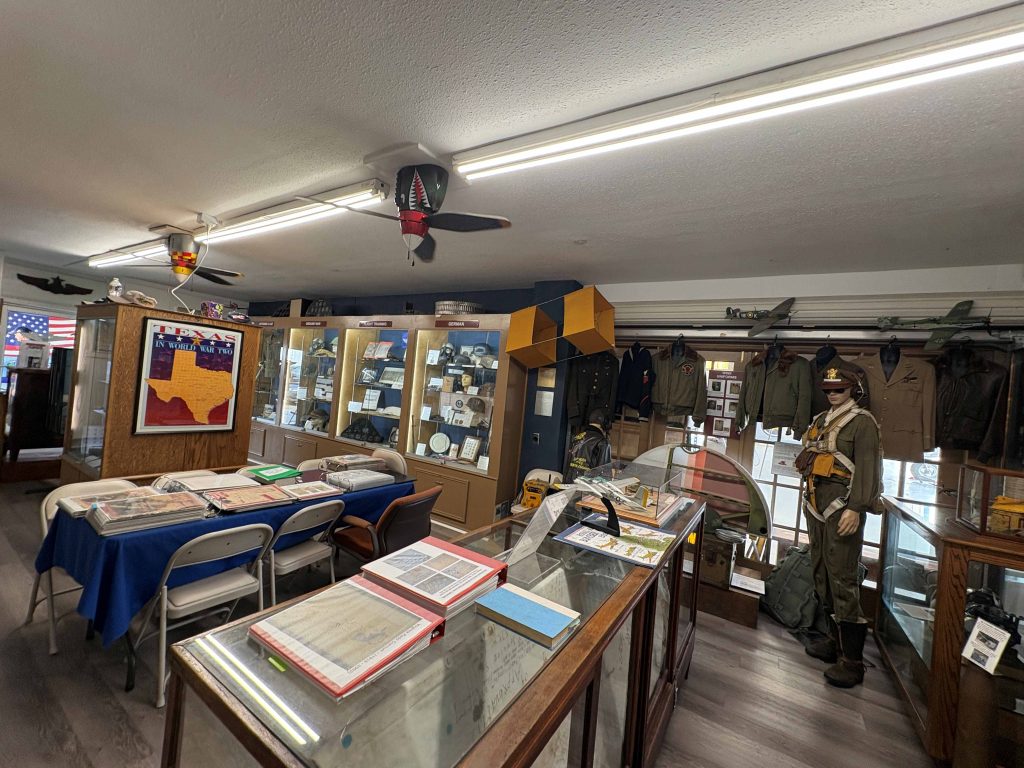
During the 90’s, there were talks throughout the unit on how to gain more interest in aviation and history. With this discussion, many members thought of bringing education and history to life in a more personal and detailed way. Members started putting items they owned from family collections, acquired pieces, and even their own collections of items. With this and the required research on each piece, they were soon putting the final touches on creating a museum. In 2002, a group of Houston Wing members took on the challenge of converting the old maintenance room into an established museum. As of 2026, the museum is a key component of the CAF Houston Wing unit, where every first and third saturday of the month, the Houston Wing docents are guiding and giving tours to anyone interested in learning more about WWII and military aviation.
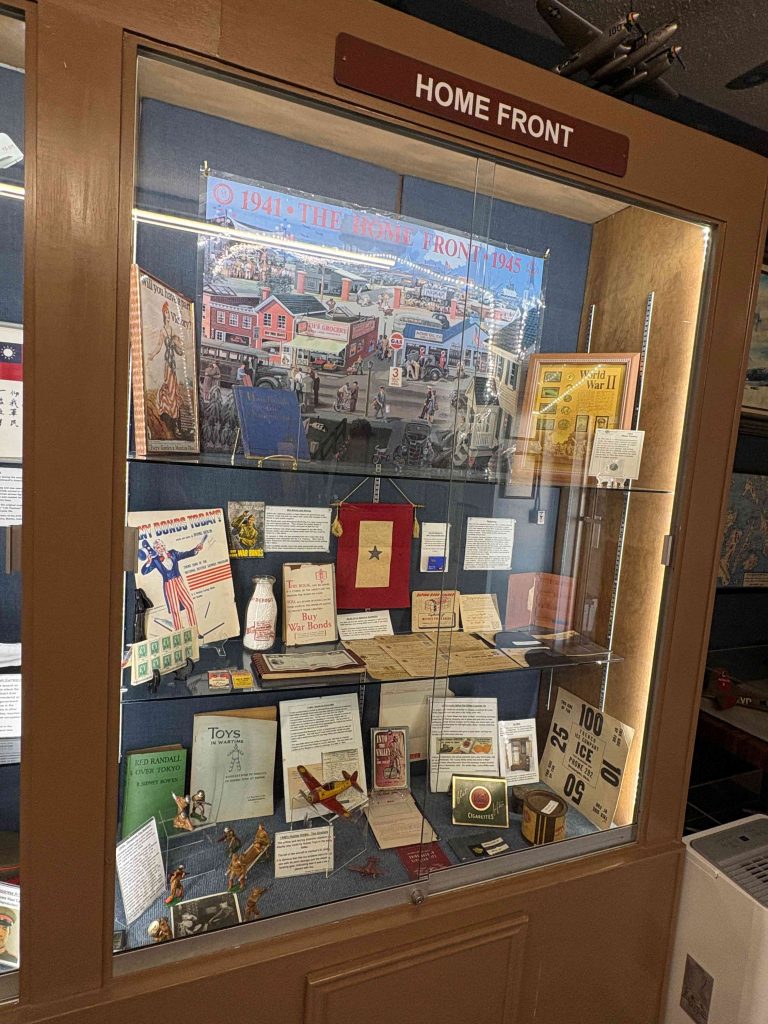
While academics only cover key events and basically a short summary of events during WWII, The Houston Wing strives to bring history to a more personal touch to history, parts of history that were made by the people during those times. The museum is compact but detailed, with history organized and well-researched in different categories, such as Home Front, Japan, Germany, Personal Stories, Ground War, Flight Training, Women at War, and Flight Helmets.
Gibson Girl Radio
In 1941, the British recovered a German-built emergency radio transmitter (Notsender N82) from the English Channel. The radio was copied and developed into a British variant, Type 33, and quickly put to use for bomber and reconnaissance aircraft. Due to the ongoing war, the British did not have the manufacturing capacity to build radios in sufficient numbers, and production was soon moved to the U.S. by the Bendix Aviation Corporation. The first contract was to deliver 11,600 sets, and it was delivered in May of 1942. The radio SCR-578 (nicknamed the Gibson Girl), designed to float, was a superior model to both German and British models. The Gibson Girl was used by the United States military until the late 1970s.
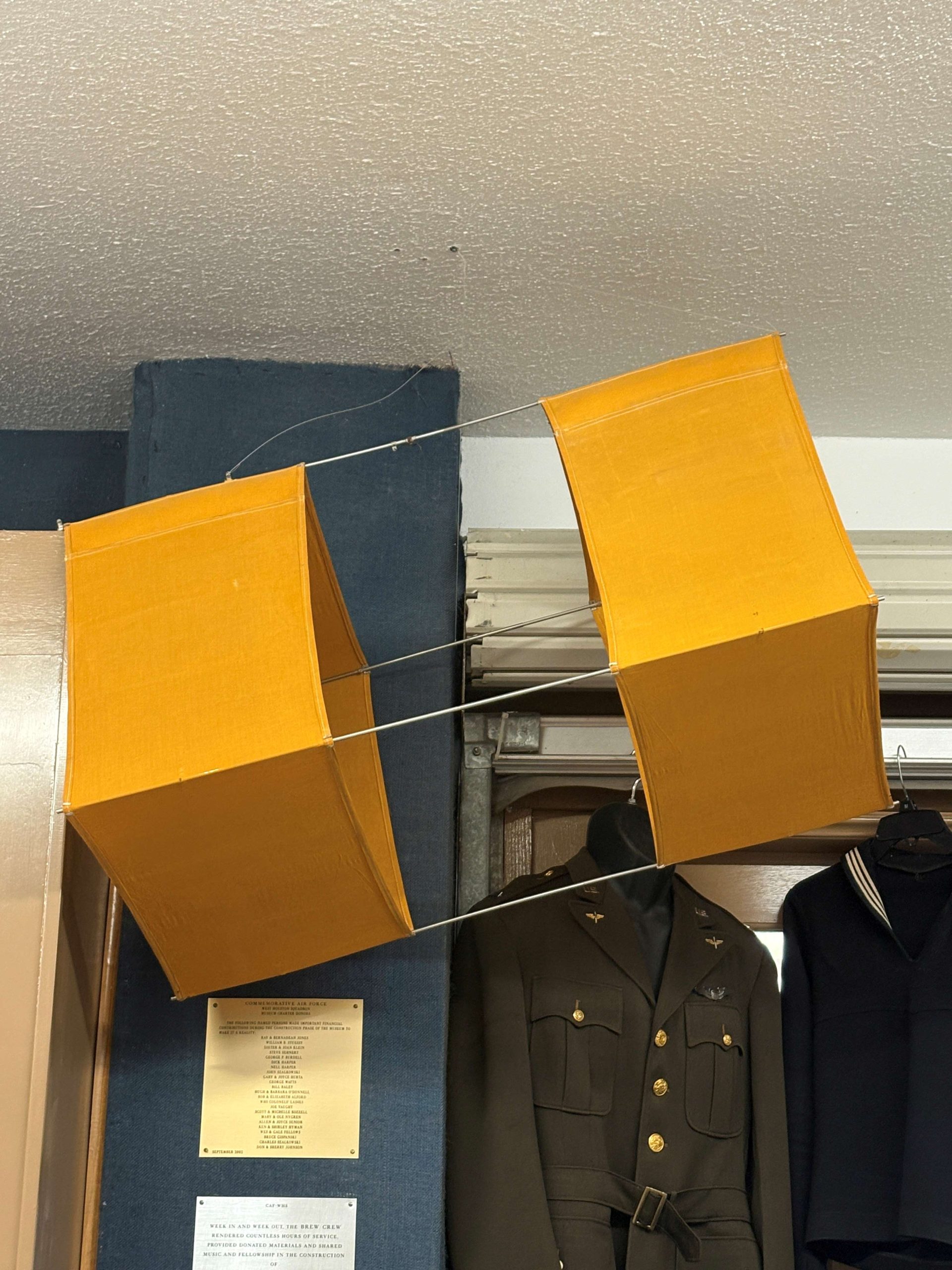
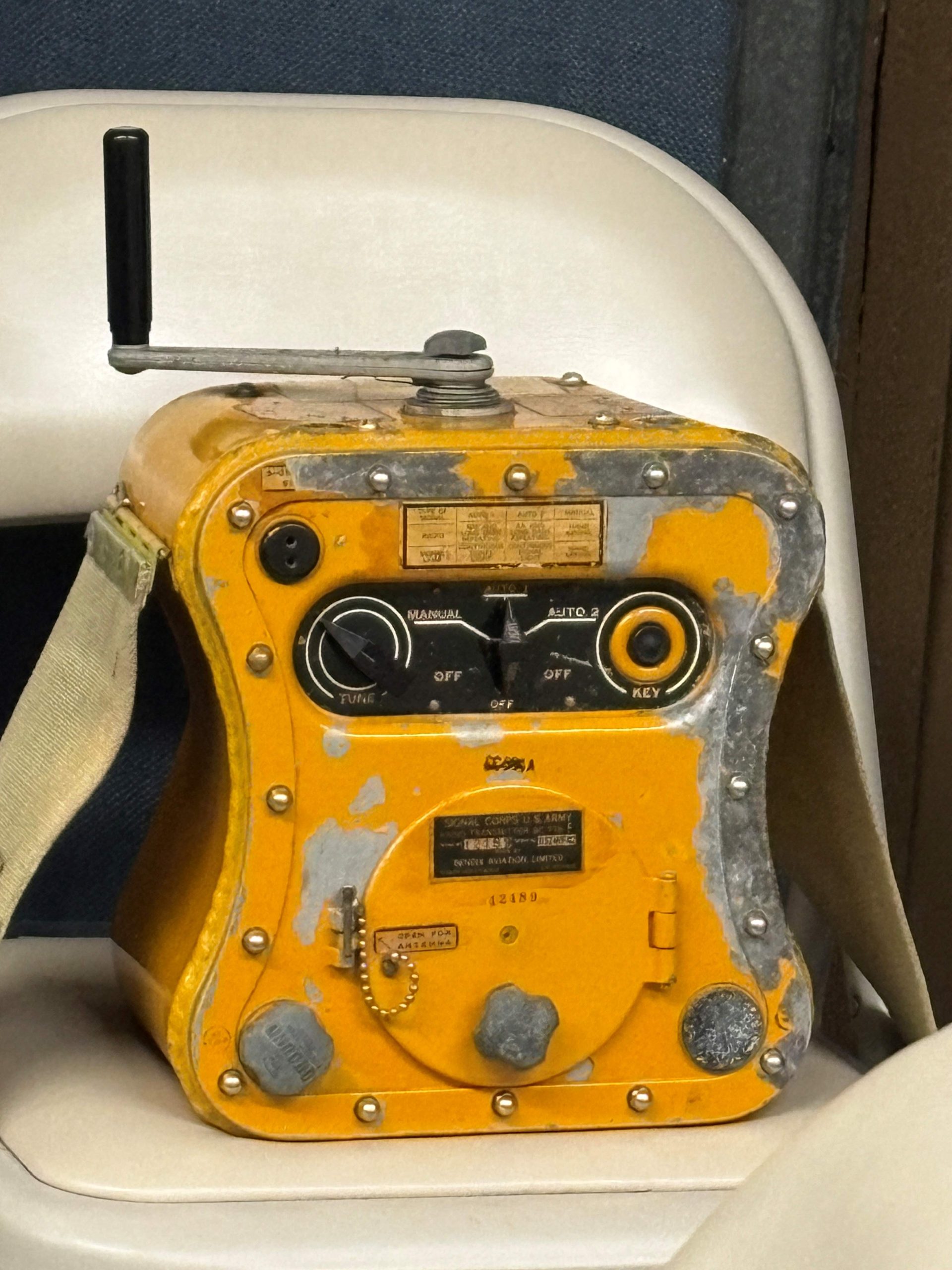
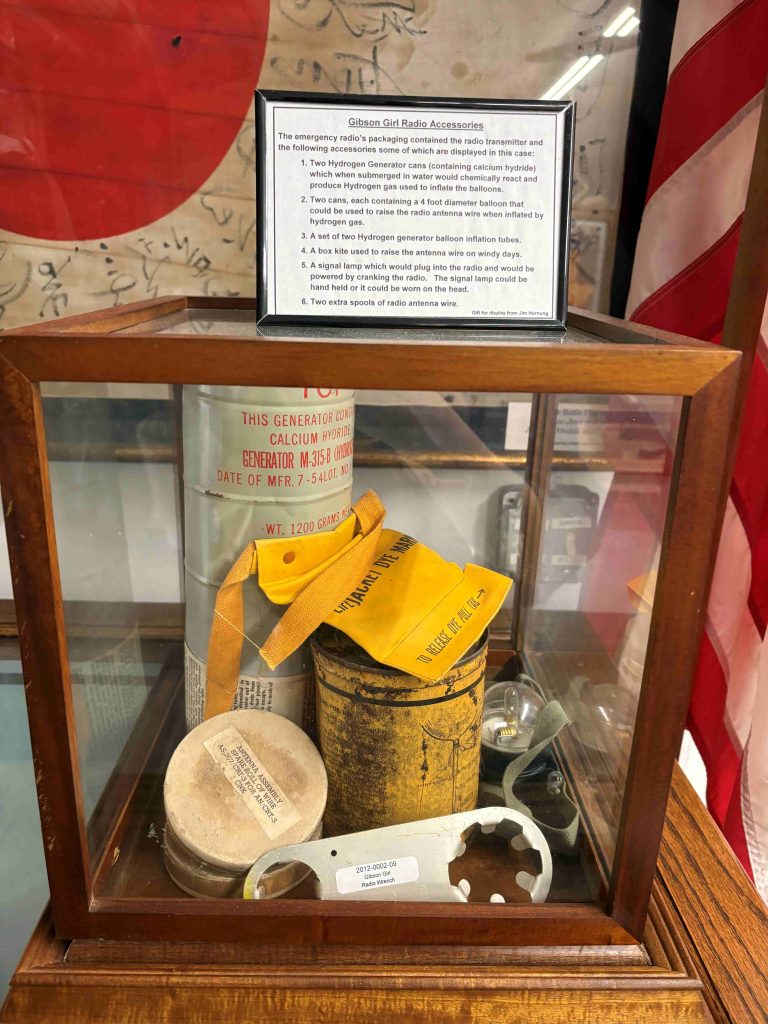
The purpose of the Gibson Girl emergency radio was used during the war for Bomber Pilots to contact nearby bases if stranded out at sea due to being shot down during combat. The radio can make contact with others from a span of 300ft from 500 kHz transmitted from the radio through “SOS” signals. Equipped alongside the radio is a raft, a box kite, 2 hydrogen generators, 2 two-foot-tall balloons in a canister, an antenna wire, and a rescue light. To make communication, pilots cranked the Gibson Girl to generate frequencies for distance. On the radio, there is a designated button, along with a cheat sheet for Morse code. This radio can help communicate through Morse code or its own designated distressed signal. This would help the crew communicate with nearby locations to seek rescue.
A Leap of Faith
Back in the cockpit, “TS” was still dead. The crew attempted to yoke forward at max power, seeing if “TS” could still fly. After heavy shuttering, groaning, and an instrument panel on the fritz, “TS” began to fly. A shout came from the crew that a landing strip was in sight. An escort, dipping wings to indicate landing. With heavy flak and barely any engines, the crew attempted a cautious landing. An English Air Dome Officer waved down Weininger’s crew after the successful belly landing, to tell them that landing at the airstrip was a risk as the field, being a former WWI airbase, was mined in order to steer off any Germans or any other Axis Powers taking over the airstrip. Weniger’s crew landed unscathed, taking a leap of faith.
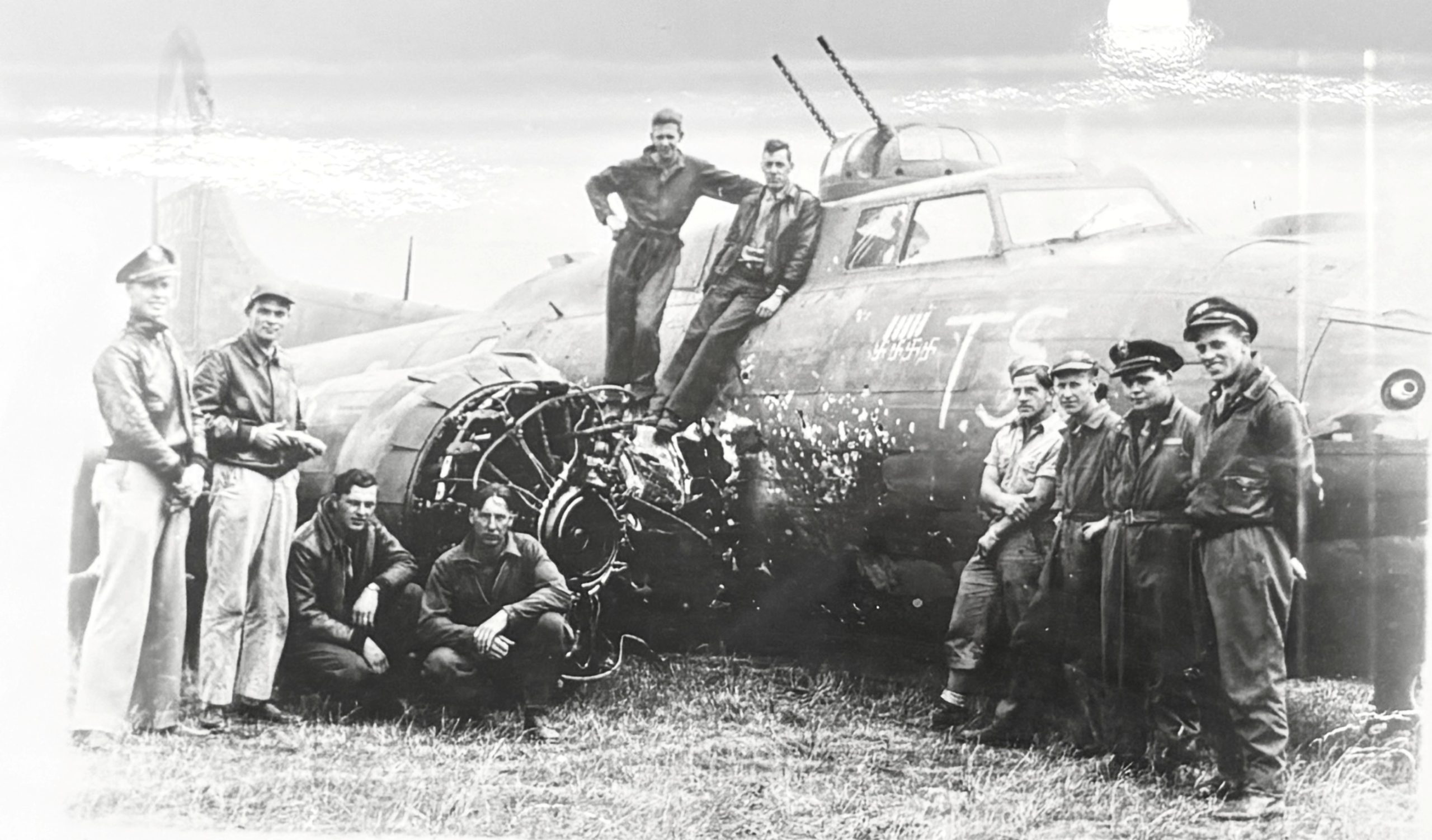
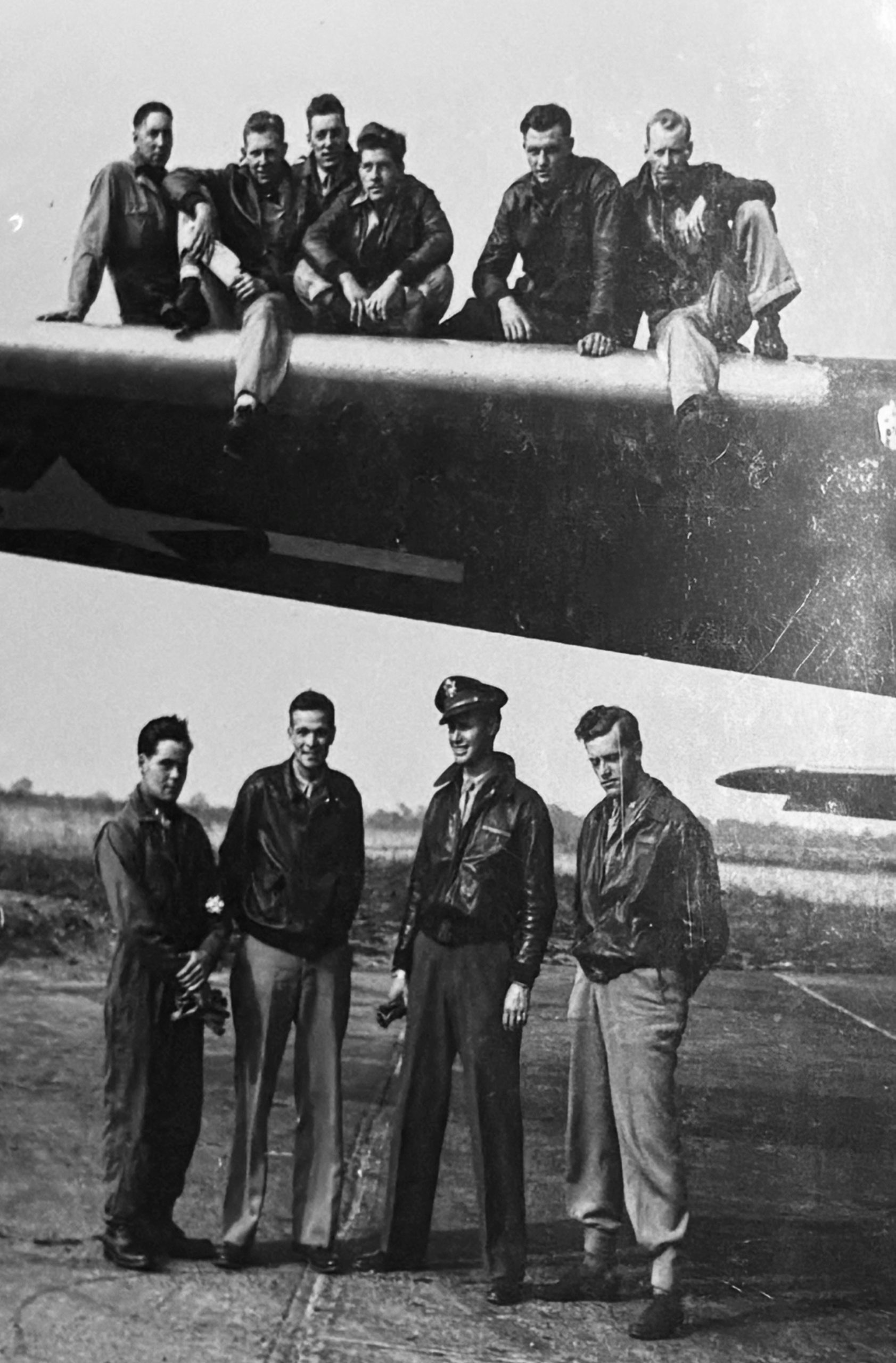
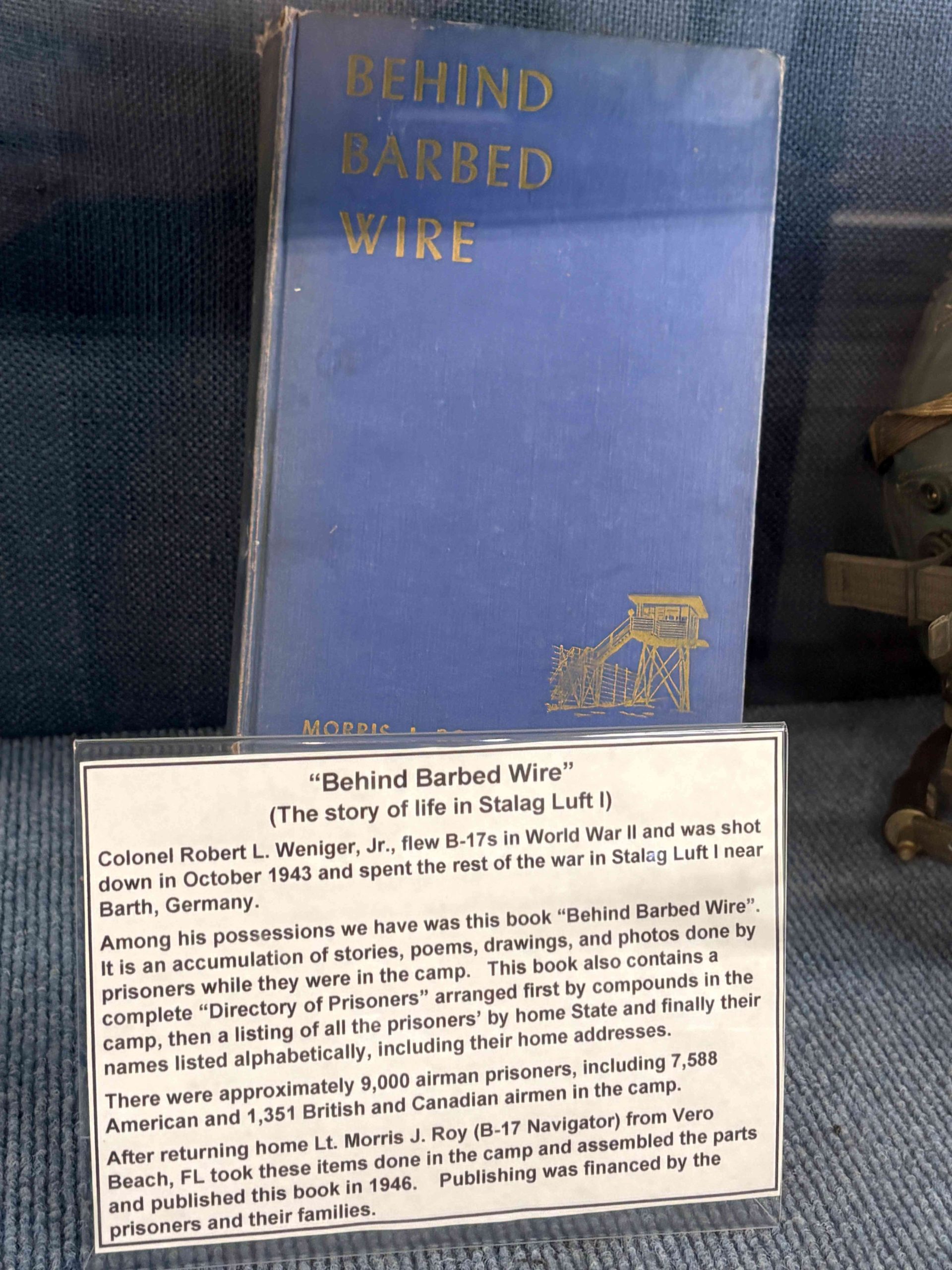
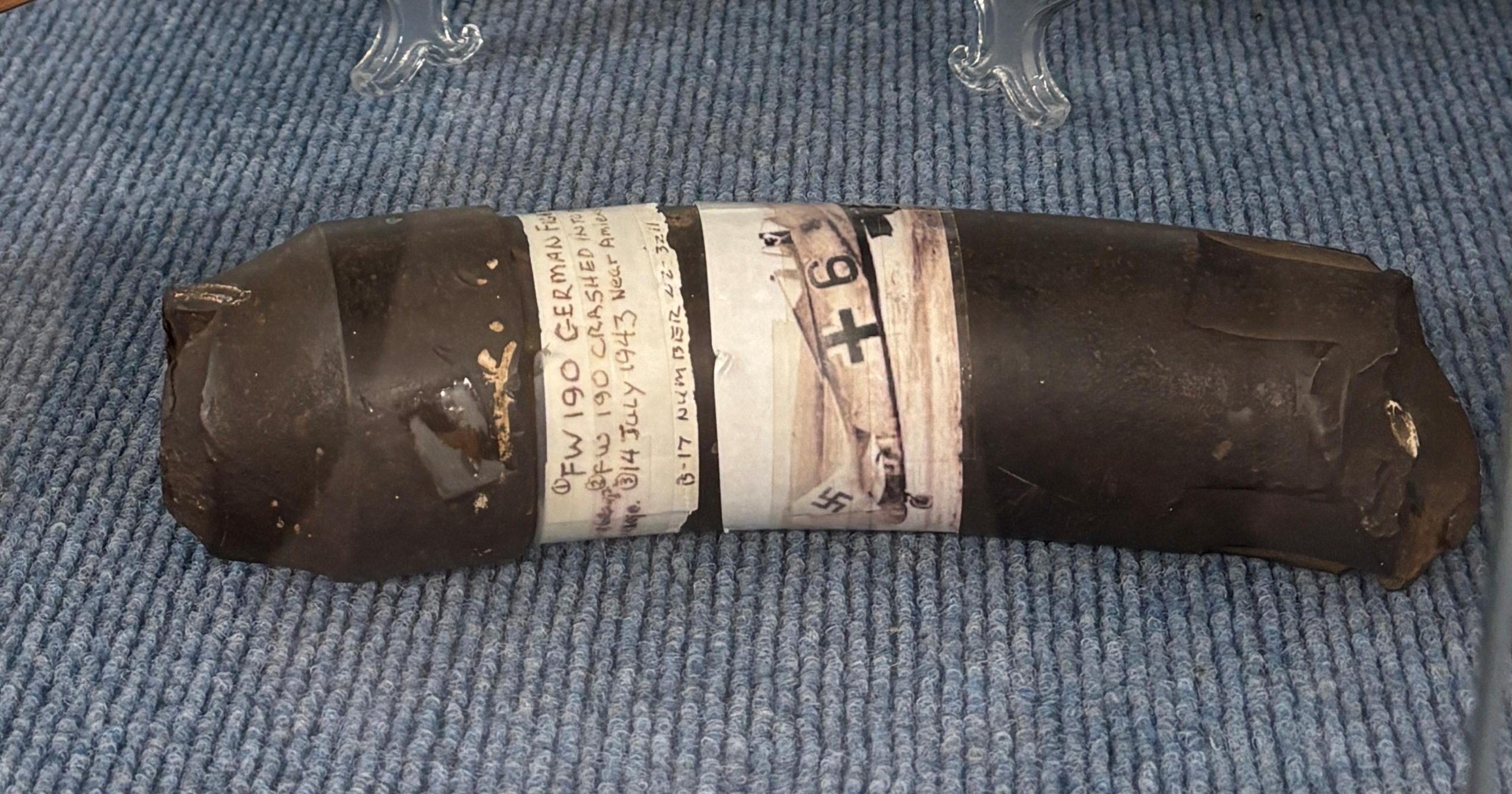
After the mission, a majority of Weniger’s crew were killed in action on October 8, 1943, in a different mission. Weniger, LT. M.L. Smith, Navigator; Tail Gunner W. McCook became a prisoner of war in Germany after being shot down in October 1943. Weniger spent the rest of the war in Stalag Luft I near Barth, Germany. During that time, Weniger and other POWs collaborated on sharing their experiences in “Behind the Barbed Wired” published by LT. Morris J. Roy. Weniger remained in the service after the war and flew SR-71s until retiring. Weniger passed away in 2005 at the age of 88. The gun barrel from Weniger’s crew mission is on display at the CAF Houston Wing along with Weniger’s Service Class yearbook and “Behind the Barbed Wire“.
CAF Houston Wing’s Personal Touch of History
Even though the Houston Wing’s Museum is small, it is a museum filled with hours of research and history that will intrigue someone to know more. With the museum tours and the Houston wing doing hangar hangouts, they strive to keep history alive. The CAF Houston Wing is open to the public every first & third Saturday of every month from 10-3. For more information and to support the CAF Houston Wing, click on this link: www.houstonwing.org.











You should do an article about the CAF’s Great Plains Wing.