





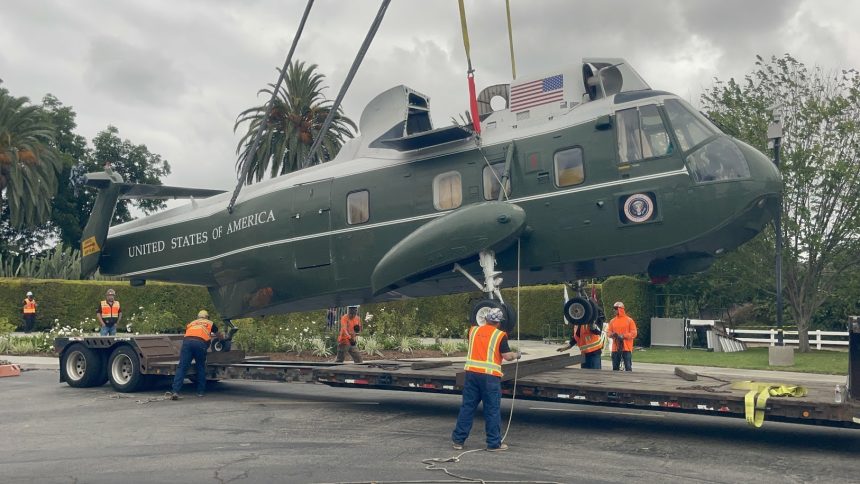

On Monday, June 29, a Sikorsky VH-3A Sea King helicopter arrived at the March Field Air Museum in Riverside, California by truck after departing the Richard Nixon Presidential Library and Museum in Yorba Linda, some 30 miles directly west of March Air Reserve Base. This helicopter, which once carried four U.S. presidents, will now undergo a restoration at the March Field Air Museum while the Nixon Library will build a new education building to provide a permanent, indoor facility to house the historic helicopter as part of a new interactive experience for museum visitors. Yet this move will also mark the second restoration this very helicopter has received at the March Field Air Museum, after it was pulled from obscurity to be displayed next to the birthplace of the 37th President of the United States.
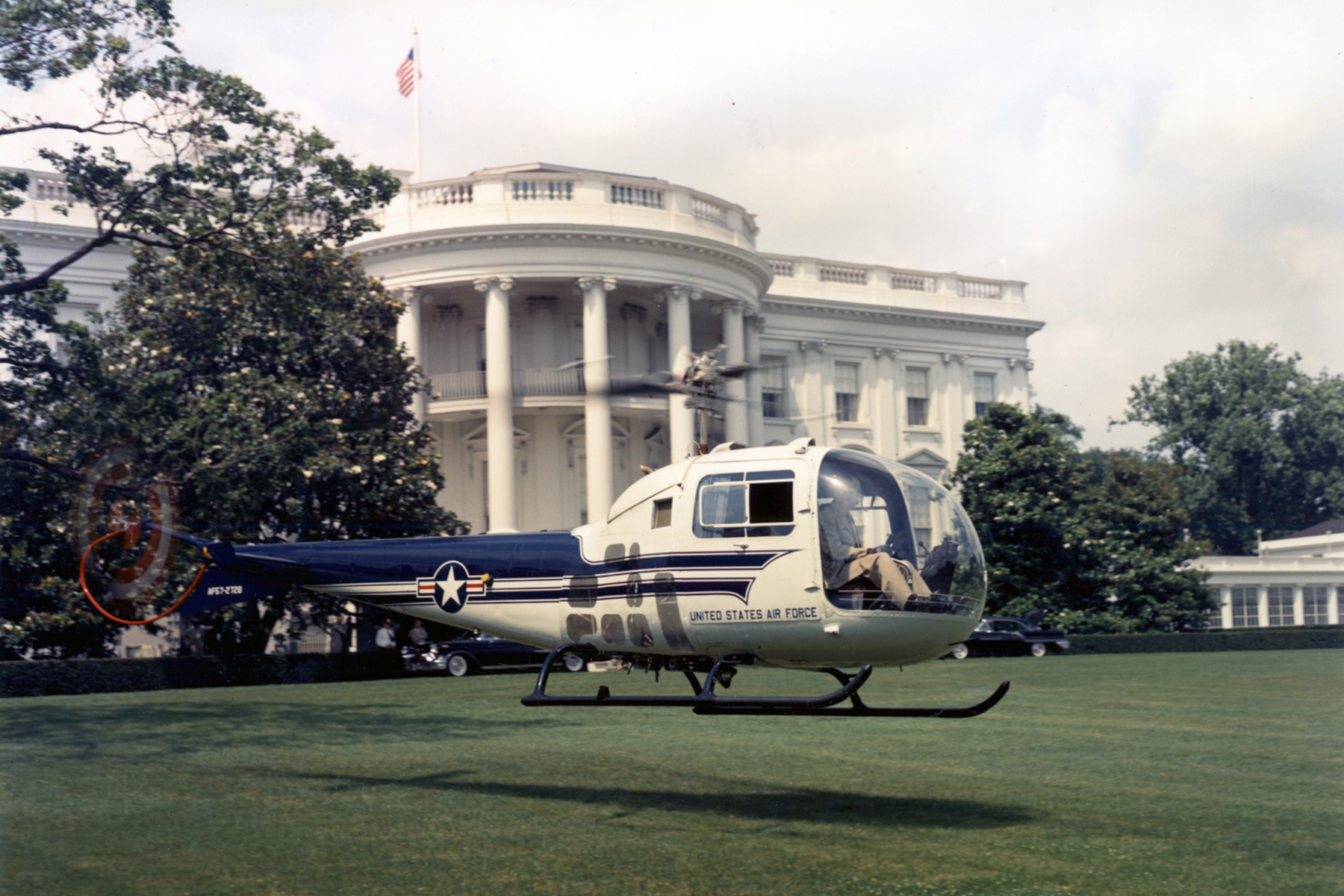
Following the initial use of Bell H-13J helicopters flown by the U.S. Air Force for President Dwight Eisenhower between 1957 and 1958 (at which time Nixon was Eisenhower’s Vice President), it was decided that since the Air Force was already given the responsibility of flying fixed-wing aircraft for the president as Air Force One, that the Army and the Marines would share the responsibility of transporting the president by rotary-wing aircraft, enabling the Commander-in-Chief to be flown directly to and from the White House’s South Lawn, with the aircraft themselves being assigned to Marine Helicopter Squadron One (HMX-1) out of Marine Air Facility Quantico, Virginia. When an Army helicopter pilot was in command, the helicopter’s callsign would be Army One, while the same helicopter would be given the callsign Marine One when a Marine helicopter pilot was in command of the rotorcraft. This system would continue until 1976, when the Marines were given sole responsibility for transporting the president by helicopter. For a brief time, the helicopter chosen by both the Army and the Marines was the Sikorsky H-34 Choctaw, but by 1961, the new Sikorsky SH-3 Sea King was selected as the VH-3A. To this day, several VH-3D Sea Kings still transport the President of the United States and are operated by HMX-1 out of Quantico and are now the last Sea Kings in operational service with the US military.
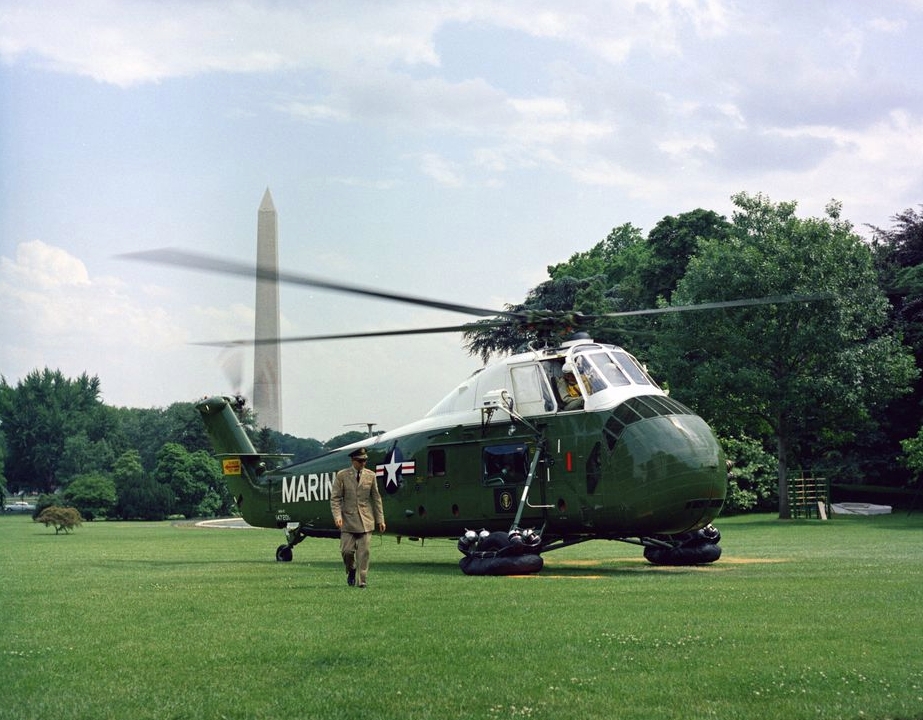
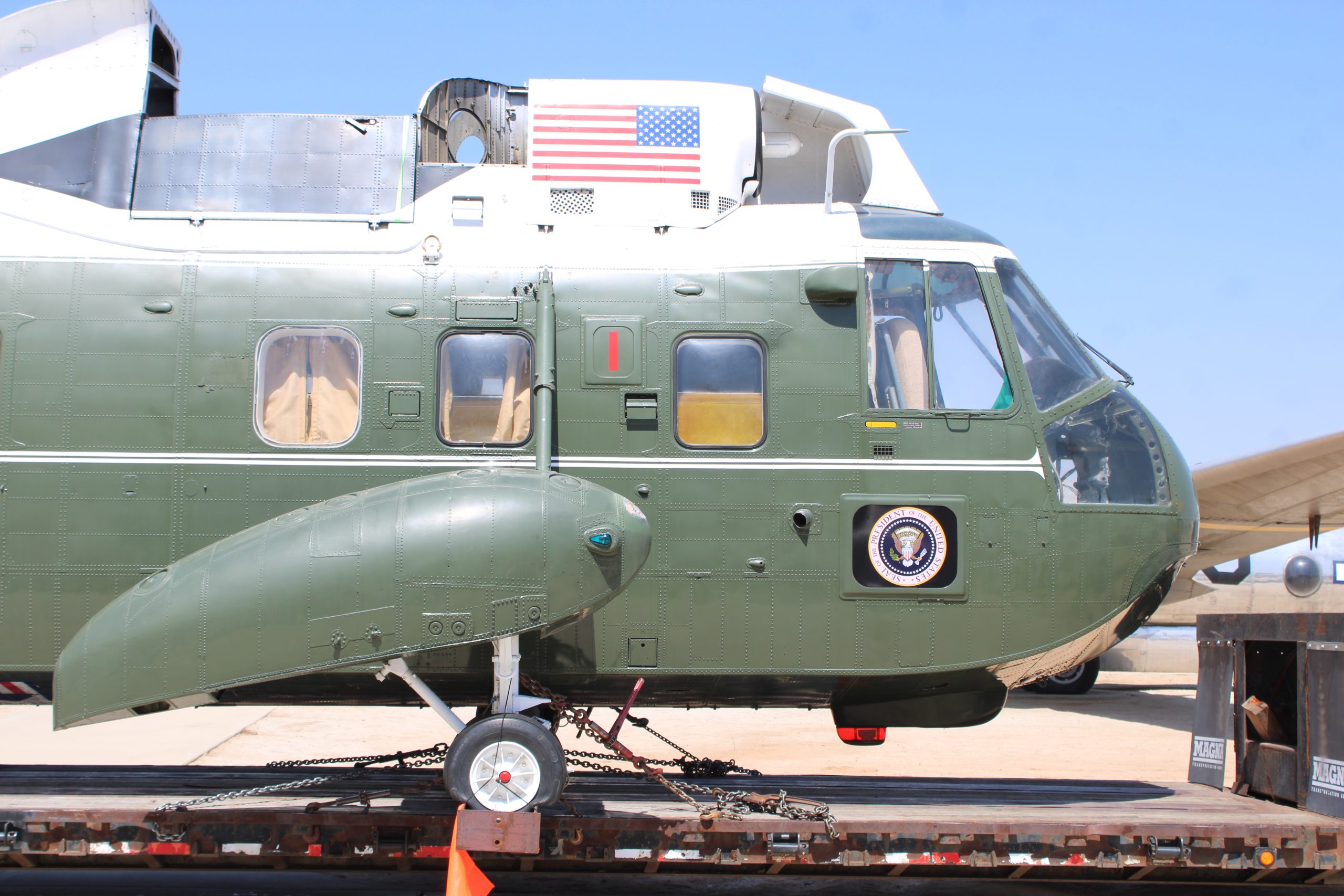
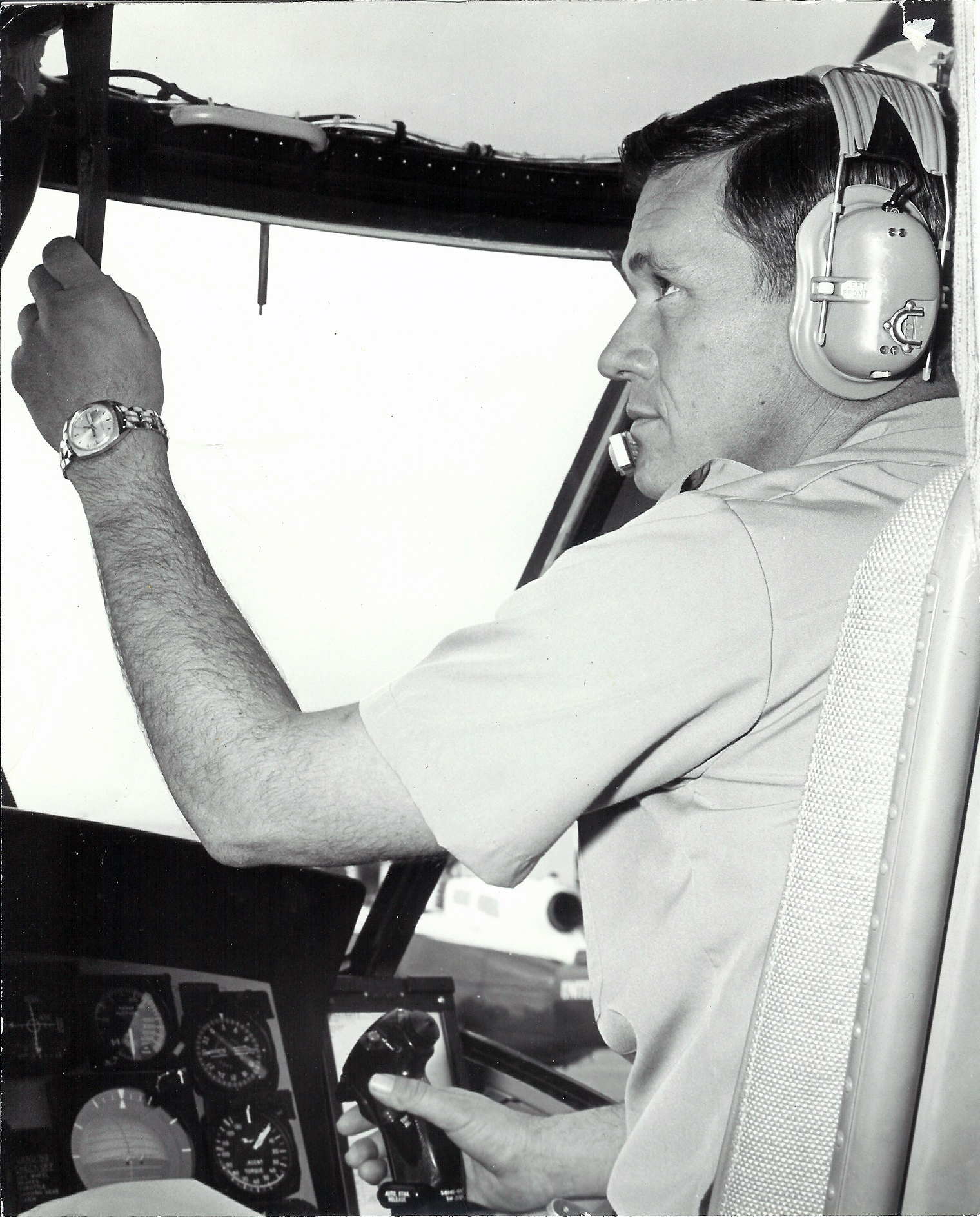
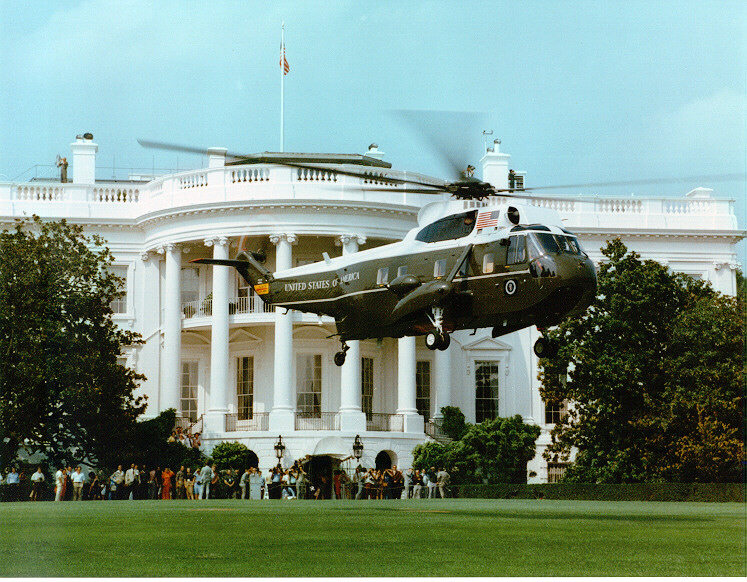
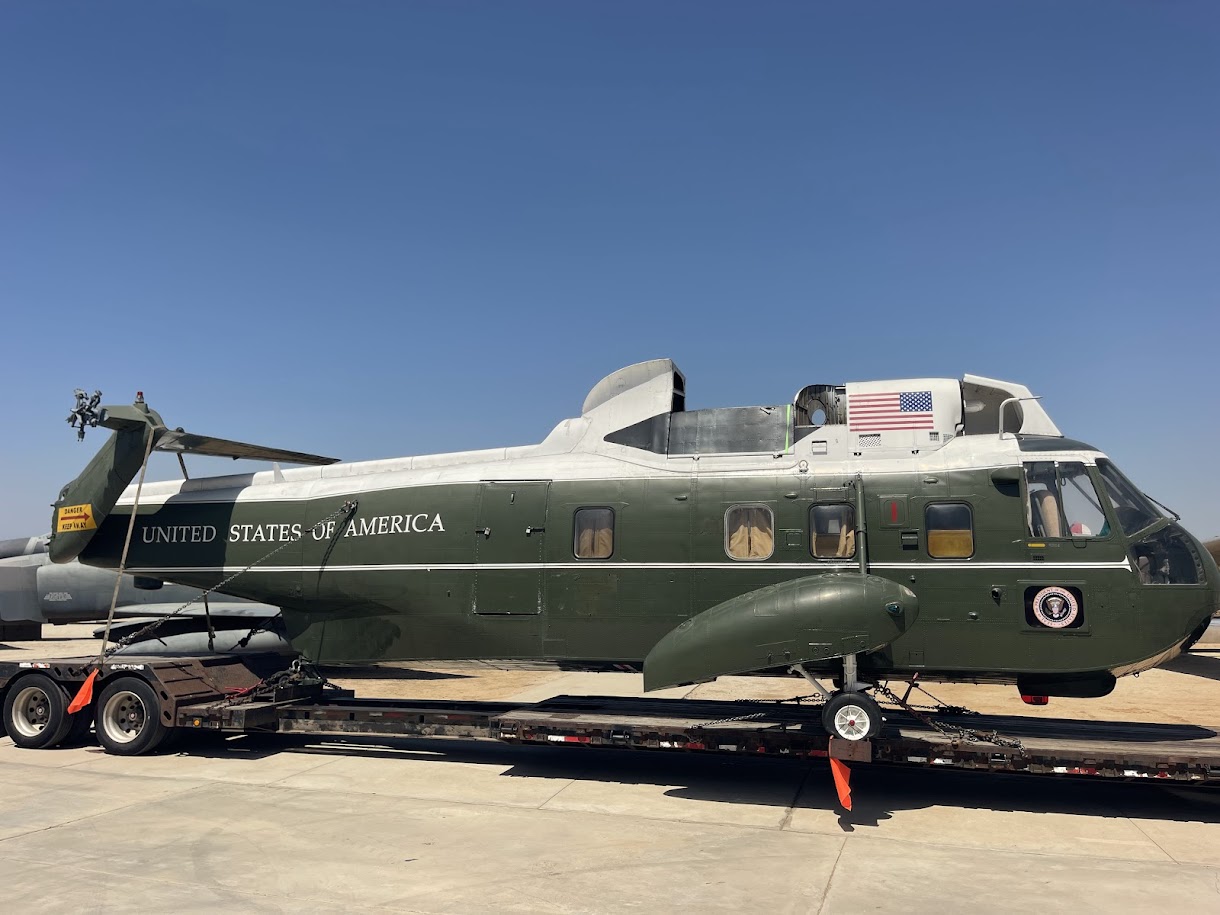
The example displayed at the Nixon Library is a Sikorsky VH-3A Sea King, built under the construction number 61-123 and delivered to the US Navy as Bureau Number 150617. Originally designated as an HSS-2Z, the changes in aircraft designation between the armed forces of the United States from the Department of Defense in 1962 resulted in BuNo 150617 being redesignated as a VH-3A. Regardless of the designation, BuNo 150617 was one of the first helicopters designated for use as a presidential transport. BuNo 150617 would serve four presidents (Kennedy, Johnson, Nixon, and Ford), but it would be with Nixon that 150617 would go on some of its most noteworthy missions, from flying in Vietnam in 1969 (the first time a presidential helicopter was flown through a combat zone), to landing in St. Peter’s Square to meet with Pope Paul VI in 1970, who then blessed the helicopter. BuNo 150617 would also be used on Nixon’s final visit abroad as President to meet with Egyptian President Anwar Sadat in June 1974, with Nixon and Sadat being aboard the helicopter for a flight over the Pyramids of Giza. All flights mentioned in this article and many more were conducted by Army One’s chief pilot, Lieutenant Colonel Gene T. Boyer. Born in Akron, Ohio on July 24, 1929, Boyer spent 22 years in the US Army, where he flew medical evacuation missions during the Korean War before being selected for the Presidential Flight Unit, served one combat tour in Vietnam, then returned to the presidential detail, completing 500 presidential missions as Pilot in Command for presidents Johnson, Nixon, and Ford, former president Eisenhower and future president Reagan, and nearly 30 other heads of state from around the world before his retirement in 1975. Yet his most famous flight would make him a participant in one of the most memorable moments in US political history.
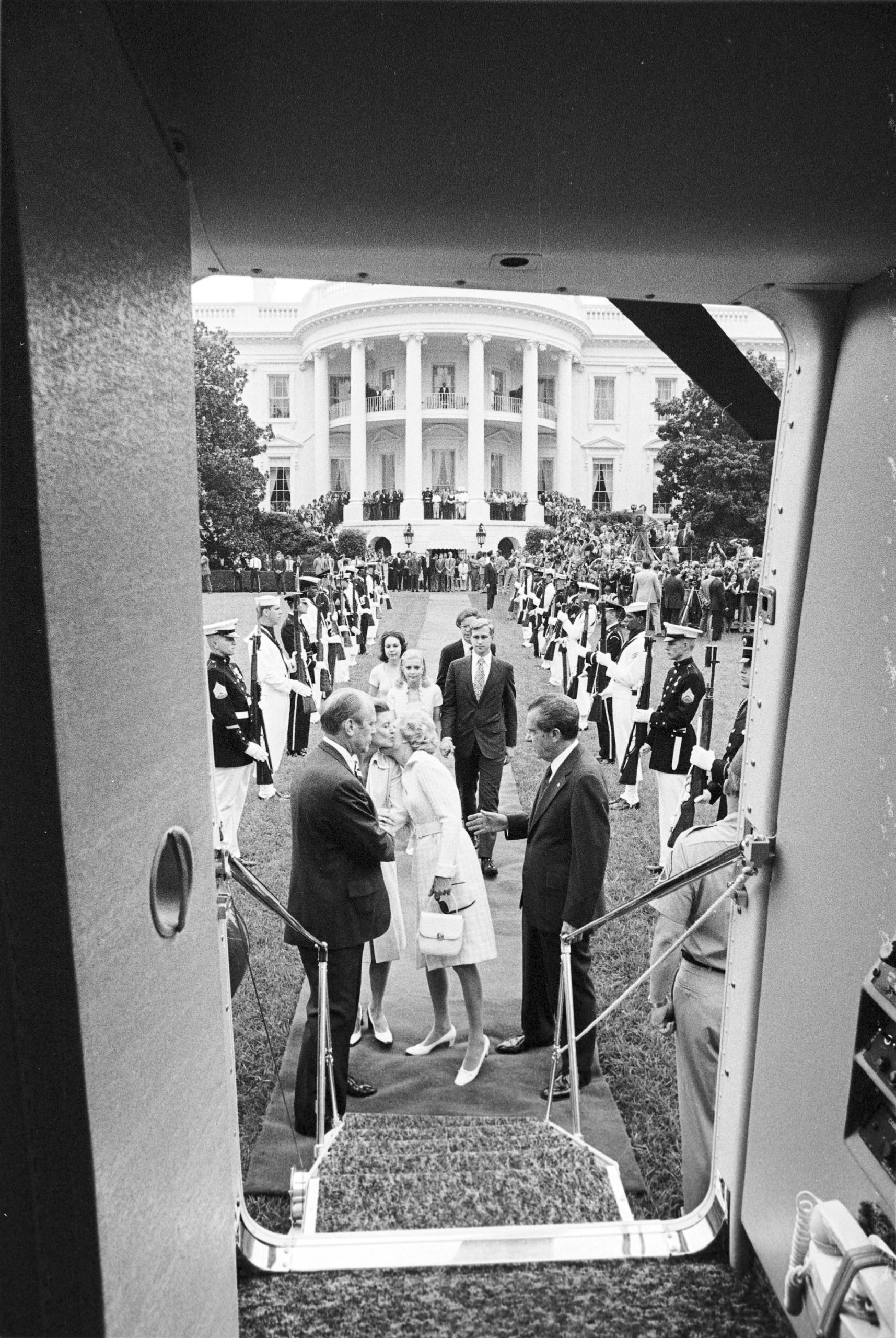
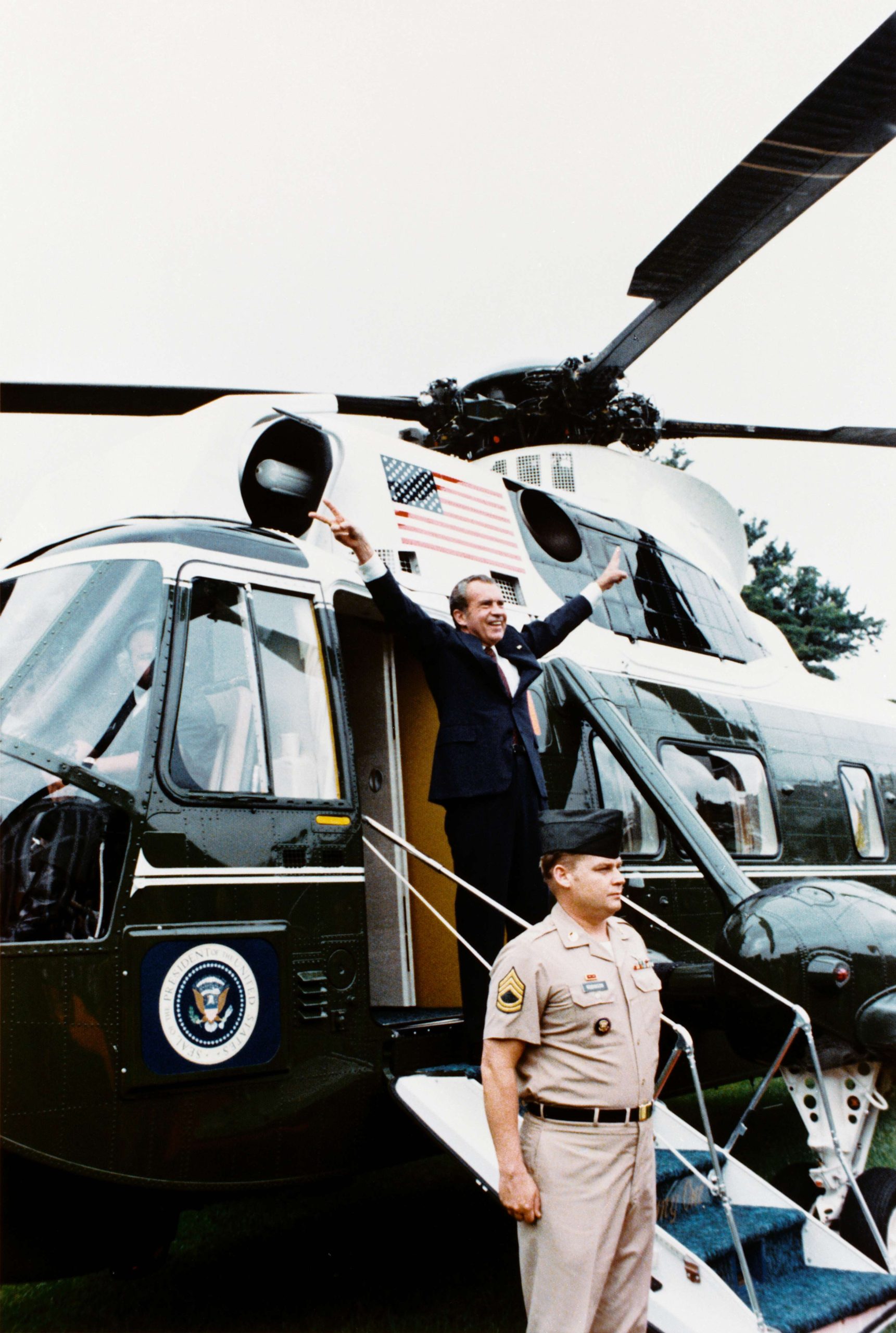
On the evening of August 8, 1974, Richard Nixon, under scrutiny for his involvement in the Watergate scandal and facing impeachment, stunned the nation fixed to their television screens when he announced that he would resign from the Presidency, with newly appointed Vice President Gerald Ford being inaugurated at noon the next day. On August 9, after delivering a farewell address at the White House, President Nixon and First Lady Pat Nixon boarded VH-3A BuNo 150617 while an honor guard of Army, Navy, Marine, and Air Force personnel lined their path to the helicopter as Vice President Gerald Ford and his entourage looked on. On climbing the last steps before going through the helicopter’s entry hatch, Nixon flashed a smile and two V for Victory hand salutes, which would become one of the most monumental episodes in US presidential history. After the Nixons settled into their seats, Lt. Col. Boyer took off from the South Lawn and turned the helicopter southeast for Andrews Air Force Base, Maryland, where the Boeing VC-137B transport was waiting to fly Nixon home to California. Aside from the ambient noise from the helicopter’s turbines and rotors, the flight to Andrews was mostly quiet, with First Lady Pat Nixon being quoted as simply stating: “Oh, it’s all so sad. It’s all so sad.” Everyone else in the cabin, including President Nixon, mostly sat in silence. In an interview with the Chicago Tribune in 2005, Boyer recalls what Nixon said to him after arriving at Andrews: “He thanked me for all the flights. I had tears in my eyes”. It was at that point that Nixon joked with Boyer before leaving the helicopter, saying, “Stop that. I’ve got to walk from here to Air Force One with about 10,000 people looking at me.”
After departing VH-3A BuNo 150617, Nixon climbed aboard VC-137B SAM 27000 (now preserved at the Ronald Reagan Presidential Library and Museum in Simi Valley, California), which took off from Andrews bound for Marine Corps Air Station El Toro, California, the closest airbase to Nixon’s home in San Clemente. Following Ford’s ascendancy to the Oval Office, VH-3A BuNo 150617 would continue to serve the new president, but in 1976, the same year the Marines assumed full responsibility for flying presidents by helicopter, the VH-3 models were phased out in favor of the improved VH-3D models that still serve U.S. presidents to this day. On September 16, 1976, BuNo 150617 was placed into storage with the Military Aircraft Storage and Disposal Center (MASDC) at Davis-Monthan Air Force Base in Tucson, Arizona, and remained there in the desert until April 11, 1983, when it was shipped to Naval Air Development Center Warminster, Pennsylvania for ground training, with many of its components, such as its tail and main rotor being stripped from the aircraft to maintain other Sea King helicopters.
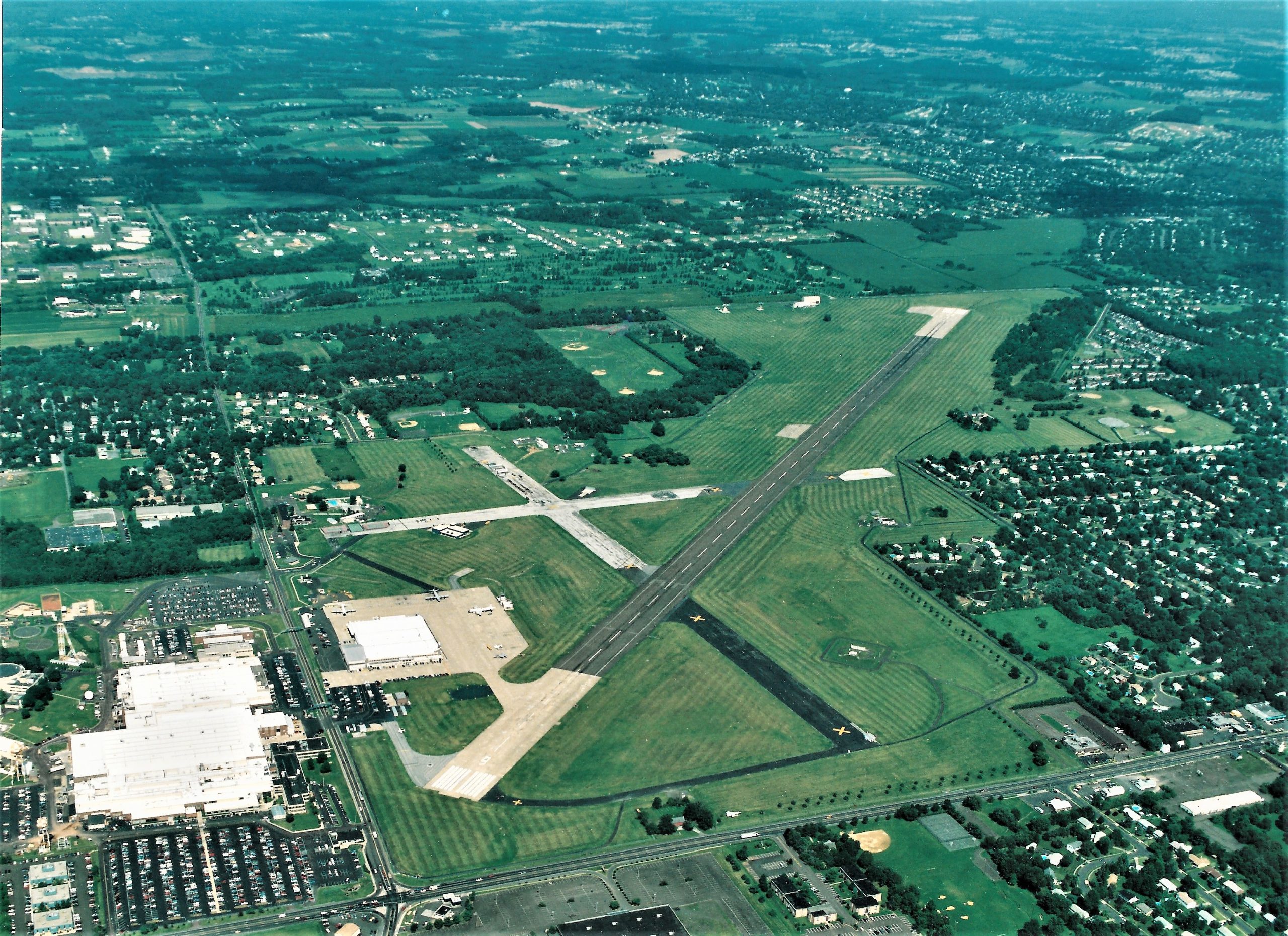
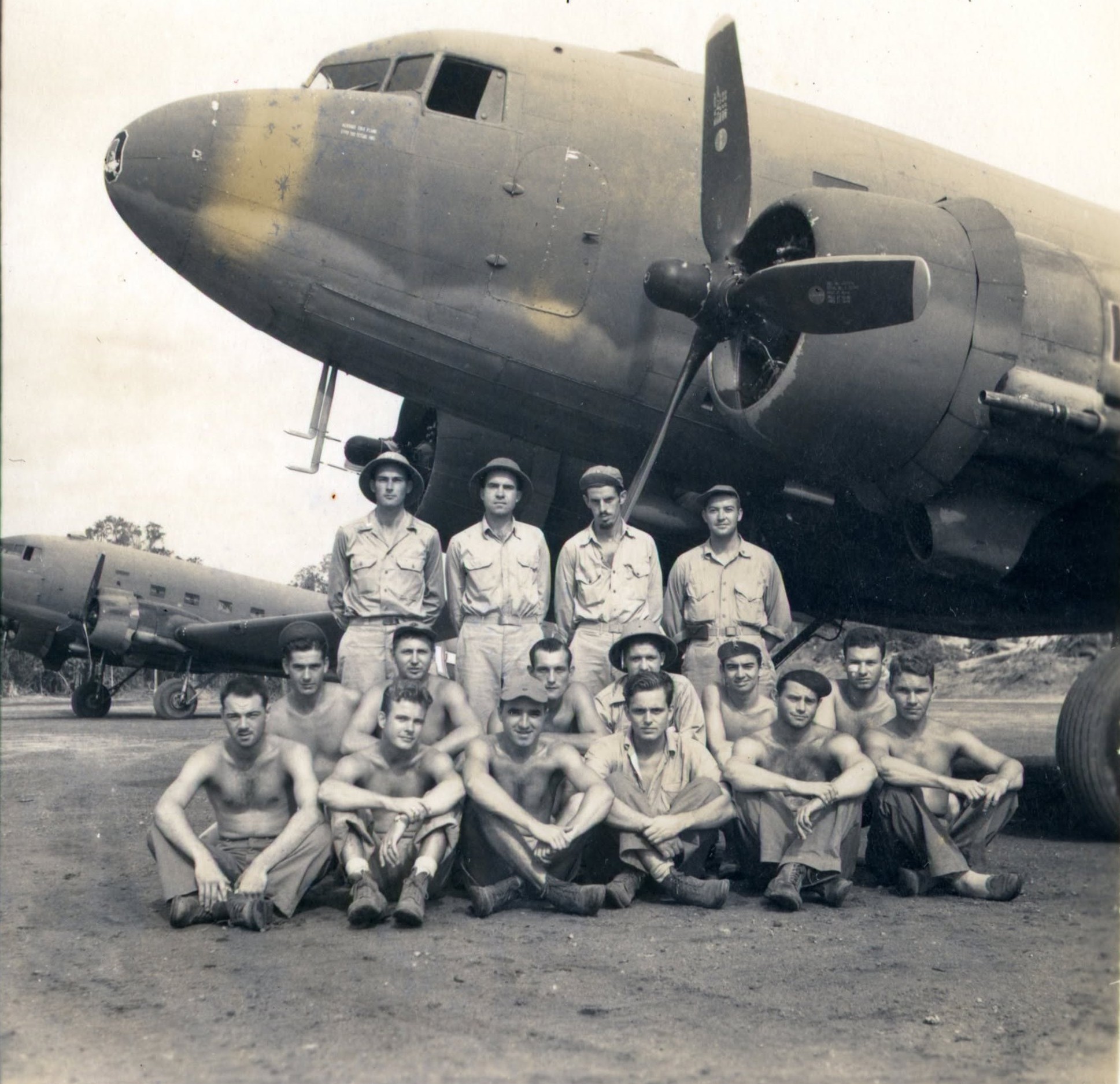
As for Lt. Col. Boyer, he left the Army in 1975 and became a pilot for Hughes Helicopters. He also maintained a friendship with former President Richard Nixon, and on some occasions even flew him around southern California into the 1980s, when Nixon moved to New Jersey. With the establishment of the Nixon Library in Yorba Linda in 1990, Boyer would eventually be reunited with VH-3A BuNo 150617 and become influential in bringing this historic helicopter to the very place where Nixon’s journey would begin. For years, Boyer had heard that the VH-3A he once flew for the presidents had been consigned to Davis-Monthan and was most likely scrapped. Then in 2000, he learned that BuNo 150617 was still in existence and was in storage at the Quonset Air Museum (later closed in 2015) at Quonset Point Air National Guard Station in North Kingston, Rhode Island. Formerly known as Naval Air Station Quonset Point, it would prove ironic that BuNo 150617 would find itself here, for during WWII, when a young Richard Nixon joined the US Navy in 1942, he would go through his initial officer training at NAS Quonset Point before eventually being assigned to Marine Air Group 25 (MAG 25) and the South Pacific Combat Air Transport Command (SCAT) to support naval air logistics in the Solomon Islands and assigning manifests for Douglas C-47/R4D transports.
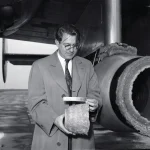
In July 2005, Gene Boyer, alongside Nixon Library curator Olivia Anastasiadis, went to Rhode Island to see VH-3A Sea King BuNo 150617, which was being kept in reserve for the ultimately futile attempt to turn the decommissioned aircraft carrier USS Saratoga (CVA-60) sitting nearby in the harbor, into a museum ship. When Boyer saw the helicopter again for the first time in 30 years, the Sea King was incomplete, wrapped in a plastic covering, and still missing its tail, main transmission, rotors, airstair doors, and other components. For Boyer, it was a sad sight to see the aircraft in such condition, and he said it looked like “… a dusty, giant elongated marshmallow on wheels parked among several old Navy trucks…” Then, he took out his pocketknife and cut a hole in the plastic sheeting to look into the interior through the missing door. On seeing the interior, Boyer was elated to discover that the VIP fabric interior, though coated in dust and cobwebs, was in remarkable condition. Boyer described it as walking into a time capsule, with cigarette butts still in the ashtrays. Though the passenger cabin was relatively complete, much of the cockpit’s instrument panel was stripped out before the aircraft had been sent to Quonset Point. Nevertheless, Boyer felt that the helicopter was fit for restoration and should be displayed at the Nixon Library. But in order to get BuNo 150617 ready for display, he felt that the March Field Air Museum was the closest area to the Nixon Library that had the resources to restore the VH-3A for display.
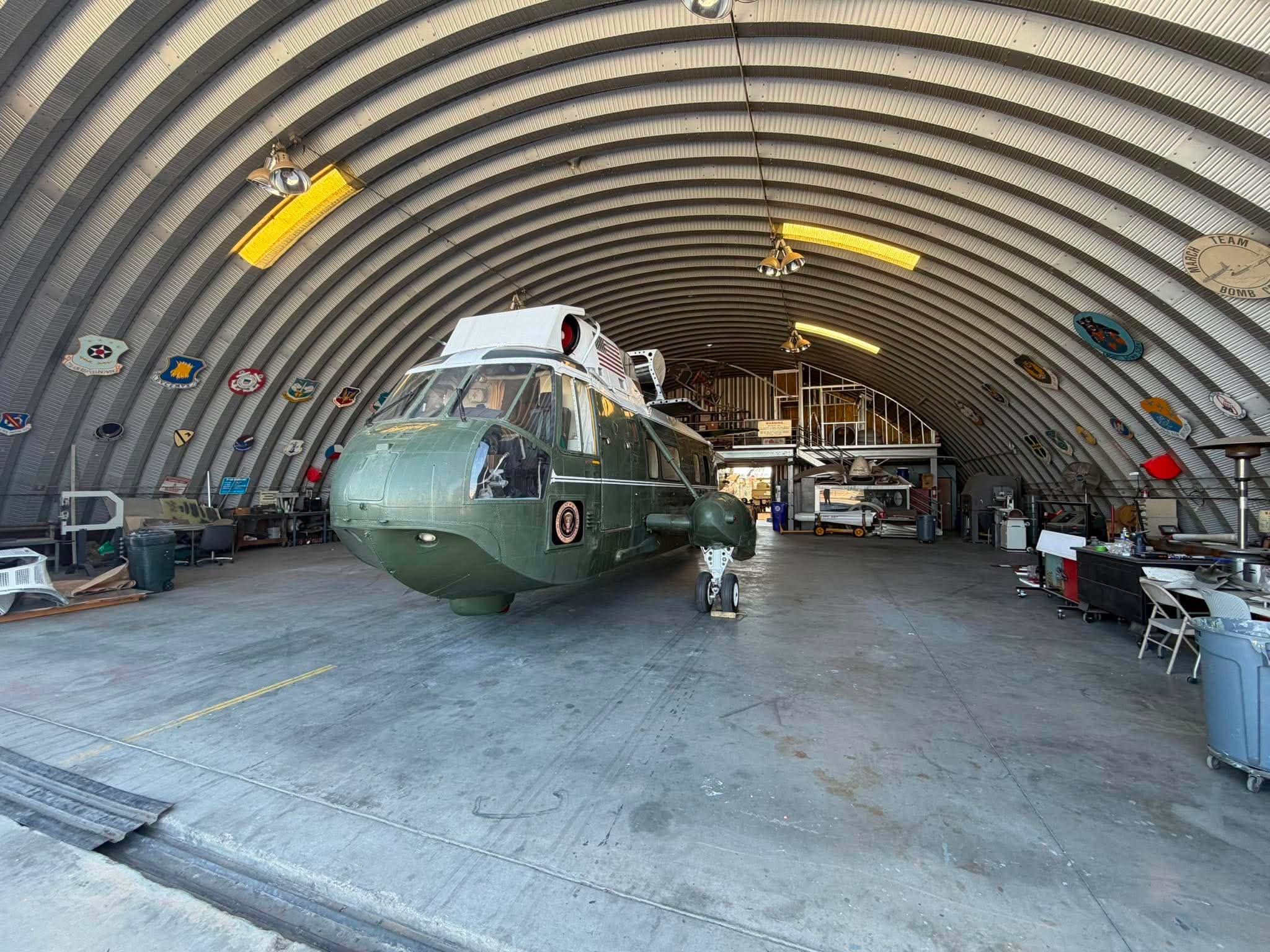
Since the aircraft was officially on loan to the Quonset Air Museum by the National Museum of the Marine Corps at Quantico, Virginia, Boyer was part of the negotiations that would see the helicopter transferred to the Richard Nixon Presidential Library and Museum, and that the March Field Air Museum would take responsibility for the restoration. However, funds were still necessary for the VH-3A Sea King to be moved from Rhode Island to California. It was then that the March Field Air Museum, which maintains relations with units serving at March Air Reserve Base, reached out to the 452nd Air Mobility Wing’s commanding officer, Brigadier General James Rubeor, who agreed to lend a Boeing C-17 Globemaster III and its crew to retrieve BuNo 150617, classifying the mission as part of loadmaster training for the 452nd AMW. In October 2005, the incomplete presidential Sea King was flown to March Air Reserve Base, unloaded from its C-17, and towed to the March Field Air Museum on the other side of the runway from the flightline. It was at that point when Rudy Lerma, a retired Air Force security specialist who was then serving as Restoration Manager at the March Field Air Museum, recalled that as he helped Gene Boyer remove the plastic wrapping from the airframe, he became aware that this was a former presidential transport, as he had not been told of the identity of this helicopter beforehand. In order to provide the parts necessary to restore VH-3A Sea King BuNo 150617, another surplus Sea King was required to fulfill the role of a donor helicopter. The March Field Air Museum found that in Sikorsky SH-3G Sea King BuNo 149688, which was formerly flown by Fleet Composite Squadron 8 (VC-8) and has been consigned to the Boneyard at Davis-Monthan Air Force Base in Tucson, Arizona. On January 31, 2006, BuNo 149688 was transported by C-17 to the March Field Air Museum and had its rotor head and rotor blades attached to BuNo 150617. Rudy Lerma recalls that the holes for the bolts to attach the foldable tail section to the rest of the helicopter may not align, which would require costly modifications to make the tail from 149688 compatible with the fuselage of 150617. Fortunately, though, the holes aligned perfectly, and the instruments that were in BuNo 149688 were used to fill out the empty instrument panel on BuNo 150617. Finally, BuNo 150617 was repainted and trucked to the Richard Nixon Presidential Library and Museum for its official dedication on July 1, 2006.
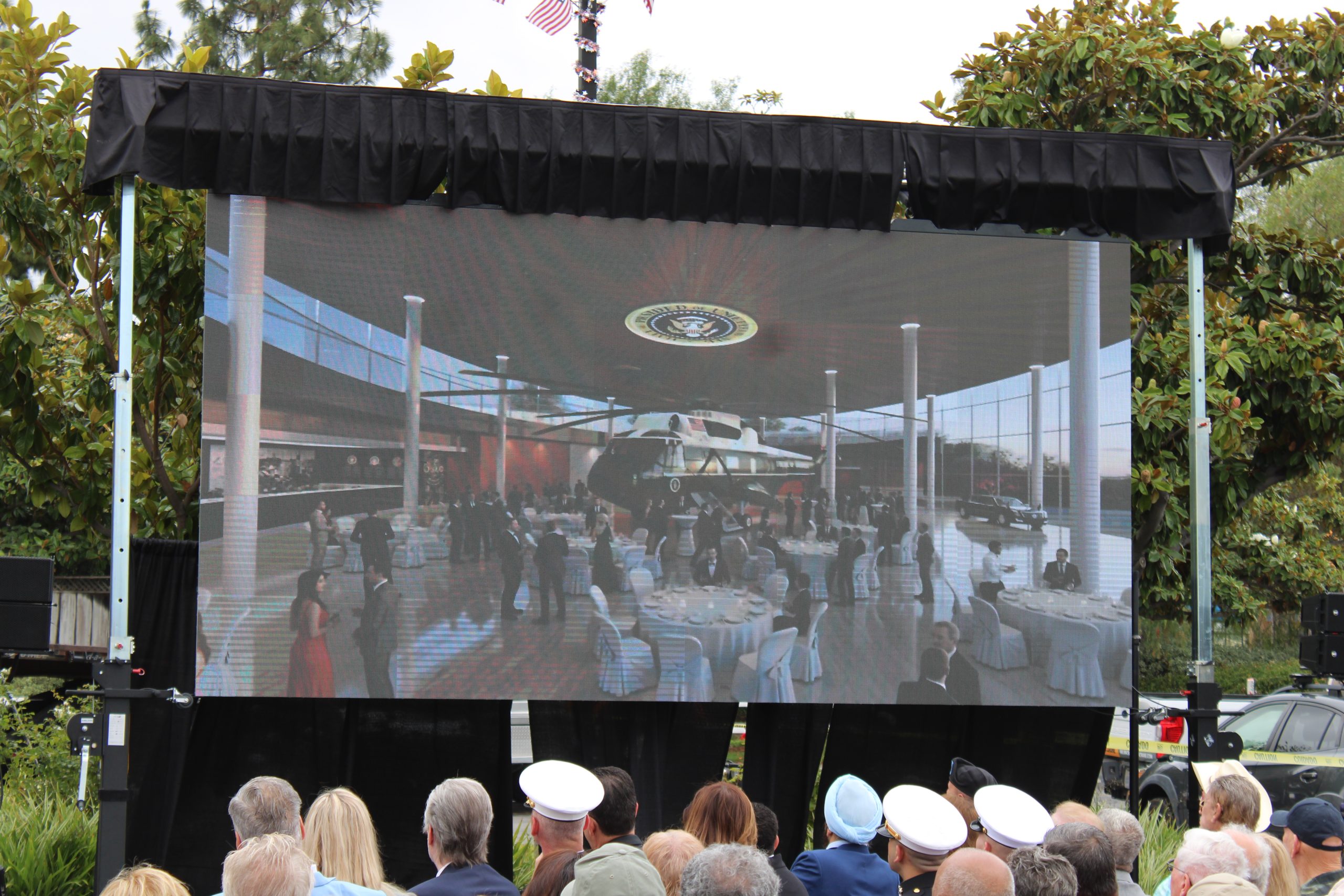
Over the next ten years, VH-3A Sea King sat outdoors on a concrete pad about 200 feet from the house where Richard Nixon was born on January 9, 1913, with museum docents leading tours through the historic helicopter’s interior. In 2016, as part of a wider series of renovations at the Nixon Library, BuNo 150617 was sent to California Aerofab at Chino Airport for a refurbishment by a team led by warbird pilot and Aerofab’s owner Matt Nightingale. The helicopter returned to the Nixon Library in time for the institution’s rededication on October 14, 2016, but in the past ten years since then, VH-3A BuNo 150617 has continued to sit outsides, exposed to the rain, and its paint faded by the sun. As such, it was decided that a new indoor facility would be necessary to ensure the safety of the former Army One/Marine One helicopter. It was determined that fittingly, VH-3A BuNo 150617 would temporarily return to the March Field Air Museum, where a team from the restoration firm Ponsford Limited will assist the museum’s own team of restoration volunteers to restore the Sea King in an 18-to-24-month timeframe. Additionally, the current director of the March Field Air Museum, Michael Ellzey, had previously served as the Director of the Richard Nixon Presidential Library and Museum through the National Archives and Records Administration (NARA), which also greatly fared over the process required to enact the temporary transfer of the helicopter from Yorba Linda to Riverside. All the while, the Richard Nixon Presidential Library and Museum will be constructing a new American Civic Center building, which addition to providing resources to teach local schoolchildren in the functions of government will also be the new indoor home of Sikorsky VH-3A BuNo 150617, along with a 1960s Lincoln Continental presidential limousine and a car similar to the one used by Richard Nixon to drive across California when he successfully ran to be a Senator for the Golden State before he was selected as Vice President to Dwight Eisenhower (both cars were previously displayed at the Nixon Library prior to the 2016 rededication).
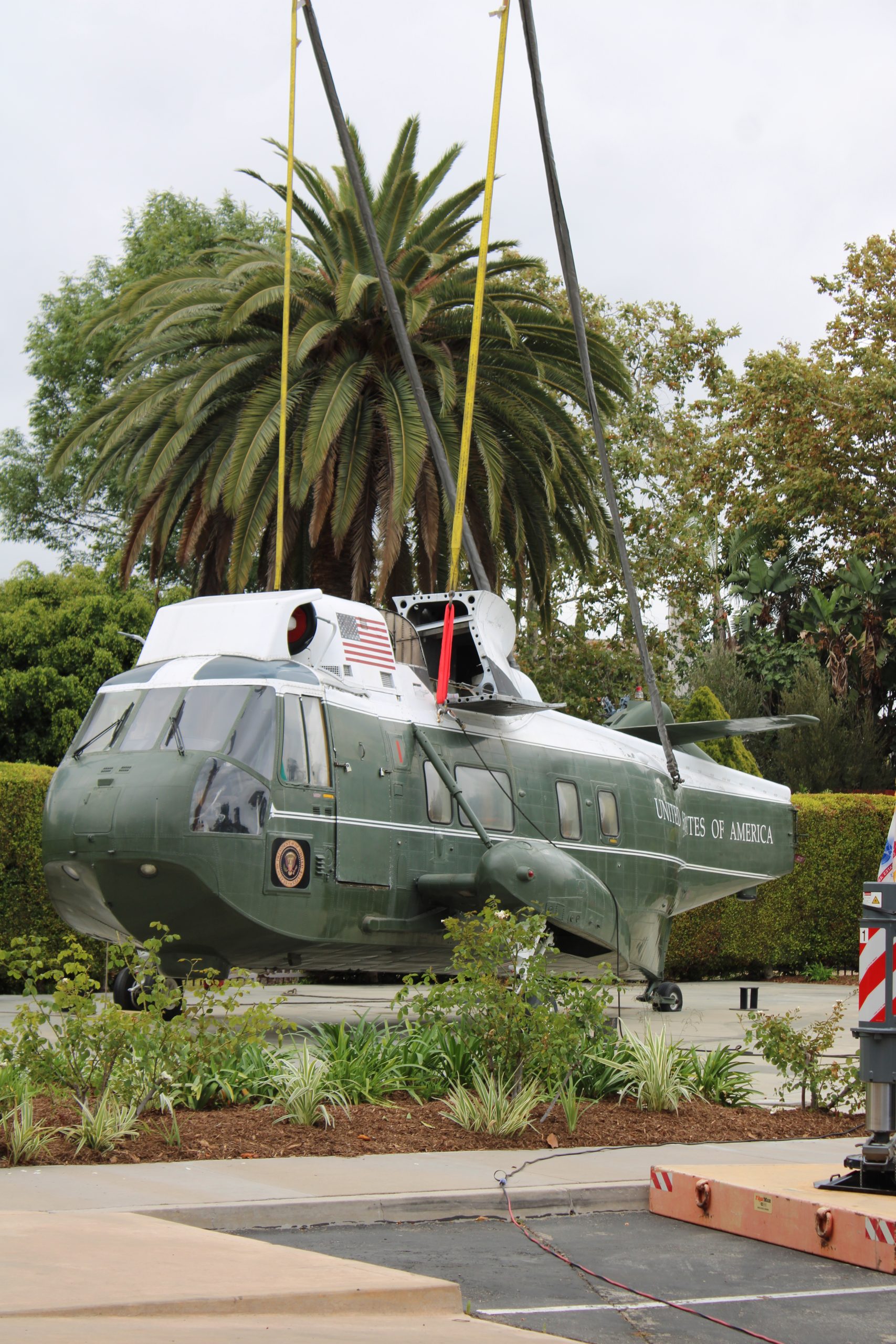
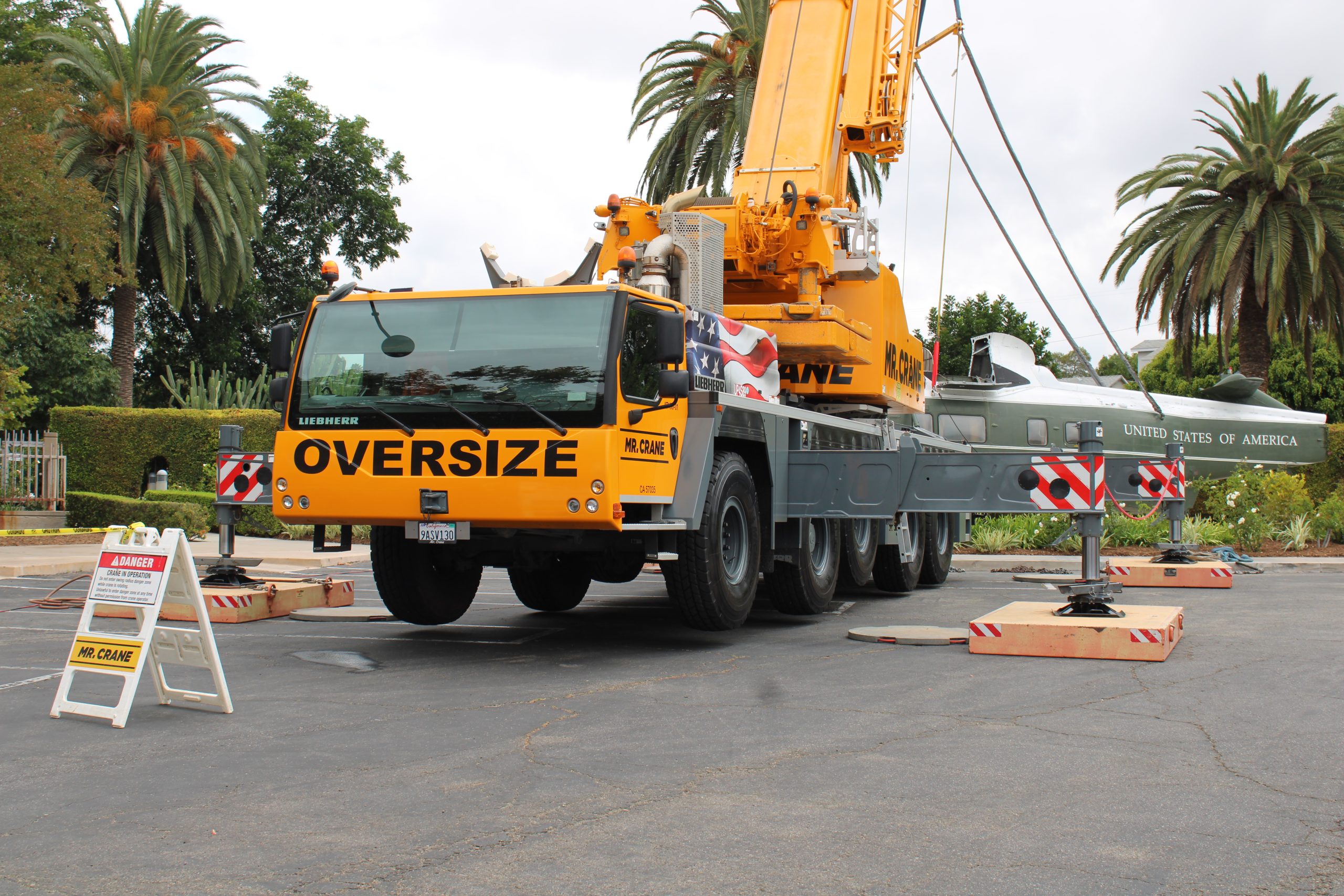
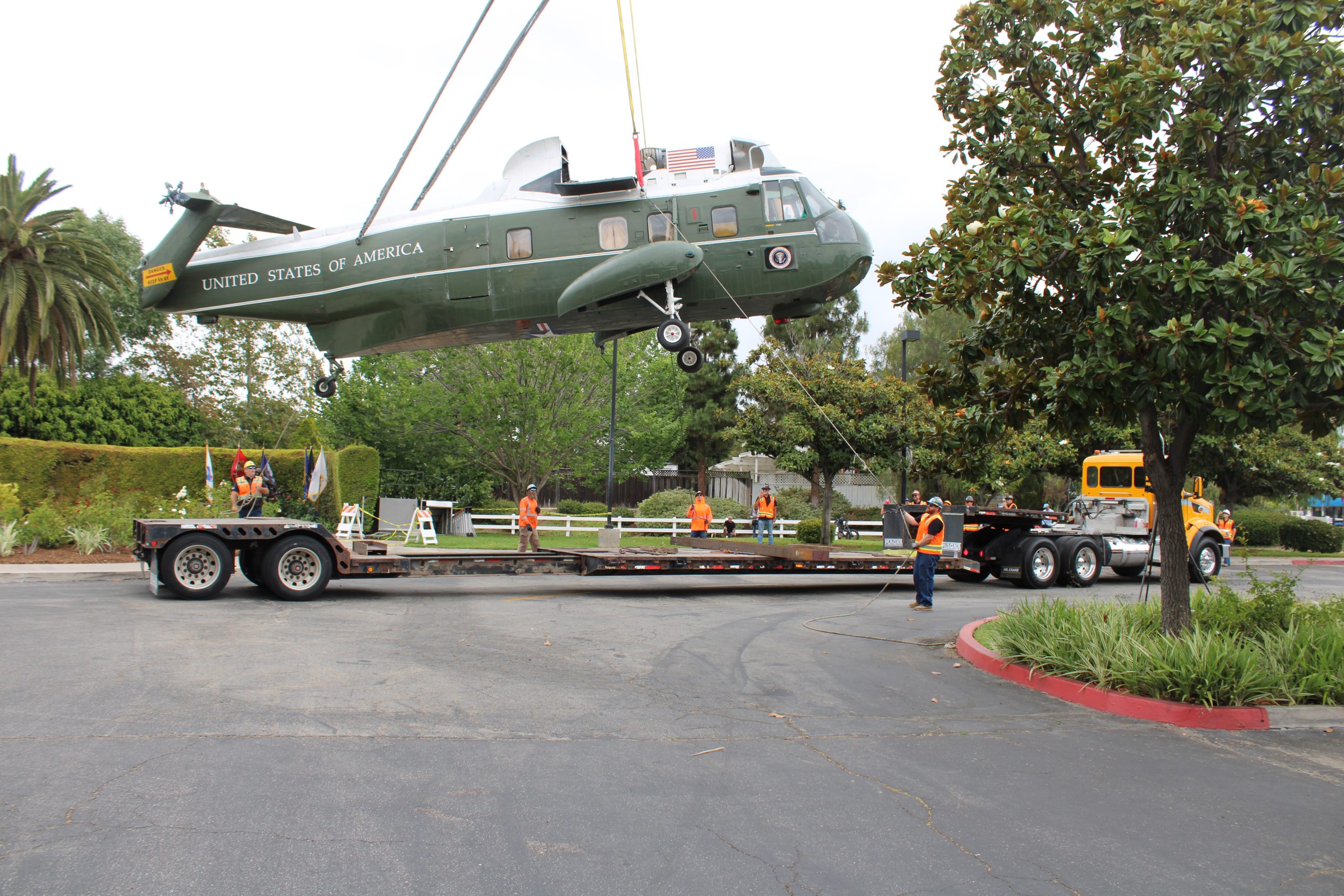
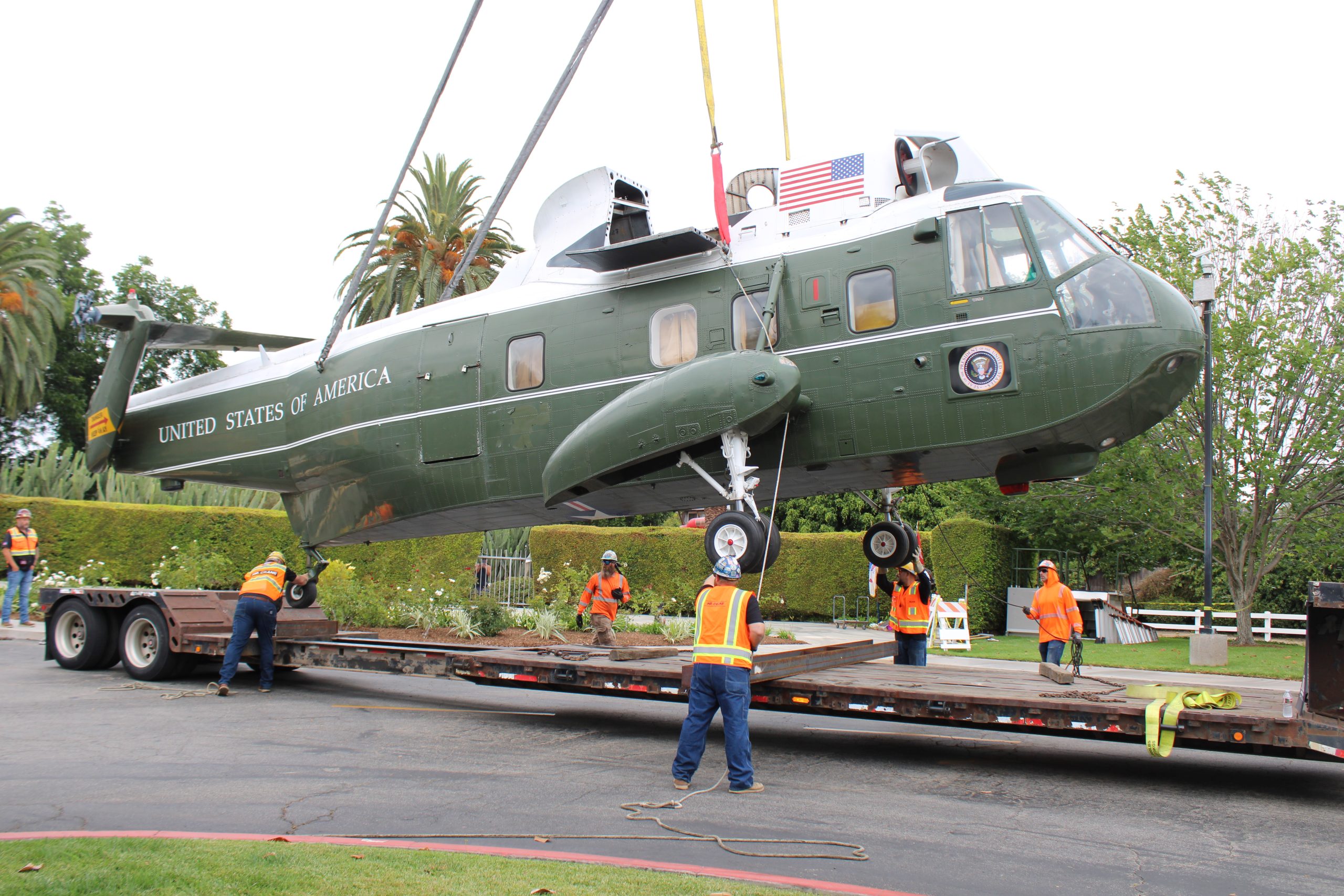
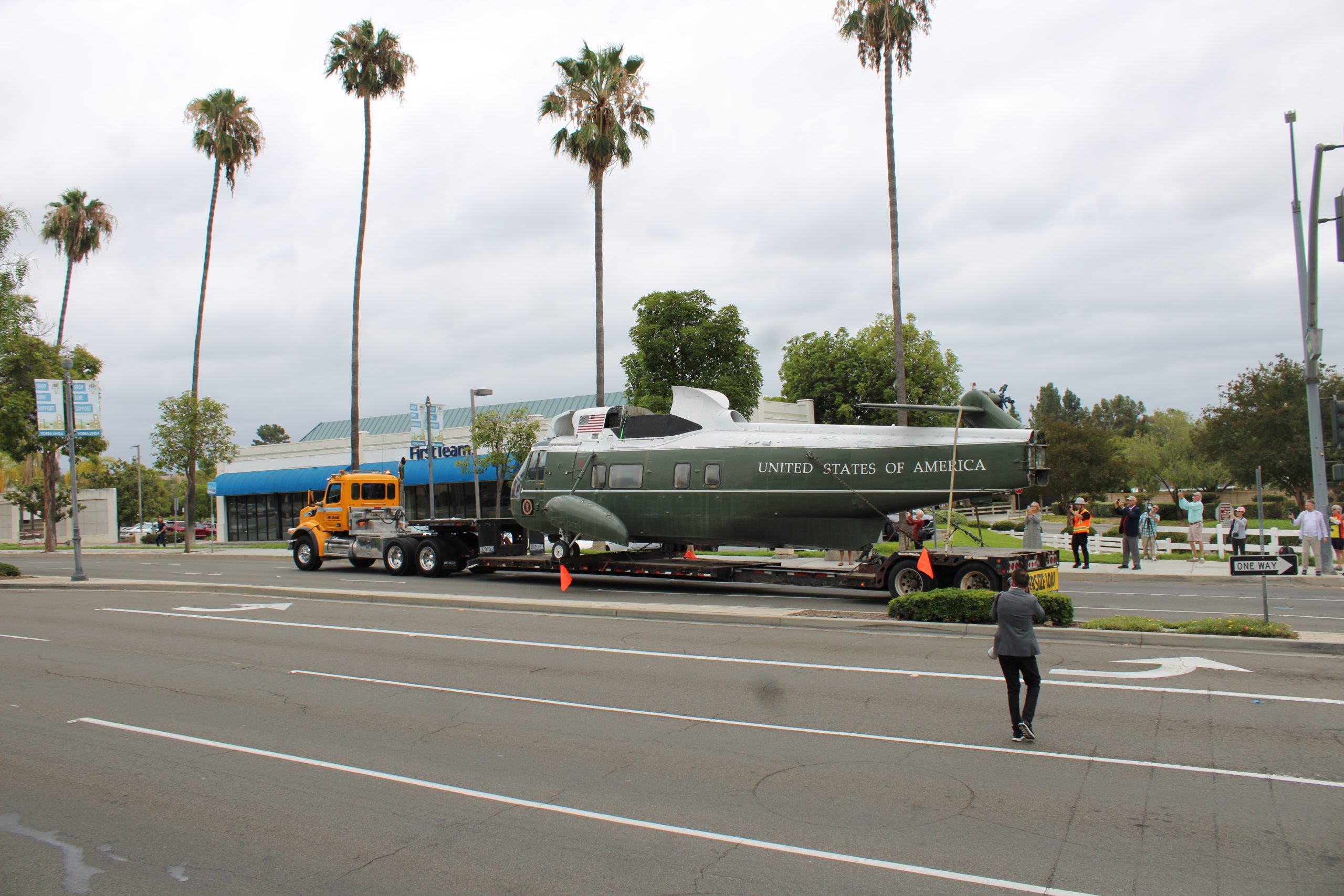
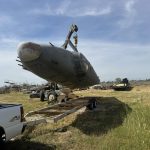
Following a series of speeches, the helicopter that flew four presidents was lifted into the air once again at 10:52 am, this time with the massive arm of a mobile crane provided by local crane service Mr. Crane, Inc., while specialists monitored the crane’s movements and held guiding cables to keep the helicopter from swinging too much to one direction. After it was on the trailer, the movers from Mr. Crane spent an hour chaining the helicopter’s landing gear to the trailer before carefully removing the hooks and cords holding the helicopter to the crane. Additionally, another trailer carried the rotor head and rotor blades while many of the engine cowling panels were loaded into the pickup trucks that would be part of the convoy to Riverside.
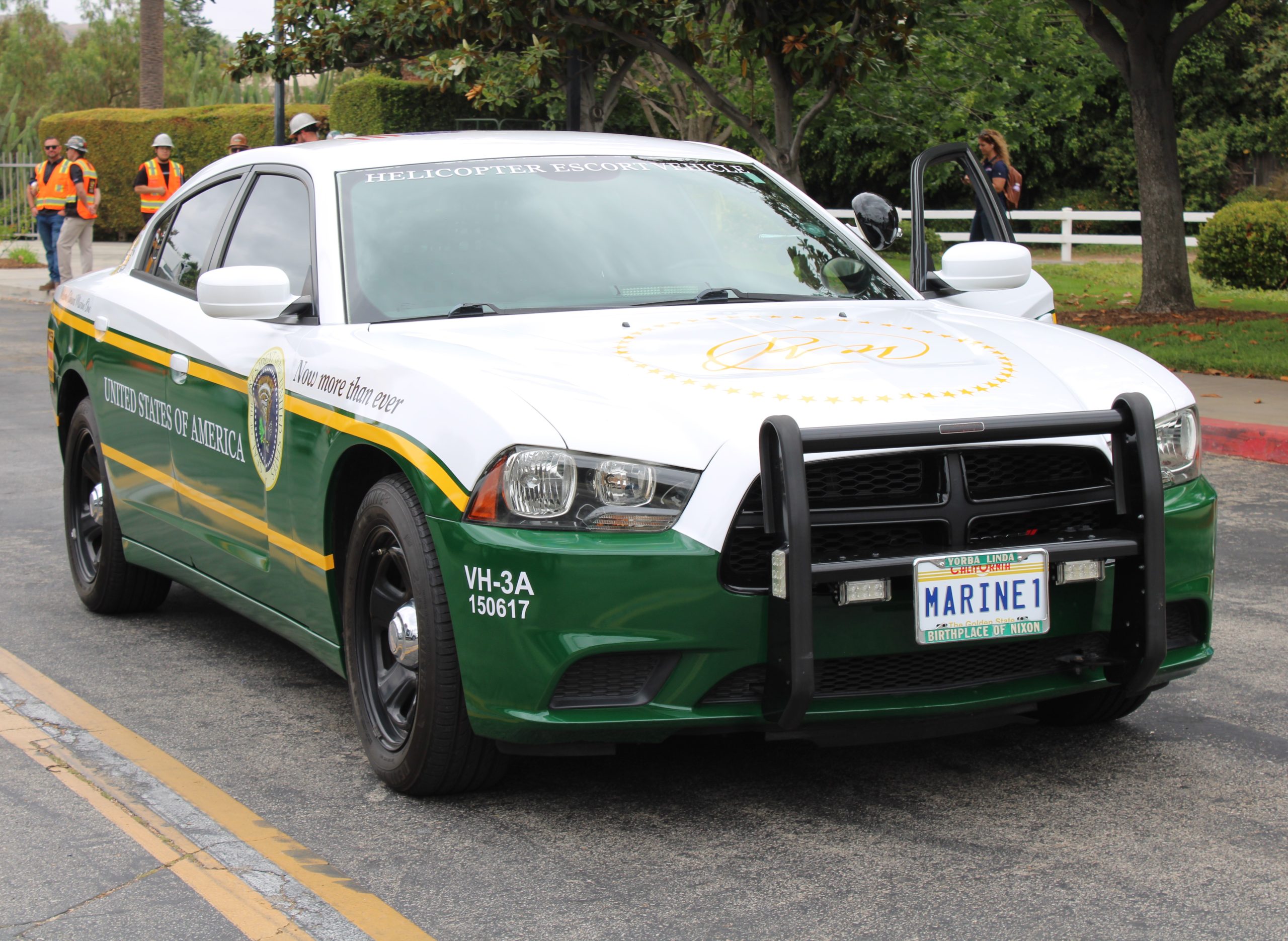
By 11:45 am, the VH-3A Sea King was at last ready to say a temporary farewell to the Nixon Library, as it departed with an escort of Orange County Sheriffs on motorcycles and the restoration’s benefactor, Charles Keller, drove a specially painted Dodge Charger as the official escort vehicle. On turning onto Yorba Linda Boulevard, the former Army One/Marine One was driven down Imperial Highway to California State Route 91, where it continued east to Corona before switching onto Interstate 15, then resumed its easterly course down State Route 60 before proceeding south to arrive at the March Field Air Museum by 2:30 pm.
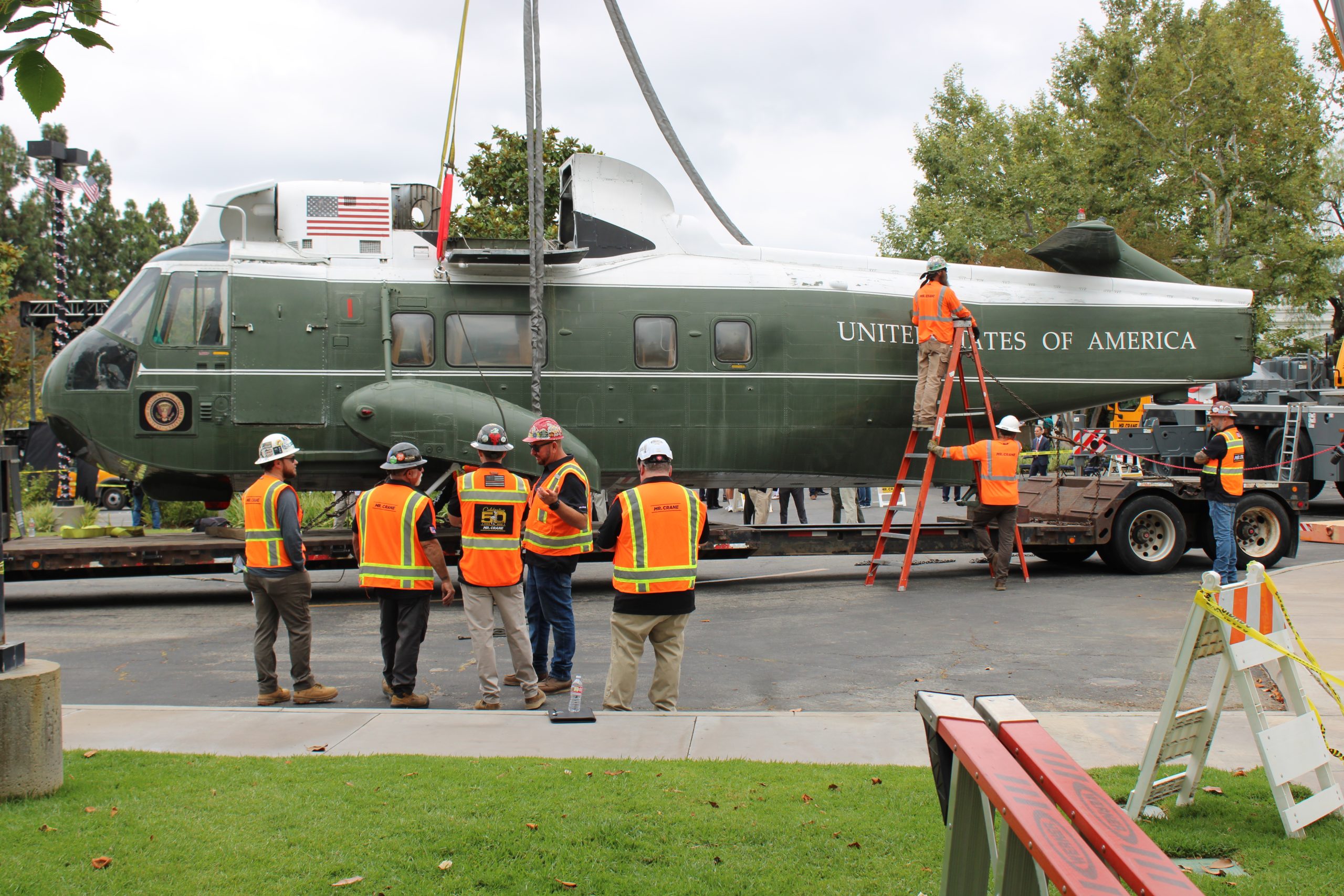
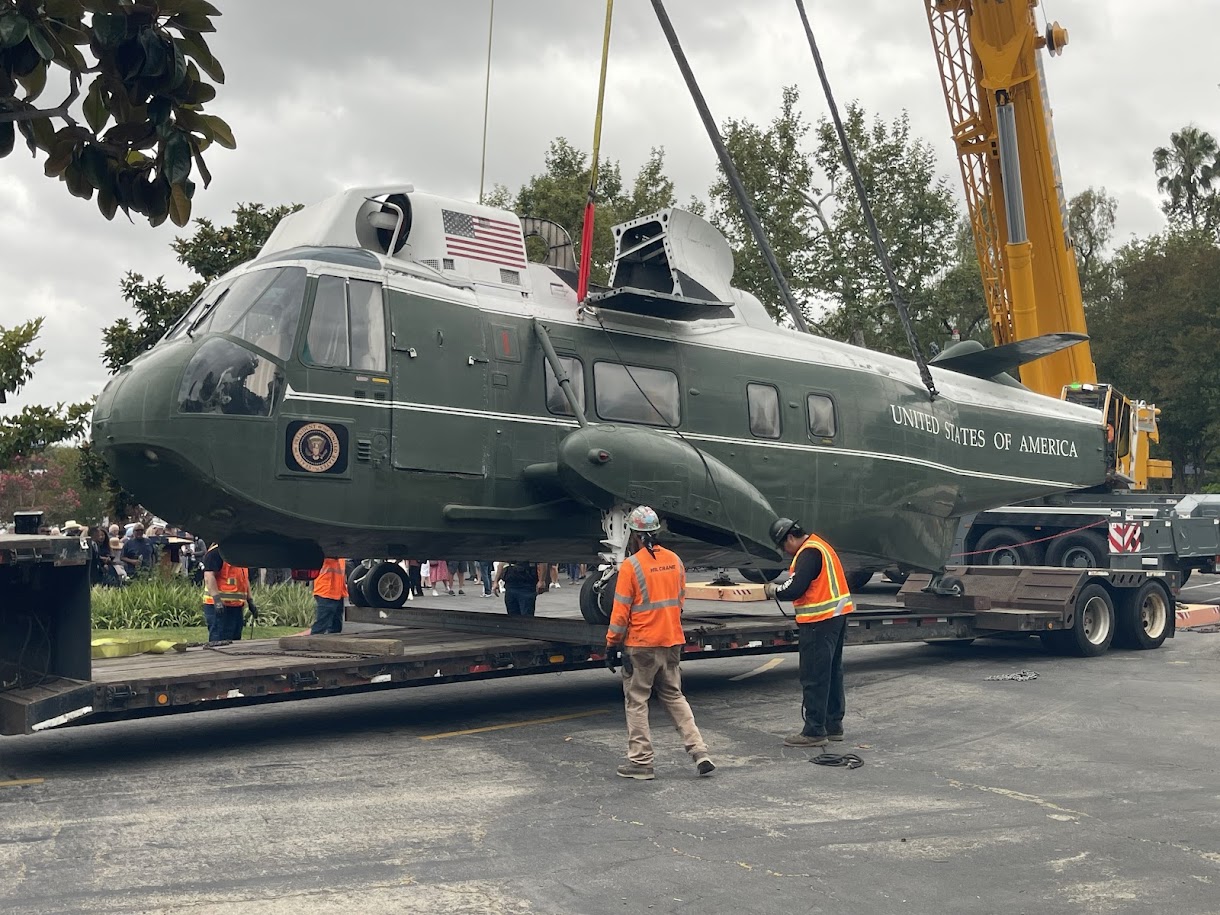
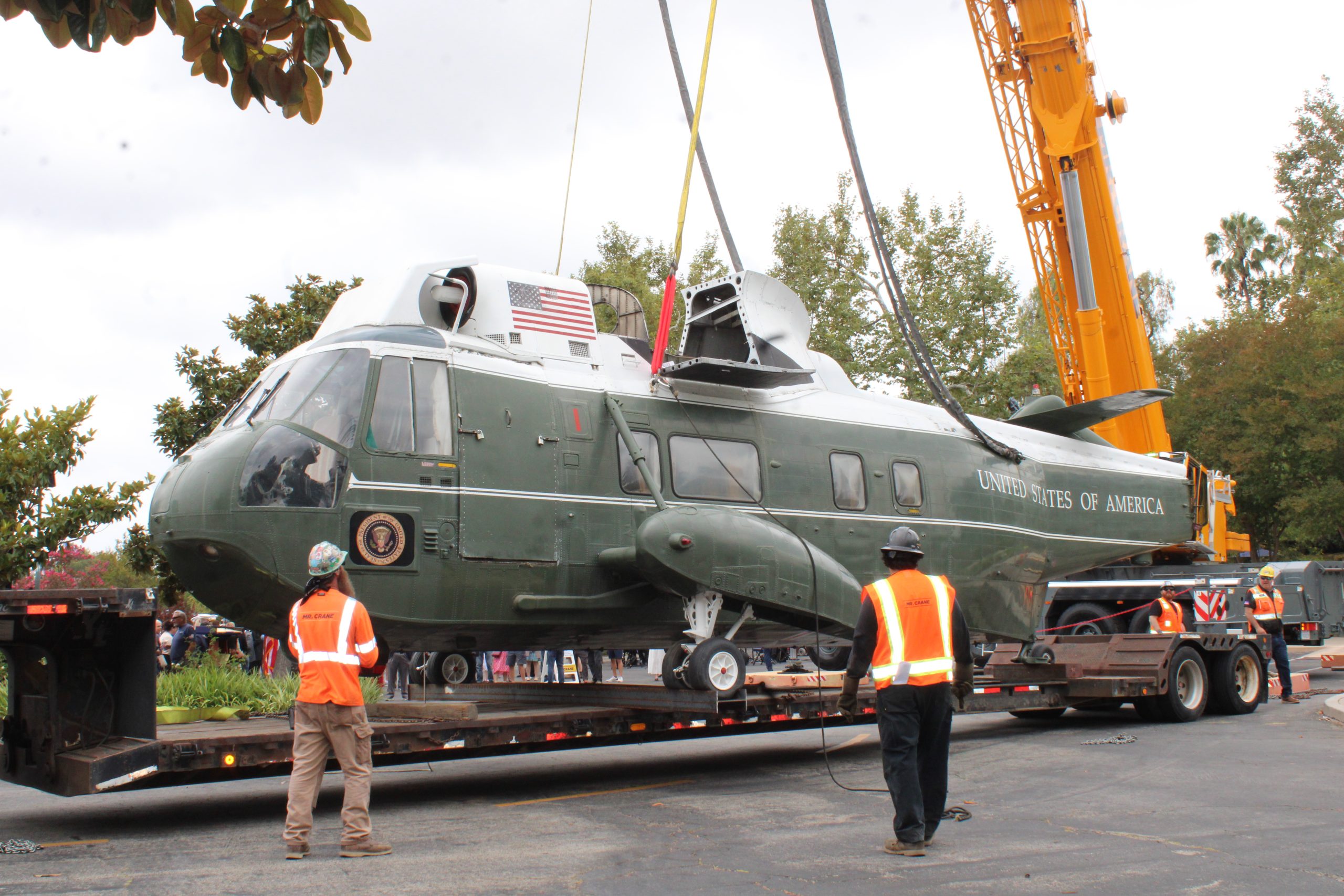
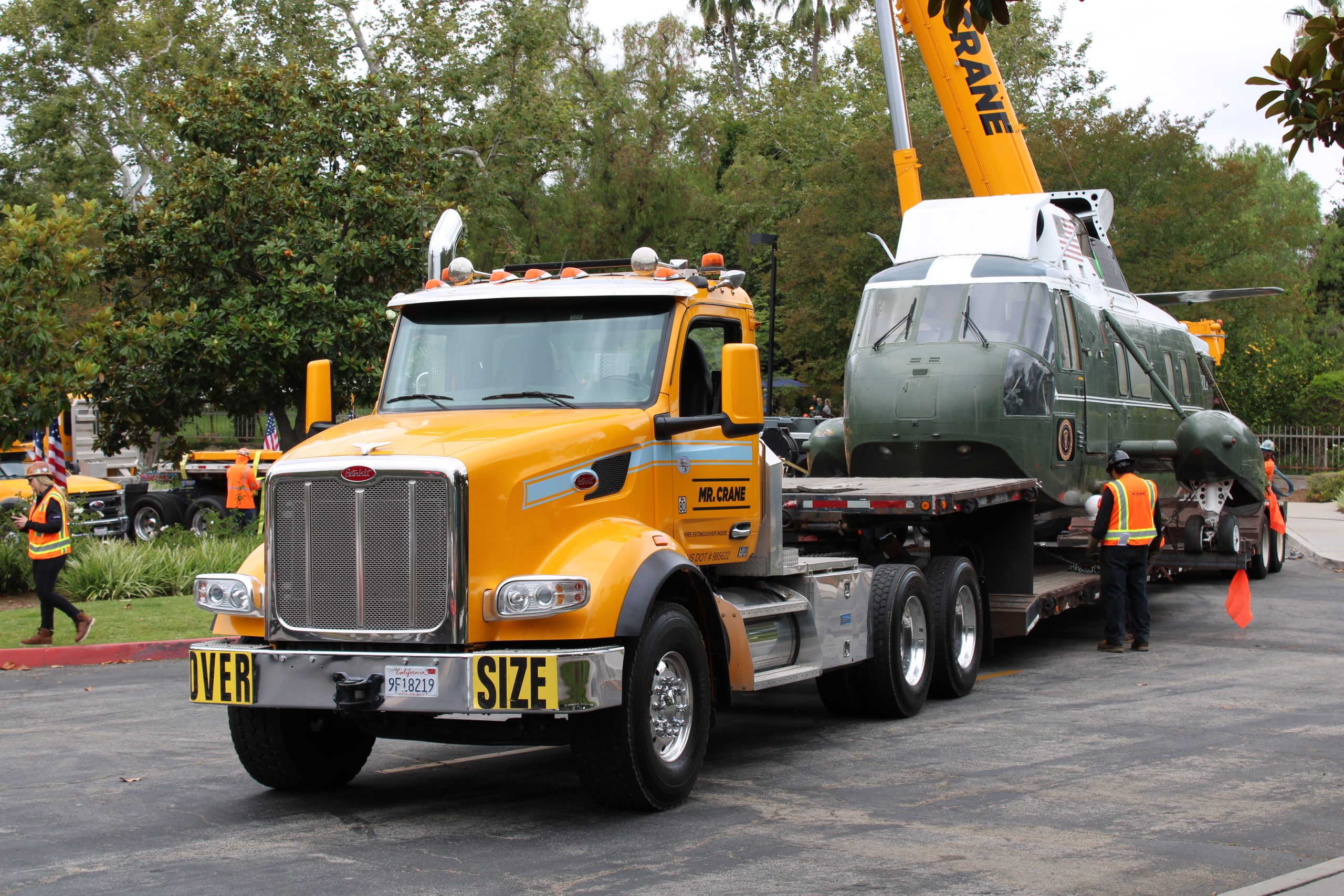
With construction of the new Civic Center at the Nixon Library scheduled to take two years, the March Field Air Museum has been honored to have the privilege to once again work on this most historic helicopter. Museum visitors will have the opportunity to see the helicopter as volunteers make further progress on the VH-3A, and the museum’s new curator, Keegan Chetwynd, has also stated that the helicopter will still be at the museum during the bi-annual Southern California Airshow, which is set to be hosted at March Air Reserve Base from March 27-28, 2027. When the restoration of BuNo 150617 is finished, the historic Army One/Marine One helicopter will return to the Richard Nixon Presidential Library and Museum in Yorba Linda to go on permanent indoor display and continue to serve as a witness to history both for the flights it made and to the momentous discussions held aboard this aircraft by four U.S. presidents. For more information, visit the Richard Nixon Presidential Library and Museum’s website HERE and the March Field Air Museum’s website HERE.



My late father’s best friend and my mentor who helped me become a USAF aviator through OTS flew Army one for Eisenhower, Kennedy Johnson and Nixon. Major Bill Shaw was a great american and friend. It was amazing just to know him.
The Bird is in great hands. March will do a great job.
At a time in America when our precious history is being daily forsaken or forgotten, it’s very heartwarming to read about this. Future generations of Americans should be able to appreciate and see these on display. Restoring their glory from a historical era….