






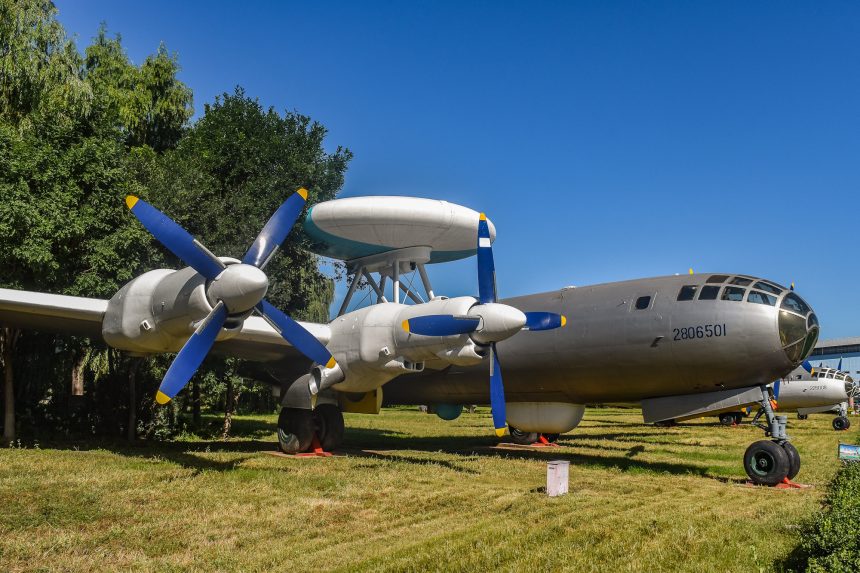

A recent trip to Beijing brought me face-to-face with two of the last survivors of the Tupolev Tu-4 strategic bomber, the Soviet Boeing B-29 Superfortress copy, instigated by the leader of the USSR himself, Josef Stalin, and given to Chairman Mao Zedong as a birthday gift in 1953. The story of the Tu-4 (fittingly applied the ASCC code name of “Bull”) has been told before, but Chinese use of the type is rarely explored and is an extraordinary tale of improvisation to fulfill the expectations of an ideologue and the regime that he governed.
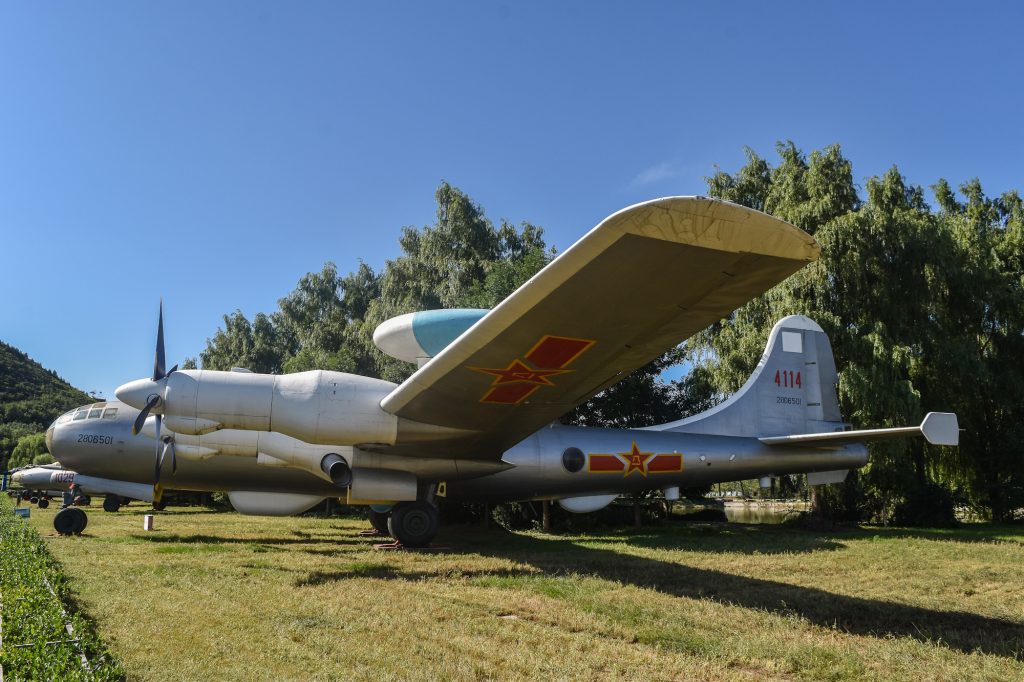
Of the more than 1,000 produced (exact figures are unknown, with some 847 operated by the Soviet Air Force, while factory production numbers vary between 1,100 and 1,200), only three complete examples of the Tu-4 are known to survive, two of which are on display at the China Aviation Museum at Xiaotangshan, north of Beijing. In this article, we will examine the two Chinese survivors and the intriguing and seldom recounted backstory of the People’s Liberation Army Air Force’s (PLAAF) use of the Tu-4. The two survivors represent the ultimate in the multitude of modifications made to the B-29 design, both of which served very different purposes from what the airframe was originally intended. Built in Plant No.22 at Kazan, now the Republic of Tatarstan, Russia, the two Chinese survivors were among a total of 25 that the PLAAF operated. With the first ten transferred free of charge to China on February 28th, 1953, as a gift from Stalin to Chairman Mao on the occasion of his 60th birthday, the PLAAF was the only foreign operator of the type.
Specifically formed to receive the type, the PLAAF’s Tu-4s were operated by the 4th Independent Regiment from Shijiazhuang, in Hebei Province, southwest of Beijing and were initially tasked with conventional bombing, maritime reconnaissance, air support, and command and control duties. Originally, as the Korean War heated up, the Chinese intended that their Tu-4s would be employed as nuclear bombers, while Chairman Mao’s focus shifted to the Kuomintang (KMT) on the island of Taiwan, where Generalissimo Chiang Kai-Shek and his followers had fled from the mainland. This nuclear role was instigated in a deal between Chairman Mao and Stalin, but following Stalin’s death in May 1953, the new Soviet Premier Nikita Khruschev refused to honour this. Souring relations between the two states, with Khruschev’s denouncement of Stalin and Chairman Mao’s opposition to his “Peaceful Co-existence” policy, ensured that no Soviet nuclear bombs went to the Chinese. This undoubtedly led to the development of their own nuclear weapons programme in 1955, detonating their first bomb on October 16th, 1964. Project 596 produced an implosion-type bomb using the same principles as the Soviet Union’s RDS-1 and the Fat Man bomb dropped on Nagasaki on August 9th 1945. Undergoing considerable variation in equipment carried aboard during their lengthy PLAAF service, the aircraft were delivered with the full complement of avionics and weaponry as the Soviet examples. Armed with standard Soviet payloads of up to 12,000 kg (26,455 lbs) of bombs internally, defensive armament comprised ten Nudel’man-Rikhter 23-mm cannons distributed to four remotely operated twin turrets in the upper forward fuselage, lower forward fuselage, upper rear fuselage, lower rear fuselage, and two in a manned tail position. Remote sighting positions with PS-84 remote gyro-stabilized sights were located in the extreme forward flight deck, rear fuselage to each side, dorsal position, and tail position. The total ammunition count was 3,150 rounds. Avionics updates once in service, including the installation of SRO-2 Khrom Nikel IFF system, the ASCC-designated “Odd Rod” three-pronged aerials, and Sirena radar homing and warning system. The comms and radar fit was a mix of original Soviet equipment and sets copied from the US originals when the B-29s that forced landed in Soviet territory were studied for reproduction.
Once in PLAAF service, the 4th Independent Regiment’s Tu-4s flew bombing missions against KMT positions on Taiwan, with mixed results. During these raids, the Tu-4s were nominally commanded by Soviet pilots, who received considerable reward from the Chinese for their services, including motor vehicles and high-end apartments in the Chinese capital. Further action saw them operating against Tibetan rebels in the Kham and Amdo Regions in 1956, with their first use in theatre being two of the big bombers attacking the Lithang monastery in Sichuan Province on March 29th. During these attacks, thousands of civilians sheltering from Chinese assaults against Tibetan rebels lost their lives. Operational necessities saw a small number of Tu-4s modified as unlikely interceptors of United States aircraft engaged in nocturnal reconnaissance flights over Chinese territory in the late 1950s and early 1960s. Owing to these types being repurposed piston-engined Boeing B-17G Flying Fortresses and Lockheed RB-69A (USAF P2V-7) Neptunes covertly CIA-operated for electronic and signals intelligence roles, interception by jet fighters proved difficult owing to their low cruising speeds. Tupolev Tu-2S medium bombers were modified for the night intercept role. Because these did not have sufficient performance to maintain contact with the nocturnal intruders, in early 1960, the Tu-4 was chosen as a more suitable long-range interception platform owing to its six-hour endurance and higher speed than the intruding spyplanes.
For this role, the Kobal’t radar mounted between the bomb bays in the aircraft’s underside was relocated aft of the flight deck, where the forward gun turret sat, and its signals were modified for tracking aerial targets. Dedicated radar stations for airborne intercept operators and tables for two navigators and two chart plotters were fitted inside the aircraft’s bomb bays, facilitating the type’s use as an airborne command and control post. An infrared targeting sight with a range of up to two miles was fitted to each of the remote gun positions around the airframe, although this proved difficult to use in service. The first aircraft so modified underwent proving trials for a month before three more aircraft received the same modifications. The first attempted engagement using Tu-4P interceptors took place on the night of March 1st, 1960, when a Taiwanese-marked RB-69A flew over Jiangsu Province to test the Chinese defences. Initially intercepted by a PLAAF Shenyang J-5 (licence-built Mikoyan Gurevich MiG-17), three Tu-4s were sent after the RB-69A owing to the high approach speeds of the jet fighter, resulting in unsuccessful attacks. After encountering the intruder using their Kobal’t radar, two of the Tu-4s began firing on the aircraft. Because of the unreliability of the infrared sights, no hits on the Neptune were observed as it escaped, and despite the third Tu-4 tailing it across Henan and Anhui Provinces for the next 35 minutes as it dropped propaganda leaflets, the RB-69A escaped into the night unharmed. Despite several successful intercepts resulting in Tu-4s firing on the RB-69As, none were ever brought down by the big four-engined aircraft, although a total of five of the seven Neptunes deployed to Taiwan for covert overflights were lost. The first successful recorded shooting down of a Neptune by PLAAF aircraft took place on the night of June 14th, 1963, by a pair of Shenyang J-5As (radar-equipped MiG-17PF), after being tailed and unsuccessfully fired on by Tu-4s. Two RB-69As had been lost previously, one to anti-aircraft fire and a second that failed to return, the cause unknown.
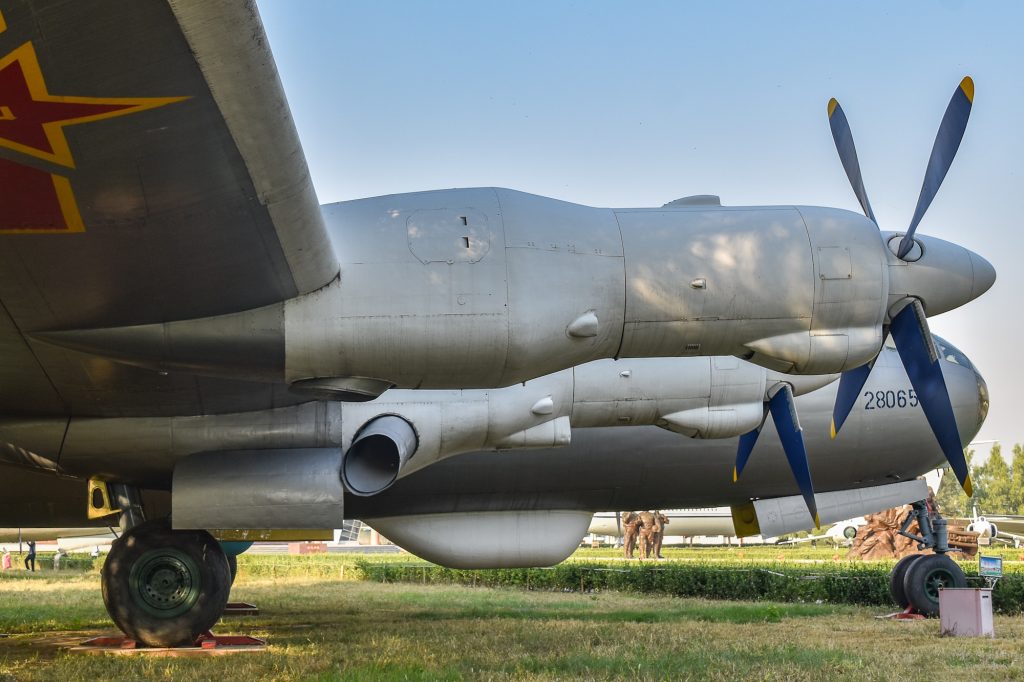
One factor in the Tu-4’s favour, which made it ideal as a night-time interceptor, apart from its greater endurance and higher cruise speed than the aircraft it was sent to attack, was that its Kobal’t radar was difficult to jam. This meant that the Tu-4s were often deployed owing to the jets failing to acquire the intruders despite the aid of ground-controlled interception crews directing them to their targets. The repurposing of the Kobal’t radar for air interception enabled the Tu-4s to search for their target independently with some degree of success in making contact, even if they had no recorded success in actually shooting any down. No timely successor to the aging Tu-4s meant that they remained in PLAAF service longer than intended, which, because of a lack of engines and support equipment, saw indigenous solutions adopted. These included re-engining 11 of the survivors with Zhuzhou WJ-6 turboprops – licence copies of the 4,250 shp Ivchenko AI-20M, which was installed in the Shaanxi Y-8, the Antonov An-12BK tactical transport built in China. Beginning in 1970, installing the WJ-6s in place of the Shvetsov ASh-73 18-cylinder radials took considerable time and resources to achieve, resulting in aerodynamic instability and handling difficulties compared to the piston-engined aircraft. The turboprop propellers are left-hand rotating (as viewed from behind, as is standard in propeller rotation designation), whereas the Shvetsov propellers were right-hand rotating. Following the lengthy conversion period, the re-engined aircraft were unveiled in 1973, with massively oversized nacelles awkwardly faired into the Tu-4’s wings, and licence-built AV-68I fully-feathering, reversible-pitch four-bladed propellers fitted. To cure excessive yaw instability with the fitting of the turboprops, thick end-plate vertical stabilizing fins were added to the horizontal stabilizers.
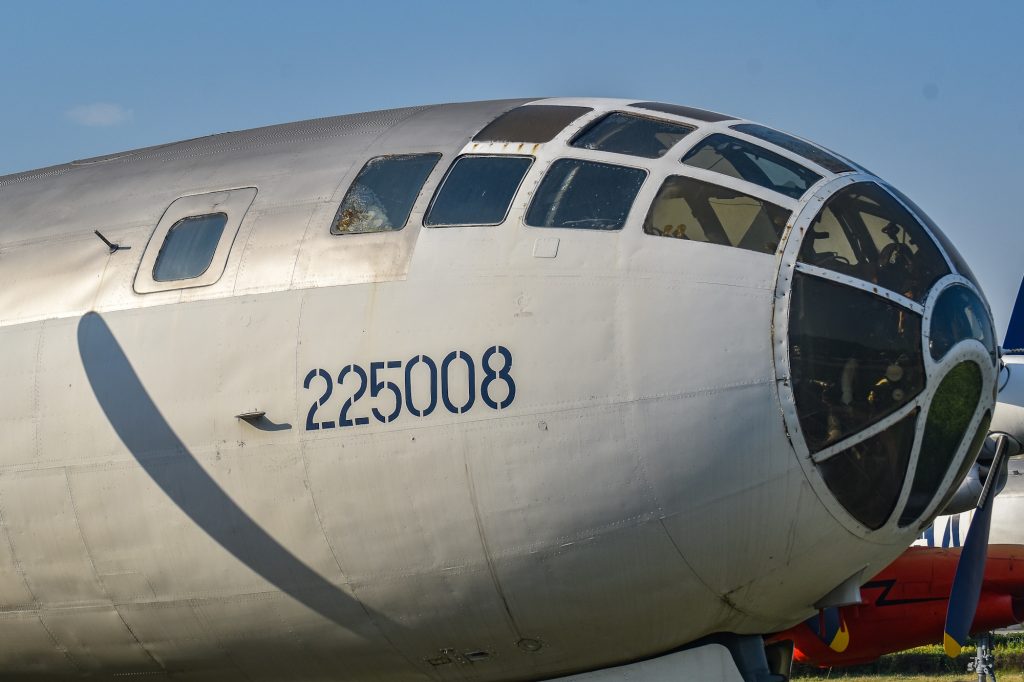
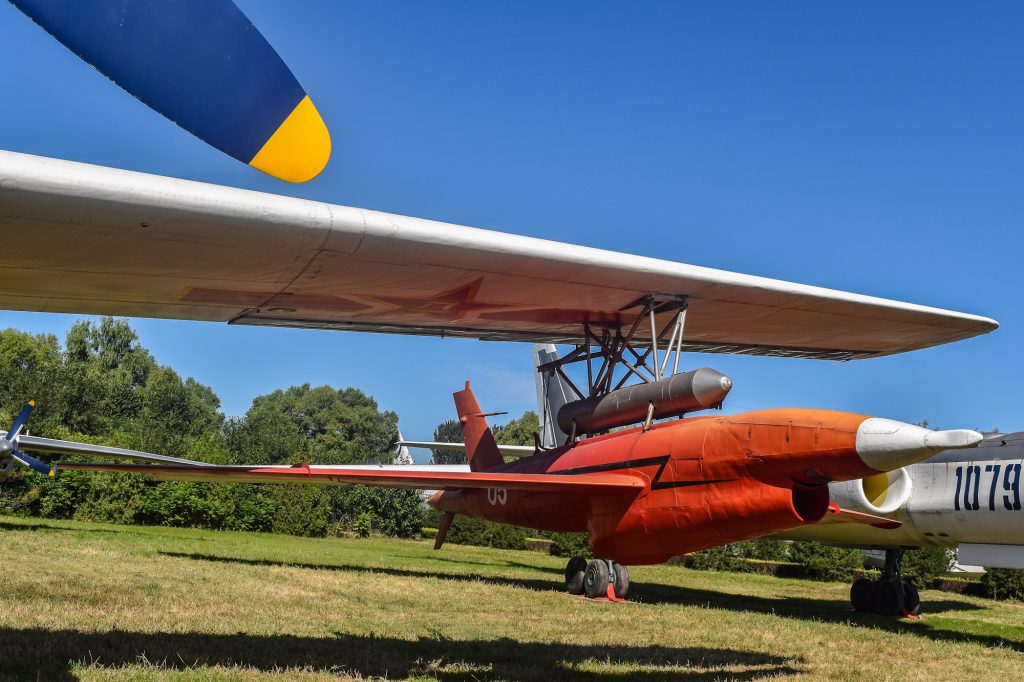
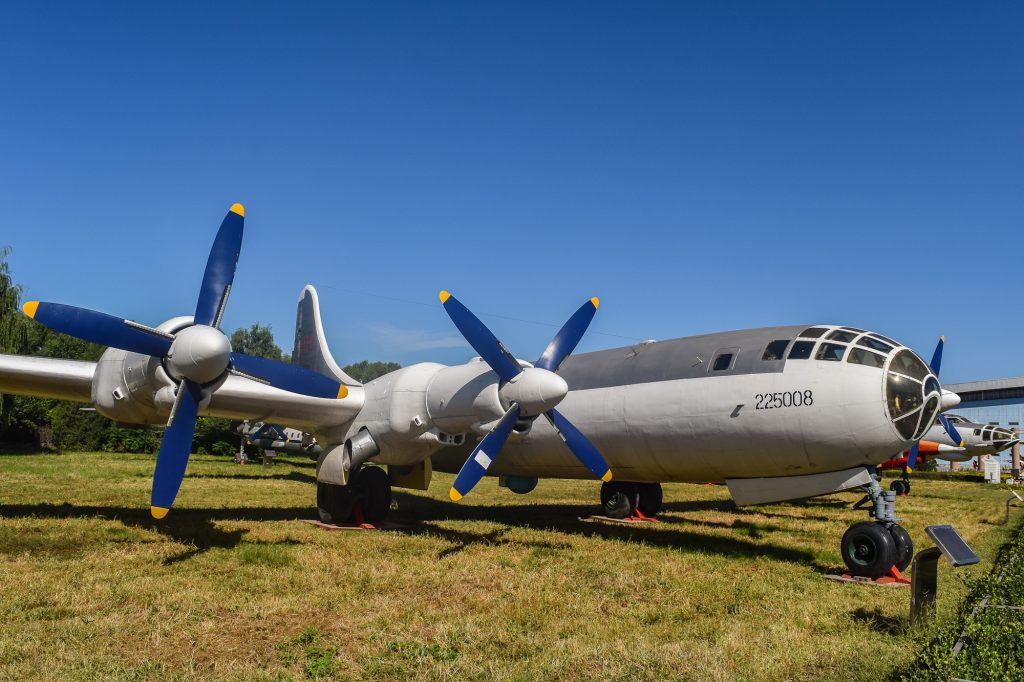
Replacement of the type in the long-range bombing role was the Xian H-6, a license-built Tupolev Tu-16 medium jet bomber, which entered PLAAF service in 1969. The delays in putting this new type into production and service owing to Chairman Mao’s Cultural Revolution of the mid-1960s to mid-1970s meant that the Tu-4 remained with the PLAAF in support roles until the last examples were retired from PLAAF service in 1991. Fifteen examples remained from the original complement of aircraft at the time of their retirement. The two aircraft on display in China have had considerable modifications for their respective roles and incorporate the WJ-6 turboprops. Aircraft s/n 225008, Red 4134, was modified in 1978 to carry two Chang Hong-1 drones, one under each outer wing on agricultural-looking open framework pylons. Renamed Wu Zheng-5 (WZ-5), these were a copy of the Ryan BQM-34A Firebee reconnaissance platform, examples of which were sent into China on reconnaissance duties throughout the 1960s. Eleven of these were shot down by Shenyang J-6 interceptors (licence-built Mikoyan Gurevich MiG-19s), one of which is displayed in the People’s Liberation Army Museum in the heart of Beijing. During the abortive Sino-Vietnamese War in February 1979, the PLAAF deployed WZ-5 drones to gather hard data about localized Vietnamese military strength. WZ-5s are reportedly still in PLAAF service.
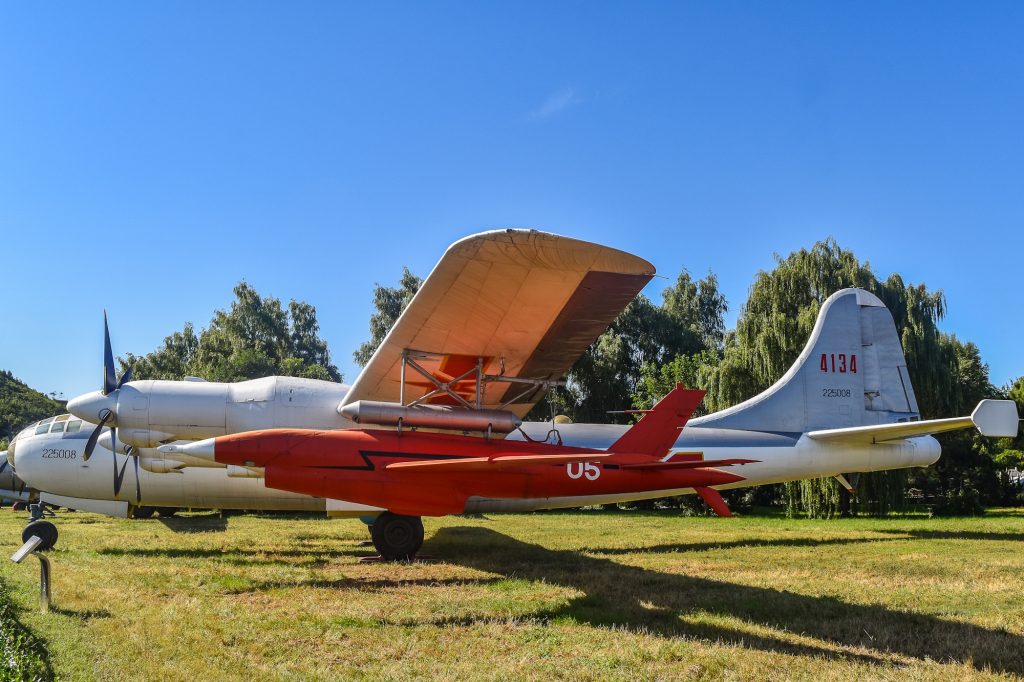
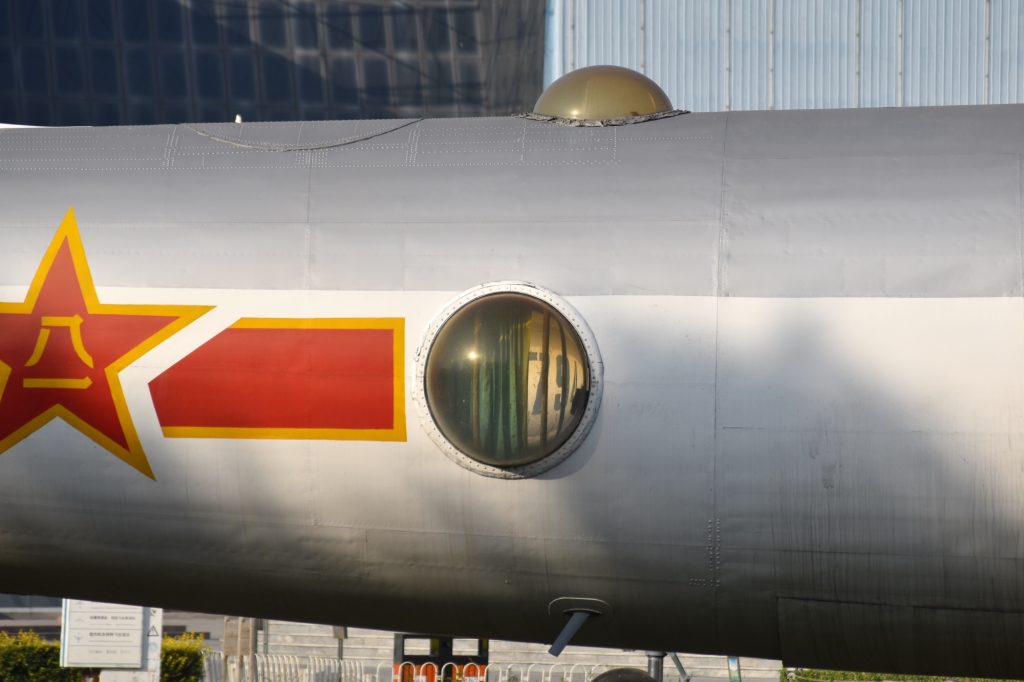
To compensate for increased drag from the drone installations under the outer wings, excess weight was removed from the aircraft to increase performance. Gun turrets and the PS-84 remote sighting systems were removed, but the observation positions and their sighting blisters were retained. The drone guidance system was installed in the flight deck forward of the pilots’ instrument panel clusters, in place of the bomb sighting equipment. The guidance system shares common ancestry with the Soviet Tu-4NM target drone variant designed in 1952, as the PLAAF’s first remotely piloted aircraft was the same type as carried by the Tu-4NM, the Lavochkin La-17; the PLAAF stockpile of 20 examples was quickly depleted, necessitating an indigenous programme launched in 1965, named the Chang Kong-1. Despite attempts at weight saving, the drone installation imposed a considerable drag penalty on 225008, which, without the WJ-6 turboprops, would have found its performance seriously degraded, as the equipment installation placed serious strain on the originally installed Shvetsov radials, which, despite their 2,400 hp output, the Tu-4NM struggled to reach altitude, taking up to two hours to reach 26,000 feet.
The second survivor is Red 4114, c/n 2806501, which underwent perhaps the most extensive modification to any of the Chinese Tu-4s. This aircraft was configured as an airborne early warning platform, equipped with a Type 843 rotodome centrally mounted on a framework on top of the aircraft’s fuselage. Designated the Kong-Jing-1 (KJ-1), short for Kongzhong Yujing, or “airborne early warning”, research into the project began in 1969 under the code name Project 926. Initially instigated in 1967 as a means of monitoring US nuclear tests in the Pacific, this was the first airborne early warning aircraft project instigated in China, and although offering promise, the installation was extraordinarily heavy, with excessive vibration being encountered during its first aerodynamic trial flight in 1970. Despite the rotodome installation, the radar aerials were not installed internally owing to the excessive vibration, a cure for which was not pursued owing to disruption to work schedules as a result of the Cultural Revolution.
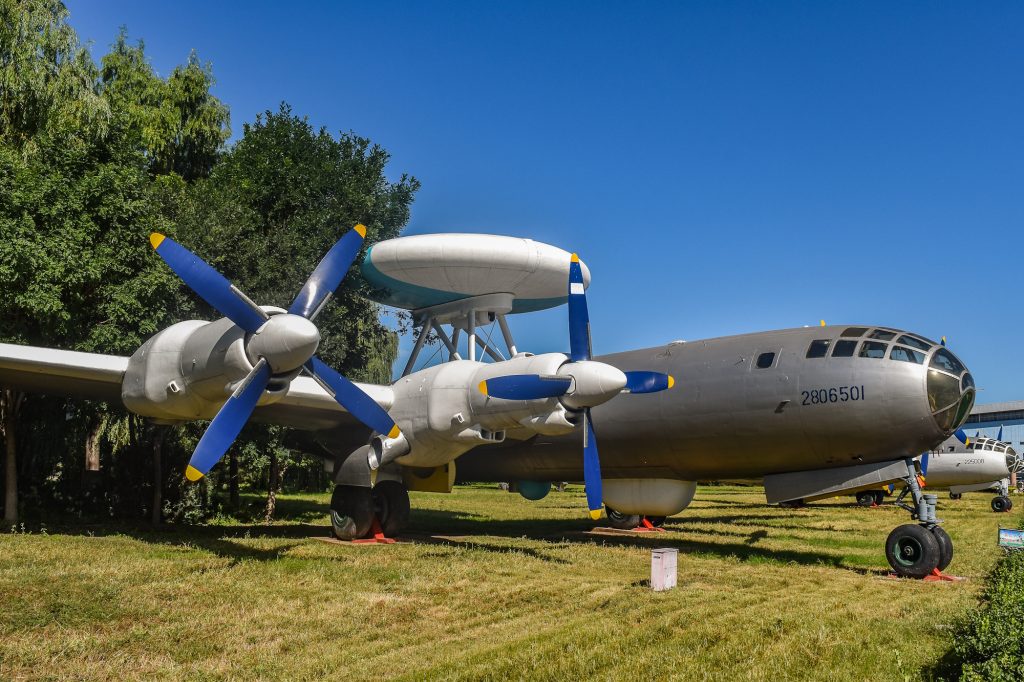
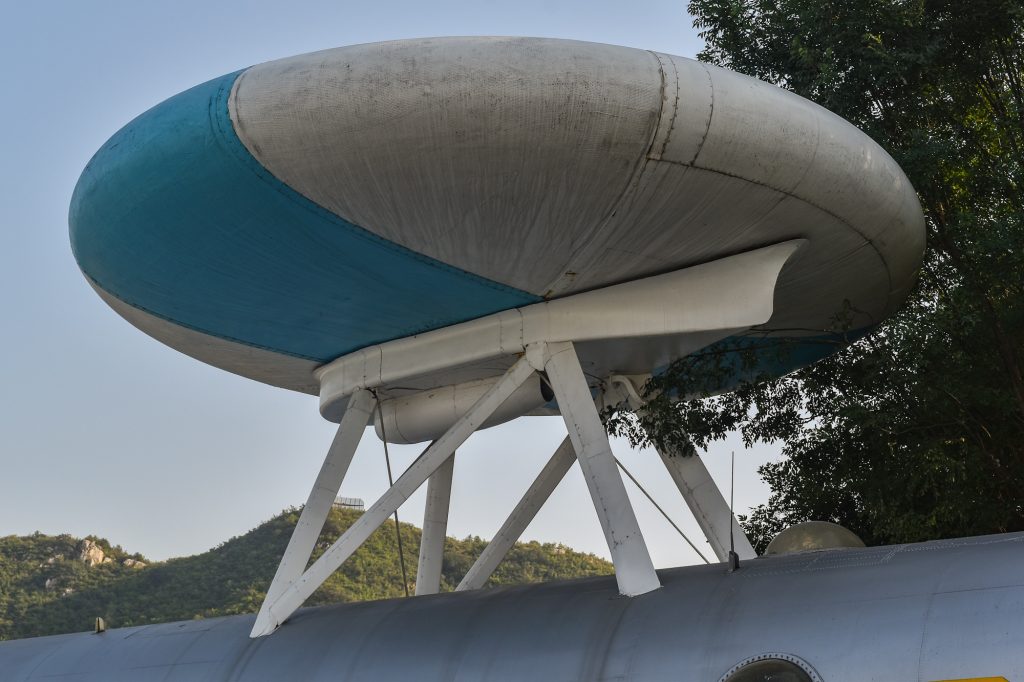
Following Mao’s death and the introduction of the so-called Chinese Economic Miracle, further work on the KJ-1 was halted owing to reductions in military spending, but in 1978, with calls for the modernization of the Chinese armed forces, interest in the KJ-1 was renewed. By this time, however, the Tu-4 and the equipment under development were decidedly obsolete, which brought further interest in the KJ-1 from the PLAAF to an end, and the project was terminated a year later. The core of the KJ-1 is two search radar aerials mounted end to end, and IFF aerials in a thick rotating saucer mounted on a substantial streamlined fairing, incorporating air cooling for the machinery responsible for turning the radome inside. All armament and fittings have been removed, and the orifices plated over, although remote sighting positions and their clear blisters remain, although it is not known whether further modification would have seen these removed.
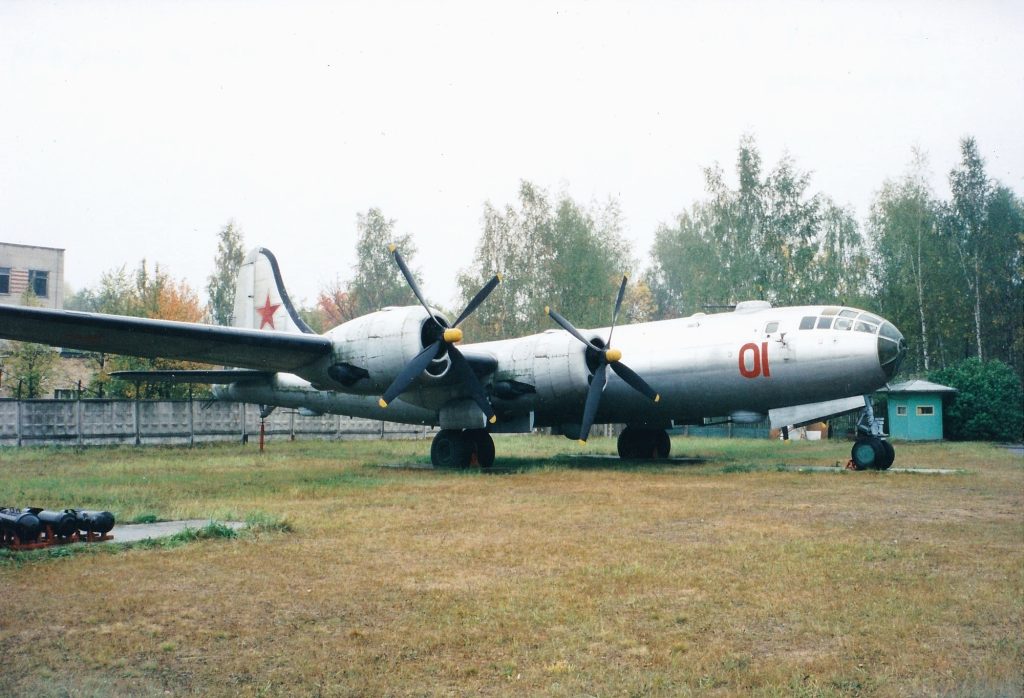
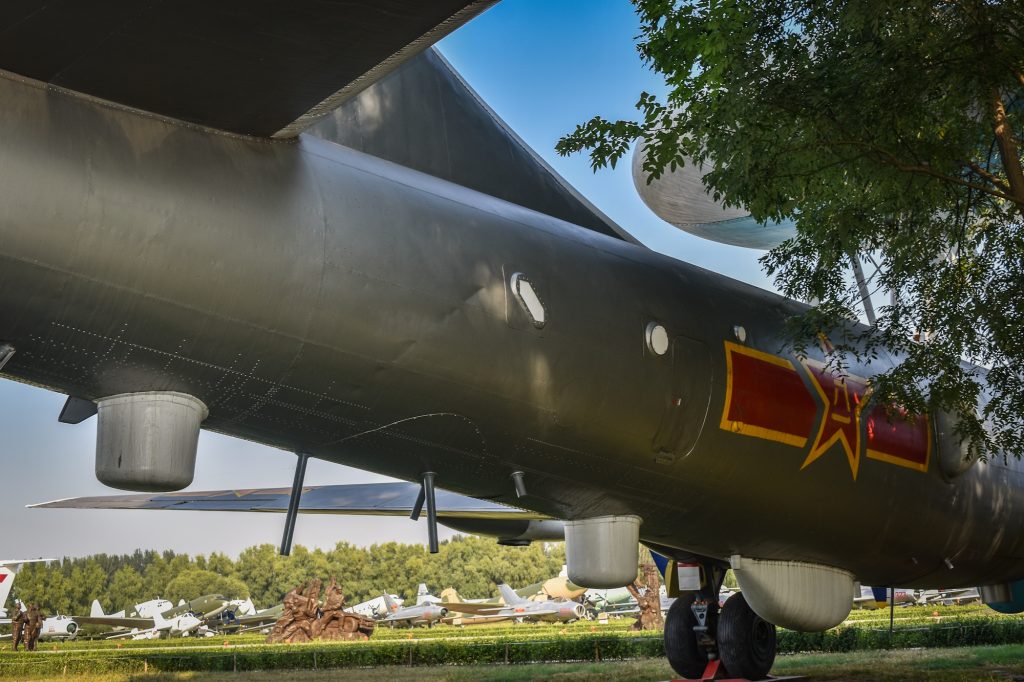
Below the lower fuselage, mounted over the forward bomb bay and under the rear fuselage, are two enormous fairings, whose purpose can only be hinted at, but between them, below the wing box break in the Tu-4’s fuselage underside, the fairing for the Kobal’t ground mapping radar is still in place. Under the rear fuselage are numerous blade aerials and two dustbin-type antennae, while there are several flat-plate sensors mounted on the rear fuselage flanks forward of the horizontal stabilizers. These hint at an intended electronic and/or signals intelligence role. Before the 1980s, PLAAF’s electronic warfare capability was lacking compared to its Western counterparts, which possibly led to the KJ-1 being modified for this mission, based on the array of peculiar aerials and bumps below the aircraft. To counteract in-flight instability about the yaw axis, given the increased surface area of the various protrusions on its fuselage, a keel surface has been installed below the vertical stabilizer aft of the retractable tail bumper. Unusually, given the aircraft’s intended role, through the nose glazing, the Tu-4’s standard OPB-5SN gyro-stabilized computing bomb sight is visible. The absence of aerials on the aft bomb bay doors hints at possible retention of the type’s original purpose, which seems counterintuitive given the amount of space required for equipment operators within the fuselage. Perhaps the start-stop nature of the KJ-1’s development precluded the full complement of internal crew positions and equipment being fitted to the aircraft? After all, retaining a bombing capability on a converted airborne early warning platform makes little sense. These and a single Kuibyshev-built example, c/n 2805103 at the Central Air Force Museum at Monino, Moscow, are the last confirmed survivors of the Tu-4, a remarkably useful type that continued in service far longer than its original operators intended. All three are, as at the time of writing, on public display and are worth seeking out by adventurous aviation enthusiasts as reminders of the Soviet Union’s and PLAAF’s extensive use of the type and the excellence of the original B-29 Superfortress that the Tu-4 stemmed from.








As a South African I have had the pleasure of sitting in the Tu 4 at Monino and while I was there the Russian test pilot who was my guide referred to the aircraft as the metric B29 . Very fortunate to have sat in it . I was told they had numerous issues with the aircraft particularly the plexi glass and over heating issues when they reverse engineered it .
Wow, nice B29 Ripoff and with it as with anything worthwhile-German influenced