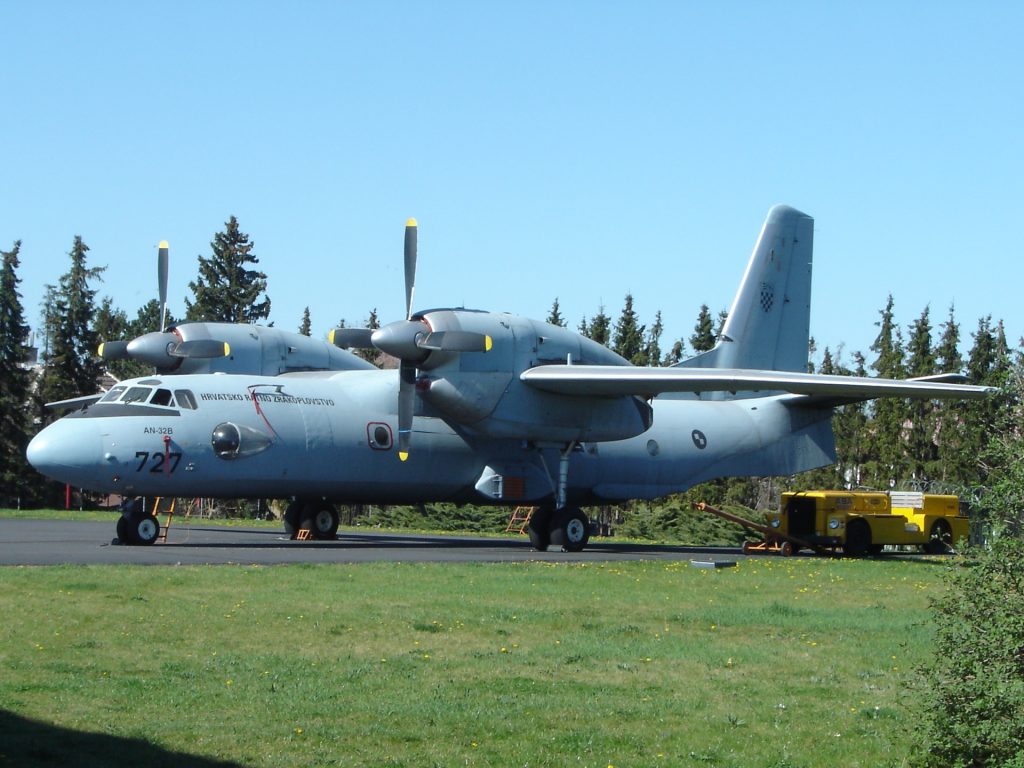
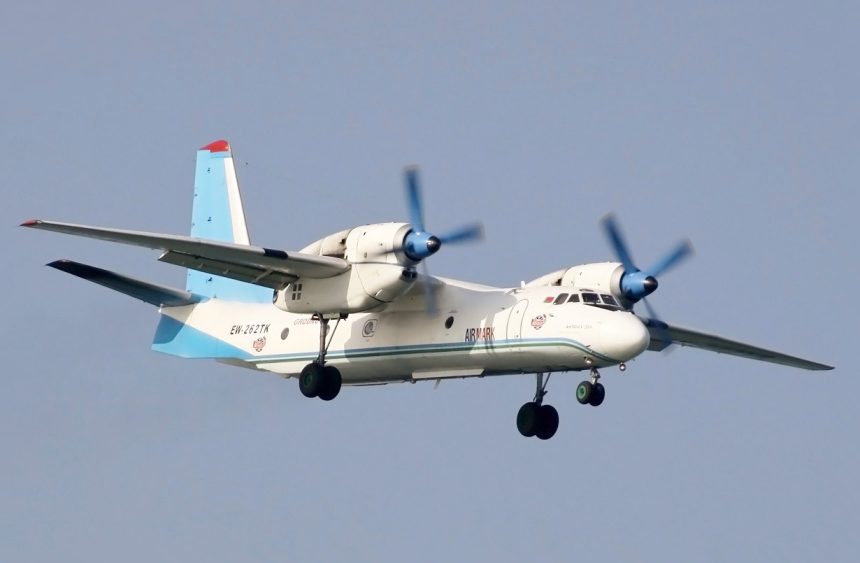


On this day in aviation history, 50 years ago (July 9, 1976), the Antonov An-32 took flight for the first time. Given the reporting name Cline by NATO, the An-32 is a twin-turboprop military transport aircraft that was developed from the An-26 Curl. The An-32 improved upon the An-26 with more powerful twin 5,112 ZMKB Progress AI-20DM turboprop engines, and also improved adverse-weather flight characteristics. The AI-20DM engines of the Cline are installed 1.5 m above the wing, which provides extra clearance from FOD at unimproved airfields.
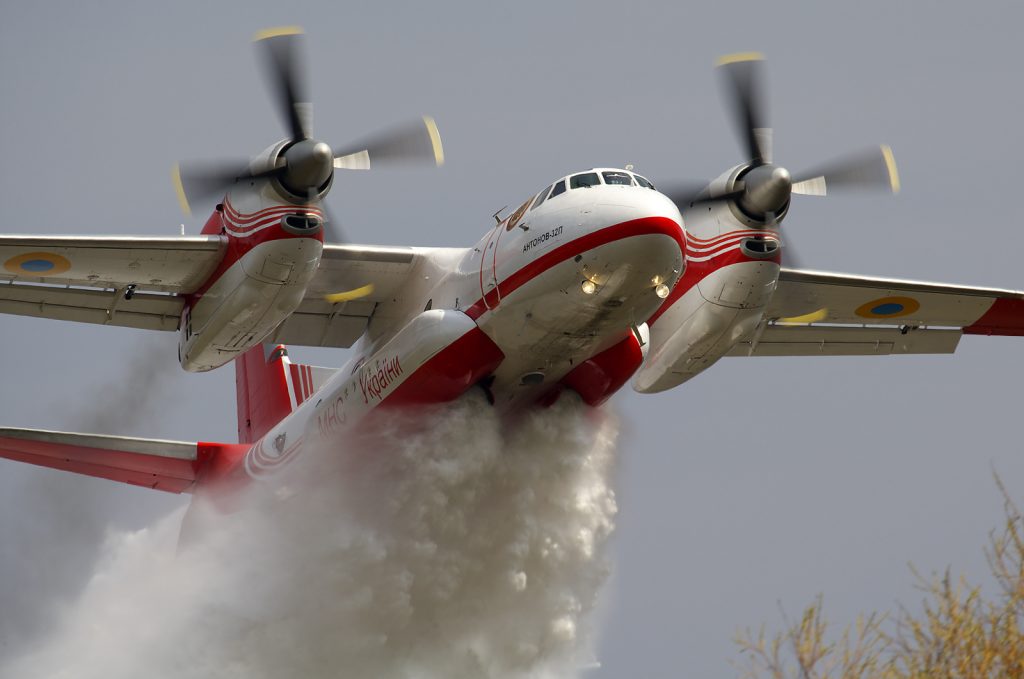
Leading-edge slats and trailing-edge flaps that were triple-slotted gave the An-32 exceptional takeoff performance. The higher-powered engines, when raised 1.5 m, allowed for larger-diameter propellers that enhanced overall performance. Together, the bigger props and AI-20DMs of the An-32 provided twice the power of the An-26. The An-32 is flown by a crew of four, and the aircraft has a capacity for either 50 passengers, 42 paratroopers, 24 stretchers (with 3 medical personnel), or 14,771 pounds of payload. Cruise speed for the Cline is 290 mph, while the maximum attainable airspeed is 330 mph. The An-32 has a range of 1,300 nmi and a service ceiling of 31,200 ft.
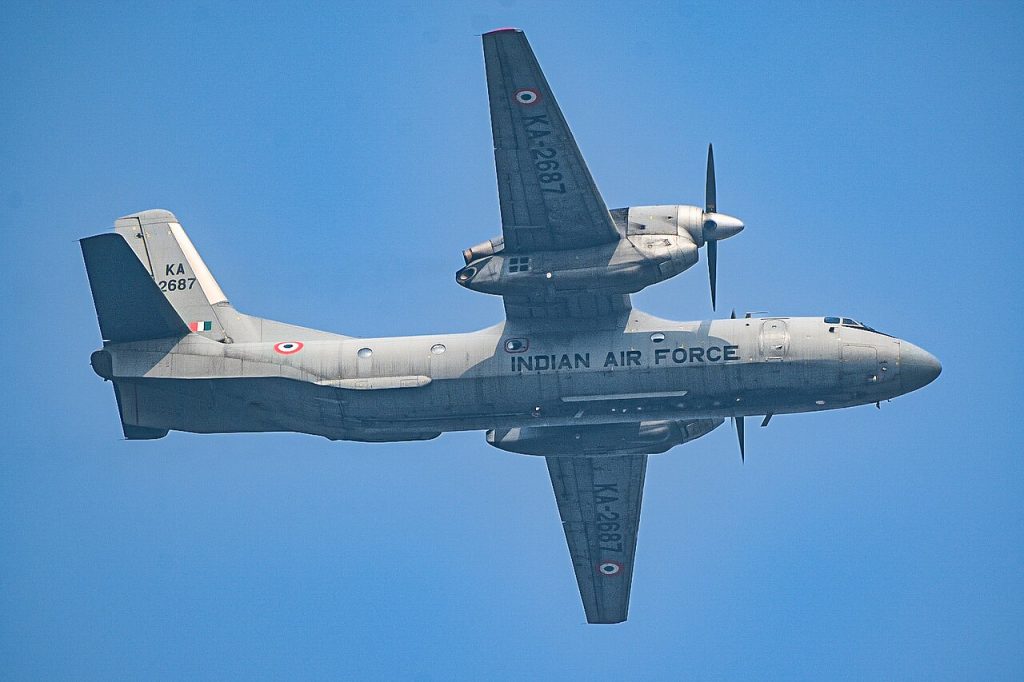
Antonov manufactured the An-32 between 1982 and 2012. A total of 373 airframes were built, and many still serve today with the Indian, Angolan, Sri Lankan, and Ukrainian Air Forces. The aircraft’s superior takeoff performance in less-than-ideal conditions makes it the perfect tactical transport and also an exceptional short-haul airliner. Peruvian airliner Aero Transporte S.A (ATSA) continues to operate a fleet of four An-32s, and they show no sign of stopping anytime soon. The Cline has even filled the role of bomber with the Iraqi Air Force, combating ISIS during the Islamic State invasion of Iraq in 2014.