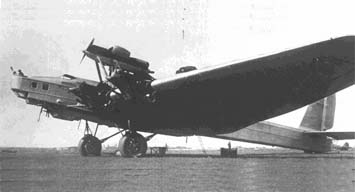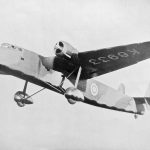
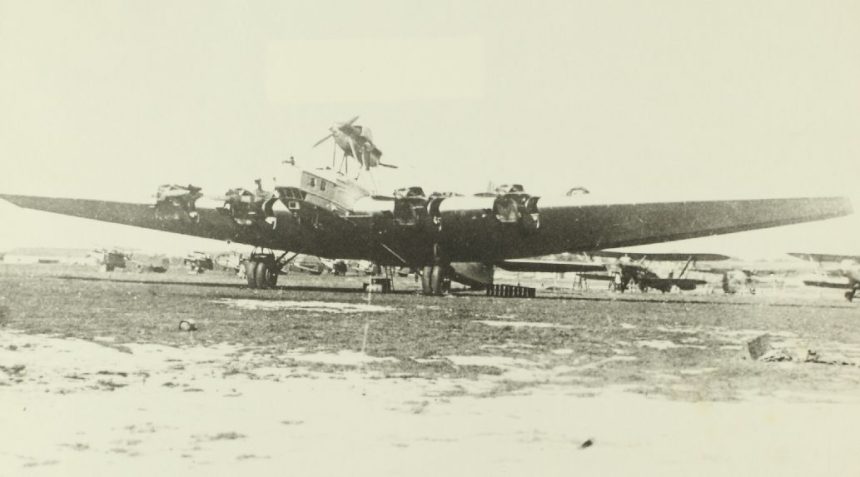

On this day in aviation history, 93 years ago (July 3, 1933), the Tupolev ANT-16 flew for the first time. Also known as the TB-4 or “Heavy Bomber 4,” the ANT-16 was a Soviet prototype military strike aircraft. The ANT-16 was a further development of the ANT-6/TB-3 heavy bomber, which saw 818 airframes produced throughout the early 1930s. Tupolev developed the TB-4 with sights set on payload, while accepting a compromise to speed and range. The doctrine at the bomber’s time of development reflected this trade-off, with the understanding that additional defensive armament would be equipped on the new bomber.
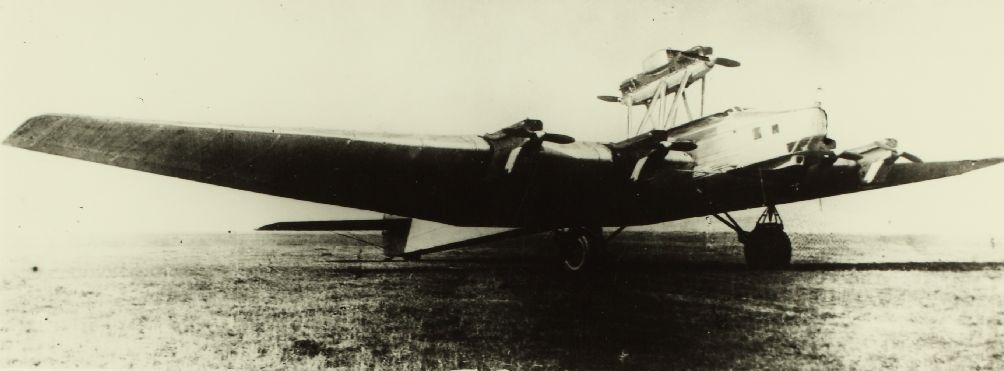
At the time of the ANT-16’s development, the aircraft’s bomb bays were the largest in any aircraft worldwide, measuring 16.4 ft × 5.9 ft × 5.9 ft. This was not an easy feat at the time, as a large bomb bay could compromise the structural integrity of the airframe. Tupolev, however, was able to successfully design the TB-4 to accommodate the feature. M. M. Gromov piloted the TB-4 on its first flight on 4/3/33. By September 29, 1933, flight testing had been completed. In the flight trials, the TB-4 proved underwhelming due to the poor efficiency of the engines. Two 750-hp Mikulin AM-34 V-12 liquid-cooled engines were installed on the top of the airframe, while four more were mounted on the wings. The wings were 6 ft 7 in thick, absorbing much of the thrust generated by the powerplants. Plans to upgrade the TB-4 to 1,250-hp Mikulin AM-35 engines never materialized, and the second prototype ANT-16 never saw completion, although some of its components were used on the ANT-20 that followed. A crew of 12 flew the TB-4, which had a gross weight of 73,370 lbs. In cruise flight, the TB-4 would typically move along at 99 mph, while maximum airspeed was 120 mph. With a 17,637 lb bomb load, the TB-4 had a combat range of 510 nmi and a service ceiling of 9,020 ft. For self-defense, the TB-4 was armed with two 20mm cannons and 10 twin-7.62mm DA machine guns. This behemoth Soviet bomber would land at 65 mph and with 1,300 ft of runway, while it could takeoff in 2,600 ft.